Showing posts with label Bob Adelman. Show all posts

Saturday, 30 November 2019

Bob Adelman's Understanding of Patriotism

Patriotism. It seemed to me that the greatest failing of the country had been its been its treatment of black people. In the ‘50s and ‘60s, the country was really quite paralyzed on the race mater. The court had spoken in 1954 but Congress was controlled by Dixiecrats, and no president in 100 years had said that segregation was wrong. I think that some people think that segregation was just some way that the races were separated. But, in fact, it was an organized system of terror. If a black person in the Deep South wanted to vote or use segregated accommodations or many other things... if he defied the customs, he ran the risk of losing his job or getting attacked, either by the authorities or by the Klan. It was awful and so un-American, really. These were our brothers and sisters who were being mistreated. I thought that the race question was the biggest unsolved problem of America. So that’s why I say it was patriotism.
(Bob Adelman on what drew him to document the civil rights movement)


Growing up in New York, were you surrounded by other people who felt the same way you did?

In the North, I think there was a general feeling that things like lynchings and poll taxes and discrimination were bad things. Though they were sometimes practiced in the North. Discrimination could be very ugly there, too. Especially, if a black family after WWII bought a house in an old white neighborhood. They could be terrorized or burned down. Racism wasn’t just a southern problem. But I guess I came from idealistic people. My mother, who I lived with in the suburbs of New York City — I remember as a little boy, it was raining and I was complaining because I couldn’t go outside, and so she said, “Oh, but it’s good for the farmers.” Which would not be a typical response. I’m not religious, but I guess I’m culturally Jewish and I certainly was very much inspired by the prophets. We’d just seen the Holocaust, so the idea of any kind of racial stigmatization was awful.

Did you feel like your photography and involvement in the movement was subversive?

No, I don’t think so. Obviously, the powers that be — particularly in the South, the local government and police — their job was to enforce segregation. And many, many people in the South supported it. In the context of challenging local authorities, it was subversive. I was regularly arrested for photographing, sometimes it was a good thing. Sometimes when people were about to get ugly or violent, getting arrested was a better alternative. Gunnar Myrdal in “The American Dilemma” said segregation was so un-American and that as soon as most Americans actually understood what segregation was, it would fall away. And in a profound sense, that what the civil rights movement did. It revealed to the country just what the underpinnings of segregation were, which were the systematic suppression of participation in public life.

Your website makes a poignant statement about your work: “His subjects knew which side he was on. And he stayed the course.” How did you or do you view the role of photojournalism during that time period? How did photography — and in your case, impassioned photography — interact with the movement itself?

I think that all art is a way in which we hold up experience and look at it. Photography does it in a very immediate way. I hoped that photographs of mine would help change opinions and understandings. That we would, by our concerted efforts, show how wrong and despicable these practices were. And, in fact, thats what did happen. The country was frozen, but when the students protested [in Birmingham in 1963], I thought that it was sheer genius. By taking their bodies — our bodies — and putting them where they were forbidden to go, that was the lever that would really break the system. I had great faith in that tactic and of course the rightness of breaking these barriers.

How long did you follow the movement as a photographer?

I started taking pictures in the ‘50s on my own, and I started volunteering with CORE (Congress of Racial Equality) in 1961. And I guess by ‘63 I’d say, my pictures starting appearing in papers quite regularly, like Newsweek and Life.

Were you surrounded by other photographers early on, or were you mostly surrounded by activists?

Oh, I had friends in the movement and friends who were photographers. Our great inspiration was always Martin Luther King, who I came to know. I was very involved in the movement. Rudy Lombard was one of my close friends. Dorothea Lange was a mentor of mine. I was friendly with [civil rights photographer] Bruce Davidson. Alfred Eisenstaedt said photographers are like spiders, they don’t hang out with each other. But I had photo friends, and artists — Jim Rosenquist, the painter, Larry rivers.


What is one of your most memorable moments following the movement from the South to Washington?

I took the iconic photo of Martin Luther King in Washington. That certainly was one of the greatest moments, for me, in American history! For 50 years I wondered why I was the only person there to capture that moment. I think by not being a member of the press, but being active in the movement, I was able to go up the stairs and get past the guards because they knew me. I had no press credentials. All the press were in the gallery, in front of the podium at the Lincoln Memorial. So the podium was on the steps and I guess because I wasn’t a press member, I was able to take the picture. That was the place to be.

I’d heard the doc speak so many times, and I knew he was going to say something amazing. The March on Washington was two things. One, it was a celebration because race was on the national agenda. Kennedy said segregation was wrong. What began as a movement of a few hundred or thousand was suddenly a mass movement. So we wanted to celebrate all that. But it was also a protest. Congress was still controlled by Dixiecrats. How they were going to be brought around was a very big “if.” When the doc delivered the Dream speech, I remember I put the camera down and was thinking that speech was so powerful and delivered in the shadow of Lincoln. His truth is marching on. I really believed that it was possible that Congress would somehow come around. The momentum would be very difficult to ignore.

Another moment was when I took the Birmingham photographs of the water hosing, which were very symbolic. Black bodies were being hosed by white firemen. In the past, when the authorities would hose people, they’d just run away. But this was a different time. Instead of being intimidated and frightened, they gathered and stood up to the hoses. It became emblematic of what was going on. Terror was going to be resisted and not given in to. I gave that photo to the doc, and he looked at it and he said it was startling that out of such pain was such beauty.

What do you hope is the impact of showcasing these photographs today?

I hope the show is a toolkit for young people on how to go about transforming things. People need to be trained and organized and have stated goals. In order to bring about change, a lot of work goes into getting other people together and having demonstrations and picketing and hanging posters. People’s right to peacefully protest is one of the most American parts of the Constitution.

- - - - - -

- interview excerpts via
- photographs by (People's Wall, Worlds's Fair, New York, 1965) and of Bob Adelman via and via

Friday, 15 November 2019

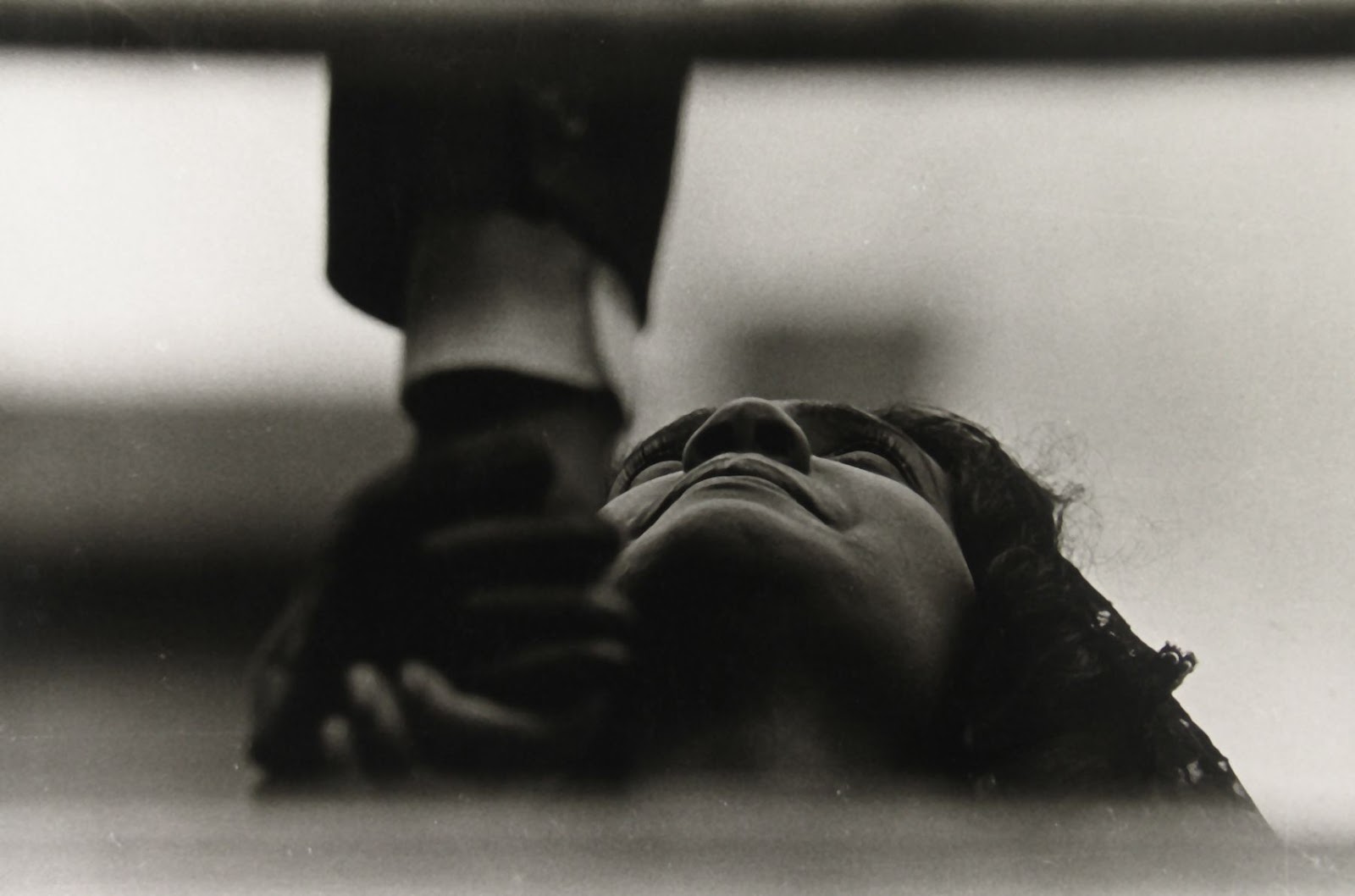
Narrative images: Socialite Gathering (1964)

"At this socialite gathering in Dallas, the maid was just another piece of furniture." (Kelen, 2012). The photograph was taken by Bob Adelman in Texas, Dallas in 1964.


- Kelen, L. G. (2012). This Light of Ours. Activist Photographers of the Civil Rights Movement. University Press of Mississippi
- photograph via

Monday, 14 October 2019

Exposing the Cruelty and Injustice of Segregation: Bob Adelman

"He was in the belly of the beast, in the middle of what was going on. Whether it was civil rights or gay rights, Bob was there. He was amazing. How many individuals do you know who marched with Dr. Martin Luther King? He was a white Jewish photographer and he also photographed Malcolm X."
James Cavello


Adelman himself was white, yet his personal involvement with the Civil Rights Movement often makes his images seem more than just documentary. He had an ability to convey the humanity of his subjects, whether an unnamed demonstrator holding an “I Am a Man” signboard in Memphis in 1968 or Martin Luther King, Jr, delivering his 1963 “I Have a Dream” speech in Washington, DC.
Alison Meier
Adelman has moved beyond the familiar clichés of most documentary photography into that rare sphere wherein technical ability and social vision combine to create a work of art.
Ralph Ellison
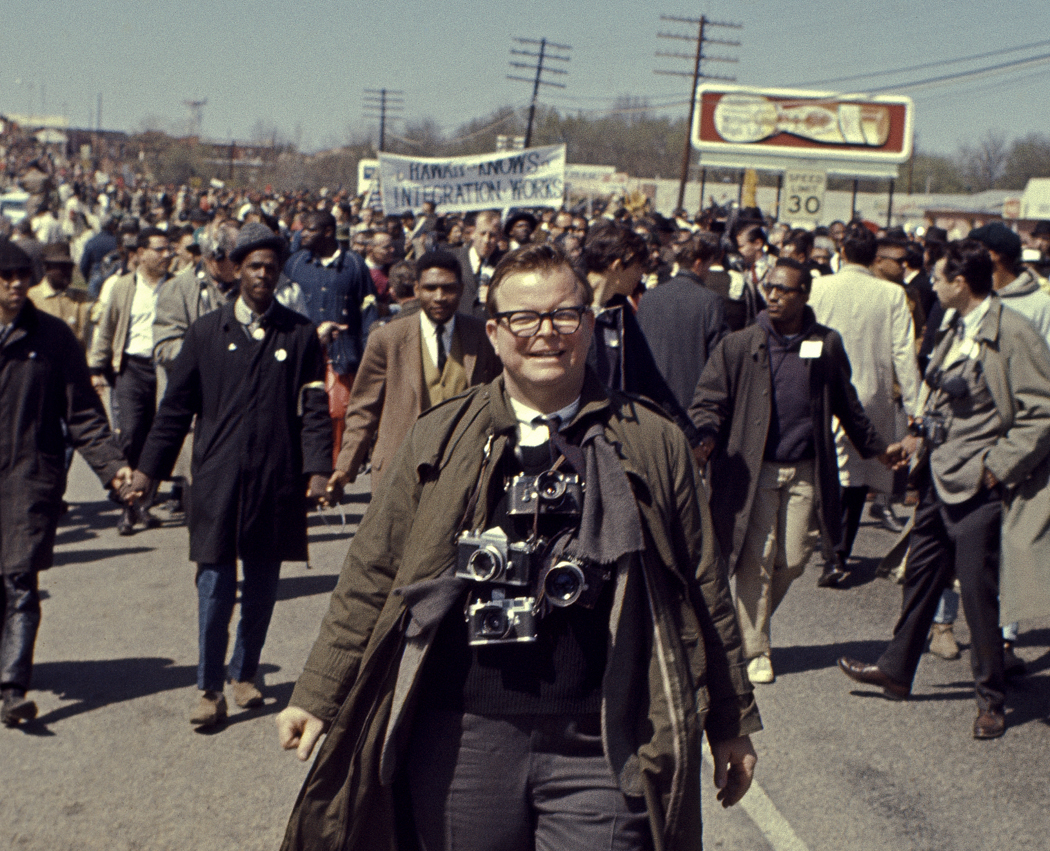
Robert Melvin "Bob" Adelman (1930-2016) was the photographer known for chronicling the civil rights movement of the 1960s including the March on Washington for Jobs and Freedom (and of Martin Luther King giving his "I Have a Dream" speech) and the Selma to Montgomery March and. He was "drawn to the sit-ins staged by young students across the American South" and volunteered to take photographs for the Congress of Racial Equality when he was a young man. His involvement with civil rights issues continued for decades (via).
It was probably the greatest display of the people’s right to protest that I’ve ever participated in.
Bob Adelman on the Selma to Montgomery March
Adelman had access to Martin Luther King and other civil rights activists such as James Baldwin. His photographs were published in Life, Look, and the New York Times Sunday Magazine. Adelman was an atheist but felt that his covering the civil rights movement and exposing both the injustice and cruelty of segregation was his way of "doing the Lord's work" (via).
And of course the treatment of the demonstrators was very disturbing to me, and their courage was very moving. I was a political idealist, so I went on a Freedom Ride to Maryland and eventually I became the National photographer for CORE (Congress of Racial Equality) and I worked with SNCC (the Student Nonviolent Coordinating Committee) too. For me to get involved in something, I had to see some purpose in it. I realized that my involvement would be very dangerous, but I had a long think with myself, and decided that this was something worth risking your life for. The photographs were very important. They were used as evidence in court cases, they were used to raise money for the movement.
Bob Adelman
My life’s work, in addition to being about race relations, is about the many and diverse social concerns in the great tradition of American documentary photography: poverty, mental illness, alcoholism, inadequate housing, the immigrant experience, prostitution, delinquency, illiteracy and on and on.
Bob Adelman
When I photographed, I was intent on telling the truth as best I saw it and then to help in doing something about it. It was a constant effort not only to document in as honest a way as I could, and to make what I was seeing vivid, but to figure out how to change things.
Bob Adelman
- - - - - - - - -
photograph of Bob Adelman (Selma toMontgomery, 1965) via

Friday, 4 October 2019

Narrative images: Memorial Service

Coretta Scott King, wife of Martin Luther King Jr., attends a memorial service for her slain husband in 1968.


photograph by Bob Adelman via

Monday, 27 August 2018

Narrative images: Civil Disobedience (1963)

"A woman blocking dump trucks, slowing construction through civil disobedience as part of a protracted battle against unfair hiring practices at the Downstate Medical Center. Brooklyn. 1963." (via)


"The 1963 image by Bob Adelman appears to be a typical civil rights photograph. But it is not. The solitary woman’s act of defiance was far from the Deep South: It took place at Brooklyn’s Downstate Medical Center." (via)

“This photograph by Bob Adelman, from Mark Speltz’s book, ‘North of Dixie: Civil Rights Photography beyond the South,’ dispels the notion that racism and segregation were just a Southern problem. Growing up in a low-income housing project in New York, I observed the withering effects of white racism in one of the nation’s most liberal cities.” (via)

- - - - - -
photograph by Bob Adelman (1931-2016) via, copyright by owner(s)

Friday, 25 May 2018

Narrative images: "I am startled that out of so much pain some beauty came."

“The police and firemen used a brute show of force to try to stop the ongoing demonstrations. It didn’t work on this day. Rather than fleeing, the protestors hung on to each other and were able to stand up to the full fury of the water, though not without casualties. I have never witnessed such cruelty. There was almost as much moisture behind the lens as in front. I gave a print of this picture to Dr. King. He studied it and said, ‘I am startled that out of so much pain some beauty came.”
Bob Adelman (1930-2016)


The photograph was taken in Kelly Ingram Park, Birmingham, Alabama in 1963. Birmingham was one of the most ethnically divided cities in the U.S.; according to Martin Luther King, it was the most segregated city. The Birmingham movement was a model of nonviolent direct action protest and organised to bring attention to the black Americans fighting for integration. So it did. It drew the world's attention to segregation with the help of images like Adelman's. Charles Moore' photographs of school children being hit by high-pressure water were printed in Life (via).

- - - - - - -
photograph via