Showing posts with label Diana Ross. Show all posts

Tuesday, 28 April 2020

Female Singers + Album Covers

"This study investigates the image of popular female singers in different musical styles as conveyed through their album cover photographs. Slides were made of ninety-one albums recorded by women between 1973 and 1981. They were shown in subgroups to panels of judges who rated them on thirty-one traits. These traits represent either (a) aspects of the “traditional” feminine stereotype, (b) qualities of sexual attractiveness, or (c) positive, but not specifically feminine, traits. The results indicate that female singers were rated positively, regardless of musical style. Country singers were rated relatively high on the traditional traits, while rhythm and blues artists were high on sex appeal and positive traits. Rock singers were rated as aloof and high on positive traits but low on traditionalism and sex appeal. Pop singers were not rated high or low on any dimension. Some differences in male and female raters’evaluations were found. It was concluded that female recording artists generally are not presented in the same stereotyped manner as women are usually portrayed in other forms of media advertising." (Thaxton & Jaret, 2007)


- Thaxton, L. & Jaret, C. (2007). Singers and Stereotypes: The Image of Female Recording Artists. Sociological Inquiry, 55(3), 239-263.
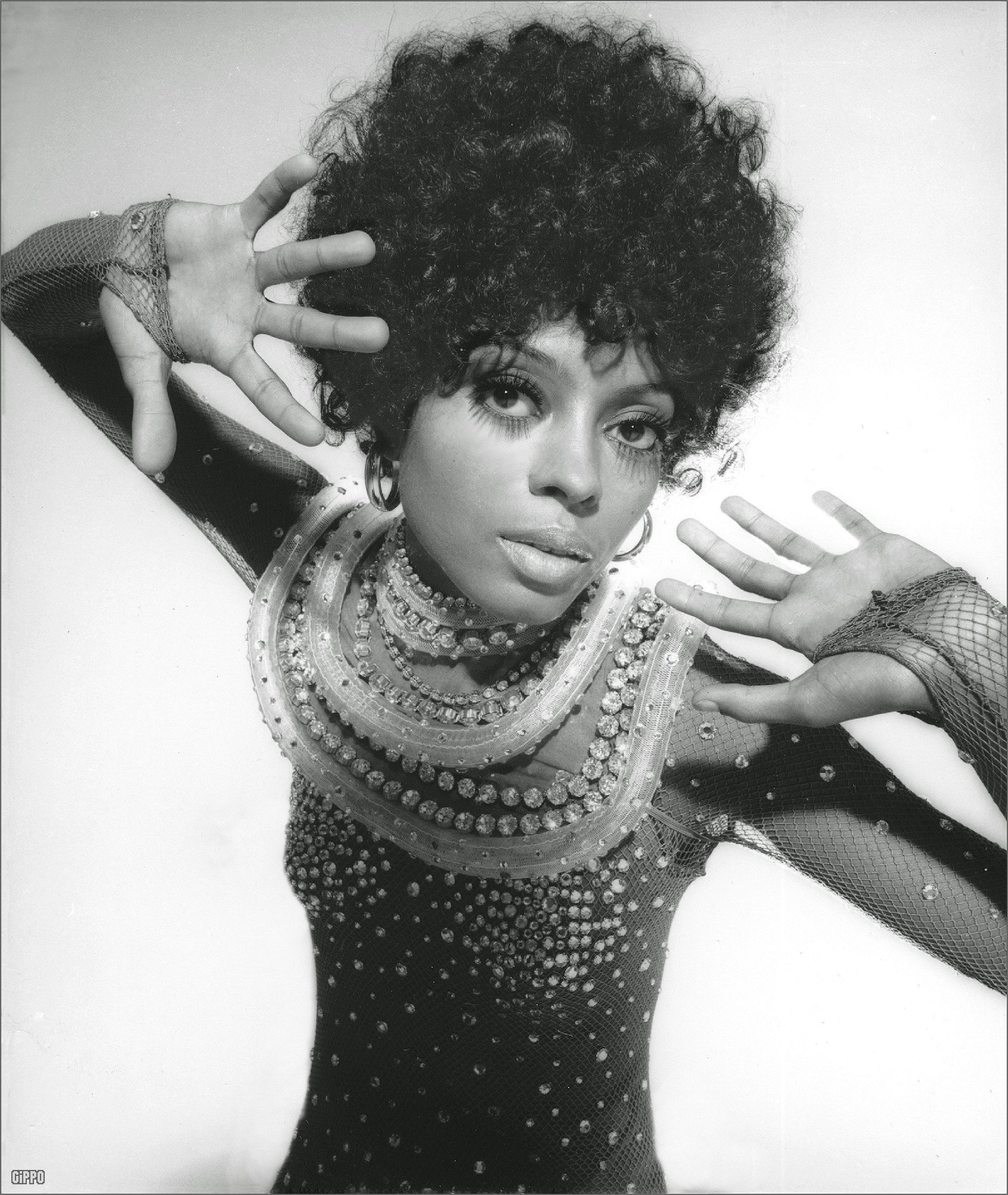
- photograph of Diana Ross via

Thursday, 21 December 2017

The Pencil Test

"'If you're black and pretend you're Coloured, the police has the pencil test.'
'The pencil test?'
'Oh, yes, sir. They sticks a pencil in your hair and you has to bend down, and if your hair holds the pencil, that shows it's too woolly, too thick. You can't be Coloured with woolly hair like that. You got to stay black, you see.'"
(cited in Bowker & Leigh Star, 1999)


Race is pure fiction. And a racist system needs fictional classifications, it needs arbitrarily chosen criteria for the different "races", ridiculous criteria that justify inequality. In 1950, the Population Registraction Act and the Group Areas Act were passed in South Africa. These classifications determined the so-called racial group one belonged to and where one could live, work, ... People were divided into four groups: Europeans (White), Asiatics, Coloureds (mixed "race"), and Natives ("pure-blooded individuals of the Bantu race"); Coloureds and Natives were subdivided. Apartheid meant that "people had to be unambiguously categorizable by race", which of course they were not. As a result, different aspects of apartheid law classified a person differently. Jazz musician Vic Wilkinson, for instance, crossed the race line five times. His "race" changed e.g. when he married women of different ethnicities and moved to different neighbourhoods.

Theoretically, "reclassification" was possible. If a person was labelled Coloured and wished to be labelled White or European, they had thirty days to appeal the classification. The average waiting time, however, was 14 months during which the person continued to live as "Coloured". If - during that time - they enrolled at a Coloured school (as they had no access to a White school), this was later seen as legal evidence that they were Coloured. Even "associating with someone of the wrong group could become evidence of membership and thus of race." The reclassification system was "completely internally inconsistent", categories were conflicting, a mixed criteria of "appearance and general acceptance and repute" was used. Questions such as "Do you eat porridge" or "Do you sleep on the floor or in a bed" were asked to find out whether a person was White. Complexion, eyes, cheekbones, earlobes ("Natives have soft lobes") profiles, and hair were examined. Many underwent the pencil test. If the pencil fell out of a person's hair, they were not classified as Black (Bowker & Leigh Star, 1999).
"Many people did not conform to the typologies constructed under the law: especially people whose appearance differed from their assigned category, or who lived with those of another race, spoke a different language from the assigned group, or had some other historical deviation from the pure type. New laws and amendments were constantly being debated and passed (see, e.g. Rand Daily Mail, 1966). By 1985, the corpus of racial law in South Africa exceeded 3,000 pages (Lelyveld, 1985: 82)."
"The Director of Census was in charge of deciding everyone's racial classification, on the basis of the census data, and, where necessary, other records of vital statistics. Horrell notes: "But this classification is by no means formal. Section Five(3) of the Population Registration Act provides that if at any time it appears to the Director that the classification of a person is incorrect, after giving notice to the person concerned, specifying in which respect the classification is incorrect, and affording him or her an opportunity of being heard, he may alter the classification in the register" (1958: 4). So in the case of apartheid, we have the scientistic belief in race difference on the everyday level, and an elaborate formal legal apparatus enforcing separation. At the same time, a much less formal, more prototypical approach uses an amalgam of appearance and acceptance -- and the on-the-spot visual judgments of everyone from police and tram drivers to judges -- to perform the sorting process on the street."
- - - - - - - - -

Interesting/Related:

- South African schools under attack over Afro hairstyles ban (2016), LINK
- I was fired for refusing to tame Afro, LINK
- The Paper Bag Test, LINK
- Being African: What does hair have to do with it? LINK
- Good Hair (trailer), LINK
- The -ism Series (4): Racism, LINK


- - - - - - - - -
- Bowker, G. C. & Leigh Star, S. (1999). Classification and its consequences. Cambridge, MA: MIT Press; link
- photograph of Diana Ross via

Friday, 29 July 2016

Somewhere

"I'm very sad. And, I'm angry, too. But, I don't think it's good to be angry. I really don't know what to say, all I can say is what's inside. I'm Negro, and I respected and loved Dr. Martin Luther King very much. And I know he lived and died for one reason - and I want all of us to be togehter. Not just the black man but the white man and everybody ... whe should walk together."
Diana Ross

The Supremes were starring at the Copacabana in New York City on 4 April 1968 when Martin Luther King, Jr. was shot in Memphis. Diana Ross was "in a deep depression" and felt "a sense of hopelessness". The Supremes cancelled their performances out of respect. The next day, they received an invitation to appear at a special programme of The Tonight Show with Johnny Carson, a programme dedicated to Martin Luther King, Jr.
The group performed Leonard Bernstein's "Somewhere". Instead of delivering a spoken interlude about romance, as Diana Ross usually did in the middle of this song, she talked about King's dream (starts at 1:45 in clip below) and used words from his famous speech "I Have a Dream" (Taraborrelli, 2007).


Photograph: The Supremes at Martin Luther King's funeral

"I felt the pain for Coretta, and I loved her beauty and how regally she held herself. I had marveled at how Jackie Kennedy had conducted herself, too. And I wondered about myself: would I have been able to be as strong, to stand as tall as these women had? I thought about that as I sat at the funeral and later at Dr. King's burial."
Diana Ross

“Yes, there's a place for each of us, Where love is like a passion, burning like a fire. Let our efforts be as determined as that of Dr. Martin Luther King, who had a dream that all God's children, Black men, white men, Jews, Gentiles, Protestants, and Catholics, could join hands and sing that spiritual of all: "Free at last! Free at last! Thank God almighty, we are free at last!"
Diana Ross


::: Diana Ross sings "Somewhere" live in London, 1973: LISTEN/WATCH
::: Tom Waits sings "Somewhere": LISTEN/WATCH (unofficial clip)
::: Shirley Bassey sings "Somewhere", 1973: LISTEN
::: Aretha Franklin and Hugh Jackman sing "Somewhere": LISTEN/WATCH
::: Julie Andrews sings "Somewhere": LISTEN/WATCH
::: Pet Shop Boys sing "Somewhere": LISTEN/WATCH
::: Barbra Streisand sings "Somewhere": LISTEN/WATCH

Somewhere (West Side Story)

There's a place for us,
Somewhere a place for us.
Peace and quiet and open air
Wait for us
Somewhere.

There's a time for us,
Some day a time for us,
Time together with time to spare,
Time to learn, time to care,
Some day!

Somewhere.
We'll find a new way of living,
We'll find a way of forgiving
Somewhere . . .

There's a place for us,
A time and place for us.
Hold my hand and we're halfway there.
Hold my hand and I'll take you there
Somehow,
Some day,
Somewhere!

- - - - - - - - -

Related posting:
-  Quoting Diana Ross
-  "I'm so happy that you didn't sneeze."

- - - - - - - - -
- Taraborrelli, J. R. (2007). Diana Ross. A Biography. Citadel
- photograph via

Friday, 14 February 2014

Quoting Diana Ross

"Years ago I wanted to buy an apartment in New York City. I was a single female - I had gone through my divorce - I had three children, I was in a show business and black. It was, like, impossible."
Diana Ross


"I don't judge people by their sexual orientation or the color of their skin, so I find it really hard to identify someone by saying that they're a gay person or a black person or a Jewish person."
Diana Ross


Diana Ernestine Earle Ross, "Female Entertainer of the Century", started her career as a founding member of The Supremes (via). The Supremes were a symbol of "changing race relations and the breaking of racial barriers" as they challenged the centuries-old stereotypes of black women. They became both style icons and role models (via).


Weekend Supremes Link Pack:

- Where did your love go: watch
- The Happening: watch & watch
- Love is like an itching in my heart: watch
- I hear a symphony: watch

- - - - - - - - - -
Photographs via and via and via