When Ettore Scola, Carlo Ponti, Sophia Loren and Marcello Mastroianni work together, something very special is about to be created.
"A Special Day" is a 1977 Italian film directed by Ettore Scola (1931-2016) who - according to Italian prime minister Matteo Renzi- had
"an ability that was as incredible as it was razor-sharp in reading Italy, its society and the changes it went through" and whose death left
"a huge void in Italian culture" (
via), a film produced by Carlo Ponti (1912-2007) who had also produced "Marriage Italian Style" and Federico Fellini's "La strada", a film starring often awarded Marcello Mastroianni (1924-1996) and often awarded Sophia Loren.
"A Special Day" is on the list of the "100 films that have changed the collective memory of the country between 1942 and 1978".

Antonietta (Sophia Loren) is a resigned and overworked homemaker, mother of six, wife of vulgar fascist husband Emanuele (John Vernon). She is barely literate and keeps a scrapbook of Mussolini's life who she enthusiastically supports. Gabriele (Marcello Mastroianni) is an intelligent, charming, sensitive and sardonic man who lives alone. He is a radio broadcaster, a critical opponent of the regime, who has been dismissed from his job and is soon to be deported to Sardinia where homosexuals "couldn't contaminate the Fascist culture" (
via and
via).
In the virile regime of fascist Italy, homosexual men undermined the image of Italian manhood Mussolini wanted to project. The regime did not pass discriminatory laws but created a climate that supported the suppression of open manifestations of homosexuality. Gay men were sent to Sardinia where they were locked inside dormitories under the supervision of the police.
"Unwittingly, the Fascists had created a corner of Italy where you were expected to be openly gay." Ironically, they were free of stigma and could be themselves. While openly gay men could not leave their homes without being arrested, on the island the arrival of someone new was celebrated. In 1939, the men were returned to the places they had come from and stayed in a kind of house arrest (
via).

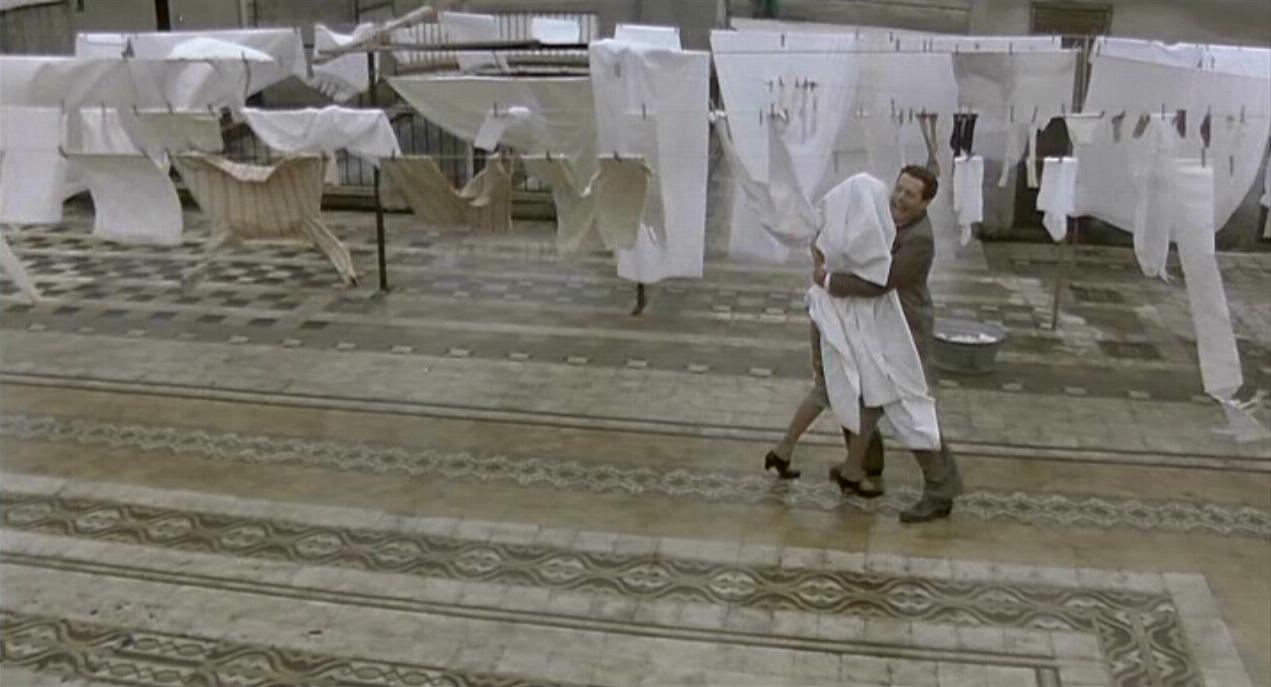
On the day Hitler visits Mussolini in Rome, Antonietta stays home and starts a day like all other days doing domestic tasks. She is alone, her husband and six children follow the fascist parade. In fact, the whole building is empty as almost everybody seems to be participating in the rally and hysterically receiving the dictators.
That day, Antonietta and Gabriele meet in the empty apartment block when she tries to find Rosamunda, her escaped mynah bird that flies to the other side of the courtyard.
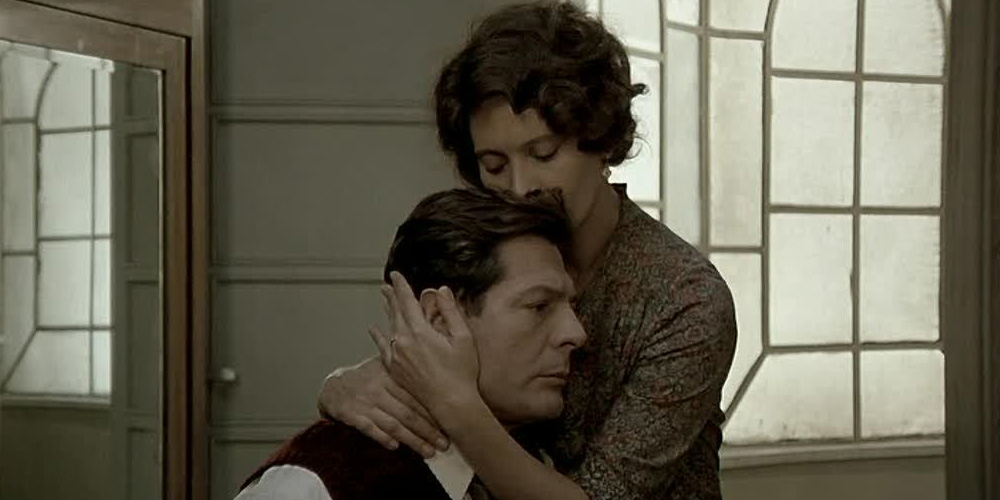
"This is the device that brings Antonietta and Gabriele together for almost two hours of comic and touching confidences, arguments and self-searching that lead, eventually, to a love scene that is simultaneously ecstatic and forlorn. It's something, I suspect, that only Miss Loren and Mr. Mastroianni could bring off so triumphantly." The New York Times
"The film stresses how repression can be a common bond between two very different people." The Guardian

At first, Antonietta does not know about Gabriele's homosexuality, flirts with him and confides to him her troubles with her unfaithful husband. They spend intimate hours with each other. At the end of the day, Antonietta sits near the window reading a book Gabriele has given her. From the window she watches him leaving the complex in the dark, escorted by fascist policemen. She turns off the light and goes to bed where her husband is waiting to patriotically produce the seventh child for Italy (
via and
via). "A Special Day" is one of
Ettore Scola's masterpieces.

images
via and
via and
via and
via