Showing posts with label Olympics. Show all posts

Saturday, 24 February 2018

NBC's Winter Olympics' Gender Coverage Gap and Gender Marking

 "[This all] sends a powerful message about the value of women’s sport. We may be picking up on this during the 2018 Olympics, but none of this is new. There’s a whole history of examples of similar things happening, it’s just that sometimes we have these moments where we can really notice how even in 2018, despite the tremendous gains we’ve made, women’s sport is still occupying second-class status." 
Cooky


NBC's primetime broadcast of the 2018 Winter Olympic Games is - so far - not gender balanced. Significantly more men's events are highlightened than women's events. In the first ten nights, men received 48.5% of the coverage, women received 32.9% (18.6% were dedicated to mixed-pair events). The 15.6% gap is smaller than the average gap found in the past two decades but wider than it was in the first half of the Sochi Games (via).
"The results of the first week of NBC’s primetime coverage of PyeongChang are a bit disheartening because of the continued press for equal coverage." James Angelini
Weiller, Greenleaf and Higgs analysed TV broadcasts of the 1991, 1996 and 2000 Summer Olympics which were all covered by NBC. They focused on sports that had male and female participants and noticed an increased amount of coverage of women's sports and athletes from 1996 to 2000. In numerous sports, gender marking (identifying the gender of the athletes, e.g. "swimming" vs "women's swimming") was evident.
"In track and field, audiences were reminded 57 that they were watching the U.S. Women's Track Team. They were reminded only 12 times that they were watching the U.S. Men's Track Team. Similarly, during the rowing competition, there were 27 instances of gender marking for female athletes during the one hour and 45-minute time frame televised. Little gender marking occurred for male athletes in rowing."
Karen Weiller
Gender marking of female athletes implies that in sports, male is the norm and female the deviation. For instance, we have "football" and "women's football". There is no "men's football", it is just "football".

There was also a hierarchy of naming as athletes of the women's rowing competition were called "girls" ten times; male athletes were never referred to as "boys". Women competing in swimming and diving were referred to by their forenames 87 times, gymnastic commentators used women's forenames 104 times (for men 11 times and 64 times) (via).
"It is obvious that media coverage of an event like the Olympic Games is critical in setting the tone as to how women are represented in the sports media. But as Olympics coverage shows, men's sports continue to enjoy a level of focus and sophistication that women's sports are missing."
Karen Weiller
"Comparison of female athletes to males in the same sport suggests a standard differential and standard comparison, most often with the female athletes being identified as the lesser of the two."
Karen Weiller
- - - - - - - - - - - -
Photograph of Elisabeth Demleitner and Stephan Hoelzlwimmer (West German luge team) with their latest design in helmets, Innsbruck, 1976 via

Tuesday, 23 August 2016

The Iron Nun

"I've learned other life lessons along the way, but the ones that I'd look back and tell my twenty something self now are: It's not what you say, it's what you do; don't pay attention to how old you are, only focus on how old you feel (...)"
Madonna Buder


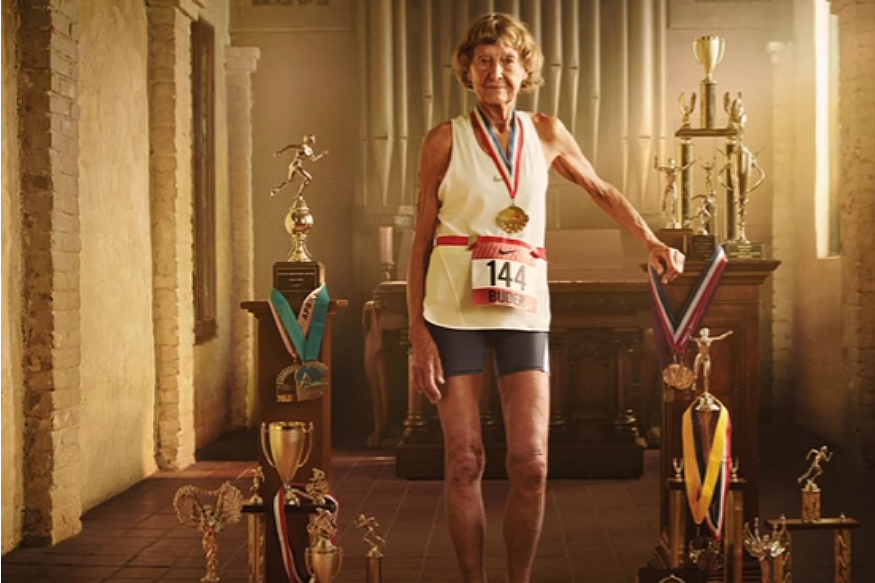
Marie Dorothy Buder, also known as Madonna Buder and the Iron Nun (a title she earned after completing the 2005 Hawaii Ironman at 75 years old), is a Catholic religious sister and Senior Olympian triathlete. She was born in 1930 and currently holds the world record for the oldest person to ever finish an Ironman Triathlon, i.e., for finishing the Subaru Ironman Canada in 2012 ... when she was 82 years old.
Madonna Buder started training when she was 48 after Father John had told her that it could improve "mind, body, and spirit". When she was 52, she completed her first triathlon; at 55 her first Ironman (via and via). But more about her in Nike's clip.


"I don't know what I'd do without running! I love the feeling I get when I whiz past people younger than me and they say, I want to be like you when I get to your age!"
Madonna Buder

Nike's wonderful new clip with/about Madonna Buder:


Behind the scenes:


"During those days, there wasn't any organized races, (including marathons and triathlons) for women. Those races came out for women eventually, but what she had was just organized by schools. Sister Madonna was 48 when she started running for fun — "Father John told me it would be good for my body and mind" — and it wasn't until 1977 that she actually ran her first race who wasn't really sure if it was OK for her to be running races, since she was the only nun doing so realizing the public wasn't used to a nun running. So to avoid creating slanderous conditions, she checked this all out with the bishop in advance. She told him she wanted to run for the cause of Multiple Sclerosis (MS), but that she wasn't sure how the media would handle it, so she wanted his blessing. He said, "Sister, I wish some of my priests would do what you're doing." (via)

"Asking how she trains for these triathlons, she says she runs to church every day and bikes 40 miles to swim in a lake near her home. She also jogs to her regular visits at the local jail, when it's nice out to talk to the inmates about Jesus and read scriptures to the them - an activity which she says makes her feel "so blessed" to come home from. As for her diet, Sister Buder sticks to a mostly raw diet of fruits and vegetables, but incorporates carbs and protein powder into her meals, and she says she 'listens' to what her body tells her it needs. Last year she had a biking accident where she fractured her pelvis, so while her body heals, she has been water jogging at the YMCA and going in the hot tub to let the jets and heat treat the nerves that are tender, and then she does the elliptical even though her doctor probably wouldn't advise that." (via)


Images via and via and via

Friday, 15 July 2016

We're the Superhumans

Channel 4 has done it again: a most impressive contribution to inclusion. Four years ago the British broadcaster covered the Paralympic Games very extensively, was lauded and won the Bafta award. And this year: "Channel 4 is proud to present this three-minute trailer: We're the Superhumans. BSL and Subtitled, and Audio Described versions are also available on the episode page." (MORE)


“All of us who were lucky enough to be involved four years ago felt it was the most amazing experience of our careers. It was a wondrous thing, 2012, so the idea of doing it again was an enormous amount of ecstasy for us, but then a tiny smidgen of agony that we’d have to make it better than last time.”
Dan Brooke

“As a self-funded public service broadcaster, we’ve got a remit here to try and change society’s attitudes and lead by example. The dictionary definition for ‘disabled’ is very negative and limiting. We wanted to change that and turn it into an extraordinary thing.”
Dan Brooke

Wednesday, 5 August 2015

Maccabi Games 2015

“Where Jewish athletes were excluded from the Olympic Games in 1936, thousands will send a message for tolerance and openness and against antisemitism and racism this summer" (via).

The so-called "Jewish Olympics" took place from 27 July to 5 August in Berlin with more than 2.000 athletes from more than 36 countries competing in 19 sports. It was the first time that the European Maccabi Games were held in Germany. A great many stadiums where the games took place were originally built by Nazis for the Olympic Games in 1936 (via), games from which Jewish athletes had been excluded (via).

"Holding the Maccabi Games in Berlin is a very important sign. We will be able to highlight that Jewish life is part of German society and that Jews have not been chased away."
Leo Friedman


The Maccabiah Games are now held quadrennially; the first time they took place in Israel in 1932. They are open to Jewish athletes and Isreali athletes regardless of religion and organised in four divisions: Juniors, Open, Masters, and Disabled (via). The European Maccabi Games are also held every four years, two years after the Maccabiah.

- - - - - - - - -
photograph via

Monday, 3 August 2015

Tommie, John, Peter & 1968 Olympic Games

"If I win, I am American, not a black American. But if I did something bad, then they would say I am a Negro. We are black and we are proud of being black. Black America will understand what we did tonight."
John Carlos


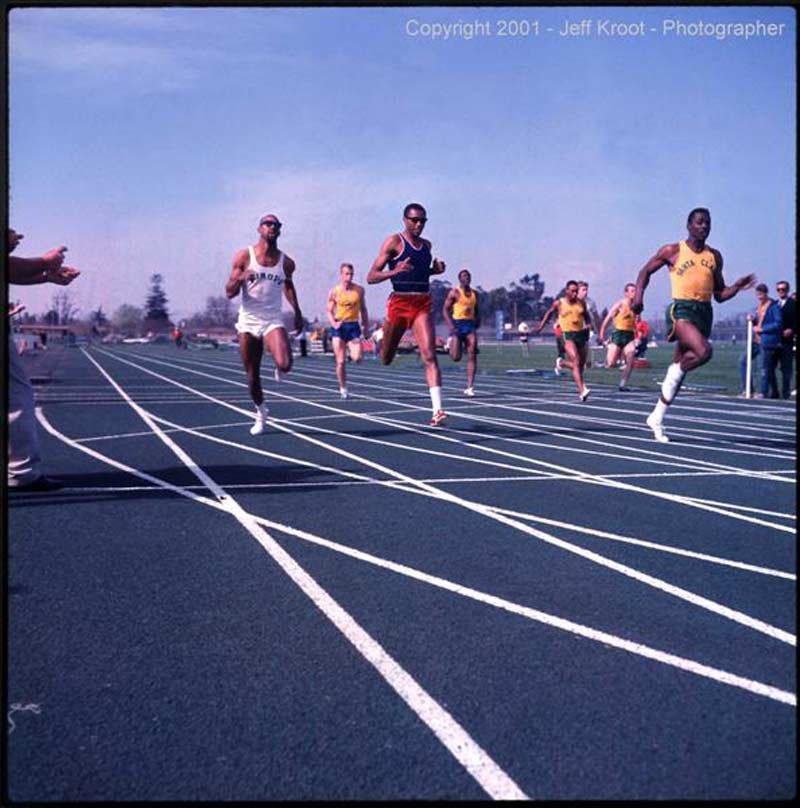
There have been a couple of scandals and controversies in the history of the Olympic Games. One of controversies was caused during the 1968 Olympics when the two black athletes Tommie Smith (gold medalist) and John Carlos (bronze medalist) raised their black-gloved fists on the podium while the US-American national anthem was played during the medal ceremony in Mexico City. Australian silver medalist Peter Norman (1942-2006) wore an Olympic Project for Human Rights badge in solidarity. Smith and Carlos received their medals shoeless wearing black socks to represent black poverty. Smith's black scarf was a symbol of black pride. Carlos had his tracksuit top unzipped to show solidarity with blue collar workers in the US; his necklace of beads was "for those individuals that were lynched, or killed and that no-one said a prayer for, that were hung and tarred. It was for those thrown off the side of the boats in the middle passage". No matter if the salute was a "Black Power" salute or a "human rights salute", it surely was "one of the most overtly political statements in the history of the modern Olympic Games" which soon became front page news (via). Their salute became one of the most memorable events of the twentieth century in the history of sports (via).


When Smith and Carlos left the podium, they were booed by the crowd. Avery Brundage (1887-1975), president of the International Olympic Committee, ordered both suspended from the team and banned them from the Olympic Village. At first, the US Olympic Committee refused but later expelled them from the Games because Brundage threatened to ban the entire US track team. The same Brundage, by the way, had made no objections against Nazi salutes when he was president of the US Olympic Committee in 1936. Smith and Carlos were highly criticised, media coverage was negative and their families received death threats (via). Peter Norman was reprimanded by the Australian media and the Australian Olympic authorities. In 1972, he was not sent to the Summer Olympics in Munich despite his qualifying times. Neither was another male sprinter sent there (via).
Decades later, in 2008, Smith and Carlos received the Arthur Ashe Courage Award which is part of the "Excellence in Sports Performance Yearly Award" for their action (in 2015, the award was given to Caitlyn Jenner for showing "courage to embrace a truth that had been hidden for years" (via)). Today, Smith and Carlos are honoured with statues, exhibitions, airbrush murals, films and songs (via). In 2012, the Australian Parliament decided to officially apologise for doing wrong to Peter Norman (via).


The Australian Parliament's apology:
"The order of the day having been read for the resumption of the debate on the motion of Dr Leigh - That this House:

(1) recognises the extraordinary athletic achievements of the late Peter Norman, who won the silver medal in the 200 metres sprint running event at the 1968 Mexico City Olympics, in a time of 20.06 seconds, which still stands as the Australian record;
(2) acknowledges the bravery of Peter Norman in donning an Olympic Project for Human Rights badge on the podium, in solidarity with African-American athletes Tommie Smith and John Carlos, who gave the ‘black power’ salute;
(3) apologises to Peter Norman for the wrong done by Australia in failing to send him to the 1972 Munich Olympics, despite repeatedly qualifying; and
(4) belatedly recognises the powerful role that Peter Norman played in furthering racial equality - Debate resumed by Dr Leigh who moved, by leave, as an amendment - Omit paragraph (3), substitute:
(3) apologises to Peter Norman for the treatment he received upon his return to Australia, and the failure to fully recognise his inspirational role before his untimely death in 2006; and Debate continued." (literally via)


"They asked Norman if he believed in human rights. He said he did. They asked him if he believed in God. Norman, who came from a Salvation Army background, said he believed strongly in God. We knew that what we were going to do was far greater than any athletic feat. He said, 'I'll stand with you'." Carlos said he expected to see fear in Norman's eyes. He didn't; "I saw love."
Martin Flanagan

"There's no-one in the nation of Australia that should be honoured, recognised, appreciated more than Peter Norman for his humanitarian concerns, his character, his strength and his willingness to be a sacrificial lamb for justice."
John Carlos

"He was a devout Christian, raised in the Salvation Army [and] believed passionately in equality for all, regardless of colour, creed or religion – the Olympic code".
Paul Byrnes about Peter Norman

"In terms of Peter Norman, he expressed verbally his idea of human rights. When he got on the victory stand he was wearing an Olympic Project for Human Rights button symbolizing his belief in human rights. Not symbolizing his belief in black rights in this country, but in human rights, which included the black rights. Tommie Smith and John Carlos had the same button on, therefore that tied him with the belief in human rights. Now, this man ran a great race. He ran a race of authority, especially the last six meters, to become a silver medalist. When he got back to his country, which also had problems with blackness, especially with the aborigine congregation, he was not received very well. I think he was vilified because he stood on the victory stand with a button on. There was nothing that he could do to make the country understand that he was not guilty."
Tommie Smith


"When I saw those two guys with their fists up on the victory stand, it made my heart jump. It was beautiful."
Margaret Bergmann-Lambert, German high jumper who was prevented from taking part in the 1936 Berlin Olympics because she was Jewish

"In that moment, Tommie Smith, Peter Norman, and John Carlos became the living embodiments of Olympic idealism. Ever since, they have been inspirations to generations of athletes like myself, who can only aspire to their example of putting principle before personal interest. It was their misfortune to be far greater human beings than the leaders of the IOC of the day."
Akaash Maharaj, member of the Canadian Olympic Committee

"A lot came to mind on the victory stand, in nanoseconds. From the time I got involved until that particular raising of the fist in solidarity. From getting no jobs, my belief in humanity, both civil and human, and I had to say something because, you know, I believed. You can run, but you cannot hide, and this was all part of my belief then and is still now. I have a responsibility. I was on a mission. It was a Tommie Smith mission to bring forth the need for America to change. To change its policies, in terms of equality, to change its policies in terms of equal rights, and the right of all people in a country which the constitution has promised to protect. Very simple."
Tommie Smith


“It (a protest) was in my head the whole year. We first tried to have a boycott (of the games) but not everyone was down with that plan. A lot of athletes thought that winning medals would supercede or protect them from racism. But even if you won the medal, it ain’t going to save your momma. It ain’t going to save your sister or children. It might give you fifteen minutes of fame, but what about the rest of your life? I’m not saying that they didn’t have the right to follow their dreams, but to me the medal was nothing but the carrot on a stick.”
John Carlos

“We wanted the world to know that in Mississippi, Alabama, Tennessee, South Central Los Angeles, Chicago, that people were still walking back and forth in poverty without even the necessary clothes to live.The beads were for those individuals that were lynched, or killed that no-one said a prayer for, that were hung and tarred. It was for those thrown off the side of the boats in the middle passage. We were trying to wake the country up and wake the world up to.” 
John Carlos

"I had no idea the moment on the medal stand would be frozen for all time. I had no idea what we'd face. I didn't know or appreciate, at that precise moment, that the entire trajectory of our young lives had just irrevocably changed."
John Carlos


photographs (1-3) by Jeff Kroot via and via and via and via and via and via and via and via and via and via and via, copyrights by the respective owners

Sunday, 2 August 2015

Special Olympics 2015

The Special Olympics 2015 opened in Los Angeles on 25 July and after nine days of opening doors to "unimagined possibilities" (via), the closing ceremony will be held today. The games' empowering mission is "to provide year-round sports training and athletic competition in a variety of Olympic-type sports for children and adults with intellectual disabilities, giving them continuing opportunities to develop physical fitness, demonstrate courage, experience joy and participate in a sharing of gifts, skills and friendship with their families, other Special Olympics athletes and the community" (via).


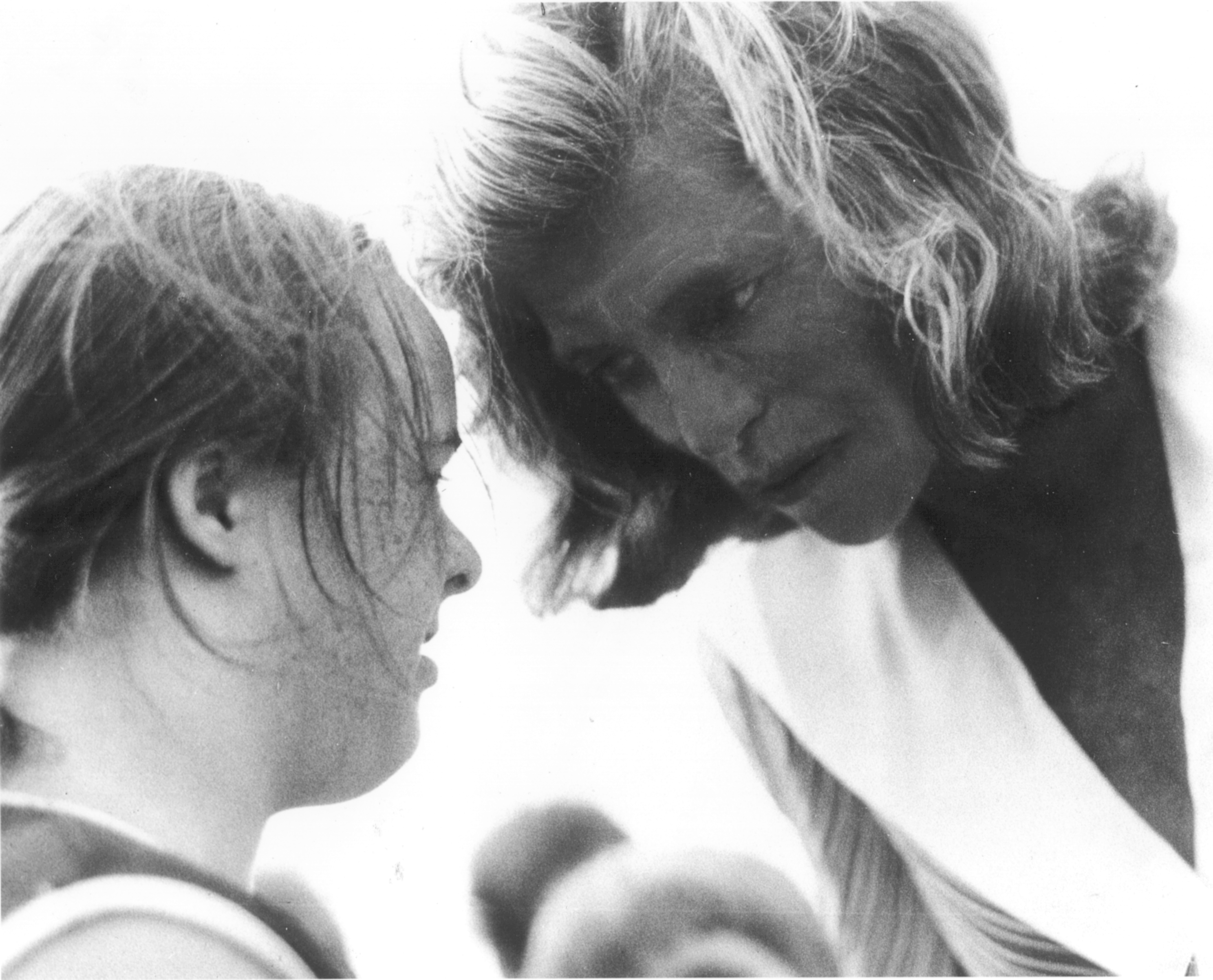
In the 1950s, Eunice Kennedy Shriver (1921-2009) saw that a great many children did not have a place to play and reacted by holding a summer day camp for young people with intellectual disabilities in her own backyard. Her vision grew into the Special Olympics which were for the first time held in Chicago in 1968 (via).


“[Eunice Kennedy Shriver] will be remembered ... as an extraordinary woman who, as much as anyone, taught our nation - and our world - that no physical or mental barrier can restrain the power of the human spirit. ” 
Barack Obama


Maria Shriver's commentary on the 2015 Special Olympics:

"Growing up, my house was filled with political leaders, spiritual leaders, social justice leaders, countless friends of my four brothers and I, and people with intellectual disabilities. It was definitely an eclectic mix, and I must admit that initially no one seemed quite sure what to make of this, including me. But soon, hesitation gave way to interactions, which began to give way to open-minded (and open-hearted) conversations between groups of people who initially seemed to have little in common.
Thanks to my mother Eunice Kennedy Shriver’s fierce will, enormous vision, and relentless drive, I grew up believing that people with intellectual disabilities -like her sister Rosemary - were not to be feared or warehoused in institutions. I grew up hearing how these people and their families struggled in isolation. I grew up seeing my mother fight for their civil rights—their rights to an education and their human rights to be seen as valuable and important members of our larger global family. I grew up being told, and being shown, that people with intellectual disabilities were capable and able beings who could not only out-perform my siblings and our friends in athletic competition, but could also teach us lessons in family unity, perseverance, courage, and love.
We have come a long way since my mother’s backyard summer camp evolved into the global movement now known as the Special Olympics. But we still have a long way to go. In the just-published Shriver Report Snapshot: Insight into Intellectual Disabilities in the 21st Century, we learned that while the institutions that warehoused people in the 60s and 70s have closed, nearly half of our country’s adult population still say they don’t know a single person with intellectual disability, and a stunning 1 in 5 don’t even know what an intellectual disability is.


As the U.S. prepares to welcome 6,500 athletes and coaches from 165 countries to Los Angeles this weekend to compete in 25 sports at the Special Olympics World Games and celebrate the 25th anniversary of the historic Americans with Disabilities Act, these facts should ignite us all to “Change the Game.”
How do we do that? Well, the Shriver Report Snapshot reveals that the more than half of Americans who do know someone with intellectual disability, who have had a personal experience, can show us the way. They report progressive attitudes and high levels of empathy when it comes to educating people with intellectual disabilities, when it comes to where they should work, and whom they should marry and date. They are more likely to understand the hurtful implications the R-word (retard) has on this community, their family members and their supporters.
These game changers, primarily millennial women, can lead the more than 40% of the country who said they do not personally know a person with an intellectual disability. This nearly half of our country continues to hold onto outdated views laced with fear and misunderstanding.
I believe this is possible because we have witnessed the remarkable speed with which Americans can change long-held attitudes. Most recently, we’ve seen our society’s rapid evolution regarding marriage equality, and we are seeing it now on the subject of transgender rights. We are a nation that can and does change, and we owe nothing less to our citizens with intellectual disabilities.


I believe we will change as a nation when we find out that just more than 1 in 10 Americans say they count a person with intellectual disabilities as a friend. I believe we will change as a nation when we find out 22% of Americans think people with intellectual disability should not be allowed to vote. I believe we will change as a nation when you hear the stories of so many families who say their child with intellectual disabilities is not welcome on their school sports teams. I believe we will change our language when we hear from people like Eddie Barbanell who talks openly of the devastating and humiliating impact the R-Word has. I believe we will change when we hear the countless stories families around the globe tell of the positive influence their child with intellectual disabilities has had on the family unit. (...)
So this week, let these Special Olympics World Games serve as a catalyst for change. (...) Have a dialogue with your children about inclusion, acceptance, and language. If you live in LA, come and watch. Reach out to someone you know with an intellectual disability or a family with a child with intellectual disabilities. If you don’t know someone, as my mother would say, go find someone. They’re here. They probably live near you. If you pass a person on the street with intellectual disabilities, instead of averting your glance and walking by, stop. Smile. Start a conversation. Share what you learn. These simple actions will begin to change the game.
Then, the next time we take the pulse of this country, I’m confident those excluding and isolating numbers will have shifted. I’m confident that we will be a better, stronger and more compassionate country if we include and value everyone in it."

Maria Shriver


photographs of Eunice Kennedy Shriver via and via and via and via and via and via and via and via and via

Wednesday, 5 March 2014

Cher & How the Sochi Olympics Became "Gay Olympics"

Before and during the Winter Olympics, there were concerns regarding the human rights of LGBT athletes and the compatibility of Principle 6 of the Olympic Charter with Russia's "gay propaganda" laws which e.g. restrict freedom of expression (via).


In December 2013, Viviane Reding, EU Commissioner for Justice, Citizenship and Fundamental Rights joined German president Gauck who boycotted the games and tweeted: "I will certainly not go to Sochi as long as minorities are treated the way they are under the current Russian legislation." (via)

US-president Obama's message was rather clear. He appointed openly gay athletes to the Olympic delegation such as tennis player Billie Jean King, ice hockey Olympian Caitlin Cahow and figure skating Olympic gold medalist Brian Boitano who came out a few days after his appointment (via).
Australian snowboarder Belle Brockhoff came out in response to the Russian laws: "I was hoping by coming out in response to these laws it would inspire a lot of other people who are in the closet to come out regardless of what society thinks and what laws are in place" (via). Shortly before the Olympics started, Finnish swimmer Ari-Pekka Liukkonen came out: "I wanted to start a broader discussion in connection with Sochi, because it's sad that the legislation in Russia restricts the human rights of young people and others." (via). Canadian speed skater Anastasia Bucsis had her coming out when she was qualifying for the Sochi Olympics (via), Dutch snowboarder Cheryl Maas raised her "rainbow gloves" to a camera after having competed in Sochi (via), a few participating athletes had come out years before, tennis legend Martina Navratilova asked the International Olympic Committee to stand up for their athletes (via).

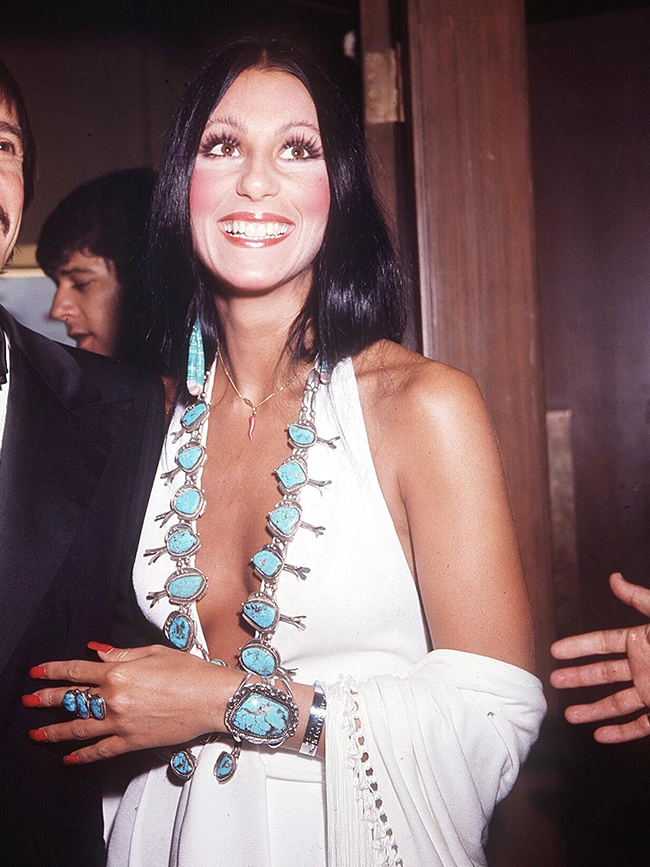
Cher turned down the offer to perform at the Winter Olympics: "I immediately said no. I want to know why all of this gay hate just exploded over there." (via)


In January 2014, the Principle Six Campaign (P6) was launched. P6 refers to the sixth principle of the Olympic Charter which says that any kind of discrimination is incompatible with belonging to the Olympic Movement. The two organisations All Out and Athlete Ally created the P6 campaign, the gear was produced and distributed by American Apparel. Proceeds from the P6 merchandise directly went to LGBT advocacy groups in Russia. The campaign was signed by a great many Olympians and professional athletes (via).

The Canadian Institue of Diversity and Inclusion (CIDI) launched an ad for the Winter Olympics to show their support especially for the athletes in Sochi. CIDI also invited the public to show support during the games by changing the facebook profile picture to an equals symbol with two lugers (via).

The day the Olympics started, Google published part of the Olympic Charter under its search bar: "The practice of sport is a human right. Every individual must have the possibility of practicing sport, without discrimination of any kind and in the Olympic spirit, which requires mutual understanding with a spirit of friendship, solidarity and fair play."

Channel 4 changed its logo into a rainbow logo for a day to back LGBT rights (via) and created the 90-second clip "Gay Mountain" wishing "good luck to everyone out in Sochi". It was officially aired on the day of the opening ceremonies of the Winter Olympics and received enormous positive response. "This is a typcially Channel 4 way of celebrating the start of the Winter Games and showing our support to all of the athletes out in Sochi, gay or straight." (via). And it is one of the many steps Channel 4 takes to promote responsible behaviour and diversity (via). The British television broadcaster is a founder of the Creative Diversity Network and plays "a pioneering role in bringing transgender stories to prime time and humanising the challenged and discrimination faced" (via).


AT&T, US Olympic Committee sponsor, was the first major US corporation to support LGBT equality and to condemn Russia's laws (via). The cosmetics chain Lush stood up for LGBT rights in the Winter Olympics stating that they are human rights. When the Olympics approached, shops around the world ran the Valentine's campaign "We believe in Love" (via). The Scottish brewery BrewDog created a type of beer called "Hello, My Name is Vladimir" with Warhol-style Putin wearing make-up and the sarcastic label "Not for gays". 50% of the profits went to LGBT charities (via). Companies sponsoring the Winter Olympics such as Coca Cola, McDonald's, Visa, and Procter & Gamble were warned by human rights activists and found themselves in a controversial situation that was difficult to handle (via).

Perhaps it is too early for a thorough analysis but in the past weeks it could certainly be observed that a great many people, organisations and companies showed solidarity and took a clear stance. And somehow it seems that the "propaganda laws" partly backfired and Sochi ironically became the "Gay Olympics"(via)...

- - - - - - -
photographs of Cher via and via, video "Gay Mountain", Channel4

Sunday, 23 February 2014

The 2014 Winter Olympics & United Nations' Secretary General Ban Ki-moon's Speech

This day marks the official end of the XXII Olympic Winter Games that were held in Sochi. These are excerpts from Ban Ki-moon's beautiful (diversity) speech he held on 6 February, one day before the Winter Olympics started.

"(...) The Olympics show the power of sport to bring together individuals regardless of age, race, class, religion, ability, sex, sexual orientation or gender identity. Different groups are meeting on the playing field, not the battlefield. (...)
The athletes here carry the flags of different nations - but they are all joining under the banner of equality, fair play, understanding and mutual respect. Their histories, traditions and day-to-day lives offer a wonderful parade of human diversity. And the athletes send a unified message that people and nations can put aside their differences. (...)


The Olympic Movement also promotes human rights, including the rights of all persons with disabilities, working closely with the Paralympic Committee. The Paralympic Games are an essential part of the Sochi Winter Games. I am one of millions of people inspired by those athletes.
The Olympics have served to break down negative stereotypes and build positive attitudes.I am pleased that the United Nations counts many Olympic athletes as champions of our causes - peace, development and human rights. These efforts are all helping to advance the Millennium Development Goals, our targets for addressing poverty, disease, environmental degradation and inequality.(...)


Sports can help empower women. Just think - for the first time in the history of winter Olympic Games, women will compete in ski jump. Of course, you will not see me at the top of the ski jump. But I will be cheering for women to jump as high and leap as far as their talent will take them. This is women's rights in action, and we have a responsibility to build a platform for women to jump. (...)


Sports can help advance human rights. Last year, the United Nations marked the International Day for the Elimination of Racial Discrimination by focusing on the power of sport. We are all aware of the need to combat ugly and hurtful racist displays at sporting matches. And this past December, the theme of Human Rights Day was "Sport comes out against homophobia." Many professional athletes, gay and straight, are speaking out against prejudice. We must all raise our voices against attacks on lesbian, gay, bisexual, transgender or intersex people. We must oppose the arrests, imprisonments and discriminatory restrictions they face.
I know that Principle 6 of the Olympic Charter enshrines the IOC's opposition to any form of discrimination. The United Nations stands strongly behind our own "Free and Equal" campaign, and I look forward to working with the IOC, Governments and other partners around the world to build societies of equality and tolerance.


Hatred of any kind must have no place in the 21st century. (...) Let us work together to make this world better for all." UN Secretary-General Ban Ki-moon via


Photos of the Beatles (Help) via and via and via and via and via