Showing posts with label Simone de Beauvoir. Show all posts

Monday, 23 October 2023

Manifesto of the 343

In April 1971, Simone de Beauvoir's manifesto was published in the magazine Nouvel Obervateur, signed by 342 more women - filmmakers, writers, actresses, philosophers, singers - (including Simone Veil, Gisèle Halimi, Francoise Sagan and Catherine Deneuve) - all of them risking prison at the time since they were openly stating that they had had an abortion which again had been a crime since 1810 based on a Napoleonic law. Some of them lost their jobs, others lost contact to their families who stopped talking to them. The women were accused of being irresponsible and were called sl*ts (the manifesto is also known as the "Manifesto of the 343 Sl*ts", the Vatican Radio said France was going down the road of genocide. 

According to the manifesto, one million women were resorted to unsafe abortion each year in France alone; "I declare that I am one of them," the manifesto said. Hundreds of thousands of women underwent illegal abortions in France every year, those with money went to private clinics or to doctors abroad, others - most of them - ended up on kitchen tables of so-called angel-makers risking both prison time and their lives since there were medical risks. For a brief period of time, there was the death sentence. The last execution (by guillotine) for abortion took place in 1943. 

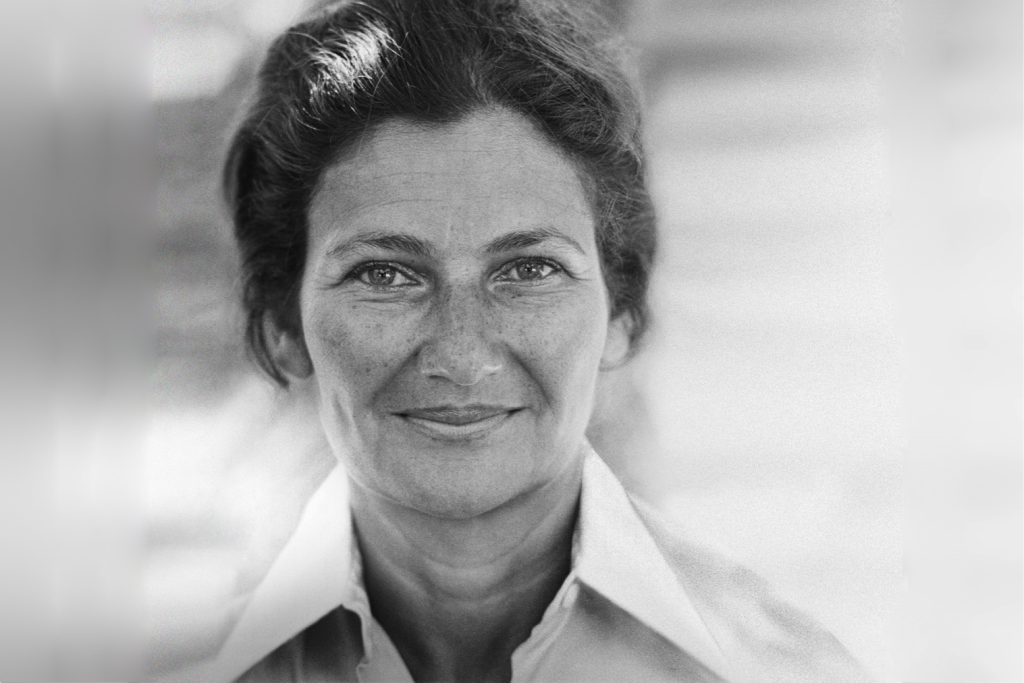
In November 1974, Simone Veil (nèe Jacob, 1927-2017), health minister at the time, presented a law that would legalise abortion. Veil was attacked personally, one conservative deputy compared her to Hitler. Veil was a Jewish survivor of the death camps Auschwitz and Bergen-Belsen. In 1975, the bill became law (via and via).

Much of the aggression was aimed personally at Veil and her family and smacked of antisemitism; it came from all sides, from members of the Parliament on the floor to anonymous letters to her office and her home. The most abhorrent remarks even compared the legalization of abortion to the Holocaust. The anonymous attacks included swastikas painted on her car and the elevator in her building and letters condemning her children to hell. At about the same time, Parliament also voted to ban laboratory experiments on animals for commercial purposes; during debate on that issue, certain members openly likened what they called the genocide of animals to the “genocide” of babies and to the genocide of Auschwitz. The worst comment she remembered from the time was one made by Jean-Marie Daillet, a member of Parliament, who asked if she would agree to the idea of throwing embryos into crematorium ovens. However, at the same time, and in the years afterward, many others paid tribute to her, approaching her even in the street to thank her and tell her she would never be forgotten for all she had done. (via)

Manifesto of the 343 (excerpts):

One million women in France have abortions every year. Condemned to secrecy they do so in dangerous conditions, while under medical supervision this is one of the simplest procedures. We are silencing these millions of women. I declare that I am one of them. I declare that I have had an abortion. Just as we demand free access to contraception, we demand the freedom to have an abortion. (...)

It’s a women’s thing, like cooking, diapers, something dirty. The fight to obtain free abortion on demand feels somehow ridiculous or petty. It can’t shake the smell of hospitals or food, or of poo behind women’s backs. The complexity of the emotions linked to the fight for abortion precisely indicate our difficulty in being, the pain that we have in persuading ourselves that it is worth the trouble of fighting for ourselves. (...)

It is out of vital necessity that women should win back control and reintegrate their bodies. They hold a unique status in history: human beings who, in modern societies, do not have unfettered control over their own bodies. Up until today it was only slaves who held this status. The scandal continues. Each year 1,500,000 women live in shame and despair. 5,000 of us die. But the moral order remains steadfast. We want to scream. (...)

The ten commandments of the Bourgeois State: 

You choose a fetus over a human being when that human is female.
No woman will have an abortion while Debré wants 100 million more French people.
You will have 100 million French people, as long as it costs you nothing.
You will be particularly severe with poor females who cannot go to England.
As such you will have a wheel of unemployment to make your capitalists happy.
You will be very moralistic, because God knows what ‘we’ women would do if we had such freedom.
You will save the fetus, since it’s more interesting to kill them off aged 18, the age of conscription.
You will really need them as you pursue your imperialist politics.
You use contraception yourself, to send just a few children to the Polytechnique or the ENA because your flat only has 10 rooms.
As for the others, you will disparage the pill, because that’s the only thing missing.

- - - - - - - - - - -
photograph of Simone Veil via 

Monday, 9 October 2023

"We do not know who we are if we ignore what we will become."

"Let us cease cheating, the meaning of our life is in question in the future that awaits us; we do not know who we are if we ignore what we will become. Let us recognize ourselves in this old man, in this old woman. We must do so if we want to take up our human condition in its totality." 


As Sonia Kruks points out, most people seek to flee this "other within us", do not recognise themselves in the old but view them as a "different species". It is "their bad faith flight from their own incipient old age that accounts for much of denigration and mal-treatment they inflict on the old".

- - - - - - - - - - - - - - - -
image (Simone de Beauvoir, Jean-Paul Sartre, Jean-Luc Goddard) via

Saturday, 30 September 2023

One is not born but rather becomes old... Sonia Kruks on Simone de Beauvoir's "Coming of Age"

One is not born but rather becomes old – and to become old, like becoming a woman, is to become “the Other.” The old are cast: “outside humanity,” Beauvoir says in La Vieillesse (translated as Old Age or The Coming of Age) and they are conceived as: “sub” human (OA 4, 505; V 10, 531)1) Although there are also profound differences, for both women and the old (of any gender) their existence is profoundly shaped by alterity2.

Beauvoir had argued in The Second Sex that, their alterity notwithstanding, an authentic pursuit of freedom remains possible for women. For, “to become a woman” also involves a project of active self-making and it is not reducible to passively “being made” one. Thus:

the traps of bad faith and the mystifications of the serious are lying in wait for [women],3

and their freedom:

cannot authentically assume itself except in revolt: this is the only way open to those who have no chance to build anything; they must refuse the limits of their situation in seeking to open paths to the future. (Ibid.)

But what, then, of the old? Can they still “seek open paths to the future”? Is revolt, or at least resistance, also open to them as an authentic path to freedom? Indeed, are any authentic projects open to them? It is striking that, although Old Age is otherwise similarly organized to The Second Sex, it has no equivalent to the final part of The Second Sex on “The Independent Woman,” on the woman who struggles to affirm her freedom. So, one must ask, does Beauvoir perhaps see old age as a unique situation, in which the demands she makes of (younger) women to eschew bad faith and engage in an authentic pursuit of freedom no longer apply? Or, could it be that she has radically modified, or perhaps abandoned, her prior ethics? How far do Beauvoir’s life-long values persist, and how they have mutated or perhaps even been discarded in her book on old age?

(...) For the great majority, their final age is, indeed, a “desert.” But “if the retired man is rendered hopeless by the lack of meaning [le non-sens] in his present life, this is because his existence has always been stolen from him” (OA 541-2 TM; V 568). In a profit-oriented, capitalist, society, where costs are always measured against benefits, after a life of alienated labor they are cast aside, regarded as “mere scrap,” as “walking corpses”(OA 6 TM; V 13). They face a “sterile” future and an “unpeopled” world, and after retirement they sink into a “deathly apathy” [une sinistre apathie] (OA 451-2; V 475-6).

(...) a common defensive strategy that Beauvoir sympathetically describes is to “take refuge in habit” (OA 466; V 490). InThe Second Sex, Beauvoir criticizes women who throw themselves into repetitive routines of housework as a means to evade their freedom. “Housework,” she says, “in fact permits a woman an indefinite flight from herself” (TSS 478, TM; DSII, 271). However, Beauvoir does not similarly depict the, sometimes obsessive, embrace of habits by the old as a form of “flight.” Rather, their habits hold out promise of much-needed protection against the meaninglessness of life. Habit is how “the old person escapes from the sickening quality of excessive leisure by filling it with tasks and duties that for him take on the form of obligations” (OA 467; V 491). The rigid habits that many old people adopt offer them a the degree of “ontological security”:

Because of habit [the old person] knows who he is. It protects him from his generalized anxieties by assuring him that tomorrow will be a repetition of today (OA 469; V 493).

As well as clinging to their habits, the old often cling excessively to their possessions. Indeed, Beauvoir observes, the two traits merge, since “the things that belong to us are as it were solidified habits”(OA 469; V 494). Furthermore, ownership itself is also felt to be: “a guarantee of ontological security.” Objectifying oneself in things, and especially a self-identification with money (which is deemed synonymous with power), is a commonly attempted form of defense: “Thanks to his possessions the old person assures himself of an identity against those who see him as nothing but an object” (OA 470; V 494). This defense is likely to fail, Beauvoir says (OA 470; V 494-5). However, she does not consider such self-objectification a form of bad faith. Similarly, she does not criticize those who attempt to evade their situation by trying to escape into a frozen world of past memories. They “affirm a fixed essence,” she writes and they

tirelessly tell themselves how this being that they were lives on inside them. . . [that] they are forever this ex-serviceman, this worshipped woman, this wonderful mother (OA 362, emphasis added, TM; V 384).

Their memories cannot “resuscitate the real world from which they emanate” (OA 364; V 386), yet Beauvoir does not criticize this clinging to the past as flight from freedom.

Yet others assume the disabilities of old age in an exaggerated form in order to justify excluding themselves from responsibility for action. A frequent device is to turn to hypochondria.

For many, illness can act as an excuse for the inferiority to which they are now doomed. It can also justify their self-centeredness – henceforth their body requires all their care (OA 302; V320).

However, far from being critical, Beauvoir adds that “these forms of behavior are based upon a very real and intense anxiety” (Ibid.). Similarly, some exaggerate mild impairments. Having some difficulty walking, they “mime” paralysis; others, being a little deaf, stop listening. However, “playing at being disabled, they become so” (OA 303; V322). In such ways, some strengthen their exclusion from the world even when this has not yet been fully imposed on them (OA 303; V 322). One could say here, as Beauvoir says of (younger) women, that they are complicit in their oppressed status; indeed, that they comply in “making themselves an object” [se faire objet].(TSS 491; DSII 195), yet Beauvoir makes no such claim. To the contrary, she sympathetically describes such behavior, especially (but certainly not only) on the part of the impoverished and institutionalized old. Not only are they “despairing “ but they are: “justifiably” [à juste titre] resentful and demanding” (OA 303; V 322).

Wronged and bullied, [the old person] retaliates by refusing to take part in the game. The adult world is no longer his: he challenges its regulations and even its ethics (OA 480 TM; V 505).

(...) The notion of authentic freedom that Beauvoir offers here presumes the continuation into old age, albeit somewhat diminished, of the passions and vitality and, especially, of the forward temporal thrust, that fuels the free, transcendent projects, of younger adults. She closes the book by envisioning an “ideal society” where these can continue for all throughout late life (OA 543. V 569).

In such an “ideal” society, after enjoying life-long participation in meaningful, collective activity, individuals will remain active and valued social participants during their very last years. They will engage in authentic action until they finally die from a brief illness “without having suffered any degradation” (OA 543; V 569).

Beauvoir’s “ideal” presupposes the overthrow of contemporary capitalist society, and she closes the book with the ringing statement that “It is the whole system that is at issue and our claim cannot be otherwise than radical – change life itself” (OA 543; V 570). However, she has also shown in extensive detail, earlier in the book, that old age is far more than an oppressive social condition. Indeed, she actually begins the “Conclusion” by remarking that “it is an empirical and universal truth that after a certain number of years the human organism undergoes a decline. The process is inescapable” (OA 539; V 565). Thus, the “ideal” of old age that she proposes could also be viewed as an aversive denial on her part of the physical decline that accompanies aging in any society. A conclusion that some critics have drawn is that Beauvoir herself views the old as less than fully human; indeed, that she participates in their objectification. However, I do not think such a conclusion is justified.

It is true that Beauvoir herself undeniably shares in the profound terror of old age that pervades modern society. In a well know passage at the end Force of Circumstance she writes of herself that old age “has got me now. I often stop, flabbergasted at the sight of this incredible thing that serves me as a face… when I look [in the mirror] I see my face as it was, attacked by the pox of time for which there is no cure.”5 However, her aversion to her own old impending age does not lead her to flee it by casting the old as “Other.” To the contrary, her goal in writing the book is the very opposite: to disclose the humanity of the old by breaking what she calls the: “conspiracy of silence” that surrounds them (OA 2; V 8). In the “Introduction” she states that she aims to make the voice of the old heard. She writes: “if their voice was heard, one would be forced to acknowledge that this is a human voice. I shall force my readers to listen to it” (OA 2 TM; V 8 emphasis added). (...)

by Sonia Kruks (2022)

- - - - - - - -
-  Kruks, S. (2022). "Old Age and the Question of Authenticity", Chére Simone de Beauvoir, link
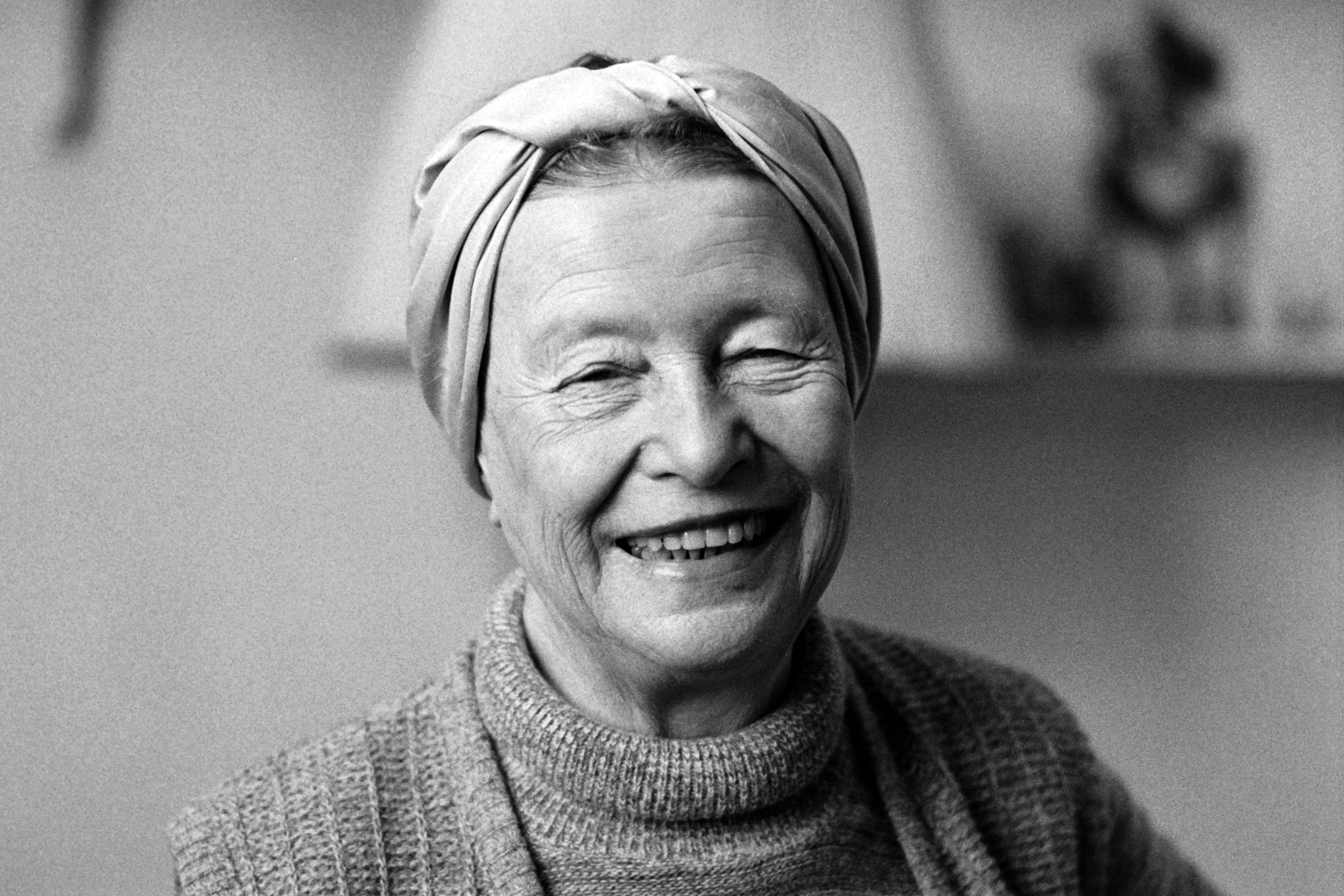
- photograph of Simone de Beauvoir (by Michele Banchilhon) via

Friday, 22 April 2016

Quoting Simone de Beauvoir

"Man is defined as a human being and a woman as a female - whenever she behaves as a human being she is said to imitate the male."
Simone de Beauvoir


photograph via

Thursday, 20 August 2015

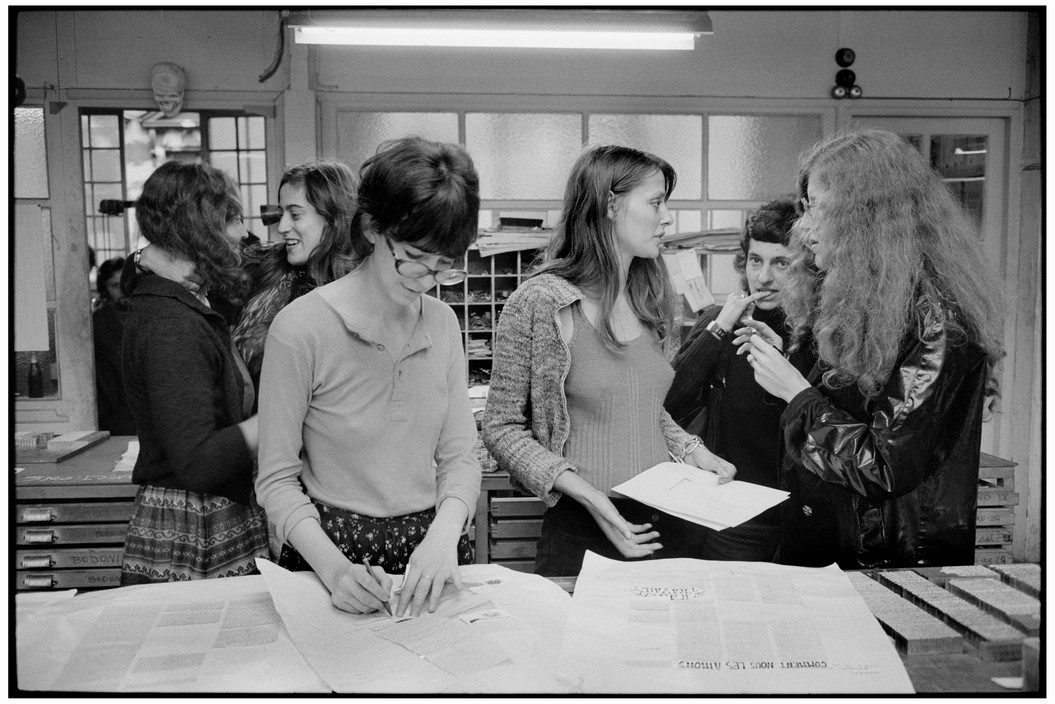
"Mouvement pour la liberation des femmes" captured by Magnum photographers

In France, two circles developed independently. One was created in 1967 as a subgroup of the social-democratic women's organisation "Movement of Democratic Women". The other one developed in the intellectual and political climate of the new University of Paris-Vincennes and appeared in the course of 1968. Both groups finally met in summer 1970, the year they declared "Women's Liberation: Year zero". In fact, the event (a demonstration in Paris in August 1970) they planned together was retrospectively regarded as the birth of the French women's movement (Schulz, 2014).


Above: Simone de Beauvoir at a Women's Liberation demonstration in Paris in 1971, photographed by Gilles Peress


Above: Women's Liberation demonstration in Paris in 1971, photographed by Gilles Peress


Above: Women demonstrating for the right to work in Paris in 1975, photographed by Jean Gaumy


Above: Women's Liberation, May 1st & Women's March & Feminist Movement newspaper "Le Torchon brûle", 1971, photographed by Martine Franck


Above: Yvelines, Versailles, French Conference For Women's Liberation, 1970, photographed by Henri Cartier-Bresson

- - - - - - - - - -  - - -

- Schulz, K. (2014). Feminist Echoes of 1968: Women's Movements in Europe and the United States. In: Gilcher-Holtey, (ed.) A Revolution of Perception?: Consequences and Echose of 1968. 124-147, Berghahn Books
- photographs via and via and via and via and via and via and via; copyrights by the respective owners, for more see