Saturday, 5 April 2014

Quoting Eartha Kitt

"I've always been multicultural myself. I'm not black and I'm not white and I'm not pink and I'm not green. Eartha Kitt has no color, and that is how barriers are broken."
Eartha Kitt


"Aging has a wonderful beauty and we should have respect for that."
Eartha Kitt


"We're not thought of in terms of color because we are entertainers. We are there to entertain you not because we are black, white, pink, or green or gay or straight or because we are Catholic or Protestant."
Eartha Kitt


"I do think that same gender partners should be able to be married. Why not? If you share a life together then who in the world should have anything to say about it?"
Eartha Kitt


 "I don't carry myself as a black person but as a woman that belongs to everybody. After all, it's the general public that made me - not any one particular group. So I don't think of myself as belonging to any particular group and never have."
Eartha Kitt


"Just because you are different does not mean that you have to be rejected."
Eartha Kitt


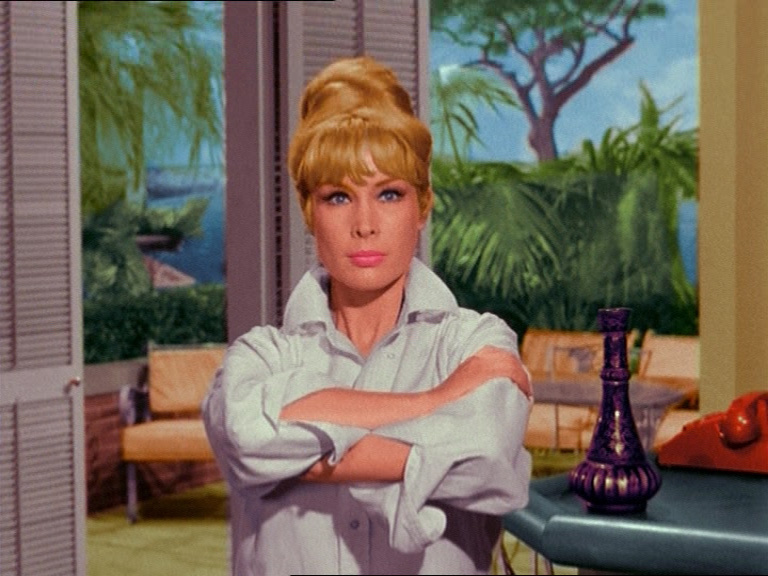
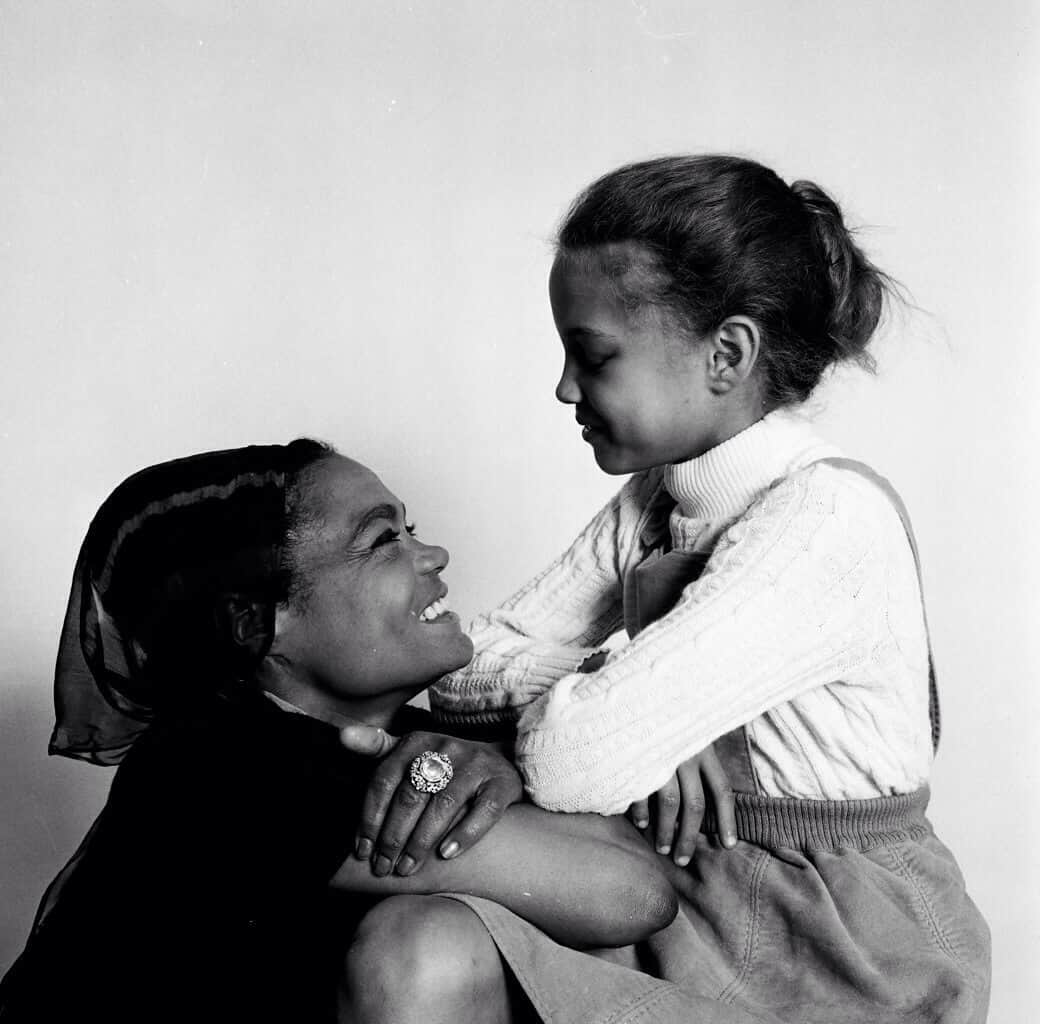
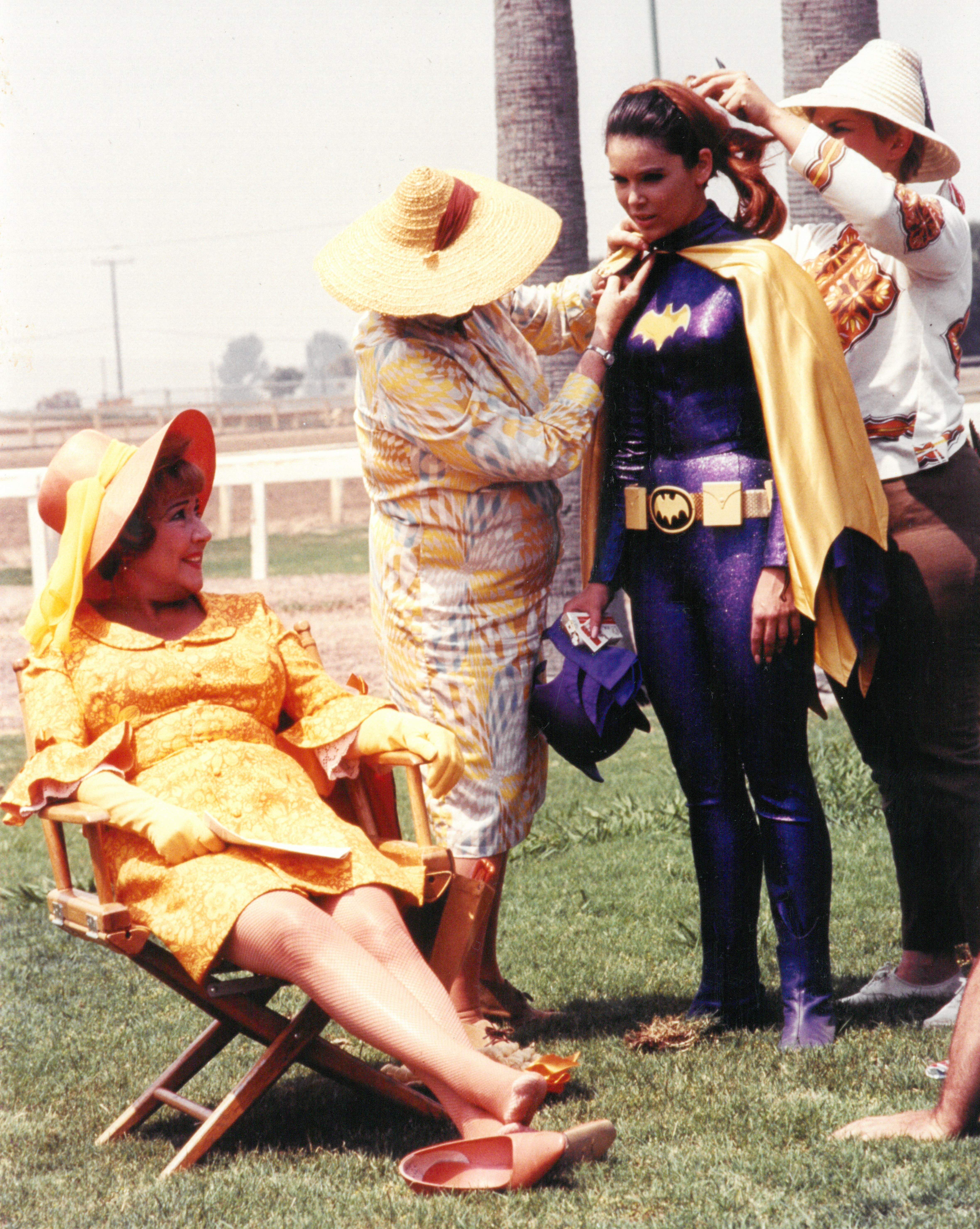
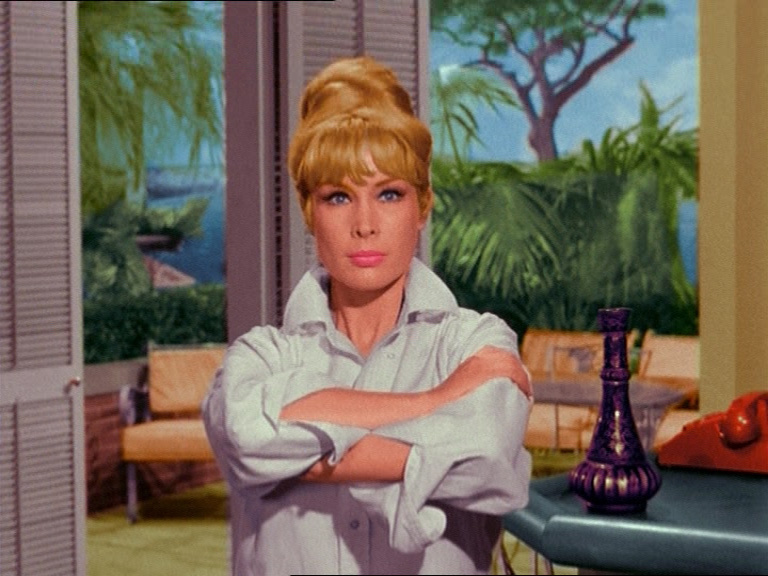
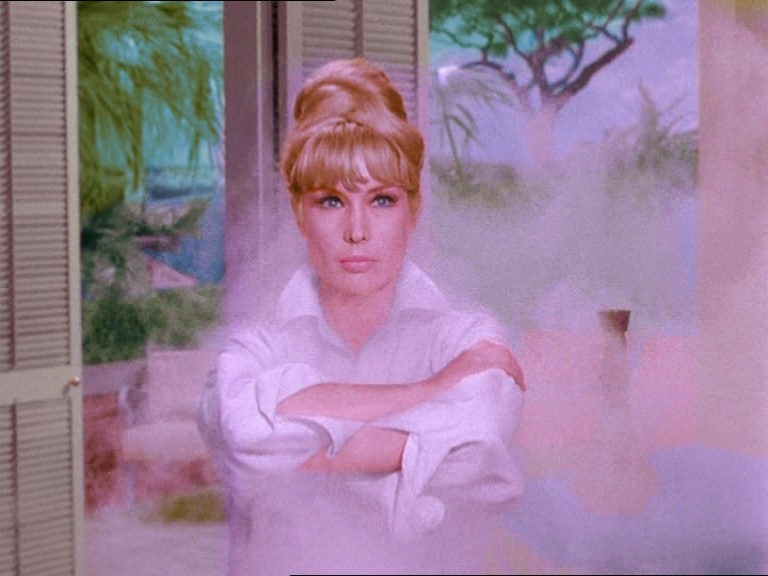
Eartha Kitt (1927-2008), among other roles Catwoman in the final season of Batman, was - according to Orson Welles - the "most exciting woman in the world". Her mother was of African-American and Cherokee descent, her father of German (or Swiss) descent (via). This "mixed parentage was a matter of shame for all concerned and would go on to blight her early life." (Williams, 2013).


Eartha Kitt was known for her activism, for supporting underprivileged young people, peace and LGBT rights which to her were civil rights. In an interview she said: "We're all rejected people, we know what it is to be refused, we know what it is to be oppressed, depressed, and then, accused, and I am very much cognizant of that feeling. Nothing in the world is more painful than rejection. I am a rejected, oppressed person, and so I understand them, as best as I can, even though I am a heterosexual." (via) It is reported that Kitt herself was rejected by her mother's husband because she was "too pale". She was sent away and later said: "If you're mulatto you're not black enough to belong to the blacks and not white enough to belong to the whites." (via)


Williams, J. L. (2013) America's Mistress: Eartha Kitt, Her Life and Times. London: Quercus Editions
photos via and via and via and via and via and via and via and via

Thursday, 3 April 2014

"Holy Act of Congress!" Batgirl and the Equal Pay Act

"I've worked for you a long time, and I'm paid less than Robin! Same job, same employer means equal pay for men and women!"


The American Association of University Women and the Center for American Progress Action Fund produced a Public Service Announcement for the Equal Pay Act. The clip shows Batgirl coming to rescue Batman and Robin but before doing so explains them the concept of equal work, equal pay (via).


John F. Kennedy's remarks upon signing the Equal Pay Act on 10 June 1963: "I AM delighted today to approve the Equal Pay Act of 1963, which prohibits arbitrary discrimination against women in the payment of wages. This act represents many years of effort by labor, management, and several private organizations unassociated with labor or management, to call attention to the unconscionable practice of paying female employees less wages than male employees for the same job. This measure adds to our laws another structure basic to democracy. It will add protection at the working place to the women, the same rights at the working place in a sense that they have enjoyed at the polling place. While much remains to be done to achieve full equality of economic opportunity--for the average woman worker earns only 60 percent of the average wage for men--this legislation is a significant step forward. Our economy today depends upon women in the labor force. One out of three workers is a woman. (...)" (via)


... and here it is, the clip:


Inspiration for this posting from Open Culture; photos via and via and via

Coming next: Catwoman

Wednesday, 2 April 2014

International Children's Book Day

International Children's Book Day is observed on 2 April, on Hans Christian Andersen's birthday. It was first observed in 1967 and aims "to inspire a love of reading and to call attention to children's books" (via).


Children's books can be gender-specific or gender-neutral. The 2014 petition Let Books Be Books received thousands of signatures asking children's publishers to take gender labels off books "and allow children to choose freely what kinds of stories and activity books interest them". The petition tries to keep customers from "buying sexism" (via). While some publishing houses say that they are not planning to create new titles that refer to boys or girls, others state that gender-specific titles are easier to sell than unisex editions ... an interesting calculation as marketing books to one gender halves the readership (via).


Since culture is depicted in children's books, gender is depicted in children's books, too. In the 1970s, critics drew attention to the images and roles of women and girls in children's literature with phrases such as the passive Sleeping Beauty or helpless Snow White and pointed out that children's literature could positively change children's gender attitudes. In fact, recent research shows "positive developments in gender biased tradition of children literature". That is quite a good sign as according to Trepanier-Street "gender stereotypical thinking may limit children's choices, interests, and abilities" (Moattar, 2010).


Moattar, K. (2010) The Visual Representation of Gender in Illustrated Children's Books in Iran and Sweden Today: A study of "The lover and Sanam" and "That's what a princess does". Master's Thesis, Lunds Universitet
photos via and via and via

Friday, 28 March 2014

The -ism Series (11): Binarism

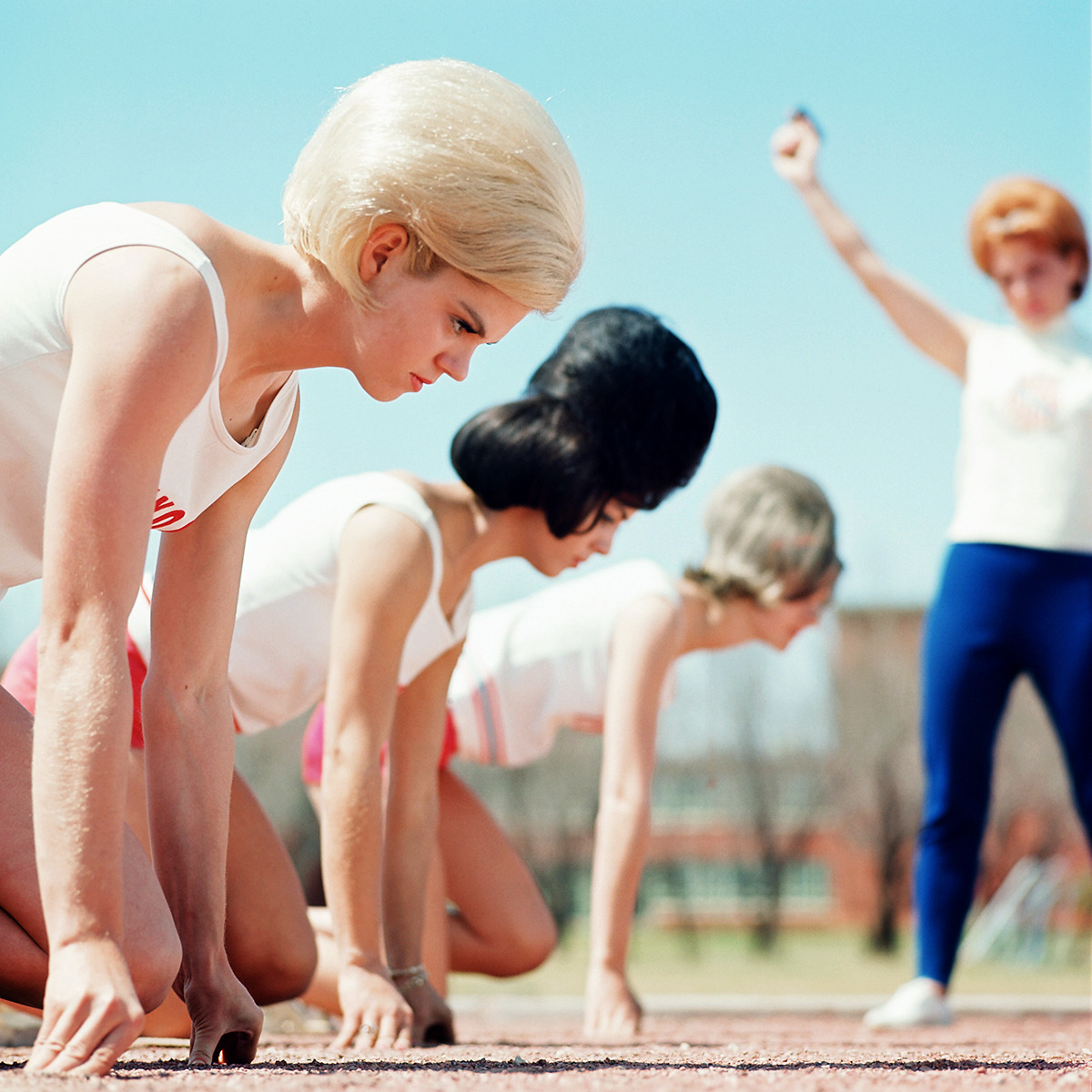
There is the tendency that gender is rather rigidly presented as a construct that "works along a male-female binarism in mass mediated accounts" (Sloop, 2004). This categorisation is criticised as those who do not clearly and permanently fall into one category are more likely to be stigmatised and marginalised (Preves, 2000). The limitations were firstly seen by feminists when queer theory came up in the 1990s (Kwok, 2005) since genderqueer individuals break gender binary.


- Kwok, P. (2005) Postcolonial Imagination and Feminist Theology. Louisville: Westminster John Knox Press
- Preves, S. E. (2000) Negotiating the Constraints of Gender Binarism: Intersexuals' Challenge to Gender Categorization. Current Sociology, 48(3), 27-50
- Sloop, J. M. (2004) Disciplining Gender: Rhetorics of Sex Identity in Contemporary U.S. Culture. University of Massachusetts Press
- photograph by John Lewis Stage (1960) via

Wednesday, 26 March 2014

Title IX

"No person in the United States shall, on the basis of sex, be excluded from participation in, be denied the benefits of, or be subjected to discrimination under any education program or activity receiving Federal financial assistance."


The Civil Rights Act of 1964 was to ensure that no individual was discriminated against due to ethnicity, religion ... gender. Prohibition on gender discrimination, however, was limited to the area of employment and did not refer to public education and federally assisted programmes (via). Title IX was proposed. And it changed the landscape of sports. The first person to introduce it was Senator Birch Bayh: "We are all familiar with the stereotype of women as pretty things who go to college to find a husband, go on to graduate school because they want a more interesting husband, and finally marry, have children, and never work again. The desire of many schools not to waste a 'man's place' on a woman stems from such stereotyped notions. But the facts absolutely contradict these myths about the 'weaker sex' and it is time to change our operating assumptions." (via).
The law was not welcomed by everybody. Opponents argued that men's sports would suffer when women's sports got more attention. Some school administrators said that in sports there were three genders: male, female and football. Schools came to different decisions ranging from dropping certain types of sports to adding new ones and creating new opportunities. After the introduction of Title IX, the number of women's college teams and women college athletes rose (via).


Just do it. On the 40th aniversary of Title IX (from 23 June, 1972), Nike celebrated the US legislation that opened the door for female athletes with the commercial "Voices" showing gold medalists and national champions Joan Benoit Samuelson, Lisa Leslie, Marlen Esparza, and Diana Taurasi (via):


photographs via and via

Monday, 24 March 2014

Quoting Kate Winslet

“I like being in the city. I like the diversity that my children are exposed to every day. I love the way their brains work. [My son] Joe turns to me the other day and says ‘One day I will have a girlfriend or a boyfriend, darling. Which would you prefer?’ And I said ‘My love, that would be entirely up to you, and it doesn’t make any difference to me.’ But that he knows! It’s a real privilege. Talk about the best education.” Kate Winslet


Photo via

Friday, 21 March 2014

World Down Syndrome Day

"Having Down syndrome is like being born normal. I am just like you and you are just like me. We are all born in different ways, that is the way I can describe it. I have a normal life." Chris Burke (actor)


Picture you, picture me ...

"Picture you, Picture me is a collaborative and explorative portrait project with my daughter Laoisha. Naturally evolving from my daughter’s curiosity and urge to stand on the other side of the camera, she has taken more and more control of the camera and of me. Directing each other through role-play and instructions, we decide how the other stands, which direction to face and even facial expressions. These are playful interactions where the camera becomes an instrument of amusement and our photo shoots become play sessions." Emer Gillespie (photographer)


In 2011, 21st of March was declared as World Down Syndrome Day, an awareness day that this year focuses on "Health and Wellbeing - Access and Equality for All". People are encouraged to wear brightly coloured and printed socks ... many of them ... some suggest three symbolising Trisomy 21 (via).

Thursday, 20 March 2014

International Day of Happiness

"On this first International Day of Happiness, let us reinforce our commitment to inclusive and sustainable human development and renew our pledge to help others. When we contribute to the common good, we ourselves are enriched. Compassion promotes happiness and will help build the future we want."
UN Secretary General Ban Ki-moon, International Day of Happiness 2013

Background music for this posting by Pharrell Williams, 2014 partner of the United 
Nations Foundation to celebrate Internatioal Day of Happiness; click "Happy"


Happy worldwide: JamaicaHong KongVienna, Tel AvivGrazBeijingBucharestTorino, Naples, Sydney, Rome, MarseilleDublinBudapestLebanon, MaltaBremen, Buenos Aires, SibiuVilnius, Lugano, Sofia, ...

Photo viaUN resolution, Day of Happiness

Tuesday, 18 March 2014

Guinness & St. Patrick's Day 2014

"Guinness has a strong history of supporting diversity and being an advocate for equality for all. We were hopeful that the policy of exclusion would be reversed for this year’s parade. As this has not come to pass, Guinness has withdrawn its participation. We will continue to work with community leaders to ensure that future parades have an inclusionary policy."


Heineken and Boston Beers withdrew their participation in the St. Patrick's parades in New York City and Boston. So did the key sponsor Guinness, Boston's mayor Marty Walsh and New York City's mayor Bill de Blasio. They reacted to the organisers of the parades who prohibited LGBT participants to carry signs or banners that identified them as who they are (via).


The Guinness commercial Men and women shouldn't live together from 1995 showing a gay couple was banned before it became a YouTube sensation 17 years later (via).

- - - - - - -
photograph (Ashland University, 1973) via

Monday, 17 March 2014

The -ism Series (10): Orientalism

The cultural critic Edward Wadie Said's (1935-2003) concept of Orientalism revolutionised the studies of "the East". Orientalism is referred to as "a body of ideas, beliefs, cliches, or learning about the East". Said describes the Orient as a European invention, as a European representation of the East. For him, Orientalism connotes 19th and 20th century European colonialism since the image of the East created by the West justified its supremacy.


Most interestingly, the concept of Orient differs from culture to culture. While US-Americans associate the Far East, i.e. mainly Japan and China, with the Orient, the French and the British have a notion of the Orient that is based on the European Western experience.


The "other", the East, helped Europe to define itself as its contrast. Said comes to the conclusion that "the Orient is not an inert fact of nature. It is not merely there, just as the Occident is not just there either." He continues that Orient and Occident are "man-made".


Said, E. (1977) Orientalism. London: Penguin
photos via and via and via