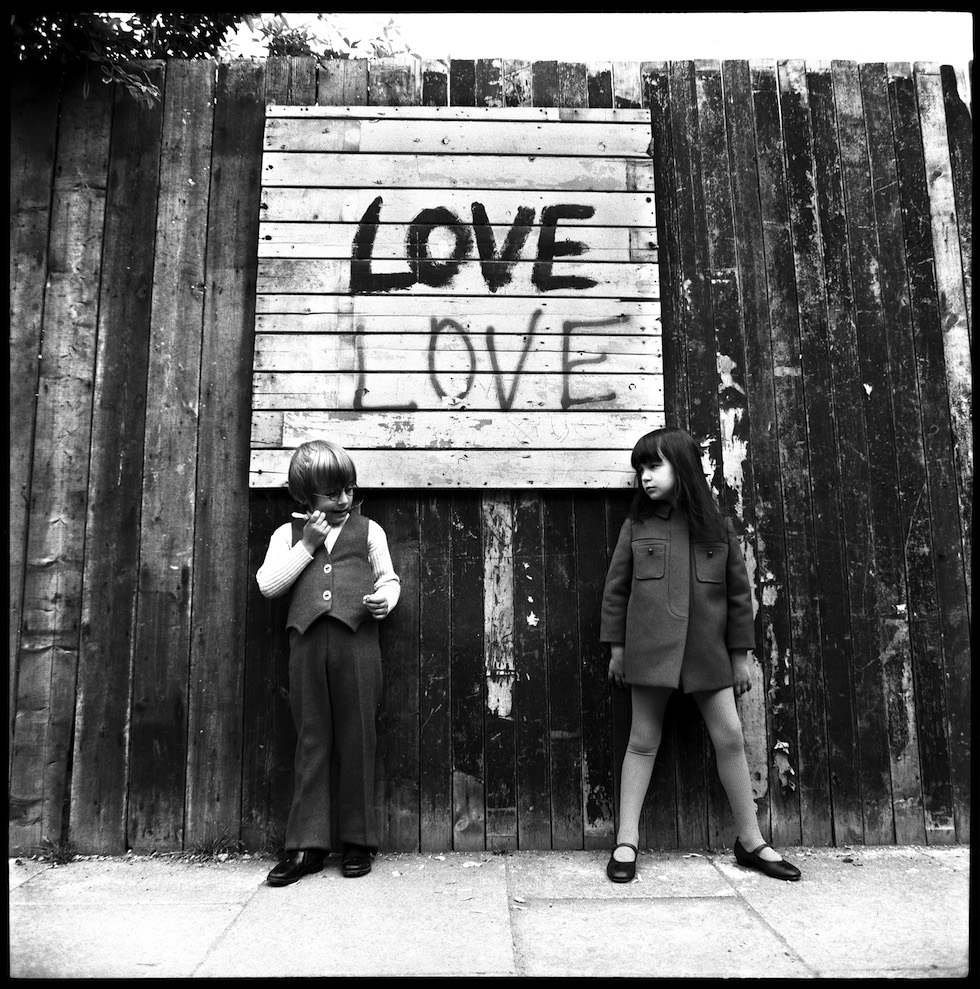
photographs by Brian Duffy via
Selection of categories
![]() Age |
![]() Disability |
![]() Ethnicity |
![]() Queer |
![]() Religion |
![]() Gender |
![]() Stereotypes |
![]() -isms |
![]() Quotes |
![]() World days |
![]() Music |
![]() Space |
![]() Sports |
![]() Health |
![]() Marketing |
![]() Urban planning |
![]() Narrative images |
![]() Birthday |
![]() Language |
![]() Segregation |
![]() School |
Showing posts with label Brian Duffy. Show all posts
Monday, 20 March 2023
The Ageing Body of an Actor and the Only Answer to the Question: "Bothered by the required nudity?"
“It didn’t matter to me because it’s the only body I’ve got. At least it was a reality. An aging body, to people who are not old, this is what’s going to happen to you. So don’t get too smart about it.”
Saturday, 9 January 2016
Sammy Davis, Jr. Performs and Takes a Swim
"Being a star has made it possible for me to get insulted in places where the average Negro could never hope to go and get insulted."
Sammy Davis Jr
Samuel George "Sammy" Davis, Jr. (1925-1990) had to face racism in the most different situations throughout his life, before becoming a star and after ... when joining the army, when marrying a white woman, when going for a swim, when staying in hotels, when John F. Kennedy was inaugurated ...
“He would come out of the stage door having had six standing ovations and somebody would yell ‘Nigger.’ There would always be something that would just cut through it all, that would just knock him down.”
Burt Boyar
As a child (at the age of three), Davis started performing with his father who put him in blackface and claimed he was "a 44-year-old dwarf" as it was illegal to perform under the age of 16. They stayed in "coloured boarding houses" while on road. His father told him that they had to stay there since people were jealous of their act. "Somehow in my naive sheltered world, I believed it." (via). Davis continued living in a segregated world when he was famous.
"Ironically, the black press didn’t always celebrate Davis’s breaking of the color line. Part of the problem, as Sy Marsh observes, was that 'Sammy Davis lived in a white world. The majority of his black audience couldn’t afford to go see him. He was a black symbol performing for white audiences.'" (via)
Sammy Davis, Jr. YouTube Selection
::: This Guy's In Love With You: WATCH/LISTEN
::: (Michael Jackson's) Bad: WATCH/LISTEN
::: Up, Up and Away: WATCH/LISTEN
::: I Gotta Be Me: WATCH/LISTEN
::: Dean Martin Celebrity Roast (50 minutes) with a lot of racist jokes: WATCH
- - - - - - - - - - - - - -
- Orleck, A. (2005). Storming Caesars Palace. How Black Mothers Fought Their Own War on Poverty. Boston: Beacon Press.
- photograph by Brian Duffy via, "selfie" via, with James Dean via, with camera via
Sammy Davis Jr
Samuel George "Sammy" Davis, Jr. (1925-1990) had to face racism in the most different situations throughout his life, before becoming a star and after ... when joining the army, when marrying a white woman, when going for a swim, when staying in hotels, when John F. Kennedy was inaugurated ...
“He would come out of the stage door having had six standing ovations and somebody would yell ‘Nigger.’ There would always be something that would just cut through it all, that would just knock him down.”
Burt Boyar
As a child (at the age of three), Davis started performing with his father who put him in blackface and claimed he was "a 44-year-old dwarf" as it was illegal to perform under the age of 16. They stayed in "coloured boarding houses" while on road. His father told him that they had to stay there since people were jealous of their act. "Somehow in my naive sheltered world, I believed it." (via). Davis continued living in a segregated world when he was famous.
"'In the days when Las Vegas began to become popular, the black performers could play in showrooms, but they couldn't stay in the hotel. And it was Frank Sinatra who went to the board of directors, who had rather shady pasts, and he said, 'Are you guys going to come into the twentieth century, or aren't you?'...Somebody said 'Well, we have white people, we have black people.' Sinatra, the story goes, said to them, 'The money is green. How about that?' And they began to look at each other and the wheels were turning, and because of Sammy, Las Vegas became integrated." Frank Sinatra, Jr. on his fatherAlthough a star, for a long time Sammy Davis, Jr. was not allowed to spend the night in the Las Vegas hotels he played. He pushed boundaries when he announced that he would only play a hotel in which he was not denied residence (according to another version it was Frank Sinatra who threatened to pull the plug on Rat Pack shows unless Davis got his own suite, via) - which by the late 1950s most of the big hotels had accepted. Black customers and entertainers were not allowed to reside in Las Vegas Strip hotels, black entertainers - although warmly greeted in showrooms - had to enter and exit through kitchens (via) and stayed in Ms Cartwright's boarding house (a building made of wooden crates) on the west side of Las Vegas. Ms Cartwright stressed the fact that her establishment was the only place black entertainers (such as Lena Horne or Nat King Cole) could stay and charged twice as much as the El Rancho (via).
"You would perform, get out of the casino by the side door, and head to the ghetto’. If they didn’t go out to the shack, they sat outside by the swimming pool." "I don’t know who made up the rules for ‘colored’ performers. But if you were colored you would never address the audience when you walked onstage. There was this invisible wall colored entertainers were not allowed to cross." Sammy Davis, Jr.Once, Sammy Davis, Jr. and his "Rat Pack" colleagues Dean Martin, Frank Sinatra, and Joey Bishop were playing poker in the Sands (the hotel in which they stayed while shooting Ocean's Eleven) when Davis decided to dive into the pool. "A tense silence reigned over the usually boisterous swim area. An irate guest stormed off to speak to the management. Within minutes after the singer emerged from the water, a crew rushed in to drain, clean, and refill the entire pool. Black Las Vegans relate this story with humor, but it reflects the dept of white 'Negrophobia" in this Southwestern desert town." (Orleck, 2005).
"Ironically, the black press didn’t always celebrate Davis’s breaking of the color line. Part of the problem, as Sy Marsh observes, was that 'Sammy Davis lived in a white world. The majority of his black audience couldn’t afford to go see him. He was a black symbol performing for white audiences.'" (via)
Sammy Davis, Jr. YouTube Selection
::: This Guy's In Love With You: WATCH/LISTEN
::: (Michael Jackson's) Bad: WATCH/LISTEN
::: Up, Up and Away: WATCH/LISTEN
::: I Gotta Be Me: WATCH/LISTEN
::: Dean Martin Celebrity Roast (50 minutes) with a lot of racist jokes: WATCH
- Orleck, A. (2005). Storming Caesars Palace. How Black Mothers Fought Their Own War on Poverty. Boston: Beacon Press.
- photograph by Brian Duffy via, "selfie" via, with James Dean via, with camera via
Monday, 16 November 2015
"Tolerance is not passive or silent acceptance of differences" ... International Day for Tolerance
"Tolerance is a new idea, one which we need now more than ever. It leads us to respect cultural diversity, ways of life and expressions of our own humanity. It is a necessary condition for peace and progress for all people in a diversified and ever-more connected world.
UNESCO was created exactly 70 years ago, on 16 November 1945, the International Day of Tolerance, on the basis that wars could be avoided if people learned to get to know each other better and understood that, in the fertile diversity of their cultures, that which unites them is stronger than that which divides them. These principles were reaffirmed 20 years ago in the Declaration of Principles on Tolerance, adopted by UNESCO in 1995. In a globalized world, home to people from many cultures and backgrounds and flooded with pictures of and information about other peoples, tolerance is the cornerstone of sustainable citizenship.
Tolerance is not passive or silent acceptance of differences; it is inseparable from respect for fundamental human rights. It is constant commitment to facilitating exchanges and dialogue, despite difficulties and a lack of understanding which can lead to inward-looking attitudes. It is a call to question prejudice and commonly-held beliefs. When violent extremism spreads messages of hate and intolerance, both on the ground and on social media; when human beings suffer persecution, exclusion or discrimination on the basis of their religion or background; when economic crises accentuate social divides and stand in the way of acceptance of others, such as minorities, foreigners or refugees; we must offer up a different discourse, an open message which calls for tolerance. We must make the lessons of the past more visible and remind people of the extreme situations which can result from rejection of others, racism and anti-Semitism.
Diversity is a reality, calling us to adapt our policies and act appropriately, for which tolerance is key. Today’s world presents us with considerable opportunities to better understand each other, share our stories, create a public space on a global scale, enrich our outlook on life and combine our perspectives. It is an invitation for us to strengthen moral and intellectual solidarity between peoples through educational cooperation, dialogue among cultures, knowledge-sharing and free distribution of information. Tolerance is a means of constructing peace; it accelerates innovation and creation, opening our minds to other ways to view the world. This founding mission of UNESCO is not decreed through laws and declarations: it relies on the will and daily efforts of the citizens of the world who are developing this culture of tolerance, and today is the time to support them."
Message by Irina Bokova, Director-General of UNESCO
- related posting: International Day for Tolerance
- photographs: (by Brian Duffy) via and (by Eliott Erwitt) via and (by Marianne Grondahl) via and (by Luis H. Salgado) via
UNESCO was created exactly 70 years ago, on 16 November 1945, the International Day of Tolerance, on the basis that wars could be avoided if people learned to get to know each other better and understood that, in the fertile diversity of their cultures, that which unites them is stronger than that which divides them. These principles were reaffirmed 20 years ago in the Declaration of Principles on Tolerance, adopted by UNESCO in 1995. In a globalized world, home to people from many cultures and backgrounds and flooded with pictures of and information about other peoples, tolerance is the cornerstone of sustainable citizenship.
Tolerance is not passive or silent acceptance of differences; it is inseparable from respect for fundamental human rights. It is constant commitment to facilitating exchanges and dialogue, despite difficulties and a lack of understanding which can lead to inward-looking attitudes. It is a call to question prejudice and commonly-held beliefs. When violent extremism spreads messages of hate and intolerance, both on the ground and on social media; when human beings suffer persecution, exclusion or discrimination on the basis of their religion or background; when economic crises accentuate social divides and stand in the way of acceptance of others, such as minorities, foreigners or refugees; we must offer up a different discourse, an open message which calls for tolerance. We must make the lessons of the past more visible and remind people of the extreme situations which can result from rejection of others, racism and anti-Semitism.
Diversity is a reality, calling us to adapt our policies and act appropriately, for which tolerance is key. Today’s world presents us with considerable opportunities to better understand each other, share our stories, create a public space on a global scale, enrich our outlook on life and combine our perspectives. It is an invitation for us to strengthen moral and intellectual solidarity between peoples through educational cooperation, dialogue among cultures, knowledge-sharing and free distribution of information. Tolerance is a means of constructing peace; it accelerates innovation and creation, opening our minds to other ways to view the world. This founding mission of UNESCO is not decreed through laws and declarations: it relies on the will and daily efforts of the citizens of the world who are developing this culture of tolerance, and today is the time to support them."
Message by Irina Bokova, Director-General of UNESCO
- related posting: International Day for Tolerance
- photographs: (by Brian Duffy) via and (by Eliott Erwitt) via and (by Marianne Grondahl) via and (by Luis H. Salgado) via
Subscribe to:
Posts (Atom)