Showing posts with label Sammy Davis Jr.. Show all posts

Tuesday, 12 January 2016

Sammy Davis, Jr. Marries

"Big question: Since the nation’s capital isn’t very integrated will Sammy Davis, Jr., be allowed to share a suite with his bride, May Britt?" Dorothy Kilgallen


Sammy Davis, Jr. and Swedish actress May Britt (his second wife) married on 13 November 1960 ... at a time so-called interracial marriages were prohibited in 31 U.S. states (only in 1967 were they - by then down to 17 states - ruled unconstitutional by the U.S. Supreme Court). The announcement of their wedding led to death threats and Davis hired a 24-hour armed guard. Hate group demonstrations took place. After the wedding, more hate letters and death threats followed (via).


Photograph: Sammy Davis Jr., May Britt and their children


"When the American Nazi Party demonstrated against black entertainer Sammy Davis Jr.'s marriage to Swedish actress May Britt, the German consul in Los Angeles felt compelled to make a public statement distancing the Federal Republic from American storm troopers."
Marable & Kai Hinton (2011)


"But Davis’s marriage to Britt was another public-relations debacle, posing further threats to his career - and life. When he arrived in Washington, D.C., in September 1960 to play the Lotus Club, he was picketed by neo-Nazis bearing signs with scurrilous slogans such as GO BACK TO THE CONGO, YOU KOSHER COON. There were bomb threats in Reno, Chicago, and San Francisco -wherever Davis played. When he was introduced at the 1960 Democratic convention in Los Angeles as an ardent campaigner for John F. Kennedy, the Mississippi delegation stood up and booed." (via)


"How I Got to Officiate at the Wedding of Sammy Davis, Jr. and May Britt"
by Rabbi William M. Kramer

(...) Once upon a time, a long time ago, I was a day in Sammy Davis’ life and he was a day in mine.

In 1961 Sammy Davis and May Britt decided to marry. Their courtship was intense and controversial. Sammy was very black and May was very white. She was Swedish and he American. She was known as a Christian and he was known as a Jew.

They went to the famous scholar and Zionist leader Dr. Max Nussbaum at Temple Israel of Hollywood in order to arrange for their wedding. May presented herself for conversion and Sammy was already Jewishly identified. (...)

When the news came out that Rabbi Nussbaum was going to do the Davis-Britt ceremony on November 13, 1961, according to David Max Eichhorn in his book, Joys of Jewish Folklore, at the Hollywood synagogue, "All hell broke loose."

"The temple office was bombarded with obscene and threatening phone calls. The Temple trustees became frightened. They were afraid that, if the wedding took place in the synagogue, it would cause a race riot. They asked Rabbi Nussbaum not to have the wedding in the Temple and not to officiate. The Rabbi was on the horns of a dilemma. He did not want to offend Sammy or May and he did not want to go against the wishes of his trustees."

I was aware of the controversy, and controversy was no stranger to Temple Israel, where Dr. Nussbausm spoke out courageously and independently on many issues.

All I know was that my senior colleague was suddenly called out of town and that I would be asked to cover for him at the ceremony, which was transferred out of the Temple into Sammy Davis’ home in the Hollywood hills.

If marrying the two of them was dangerous, I was evidently regarded as expendable. For my part, I was delighted. I was a member of Sammy Davis fandom, as was my late wife, Joan. (...)

I recieved (sic) hundreds of life-threatening phone calls and letters. Thank God, nothing happened. After the wedding I spoke on the phone two or three times with Davis and saw May a couple of times. (...)

I have not liked the Rev. Mr. Jess Jackson, and I have found his Rainbow Coalition colorless. But I too prayed in front of my televion set that somehow the death of the great Sammy Davis would make for reconciliation wherever there was difference between Black and Jew.

I did not copy down Jackson’s words, but as I recall them he said that, "in Davis, Black and White and Christian and Jew uniquely met." Sammy was like that. He was a transcender.

I would have felt better if Sammy Davis, the Jew, had had only a Jewish sevice. Still, he was an ecumenical man, a man of cultural blending. Maybe, his was the exception. He was certainly exceptional. (...)


Frank Sinatra, Sammy Davis, Jr.'s best man and supporter of John F. Kennedy, asked him to postpone the wedding in order to make sure that tensions would not impact votes. After their wedding, Davis's name was removed from the list of entertainers at JFK's inaugural party Sinatra hosted in Washington (via).
"Earlier that year the Democratic Convention took place in Los Angeles where John F. Kennedy would be elected as the Democrats’ presidential nominee. When the introductions of Hollywood celebrities were being announced, Davis was booed by many of the white Southern delegates because he was engaged to a white woman. A headline over a New York Times story the next day read, “Delegates Boo Negro.” JFK’s father, Joseph Kennedy, was worried that Davis’ marriage to a white woman on the eve of the November election might cost his son votes, so Davis reluctantly postponed the wedding until after the election." (via)


May Britt's contract, by the way, was not renewed when 20th Century Fox studios learned that she was going to marry Davis (via).


"During the 1960s, coverage of African-American entertainers increased from virtually non-existent to occasional features, but never without mention of race. Notably, fan magazine stories began to cover African Americans as individuals struggling to combat racism, although they never criticized the Hollywood establishment itself for discriminating against nonwhite performers. 
For example, a 1963 Photoplay ran a story on Sammy Davis, Jr. and Dick Gregory called "How Two Negro Showmen Fight for Integration." (...)
African Americans could also count on coverage if they were romantically linked with whites (...). "Why is Mommy White?" asks an article that same year (1964 - Ed. Note), allegedly a question that Sammy Davis, Jr.'s children had about their Swedish mother, May Britt."
Sternheimer (2015)

"In 1961, Swedish actress May Britt wrote an article for Ebony called, “Why I Married Sammy Davis Jr.” In this personal narrative, she told the story of their relationship and their love for each other. This story would start a trend of magazine articles showcasing interracial couples, especially famous couples."
Magnuson-Cannady (2005)


"I’m looking for someone to marry. I got the call this morning. I have to marry a black chick, and I’m looking for someone to marry." Sammy Davis, Jr.
In the 1950s, Davis had a relationship with "white" Kim Novak which led to his first wedding ... with Loray White on 10 January 1958. After alleged threats to his life, Sammy Davis Jr. was told to marry a "black" girl ... who happened to be Loray White. They married "midst rumors that his life had been threatened by those whose interests lay with Miss Novak remaining a multi-million dollar movie property" (via). They agreed that Loray White would marry him for a certain sum of money and at the end of the year they would dissolve the marriage (via).
"It was a very dangerous relationship then - a white woman and a black man, no matter his status -it simply didn’t mix publicly. I was suddenly in the eye of a hurricane. . . . My agent told me my career would be over if I continued to see Sammy. Some of my friends wouldn’t even return my telephone calls." Kim Novak


Photograph: Sammy Davis Jr. and his third wife Altovise Davis (1943-2009) whom he married in 1970

Interview with Altovise Davis (CNN, Larry King, aired 27 May 2002), excerpts:

KING: What a life Sammy had: married to a white woman at a time that didn't occur.
A. DAVIS: That's true.
KING: People in the audience may not know what a stir that was. You were a kid, I guess, when he was...
A. DAVIS: When he got married to her?
KING: Yes.
A. DAVIS: Oh, yes, I was a kid when he got married to her.
KING: That was a story that went through...
A. DAVIS: The roof, right?
KING: Ruined her career, right? They stopped giving her movies. But Sammy was gutsy.
A. DAVIS: Yes, he was, always had been.

(BEGIN VIDEO CLIP, JUNE 1, 1989)

S. DAVIS: You know, being a celebrity doesn't protect you from racism. I'm even more aware of my brothers and sisters who have to face it who don't have the cloak of celebrity to protect them.
So, you got to fight it every day we can, all of us. And when I say my brothers and sisters, I mean good people, period. I'm not just talking about black or white. I'm talking about everyone who is disenfranchised. But the bitterness is overridden by the fact that I'm in a position. I have survived. And I think and I pray to God that I can do some good and eradicate it more and more. But, personally, I would be dishonest if I said I didn't have a little bit of it.
KING: You will agree, Sammy, that you probably saw less of it than the average American black.
S. DAVIS: Absolutely. Wait a minute. I said that.
The cat on the street, the man on the street, he hasn't got celebrity. That's what I mean. At least you're protected by that. I can buy my way into this now. Those days I couldn't, because they wouldn't let you into the hotels.

(END VIDEO CLIP)


- Magnuson-Cannady, M. (2005). "My Daughter Married a Negro": Interracial Relationships in the United States as Portrayed in Popular Media, 1950-1975. UW-L Journal of Undergraduate Research VIII, 1-13
- Marable, M. & Kai Hinton, E. (eds.) (2011) The New Black History. Revisiting The Second Reconstruction. New York: Palgrave Macmillan
- Sternheimer, K. (2015). Celebrity Culture and the American Dream: Stardom and Social Mobility. New York & London: Routledge
- photographs via and via and via and via and via and via and via and via and via and via and via and via and via and via and via and via

Monday, 11 January 2016

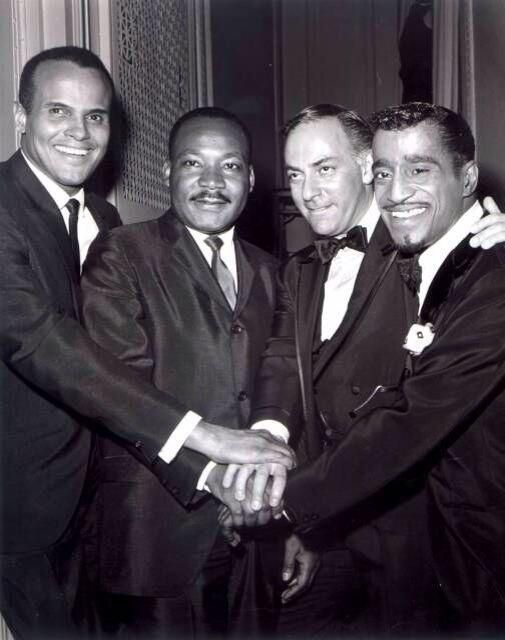
Sammy Davis, Jr. Gets a Letter from Martin Luther King, Jr.

"We can't answer King's assassination with violence. That would be the worst tribute we could pay him."
Sammy Davis Jr.


Above: Backstage at New York's Majestic Theatre, 1965, by Dave Pickoff

On 20 December 1960, Martin Luther King wrote a letter to Sammy Davis, Jr. thanking him for his "wonderful support" of the upcoming 27 January 1961 Carnegie hall "Tribute to Martin Luther King, Jr."


Mr. Sammy Davis, Jr.
Sherry-Netherland Hotel
5th Avenue at 59th Street
New York 2 2, New York


Dear Sammy:
I have been meaning to write you for quite some time. A sojourn in jail and a trip to Nigeria among other tasks have kept be behind.
When I solicited your help for our struggle almost two months ago, I did not expect so creative and fulsome a response. All of us are inspired by your wonderful support and the Committee is busily engaged in the preparations forJanuary 27th. I hope I can convey our appreciation to you with the warmth which we feel it.
In the midst of one of my usual crowded sojourns in New York, I had the opportunity to hear the play, “Kicks and Co.” by Oscar Brown at the invitation of the Nemiroffs, at whose home I have previously been a guest. I learned of your interest in it and I am deeply pleased.


To my knowledge, rarely has there come upon the American scene a work which so perceptively mirrors the conflict of soul, the moral choices that confront our people, both Negro and white, in these fateful times. And yet a work which is at the same time, so light of touch, entertaining-and thereby all the more persuasive.
Art can move and alter people in subtle ways because, like love, it speaks through and to the heart. This young man’s work will, in its own special way, affect the conscience of vast numbers with the moral force and vigor of our young people. And coming as it does from a source so eminently influential, the Broadway theatre, and an actor of such stature as yourself, it will be both an inspiration and a sustenance to us all.
In that context, let me share with you again my appreciation for the motives and the wisdom that have led you to it.

Very sincerely yours,
Martin Luther King, Jr.
MLK (via)


"The civil rights movement wasn't easy for anybody." 
Sammy Davis Jr.


Original caption, photograph above: 28 May 1963, Los Angeles - Entertainer Sammy Davis Jr. strikes a Napoleonic pose on the speakers platform at Wrigley Field during a freedom meeting. Rev. Dr. Martin Luther King told the gathering “we want to be free whether we’re in Birmingham or Los Angeles.” Some 35,000 persons attended the meeting.


August 1963: Sammy Davis Jr. and other Hollywood stars at the March on Washington for Jobs and Freedom, one of the largest political rallies where Martin Luther King, Jr. held his speech "I Have a Dream".


Photograph by Spider Martin: Martin Luther King, Jr. and Coretta Scott King at a Sammy Davis, Jr. concert.


photographs via and via and via and via and via and via and via and via and via and via and via

Sunday, 10 January 2016

Sammy Davis, Jr. Joins the Army

"I'd learned a lot in the Army. I knew that above all things in the world I had to become so big, so strong that people and their hatred could never touch me."
Sammy Davis Jr.


Excerpts from "Sammy Davis Jr.: A Personal Journey with My Father", by Tracey Davis and Nina Bunche Pierce (via):

“I WAS SEVENTEEN when I joined the army, all of five foot six inches and one hundred twenty pounds. All the soldiers were twice my size. A little lost, I politely ask a white PFC sitting on the barracks’ steps where Building Two Hundred Two was located. He sized me up and down, reluctantly told me it is two buildings down followed by ‘And I’m not your buddy, you black bastard!’ ...

“When I arrived at Unit Barracks Two Hundred Two, a corporal checked my name off his clipboard and told me to wait on the sidelines until they ‘figure out what to do with me.’ White kids showed up, simply walked inside and took the first bunk they saw. Another colored kid, tall, with his gear, was sent to sit on the side by me. We shook hands. His name was Edward. We both knew trouble was stirring.

“Felt like a lifetime that me and this colored kid waited outside the barracks watching the last white kid march in. We sat outside a screen door, as we were ordered.

“We could hear the corporal address the unit. He said, ‘Folks, we got a problem, we got n-----s outside assigned to this company. I’ll stick ’em down there, but move your gear so I can give ’em the last two bunks.’


“Then one of the guys piped up, ‘Hey, that’s right next to me! I ain’t sleepin’ next to no dinge!’ The corporal made it clear who was in charge of the unit, but the same guy kept mouthing off, ‘I’m only sayin’ I didn’t join no n----- army,’” Pop recalled.

“All the guys started shouting about how they ain’t sharing no toilet can with no n-----, and what the hell’s the army need ’em niggers for, just to steal us blind while we sleep? The corporal quieted them down with a simple, ‘Knock it off. I don’t want ’em anymore than you do, but we’re stuck with ’em. That’s orders.’

“The corporal motioned us in with our gear ‘on the double.’ My legs were shaking, trembling. As he marched us down the aisle — eyes glaring on either side of us — soldiers guarded their cots spaced about three feet apart. The corporal pointed to the last two beds on one side, separated from the rest by about six feet with one empty cot between us and the white soldiers. It was as if we had the plague and were being quarantined.

“A sergeant marched in. He announced his name, Sergeant Williams. He glanced at the space between the beds. He gave a cold stare to the corporal and said, ‘What the hell is that?’ The corporal whispered quietly to the sergeant about how he was trying to deal with the n----- problem.”

“Sergeant Williams was fuming, ‘There is only one way we do things here and that is the army way! You have sixty seconds to replace the beds with exactly three feet of space, to the inch, between every cot in this barracks. Move!’ For a brief moment, I felt safe.

“Sergeant Williams asked us questions: When did we arrive? How long did it take for us to get our bunks? Did you choose your bunks? Then the sergeant told us to move our gear one bunk closer to the white soldiers. He addressed the whole unit, ‘No man here is better than the next man unless he’s got the rank to prove it!’

“I remember years later, George Rhodes, my conductor and arranger, told me he was surprised that with all the racial tension I endured, I never turned around and hated right back. I think that was because when I reached out for help, there was always some white guy like Sergeant Williams or Frank Sinatra, who helped me back up. The black press would scrutinize me for it, but believe me, those cats saved the day for me.

“But the minute the sergeant left, the soldiers tried to turn us into their slaves — making us polish their boots and such. I refused to do it and was teased as the ‘uppity n----- boy.’ Edward on the other hand, was not going to put up a fight for his own dignity, and I had no right to judge his desire to hide his pain. ‘Yes, suh!’ said Edward, ‘Glad t’do ’em, suh.’ I felt like I was on an island all alone.


“That’s only the prelude to the circus act. Your grandfather had given me an expensive one hundred twenty–buck gold watch to take with me to the army. I treasured it. The white soldiers got ahold of my watch on the first day in the barracks. They tossed it back and forth to each other, over my head, laughing as I chased after it. You know how little I was — still am! These white cats were huge.

“Eventually, Jennings, the biggest bigot of them all, ground my watch into the floor with the heel of his boot. He crushed the glass, twisted the gold, and broke the hands off. It was mangled in pieces. I picked up the remains, went to my bed, and wrapped it in paper. Jennings shouted behind me, ‘You can always steal another, n----- boy!’ The whole incident crushed me, deeply.


“Every night I would lay in bed, wondering what is it about skin that made people hate so much. But it was far deeper than skin; to these white cats, I was a different breed.


“I had to face the fact that the army vultures were going to prey on me daily. Try to eat me alive. I thought of my father, Uncle Will, the agents, the managers, the acts we worked with — nobody treated us this way. Or had my father just shielded me from it all? I knew we stayed in colored boarding houses made of wooden crates, but I didn’t realize we had to stay there. ... All I knew was that when the Will Mastin trio got onstage, people laughed, clapped, were entertained. Talent earned us respect.

“Talent was my only weapon. Eventually in the army, I was transferred to an entertainment regiment in an ‘experimental’ integrated Special Services unit. But until that transfer, Sergeant Williams got me a few gigs at the service club, thinking it might help.

“After one show, Jennings appeared to be offering me his friendship. He handed me a beer. ‘C’mon over here, Davis, let’s get acquainted.’ He pulled out a chair for me. ‘You notice I ain’t calling you ‘boy.’ I thought my talent finally broke the ice. But sure enough as I picked up the bottle of beer, I realized it was warm, not cold. I smelled it. Jennings had replaced my bottle of beer with urine. ...


“I had a knock-down, drag out fight every two days. I can’t even count how many times I was in the infirmary for a broken nose. When we finished basic training, my physical turned me down, and I was put through basic again. I didn’t qualify for any of the army’s specialist schools because I had no education at all.

“Sergeant Williams was my savior. He would call me into his office to offer his advice. ‘You’ve got to fight with your brains, Sammy, not your fists.’ Sergeant Williams told me I had to stop looking at comic books and learn to read. He taught me to read and write. God bless that man.

“The first book I ever read was The Three Musketeers. Long, thick, and let me tell you, I am never going to read it again. But Sergeant Williams had me read all the classics. He would select books from Dickens to Twain to Abraham Lincoln, even The Complete Works of Shakespeare. I would circle the words I didn’t know. He would sit in the squad room at the end of the barracks and explain it to me. Sergeant Williams gave me hope that I could overcome this battle.

“The latrine became my temple. I would read religiously after taps in that dimly lit latrine, and report back to Sergeant Williams. We would have our own civilized discourse on each book. I hungered for that time with him. He made me feel like a human being again. His office became my own sacred refuge, a retreat from the racism, hate, ignorance, and intolerance of my unit. ...

“I owe him my life. He tempered all the humiliation I felt from my unit. He distracted me from all my rage, all my anger. I wouldn’t have survived the army without him.


“The last straw with Jennings was the worst of all. After I did a little Frank Sinatra number at the Officers’ Club, impressing a general, word was out that I might be able to transfer into the integrated Special Services unit. Jennings wasn’t pleased. He thought I was kissing butt to escape his abuse. ...

“Jennings and his gang jumped me on the way to a meeting with the captain. They cornered me, dragged me into a latrine, and beat the crap out of me.

“But that wasn’t the worst of it. They took a can of white paint and wrote the word ‘N-----’ on my chest. They beat me until I was bleeding from every part of my body. I thought my life was done — I was going to be beaten to death. Just to add some icing on the cake, Jennings ended his circus act with, ‘Now be a good little c--- and give us a dance.’

“I danced for my life. After Jennings finished his finale, I wanted to crawl into the walls of the latrine and die. I thought to myself, I joined the Unites States Army to fight the enemy in whatever country at whatever time, but I never thought I would be sleeping with the enemy in my own unit, my own barracks.”

After the attack, Davis was transferred into the entertainment regiment.

“I was able to perform to larger crowds, even got cheers from those who previously mistreated me. Prejudiced white men admired and respected my performances. I saw Jennings in the audience once. He didn’t crack a smile, but I could tell from his expression I had won the battle, maybe not the war, but that battle. The spotlight lessened the prejudice. For me, it was a revelation. My talent was the weapon, the power, the way for me to fight. It was the one way I might hope to affect a man’s thinking. From then on, deep in my heart, soul, and spirit, I knew I had to be a star.


“My father and Uncle Will met me at the station in Los Angeles after I was discharged. After hugs and all that good stuff, my father noticed my treasured gold watch he had gifted me was not on my wrist. I just couldn’t bear to tell him the truth. Why would I put my father and Uncle Will through the pain and suffering of hearing stories about prejudice, beatings, and white paint smearing the word ‘N-----’ across my chest? I told my father ‘the watch got smashed on maneuvers.’ ...

“So there we are standing in the Los Angeles station. I am discharged from the army, free at last. I ask my father the same question I always asked him as a kid: ‘Where we goin’, Dad?’ The melody of his refrain was music to my ears when I heard him exclaim, ‘We’re going back into show business, son!’ And off we went, full speed ahead.”


::: Talk on the BBC (1966): Sammy Davis, Jr. on Hate, Bigotry and Pain (2 minutes): WATCH

- - - - - - - - -
photographs by Burt Glinn via, via, by Philip Halsman via, by Phil Stern via, via, via, via, via, via

Saturday, 9 January 2016

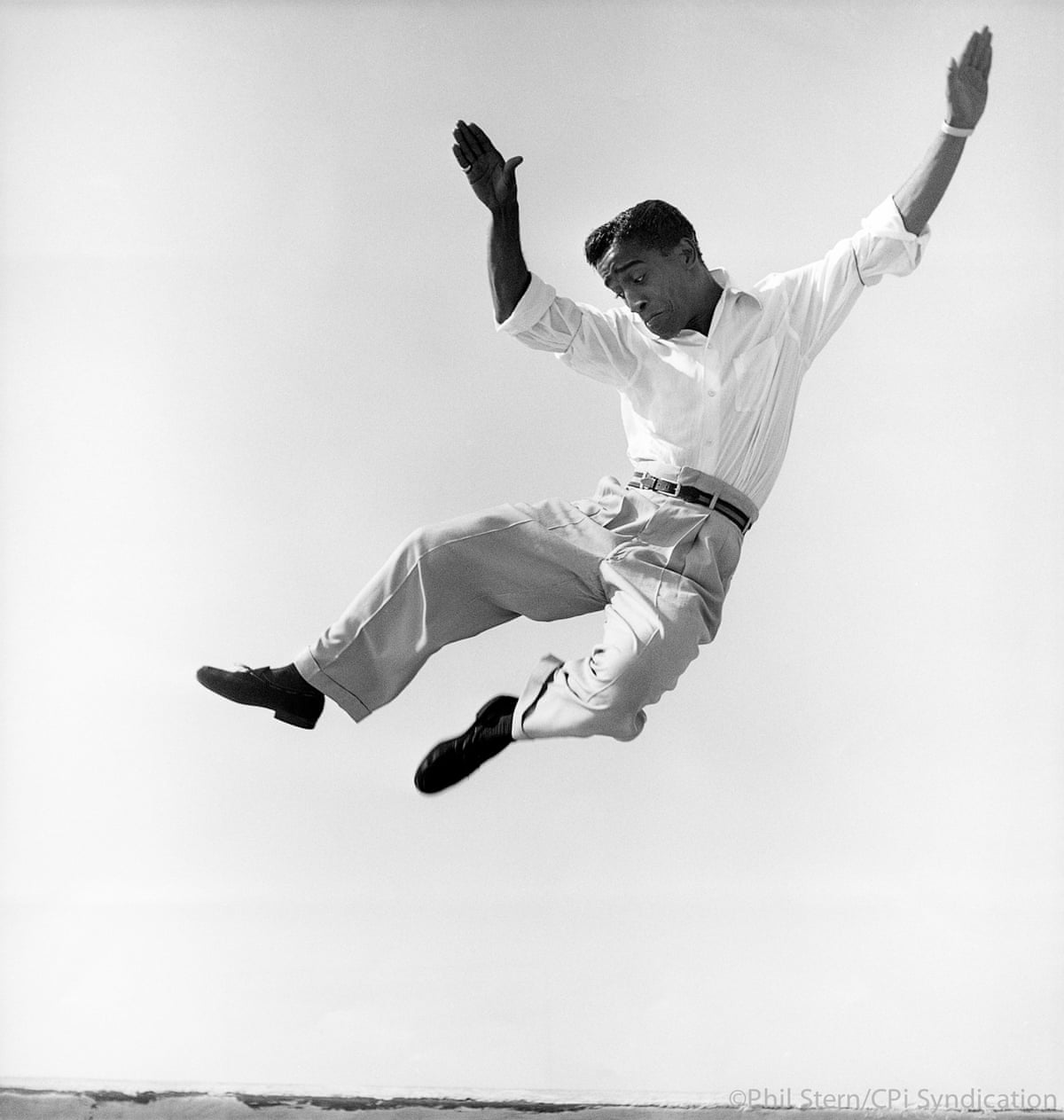
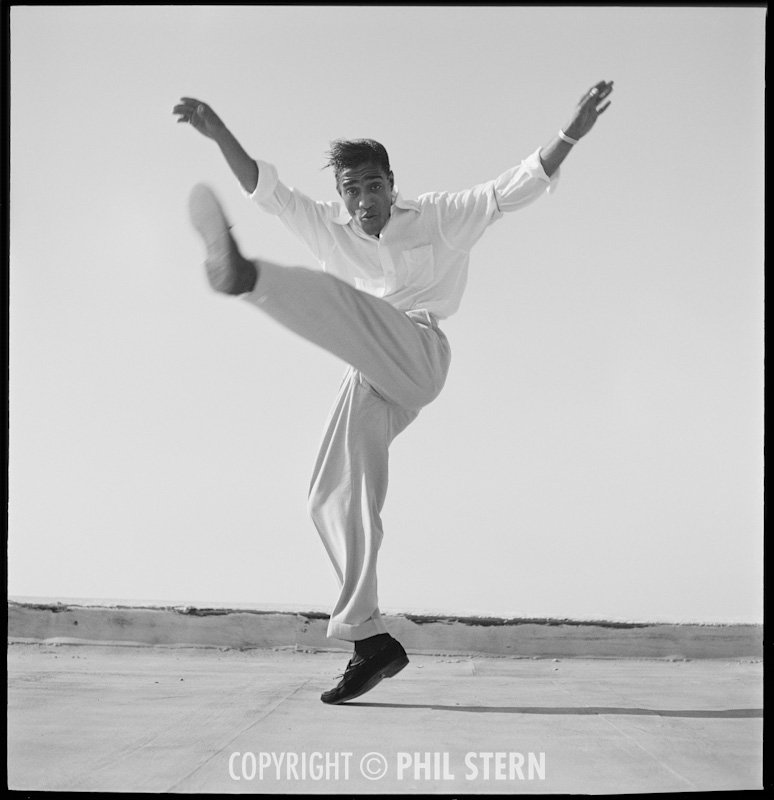
Sammy Davis, Jr. Performs and Takes a Swim

"Being a star has made it possible for me to get insulted in places where the average Negro could never hope to go and get insulted."
Sammy Davis Jr


Samuel George "Sammy" Davis, Jr. (1925-1990) had to face racism in the most different situations throughout his life, before becoming a star and after ... when joining the army, when marrying a white woman, when going for a swim, when staying in hotels, when John F. Kennedy was inaugurated ...

“He would come out of the stage door having had six standing ovations and somebody would yell ‘Nigger.’ There would always be something that would just cut through it all, that would just knock him down.”
Burt Boyar


As a child (at the age of three), Davis started performing with his father who put him in blackface and claimed he was "a 44-year-old dwarf" as it was illegal to perform under the age of 16. They stayed in "coloured boarding houses" while on road. His father told him that they had to stay there since people were jealous of their act. "Somehow in my naive sheltered world, I believed it." (via). Davis continued living in a segregated world when he was famous.
"'In the days when Las Vegas began to become popular, the black performers could play in showrooms, but they couldn't stay in the hotel. And it was Frank Sinatra who went to the board of directors, who had rather shady pasts, and he said, 'Are you guys going to come into the twentieth century, or aren't you?'...Somebody said 'Well, we have white people, we have black people.' Sinatra, the story goes, said to them, 'The money is green. How about that?' And they began to look at each other and the wheels were turning, and because of Sammy, Las Vegas became integrated." Frank Sinatra, Jr. on his father
Although a star, for a long time Sammy Davis, Jr. was not allowed to spend the night in the Las Vegas hotels he played. He pushed boundaries when he announced that he would only play a hotel in which he was not denied residence (according to another version it was Frank Sinatra who threatened to pull the plug on Rat Pack shows unless Davis got his own suite, via) - which by the late 1950s most of the big hotels had accepted. Black customers and entertainers were not allowed to reside in Las Vegas Strip hotels, black entertainers - although warmly greeted in showrooms - had to enter and exit through kitchens (via) and stayed in Ms Cartwright's boarding house (a building made of wooden crates) on the west side of Las Vegas. Ms Cartwright stressed the fact that her establishment was the only place black entertainers (such as Lena Horne or Nat King Cole) could stay and charged twice as much as the El Rancho (via).
"You would perform, get out of the casino by the side door, and head to the ghetto’. If they didn’t go out to the shack, they sat outside by the swimming pool." "I don’t know who made up the rules for ‘colored’ performers. But if you were colored you would never address the audience when you walked onstage. There was this invisible wall colored entertainers were not allowed to cross." Sammy Davis, Jr.
Once, Sammy Davis, Jr. and his "Rat Pack" colleagues Dean Martin, Frank Sinatra, and Joey Bishop were playing poker in the Sands (the hotel in which they stayed while shooting Ocean's Eleven) when Davis decided to dive into the pool. "A tense silence reigned over the usually boisterous swim area. An irate guest stormed off to speak to the management. Within minutes after the singer emerged from the water, a crew rushed in to drain, clean, and refill the entire pool. Black Las Vegans relate this story with humor, but it reflects the dept of white 'Negrophobia" in this Southwestern desert town." (Orleck, 2005).


"Ironically, the black press didn’t always celebrate Davis’s breaking of the color line. Part of the problem, as Sy Marsh observes, was that 'Sammy Davis lived in a white world. The majority of his black audience couldn’t afford to go see him. He was a black symbol performing for white audiences.'" (via)


Sammy Davis, Jr. YouTube Selection

:::
This Guy's In Love With You: WATCH/LISTEN
::: (Michael Jackson's) Bad: WATCH/LISTEN
::: Up, Up and Away: WATCH/LISTEN
::: I Gotta Be Me: WATCH/LISTEN
::: Dean Martin Celebrity Roast (50 minutes) with a lot of racist jokes: WATCH

- - - - - - - - - - - - - -
- Orleck, A. (2005). Storming Caesars Palace. How Black Mothers Fought Their Own War on Poverty. Boston: Beacon Press.
- photograph by Brian Duffy via, "selfie" via, with James Dean via, with camera via

Saturday, 4 April 2015

"I'm so happy that you didn't sneeze."

"Dear Dr. King, I am a ninth-grade student at the White Plains High School. While it should not matter, I would like to mention that I'm a white girl. I read in the paper of your misfortune, and of your suffering. And I read that if you had sneezed, you would have died. And I'm simply writing you to say that I'm so happy that you didn't sneeze." (via)


On 20th September 1958, a decade before his assassination, Martin Luther King was stabbed in his chest with a steel letter opener by Izola Curry (who passed away in March 2015). As the tip of the blade had come "right up against his aorta" the next day the New York Times reported that King would have died had he merely sneezed. Among his mail was a letter from a young student at White Plains High School in New York. "And I looked at that letter, and I'll never forget it." (via)
"Days later, when I was well enough to talk with Dr. Aubrey Maynard, the chief of the surgeons who performed the delicate, dangerous operation, I learned the reason for the long delay that preceded surgery. He told me that the razor tip of the instrument had been touching my aorta and that my whole chest had to be opened to extract it. 'If you had sneezed during all those hours of waiting,' Dr. Maynard said, 'your aorta would have been punctured and you would have drowned in your own blood.'" (via)


On 4th April 1968, Martin Luther King was standing on Lorraine Motel's (which is now part of Memphis's National Civil Rights Museum) second-floor balcony when James Earl Ray's bullet entered through his right cheek. King died within an hour after an emergency chest surgery at St. Joseph's Hospital. His autopsy revealed that although he was only 39 years old, he "had the heart of a 60 year old." 13 years in the civil rights movement had taken their toll (via).


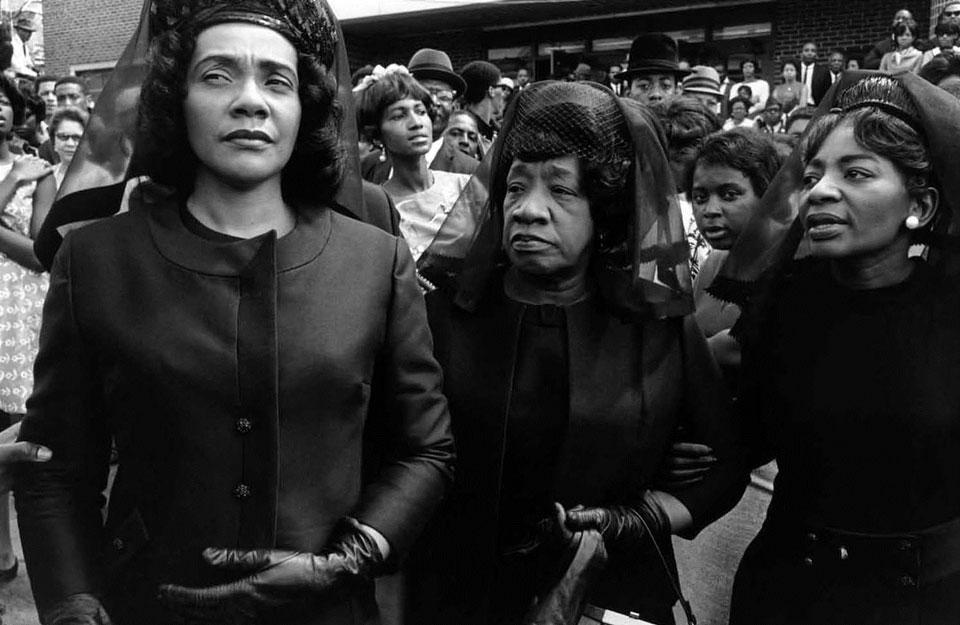
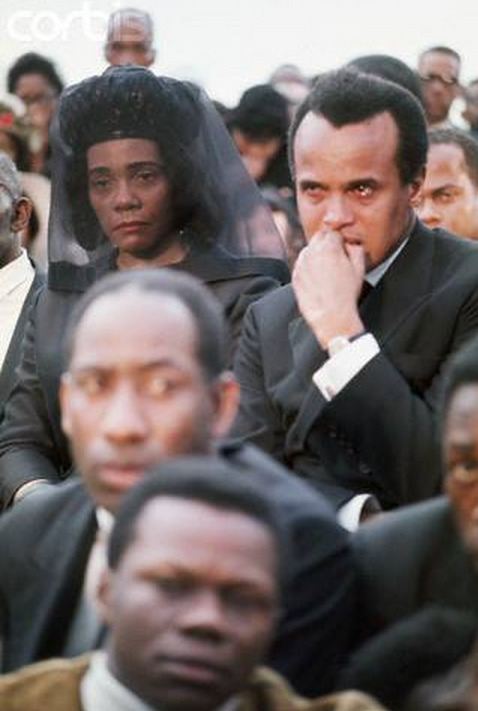
President Johnson declared 7th April a national day of mourning, more than 100.000 mourners followed King's coffin through the streets of Atlanta. During his funeral, a recording of Martin Luther King's last sermon was played:
"I'd like someone to mention that day that Martin Luther King Jr. tried to give his life serving others. . . . I want you to be able to say that day that I did try to feed the hungry. . . . And I want you to say that I tried to love and serve humanity." (via)


photographs via and via and via and via and via and via and via and via and via and via and via and via
copyright by the respective owners