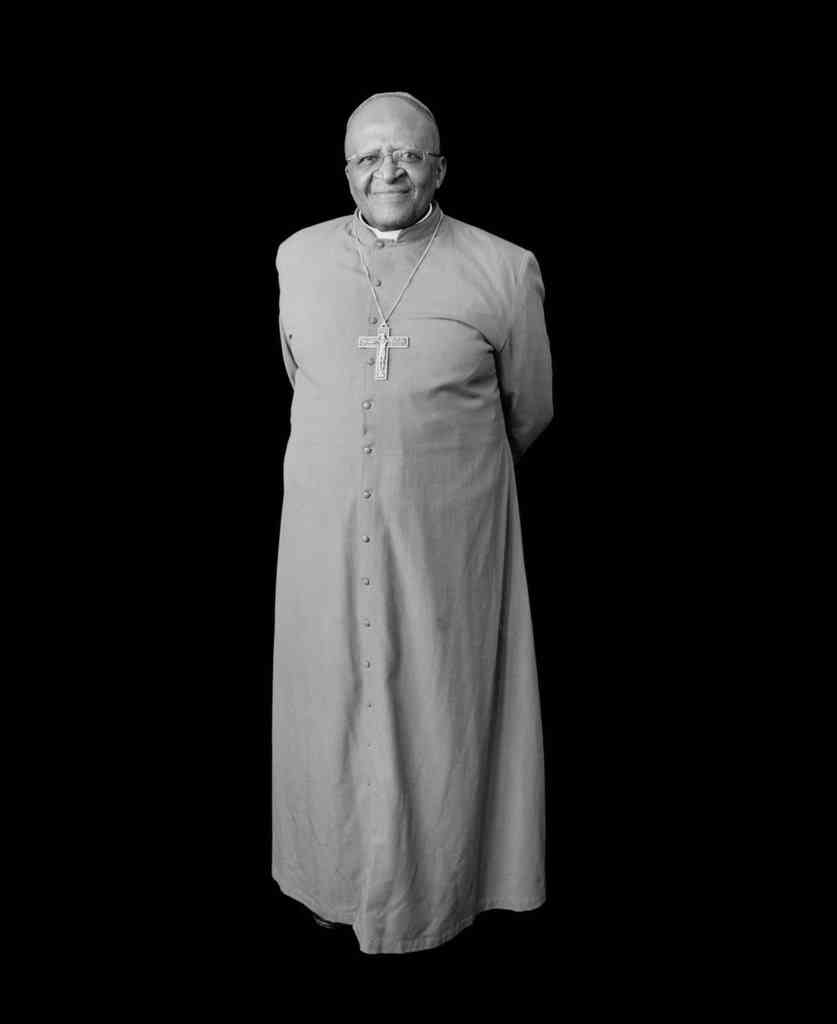
Back in the 1970s and 1980s, one of our most important levers in overcoming apartheid was the
support of global corporations that heeded the call to divest. Apartheid became a global enemy;
now it is climate change’s turn.
Yet energy companies are continuing to explore for new fossil fuel reserves that environmental
scientists say we will never be able to use. By the time those reserves are tapped, global
temperatures will have risen so high that the world as we know it will have ceased to exist. July
was not only the hottest month on record globally but also the 415th consecutive month with
temperatures above the 20th century average. If not checked now, climate change will wreck all
progress people have made in their understanding of the values of equality, shared
responsibility, human rights and justice since the second world war and lay to waste the UN
Sustainable Development Goals for 2030.
Former UN chief Ban Ki-moon’s blunt warning that we can “delay and pay” for climate change
or “plan and prosper” is a clarion call to action, but will those holding the reins of economic
power have heard him? The rich and powerful must be persuaded to pay. They have caused
most of the mess we are in. Their obligations are not legal; they are based in ethics and human
values.
Sadly, the leaders of some of the largest
contributors to climate change show little interest
in human rights and justice. The prospect of what
some are terming climate apartheid, in which the
rich pay to protect themselves from the worst
impacts while the poor take the full hit is becoming
depressingly real.
Desmond Tutu, 3 October 2019
full text see/excerpts via: Financial Times "Climate change is the apartheid of our times"
- - - - - -
Related postings: ::: Quoting Desmond Tutu: LINK ::: Desmond Tutu's Letter to Aung San Suu Kyi: LINK ::: "It doesn't matter where we worship or what we call God...": LINK
Aung San Suu Kyi, Nobel Peace Prize laureate (1991) and State Counsellor became a "democracy icon who fell from grace". Not only did she not speak out against the genocide taking place in Myanmar. She described the generals in her cabinet as "rather sweet" (via), denied the ethnic cleansing taking place, said the military would operate according to the rule of law (via) and that she had no idea why Muslims were fleeing the country (via).
"I don't think there is ethnic cleansing going on. I think ethnic cleansing is too strong an expression to use for what is happening. I think there is a lot of hostility there - it is Muslims killing Muslims as well, if they think they are co-operating with the authorities." Aung San Suu Kyi
Meanwhile, about 400 villages have been wiped off the map (80% of them in the first three weeks of the military campaign), women are tied to trees and gang-raped, children are assaulted and forced back inside burning houses, people tortured (via), over 725.000 people have been forced to flee to Bangladesh since 25 August 2017 (via and via). In the month after the violence broke out, at least 6.700 Rohingya were killed, at least 730 of them were children under the age of five (via).
There was a discussion whether Aung San Suu Kyi would be stripped of the Nobel Peace Prize and it was decided that she could keep it as the rules did not allow for it to be withdrawn (via). However, Canadian MPs voted to strip her of her honourary citizenship (via), she was stripped of her Freedom of Edinburgh reward, Oxford, Glasgow and Newcastle revoked all honourary awards, Sir Bob Geldof called Aung San Suu Kyi a murderer (via), she lost the Freedom of Paris award, Amnesty International's "Ambassador of Conscience Award" (via), Unison's honourary membership, Sheffield's award, Dublin's award, the honourary presidency of the London School of Economics student union, her name was deleted from an exhibition at the Canadian Museum for Human Rights, the City of London and the University of Bristol expressed their concerns (via)
My dear Aung San Su Kyi
I am now elderly, decrepit and formally retired, but breaking my vow to remain silent on public affairs out of profound sadness about the plight of the Muslim minority in your country, the Rohingya.
In my heart you are a dearly beloved younger sister. For years I had a photograph of you on my desk to remind me of the injustice and sacrifice you endured out of your love and commitment for Myanmar's people. You symbolised righteousness. In 2010 we rejoiced at your freedom from house arrest, and in 2012 we celebrated your election as leader of the opposition.
Your emergence into public life allayed our concerns about violence being perpetrated against members of the Rohingya. But what some have called 'ethnic cleansing' and others 'a slow genocide' has persisted – and recently accelerated. The images we are seeing of the suffering of the Rohingya fill us with pain and dread.
We know that you know that human beings may look and worship differently – and some may have greater firepower than others – but none are superior and none inferior; that when you scratch the surface we are all the same, members of one family, the human family; that there are no natural differences between Buddhists and Muslims; and that whether we are Jews or Hindus, Christians or atheists, we are born to love, without prejudice. Discrimination doesn't come naturally; it is taught.
My dear sister: If the political price of your ascension to the highest office in Myanmar is your silence, the price is surely too steep. A country that is not at peace with itself, that fails to acknowledge and protect the dignity and worth of all its people, is not a free country.
It is incongruous for a symbol of righteousness to lead such a country; it is adding to our pain.
As we witness the unfolding horror we pray for you to be courageous and resilient again. We pray for you to speak out for justice, human rights and the unity of your people. We pray for you to intervene in the escalating crisis and guide your people back towards the path of righteousness again.
"It doesn’t matter where we worship or what we call God; there is only one, inter-dependent human family. We are born for goodness, to love – free of prejudice. All of us, without exception. There is greater commonality in our belief systems than we tend to credit, a golden thread expressed in the maxim that one should treat others as one would like others to treat oneself. I don’t believe in the notion of “opposing belief systems.” It would be more accurate to say that human beings have a long history of rationalizing acts of inhumanity on the basis of their own interpretations of the will of God."
"Much as I’d love to see all the world’s churches, mosques, synagogues and temples overflowing with humanity, how good we are is not measured by the number of times we attend formal religious ceremonies. Among the most heartening trends I have noticed on my travels over the past dozen or so years has been the spiritual strength of young people. They don’t necessarily occupy the front pews on Sunday, but they seem to have been born with an enhanced sense of tolerance and a deep understanding of our inter-dependence, on each other and a functional world."
"The closest I can think of to an “aha” moment occurred in my childhood, when a white priest greeted my mother politely in the street. The same priest, Father Trevor Huddleston, later visited me regularly when I nearly succumbed to tuberculosis. He taught me invaluable lessons about the human family; that it doesn’t matter how we look or where we come from, we are made for each other, for compassion, for support and for love. I called my son Trevor, and Bishop Huddleston, as he later became known, went on to lead the International Anti-Apartheid Movement."
"We inhabit a universe that is characterized by diversity. There is not just one planet or one star; there are galaxies of all different sorts, a plethora of animal species, different kinds of plants, and different races and ethnic groups. God shows us, even with a human body, that it is made up of different organs performing different functions and that it is precisely that diversity that makes it an organism. If it were only one organ, it would not be a human body. We are constantly being made aware of the glorious diversity that is written into the structure of the universe we inhabit, and we are helped to see that if it were otherwise, things would go awry. How could you have a soccer team if all were goalkeepers? How would it be an orchestra if all were French horns?" Desmond Tutu
"I would not worship a God who is homophobic and that is how deeply I feel about this. I would refuse to go to a homophobic heaven. No, I would say sorry, I mean I would much rather go to the other place." Desmond Tutu
"Differences are not intended to separate, to alienate. We are different precisely in order to realize our need of one another." Desmond Tutu