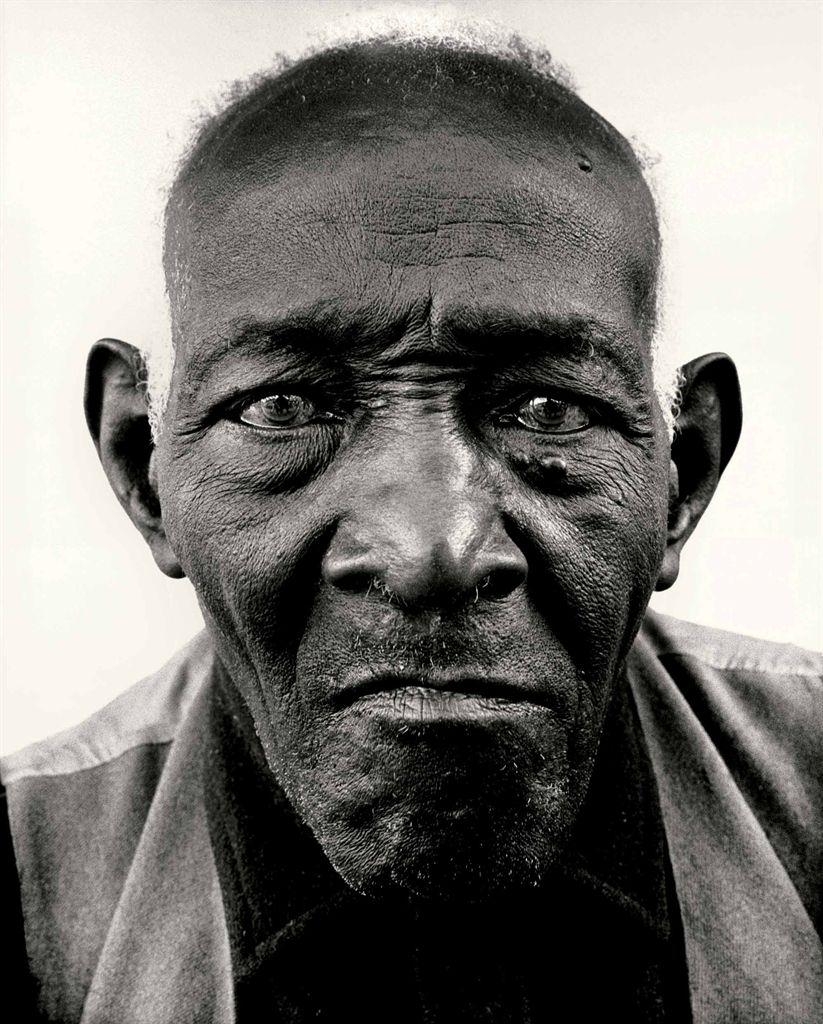
George Corley Wallace, Jr. (1919-1998) was Governor of Alabama and a U.S. presidential candidate for four elections (
via). And, Wallace was an ardent segregationist.

In 1958, Wallace ran in the Democratic primary for governor, so did his opponent John Malcolm Patterson. Patterson was supported by the Ku Klux Klan, Wallace had spoken against them and was endorsed by the NAACP. Patterson won, Wallace lost. In order to boost his career, Wallace became racist:
"Seymore, you know why I lost that governor's race? ... I was outniggered by John Patterson. And I'll tell you here and now, I will never be outniggered again."
"You know, I tried to talk about good roads and good schools and all these things that have been part of my career, and nobody listened. And then I began talking about niggers, and they stomped the floor."
In his
Inaugural Address on 14 January 1963, he declared:
"In the name of the greatest people that have ever trod this earth, I draw the line in the dust and toss the gauntlet before the feet of tyranny, and I say segregation now, segregation tomorrow, segregation forever." With "tyranny", Wallace referred to attempts of desegregation. His speechwriter, by the way, was Asa Earl Carter (1925-1979), founder of a military Ku Klux Klan splinter group - a group that attacked Nat King Cole on stage, that abducted and castrated Judge Edward Aaron and poured turpentine on his wounds before leaving him abandoned, people who were sentenced to twenty years but given parole under governor Wallace. The same Carter quit this Klan group after shooting two members ... shortly before becoming a speechwriter for the governor who he never personally met. In 1970 - Wallace had become more "liberal" in the meantime - Carter ran against him for governor of Alabama and after losing demonstrated with signs reading "Wallace is a bigot" and "Free our white children" (
via and
via).
Proponents of civil rights, such as John Lewis and Martin Luther King, highly criticised the Inaugural Address. The same year, in his "I Have a Dream" speech in front of the Lincoln Memorial, King referred to Wallace by saying:
"I have a dream that one day, down in Alabama, with its vicious racists, with its governor having his lips dripping with the words 'interposition' and 'nullification' - one day right there in Alabama little black boys and black girls will be able to join hands with little white boys and white girls as sisters and brothers." (via)

In the mid/late
1960s, Wallace changed his views on segregation; he called his inaugural speech the "biggest mistake" he had made:
"I didn't write those words about segregation now, tomorrow and forever. I saw them in the speech written for me and planned to skip over them. But the wind-chill factor was 5 below zero when I gave that speech. I started reading just to get it over and read those words without thinking. I have regretted it all my life." (via)
In 1972, Wallace was
shot five times while campaigning which left him paralysed (
via). A few years later, he apologised to black civil rights leaders for his actions and explained that he had then sought power and glory instead of love and forgiveness which he realised he needed most. In 1979, he said:
"I was wrong. those days are over, and they ought to be over." During his last term as governor (1983-1987), he made "a record number of black appointments to state positions" (
via)
"I have learned what suffering means. In a way that was impossible, I think I can understand something of the pain black people have come to endure. I know I contributed to that pain, and I can only ask your forgiveness."
George Wallace, Address to the Montgomery Dexter Avenue Baptist Church (where King pastored in the 1950s), 1979
Wallace expressed his conversion more than once and in 1987, he reconciled with civil rights activist Jesse Jackson and prayed with him (
via).
A few days after Wallace passed away, civil rights leader John Lewis wrote:
(...) A showdown was inevitable. Much of the bloodshed in Alabama occurred on Governor Wallace's watch. Although he never pulled a trigger or threw a bomb, he created the climate of fear and intimidation in which those acts were deemed acceptable.
Although we had long been adversaries, I did not meet Governor Wallace until 1979. During that meeting, I could tell that he was a changed man; he was engaged in a campaign to seek forgiveness from the same African-Americans he had oppressed. He acknowledged his bigotry and assumed responsibility for the harm he had caused. He wanted to be forgiven. (...)
When I met George Wallace, I had to forgive him, because to do otherwise -- to hate him -- would only perpetuate the evil system we sought to destroy.
George Wallace should be remembered for his capacity to change. And we are better as a nation because of our capacity to forgive and to acknowledge that our political leaders are human and largely a reflection of the social currents in the river of history. (...) (
via)
"Forgiveness does not mean ignoring what has been done or putting a false label on an evil act. It means, rather, that the evil act no longer remains as a barrier to the relationship. . . . While abhorring segregation, we shall love the segregationist. This is the only way to create the beloved community."
Martin Luther King, Jr.

Photograph: George Wallace and Jimmy Dallas, Montgomery, Alabama, 31 July 1993
Excerpts from the 1963 inaugural speech (
via):
"Let us send this message back to Washington by our representative who are with us today...that from this day we are standing up, and the heel of tyranny does not fit the neck of an upright man...that we intend to take the offensive and carry our fight for freedom across this nation, wielding the balance of poer we know we possess in the Southland....that WE, not the insipid bloc voters of some sections..will determine in the next election who shall sit in the White House of these United States....that from this day...from this hour...from this minute...we give the word of a race of honor that we will tolerate their boot in our face no longer....and let those certain judges put that in their opium pipes of power and smoke it for what it is worth. (...)
What I have said about segregation goes double this day...and what I have said to or about some federal judges goes TRIPLE this day. (...)
It (government) is a system that is the very opposite of Christ for it feeds and encourages everything degenerate and base in our people as it assumes the responsibilities that we ourselves should assume. Its pseudo-liberal spokesmen and some Harvard advocates have never examined the logic of its substitution of what it calls "human rights" for individual rights, for its propaganda play upon words has appeal for the unthinking. Its logic is totally material and irresponsible as it runs the full gamut of human desires...including the theory that everyone has voting rights without the spiritual responsibility of preserving freedom. Our founding fathers recognized those rights...but only within the frameworks of those spiritual responsibilities. But the strong, simple faith and sane reasoning of our founding fathers has long since been forgotten as the so-called "progressives" tell us that our Constitution was written for "horse and buggy" days...so were the Ten Commandments.
Not so long ago men stood in marvel and awe at the cities, the building, the schools, the autobahns that the government of Hitler's Germany had built...just as centuries before they stood in wonder at Rome's building...but it could not stand...for the system that built it had rotted the souls of the builders...and in turn...rotted the foundation of what God meant that men should be. Today that same system on an international scale is sweeping the world. It is the "changing world" of which we are told...it is called "new" and "liberal". It is as old as the oldest dictator. It is degenerate and decadent. As the national racism of Hitler's Germany persecuted a national minority to the whim of a natiomal majority...so the international racism of the liberals seek to persecute the international white minority to the whim of the international colored majority...so that we are footballed about according to the favor of the Afro-Asian bloc. But the Belgian survivors of the Congo cannot present their case to a war crimes commission...nor the Portuguese of Angola...nor the survivors of Castro...nor the citizens of Oxford, Mississippi. (...)
This nation was never meant to be a unit of one...but a united of the many (...). In united effort we were meant to live under this government...whether Baptist, Methodist, Presbyterian, Church of Christ, or whatever one's denomination or religious belief...each respecting the others rights to a separate denomination...each, by working to develop his own, enriching the total of all our lives through united effort. And so it was meant in our political lives...whether Republican, Democrat, Prohibition, or whatever political party...each striving frim his separate political station...respecting the rights of others to be separate and work from within their political framework...and each separate political station making its contribution toour lives...
And so it was meant in our racial lives...each race, within its own framework has the freedom to teach..to instruct..to develop..to ask for and receive deserved help from others of separate racial stations. This is the great freedom of our American founding fathers...but if we amalgamate into the one unit as advocated by the communist philosophers..then the enrichment of our lives...the freedom for our development...is gone forever. We become, therefore, a mongrel unit of one under a single all powerful government...and we stand for everything...and for nothing.
The true brotherhood of America, of respecting the separateness of others.and uniting in effort..has been so twisted and distorted from its original concept that there is small wonder that communism is winning the world.
We invite the negro citizens of Alabama to work with us from his separate racial station..as we will work with him..to develop, to grow in individual freedom and enrichment. We want jobs and a good future for BOTH our races. We want to help the physically and mentally sich of BOTH races..the tubercular and the infirm. This is the basic heritage of my religion, of which I make full practice....for we are all the handiwork of God. (...)
And my prayer is that the Father who reigns above us will bless all the people of this great sovereign State and nation, both white and black.
I thank you.

photographs of George Wallace taken by Richard Avedon who thought his pictures were "lousy" and that he had turned Wallace into a caricature (
via)
via and
via and
via and
via


.jpg)