Showing posts with label Sepp Werkmeister. Show all posts

Friday, 8 September 2023

Ageing Narratives Over 210 Years (1810-2019). Depressive Results. An Abstract.

Objectives: The World Health Organization launched a recent global campaign to combat ageism, citing its ubiquity and insidious threat to health. The historical context that promoted this pernicious threat is understudied, and such studies lay the critical foundation for designing societal-level campaigns to combat it. We analyzed the trend and content of aging narratives over 210 years across multiple genres-newspaper, magazines, fiction, nonfiction books-and modeled the predictors of the observed trend. 

Method: A 600-million-word dataset was created from the Corpus of Historical American English and the Corpus of Contemporary American English to form the largest structured historical corpus with over 150,000 texts from multiple genres. Computational linguistics and statistical techniques were applied to study the trend, content, and predictors of aging narratives. 

Results: Aging narratives have become more negative, in a linear fashion (p = .003), over 210 years. There are distinct shifts: From uplifting narratives of heroism and kinship in the 1800s to darker tones of illness, death, and burden in the 1900s across newspapers, magazines, and nonfiction books. Fiction defied this trend by portraying older adults positively through romantic courtship and war heroism. Significant predictors of ageism over 210 years are the medicalization of aging, loss of status, warmth, competence, and social ostracism. 

Discussion: Though it is unrealistic to reverse the course of ageism, its declining trajectory can be ameliorated. Our unprecedented study lay the groundwork for a societal-level campaign to tackle ageism. The need to act is more pressing given the Covid-19 pandemic where older adults are constantly portrayed as vulnerable. (Ng & Chow, 2021)

- - - - - - - - - - - -

- Ng, R. & Chow, T. Y. J. (2021). Aging Narratives Over 210 Years (1810-2019). The Journal of Gerontology, Series B: Pschological Scienes and Social Sciences, 76(9), 1799-1807.
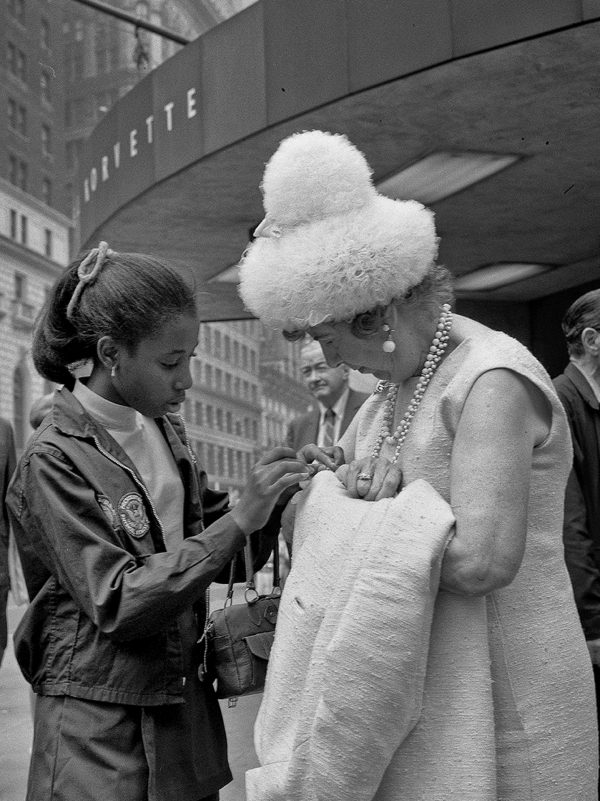
- photograph by Sepp Werkmeister via

Monday, 4 September 2023

Stereotype Threat Lowers Older Adults' Self-Reported Hearing Abilities. An Abstract.

Background: Although stereotype threat is a well-documented phenomenon, previous studies examining it in older adults have almost exclusively focused on objective cognitive outcomes. Considerably less attention has been paid to the impact of stereotype threat on older adults' subjective assessments of their own abilities or to the impact of stereotype threat in noncognitive domains. 

Objective: Older adults are stereotyped as having experienced not only cognitive declines, but physical declines as well. The current study tested the prediction that stereotype threat can negatively influence older adults' subjective hearing abilities. 

Methods: To test this, 115 adults (mean age 50.03 years, range 41-67) read either a positive or negative description about how aging affects hearing. All participants then answered a questionnaire in which they assessed their own hearing abilities. 

Results: The impact of stereotype threat on self-reported hearing was moderated by chronological age. Participants in their 40s and early 50s were unaffected by the stereotype threat manipulation. In contrast, participants in their late 50s and 60s rated their hearing as being subjectively worse when under stereotype threat. 

Conclusion: The current study provides a clear demonstration that stereotype threat negatively impacts older adults' subjective assessments of their own abilities. It is also the first study to demonstrate an effect of stereotype threat within the domain of hearing. These results have important implications for researchers investigating age-related hearing decline. Stereotype threat can lead to overestimation of the prevalence of age-related hearing decline. It can also serve as a confounding variable when examining the psychosocial correlates of hearing loss. Because of this, researchers studying age-related hearing loss should aim to provide a stereotype threat-free testing environment and also include assessments of stereotype threat within their studies. (Barber & Rain Lee, 2015)

- - - - - - - -

- Barber, S. J. & Rain Lee, S. (2015). Stereotype Threat Lowers Older Adults' Self-Reported Hearing Abilities. Gerontology, 62(1), 81-85.
- photograph by Sepp Werkmeister via

Wednesday, 5 June 2019

Hysterical, Emotional, Exaggerating: Women, Bias and Undertreatment of Pain

"There is now a well-established body of literature documenting the pervasive inadequate treatment of pain in this country. There have also been allegations, and some data, supporting the notion that women are more likely than men to be undertreated or inappropriately diagnosed and treated for their pain."
Hoffmann & Tarzian (2001:13)


Value systems of a culture have an impact on pain perception from the very beginning. Children are socialised how to react to pain, i.e., boys are often discouraged from expressing pain. And when they are adults, they show the same communication patterns. In a study, male pain research participants reported that they "felt an obligation to display stoicism in response to pain". Impression management also seems to play a role since men report less pain in front of a female researcher than a male researcher. Men and women also show differences in how they report their pain to health-care providers. Interestingly, although women are better at describing their pain sensations, they receive less pain medication.
Miaskowski reported on several studies that identified such differences in response and treatment. Faherty and Grier studied the administration of pain medication after abdominal surgery and found that, controlling for patient weight, physicians prescribed less pain medication for women aged 55 or older than for men in the same age group, and that nurses gave less pain medication to women aged 25 to 54.
Calderone found that male patients undergoing a coronary artery bypass graft received narcotics more often than female patients, although the female patients received sedative agents more often, suggesting that female patients were more often perceived as anxious rather than in pain. Another study, examining post-operative pain in children, found that significantly more codeine was given to boys than girls and that girls were more likely to be given acetaminophen.'
Miaskowski further reported on two more recent studies. In a 1994 study of 1,308 outpatients with metastatic cancer, Cleeland and colleagues found that ofthe 42 percent who were not adequately treated for their pain, women were significandy more likely than men to be undertreated (an odds ratio of 1:5). In another study of 366 AIDS patients, Breitbart and colleagues found that women were significantly more likely than men to receive inadequate analgesic therapy. (...)
A recent prospective study of patients with chest pain found that women were less likely than men to be admitted to the hospital. Of those hospitalized, women were just as likely to receive a stress test as men, but of those not hospitalized, women were less likely to have received a stress test at a one month follow-up appointment. The authors attributed the differences in treatment to the "Yentl Syndrome," i.e., women are more likely to be treated less aggressively in their initial encounters with the health-care system until they "prove that they are as sick as male patients." Once they are perceived to be as ill as similarly situated males, they are likely to be treated similarly. (...)


Hoffmann and Tarzian (2001) come to the conclusion that women are taken less seriously when they report pain and seek help. One likely explanation for the gender-specific difference in treatment is the health-care provider's attitude ... and bias. According to several studies, women are also perceived as being able to tolerate more pain than men, as having a "natural capacity to endure pain".
McCaffery and Ferrell explained this seeming contradiction by speculating that while society attributes strength and bravery to men, these characteristics are displayed by an unwillingness to complain or express discomfort rather than by an actual tolerance of discomfort.
Health-care providers tend to doubt the pain experience of women. A great many women feel that their doctor did not take their pain seriously and expected them to put up with it. The image of the hysterical and emotional woman may also be one reason why female chronic pain patients are more likely to be diagnosed with histrionic disorder.

- - - - - - - - - -
- Hoffmann, D. E. and Tarzian, A. J. (2001). The Girl Who Cried Pain: A Bias Against Women in the Treatment of Pain. Journal of Law, Medicine & Ethics, 29, 13-27.
- photographs by Sepp Werkmeister via

Saturday, 1 June 2019

A Short Ageing Attitudes Quiz

The World Health Organization offers a short "Ageing Attitudes Quiz" with feedback to the answers. There are nine statements and the opportunity to check "your attitudes against these commonly held views of ageing and older persons". Again, a lovely aspect of this quiz is that the WHO offers feedback as you can check your answers: LINK


"All older people are the same."
"Poor health is inevitable in older age."
"An older person is somebody aged 60 years and above."
"My attitude to ageing has little or no influence on my health."
"Ageing is an obstacle to a good life and must be overcome."
"Older adults are a drain on the economy, including health system."
"Ageism means having negative attitudes and or discriminating against people because of their age."
"I can be ageist and not know it."
"We can combat ageism!"

- - - - -
photograph by Sepp Werkmeister (NYC, 1960s) via