Showing posts with label Twiggy. Show all posts

Friday, 26 June 2015

"Mrs. Peel, we're needed."

"It was the first show that put its leading man and leading lady on an equal footing, and showed a woman fighting and kicking and throwing men around. That was a radical departure in its time."
Patrick Macnee


In "The Avengers", John Steed, played by Patrick Macnee (1922-2015), always treated Emma Peel and other female partners as equals. Even the fact that Emma Peel was called a "feminist icon" is tributed to Patrick Macnee's ability of having a powerful woman at his side. When Linda Robinson appeared in season 6 to play Tara King, Emma Peel's succesor, he said:

"[Thorson]’s character loved Steed, but I always thought that was a bad idea. The show was so much better with Steed and his leading lady as sparring equals, without the woman being subservient. But with Linda, it leaned that way."
Patrick Macnee


"We were the first people in popular television to make the woman an equal partner with the man. You won't believe that, but I promise you it's true."
Patrick Macnee

"It was male chauvinism, as you must realize, in the 1960s, particularly in the entertainment business, which was pretty repulsive."
Patrick Macnee


"The thing I'm really proud of is that I never carried a gun. I said that I wouldn't carry one; when they asked me why, I said that I'd just come out of a World War in which I'd seen most of my friends blown to bits. In a way, I was politically correct at that time. It was rather extraordinary - I don't take all the credit for it. But the main credit of that show - which was a comic strip, The Avengers - we started off doing it live but when the women came, it coincided with the rise of women's lib. So women were totally excited to see, in what was after all a comic strip type show, a woman [who] actually does things. You won't believe it now because women run the roost, so to speak. At that time, to see a women like Diana Rigg, with that beautiful auburn hair throwing men over her shoulder, then tossing her hair out of her eyes, smiling and saying 'Where do we go next?' was highly attractive - particularly to young women. And to young men, particularly with the clothes, because they were... err, revealing and interesting. Suddenly a woman was vibrant in a medium in which [that] normally didn't happen."
Patrick Macnee

<

"If I was Sean Connery, I would have been macho. I always remember Honor Blackman going to the Bond film saying, 'Oh, he wouldn't let me get away with that.' Implying, you always did. I'd grown up with a lot of women. My mother was a famous lesbian in the 20s and 30s and I grew up with only women, so I was used to getting on with them. It just struck me, in fact now, Jerry Weintraub has been telling people that he's going to have the women dominate to Ralph Fiennes, who is one of the best actors in the world. And I think Ralph Fiennes will be wonderful as Steed. I hope he invents it all over again, makes it a new character, you know."
Patrick Macnee


"(...) I disliked the Bond character intensely. I was told in 1960 that if I read the Bond books it might help with my character, this character called Steed. I told them that I found him perfectly repulsive, sadistic and disgusting, and I loathed that title 'Licensed To Kill'. In fact, the Bond that I did I just went in and played this little part, and thank God they built it up and it was very nice and I enjoyed it. But the character of Bond... no, he's the very antithesis of Steed, in fact. He uses women as battering rams, and uses his gun at every conceivable moment. I tried to use my ingenuity and gave the really dangerous work to the women, which I think is the way it should be. Women seem so anxious to go to war. All right, let them go to war then we won't have to."
Patrick Macnee


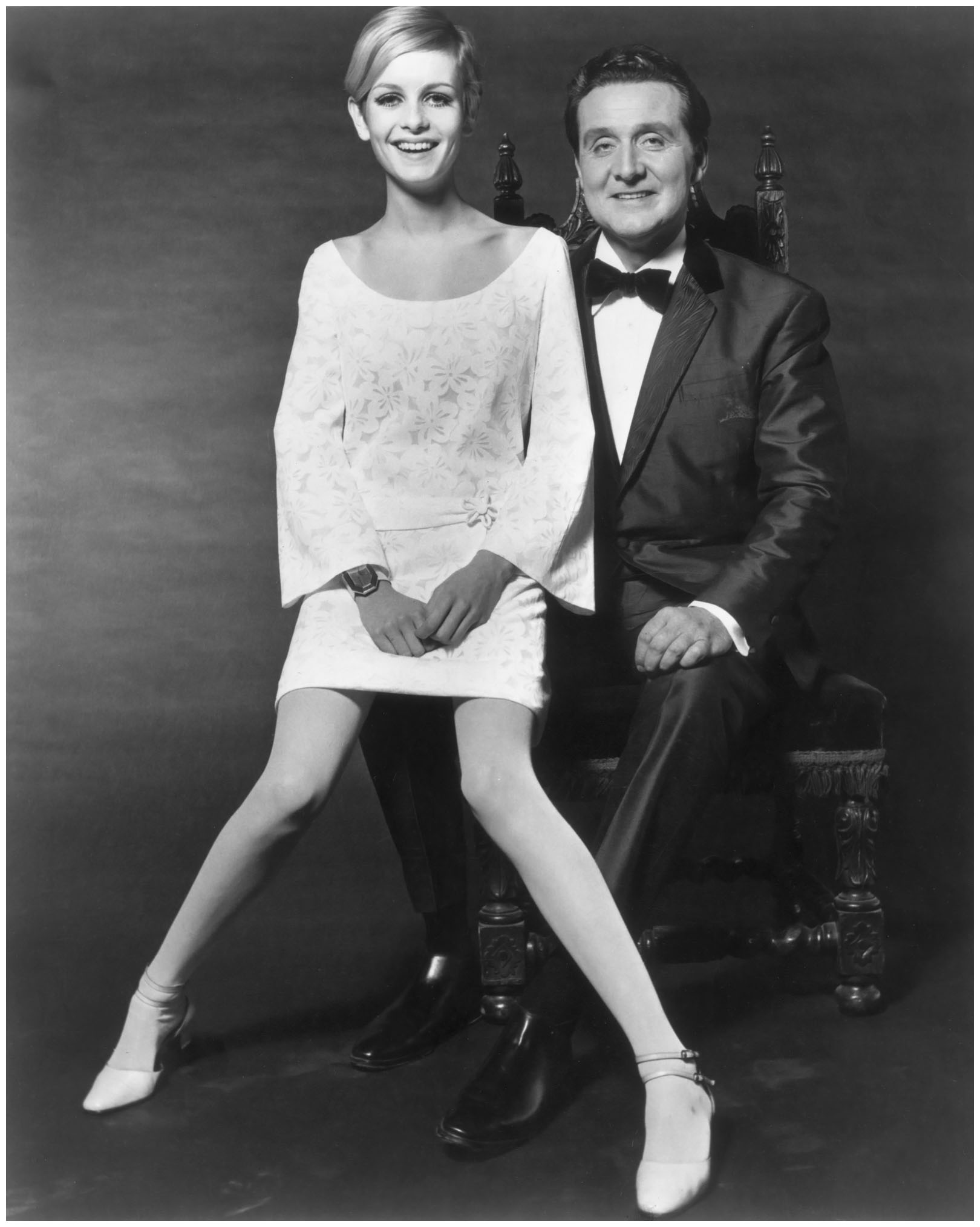
photographs of Patrick Macnee and Twiggy via and via and via and via and via and via and via and via

Tuesday, 16 June 2015

TV, Film & Gender

A study examining gender portrayals in general audience films (101 of the top-grossing G-rated movies between 1990 and 2005) came to the conclusion that there was a clear gender imbalance. 28% of the speaking characters and 17% of characters in crowd scenes were female, 83% of the films‘ narrators were male. Apart from gender, ethnicity was a construct affected by a clear imbalance in representation. 85.5% of the characters in G-rated films (i.e. general audiences, all ages permitted) were "white". Differences did not only refer to the quantity, there were also qualitative differences. Females were valued for their appearance, had rather short sighted aspirations and were longing for one-dimensional love. The authors conclude that much work is needed to be done to improve gender portrayals (Smith & Cook, 2008).


"Female audiences are driving the change, I think. Women don't stop consuming cultural product once they stop menstruating."
Cate Blanchet 

"When Lisa Genova wrote this book, she told me that no one wanted to make it into a movie because no one wanted to see a movie about a middle-aged woman."
Julianne Moore at the 2015 Golden Globes Award

"In spite of efforts to achieve greater gender balance within the industry, especially in these busier times, the reality seems to be that it's getting worse not better. These statistics must propel industry and inform government policy to increase the pursuit of proper diversity in the workforce."
Iain Smith

"On so many sets women are seen as lesser beings in terms of status and many women still find it hard to be taken seriously. I just can't bear it. There are still a lot of hostile working environments in film and television for women to walk into that need to be addressed, where they are treated differently from the men, but because of the nature of the industry none of these people get called out."
Beryl Richards


"I've noticed a lot of people talking about the wealth of roles for powerful women in television lately. And when I look around the room at the women who are here and I think about the performances that I've watched this year, what I see actually are women who are sometimes powerful and sometimes not, sometimes sexy, sometimes not, sometimes honorable, sometimes not, and what I think is new is the wealth of roles for actual women in television and in film. That's what I think is revolutionary and evolutionary."
Maggie Gyllenhaal at the 2015 Golden Globes Award (by the way the same Maggie Gyllenhaal that at 37 was told to be too old to play the lover of a 55-year-old man)


Some figures:

- More than three-quarters of those involved (entire crew from make-up artist to sound engineers and directors) in making 2.000 of the biggest grossing films in the past twenty years have been male, 22% female (via).
- On basis of the 2.000 films, 13% of the editors, 10% of the writers and 5% of the directors were female. Visual effects had 17.5% women, music 16%, camera and electricals 5% (via).
- In TV, less than 15% of directors are women. (via)
- Of the top 100 box-offices releases in the US, 4.4% of the directors are women. (via)
- The Academy Award for Best Directing has been given out for 87 years. During this period, one woman won the award. (via)
- In film, about three-quarters of leading roles are male. (via)
- In 2014, women made up 13% of leading roles. (via)
- In film, 9 out of 10 script writers are male. (via)
- During the 2013/14 television season, 29% of employed TV writers were female (2011/12: 30.5%). (via)
- In 2013, 10% of film screenwriters from the top 250 films produced in the US were female. (via)
- In 2014, only 55.4% of films passed the Bechdel Test (2013: 67.5%, 2012: 66.4%). (via)
- In 2014, women had speaking roles 30% of the time, i.e., 5% more than in the 1940s and 1950s. (via)
- In 2014, the top ten earning actresses made half of what their male counterparts made. (via)
Ally the Manic Listmaker compiled a collection of movies by women worldwide in the past twenty years and listed 1.400. (via)


Some reactions:

- In 2015, Meryl Streep started funding the "Writers Lab", a laboratory for women screenwriters over 40.
- In 2015, "The Dollhouse Collective" was launched by Rose Byrne and four other actresses, an all-female production company aiming to increase the presence of female filmmakers (via)
- In 2014, Lena Dunham launched "A Casual Romance" with two women, a production company aiming to empower comedic women. (via)
- In 2012, Reese Witherspoon together with producer Bruna Papandrea launched "Pacific Standard" focusing on developing roles for women.
- In 2015, Geena Davis launched the Bentonville Film Festival to promote diversity . (via)


- Smith, S. L., & Cook, C. A. (2008) Gender Stereotypes: An Analysis of Popular Films and TV., www.thegeenadavisinstitute.org
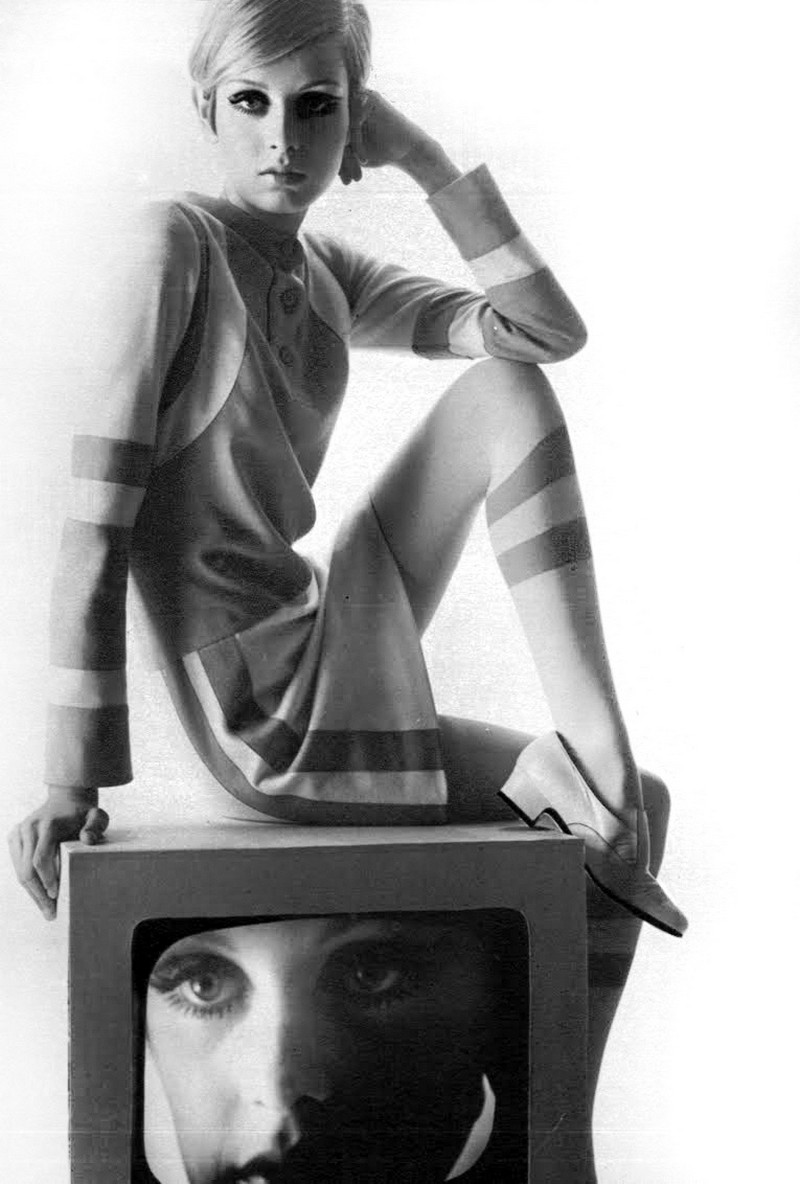
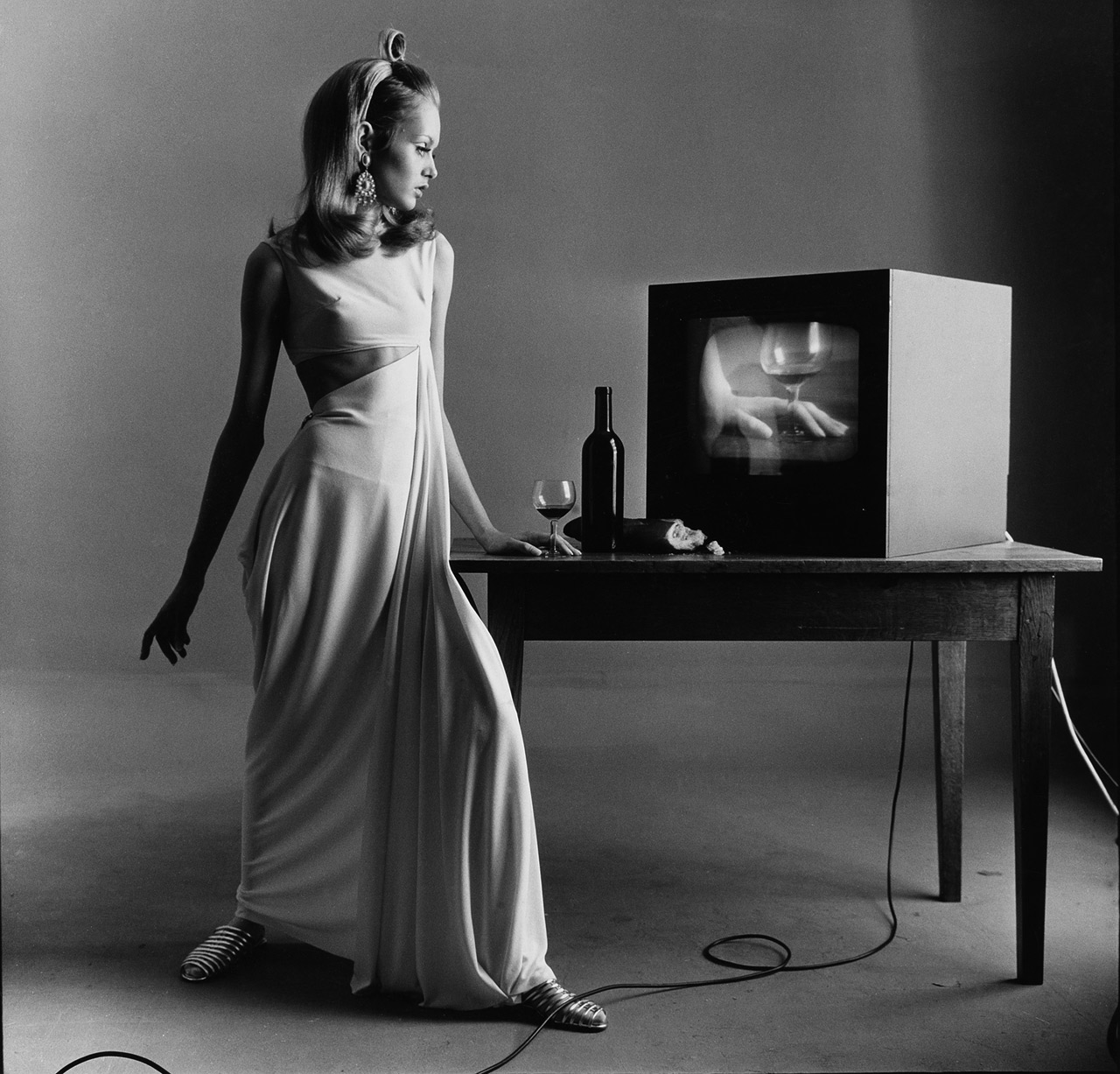
- photographs of Twiggy Lawson by Bert Stern (1929-2013) via and via and via and via and via

The first part of this posting was originally published on Science on Google+ on 14th of December 2013

Friday, 10 October 2014

World Mental Health Day

The theme for World Mental Health Day 2014 is "Living with schizophrenia". Worldwide, around 26 million people are affected by schizophrenia, 90% of those with untreated schizophrenia live in the so-called developing world (via).


Hollywood tends to portrait schizophrenia in a stereotypic manner, oftentimes as a dangerous "multiple personality disorder". In the media, schizophrenia is associated with unpredictable, bizarre and violent behaviours. The protagonist is a genius "possessed" by paranormal phenomena, with vivid visual hallucinations whose disorder was triggered by a traumatic life event, a criminal who could be cured by an empathetic loving helper who just listens and understands (Owen, 2012).


The construct of positive and negative symptoms in schizophrenia can be traced back to one of the founding fathers of schizophrenia research, Emild Kraepelin. Kraepelin (1856-1926) subdivided the symptoms into "two principal groups of disorders which characterize the malady".  It was John Hughlings Jackson (1835-1911) who coined the terms "positive and negative symptoms" (Skrabalo, n.y.). Positive symptoms are delusions, hallucinations, disorganised speech, grossly disorganised or catatonic behaviour; negative symptoms are affective flattening or diminished emotional expression, alogia or avolition (Tandon et al, 2013). In general, positive symptoms are the ones "added" (e.g. hallucinations) and negative symptoms are the ones "taken away" (e.g. emotional expression).


According to some UK research, between 30 and 50% of people with schizophrenia are able to work. Doing a job supports recovery, improving health. There is no universal recipe for finding the right job for people with schizophrenia as "different people have different skills, interests and qualifications as with the broader population." Nevertheless, people living with schizophrenia are underrepresented in the workplace mostly because of the stigma associated with the disorder. Interestingly, the negative symptoms are a more serious barrier at the workplace than the positive ones (Bevan, 2013).


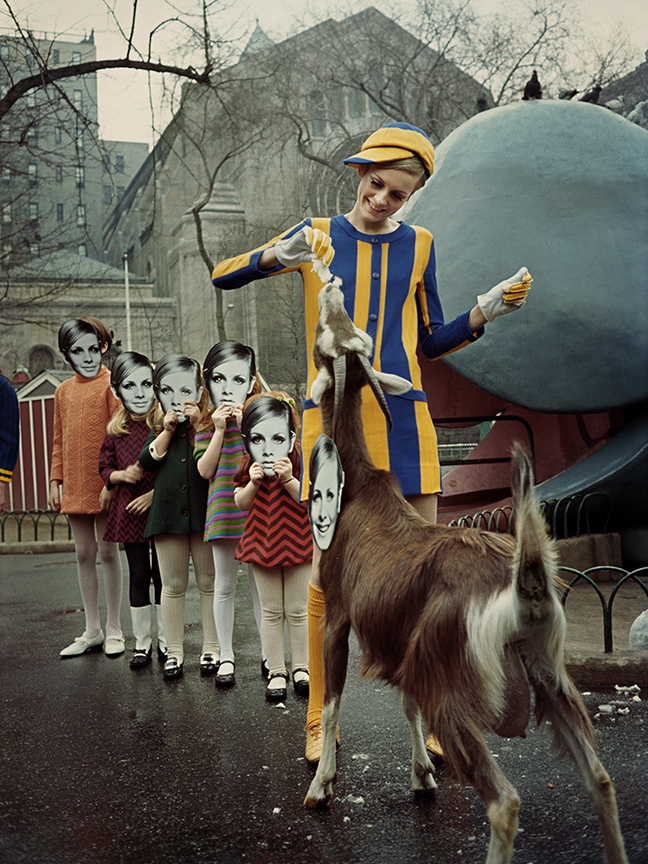
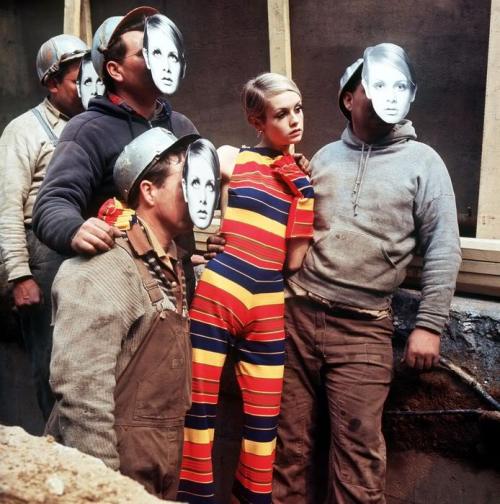
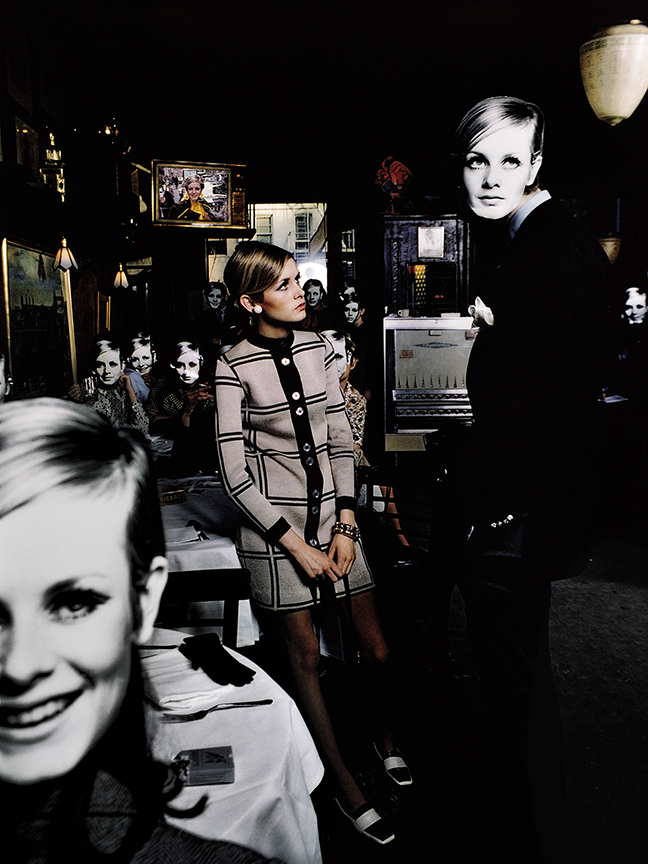
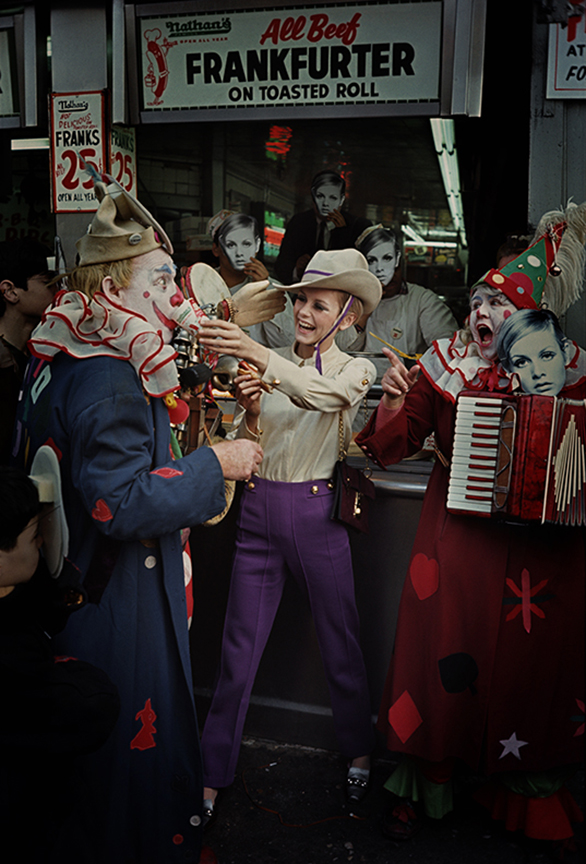
"Everyone Wants To Be Twiggy" (1967): Melvin Sokolsky "solved the problem of gawpers hanging around the location by giving them all Twiggy masks and turning them into extras; a casual portrait of Twiggy in a woolly hat taken by her friend Linda McCartney" (via). By the way, one of the original masks can be purchased via eBay ... starting bid: $ 690,-


- Bevan, S., Gulliford, J., Steadman, K., Taskila, T., Thomas, R. & Moise, A. (2013) Working with Schizophrenia: Pathways to Employment, Recovery & Inclusion. The Work Foundation, Lancaster University
- Owen, P. R. (2012) Portrayals of Schiziphrenia by Entertainment Media: A Content Analysis of Contemporary Movies. Psychiatric Services, 63(7), 655-659
- Skrabalo, A. (n.y.) Negative Symptoms in Schizophrenia(s): The Conceptual Basis. Harvard Brain, 7-10
- Tandon, R., Gaebel, W., Barch, D. M., Bustillo, J., Gur, R. E., Heckers, S., Malaspina, D., Owen, M. J., Schultz, S., Tsuang, M., Os, van J. & Carpenter, W. (2013) Definition and description of schizophrenia in the DSM-5. Schizophrenia Research, http://dx.doi.org/ 10.1016/j.schres.2013.05.028
- photographs by Melvin Sokolsky via and via and via und via and via and via and via and via and via and via