Thursday, 23 October 2014

Harlem in Colour: Living Portraits

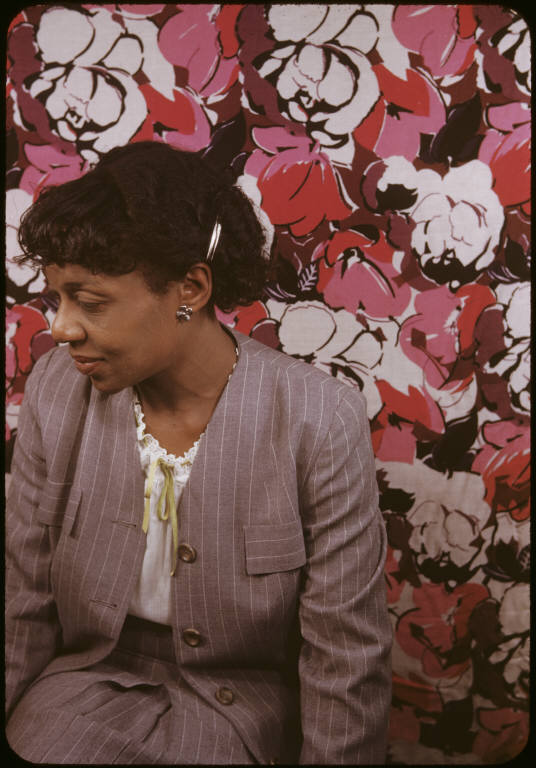
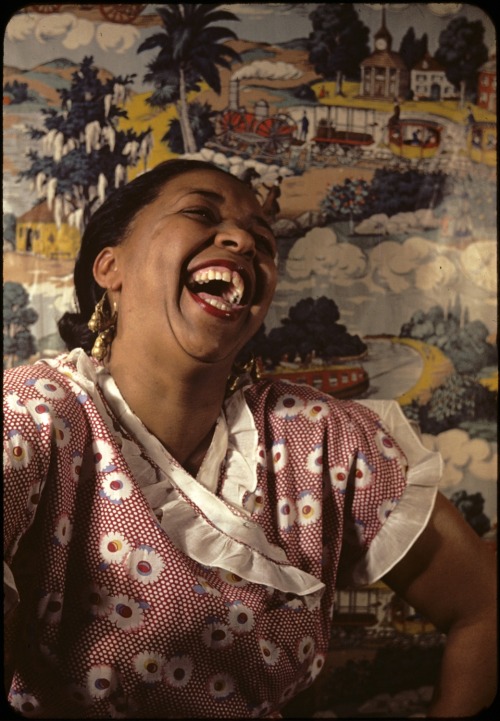
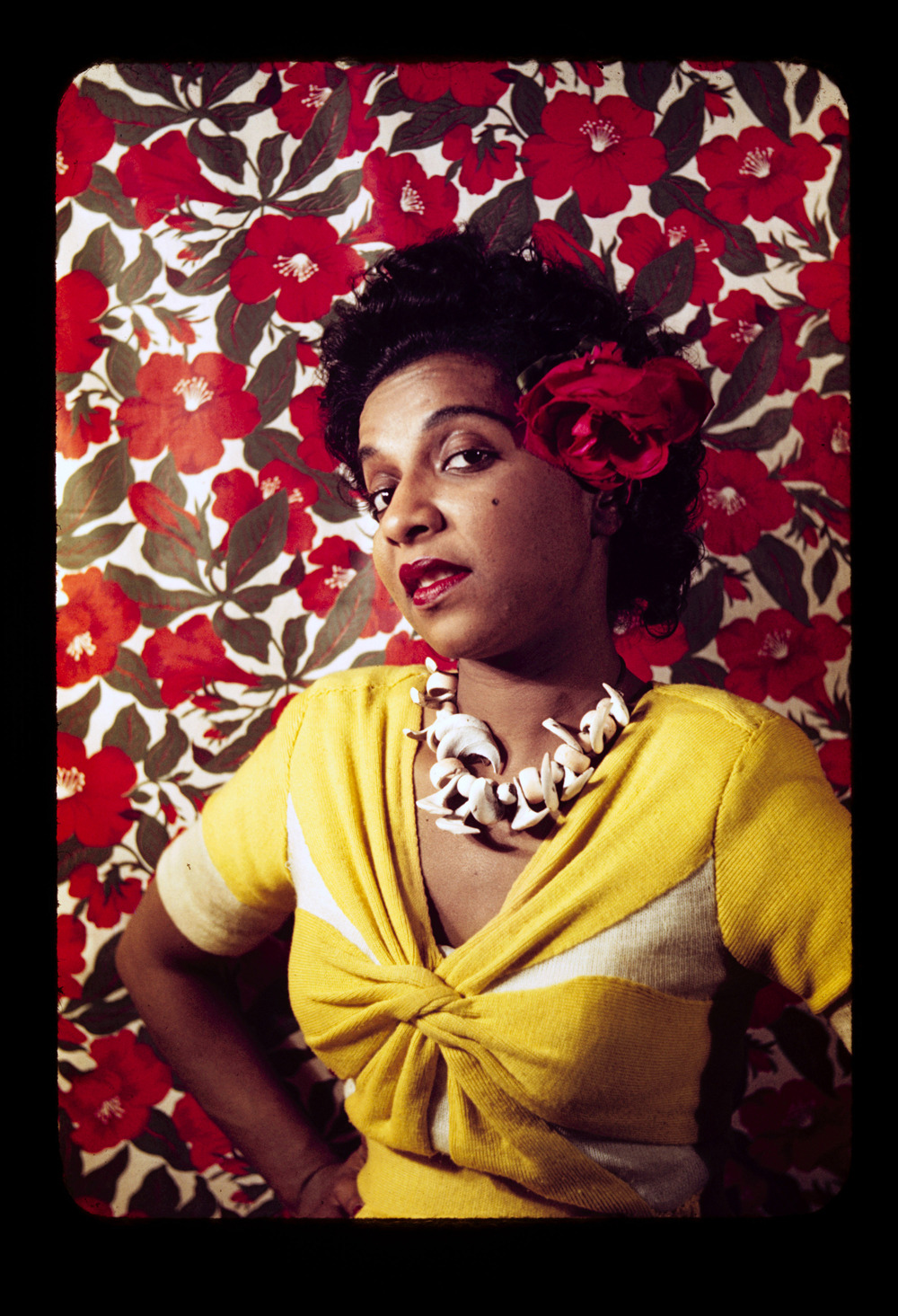
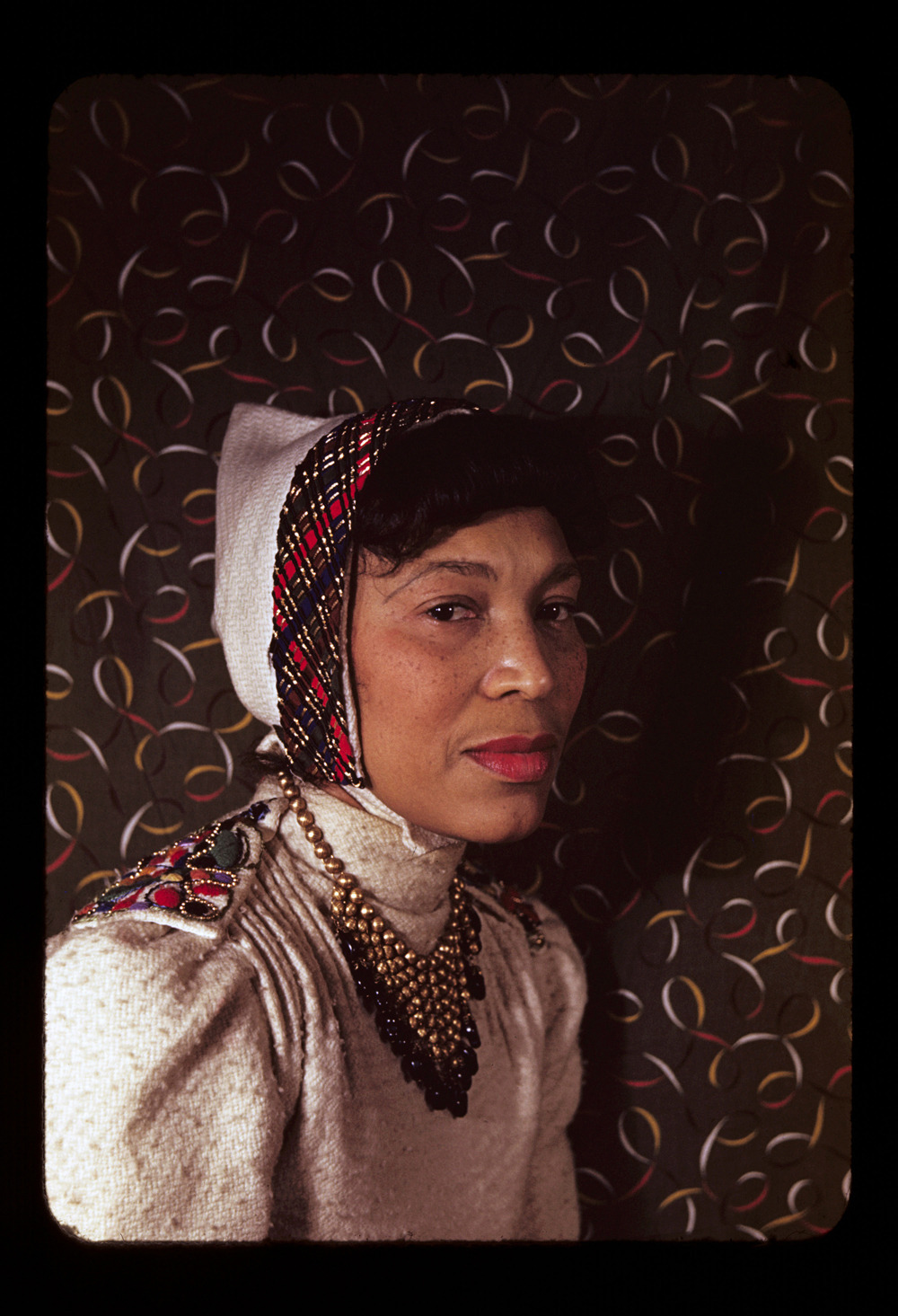
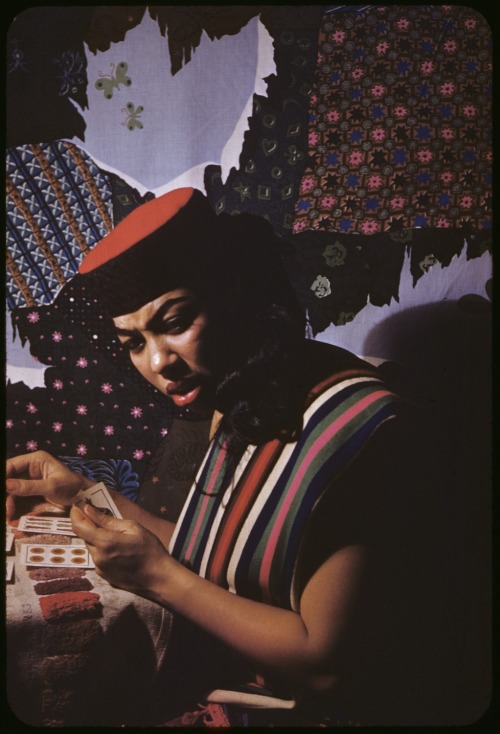
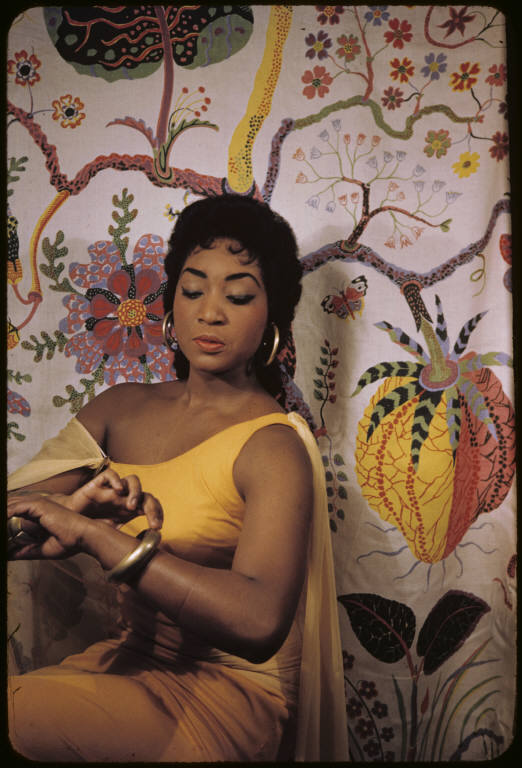
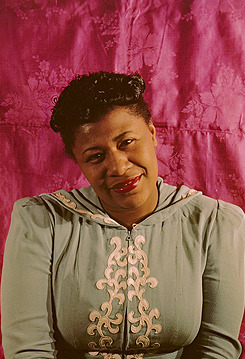
Carl Van Vechten (1880-1964) was a US-American photographer, writer, promotor of literary talent, and critic of dance, theatre and opera for The New York Times. He started taking photographic portraits in 1932 and discovered the then new colour film in 1939. Van Vechten asked artists, intellectuals, educators, musicians, composers, dancers, entertainers, and activists - many of them luminaries of the Harlem Renaissance - to sit for him. And so they did. The collection (1939-1964) comprises 1.884 colour Kodachrome slides (via).


Carl Van Vechten was "an unlikely champion of the African-American experience". The night clubs in Harlem made him, as he said, "violently interested in Negroes". He saw himself not only as a supporter of Harlem Renaissance but as a vital part of it (via).


Van Vechten published "Nigger Heaven" in 1926, a novel described as a "notorious, baroque travesty of black life in Harlem" but also as a "literary and civil rights success". The choice of the title was also controversial, reactions ranged from outrage to applause.
"Was Carl Van Vechten a good thing to happen to Langston Hughes, the Harlem Renaissance, portrait photography and the James Weldon Johnson Memorial Collection at Yale University, the four focuses of his professional and personal enthusiasms? The hundreds of portrait photographs taken in the years after he ceased writing fiction are a valuable record of famous, prominent and striving people of color, but the general judgment seems to be that Van Vechten was no Gordon Parks or Henri Cartier-Bresson. The service he rendered as indefatigable magpie of black correspondence, manuscripts, notes, photographs and musical recordings that constitute the vast Johnson Collection is universally acknowledged to be a contribution of unsurpassed importance to letters, history and race relations." (via)


"Negro life is seizing its first chances for group expression and self-determination."
Alain Locke, critic and teacher (1926)

Harlem Renaissance (c. 1918-1937) was a new black culture identity shaped by artists and intellectuals. The intent of the movement was not a political but an aesthetic one. Although participants sought to reconceptualise "the Negro" apart from the white stereotypes, defraying ethnic prejudice was secondary to the "expression of our individual dark-skinned selves." Harlem Renaissance became the most influential movement in African American literary history (via and via).


Carl van Vechten photographed Peter Abrahams, Prince Etuka Okala Abutu, Armenta Adams, Adele Addison, Alvin Ailey, Betty Allen, Sanford Allen, Martina Arroyo, William Attaway, Ethel Ayler, Pearl Bailey, James Baldwin, Harry Belafonte, Roy Thompson Beresford, Mary McLeod Bethune, Charles Blackwell, McHenry Boatwright, Margaret Allison Bonds, Paul Bontemps, William Stanley Braithwaite, Carol Brice, Jonathan Brice, Maurice Brooks, Anne Wiggins Brown, Debria Brown, Roscoe Lee Browne, Joyce Bryant, Ralph J. Bunche, Dan Burley, Miriam Burton, John Carlis, Thelma Carpenter, Diahann Carroll, John Carter, Shirley Verrett Carter, Horace Cayton, Omar Clay, Ladybird Cleveland, Leo Coleman, Durward B. Collins, Janet Collins, Zebedee Collins, Clayton Corbin, Edna Cordoza, Eldzier Corter, Robert Curtis, Jimmy Daniels, Ossie Davis, Gloria Davy, Ruby Dee, William Demby, Beauford Delaney, Inez Dickerson, Hugh Dilworth, Mattiwilda Dobbs, Owen Dodson, W. E. B. DuBois, Todd Duncan, Roy Eaton, Bobby Evans, Martha Flowers, Benny Garland, Althea Gibson, Richard Gibson, John Birks “Dizzie” Gillespie, Shirley Graham, Reri Grist, Nicolas Guillen, Juanita Hall, Bertha “Chippie” Hill, Ramon Blancos Habana, Frank Harriott, Afrika Hayes, Marion Hayes, Roland Hayes, Chester Eugene Haynes, Godfrey Headley, Chester Bomar Himes, Geoffrey Holder, Leo Holder, Charlotte Holloman, Nora Holt, Marilyn Horne, Langston Hughes, Phillipa Husley, Earle Hyman, Ivie Jackman, Annette Jackson, Mahalia Jackson, Raymond Jackson, Louise E. Jefferson, Charles Johnson, Hal Johnson, Hylan “Dots” Johnson, Marie Johnson, (Everett) LeRoi Jones, James Earl Jones, Laurence Clifton Jones, Ulysses Kay, William Melvin Kelly, Eartha (Mae) Kitt, George Lamming, Carmen De Lavallade, Everett Lee, Henry Lewis, Powell Lindsay, James Lowe, Robert Keith McFerrin, Claudia McNeil, Geraldyn (Gerri) Hodges Major, Claude Marchant, William Marshall, Mabel Mercer, Lizzie Miles, Arthur Mitchell, Edgar Mittelholzer, Mollie Moon, Linwood Morris, Willard Motley, Lorenzo Newby, Maidie Norman, Godfrey Nurse, Frederick O’Neal, Leonard de Paur, Louise Parker, Louis Peterson, Julius Perkins Jr., Mildred Perkins, Charles Perry, Ann Petry, Evelyn La Rue Pittman, Leontyne Price, Bertice Reading, Guy Rodgers, Percy Rodriguez, Pearl Showers, Edith Spurlock Sampson, Diana Sands, Harold Scott, George Shirley, Bobby (Robert Waltrip) Short, Merton Simpson, Noble Sissle, Clarence Smith Jr., William Gardner Smith, Rawn Spearman, Melvin Stewart, William Grant Still, Billy Strayhorn, Howard Swanson, Archie Savage, Wesley Tann, Ellen Tarry, Dorothy Taylor, Claude Thompson, Veronica Tyler, Margaret Tynes, Henry Van Dyke, Elaine Vance, William Warfield, Dorothy West, Moran Weston, Clarence Cameron White, Josh White, Lindsay H. White, Roy Wilkins, Billy Dee Williams, Camilla Williams, John Alfred Williams, Maurice Williford, Ellis Wilson, John W. Work, Dale Wright (via), Ella Fitzgerald, Jane White, Zora Neale Hurston, Adelaida Hall, Joyce Bryant, Muriel Rahn, Ethel Waters, Muriel Smith, Billie Holiday, Alan Meadows, Blanche Dunn, Ethel Ayler, Claude Marchant, Richmond Barthé, Robert McFerrin, Amiri Baraka, Harold Jackman, Mary McLeod Bethune, Dorothy Maynor, Alain Locke, Billy Dee Williams, Roscoe Lee Brown, Juanita Hall, Claude McKay ...


Follow-up posting: Harlem Renaissance

photographs via and via and via and via and via and via and via and via and via and via and via and via and via and via and via and via and via and via and via and via and via and via and via and via and via and via and via and via and via and via and via 
Monday, 20 October 2014

My Humps

"My Humps" was released by the US-American group The Black Eyed Peas in 2005. An estimated 76 million records sold in the past ten years make them one of the world's best-selling groups. When it comes to downloaded tracks, they are even the second-best-selling group (via). "My Humps" was another commercial success and reached the top ten in fifteen countries. It became one of The Black Eyed Peas' best selling singles with more than two million downloads. In 2006, it received the MTV-award for "Best Hip-Hop Video".


Reactions of experts and music critics, however, were inverse. They called it "one of the worst songs of all time". Rolling Stones called the duet between will.i.am and Fergie "an irresistible, butt-stupid ode to Fergie's ass", its readers voted it one of the "20 Most Annoying Songs". AOL Radio put it at number 80 on the "100 Worst Songs Ever", Pitchfork Media listed it at number three on "The 15 Worst Releases of 2005". The song was called a "five-minute commercial jingle" and was criticised for its "junior high level sexual titilation", the "boring minimalist repetition" and the "serious lack of true wit and humour". The "objectification of women disguised as empowerment" (via), the "misogynistic wolf dressed up in a feminist sheep's clothing" (via) inspired a range of artists to respond with a parody. Peaches, for instance, covered the song in 2006 and changed it into "My Dumps". Alanis Morissette covered the song in the style of a ballad in 2007 which became one of the most viewed clips (via). The Guardian's Music Blog raises "a toast to Morissette for making something rather lovely out of all that junk." (via). Cheers!

What you gon' do with all that junk?
All that junk inside your trunk?
I'ma get, get, get, get, you drunk,
Get you love drunk off my hump.
My hump, my hump, my hump, my hump, my hump,
My hump, my hump, my hump, my lovely little lumps (Check it out)

I drive these brothers crazy,
I do it on the daily,
They treat me really nicely,
They buy me all these ices.
Dolce & Gabbana,
Fendi and that Donna
Karan, they be sharin'
All their money got me wearin' fly
Brother I ain't askin,
They say they love my ass ‘n,
Seven Jeans, True Religion's,
I say no, but they keep givin'
So I keep on takin'
And no I ain't taken
We can keep on datin'
I keep on demonstrating.

My love (love), my love, my love, my love (love)
You love my lady lumps (love),
My hump, my hump, my hump (love),
My humps they got you,

She's got me spending.
(Oh) Spendin' all your money on me and spending time on me.
She's got me spendin'.
(Oh) Spendin' all your money on me, up on me, on me

What you gon' do with all that junk?
All that junk inside that trunk?
I'ma get, get, get, get, you drunk,
Get you love drunk off my hump.
What you gon' do with all that ass?
All that ass inside them jeans?
I'm a make, make, make, make you scream
Make you scream, make you scream.
Cos of my hump (ha), my hump, my hump, my hump (what).
My hump, my hump, my hump (ha), my lovely lady lumps (Check it out)

I met a girl down at the disco.
She said hey, hey, hey yea let's go.
I could be your baby, you can be my honey
Let's spend time not money.
I mix your milk wit my cocoa puff,
Milky, milky cocoa,
Mix your milk with my cocoa puff, milky, milky riiiiiiight.

They say I'm really sexy,
The boys they wanna sex me.
They always standing next to me,
Always dancing next to me,
Tryin' a feel my hump, hump.
Lookin' at my lump, lump.
You can look but you can't touch it,
If you touch it I'ma start some drama,
You don't want no drama,
No, no drama, no, no, no, no drama
So don't pull on my hand boy,
You ain't my man, boy,
I'm just tryn'a dance boy,
And move my hump.

My hump, my hump, my hump, my hump,
My hump, my hump, my hump, my hump, my hump, my hump.
My lovely lady lumps (lumps)
In the back and in the front (lumps)
My lovin' got you,

She's got me spendin'.
(Oh) Spendin' all your money on me and spending time on me.
She's got me spendin'.
(Oh) Spendin' all your money on me, up on me, on me.

What you gon' do with all that junk?
All that junk inside that trunk?
I'ma get, get, get, get you drunk,
Get you love drunk off my hump.
What you gon' do with all that ass?
All that ass inside them jeans?
I'ma make, make, make, make you scream
Make you scream, make you scream.
What you gon' do with all that junk?
All that junk inside that trunk?
I'ma get, get, get, get you drunk,
Get you love drunk off this hump.
What you gon' do wit all that breast?
All that breast inside that shirt?
I'ma make, make, make, make you work
Make you work, work, make you work.

(A-ha, a-ha, a-ha, a-ha) [x4]

She's got me spendin'.
(Oh) Spendin' all your money on me and spendin' time on me
She's got me spendin'.
(Oh) Spendin' all your money on me, up on me, on me. (via)

Thursday, 16 October 2014

Narrative images: Stop skinheading

This image was documented as the Swedish writer Astrid Anna Emilia Lindgren (1907-2002), author of e.g. "Pippi Longstocking", "Karlsson-on-the-Roof", "Six Bullerby Children", "Ronia the Robber's Daughter", walked through Stockholm and a young man approached her and said:
- "Please allow me to greet you and shake your hand. I've read all of your books, and I really like them."
- "Are you one of those skinheads?"
"Yes."
- "Then I think you should stop skinheading."
The boy was abashed. Astrid patted his cheek gently.
- "I like you, laddie, but I really think you should stop skinheading." (via)


photo via

Monday, 13 October 2014

Quoting Diana Rigg

"I think I was quite daring. I was once escorted out of a restaurant because I was wearing a trouser suit. It wasn't considered good breeding for a woman to go around in trousers after 6:00 pm, especially in smart restaurants and bars such as the Connaught Hotel, which served the best cocktails."


"The older you get, I have to say, the funnier you find life. That's the only way to go. If you get serious about yourself as you get old, you are pathetic."


"I don't want to retire. I never want to retire. What's the point of it?"


[on hitting middle age] "I am devastated at what has happened. I have completely disappeared. I am totally invisible. I never really liked my sexy label but on the other hand, to disappear so totally is quite startling."


Dame Enid Diana Elizabeth Rigg is a British actress mostly known for her role "Emma Peel" in the 1960s cult series "The Avengers".


quotes via, photos via and via and via and via