Thursday, 1 January 2015

Harlem Hopscotch

"She loved everything, from pop to country and, of course, hip-hop. With her dedication to social activism and how she illuminated the struggles and injustices of the urban experience through prose, there's a direct correlation to hip-hop today." "She was really excited about her street-wise commentary being presented in this way." 
Colin Johnson, Maya Angelou's grandson


One foot down, then hop! It's hot.
Good things for the ones that's got.
Another jump, now to the left.
Everybody for hisself.

In the air, now both feet down.
Since you black, don't stick around.
Food is gone, rent is due,
Curse and cry and then jump two.

All the peoples out of work,
Hold for three, now twist and jerk.
Cross the line, they count you out.
That's what hopping's all about.

Both feet flat, the game is done.
They think I lost, I think I won.


In 1969, the storyteller, poet, dancer, singer, autobiographer and civil rights activist with more than 50 honorary doctorate degrees Maya Angelou (1928-2014) published her poem "Harlem Hopscotch" (via). Hopscotch is driven by rhythm; the "twists and jerks" are a metaphor about the difficulties faced by black US-Americans (via). Before she passed away in May 2014, she worked on a project that blended her poetry with hip-hop music. Maya Angelou recited her poems, producers Shawn Rivera and RoccStarr focused on beats and instrumentals, Tabitha and Napoleon Dumo on choreography. The music video shows dancers in N.Y. and L.A. (via).

::: Maya Angelou's Harlem Hopscotch: watch


"When you read the poems on the page, they can be interpreted rhythmically by the reader." "But when Dr. Angelou reads them, there's no doubt that she was coming from the place of rhythm. ... You can tell the rhythms were implied already. She already was the first lady of hip-hop."
Shawn Rivera


photograph of girl playing hopscotch in Harlem, 105th street by Walter Rosenblum (1919-2006) taken in 1952 via, photograph of children playing chalk games in Brooklyn, taken by Arthur Leipzig (1918-2014) in 1950 via, of children in Ladbroke Grove via, of children playing hopscotch taken by Ralph Morse via, of girls playing via, photograph by Raymond Depardon via, of patrolman J. S. Davidson playing hopscotch, watched by patrolman T. D. McKnight, taken by Jim Shearin via, of Doris Day via

Saturday, 27 December 2014

Bus Stop: Beautiful & Inclusive Filmmaking

Bus Stop Films "is a pioneering organisation which has a focus on creating inclusion within the film industry" (via), dedicated to "helping members of diverse and marginalised communities". The Australian not-for-profit organisation focuses on training and developing people with a disability, giving students a chance to gain work experience and employment opportunities (via). Mentors support people with a disability who fulfill both cast and crew roles ... creating an inclusive environment (via).


Mr Howell, a charismatic lawyer has a job interview with Mr Dexter, a partner's son with Down's syndrome. But "Thomas Howell gets more than the bargained for in his interview at a prestigious law firm; an insult about his tie, a rendition of Harry Potter and the chance to change the lives of a father and son." (via) "The Interviewer" is a twelve-minutes film directed by Genevieve Clay-Smith and Robin Bryan where twelve '"people living with an intellectual disability were mentored by industry professionals to make a short film." Bus Stop Films' most recent and largest short film project has won more than thirty international awards (via). The film that "shows that inclusion and the rights of people with diasbilities are topics that can be addressed by challenging, rather than affirming, stereotypes" was an instant success (via).

::: The film "The Interviewer" (12 min.) can be watched here: watch
::: The trailer and the making of can be watched here: watch
::: And here an early Bus Stop film (winner of Best Film and Best Actor, Tropfest 2009, 8 min.): Be My Brother


"You don't understand someone's potential until you give them an opportunity to rise to the occasion."
Genevieve Clay-Smith

all photographs via
Danke, Christian.

Wednesday, 24 December 2014

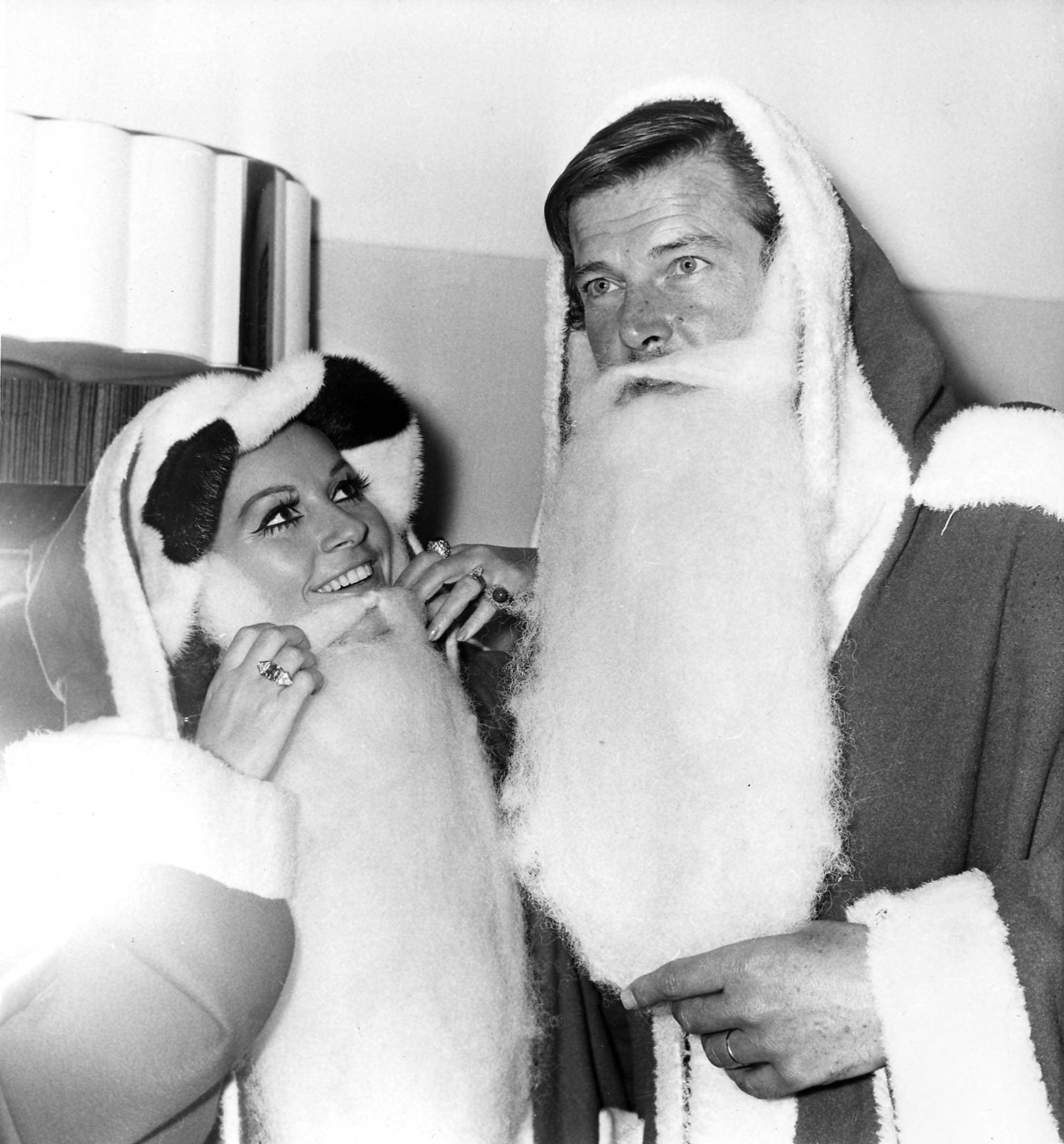
Roger Moore & Zwarte Piet

Zwarte Piet (Black Pete) is the companion of Sinterklaas (Saint Nicholas in Dutch folklore). On 5th December both go to children's houses with presents ... if the children behaved well (legend and rumour have it that the naughty ones are stuffed into Zwarte Piet's sacks). In early depictions, Zwarte Piet was Saint Nicholas' dull-witted, clumsy, broken-Dutch speaking servant. In the 1950s, the "Moor" was turned into a man whose face was black because he had come down the chimneys. An interesting fact, however, is that it is only his face that is solid black while his clothes remain perfectly clean ... neither does the chimney explain why Zwarte Piet often has an Afro-wig, hoop earrings and exaggerated red lips. In the 1960s, the image of the servant or slave partly transformed into the image of the less ignorant and more responsible helper or friend (via).


One of the first persons to question Zwarte Piet's portrayal was M. C. Grünbauer in 1968, at least one of the earliest ones with a record of it. Grünbauer linked him with the Dutch history of slavery. She argued that Zwarte Pieten should become Witte Pieten (White Pete) to change the power differences between the white master Sinterklaas and the black slave Zwarte Piet. Black Pete did not change his colour but changed from a rather creepy person to a clownish one. In Suriname (which was conquered by the Dutch in 1667, later reoccupied by the British and the Dutch a couple of times and gained independence from the Netherlands only in 1975), celebrating Sinterklaas was banned in 1980 as it was seen as "an unwanted symbol of colonialism". The following year, the Solidarity Movement Suriname organised the first protest against Black Pete in the Dutch city of Utrecht.


At the moment, there is an unprecedented heavy, emotional, aggressive (Wouters, 2014), nasty, messy, fierce and heated (via) debate in the Netherlands about how acceptable Zwarte Piet is. It is also a debate about tradition, defence of Dutch national identity and the Netherland's self-concept of being a tolerant society.
Social historian and member of the United Nation's Working Group of Experts on People of African Descent Verene A. Sheperd was insulted, threatened, intimidated and told "to go back to her own country" because she had criticised Zwarte Piet (Wouters, 2014) and called the custom "a throwback to slavery" (via). According to a survey carried out by the municipality of Amsterdam in 2012, only 7% responded Zwarte Piet was discriminatory (Wouters, 2014). On the other hand, in 2013, there were 21 official complaints about racist characteristics of Zwarte Piet and calls to stop Sinterklaas parades in Amsterdam (via). The petition "Pietitie" to retain Zwarte Piet was liked by 2.2 million Dutch people on Facebook within a short time.
Black Pete elicits divergent opinions ranging from "innocent holiday tradition, part of culture and identity, just funny, not racist" to "bizarre sidekick and "one of Europe's oddest and most titilating Christmas traditions" visualised by blackfaces that resemble Renaissance minstrels (via). Questioning Zwarte Piet is somehow felt as an attack on Dutch identity ... due to the impact traditions more or less automatically seem to have but also because tolerance is regarded as a core value of Dutch culture by a clear majority (i.e. 66%) of Dutch citizens. The self-image of a great many Dutch is undermined as their tolerance is criticised; society is polarised (Wouters, 2014). The whole issue is surely too complex to generally state that the Dutch have turned into an intolerate society. Various European surveys show that the Dutch are among the ones who highly value non-discrimination, freedom of religion, women's rights, and acceptance of homosexuality (Duyvendak, 2005). In short, Zwarte Piet is an anachronism in a modern and progressive country (via).
According to Duyvendak, cultural homogenisation took place in the past decades which made a Dutch majority develop uniform, progressive ideals. As the citizens of the majority population differ little from one another, "it would seem that Dutch society is losing its ability to cope with cultural differences". Considering policies regarding newcomers, Duyvendak comes to the conclusion that "a 'tolerant' country does not necessarily have to esteem diversity" (Duyvendak, 2005). An interesting paradox.


Office of the United Nations
High Commissioner for Human Rights
Special Procedures of the Human Rights Council
17 January 2013

Excellency,

We have the honour to address you in our capacities as Chair-Rapporteur of the Working Group on people of African descent; Special Rapporteur in the field of cultural rights; Independent Expert on minority issues; Special Rapporteur on contemporary forms of racism, racial discrimination, xenophobia and related intolerance pursuant to Human Rights Council resolution 18/28, 19/6, 16/6, and 16/33.
In this connection, we would like to bring to your Excellency’s Government’s attention information we have received concerning the Dutch celebration of Black Pete, also known as “Swarte Piet”, which, each year, is part of the Saint Nicholas Event (5 December), and precedes and accompanies the celebration of Santa Claus .
According to information received: 
The character and image of Black Pete perpetuate a stereotyped image of African people and people of African descent as second-class citizens, fostering an underlying sense of inferiority within Dutch society and stirring racial differences as well as racism. During the celebration, numerous people playing the Black Pete figure blacken their faces, wear bright red lipstick as well as afro wigs. The Black Pete figure is to act as a fool and as a servant of Santa Claus. The Black Pete segment of Santa Claus celebrations is experienced by African people and people of African descent as a living trace of past slavery and oppression, tracing back to the country’s past involvement in the trade of African slaves in the previous centuries. Reportedly, a growing opposition to the racial profiling of Black Pete within the Dutch society, including by people of non-African origins, is to be noticed. However, it is also alleged that no response has been given to associations defending the rights of African people and people of African descent in the Netherlands, which are asking for dialogue on this issue.
Furthermore, it is reported that in relation to the acceptance of the UNESCO Convention for the Safeguarding of Intangible Cultural Heritage in 2012 by the Netherlands, proposals have been made to declare the Dutch Cultural Historical Tradition “Santa Claus and Black Pete” as Immaterial Cultural Heritage. It is reported that the Dutch authorities have selected the annual Saint Nicolas Event (December 5) as one of the intangible heritages to be submitted for inclusion in the UNESCO list.
While we do not wish to prejudge the accuracy of the facts received, we should like to appeal to Your Excellency’s Government to guarantee the right to equality and non-discrimination of African people and people of African descent in accordance with article 1 of the Universal Declaration of Human Rights, article 2 of the International Covenant on Civil and Political Rights and article 2 and 26 of the International Covenant on Economic, Social and Cultural Rights (ICESCR) to which the Netherlands is a party. (...)
via/continue


Some more facts: Verene Sheperd was criticised by Belgian UNESCO official Marc Jacobs for abusing the name of the UN (via) and not having been authorised to sign the letter to the UN (via). This year, an Amsterdam court ruled that the Zwarte Piet tradition is offensive to black people since it perpetuates a negative stereotype of black people. Amsterdam's mayor wrote in a letter that he would support a "less black and less servile" Pete (via). The songs sung during Sinterklaas, by the way, will be rewritten and certain words will be replaced (via)

- - - NO MATTER IF OR WHAT YOU CELEBRATE AND WHEN ... HAPPY HOLIDAYS AND/OR JUST A WONDERFUL TIME TO ALL OF YOU. - - -

- Duyvendak, J. W. (2005) A multicultural paradise? The cultural factor in Dutch integration policy. Paper presented at the 3rd ECPR Conference - Budapest, 8-10 September 2005. Open Section (31) 17: What the hell happened to the Netherlands? Public culture and minority integration in the country of (in)tolerance. via
- Wouters, L. (2014) "Zwarte Piet contested" Tolerance and the (re)production of the Zwarte Piet tradition in the Netherlands. Utrecht: MA Thesis
- photograph by Alfred Eisenstaedt (1898-1995) via, of Roger Moore as Santa Claus (Southampton, 1969) via and via and (with third wife Luisa Mattioli) via

Monday, 22 December 2014

Quoting Virna Lisi

"È arrivata l'età delle rughe? Pazienza. Le rughe rappresentano il passato di ciascuno, e fanno parte della vita."
Virna Lisi

"The age of wrinkles has arrived? Never mind, wrinkles represent every individual's past and are part of life."
Virna Lisi


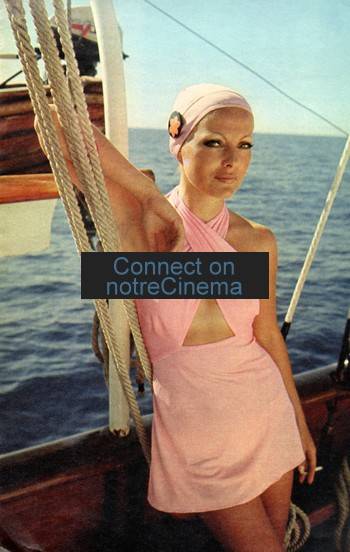
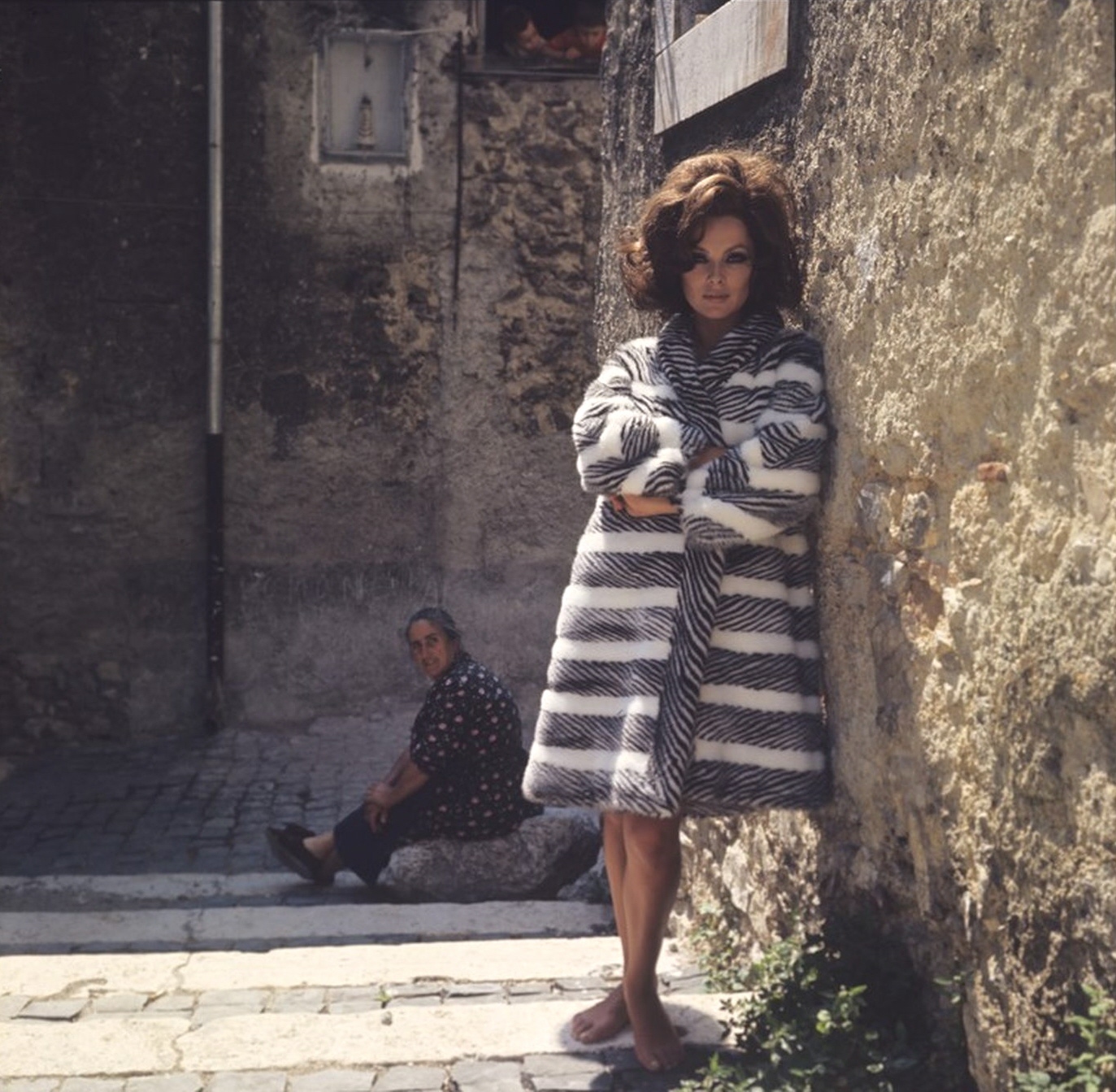
Virna  Lisa Pieralisi, born on 8 November 1936, was a theatre and cinema actress who made career in Italy and later in Hollywood. She starred with Totò, Anna Magnani, Alain Delon, Anthony Quinn, Jack Lemmon, Tony Curtis, Frank Sinatra, William Holden ... She became tired of her "Italian Marilyn" image, left Hollywood and continued her success as a character actress in Europe. Virna Lisi refused a couple of offers such as playing Barbarella - which Jane Fonda accepted. She passed away on 18 December 2014 (via).


photographs via and via and via and via and via

Thursday, 18 December 2014

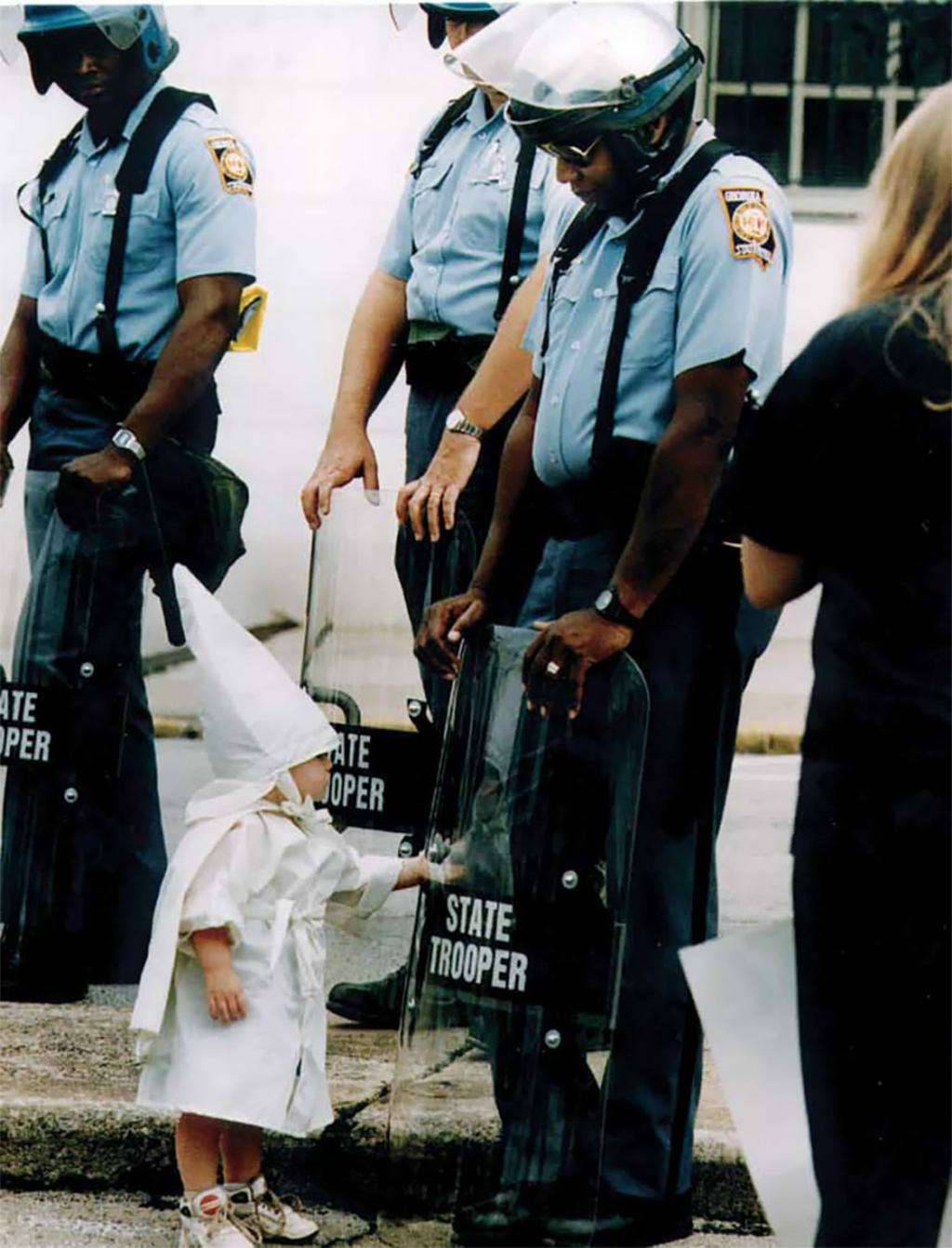
Narrative images: "The State Patrol made me be there. His momma and daddy made him be there."

"I will never be able to live without someone finding this picture. Over twenty years later and it just keeps coming up. I am amazed how much this photo has popped up again and again. Gainesville Times, Gainesville GA. Sad but true. It is me. I took it. Josh 3 years old at that time. Klan rally on the square in Gainesville GA. This lady to the right is his mom and they were from the winder knights , Winder GA. So there is the background of this photo. They also had a smaller child that was in a stroller in kkk garb. All the other journalists there were focused on the speeches on the courthouse steps, but I kept an eye on Josh. No need for words to explain this sad situation. I think he thought it was halloween and was looking at his reflection in the shield."
Todd Robertson, 2012


“I didn’t even see the kid. I was just looking down to see what was bumping on my shield. And when I looked down, there was this little kid in a Klan uniform. He saw his reflection in the riot shield. He was tracing his outline. The child was oblivious to what was going on around him." Allen Campbell 
On 5 September 1992, a Saturday on Labour Day weekend, the Ku Klux Klan held a rally in Gainesville (Georgia). There were 66 Klan representatives, about three times as many law enforcement personnel and about 100 observers, most of them demonstrating against the Klan. Todd Robertson was assigned as a backup photographer for "The Gainsville Times", the local daily. He did not focus on speakers but rather on a mother and her two Klan-robed boys. One of them, a toddler called Josh, approached the black state trooper Allen Campbell who was holding a riot shield on the ground. The toddler saw his reflection in the shield and reached for it. That moment the mother took away the toddler. Robertson captured this very moment two persons met who both had not chosen to be where they were. Allen Campbell: "The State Patrol made me be there. His momma and daddy made him be there." (via). Campbell was "ticked off" about being at the rally: "It was the last holiday of the summer. But here I am at a Ku Klux Klan rally in Gainesville, Ga., protecting the rights of the Ku Klux Klan." (via)

At the beginning, the photograph was not paid much attention to. The newspaper office told Robertson, his photographs were not worth developing. He took his film to a local one-hour photo developer, brought them back to the newspaper office and was told by the managing editor: "This picture's running the paper." It appeared in a small community newspaper, was then discovered by other newspapers and won the Associated Press award in the Feature Photo category. Seven years later, in 1999, it was featured by the Southern Poverty Law Center that was often contacted by people who wanted to order a poster version of the photograph. In 2011, it appeared again on a popular blog. Ball State University built a one-hour lesson plan (Kiddie Klan Exercise) around the photograph as part of the teacher toolkit "Learning from a Legacy of Hate". (via)
"It’s a fleeting moment, but one that you could spend hours reflecting on, finding different nuances and interpretations. It becomes a sort of Rorschach test for each commenter’s worldview. It might leave you hopeful that hate isn’t a trait we’re born with. Or it might make you depressed about the fact that many children are destined to be corrupted and psychologically misshapen." David Griner
In January 2013, Todd Robertson met with Allen Campbell and said he wished he would know what happened to the toddler: "It would be nice to know he's moved beyond that." (via)

photograph by Todd Robertson via

Tuesday, 16 December 2014

"There was no judgement, no follow up, just acceptance."

“As a primary school teacher I’d always worried about mentioning my sexuality, despite the fact that my colleagues talked about their husbands, wives and significant others all the time.
Then, as part of anti-bullying week, I’d asked who’d heard ‘gay’ being used as an insult. Almost every one of my class put their hands up. I was stunned.
Then I asked who thought that people who were gay or lesbian were bad or wrong in some way, again almost every hand went up.
After speaking to my Head, who was very supportive, we agreed I could tell the class that I’m gay so they at least knew one gay person and hopefully explain that when people use that word they’re talking about me.
The reaction was fantastic – there were a lot of gasps and shocked looks and some basic questions – do you have a boyfriend, etc – but after a couple of minutes they were over it and we moved on to the rest of the lesson.


The letter came a couple of days later. The little girl who wrote it gave it to me at the start of the day with all the other slips about dinner money, school trips and doctors appointments.
Reading it brought tears to my eyes and it took me a little while to compose myself. When I thanked her she just shrugged and repeated something one of the boys in the class had said during the lesson, ‘It’s just your life’. Then she went back to her maths.
For my class it was a surprise sure but, to them, it was just something simple and easy to file away as another piece of information. There was no judgement, no follow up, just acceptance.
Now, I can mention my fiance as easily as any other teacher and my class know me a little better. I’ve had a lot of letters and cards over the years, but this one I know I’ll keep forever.”

The letter from the 9-year-old girl A. to her teacher R.:

Dear Mr R.
Even though you're gay, I will always treat you the same way as I do now. I still think about you the same way as I used to. You're a great teacher and these are just some of the words that I would describe you as: great, amazing, fantastic, brilliant, awesome and brave. The reason why I say brave, is because you shared a personal secret which was very brave. You don't have to feel scared because I know that everyone in the class feels the same way as I do.
From A.
P.S. Mr R, we are proud of you.

image via and information via

Monday, 15 December 2014

The -ism Series (18): Postcolonialism

Postcolonialism is "one of the most interesting interventions in cultural theory" (via) and emerged through discussions of representation, identity and power (Barnett, 2006) that arise from the process of decolonisation and the resulting search for alternative cultural identities. The term refers to the consciousness after colonisation, the subversive and resistant politics aiming to preserve differences rather than assimilationg to the dominant cultural patterns. It implies reversing roles and transforming from object to subject (via). "As the underdogs, the people in colonized countries try to establish their difference from colonizers." (Nejat & Baradaran Jamili, 2014).


Post-colonial refers to a period after colonialism; that is a commonsense understanding of the term. Childs and Patrick (1997) state, however, that our common understanding could be "unacceptably Anglocentric or Eurocentric" since we tend to concentrate on British and French empires. The question arises: After whose colonialism? Quoting Ahmaz, the authors argue that colonialism "becomes a trans-historical thing, always present and always in process of dissolution in one part of the world or another, so that everyone gets the privilege, sooner or later, at one time or another, of being coloniser, colonised and post-colonial - sometimes all at once, in the case of Australia, for example."


The term "postcolonial" is also criticised for marking history as a series of stages ranging from "precolonial", "colonial" to "postcolonial". This approach implies that time is linear and that there is a sort of development. "Post" sets the time and turns colonialism into a marker of history in relation to European time (McClintock, 1992). Aymara-speaking people in the Bolivian Andes, for instance, do not emphasise the arrival of the Spanish to their region the same way Europeans do (Bair, 2011).
"One way in which European colonial and imperial expansion was legitimized was through a claim that European culture was the prime mover of historical progress itself. Non-European cultures were denigrated as being either historically backward, or worse, as being wholly outside of history. This same pattern of thought persists in central categories of twentieth-century social science, including ideas of modernization, of development, and of developed and less developed. All of these ideas presume one particular set of cultural values and practices as the benchmark against which to judge all others. In so far as they presume an idealized model of European history as the single model for other societies to emulate, these notions are often described as Eurocentric." (Barnett, 2006)
According to postcolonial critics, gender differences also need to be considered when discussing postcolonialism as otherwise it "will, like marginalization, be a male-centered and ultimately patriarchal discourse in which women's voice are marginalized and silenced." Since women tend to be subjected to colonial domination of empire and male domination of patriarchy, a "double colonisation" takes place (Nejat & Baradaran Jamili, 2014).

Postcolonial studies are, without doubt, highly interesting and complex. The tendency to emphasise European colonialism, however, can obscure other power relations that deserve attention and enhance Eurocentric views (Baird, 2011).


- Baird, I. G. (2011) Questioning the Precolonial, Colonial and Postcolonial in the Context of the Brao of Southern Laos and Northeastern Cambodia. ACME: An International E-Journal for Critical Geographies, 10(1), 48-57
- Barnett, C. (2006). Postcolonialism: space, textuality and power. In: Aitken, Stuart and Valentine, Gill eds. Approaches to Human Geography. London,  147–159
- Childs, P. & Williams, R. J. P. (1997) An Introduction to Post-Colonial Theory. London et al.: Prentice Hall Harvester Wheatsheaf
- McClintock, A. (1992) The Angel of Progress: Pitfalls of the Term "Post-Colonialism". Social Text, 31/32, Third World and Post-Colonial Issues, 84-98
- Nejat, J. & Baradaran Jamili, L. (2014) Double Colonization in John Maxwell Coetzee's Disgrace. Journal of Novel Applied Sciences, 3(1), 40-44
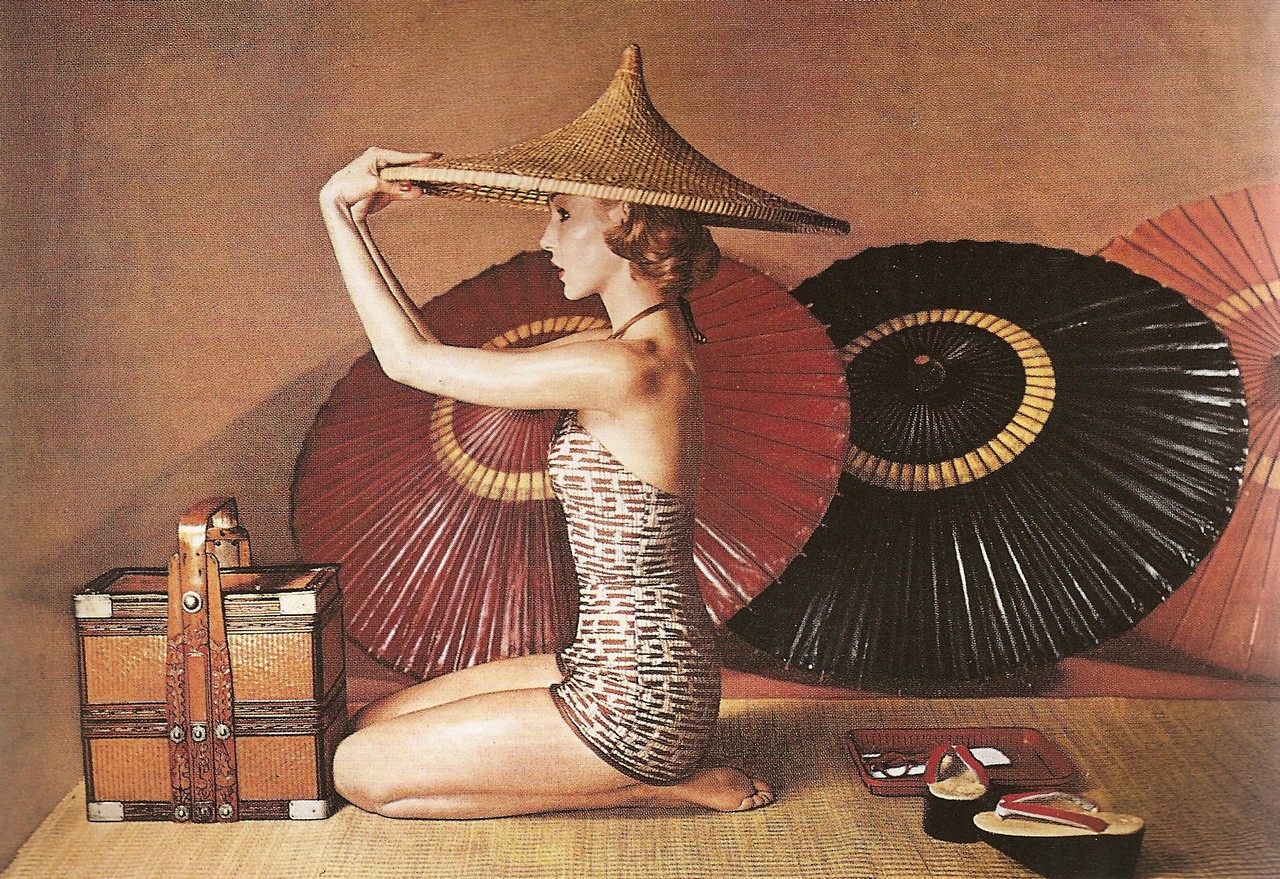
- photographs by Louise Emma Augusta Dahl-Wolfe (1895-1889) via and via and via

Thursday, 11 December 2014

Bill Traylor

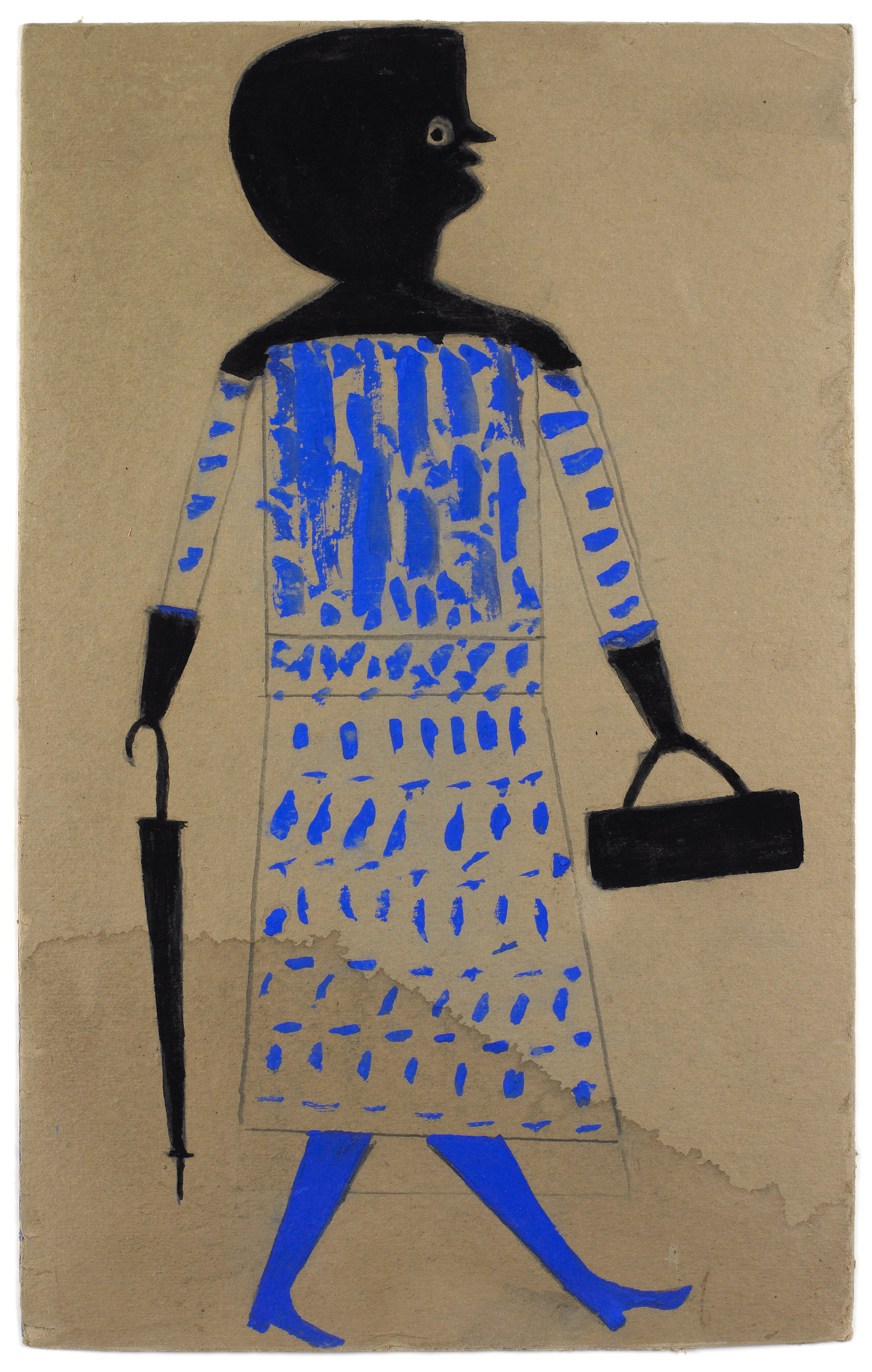
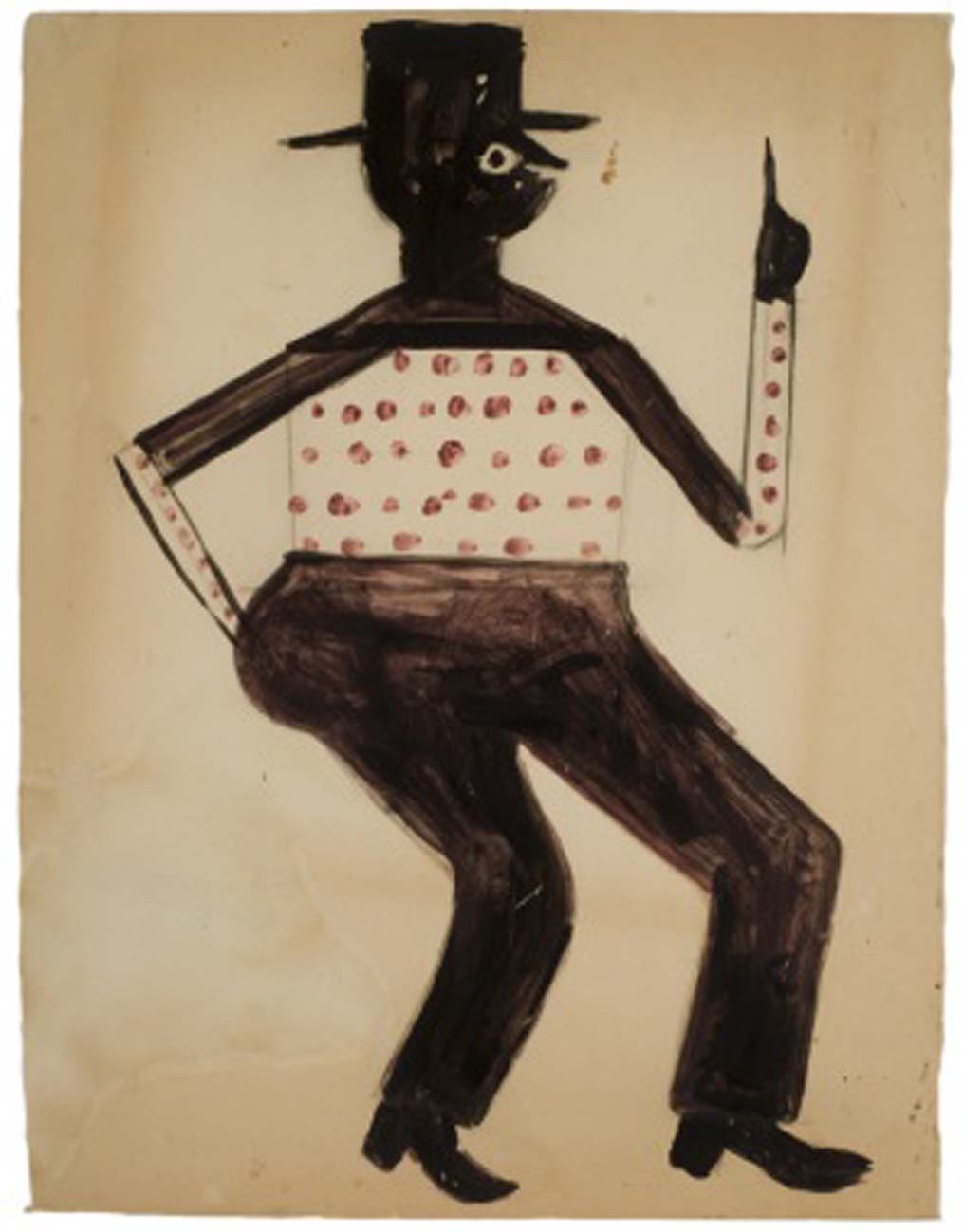
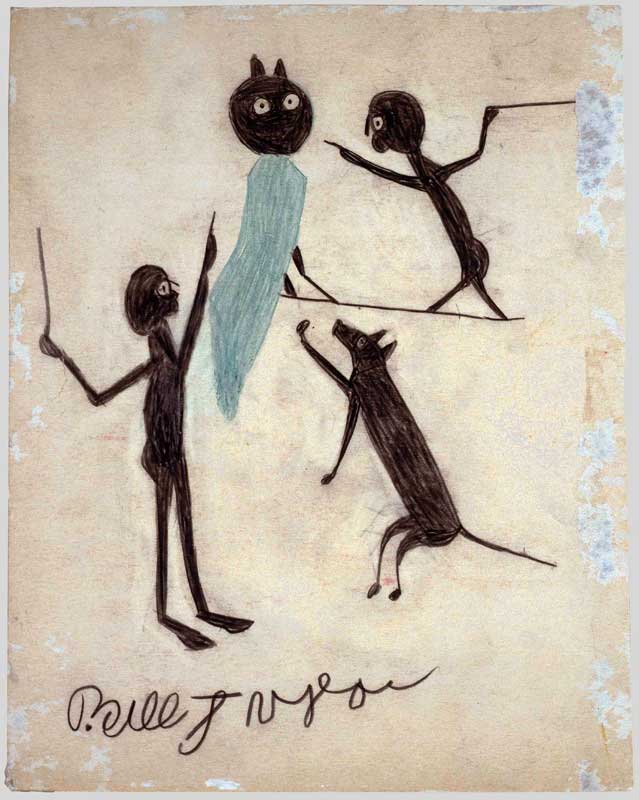
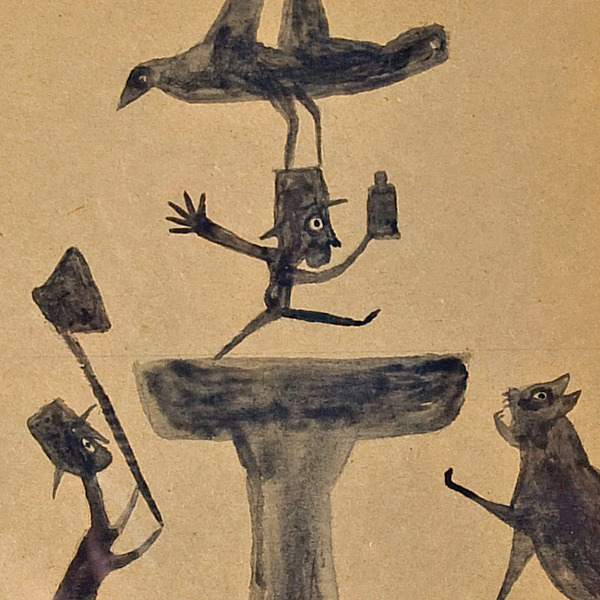
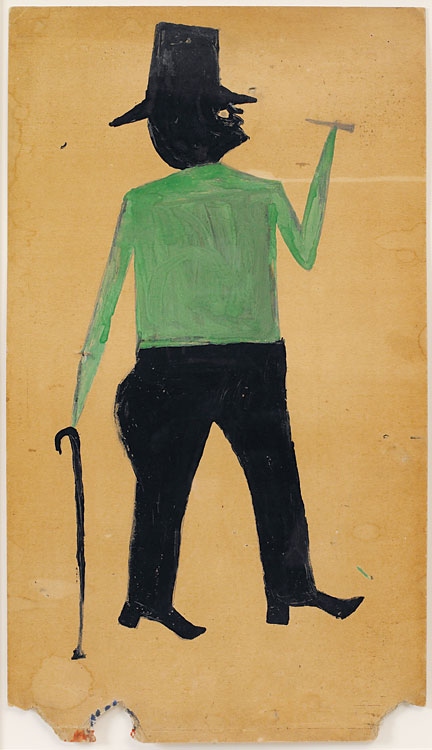
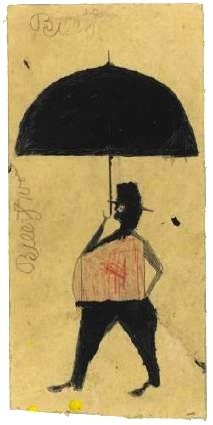
Bill Traylor was born into slavery in 1854 (according to other sources in 1856). The son of Sally and Bill Calloway - both slaves - grew up in Alabama, on the plantation of the white cotton grower George Hartwell Traylor (via) where he later worked as an emancipated sharecropper.


He was in his mid eighties when the plantation he had spent all his life on was sold (via). And he was in his mid eighties, when he one day, picked up a stub of pencil and a scrap of cardboard from the street and started drawing (via). Despite the circumstances, Traylor's art never showed anything bitter but rather optimism which could be interpreted as "the only kind of resistance to power and repression that a 95-year-old black man in Alabama could offer some eight decades after the Civil War's end. That resistance is the art of insistent optimism and celebration of humanity and nature that can be summoned even amid the most sustained coercion."  (via). Bill Traylor started drawing in 1939, had his first public exhibition in 1940 and produced about 1.500 pieces of art from 1939 to 1942. He died in 1945 (via).


"Racism and poverty have been the obvious obstacles to Traylor's appreciation, but more recently it has been the myth of the Outsider Artist, a kind of cultural ghettoization of the so-called untrained, poorly connected, marginalized savant, that accounts for not just Traylor's relative obscurity, but for the obscurity of thousands of artists like him throughout the U.S. alone. Eurocentrism--the Western cultural bias that elevates the self-proclaimed refinement of the European art-historical legacy above the productions of the myriad non-Western legacies of the world--is an even more entrenched and insidious dynamic keeping Traylor from achieving the truly international renown he is due." (via)


images via and via and via and via and via and via and via and via and via and via and via and via and via and via and via and via