Abstract: This study investigated students' perspectives about bullying towards same-country and immigrant peers. Thirty-five Italian and immigrant students (age range: 11–15) took part to the study. Participants were probed with two bullying scenarios, depicting respectively a new classmate from another Italian city and from a foreign country. A Grounded Theory approach was adopted to examine participants' perspectives about the motives for bullying.
Findings showed that a process of socializing deviance is at the core of both forms of bullying. This social process refers to a series of shared beliefs within the peer group about the victim's deviant features. Three sub-categories related to both forms of bullying emerged from the core concept: (a) Rejecting the newcomer deviance, (b) Rejecting physical deviance, (c) and Rejecting personality deviance. These sub-categories were related to the sub-categories of bullying towards immigrant peers: (d) Rejecting cultural deviance, (e) and Learned racism. Findings are discussed in terms of their theoretical and practical relevance. (Mazzone et al., 2018)
- - - - - - - - -
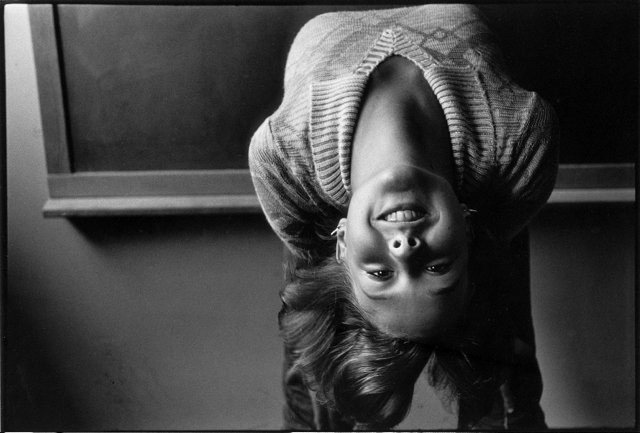
- Mazzone, A., Thomberg, R., Stefanelli, S., Cadei, L., & Caravita, S. C. S. (2018). "Judging by the cover": A grounded theory study of bullying towards same-country and immigrant peers. Children and Youth Services Review, 91, 403-412. - photograph by Rob Brenner via
Sexual harassment and sexual violence in educational settings do not only target students but also teachers - or female staff in general. Men and boys are consistently found to be the main perpetruatros of sexual harassment and sexual violence which is linked to male ideas around gender and masculinity playing a crucial role. In addition, online pornography creates a "misguided representation" of individuals and sexual relationships, which again has an impact on young men and boys in particular. There is, in fact, an association between regular access to online pornography and violent sexual behaviour. Also, young men who use pornography are more likely to show negative attitudes to gender equality. Easy access to porn is said to have a "very corrosive impact within schools".
Sending unwanted hardcore pornographic or nude images to girls in the corridor or to other students in class are some of the problems cited. According to a piece of research on nude image sharing, the scale of the problem is enormous and, at times, more than 5.000 responses is possible. The problem is difficult to tackle since the behaviour is also happening outside the school gates, on young people's mobile phones.
One major challenge is the combination of two trends taking place at the same time: the mainstreaming of hardcore pornography and the digital revolution of the social world from which new kinds of digital-based abuse and violence emerge. This kind of abuse is also targeting teachers. One in twenty of the teachers taking part in a poll said that the misogyny they had experienced had been posted on social media. The posts showed the teachers' faces superimposed on pornographic images or upskirt pictures of teachers (via).
- - - - - - - - - - - - photograph by Joseph Szabo (Barbara, 1977) via
The photograph shows the first black US-American students to attend Plymouth Elementary School in
Monrovia (Los Angeles County, California) arriving by bus on 10th of September
1970.
School desegregation and busing sparked protests in Los Angeles in the 1970s -
more than two decades after the Supreme Court had outlawed segregation at
schools - leading white middle-class families fleeing from the L.A. Unified
School District and moving to more homogeneous suburban districts devoid of
busing. Mandatory busing was seen as a means to integrate and remedy the harms
of segregation since the black population was kept from living in so-called
white neighbourhoods and, as a result, from attending schools in these
neigbhourhoods.
In 1979, forced busing was ended and L.A. shifted to a voluntary busing system
under court supervision which became the so-called "magnet" programme. The
programme aimed at becoming so attractive in academic terms that white
students would be drawn to schools they would otherwise not attend. Another
approach was to allow ethnic minority students from low-income South L.A. to
take buses to scholls in traditionally white areas in the San Fernando Valley.
Los Angeles has kept its magnet programme and white students attend some of
them. Generally speaking, however, their number is rather low: 73.4% Latino,
10.5% white, 8.2% black American, 4.2% Asian (via).
- - - - - - photograph (Fitzgerald Whitney/Los Angeles Times) via
"A man in a gleaming white suit comes to a small Southern town on the eve of
integration. His name is Adam Cramer. He calls himself a social reformer. But
his aim is to incite the people against letting black children into the town’s
white school. Soon he has the white citizens of the town worked up." (MUBI)
C: "You may say I'm a social worker. I've come to do what I can for the town. The integration problem." W: "Oh that. But that's all over. I mean they've got ten n***ers enrolled already in the school. And they're starting Monday."
C: "Yes, I know. But do you think it's right?" A: "No, I sure don't. Neither does nobody. But it's the law." C: "Whose law?"
"I am Elizabeth Eckford. I am part of the group that became known as the Little Rock Nine. Prior to the [de]segregation of Central, there had been one high school for whites, Central High School; one high school for blacks, Dunbar. I expected that there may be something more available to me at Central that was not available at Dunbar; that there might be more courses I could pursue; that there were more options available. I was not prepared for what actually happened."
"The First Day, which was performed by Kendie Jones, is a dance interpretation of Eckford’s walk that day. Its monochrome aesthetic is an evocative nod towards the black-and-white images of Eckford's public ordeal, which was captured by press photographers and republished in papers internationally." (via)
"I was more concerned about what I would wear, whether we could finish my dress in time...what I was wearing was that okay, would it look good. The night before when the governor went on television and announced that he had called out the Arkansas National Guard, I thought that he had done this to insure the protection of all the students. We did not have a telephone, so inadvertently we were not contacted to let us know that Daisy Bates of NAACP had arranged for some ministers to accompany the students in a group. And so, it was I that arrived alone.
On the morning of September 4th, my mother was doing what she usually did. My mother was making sure everybody’s hair looked right and everybody had their lunch money and their notebooks and things. But she did finally get quiet and we had family prayer. I remember my father walking back and forth. My father worked at night and normally he would have been asleep at that time, but he was awake and he was walking back and forth chomping on cigar that wasn’t lit.
I expected that I would go to school as before on a city bus. So, I walked a few blocks to the bus stop, got on the bus, and rode to within two blocks of the school. I got off the bus and I noticed along the street that there were many more cars than usual. And I remember hearing the murmur of a crowd. But, when I got to the corner where the school was, I was reassured seeing these soldiers circling the school grounds. And I saw students going to school. I saw the guards break ranks as students approached the sidewalks so that they could pass through to get to school. And I approached the guard at the corner as I had seen some other students do and they closed ranks. So, I thought; 'Maybe I am not supposed to enter at this point.' So, I walked further down the line of guards to where there was another sidewalk and I attempted to pass through there. But when I stepped up, they crossed rifles. And again I said to myself; 'So maybe I’m supposed to go down to where the main entrance is.' So, I walked toward the center of the street and when I got to about the middle and I approached the guard he directed me across the street into the crowd. It was only then that I realized that they were barring me, that I wouldn’t go to school.
As I stepped out into the street, the people who had been across the street started surging forward behind me. So, I headed in the opposite direction to where there was another bus stop. Safety to me meant getting to that bus stop. It seemed like I sat there for a long time before the bus came. In the meantime, people were screaming behind me what I would have described as a crowd before, to my ears sounded like a mob."
::: Narrative images: World Press Photo of the Year 1957: LINK ::: Narrative images: The Lost Year: LINK ::: Narrative images: Charles Thompson goes to school: LINK ::: Ruby & The New Orleans School Crisis: LINK
Next week, the 2019 CESNUR Conference"Re-Enchanting the World: Spiritualities and Religions of the Third Millennium" will be held, taking place from 5 to 7 September at the Università di Torino.
I am very much looking forward to travelling with my Cinquecento, taking part and talking about "Schools and Religious Diversity: Why Teacher Professionalism Needs Diversity Awareness":
The rise of migration to Europe has brought ethnic and religious diversity, is reshaping the
educational landscape and challenging policy makers. In populist rhetoric, religion is instrumentalised
as a means of constructing a “Christian Occident” as an antithesis to immigrants and refugees mainly
coming from Muslim-majority countries. Islam has more or less become Europe’s second religion, at
the same time reason number one for discrimination and bullying at school. According to surveys,
teachers feel ill prepared to meet the needs of students with a different religious background and
helpless when confronted with islamophobia, antisemtitism, etc. Since schools play a key role in
integration, supporting social changes, and building the future, it is high time university curricula and
teachers‘ ongoing education were rethought.
In this paper, the field of tension is discussed between schools‘ task to educate in line with the
majority’s culture and the inclusion of minorities, between stereotypes, challenges, problems and
chances, between freedom to and from religion, as well as types of religious discrimination,
perpetrators and victims, good practices, and latent variables hidden behind generalisations
suggesting that it is not necessarily religion per se that is the problem.
"It has long been recognised that schools serving disadvantaged communities are more likely to be staffed by teachers without qualified teacher status, with fewer years of experience and by non-specialist science and maths teachers. Inequality in access to suitably qualified, high quality teachers is likely to be an important contributor to the attainment gap that exists between students who come from disadvantaged families and those who do not."
According to a survey conducted among more than 7.000 primary and secondary teachers in the U.K., schools serving disadvantaged communities struggle finding qualified teachers, particularly in core subjects such as mathematics and sciences. Teachers believe that these schools involve harder work and require more skills while they prefer to teach pupils with fewer behavioural problems. However, 80% would consider a move to a school with recruitment difficulties if the conditions (pay, promotion, reduced timetable) were right (via and via).
- - - - - -
photograph by Henry Grant (1966) via, copyright by Henry Grant Collection and Museum of London
In 1965, Robert Rosenthal and Lenore Jacobson conducted an experiment in an elementary school to study the impact teacher expectation has on student performance. The researchers told teachers that certain children were "growth spurters" based on their results on the Harvard Test of Inflected Acquisition.
But. The test did not exist. The children, in fact, had been chosen at random. They did, however, nevertheless show greater intellectual growth than the control-group children after one year (12 IQ points versus 8 IQ points). Why?
Expectations serve as self-fulfilling prophecies. Teachers expecting greater intellectual development communicate these expectations with reactions, words, looks, postures, gestures; they encourage their students. Particularly younger children, i.e. first and second graders, show effects of teacher expectations (Rosenthal & Jacobson, 1965). Seen from a different angle, this means that certain students are not encouraged and do not perform well due to the low expectations. This is particularly of interest when discussing the performance of children and their ethnicity, religion, gender, and socio-economic background.
- Rosenthal, R. & Jacobson, L. (1965). Pygmalion in the Classroom. The Urban Review, 16-20, link
- photographs taken at Broadview Public School in 1959/60 via
World Teachers’ Day 2018 will mark the 70th anniversary of the Universal Declaration of Human Rights (1948) that recognizes education as a key fundamental right and establishes an entitlement to free compulsory education, ensuring inclusive and equitable access for all children.
This year’s theme, “The right to education means the right to a qualified teacher,” has been chosen to remind the global community that the right to education cannot be achieved without the right to trained and qualified teachers. Even today, a continuing challenge worldwide is the shortage of teachers. There are an estimated 264 million children and youth still out of school globally. To reach the 2030 Education Goals of universal primary and secondary education, the world needs to recruit almost 69 million new teachers. This ‘teacher gap’ is more pronounced among vulnerable populations, such as girls, children with disabilities, refugee and migrant children, or poor children living in rural or remote areas.
Held annually on 5 October since 1994, World Teachers’ Day commemorates the anniversary of the signing of the 1966 ILO/UNESCO Recommendation concerning the Status of Teachers. It is co-convened in partnership with UNICEF, UNDP, the International Labour Organization, and Education International. (literally via)
The premier demand upon all education is that Auschwitz not happen again. Its
priority before any other requirement is such that I believe I need not and should not
justify it. I cannot understand why it has been given so little concern until now. To
justify it would be monstrous in the face of the monstrosity that took place. Yet the
fact that one is so barely conscious of this demand and the questions it raises shows
that the monstrosity has not penetrated people’s minds deeply, itself a symptom of the
continuing potential for its recurrence as far as peoples’ conscious and unconscious is
concerned.
Every debate about the ideals of education is trivial and inconsequential
compared to this single ideal: never again Auschwitz. It was the barbarism all education
strives against. One speaks of the threat of a relapse into barbarism. But it
is not a threat—Auschwitz was this relapse, and barbarism continues as long as the
fundamental conditions that favored that relapse continue largely unchanged. That is
the whole horror. The societal pressure still bears down, although the danger remains
invisible nowadays. It drives people toward the unspeakable, which culminated on a
world-historical scale in Auschwitz. Among the insights of Freud that truly extend even
into culture and sociology, one of the most profound seems to me to be that civilization
itself produces anti-civilization and increasingly reinforces it. (...)
A pattern that has been confirmed throughout the entire history of persecutions is
that the fury against the weak chooses for its target especially those who are perceived
as societally weak and at the same time—either rightly or wrongly—as happy. Sociologically,
I would even venture to add that our society, while it integrates itself ever
more, at the same time incubates tendencies toward disintegration. Lying just beneath
the surface of an ordered, civilized life, these tendencies have progressed to an extreme
degree. (...)
People who blindly slot themselves into the collective already make themselves into
something like inert material, extinguish themselves as self-determined beings. With
this comes the willingness to treat others as an amorphous mass. I called those who
behave in this way “the manipulative character” in the Authoritarian Personality, indeed
at a time when the diary of Höss or the recordings of Eichmann were not yet known. (...)
Walter Benjamin asked me once in Paris during his emigration, when I was still
returning to Germany sporadically, whether there were really enough torturers back
there to carry out the orders of the Nazis. There were enough. Nevertheless the question
has its profound legitimacy. Benjamin sensed that the people who do it, as opposed
to the bureaucratic desktop murderers and ideologues, operate contrary to their
own immediate interests, are murderers of themselves while they murder others. I fear
that the measures of even such an elaborate education will hardly hinder the renewed
growth of desktop murderers. But that there are people who do it down below, indeed
as servants, through which they perpetuate their own servitude and degrade themselves,
that there are more Bogers and Kaduks: against this, however, education and
enlightenment can still manage a little something.
In 1964, Freedom Schools were established aiming to offer a culturally relevant curriculum to Black students and to empower them. Students studied "race" relations, inequality, African American history and literature, critically studied what it meant to be a black US-American during the Civil Rigths Movement. Providing critical information meant that students could realise that education was the door to greater political freedom as it was also required for voting rights (Watson, n.d.).
In Mississippi, per capita expenditure of school boards was four times higher for white children than for black children.Teachers did not cover controversial topics as they would have lost their jobs. Additional schools were needed, schools in which questioning was the vital tool, Freedom Schools.
Freedom Schools were popular, twice as many students took part than expected. Classes were usually held in churches or outdoor. Not only did they enhance critical thinking, other subjects (e.g. foreign languages) were supposed to help students transition to higher education after completing high school (via).
Photograph: The Freedom Summer, volunteers arrive in Hattiesburg, MS, the "Mecca of the Freedom School world" (via)
Photograph: The July 4th, 1964 picnic at Vernon Dahmer's farm welcomed Freedom Summer volunteers to Hattiesburg, Mississippi.
Photograph: Vernon Dahmer (1908-1966), pictured wearing a hat, is the Hattiesburg activist who hosted the July 4th picnic.
He was murdered two years after the Freedom Summer by members of the Ku Klux Klan.
Photograph: Freedom School Mississippi Project, 1964, a volunteer teaching science class to students, photo credit: Matt Herron
Photograph: Freedom School student Cynthia Perteet (left) and volunteer Beth More (right) in Hattiesburg, Mississippi, during Freedom Summer, 1964. More was a teacher in the Freedom School hosted by Mt. Zion Baptist Church.
Photograph: Student Nonviolent Coordinating Committee field secretary Sandy Leigh (New York City), director of the Hattiesburg project, lectures Freedom School students in the sanctuary of True Light Baptist Church.
Photograph: Volunteer William D. Jones (native of Birmingham, Alabama, and New York public school teacher) who taught in the Freedom School at True Light Baptist Church in Hattiesburg, leans on the stair rail of St. John United Methodist Church in Palmers Crossing talking with local child Tilton Sullivan.
- - - - - - - - - -
- Watson, M. (n.d.). Freedom Schools Then and Now: A Transformative Approach to Learning, 170-190, link
- photographs and their descriptions via and via and via and via and via and via and via and via and via
A survey carried out in Austria in 2016 came to the conclusion that the most common type of discrimination at schools is islamophobia. 61.70% of the students who had experienced discrimination were Muslims followed by 31.91% who had experienced discrimination because of their ethnicity, 4.26% because of their gender, 2.13% because they were atheists.
More female (51.06%) than male (34.04%) students reported to have experienced discrimination. Of the Muslim students, 73% of the girls and 10% of the boys felt discrimated against and among the girls those wearing a headscarf (62%) were more affected than those without (38%).
While more female students are discriminated against, more male (55.32%) than female (31.91%) teachers act out their prejudice. The percentage of male teachers discriminating against female students is 66.67% compared to 18.52% of male teachers discriminating against male students.
- - - - - - - -
- Initiative für ein diskriminierungsfreies Bildungswesen (2016). Diskriminierung im österreichischen Bildungswesen. Bericht 2016
- photograph via
Children with Attention Deficit Hyperactivity Disorder (ADHD) are a challenge to "manage" at school. In general, there is a lack of formal education and support to help and prepare teachers (e.g. Perold et al., 2010). Hence, teachers can feel stress and see it as an educational problem (via). The classroom, in fact, can be "one of the most difficult places for children with (...) ADHD" (Kos et al., 2006). Among some teachers, there is the tendency to get rid of these children by diagnosing special needs and sending them to special schools (via).
Educational reformer Friedrich Gedike (1754-1803) pointed out that school records were not primarily about academic performance but about behaviour, discipline, obedience, and attention. The characteristics of this school system (that do have survived) create an environment in which children with ADHD are perceived as particularly challenging. Outside school, their behaviour is not labelled as a problem - or at least not to such an extent (von Stechow, 2015). Psychosocial interventions can improve school performance (Tresco et al., 2010).
- - - - - - - -
- Kos, J.M., Richdale, A. L., & Hay, D. A. (2006). Children with Attention Deficit Hyperactivity Disorder and their Teachers: A review of the literature. International Journal of Disability, Development and Education, 53(2), 147-160.
- Perold, M., Louw, C., & Kleynhans, S. (2010). Primary school teachers' knowledge and misperceptions of attention deficit hyperactivity disorder (ADHD). South African Journal of Education, 30, 457-473.
- von Stechow, E. (2015). Von Störern, Zerstreuten und ADHS-Kindern: Eine Analyse historischer Sichtweisen und Diskurse auf die Bedeutung von Ruhe und Aufmerksamkeit bis zum 21. Jahrhundert. Bad Heilbrunn: Verlag Julius Kinkhardt.
- photograph via
Albert Einstein once said, everybody’s a genius. But if you judge a fish by its ability to climb a tree, it will live its whole life believing that it is stupid. Ladies and Gentlemen of the jury, today on trial we have modern day schooling. Glad you could come. Not only does he make fish climb trees but also makes them climb down and do a ten mile run.
Tell me school, are you proud of the things you’ve done? Turning millions of people into robots, do you find that fun? Do you realize how many kids relate to that fish? Swimming upstream in class, never finding their gifts. Thinking they are stupid. Believing they are useless.
But the time has come, no more excuses. I call school to the stand and accuse him of killing creativity! Individuality! And being intellectually abusive. He’s an ancient institution that has outlived his usage.
So Your Honour, this concludes my opening statement and if I may present the evidence of my case, I will prove it.
Judge: Proceed.
Prince Ea: Exhibit A: Here’s a modern day phone, recognize it? Here’s a phone from 150 years ago. Big difference right? Stay with me… Here’s a car from today, and here’s a car from 150 years ago. Big difference right? Well get this… Here’s a classroom of today and here’s a class we used 150 years ago.
Gallery: Whoaaa…
Prince Ea: Now ain’t that a shame? In literally more than a century, Nothing Has Changed. Yet you claim to prepare students for the future? But with evidence like that I must ask, Do you prepare students for the future or the past?
I did a background check on you and let the records show that you were made to train people to work in factories. Which explains why you put students in straight rows, nice and neat. Tell em’ sit still. Raise your hand if you wanna speak. Give em’ a short break to eat and for 8 hours a day tell em’ what to think.
Oh, and make them compete to get an A. A letter which determines product quality. Hence grade A of meat. I get it. Back then times were different. We all have a past. I myself am no Gandhi. But today, we don’t need to make robot zombies. The world has progressed, and now we need people who think creatively, innovatively, critically, independently with the ability to connect.
See every scientist will tell you that no two brains are the same. And every parent with two or more children will confirm that claim. So please explain why you treat students like cookie cutter frames or snapback hats. Giving them this ‘one size fits all’ crap.
Judge: Watch your language.
Prince Ea: Sorry Your Honour. But if a doctor prescribed the exact same medicine to all of his patients the results would be tragic. So many people would get sick. Yet when it comes to school, this is exactly what happens. This EDUCATIONAL MALPRACTICE. Where one teacher stands in front of 20 kids, each one having different strengths, different needs, different gifts, different dreams. And you teach the same thing the same way? That’s horrific!
(...) See teachers are heroes that often get blamed. But they’re not the problem. They work in a system without many options or rights. Curriculum are created by policy makers. Most of which have never taught a day in their life. Just obsessed with standardized tests. They think bubbling in a multiple choice question will determine success. That’s outlandish.
In fact THESE TESTS ARE TOO CRUDE TO BE USED and should be abandoned. But don’t take my word for it, take Frederick J Kelly. The man who invented standardized testing, who said and I quote, “These tests are too crude to be used and should be abandoned.”
(...) I don’t have much faith in school but I do have faith in people. And if we can customize healthcare, cars, and Facebook pages, then it is our duty to do the same for education. To upgrade it. Change it. Do away with school spirit, cause that’s useless. Unless we’re working to bring the spirit out of each and every student, that should be our task.
(...) So let’s attend to their dreams and there’s no telling that we can achieve. This is a world in which I believe. A world where fish are no longer forced to climb trees.
homophone, definition:
1. Phonetics. a word pronounced the same as another but differing in meaning, whether spelled the same way or not, as heir and air.
2.
a written element that represents the same spoken unit as another, as ks, a homophone of x in English.
(dictionary)
Tim Torkildson was a teacher in Provo, Utah. He was also an education blogger. On his weblog, he wrote a posting about homophones ... and was fired by the owner of the language school he was working for. Homophones would be associated with homosexuality, some students could become offended or think the school had a "gay agenda". The teacher could not be trusted to write a regular blog. That was in 2014 (via and via and via).
The Sir Peter Ustinov Foundation was founded by UNICEF goodwill ambassador Sir Peter Ustinov and his son in 1999. Its focus is to grant children access to education and an optimistic future "irrespective of their cultural, social, religious or financial background". Ustinov was convinced that education is the key to a better future, to a world with less poverty and fewer conflicts. He was also convinced that prejudices are the origin of all conflicts. The foundation actively looks after vulnerable children such as orphans, children with facial disfigurement and young trafficked prostitutes.
Currently, there are eight Peter Ustinov schools in Germany dedicated to living an open-mind culture and fighting prejudices. There is also the Ustinov College in Durham (where students are called Ustinovians) and the Ustinov Institute in Vienna, both support research on prejudices in order to eliminate them (via).
- - - - - - - -
images via (copyright by respective owner/s)
Every year, the Italian Embassy in Nairobi organises a concert by a renowned Italian musician. In 2012, the musician was Mario Biondi, Italy's Barry White. All proceeds went to "an Italian Cooperation education project for the construction of a primary school for the poorest children of the coastal city of Malindi in Kenya" (via and via).
"A high school student being educated via television during the period that schools in Little Rock, Arkansas, were closed to avoid integration" (via). The photograph was taken by Thomas O'Halloran in September 1958 (via).
"'The Lost Year' refers to the 1958–59 school year in Little Rock (Pulaski County), when all the city’s high schools were closed in an effort to block desegregation. One year after Governor Faubus used state troops to thwart federal court mandates for desegregation by the Little Rock Nine at Central High School, in September 1958, he invoked newly passed state laws to forestall further desegregation and closed Little Rock’s four high schools: Central High, Hall High, Little Rock Technical High (a white school), and Horace Mann (a black school). A total of 3,665 students, both black and white, were denied a free public education for an entire year which, increased racial tensions and further divided the community into opposing camps.
(...) Perhaps the greatest consequences were the effects on displaced students and their families. Some of the educational alternatives that displaced students found were nearby public schools, in-state public schools where students lived with friends or relatives, out-of-state public and private schools, correspondence courses, parochial schooling, and early entrance into college. Nearby schools such as Jacksonville (Pulaski County) and Mabelvale (Pulaski County) for white students and Wrightsville (Pulaski County) for black students absorbed as many students as they could. Some students, as young as fifteen years old, moved in with relatives in public schools across all of Arkansas, and even out of state. The number of displaced white students was 2,915. Of those, thirty-five percent found public schools to attend in the state. Private schools in Little Rock took forty-four percent of the displaced white students. A total of ninety-three percent of white students found some form of alternative schooling. This was not the case for displaced black students. Among the 750 black students who were displaced, thirty-seven percent found public schools in Arkansas to attend. Some located parochial schooling, out-of-state public and private schooling, and some did enter college early or take correspondence courses. However, fifty percent of displaced black students found no schooling at all. The NAACP, through Roy Wilkins, stated that opening private high schools for displaced black students would defeat their intent to gain equal access for all students to public education. Some of the students from both races went to the military, some went to work, and some married early or simply dropped out. Interviews with many former students indicate lifelong consequences because of this denial of a free public education."
Inclusive pedagogy is a contentious concept as there is no agreement that all children can be educated together and where there is agreement there is still a discussion on how this can be done (Florian, 2015). As countries and cultures have different concepts, there is some confusion about the use and meaning of inclusion in educational settings. Different definitions have resulted in different practices (Makoelle, 2014). There is the widespread perception (or rather fear) that the inclusion of pupils with difficulties in learning will hold back the progress of pupils without difficulties in learning. Inclusive education, however, results in benefits for all learners (Spratt & Florian, 2013).
Inclusive pedagogy rejects so-called ability labelling, it does not limit the expectations of teachers and pupils and by focusing on the perceived "potential" reproduce social inequalities.
Labelling children as those having "special needs" means that teachers differentiate work based on their perception of ability which again places "a ceiling on the learning opportunities of those thought to be less able". Disrupting these practices and replacing them with participatory approaches to both teaching and learning is what educational (and social) inclusion is about.
Inclusion is not passive, it is not "being done to" certain groups but a dynamic process that involves all children (Spratt & Florian, 2013).
"The notion of inclusive pedagogy is not a
call for a return to a model of whole class
teaching where equality is notionally addressed
by providing identical experiences for all.
Instead it advocates an approach whereby the
teacher provides a range of options which are
available to everybody. Human diversity is seen
within the model of inclusive pedagogy as a
strength, rather than a problem, as children work
together, sharing ideas and learning from their
interactions with each other. The inclusive
pedagogical approach fosters an open-ended
view of each child’s potential to learn."
Spratt & Florian (2013)
Bell curve thinking means that positions at the centre of a normal distribution are seen as ideal while those outside are regarded as marginalised learners who require something additional, different or "special".
"Because schools are organised by grouping pupils according to commonly agreed
categories, and the utilitarian principle of the greatest good for the greatest
number, what is ordinarily provided will meet the needs of most learners, while
some may require something ‘additional’ to or ‘different’ from that which is
ordinarily available. A bell curve model of distribution, which assumes ‘that most
phenomena occur around a middle point while a few occur at either high or low
extreme ends’ (Fendler and Muzaffar, 2008, p 63) underpins many educational
practices and is widely used as an organisational principle. Sorting students by
ability is one example of how this model operates; the use of norm-referenced
tests is another. Both of these practices are part of the pathway by which
judgements about students’ learning capacity are determined and by which some
students become eligible for additional support. As a structural feature of the
school system, these sorting practices often set the points at which individual
students’ educational needs are defined as ‘additional’ or ‘special’. Consequently
the idea that some students will need something ‘different from’ or ‘additional to’
that which is generally available to others of similar age is taken for granted. In
other words it has become normalised in educational thinking and is accepted
without question. Indeed it guides the definition of additional support in many
countries."
(Florian, 2015)
Having additional or special needs is being assigned membership to a group and starting to believe that one has the attributes of the group. Often, it also implies that teachers lower their expectations about what the student can achieve (Florian, 2015).
Once a child is labelled, the label is likely to stay throughout the school years. Having special needs means being different, can create stigma and low self-esteem (via). Inclusive pedagogy does not provide something different or additional but "seeks to extend what is ordinarily available to everybody" (via).
- Florian, L. (2015). Inclusive Pedagogy: A transformative approach to individual differences but can it help reduce educational inequalities? Scottish Educational Review, 47(1), 5-14
- Makoelle, T. M. (2014). Pedagogy of Inclusion: A Quest for Inclusive Teaching and Learning. Mediterranean Journal of Social Sciences, 5(20), 1259-1267.
- Spratt, J. & Florian, L. (2013). Applying the principles of inclusive pedagogy in initial teacher education: from university based course to classroom action. Revista de Investigación en Education, 11(3), 133-140.
- images via and via and via and via and via
"And remember, boys and girls, your school - like our country - is made up of Americans of many different races, religions and national origins. So...
... if YOU hear anybody talk against a schoolmate or anyone else because of his religion, race or national origin - don't wait: tell him THAT KIND OF TALK IS UN-AMERICAN."
The origin of this poster in not known; the fine print on it says that it is from 1956, according to an auction listing the copyright date is 1949. The poster was distributed by the Institute For American Democracy, an offshoot of the Anti-Defamation League and other organisations, such as the Council Against Intolerance (via).