Showing posts with label intersection. Show all posts

Wednesday, 23 October 2024

Home for the Golden Gays

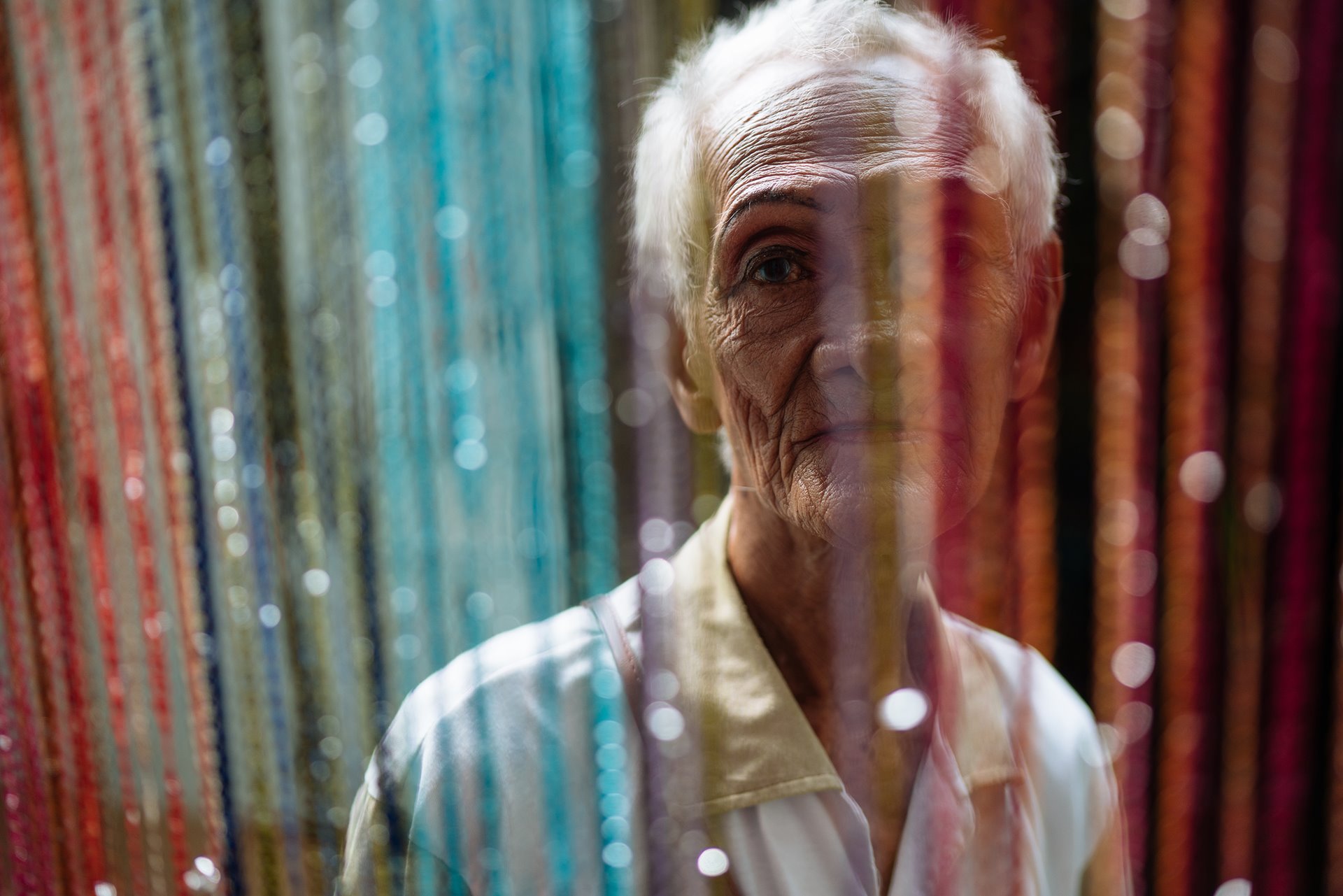
The Home for the Golden Gays is a Philippine non-profit organisation founded by lawyer and activist Justo Justo (1941-2012) in 1975. Justo envisioned "a care home for aging members of the outcasted gay community". After his death, the community were evicted and some members became homeless. Only in 2018, they started renting a house again (via and via and via). Its status, however is still precarious since the shelter depends on irregular and insufficient donations. The elderly residents continue working, giving performances or side gigs as street vendors or haircutters. It is no coincidence that the official slogan they chose is "Don't get sick" (via).

To be old and LGBT can be particularly difficult. Official statistics on the elder LGBT community remain scant, but a survey of LGBT-identifying Filipinos aged between 50 and 74 released in June found that 40% of respondents lacked money for necessities like food and medication. According to the survey, 48% of the respondents feared losing their homes within 2022. Some were unstably housed and others said they lived on the streets or in parks. (via)

- - - - - - - - - - - - -

photograph by Hannah Reyes Morales via

Saturday, 21 September 2024

Flowers at Your Feet. Texas Isaiah's Archive.

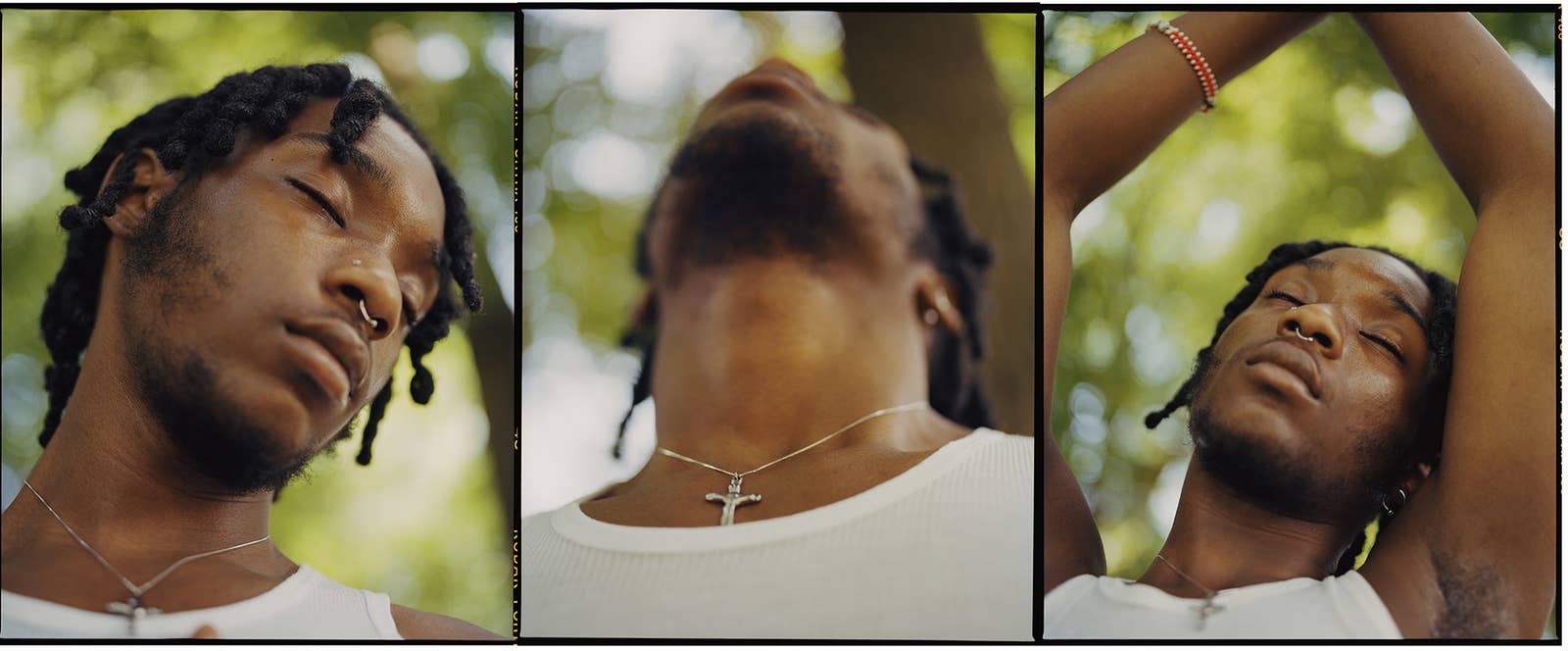
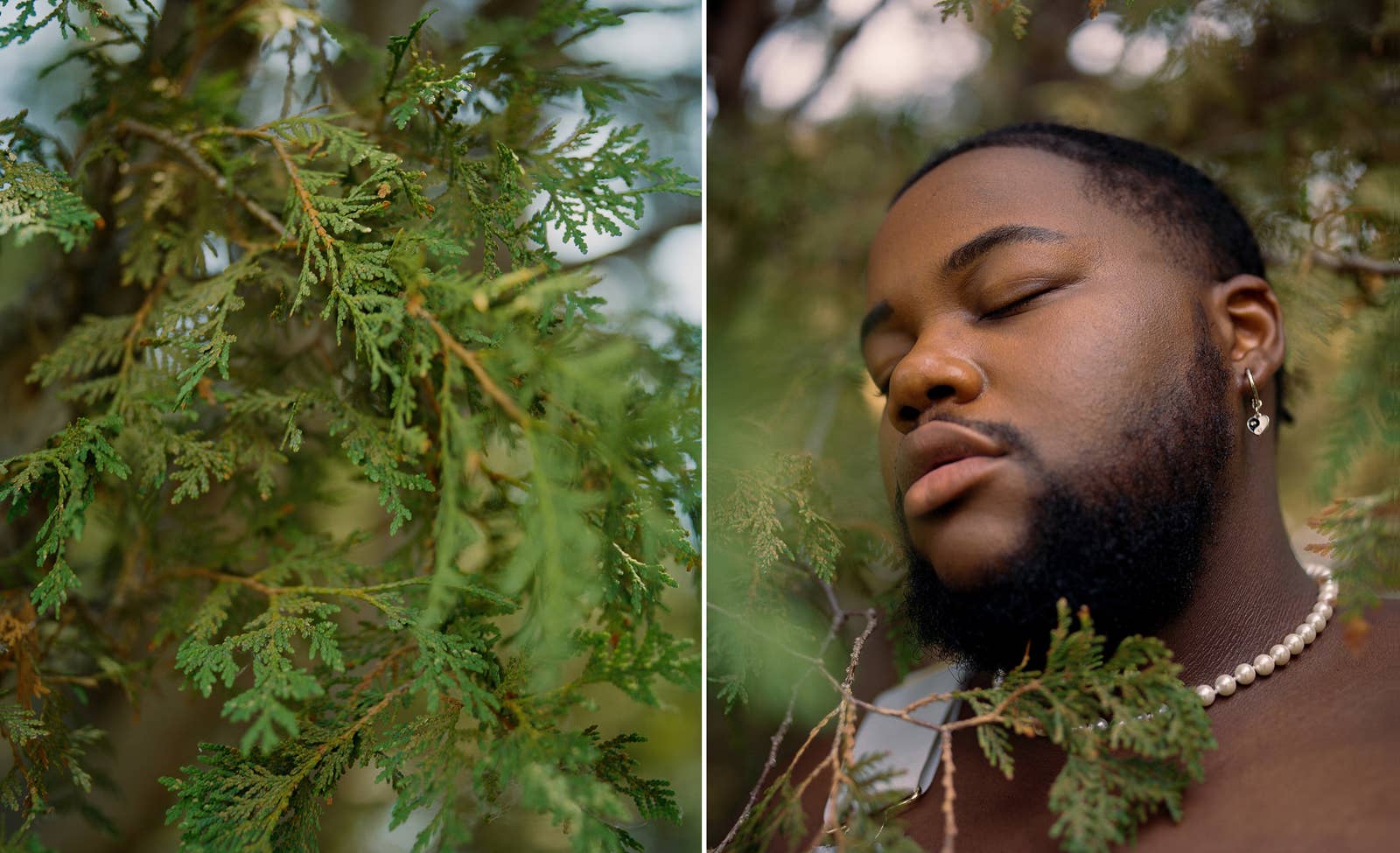
Texas Isaiah is a Black transmasculine photographer and the first trans photographer to shoot for the cover of Vogue and Time. His project "Flowers at Your Feet" started in 2020 and is about memories, gratitude, beauty, and healing;. It is a collection of Black transmasculine portraits, the flowers are the people themselves (via).

Excerpts from an interview:

I was interested in developing a more concrete archive because I had lost a significant amount of people in an eight-month period. People from childhood had passed away, my coworker, and the last person was my grandfather.

Looking back, I didn’t have a visual archive of these people. I just had my memories, and there was a visual loss that resonated with me deeply. I started to think more about what it would look like to contribute to an everlasting archive. Black and brown POC trans people weren’t being imaged a lot during that time, so I thought about the ways I can do that differently that weren’t immediately tethered to media or traditional aspects of representation.

When I was creating the archive, which was Black trans people in general, I didn’t feel a full connection with a lot of the [other trans-centered] work that was being created, especially of just masculine people in general. There are so many reasons why there isn’t a lot more Black trans representation in the media. It was not so much that I wanted to be seen, actually. I wanted to be able to extend space to people who felt invisible, who felt that they didn’t deserve to be imaged. When we look at media, the transmasculine people that are popular and who are extended resources are white transmasculine people.

It’s so important for people to see themselves so that they are able to heal and grow from the things they’ve been taught. There is so much that is projected onto us, and the reality is that we haven’t always been in proximity to the most healthy terrains of masculinity. But I believe that Black transmasculine people — in the ways that we have cared and loved throughout history and today — are really shifting the perspective of what it looks like to be a person of good character who is also masculine.

The beautiful thing about Flowers at Your Feet is that it mostly highlights transmasculine people, which includes trans men. I think that there is so much nuance there because not everybody has the same relationship to their masculinity — not everybody identifies as a man.

And I’ve learned myself that other people desire specificity. I don’t need that for myself because I don’t think that there is always language to describe our existences, and I’ve made peace with that. Those gray areas are really beautiful to me, because that means that I don’t have to lock myself into something that I may grow out of. There’s such a deep desire to keep that open.

Inherently, I view transness as, like, such a deeply spiritual space. I believe that, you know, the spirit doesn’t have to have any specificity. I think that’s such a beautiful thing.

It (Flowers at Your Feet) was something that someone I dated a long time ago used to say to me. I asked them, “What does that mean?’ They said, you know, ‘I’m just giving you your flowers. I’m offering you gratitude.’” And when I was thinking about a Black transmasculine archive, and also the masculine archives that exist today, it was during that era where people were creating a lot of images of Black masculine people and flowers.

That was so beautiful aesthetically, but I don’t think that conversation went as far as it could have. I think it stopped at aesthetics. I decided to use that title for the project to offer my gratitude to Black transmasculine people — past, present, and future — but also to contend with the images made at that time. There aren’t any flowers within the images I make; the flowers are the Black transmasculine people themselves.

Texas Isaiah

- - - - - - - - - - - - - - -

photographs by'Texas Isaiah via and via and via

Sunday, 1 September 2024

Dementia in Transgender Population: Case Vignette

In their paper, Beehuspoteea and Badrakalimuthu (2021) shortly discuss the lack of research on dementia in the transgender population and the specific need for carers to be provided with the psychoeducation necessary to better understand the impact dementia possibly has on transgender persons. They also mention the higher level of stress carers of transgender people might experience and the higher level of stress transgender persons might have when developing dementia. In order to illustrate the complexity of this intersection, the authors present a case vignette:

"A 76-year-old female transgender person was diagnosed with Alzheimer's dementia in 2014 with MOCA (MOntreal Cognitive Assessment) score of 17/30. She was treated with donepezil 10mg OD and prescribed mirtazapine 15mg ON to treat insomnia and low mood. She underwent male to female gender reassignment surgery, including bilateral breast surgery completed in 1960s, and hormonal treatment with estradiol. She considered her sexual orientation to be towards the same sex, and she was in a long-term relationship with a female partner. Her medical history included migraine and she was on propranolol 80mg OD. There was no other significant psychiatric history. She resided in her own flat and her partner lived in a separate flat in the same block. The couple had two of three surviving adopted daughters, both in their forties. The patient's primary carer was her partner and there was no formal care input. In 2016, her MOCA score dropped to 11/30 and she had impaired hygiene and nutrition. In 2018, she started wandering and bringing men to her flat and engaging with them in sexual activities leading to a high risk of vulnerability to abuse culminating in Mental Health Act assessment and admission to a dementia unit. MOCA was not performed due to receptive and expressive dysphasia. In the unit, she presented with insomnia, agitation, dysphasia, having sexually inappropriate conversations with staff about being interested in men, which was a continuation of new behaviour that was identified in the community, as well as making innuendos to female members of staff while talking about herself as a ‘man’. She presented with toileting behaviour that would identify her as male gender, for example standing to urinate as if using a urinal, interpreted as reversal towards biological gender identification. Her partner felt devastated by behaviours exhibited by the patient, which could be identified as male-gender based behaviour aligned with biological gender by birth."

- - - - - - - - - - - -
- Nirja Beehuspoteea & Vellingiri Raja Badrakalimuthu (2021). Dementia in transgender population: case vignette. Progress in Neurology and Psychiatry, link
- photograph by Lissa Rivera via

Tuesday, 27 August 2024

"I feel like a caged pig in here." The Role of Ethnicity in a Nursing Home.

Abstract: Racial disparities in nursing home (NH) quality of life (QOL) are well established, yet, little is understood about actual experiences shaping QOL for Black, indigenous, and people of color (BIPOC) residents in NHs. This gap extends to BIPOC residents with limited English proficiency (LEP). 


Drawing on Kane's (2001) and Zubristky's (2013) QOL frameworks, this case study examined QOL experiences for Hmong NH residents, an ethnic and refugee group from Southeast Asia, in a NH with a high proportion of BIPOC residents. Methods include four months of observation, interviews with eight Hmong residents and five NH staff, and one community focus group. Thematic analysis revealed significant challenges in QOL. Exacerbated by language barriers and racism, many residents reported neglect, limited relationships, lack of meaningful activities, and dissatisfaction with food. These experiences fostered a sense of resignation and diminished QOL among Hmong residents, highlighting the need for additional supports for this group. (See Thao, Davilla & Shippee, 2024)

- - - - - - - - - - - - - - -
- See Thao, M., Davilla, H., Shippee, T. (2024).  "I feel like a caged pig in here": Language, Race, and Ethnic Identity in a Case Study Hmong Nursing Home Resident Quality of Life. Journal of Applied Gerontology, link
- photograph by Flip Schulke via

Friday, 14 June 2024

The Tradwife Persona

For a great many women, tradwife is an identity. Tradwives are women who believe in what is considered as traditional gender roles usually including "hetereosexual marriage with masculine dominance and feminine subservience, child-rearing, homeschooling,  and right-wing political ideals". In his article, Proctor examines three well-known online tradwife persona: Alena Kate Pettitt (The Darling Academy), Caitlin Huber (Mrs. Midwest), and Ayla Stewart (Wife with a Purpose). 

His focus is on how forms of racism and sexism manifest in their performances to "1) establish tradwifery as a legitimate practice and form of identification, 2) illustrate how a person should act/talk/live to be considered a tradwife, and 3) establish themselves as part of a community of tradwives". 

Tradwifery is inherently sexist and explicitly anti-feminist since women are portrayed as subservient to men and feminism is attacked calling for a return to so-called traditional feminine gender roles. Many tradwives call their ideology and lifestyle "choice feminism". In other words, as the choices are made by women they are automatically declared to be feminist choices.

The decisions to stay at home “may be presented as entirely personal. However, they are inseparable from the profound crisis of both work and care under neoliberal capitalism” (Rottenberg & Orgad 2020). So those women who choose to not work are exercising a privilege to embody a traditional version of feminine gender roles, as these traditions are often “frozen moments in history arbitrarily chosen from the cultural repertoire as “the’ authentic expression of the national collective” (Christou 2020). Indeed, very likely these arbitrary historic traditions themselves are complete inventions (Hobsbawm 1992). For instance, it is a myth that women in the far past didn’t work. They were wives and mothers, but also worked the fields, brewed mead, sold and bartered goods, spun wool, and very often worked alongside guildsmen to learn a trade (Shahar 2003). By framing the woman’s role in the home as ‘traditional’, tradwives continue a long project of delegitimizing women’s contributions in the workforce as separate and less valid than the formalized economy of male labour (Milkman 2016).

While sexism is quite obvious, the link between tradwifery and racism is comparably more subtle. The movement promotes white, western heteronormative ideals of gender roles taken from white middle-class US-Americans in the 1950s. The construction of the fragile woman was something white women had access to, not Black women, as the distribution of labour was different among the Black population. The tradwife movement is not explicitly racist or extremist. However, tradwife culture is useful to white supremacists.

In 2018, Ayla Stewart (censored several times) described her site as "an online forum which brings together people interested in God's plan for happy families and wives dedicated to traditional homemaking. It also serves youth interested in an alternative to feminism and liberal ideology". While Stewart is vocal on issues of feminism and ethnicity, Caitlin Huber and Alena Kate Pettit shy away from overt statements and focus more on institutional and corporate aspects of their personas and making money.

Huber has a ‘Shop’ tab on her blog that links out to allow purchase of her “favourite things”. She does not produce these items, but in the site’s frequently asked questions, she explains: “I get ad money from YouTube from my videos, and when I do a sponsorship, I will negotiate to get paid. I also get a little money from any links that I offer to y’all from Amazon!” (Huber 2022). She is letting us know (with a colloquial “y’all”) that even though she is making money from this, she’s really just like us: a normal person, where ‘normal’ is code (for all three women) as white, middle-class, heterosexual, cisgendered, neurotypical, and able-bodied. Pettitt takes corporate agency a step further by offering her own books on ‘Traditional Lifestyle & Etiquette’—co-authored by herself and The Darling Academy—for purchase via Amazon link.

The author points out that while the concept of tradwifery clearly contains aspects of misogyny and white supremacy, not all tradwives are anti-feminists or white nationalists (Proctro, 2022).

- - - - - - - - - -

- Proctor, D. (2022). The #Tradwife Persona and the Rise of Radicalized White Domesticity. Persona Studies, 8(2), 7-26; link
- photograph via

Saturday, 25 May 2024

Twice As Likely

"Women are twice as likely to be diagnosed with dementia. 
They are also far more likely to care for a person with dementia."
Alzheimer's Society

photograph of Monica Vitti (1968) via

Thursday, 2 May 2024

Identity Politics and Vaccine Distribution

"For me, the most important and the most shocking was the way in which the United States rolled out vaccines in 2021. We had these amazing life-saving vaccines, but there were too few of them, so what were we going to do? Virtually every country in the world did it by age. But the key advisory committee to the Centers for Disease Control, called ACIP, said that even though that course of action is much easier to implement, we're not going to do that. It would, they said, be unethical because a disproportionate number of older Americans are white. Even though, according to their own causal models, adopting a different rule would increase the number of deaths by between 0.5 and 6.5%, could lead to thousands more people dying, simply prioritizing older people would be the ethically wrong thing to do. 


Instead, they recommended putting essential workers, who supposedly are more diverse, first. A couple of things happened because of that. One is that it's really hard to communicate who's an essential worker. And immediately the politicking started about being included as essential workers: Film crews were essential workers. Finance executives were essential workers. I was an essential worker, as a college professor in Maryland, at a time when I was not allowed to teach classes in person…

Then what happened is that you had way too many people eligible for the vaccine at a time when there were barely any appointments. So who got the appointments? The people who were able to refresh the websites for hours a day, or who could write computer programs to find eligible spots, or who were able to drive hours out of town in order to get to some rural pharmacy that had more capacity for some reason. They were the ones to get it. In other words, more privileged people who were probably at slightly less risk of death. AI suspect that this policy even killed more non-white people, because if you give a vaccine to two 25-year-old black Uber drivers, rather than one 80-year-old black retiree, more black people are going to die.

So here's a policy that is a life or death question; is capable of inspiring just the worst kind of zero-sum racial competition in our politics; and can easily be exploited by the political right (...)"


- - - - - - - -
- photograph by Dennis Feldman (1969-1972, Hollywood) via
- Yasha Mounk, full interview: link

Wednesday, 24 April 2024

The Coded Gaze

"You've likely heard of the 'male gaze' or the 'white gaze. This is a cousin concept really, about who has the power to shape technology and whose preferences and priorities are baked in — as well as also, sometimes, whose prejudices are baked in.“


"The goal of AJL is to create a world with more inclusive technology by fighting “the coded gaze”, my term for bias in artificial intelligence that can lead to exclusionary experiences or discriminatory practices. The coded gaze is a view that posits any technology created by humans will reflect individual or collective values, priorities and if unchecked, prejudices. To address bias, the coded gaze must be acknowledged. Exploring the coded gaze can inform ways to make artificial intelligence more inclusive. AJL fights the coded gaze through a bias-busting strategy that (1) highlights bias by raising public awareness on the shortcomings of artificial intelligence through media production, public talks, and exhibitions, (2) identifies bias by conducting research and building tools that practitioners and researchers can use to check datasets and algorithms for demographic and phenotypic bias, and (3) mitigates bias by providing inclusive benchmarks and best practices to create more inclusive artificial intelligence." (Buolamwini, 2017)

- - - - - - - - - - - - - - - -
- Buolamwini, J. (2017). Gender Shades: Intersectional Phenotypic and Demographic Evaluation of Face Datasets and Gender Classifiers. MIT: MA Thesis.
- photograph by Vivian Maier via

Sunday, 5 November 2023

Feeling One's Underrepresentation in the Beauty Industry

"Mirror/Mirror: Survey of Women's Reflections of Beauty, Image and Media" is a survey conducted in 2019. It found that 64% of women aged 39 to 54 and 74% of women aged 55 to 73 feel that the beauty industry creates products not having people their age in mind and that they are underrepresented in beauty advertising. More than 70% of the women across both age groups state that they would be more likely to purchase from brands that are more inclusive in terms of age. 76% of women aged 22 to 38 agree with this statement (via).

photographs of Joan Crawford by Eve Arnold (1959) via 

Friday, 6 October 2023

Fugitive Feminism. By Akwugo Emejulu.

"Fugitive feminism is a doorway through which I imagine Black women leading the way into the non-human, or perhaps, a beyond-human, future. Fugitive feminism is both the promise and the act of self-rebirthing, into a different reality, where we no longer are circumscribed by the assumptions of humanity that have shaped our liberations struggles by turning our backs on the very thing for which we have struggled for generations - inclusion in womanhood and humanity."
Emejulu (2022:31)

::: Related posting: Fleeing Humanity

- - - - - - - - - - - - - -

- Emejulu, A. (2022). Fugitive Feminism. Silver Press.
- photograph via

Friday, 22 September 2023

Cursed by Night. By Hannah Price.

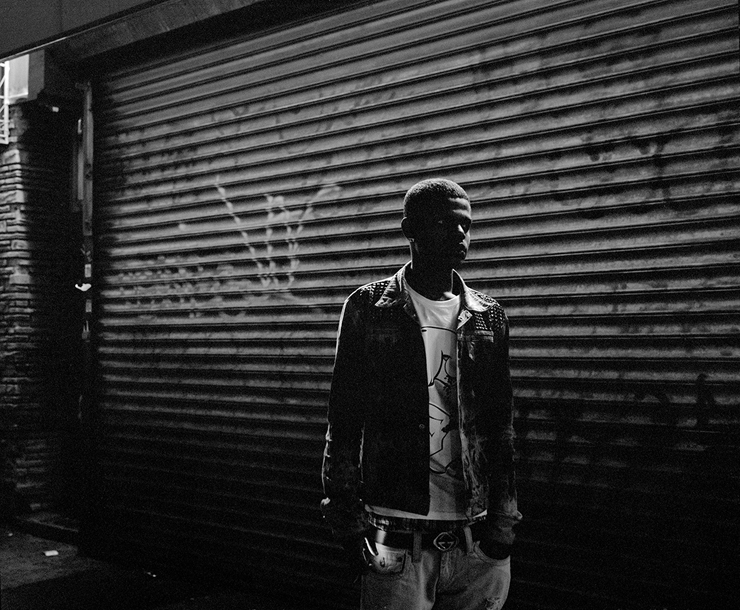
Cursed by Night is a series of photographs taken between 2012 and 2013 in Brooklyn, Harlem, Harford, CT, and Philadelphia, PA. In it, my lens portrays a world of darkness to which black males are unfortunately tied, and by which they find themselves cursed. Together, these images form a narrative in which the aiblity to perceive the subject of each portrait is disrupted by the fearful projections of those who understand the world in rigid terms of black and white. This narrative finds its basis in reality: advancements in mobile photography and video have allowed the disturbing frequency of racial fear and its consequences highly visible. We all know how this story often ends.

The darkness of nights acts as both a backdrop and a shroud in my portraits. The subjects belong to it, but in this context they are visually and conceptually obscured by it. A famliar visual language dominates the images: the sharp shadows cast by street lamps, the empty sidewalk, the atmosphere of foreboding. We recognize this as the sterotypical landscape of danger, of menace, of black and everything associated with it. In these photographs, the darkness distorts the representation of its subjects, rendering them as threats, or as invisible. We recognize this as the stereotypical landscape of danger, of menace, or the absence of light and everything associated with it. In these photographs, the darkness distorts the representation of its subjects, rendering them as threats, or as invisible.

"Black" is inseparable from a dense web of figurative connotations, all of them negative: impurity, sin, death, evil. These associations make up the lens through which blackness is perceived by many, and ultimately they are inherited as the burden (the curse) of black men. By using this black and white mode of seeing and following its conventions, Cursed by Night aims to challenge and reveal its power. 
Hannah Price

My role as a photographer is to communicate visually. And personally, for Cursed by Night, I want to document life and politics along with adding the concept of horror. Black men being racially profiled has existed forever in America. Using visual techniques to force a conversation on this particular social issue was my personal goal. Mostly, I hope to just make people think about how they themselves react to black men, even though the work is dark and projects innocent black men in a negative light (which is what racial profiling does). This blatant imagery allows me to talk about the concept and how it affects innocent people’s lives –sometimes by taking their lives.I am also proposing that reaching an understanding of the difference between reality, and the perceptions maintained by non-black people, is the only way we the people can help end this curse.
Hannah Price

photographs by Hannah Price via

Saturday, 16 September 2023

Lunar Geisha. By Michelle Watt.

When Michelle Watt was four, her family left China and moved to the US where she grew up. As a young woman, Watt bar-tendered for a couple of years in New York and experienced what it means to be turned into the fetishised Asian woman. 

It happens still to this day, but you know how you’re treated as a young woman behind a bar. You’re like a baby sheep in a pack of wolves. And my Asianness kept coming up as a way in for them. Michelle Watt

Michelle Watt's reaction was to create "Lunar Geisha", surrealistic compositions, a portrait series of a Geisha, the metaphor for the hypersexualised Asian woman. In her photographs, Watt also symbolises the "good daughter" within Asian society and the object of desire within the US-American one (via). The series explores how Asian women "are thrust into playing certain roles, the ways in which they become complicit in those stereotypes and the ways in which they rebel against them" (via).

It’s not really an inspiration as much as it’s a compulsion to work it out. Deconstructing it through staging and storytelling and narrative in these symbolic ways ends up being a really healing way of dealing with those things.
Michelle Watt

“I wanted to show how, even within Asian society, women are forced to play roles in ways that they may not necessarily want to; roles that may often be silencing them. And how – in order to fit in, in order to find a sense of belonging – we betray ourselves, and we play along.”
Michelle Watt

“Am I being hired because I’m being used as a token? Is that okay? Am I going to fight that? It’s complicated. I always feel like I’m asking these questions.”
Michelle Watts

“I crave things like belonging and love. I want to feel like I’m attractive and to have that validated by men — or by anyone. And so I’ve been complicit in fulfilling these stereotypes in order to gain the favour of others. But the first step of breaking any sort of bad behaviour or habit is to recognise it. So making stories like this helps me address that.”
Michelle Watt

“It’s complicated because you want to play that part because you want to belong somewhere. But you also don’t really like that part, so you don’t really want to play the part. That’s kind of confusing. Codependency is a huge theme there.”
Michelle Watts

photographs via and via

Friday, 25 August 2023

"Darling, I want my gay rights now!" Marsha P. Johnson

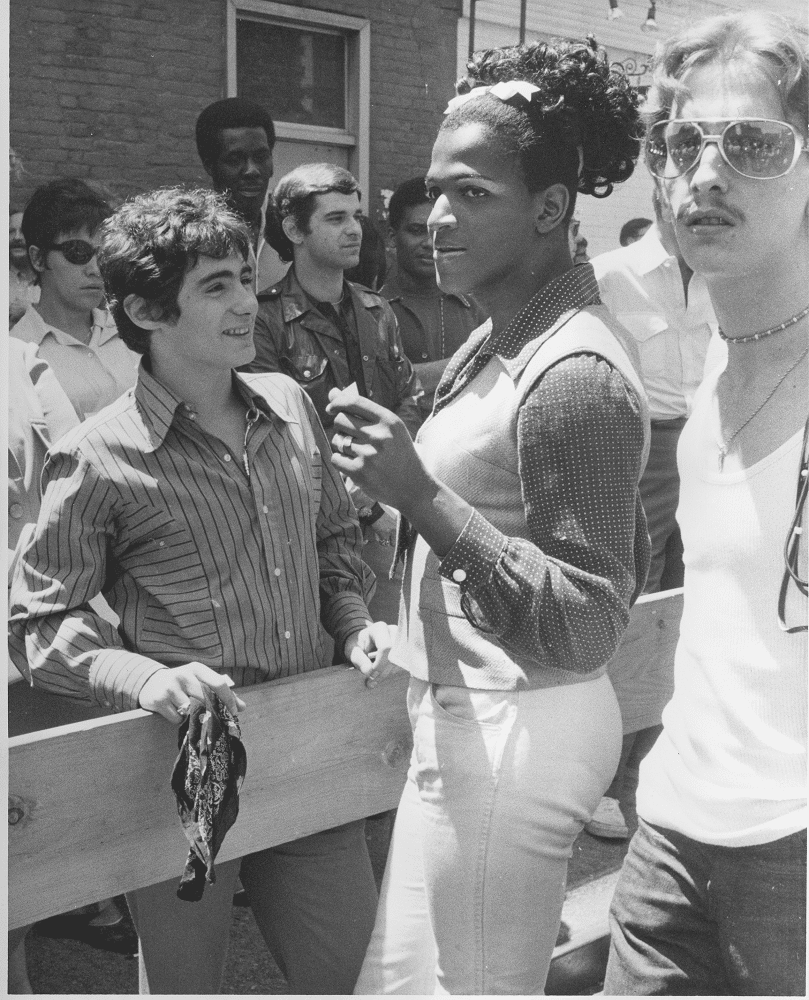
Marsha P. Johnson (1945-1992), born Malcom Michaels Jr., moved from New Jersey to New York City aged seventeen. There, she adopted the name Marsha P. Johnson, "P." standing for "Pay It No Mind" - her life motto and reply to questions regarding her gender. 


Marsha called herself a gay person, a transvestite, and a drag queen. At the time, the term transgender was not commonly used.  She was near the Stonewall Inn on 28th of June 1969, the night the police raided the bar and the patrons fought back. Apparently, Marsha was on the front lines, the stories about her role vary and range from her starting the uprising to her climbing a lamppost and dropping a purse onto a police car damaging its windshield. Marsha attended rallies, sit-ins and meetings of the Gay Liberation Front whose work she appreciated. At the same time, however, she expressed frustration about how transgender were invisible and how white gay men and lesbians dominated the conversation.
How many years has it taken people to realize that we are all brothers and sisters and human beings in the human race? I mean how many years does it take people to see that? We’re all in this rat race together!
In 1970, her fiend Sylvia Rivera had the idea to create a place where transpeople could live and feel safe. Together they founded the Street Transvestite Activist Revolutionaries (STAR) offering a home and breakfast to those in need. Marsha became "Saint Marsha".
I’d like to see the gay revolution get started… If a transvestite doesn’t say I’m gay and I’m proud and I’m a transvestite, then nobody else is going to hop up there and say I’m gay and I’m proud — and I’m a transvestite for them.
Marsha P. Johnson worked as a sex worker, waiting tables, and performing in drag shows., spent most of her life without a permanent home. Danger and poverty accompanied her life, she contracted AIDS in 1990, and was arrested more than 100 times. In 1992, her body was found in the Hudson River. The police ruled her death a suicide, her friends disagreed and called it a hate crime. In 2012, the NYC Police Department agreed to open the case again; the case is still unsolved (via).


“As long as gay people don’t have their rights all across America, there’s no reason for celebration.”

“I was no one, nobody, from Nowheresville, until I became a drag queen.”

“We have to be visible. We should not be ashamed of who we are.”

‍“Darling, I want my gay rights now!”

“I don’t know what I am if I’m not a woman.”

“I’d been going to jail for like 10 years before the Stonewall.”

“There are a lot of gay transvestites who have been in jail for no reason at all.”

“I started out with makeup in 1963 and 1964. In 1965, I was coming out more, and I was still wearing makeup but I was still going to jail just for wearing makeup.”

“Gay sisters don’t think too bad of transvestites. Gay brothers do.”

“Now they got two little nice statues in Chariot Park to remember the gay movement. How many people have died for these two little statues to be put in the park for them to recognize gay people?”

- - - - - - - - - -
photographs (first one by Johnny Romanek) via and via

Monday, 21 August 2023

The Missing (Young) White Woman Syndrome

In 2004, journalist Gwen Ifill (1955-2016) introduced the phrase "Missing White Woman Syndrome" at a conference. She responded to news anchor Suzanne Malveaux who pointed out that there was a disparity in US media coverage with missing white, young women receiving more attention than non-white women and men. According to her, the media had failed to cover international genocides including Rwanda showing more interest in the two figure skaters Kerrigan and Harding than in a million genocide victims: "In 1994, during Rwanda, we were looking at Nancy Kerrigan and Tonya Harding." "If it's a missing white woman, you're going to cover that, every day," Ifill responded (via). Later, Jon Stewart came up with the following algorithm for media coverage of missing people: Family Income x (Abductee Cuteness ÷ Skin Color)2 + Length of Abduction x Media Savvy of Grieving Parents (via).

13% of the US population and 31% of missing persons are Black; 76% of the US population and 54% of missing persons are white. Findings of a study carried out in 2013 show that missing white women are covered significantly more often than everyone else (via).

(...) what is missing from the popular disparity discourse surrounding “Missing White Woman Syndrome” is that cops and cover stories were never meant to rescue our loved ones, and those of us who make this demand might turn up empty.

In her article, Purnell explains the status quo with history, with white women's "cries and lies" galvanising law enforcement and lynch mobs to act on their behalf for many centuries. When the White-Slave Traffic Act was passed in 1910 to combat sex slavery and human trafficking, police officers and investigators were sent to "rescue" white women forcibly removing them from their homes in which they were living with Black men, immigrants, poor white men. At the same time, when the same white women demanded voting rights, education, equity, or housing, these efforts were resisted by their "rescuers". According to Gruber, "white women's alliance with law enforcement stemmed from not just racism and racial ptivilege but also women's need for power and protection in a society that significantly restricted their social, sexual, and economic liberty". From this perspective, the responses to missing white women are rather a failure of society than an accomplishment or a goal. Although a lot has changed for the better, there is still "the notion that the amount of media coverage that a missing person receives, or the number of resources that police expend to find them, is a litmus test for the value of Black life" (via).

More recently, a sample of 3.600 articles (newspapers, TV, raio, online outlets) about missing people published between January and November 2021 was analysed. The conclusion: "If you're young, white, female, and a resident of a big city, the coverage you'd receive if you went missing is vastly out of proportion". A white young woman missing in New York, for instance, could be covered in 67 news stories while a young Latino male would appear only 17 times and a middle-aged Black man would receive a maximum of four mentions (via).

A Black man who went missing in St. Louis, for instance, would only garner 12 news stories, while a young white woman from the same town would attract ten times the media coverage. (via)

In Washington specifically, Indigenous people represent only 1.9% of the state’s population, yet they account for 6% of active missing person reports. But “the actual number of missing and murdered Indigenous women and girls is likely much higher,” as Indigenous persons, just like Latinx people, “are often inaccurately reported or listed as White in law enforcement databases.” Indigenous women go missing at ten times the national average, yet there are no high-profile cases, obsessive social media followings or extraordinary efforts by law enforcement to solve their cases. (via)

An analysis of the intersection of ethnicity and gender on the media coverage of missing persons showed that 49.74% of articles were dedicated to white women while only 17.40% covered white men. The numbers might not be absolutely correct (since e.g. many cases go unreported, databases have different definitions of "white", white women are kidnapped at higher rates) but the tendency is clear (via).

On this website (Columbia Journalism Review) you can calculate how "pressworthy" you are: LINK

- - - - - - - - - - - - - - - 
photograph by Peter Lindbergh (Paris) via

Tuesday, 15 August 2023

The Legacy of Slavery. By Angela Y. Davis.

When the tentative pre-Civil War forays into factory work gave way to an aggressive embrace of industrialization in the United States, it robbed many white women of the experience of performing productive labor. Their spinning wheels were rendered obsolete by the textile factories. Their candlemaking paraphernalia became museum pieces like so many of the other tools which had previously assisted them to produce the articles required by their families for survival.

As the ideology of femininity - a by-product of industrialization - was popularized and disseminated through the new ladies' magazines and romantic novels, white women came to be seen as inhabitants of a sphere totally severed from the realm of productive work. The cleavage between the home and the public economy, brought on by industrial capitalism, established female inferiority more firmly than ever before. "Woman" became synonoymous in the prevailing propaganda with "mother" and "housewife", and both "mother" and "housewife" bore tha fatal mark of inferiority.

But among Black female slaves, this vocabulary was nowhere to be found. The economic arrangements of slavery contradicted the hierarchical sexual roles incorporated in the new ideology. Male-female relations within the slave community could not, therefore, confirm to the dominant idiological patterns (Davis, 1981:9)

Most scholarly studies have interpreted slave family life as elevating the women and debasing the men, even when both mother and father were present. (...)

It is true that domestic life took on an exaggerated importance in the social lives of slaves, for it did indeed provide them with the only space where they could truly experience themselves as human beings. Black women, for this reason - and also because they were workers just like their men - were not debased by their domestic functions in the way white women came to be. Unlike their white counterparts, they could never be treated as mere "housewives". But to go further and maintain that they consequently dominated their men is to fundamentally distort the reality of slave life. (ibid.:13)

- Davis, A. Y.  (1981). Women, Race & Class. Penguin Books, 12th edition
- photographs of Angela Davis (East Berlin, 1973) via 

Friday, 4 August 2023

Fleeing Humanity. By Akwugo Emejulu.

"When did you first learn that you were a non-human? For me, it was a slow realisation. To begin with, I formly rejected the idea. When a white boy in third grade called me a n*gger and I ran to my white teacher in tears, she, unmoved, simply shrugged her shoulders and told me to ignore it. And that was that. (...)" Emejulu (2022:11)

"Granny, as we called her, had incredible stories. Her stories were my first introduction to Blackness, and, by extension, aspirational humanness." (ibid.:15) "My grandmother did not want to be white, even though (...) she had the ability to disappear into whiteness. It never occurred to her to be white - she wanted to be human. But, of course, I now understand that it is impossible to separate the two." (ibid.:17)

"The understanding of my non-humanity crept up on me and now I cannot let it go. I want to pick it up, turn it over in the light. Study it. Understand it. And embrace it. I can't say exactly how I came to this realisation. I felt my exclusion from the supposedly universal category of the 'human' most keenly in my alienated relationship to the social sciences: much of it didn't apply to me or Black women more generally because it was the work of white scholars describing their implicitly white world. Also, in my exhausting encounters in feminist activist and academic circles, I had to constantly remind my white 'sisters' that Black women were, in fact, women (...). (ibid.:19f)

"To believe I am non-human does not mean I believe in my own inferiority. Rather, it means I believe that the human is a construction of whiteness and any discussion about Black inferiority is a product of the futile struggle to be recognised as human." (ibid.:23)

- - - - - - - -

- Emejulu, A.  (2022). Fugitive Feminism. Silver Press.
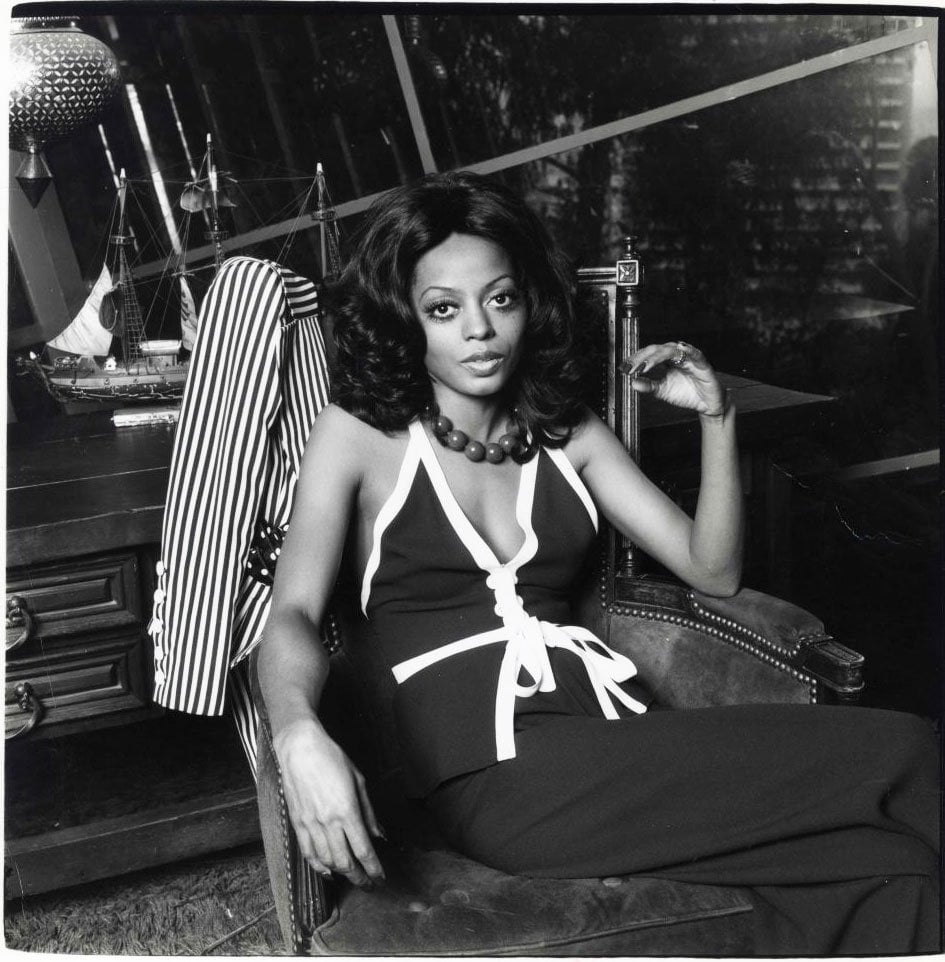
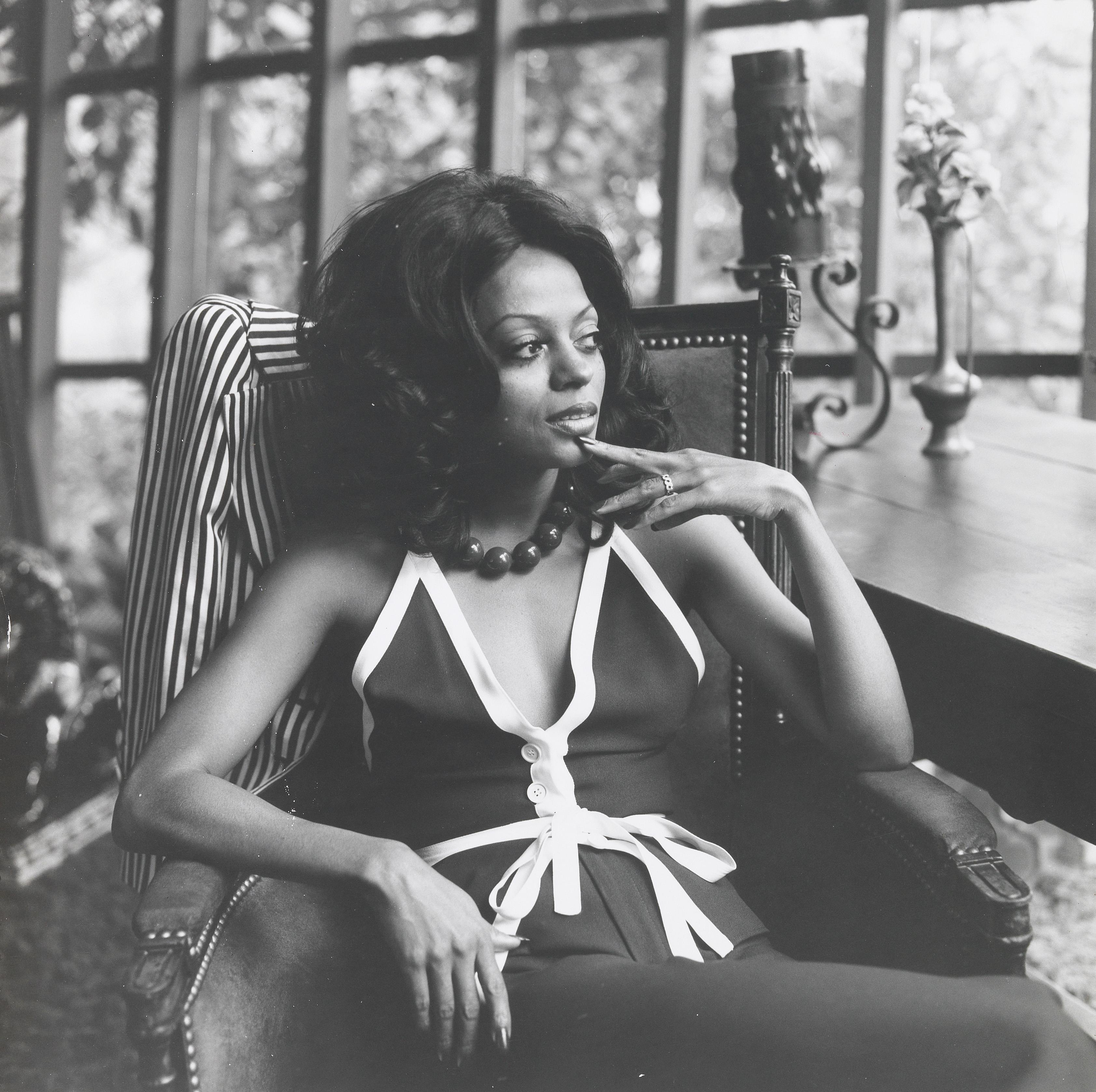
- photographs of Diana Ross by Harry Langdon via and via 

Tuesday, 20 December 2022

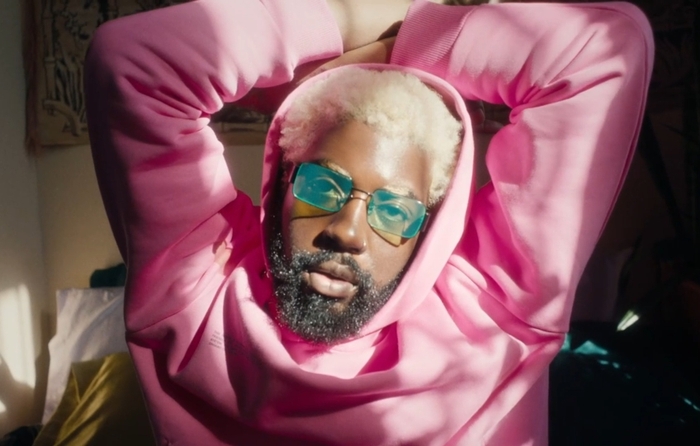
Last year, the brand PANGAIA released a film honouring Black and queer communities. The film was directed by Rodney Passé, the people portrayed are a DJ, an urban educator, a stylist, and a musician.

(...) these community activists take a tour of places in Brooklyn that evoke a sense of collective care and resilience. Woven throughout this uplifting portrait of Blackness and queerness is the soft caesuras and storied stanzas of an original poem written by Jasmine Mans, who is also featured in Wè.

::: Watch the short film:

- - - - - - -
image via

Thursday, 8 December 2022

Drag Syndrome

The starting point is the art.
Before Downs Syndrome,
before extra chromosome, before disability,
before anything.
artists

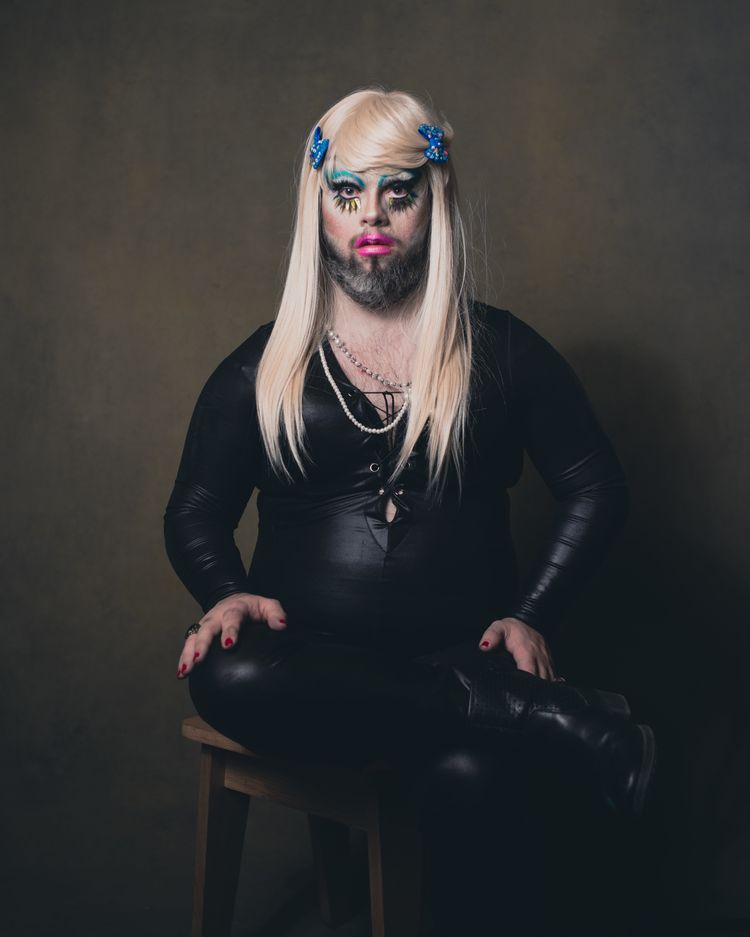
Drag Syndrome is a London-based collective that uses the power of drag to promote "a message of radical acceptance for those with disabilities". All performers are artists with Down syndrome, each constructs a drag personality that helps make them visible, be judged on their skills rather than their disability, and - as director Daniel Vais says - celebrate who they are. Drag Syndrome now performs regularly at festivals in the UK and Europe and already has a large fan base (via).

"A producer had invited me to see a space in East London. So I went with Sara Gordon, one of our models and dancers, to the Christmas party last year. During the event there were performances by drag queens, which prompted me to ask Sarah if she would ever be open to experimenting with drag. And she replied straight away saying it would be absolutely fascinating. Right on the spot I came up with the title, Drag Syndrome. 

From there, I spoke with all the artists and asked them if they would want to try it. They were all very enthusiastic about it. But I told them that drag is not just a costume. Drag is about transformation. It's an art form. So the performers started researching it and each began developing their own characters.

Drag is all about empowerment and transformation. It allows you to be a bigger version of yourself and express yourself in a way that's more surreal. There's so much fantasy and freedom to it. This is an opportunity for our performers to express themselves in a way they don't usually get to on a regular basis, in these kind of settings. They love it. They are really enjoying what they do and the characters they play.

We've received big support from the drag world. All the biggest and most influential drag queens and kings have connected with us and supported us. Beyond this, many celebrities and really famous people, including top dancers and photographers, have been really supportive and understand that this is a special performing arts project.

This is just another layer of drag, and it gives our performers a chance to hang around with young audiences and be a part of arts and culture, which is what they really want. It allows them to show their talents. This isn't really a social project, but we do give opportunities to performers and artists who have Down syndrome and put them into a mainstream context. Yes, these are artists who have Down syndrome, but it's not the main issue. Audiences see beyond that. That's why we get loads of great responses and people really enjoy it. The extra chromosome is only a bonus."

Daniel Vais

- - - - - - -

photographs via and via and via and via 

Saturday, 3 December 2022

Black Drag Magic. By Lee-Ann Olwage.

In her series "Black Drag Magic", photographer Lee-Ann Olwage focuses on the intersection of gender identity and the South African context, a "beautiful and unique place", as she says, with "a complex and diverse nation who are still in the beginning of finding and celebrating our identity". In 1996, discrimination in terms of sexual orientation was outlawed. Dangers, however, are still persisting today (via).

Above: Professional drag performer Belinda Qaqamba Ka-Fassie came up with the idea for this series in collaboration with photographer Lee-Ann Olwage. “My performances are inspired by the human condition, or rather the ‘black queer condition,'” Ka-Fassie says. (literally via)
My most recent work, #blackdragmagic, tells the stories of Black queer, gender-nonconforming and trans people who grew up and live in the townships of Cape Town. The project is about augmenting the power of daily township-spatial navigation, migration, culture, gender and sexual identity. I wanted the project to serve as a platform for Black queer bodies where they were invited to co-create images that told their stories in a way that is affirming and celebratory. 
We shot in Khayelitsha, a partially informal township in Western Cape, South Africa, located on the Cape Flats. While the township is their home, it is also a place where they are subjected to harassment, violence and discrimination on a daily basis. The process of creating the project became a radical, progressive act to reclaim the township and to stand up against the overwhelming climate of discrimination Black queer people face.
Above: Mthulic Vee Vuma poses wearing traditional Xhosa female clothing and holding a beaded stick used in marriage ceremonies. “The meaning of the clothing I am wearing is to love and accept our culture,” Vuma says. (literally via)
[It] takes a deeper look at how gender and sexual identity are influenced by cultural identity in South Africa,” she says. “They cannot be separated from each other yet, in South Africa, cultural identity often denies that queer identity exists.
Above: Mthulic Vee Vuma poses in traditional Xhosa clothing at the *tshisanyama* meat market. (literally via)

- - - - - - - -
photographs via

Sunday, 13 November 2022

After Black Power, Women’s Liberation. By Gloria Steinem (1969)

Once upon a time—say, ten or even five years ago—a Liberated Woman was somebody who had sex before marriage and a job afterward. Once upon the same time, a Liberated Zone was any foreign place lucky enough to have an American army in it. Both ideas seem antiquated now, and for pretty much the same reason: Liberation isn’t exposure to the American values of Mom-and-apple-pie anymore (not even if Mom is allowed to work in an office and vote once in a while); it’s the escape from them.


For instance: 

(...)

A coven of 13 members of WITCH (The Women’s International Terrorist Conspiracy from Hell, celebrating witches and g*psies as the first women resistance fighters) demonstrates against that bastion of white male supremacy: Wall Street. The next day, the market falls five points.

More witches and some black-veiled brides invade the Bridal Fair at Madison Square Garden. They carry signs (“Confront the Whore-makers,” “Here Comes the Bribe”), sing, shout, release white mice in the audience of would-be brides, and generally scare the living daylights out of exhibitors who are trying to market the conventional delights of bridal gowns, kitchen appliances, package-deal honeymoon trips and heart-shaped swimming pools.

At the end of the Columbia strike, the student-run Liberation School offers a course on women as an oppressed class. Discussions include the parallel myths about women and N*groes (that both have smaller brains than white men, childlike natures, natural “goodness,” limited rationality, supportive roles to white men, etc.); the paternalistic family system as prototype for capitalistic society (see Marx and Engels); the conclusion that society can’t be restructured until the relationship between the sexes is restructured. Men are kept out of the class, but it is bigger and lasts longer than any other at the school.

(...)

What do women want? The above events are in no way connected to the Bloomingdale-centered, ask-not-what I-can-do-for-myself-ask-what-my-husband-can-do-for-me ladies of Manhattan, who are said by sociologists to be “liberated.” Nor do the house-bound matriarchs of Queens and the Bronx get much satisfaction out of reading about feminist escapades. On the contrary, the whole thing alienates them by being a) radical and b) young.

The women behind it, and influenced by it, usually turn out to be white, serious, well-educated girls; the same sort who have labored hard in what is loosely known as the Movement, from the Southern sit-ins of nine years ago to the current attacks on the military-industrial-educational complex. They have been jailed, beaten and Maced side-by-side with their social-activist male counterparts. (It’s wonderful to see how quickly police from Selma to Chicago get over a reluctance to hit women.) They have marched on Senate committees, Pentagon hawks, their own college presidents and the Chase Manhattan Bank. But once back in the bosom of SDS , they found themselves typing and making coffee.

“When it comes to decision-making or being taken seriously in meetings,” said one revolutionary theorist from Berkeley, “we might as well join the Young Republicans.”

(...)

Finally, women began to “rap” (talk, analyze, in radical-ese) about their essential second-classness, forming women’s caucuses inside the Movement in much the same way Black Power groups had done. And once together they made a lot of discoveries: that they shared more problems with women of different classes, for instance, than they did with men of their own; that they liked and respected each other (if women don’t want to work with women, as N*groes used to reject other N*groes, it’s usually because they believe the myth of their own inferiority), and that, as black militants kept explaining to white liberals, “You don’t get radicalized fighting other people’s battles.”

(...)

The older, middle-class women come first, the ones who tried hard to play subordinate roles in the suburbs according to the post-war-baby-boom-women’s magazine idyll but found Something Missing. Betty Friedan, who explained their plight clearly and compassionately in The Feminine Mystique, named that Something: rewarding work. But when these women went out to find jobs, they found a lot of home-truths instead.

For instance, there is hardly a hierarchy in the country—business, union, government, educational, religious, whatever—that doesn’t discriminate against women above the secretarial level. Women with some college education earn less than men who get as far as the eighth grade. The median income of white women employed full time is less than that of white men and Negro men. The gap between women’s pay and men’s pay gets greater every year, even though the number of women in the labor force increases (they are now a third of all workers). Forty-three states have “protection legislation” limiting the hours and place a woman can work; legislation that is, as Governor Rockefeller admitted last year, “more often protective of men.” The subtler, psychological punishments for stepping out of woman’s traditional “service” role are considerable. (Being called “unfeminine,” “a bad mother” or “a castrating woman,” to name a traditional few.) And, to top it all off, the problem of servants or child care often proves insurmountable after others are solved.

In short, women’s opportunities expanded greatly for about 15 years after they won the vote in 1920 (just as N*groes had more freedom during Reconstruction, before Jim Crow laws took over where slavery had left off), but they have been getting more limited ever since.

The middle-class, educated and disillusioned group gets larger with each college graduation. National Organization for Women (NOW)—founded in 1966 by Betty Friedan, among others, “to bring women into full participation in the mainstream of American society now, exercising all the privileges and responsibilities thereof in truly equal partnership with men” — is a very effective voice of this group, concentrating on such reforms as getting irrelevant sex-designations out of Help Wanted ads and implementing Equal Employment Opportunity laws.

If the WLM can feel solidarity with the hated middle class, and vice versa, then an alliance with the second mass movement—poor women of all colors—should be no problem. They are already organized around welfare problems, free daycare centers, for mothers who must work, and food prices. For them, equal pay, unequal training and sex discrimination for jobs (not to mention the woman-punishing rules of welfare) exact a daily price: Of all the families living below the poverty level, 40 per cent are headed by women.

A lot of middle-class and radical-intellectual women are already working with the poor on common problems, but viewing them as social. If the “consciousness-raising” programs of the WLM work, they’ll see them as rallying points for women qua women. And that might forge the final revolutionary link. Rumblings are already being heard inside the Democratic party in New York. It’s the women who staff and win elections, and they may finally balk at working for only men—not very qualified men at that—in the mayoral primary.

There is plenty of opposition to this kind of thinking, from women as well as men. Having one’s traditional role questioned is not a very comfortable experience; perhaps especially for women, who have been able to remain children, and to benefit from work they did not and could not do. Marriage wouldn’t go straight down the drain, as traditionalists keep predicting. Women’s liberation might just hurry up some sort of companionate marriage that seems to be developing anyway.

But there is bound to be a time of, as social anthropologist Lionel Tiger puts it, “increased personal acrimony,” even if the revolution fails and women go right back to darning socks. (Masculinity doesn’t depend on the subservience of others, but it will take us a while to find that out.) It might be helpful to men—and good for women’s liberation—if they just keep repeating key phrases like, “No more guilt, No more alimony, Fewer boring women, Fewer bitchy women, No more tyrants with all human ambition confined to the home, No more ‘Jewish mothers’ transferring ambition to children, No more women trying to be masculine because it’s a Man’s World …” (and maybe one more round of “No more alimony”) until the acrimony has stopped. 

Because the idea is, in the long run, that women’s liberation will be men’s liberation, too.


- - - - - 
photo via