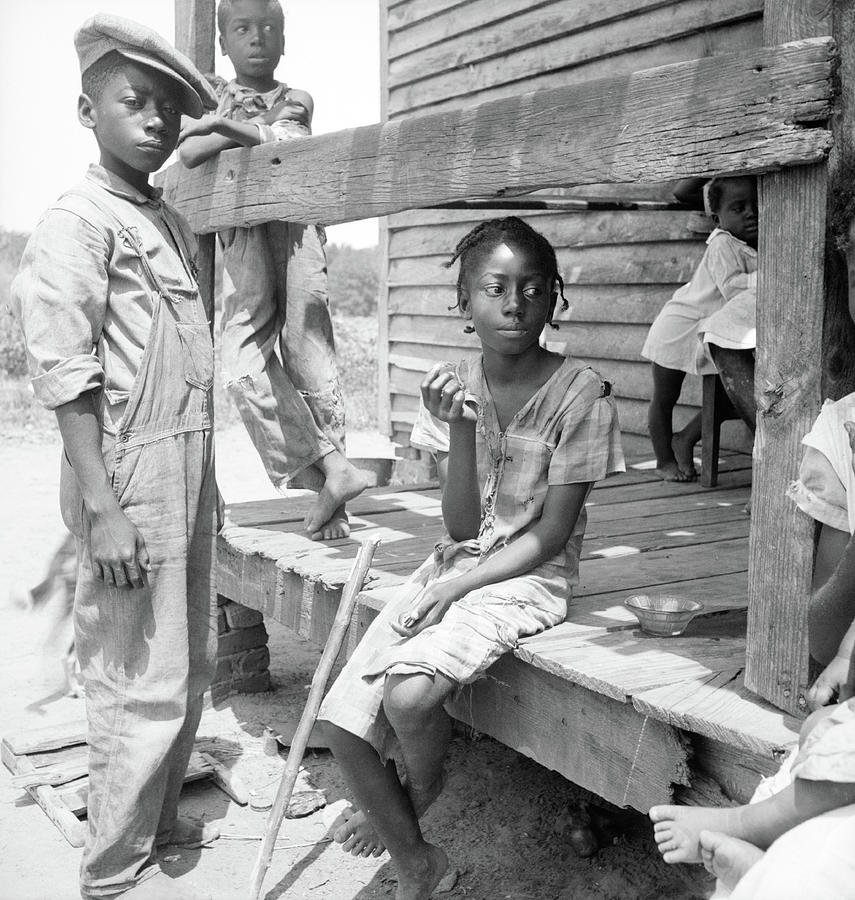
Saturday, 30 October 2021

A Master Cultural Narrative of Old Age: The Metaphor of the Journey

"A main concern I have with narratives in gerontology is that the potential (and actual) presence of master cultural narratives is not discussed. There are numerous master narratives of later life that can damage not only the identity of older adults, but also how older age is understood by others. For example, late life is often portrayed by the metaphor of the journey.


The significance of the life-as-journey narrative is that importance is placed solely on the past, not the present or future. This implies that from the standpoint of later life, everything worth doing has passed as a pilgrim-like progression through time, followed by a period of wisdom, reflection, and acceptance in older age. Related to this notion is loneliness—the idea that, since social networks have become smaller over time, new relationships are not likely. Although the research literature does not support the idea that older people are lonelier than other age groups (Victor et al., 2002), the stereotype still persists." (de Medeiros, n.d.).

- - - - - - - -
- de Medeiros, K. (n.d.). Narrative Gerontology: Countering the Master Narratives of Aging, link
- photograph via

Friday, 29 October 2021

Porch Portraits (Susan Meiselas, 1974)

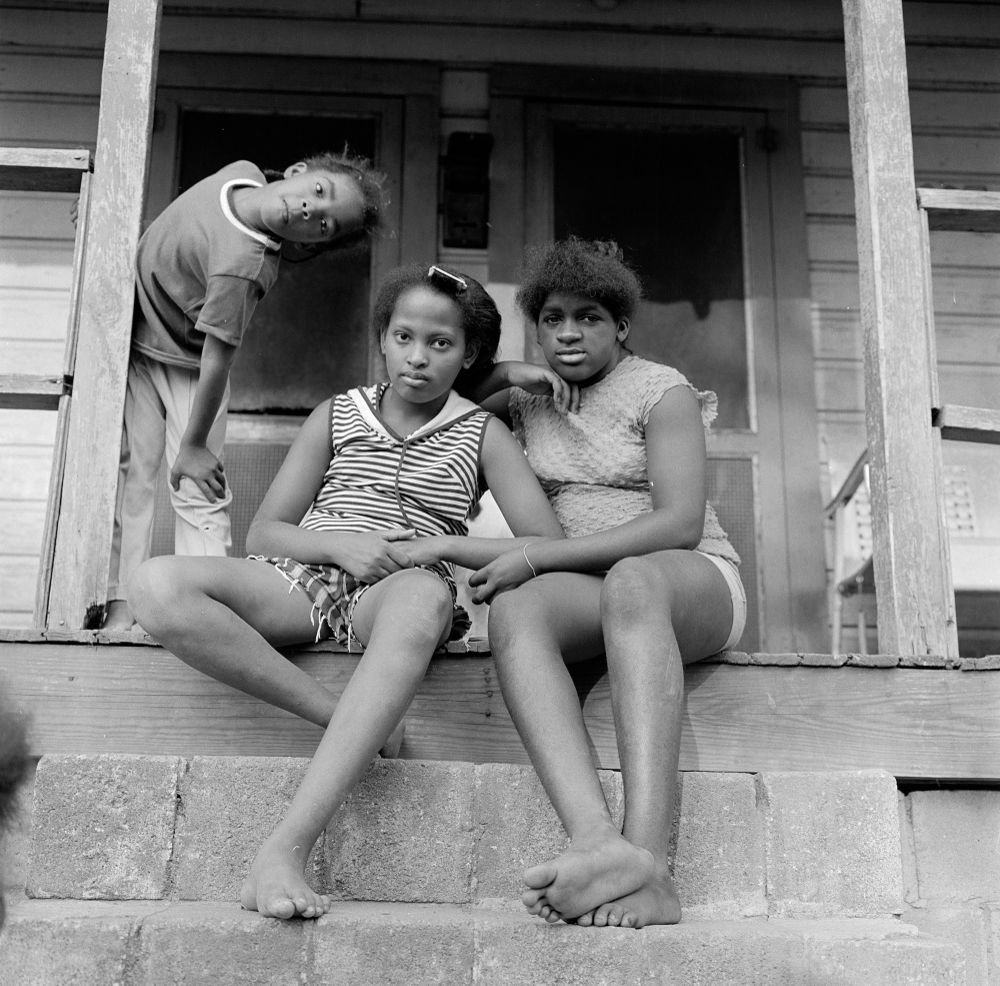
I would drive down a road, see a house, stop my car and hope that someone would open their door. I hadn’t planned what I would say. I began by explaining that I was teaching photography in the local elementary school, that I came from the North, and would like to take their photo. I didn’t really know why. As my work has evolved, it’s rarely been focused on portraits. Portraits usually aren’t an expression of a sustained relationship. I often find them to be awkward and tense encounters. Now, from a distance of more than 40 years, there are so many more questions that I wish I had asked, but maybe didn’t feel that I could.


These photographs come from a time when tenderness was still possible. We could see each other, if only for a moment. Each exchange led me to make a picture and when I returned home I sent every family a print in the form of an enlarged postcard. That process was most important to me. They had welcomed me to trespass. The postcard was simply a gesture to acknowledge that crossing we shared. I wonder now how their lives have evolved. Looking back at myself as a young white woman making this work leads me to rethink my own connection to the history of the South, which I knew so little about then.
Susan Meiselas


photographs by Susan Meiselas via and via and via

Thursday, 28 October 2021

Men vs Women Adopting Dogs

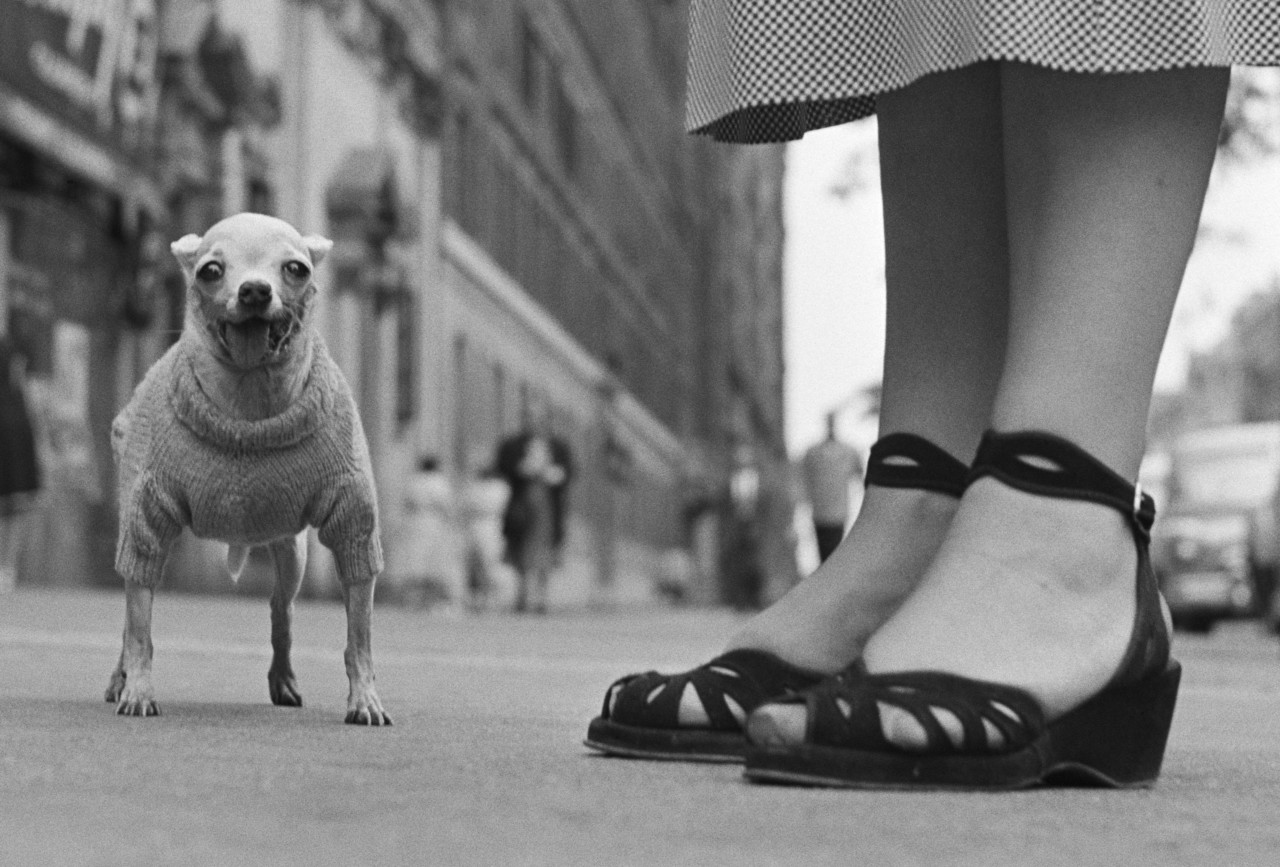
According to an analysis of dog adoption in the Czech Republic (2010-2016), there are significant gender differences concerning adopters: Generally speaking, more women than men adopt dogs. Women adopt more small dogs, men more large dogs, women adopt more older dogs (and dogs requring special care) and more brown dogs while men adopt more black dogs

- Vodičková, B., Večerek, V. & Voslářová, E. (2019). The effect of adopter's gender on shelter dog selection preferences, link
- photograph by Elliott Erwitt via

Wednesday, 27 October 2021

Narrative Gerontology

Narrative gerontology is a way to study ageing. Its main approach is to explore ageing through the metaphor of "life as story" understanding individuals as thinking and acting on the basis of stories, seeing human beings as storytellers and storylisteners, as biographical beings who do not have stories, but are stories. It is "a lens through which to view the aging process, a unique way of seeing what aging involves" (Kenyon & Randall, 1999).

Over the decades, the body of gerontological research continued to grow but perspectives from the humanities were absent until the 1970s. Only then did researchers start asking questions about the meaning of age, i.e., the whys rather than the hows. "The shift to meaning-based inquirey in gerontolgy in many ways laid important groundwork for narrative gerontology." The term "narrative gerontology" was coined by Ruth in 1994 (via).

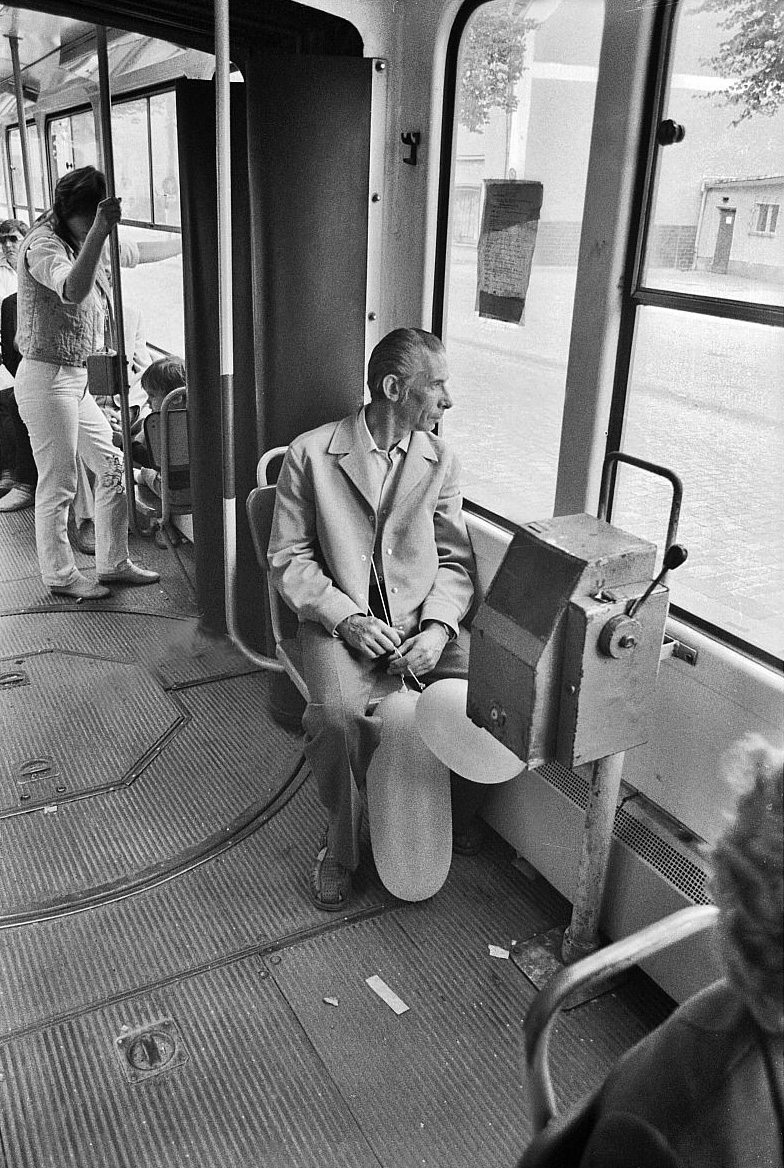
My parents were storytellers: the first half of my life was punctuated by the stories they would tell us (me and my siblings) of our Dutch ancestry, culture, and history, our Canadian roots, our family’s journey, the early experiences of my older siblings, and my early life. These stories informed and intrigued us, connected and grounded us, provided direction, and occasionally embarrassed or bored us. I recall that these stories would often enliven my parents, sometimes sadden them, and/or appear to stimulate their thinking; as a child, I can remember remarking to myself (and being somewhat perplexed at the time) that these stories were often directed more at themselves than at us. There seemed to be multiple messages and many levels to these stories. Now my parents are deceased and their stories, as I struggle to recall them, have a renewed, more immediate and ultimately poignant appeal. (de Medeiros, 2013)

- - - - - - - -
- de Medeiros, K. (2013). Stucturing the Insider's View: Narrative Gerontology in Research and practice. The Gerontologist, 55(2), 337-338.
- Kenyon, G. & Randall, W. (1999). Introduction: Narrative gerontology. Journal of Aging Studies, 13(1), 1-5.
- photograph by Gundula Schulze Eldowy via

Tuesday, 26 October 2021

Going to School in L.A. in the 1970s

The photograph shows the first black US-American students to attend Plymouth Elementary School in Monrovia (Los Angeles County, California) arriving by bus on 10th of September 1970.

School desegregation and busing sparked protests in Los Angeles in the 1970s - more than two decades after the Supreme Court had outlawed segregation at schools - leading white middle-class families fleeing from the L.A. Unified School District and moving to more homogeneous suburban districts devoid of busing. Mandatory busing was seen as a means to integrate and remedy the harms of segregation since the black population was kept from living in so-called white neighbourhoods and, as a result, from attending schools in these neigbhourhoods. 

In 1979, forced busing was ended and L.A. shifted to a voluntary busing system under court supervision which became the so-called "magnet" programme. The programme aimed at becoming so attractive in academic terms that white students would be drawn to schools they would otherwise not attend. Another approach was to allow ethnic minority students from low-income South L.A. to take buses to scholls in traditionally white areas in the San Fernando Valley. Los Angeles has kept its magnet programme and white students attend some of them. Generally speaking, however, their number is rather low: 73.4% Latino, 10.5% white, 8.2% black American, 4.2% Asian (via).

- - - - - -
photograph (Fitzgerald Whitney/Los Angeles Times) via

Monday, 25 October 2021

"I Don't Hate All Women..." Incels, Porn, and Misogyny

"I dont hate indian women as a whole. Only those disrespectful stuck up b*tches; I don’t hate all women but modern Western women; I don’t hate women just hate feminists and sl*ts."


"This article seeks to establish the connection—via shared discourse—between those who identify as involuntary celibates online (henceforth Incels) and mainstream pornography. Using an interdisciplinary approach involving linguistic analysis of Reddit forum data—more precisely the r/incels Subreddit—informed by research into digital behaviors and feminist analysis, we demonstrate how both mainstream pornography and Incels are different manifestations of the same deep-rooted misogyny, enabled and exacerbated by contemporary technologies. It is not the aim of this article to establish a causal link between the watching of pornography and negative behavioral change, nor is it our intention to cast judgments on people’s sexual practices. We want to move beyond a simplistic pro-porn or anti-porn dichotomy that discourages debate, and instead provide evidence of its commonalities with other practices that are more often seen as aspects of the ongoing normalization of violence against women (VAW) and whose misogynistic nature, therefore, tends to be taken more seriously."

Some results (excerpts):

Women are one homogeneous group.

"(...) the discussion of the success of obese women (as opposed to Incels) in finding (sexual) partners. This view is often supported by pseudo-scientific facts and dubious external data, suggesting that women, unlike men, are in high (sexual) demand and, therefore, even women who appear low on the “attractiveness scale” will find a (sexual) partner, while men who are not at the top of this scale are condemned to a life of celibacy. This is expressed clearly by one of the users on the forum: There are many males that have literally zero options. [There is strong demand for even the ugliest of women.] (link to sluthate.com). The top 20% of men get the top 80% of the women, and the bottom 80% of men fight like dogs over the remaining 20% of women. This is why in a sexually free society, even the ugliest most deformed obese women can get males of average attractiveness. In this system, women are the gatekeepers of sex, while Incels are their victims. As shown in the following, it is particularly feminism—with the sexual liberation of women—that Incels blame for their misery."

(...) women are often talked about in terms of what happens in their minds, rather than in terms of their actions in the external world. Thus, despite their factual and pseudo-scientific tone, these discussions are speculative, particularly when they occur alongside aggregation (e.g., Because the majority of modern women don’t want a loving boyfriend). These conjectures often revolve around the type of men that women are supposedly attracted to (e.g., Women don’t like ugly men who aren’t rich, because they aren’t good providers), or around women’s sexuality, including the suggestion that women enjoy abusive relationships and aggressive sex.

"Like in pornography, where the tendency is for female performers not to say “no,” but to show pleasure when subjected to physical aggression, Incels believe that aggression and female pleasure are connected (e.g., Most women don’t like it soft: they like it rough, hard, and deep)."

"Scholars (Jensen, 2011; Makin & Morczek, 2015) have suggested that mainstream pornography—with its unceasing exploitation of women—encourages the acceptance and propagation of “rape culture,” (...). Some comments on r/incels show that this is not just a prerogative of pornography: But the deal is that they start liking it in the middle of the act or follow the guy around later like puppies on a leash. So rape is what modern Western women want."

"(...) the most frequent attributes for women: whores, people, and sluts. The specifically sexually derogatory nature of this language is worth noting, as r/incels (like pornography) appears to be a site of constant (re)production of ways to linguistically degrade and objectify women. For example, Incels refer to women as cumdump, cumrags, or twatrags—a term that indicates an old garment used to clean up bodily fluids following ejaculation. Another way in which Incels use sex to linguistically dehumanize women is through verbs that are normally applied to things such as soil or roads (e.g., a 30yo woman who has been plowed by 150 different cocks). The verb plow here, in addition to normally being applied to inanimate objects, also suggests violence (e.g., fields are plowed with sharp objects). The implication is not only that women are objects to be treated aggressively but also that the penis is a powerful weapon to be used against them. This discussion of women as objects used for sex or as receptacles of men’s penises and semen (dumpsters, holes, tubes) recalls some of the most popular images of mainstream pornography (...)."

"Incels also dehumanize women by referring to them as objects, female humanoid organisms (or femoids) or animals, as shown by metaphors such as women are fucking animals, women are shallow creatures, women are toxic wild beasts. Perhaps the strongest indicator of the propensity of Incels not to see women as human beings is the frequent reminder on r/incels that women are people (e.g., women are people literally just like you). Arguably, the very need to state the obvious, that is, that women are people, is an intertextual reference to the common presupposition among Incels that women are something else (animals, objects, holes, containers). The dehumanization of women (for sexual pleasure) is part and parcel of “rape culture” (Jensen, 2011) and a major feature of mainstream pornography."

"This sense of entitlement to and understanding of women’s bodies as objects (that must be obtained) also appears in the ways in which FORCE is used. While many users do not explicitly encourage forcing women to have sex or be in relationships with them, the discussion of the obvious suggests, again, that this is indeed a possibility for Incels. In fact, not forcing women is often linked to their inability, rather than their unwillingness, to do so (e.g., I cannot force a woman to desire me or have sex with me so essentially I am screwed). Women are once again positioned as gatekeepers of sex and, consequently, of Incels’ happiness. Incels, in contrast, are the victims: constantly starved for sex and fighting other men to gain access to women’s bodies that are scarcely available (to Incels)."

"The specific hatred for feminists is also shown by the fact that feminist is more often associated with (sexually) derogatory language than woman. (...) feminist is similar to words such as whore, bitch, cuck, slut, idiot, cunt, while woman is more similar to words like people, man, girl, guy, female, person. The type of abusive language that one may expect to find on the forum does not target women in general; it tends to be specifically directed toward feminists, who receive insults for their “promiscuity.”"

"What Incels really hate—and what they blame feminists for—is women who refuse them, women who sleep with several men but say “no” to Incels. It is these women who receive most online (sexualized) abuse (Lewis et al., 2017), arguably in an attempt to control them through silencing. This generates a paradoxical situation, in which derogatory terms that refer to “promiscuous” women are not being used for women who participate in sexual acts with numerous men, but for women who say “no.”"

"Like in offline sexualized violence, for Incels too sex is the chosen weapon to express the hatred and revenge that women “deserve” for rejecting them and choosing aggressive alpha men instead."

"The issue, therefore, is a broader one and a cultural one; neither Incel ideology nor mainstream pornography should be problematized separately or insulated from discussions of women’s equality, because these practices are not detached from other forms of misogyny but are an extension of these and symptoms of structural misogyny. Neither pornography nor Incels created misogyny, but misogyny underlies and correlates both practices, which, therefore, should be understood as part of a “networked misogyny” (Banet-Weiser & Miltner, 2016) that, separately or cumulatively, causes harm and is not limited to the online world. While the internet, as a “site of social and cultural reproduction that reflects real-world patterns” (Lewis et al., 2017, p. 1464), enables the exponential replication of misogyny by inventing, spreading, and reproducing techniques to attack women (online and offline), online misogyny is not a product of the technology, but a result of the society that shaped it."

- - - - - - -
- Tranchese, A. & Sugiura, L. (2021). “I Don’t Hate All Women, Just Those Stuck-Up Bitches”: How Incels and Mainstream Pornography Speak the Same Extreme Language of Misogyny. Violence Against Women, 27(14), 2709-2734; link
- photographs by Susan Meiselas via and via 

Sunday, 24 October 2021

"Everybody’s looking at me."

Anna Grevenitis, a French photographer living in the U.S., has a son and a daughter, Luigia, 16, called Lulu. Although Down syndrom is not rare, being in public with her daughter still brings "a less welcome form of attention". From a certain age on, Lulu started noticing this attention and, depending on her mood, either reacted saying "Everybody loves me. Everybody's looking at me." or "Everybody hates me. Everybody's looking at me." Her mother reacted with a stare of her own.

In her series, Grrevenitis directs "a defiant gaze toward the camera, while her daughter goes about the daily routines of a teen-age girl". She presents Lulu to the viewer, however, on their own terms defending her from unwanted judgment. Her series is an ordinary portrait of adolescence unlike the stereotypical portrayal of children with Down syndrome usually tending to show an "angelic, saccharine, and unmolested soul" or a "burdensome, unwanted, and ultimately pitiable victim" (via).


"When my daughter was born, I was told that she had the “physical markers” for Down syndrome. A few days later, the diagnosis of trisomy 21 was confirmed with a simple blood test. Today, fifteen years later, Luigia is a thriving teenager, yet these “markers” have grown with her, and her disability remains visible to the outside world. As we try to go about our ordinary lives in our community–getting ice cream after school, going grocery shopping or walking to the local library–I often catch people staring, gawking, or side-glancing at her, at us. Even though their gaze feels invasive, I perceive it as more questioning than judging, at least most of the time. With this on-going series REGARD, I am opening a window into our reality. To emphasize control over my message, these everyday scenes are meticulously set, lit up; they are staged and posed. The performers are my daughter and I because, as her principal caretaker, particular attention is directed at me each time we leave our home. The self-portraits are purposefully developed in black and white, for by refusing the decorative and emotionally evocative element of color, I aim to maintain a distance between us and them. The composition of the photographs expresses routine, domestic acts in which I address the viewers directly: look at us bathing; look at us grooming; here we are at bedtime; this is us on a random day at the beach. In each scene, the viewers are plunged into the outside perspective. At first glance, it may seem that I am offering us as vulnerable prey to their judgement, yet in fact I am guarding our lives, and the viewers are caught gawking–my direct gaze at the camera. Through the direct, return gaze, I am not only the one in control, but I am also the one the viewer eventually focuses on. Image after image, I am emerging center-stage as I am asking to be seen. A shift in perspective is imposed. Because of the otherness of our circumstance, I know I am being scrutinized, and my own narcissistic inkling is surfacing. In the end, I am not so much interested in answering the viewers’ questions anymore as I am leaving them with mine: what is this saying about me?" Anna Grevenitis

photographs via

Tuesday, 19 October 2021

A fierce grudge against poverty...

“I hold a fierce grudge against poverty because I was so desperately poor when I was young. But accusing my past is hardly the answer. There is, I want to believe, a personal need to recognise the right of every man to live a reasonably decent life."
Gordon Parks


photograph by Gordon Parks via

Sunday, 17 October 2021

International Day for the Eradication of Poverty

“We know by now how to photograph poor people. What we don’t know is how to photograph affluence – whose other face is poverty.”
Dorothea Lange


On 17 October 1987, a hundred thousand people gathered in Paris, where the Universal Declaration of Human Rights was signed in 1948, to "honour the victims of extreme poverty, violence and hunger" as poverty is a violation of human rigts. Since then, 17 October has been the day dedicated to the eradication of poverty, the day we show solidarity with the poor, acknowledge the struggle of people living in poverty, make their concerns heard, and use their expertise to fight poverty (via).

- - - - - - - - -
photograph by Dorothea Lange via

Saturday, 16 October 2021

A gentle way of looking at things

"And as I've gotten older, I've had more of a tendency to look for people who live by kindness, tolerance, compassion, a gentler way of looking at things."
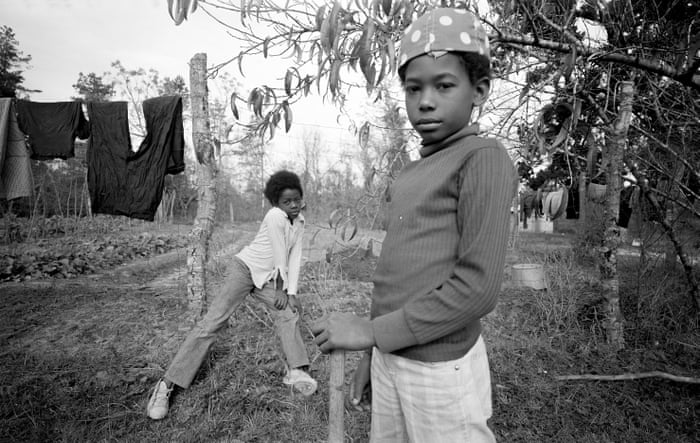
Martin Scorsese


photograph via