Saturday, 4 November 2023

Ernest Ralph Tidyman and the Creation of Shaft

Ernest Ralph Tidyman (1928-1984) created John Shaft for the 1970 novel of the same name and co-wrote the screenplay for the 1971 film version of Shaft. It was Ronald Hobbs, one of the very few Black literary agents at the time and the only one in New York City, who - in 1968 - had recommended to commission Tidyman to write Shaft (via and via and via and via). More books and more film sequels followed.

"Encouraged by his literary agent, Ronald Hobbs, Tidyman took up a commission on a $1,800 advance from Macmillan mystery editor, Alan Rinzler. Rinzler had been looking to spice up the publisher’s mystery output and had been looking for something new in the field. He had the idea of creating a black detective hero in the Sam Spade/Philip Marlowe mould. After reviewing the initial pages Rinzler encouraged Tidyman to toughen up the lead character deeming Tidyman’s initial version too soft. He suggested a gesture of violence by having the hero throw a gangster out of his office window." (via)

Reading black fiction, you see that the central figure is either super hero or super victim, as in [William] Styron's book. The blacks I knew were smart and sophisticated, and I thought, what about a black hero who thinks of himself as a human being, but who uses his black rage as one of his resources, along with intelligence and courage.
Ernest Tidyman

"Tidyman’s true skill was an ability to define the hero and the bad guys without ever allowing racism to bump into itself. Everyone, black and white, was rooting for Shaft, the hero. The fact that he was black had nothing to do with it . . . and, of course, everything to do with it. Blacks and whites could root side by side, but in Shaft territory it was always going to be hipper to be black." (via)

- - - - - - - - - - -
photograph of Ernest Tidyman via 

Friday, 3 November 2023

Personality Disorders, Eccentricities or Ageism?

Abstract: Personality disorders, especially in older adults, are among the most difficult psychiatric disorders for nurses to assess. When aging further complicates these disorders, nurses' therapeutic skills are challenged. It has long been thought that personality disorders "age out," but new research indicates that personality disorders may in fact continue throughout the life span. 


In addition, the primary and secondary changes of aging further complicate assessment. Assessment of personality disorders in older adults may also be distorted by ageist stereotypes and a lack of understanding of cultural context. Likewise, nurses must be careful about misinterpreting "eccentric" older adult behavior as a personality disorder. In this article, we focus on assessment challenges in older adults to help nurses distinguish between characteristics of personality disorders, stereotypes, and eccentricities in this population. (Magoteaux & Bonnivier, 2009)

- - - - - - - - - - - - - -

- Magoteaux, A. L. & Bonnivier, J. F. (2009). Distinguishing between personality disorders, stereotypes, and eccentricities in older adults. Journal of Psychosocial Nursing and Mental Health Services, 47(7), 19-24, link
- photograph of Bette Davis via

Thursday, 2 November 2023

Coming out, coming home, coming with: Models of queer sexuality and the role of culture

In 2015, the video "Coming Home" appeared on Chinese social media, released by an organisation that advocates for "a U.S.-style of coming out among Chinese LGBTI". The video targeted parents of queer children and received more than 250 million views before the government made the website remove the "gay-friendly content"

Coming Home narrates the story of a middle-class gay man, Fangchao, who comes out to his parents on the phone. Fangchao’s father scolds him when he comes out: “Since you have already come/gone out, don’t come home again!”(PFLAG China, 2015). With this pithy statement, the scriptwriter makes conspicuous the opposing relational models of coming out versus coming home for Chinese queer subjects. There is a play on words (chuqu 出去) in the dialogue to mean both coming out (as a queer subject) and going out (as in leaving the family). This video weaves together simultaneous movements away from and toward the family: coming out takes on the meaning of leaving the family in order to gain sexual freedom; coming home (huijia 回家), on the other hand,brings to mind the idea of coming back to the family, reining in and covering queer desires in order to stay close to the family. In this rendering, coming out is antithetical to coming home: if you come out, then do not think about coming home again.
Fangchao's coming out turns him into an outcast. Two years later, so the flash-forward in the video, his mother calls him telling him to visit the family during the Chinese New Year: "No matter who you are, you are still our son." At the end, family love overrules and the parents accept their gay son. The video ends with mothers speaking out and encouraging viewers to come out to their families.
The messages of this video are clear: dear parents of Chinese queers, remember how much you love your children and be sure to invite them to come (back) home; dear Chinese queers, come out and then wait for your parents (probably your mother) to invite you to come home.
Coming out and coming home can be seen as models of queer sexuality, each offering norms, aspirations, prescriptions. Huang and Brouwer (2018) see coming home as an indigenous model and coming out as an exogenous one. and elaborate a third model - coming with. The authors conducted interviews with 13 Chinese queer subjects to ...
investigate the distinctness of these models, their points of dissonance and consonance,and the ways in which queer subjects take them up (partially or fully, temporarily or enduringly), revise them, or reject them. Broadly, we express a critical/cultural orientationas we “examine multiple axes of power and oppression …and consider culture to be a starting point for theory and analysis”(Ono, 2009, p. 77). More specifically, we hope to contribute to the projects of culturalizing queer theory and queering intercultural communication. Aligned with these projects, we stay alert to “the ways in which western queer formations,”like the coming-out model, “travel, by choice and by coercion, imposing western values and ideals on non-western cultures within and outside of westerncountries”(Chávez, 2013, p. 87). As we investigate if, why, and how Chinese queer subjects come out to themselves, friends, peers, and/or family members (cf., Bie & Tang, 2016) or choose tactics more aligned with coming home, we feature the particularities of everyday life as Chinese queer subjects express them, and we aspire to counter “the cultural reductionism”(Ban, Sastry, & Dutta, 2013, p. 283) that is persistent in orientalist ways of understanding China.
The questions asked are highly interesting since culture might be a neglected aspect in transnational queer discourse. Coming-out rates are, in fact, relatively low in China (as of 2016, 3% of gay and bisexual men, 6% of lesbian and bisexual women). Not the public but family, particularly parents, is what keeps them most from coming out, 75% of gay and bisexual men and 81% of lesbian and bisexueal women reported "that their primary source of distress" is the family. Only 19% of gay/bisexual men and 25% of lesbian/bisexual women said that they had come out to "some family members".
Transnational LGBTI movements privilege a queer politics that is oppositional and confrontational, with an emphasis on the visibility of sexual identity. Critical sexualities scholars have argued that the predominant narrative of “coming out”is built on a particular kind of queer experience and geography, which is usually from the standpoint of white,middle-class, urban U.S. citizenship (e.g., Chávez, 2013). Due to the transnational circulation of Euro-American queer discourses, identitarian and visibility frames of queerness (Puar, 2007), which endorse a confrontational politics of coming out, have become an increasingly prominent discourse in Chinese LGBTI movements. The movement organization PFLAG China, for example, not only sponsored the video we featured in the introduction, but also sponsored a coming-out story competition for lesbians, gay men, and allies (Bie & Tang, 2016). Transnational queer discourse’s emphasis on a homosexual identity and the politics of visibility has become a new discursive resource that Chinese queer subjects can draw on in order to fight for their sexual freedom. It risks becoming a new hegemony that Chinese queer subjects might be expected to embrace to become intelligible members in a transnational LGBTI imaginary—a form of peer pressure, to use the words of our interviewee Ada, that Chinese queer subjects face. Indeed, an analysis of our data shows that coming out is an important narrative in being queer in contemporary China.
Also of interest...
Some of the interview participants take up the imperatives and practices of coming outas offered by Western discourses. However, several take up coming out in partial and revised ways or reject it altogether as unimaginable, unfeasible, or unsustainable. Partial and revised uptake is mediated by several factors, including the cultural principles of pulu (铺路) and suzhi (素质). Repeatedly during the interviews, the two popular discourses of suzhi (“quality”) and pulu (“path-paving”) emerged as the parameters or preconditions of coming out. The discourse of suzhi/quality is essentially a class issue related to the emergence of a “rainbow economy.”Increasingly, Chinese queer subjects are interpellated into the consumerist position of being “out and proud.”But not all queer subjects answer the hail of interpellation as good consumers. Economic difference predicts whether one is a good consumer, and thus a proper queer or not. Those who do not or cannot afford to be good consumers are sometimes condemned as lacking “culture,”or described as “low quality”(di suzhi), and thus not qualified to be a “good homosexual”(see Rofel,2007, pp. 103–106).
A 19-year-old mentioned class differences in connection with coming out:
I remember when the CEO [chief executive officer] of Apple came out, everybody was talkingabout it. I remember how people responded to it: this is something of the rich. I think whenyou are financially well off, people think that [being gay] is OK. If you are not, then play notricks—get married and have children!
In line with this view, many interviewers reported to prepare themselves and their parents to better respond to the coming out by working on financial success, by "paving their way". Financial success is seen as a precondition for coming out.
The pulu/path-paving discourse suggests a “two-step model to coming out”(Kam,2012, p. 99)—first, to stand up as a “successful”member of society, leaving the issue of sexuality unaddressed, and then to come out as an “outstanding”(youxiu) daughter/son but “less desirable”queer subject. Such a “two-step model”relies on the recognition of,rather than challenges the criteria of, heteronormative society. “The recognition of queers,”Ahmed (2010, p. 106) points out, “can be narrated as the hope or promise of becoming acceptable, where in being acceptable you must become acceptable to a world that has already decided what is acceptable.”The discourse of pulu/path-paving promisesa gift from the “tolerant” heteronormative family, “which conceals queer labor and struggle”(p. 106). Complicity with heteronormativity, in turn, produces a kind of homo-normativity for Chinese queers.
Coming home, on the other hand, focuses on the desire or obligation to remain close to the family. Familial piety is an ethic, a priority. In China, it is regarded as the mot common approach historically and today. Hence, key assumptions of transnational queer movements are questioned since, in many Western societies, they are built on the notion of individualism, confrontational politics that might work there but are not automatically the best way to achieve liberation in community-oriented societies stressing the importance of social harmony. In line with this, the Chinese parents' main concern would be less about their children's identification as lesbian or gay but their marginalisaiton within the family "making the child a nonbeing in Chinese culture".
In conventional Chinese culture, one’s sexual normativity is less defined by one’s sexual preference than by one’s willingness and ability to fulfill one’s filial duties—in particular,the duty to reproduce (Chou, 2000, pp. 24–25). In other words, one’s sexual deviance is not determined primarily by the sex of one’s sexual partner(s) but by the (lack of) adherence to the ascribed filial duty of bearing children. According to the Confucian logic inChinese society, having same-sex desires does not absolve one from the responsibility of engaging in heterosexual activities that ensure the continuation of the family’s bloodline.
The coming-with model stresses the point that parents are not an option to choose but always an integral part of one's life. This approach combines "the preservation of space for one's queer sexuality with tactics that stay with the family either by cultivating parental harmony or actively interrogating heteronormative family structures".
the contours of an alternative model began to emerge as it became clear in the interviews that queer subjects are necessarily “closeted” under the familial discourse, as suggested by the polarizing construction between the Chinese family and sexual freedom, and that Chinese queer subjects do not agree with every connotation of the family institution. The interviewees described numerous ways that queer desires are still possible to circulate within the family institution by living with rather than turning away from the family institution.
The authors come to the conclusion that Chinese queer subjects prefer the coming-with approach that makes it possible to integrate both familial belonging and sexual identification. Coming out, on the other hand, is an approach that is associated with turning away from the family. And coming home would again mean leaving the heteronormative family uncontested (Huang & Brouwer, 2018).

- - - - - - - - - - - - 
- Huang, S. & Brouwer, D. (2018). Coming out, coming home, coming with: Models of queer sexuality in contemporary China. Journal of International and Intercultural Communication, 11(2), 1-20, link
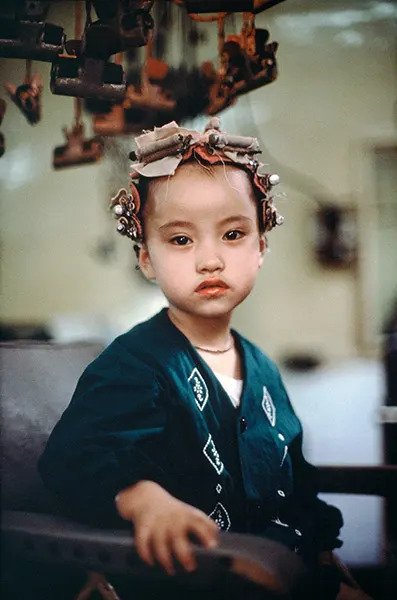
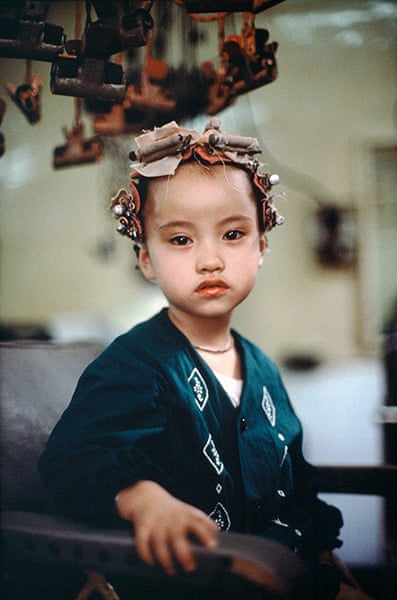
- photograph by Eve Arnold (China 1979) via

Wednesday, 1 November 2023

Environmental Professionals and Ethnic Diversity

According to a survey (n = 2,004 environmental professionals) commissioned by Wildlife and Countryside Link, only 4% out of 44 charities have consistently implemented an action plan in order to increase ethnic diversity while 84% consider or are taking action over a lack of inclusion. Only 22% of leaders felt increasing diversity actually was a top priority for the sector (86% agreed it should be one). Only 98 of those surveyed indicated that they were of ethnic minority descent. These persons were also the ones who showed lower ratings of their organisations' policies aiming to promote equality, diversity and inclusion. Eleven of them said there was racism in the sector, mostly unconscious bias and covert racism (via).


photograph via

Tuesday, 31 October 2023

"Hotter than Bond, cooler than Bullitt"

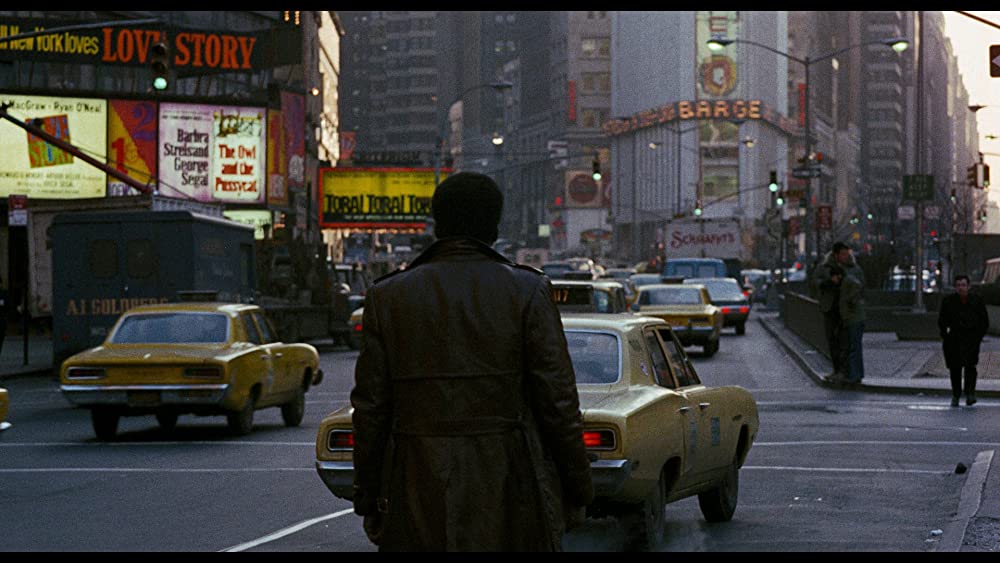
“Ghetto kids were coming downtown to see their hero, Shaft, and here was a Black man on the screen they didn’t have to be ashamed of. We need movies about the history of our people, yes, but we need heroic fantasies about our people, too. We all need a little James Bond now and then.”
Gordon Parks (1972)


- image of Richard Roundtree (1942-2023) via 
- "Hotter than Bond, cooler than Bullitt!" was the blurb on the paperback the film was based on (via)

Sunday, 29 October 2023

Narrative images: Trolley

"One of the most important photographs in “The Americans,” one of the most celebrated ones, is this one of the trolleys in New Orleans. It was a picture that Frank made in the fall of 1955, just a few weeks before Rosa Parks in nearby Montgomery, Alabama, had refused to give up her seat on a bus.

As you can see, it shows a trolley, and we see in the front of the trolley, two older white people, two children in the middle of the trolley. The boy looking out, I think, with an almost quizzical expression, as if to ask the photographer and then also us, the viewer, “What is this world? What is going on?”

In the back of the trolley is this African American man, who looks out with an almost plaintive expression, questioning expression, about why the world is perhaps this way. You can see here the rigidly segregated society that existed in New Orleans at that time.

One of the really interesting facets about the picture is those who are old enough to remember segregated buses, particularly perhaps those in the South, in New Orleans, might notice that the little girl has her hand resting not actually on the back of the seat itself, but a little bit higher than the seat. And it turns out that her hand is resting on a piece of wood that indicated the “colored section” of the bus. And that piece of wood could be picked up and moved backwards if there were no more seats for white people on the bus. So, if you get on this bus at that time, and there was no seat for a white person you could pick that up move it to the next row of seats and all of the African Americans would have to get up and move one seat back on one road.

It’s a really, I think, chilling expression of racism in this country at that time.

(...) it still speaks about issues that we’re dealing with today in contemporary society, the racism that exists within America, and also (...) it’s such a poignant and powerful picture."

Sarah Greenough

- - - - - - - - -
photograph by Robert Frank (New Orleans, 1955) via

Saturday, 28 October 2023

... a state of latency waiting for the right circumstances

"There is a large research literature showing how antisemitism exists in many locations and how it spreads like a virus, or rather, how it never disappears but simply goes into a state of latency waiting for the right circumstances to become manifest." (Brekke, 2021)


- Brekke, T. (2021). Islamophobia and Antisemitism are Different in Their Potential for Globalization. Journal of Religion and Violence, doi: 10.5840/jrv202142689 
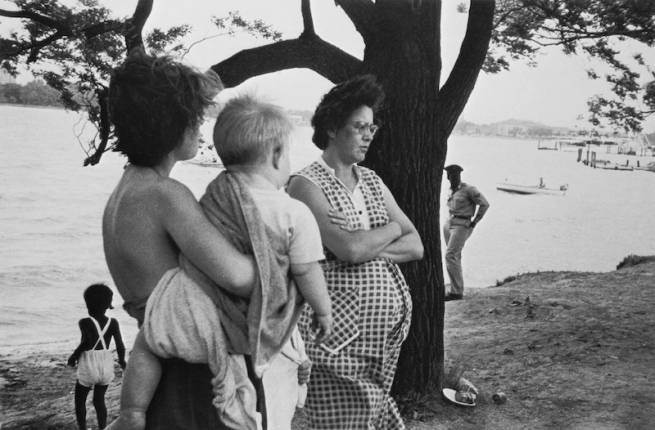
- photograph by Robert Frank (Detroit, 1955) via

Friday, 27 October 2023

Laughing at others? The role of gender and the moderating effect of age.

Abstract: People have different responses to being laughed at, including fear of being laughed at, joy from being laughed at and joy from hearing others laugh. Previous studies have indicated that men have a higher tendency of laughing at others, but there were no gender differences on terms of the other two responses. Socioemotional selectivity theory indicates that individuals pay less attention to negative stimuli as they get older. It is worth investigating whether the gender differences of gelotophobia and gelotophilia occur in certain developmental stages. 


The present study is a cross-sectional study, with a sample size of 1247 participants; we collected information regarding laugh-related traits among participants 11-66 years old, and we particularly focused on the moderation effect of age on gender differences on gelotophobia, gelotophilia and katagelasticism. The results showed that men had a stronger tendency for laughing at others, but there were no significant gender differences on terms of gelotophobia and gelotophilia; age not only moderated the relationship between gender and gelotophobia but also the relationship between gender and katagelasticism. Male adolescents had higher incidences of gelotophobia and katagelasticism than female adolescents, but this finding was not consistent in the middle adulthood sample. The present study found age to be a moderator between gender and laugh-related traits, and it indicated the influence of age on the fear of being laughed at during early adolescence, but there was no gender difference with respect to katagelasticism in middle adulthood. (Wu, Chan & Chen)

- - - - - - - - - - 
- Wu, C.-L., Chan, Y.-Ch. & Chen, H.-C. (2019). Gender differences on laugh-related traits: A cross-sectional study. International Journal of Psychology, 54(5), link
- photograph of Melinda Mercouri (1920-1994) via

Wednesday, 25 October 2023

Inclusive Miss Universe

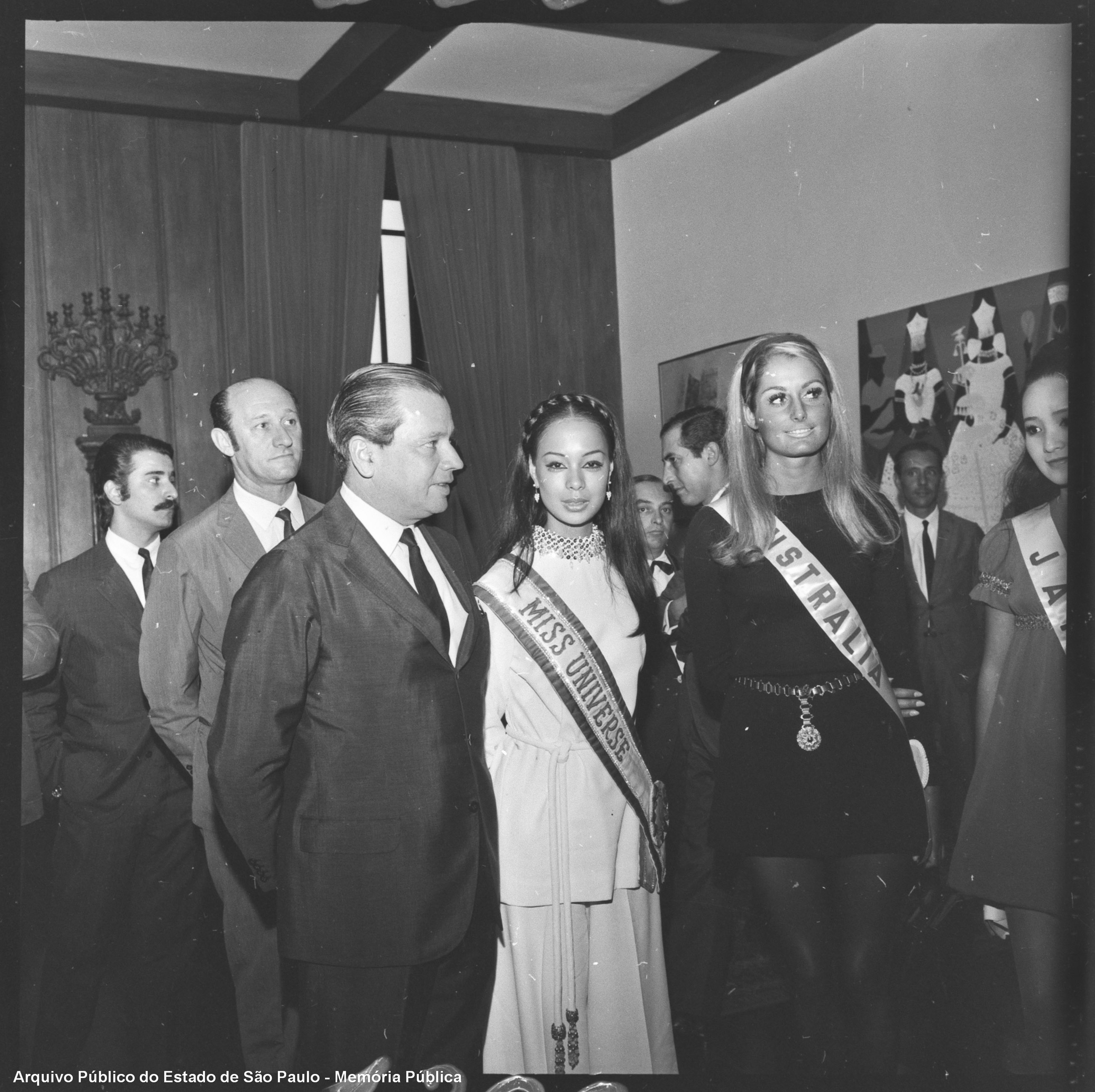
In 2022, IMG sold the Miss Universe Organization to Thai businesswoman and advocate for transgender rights Anne Jakapong Jakrajutatip. Since its foundation more than seven decades ago, it is now the first time that a woman owns the organisation. The first Miss Universe pageant was held in 1952 with an age limit of 28 (27 for Miss World, 25 for Femina Miss India, 55 for Mrs Universe but she needs to be married). In its 72 years of history, Miss Universe crowned 40 women aged 17 to 20; in the past years most of the contestants were not older than 25. R'Bonney Gabriel is the oldest Miss Universe (2022) to date. She was 28 when she competed. 

In 2018, the first openly transgender person took part. Only in 2023 was the end of age restrictions announced. 2023 also means the end of restrictions on participants who are married, divorced or pregnant (via and via and via).

photographs (1969) via and via and (1967) via

Tuesday, 24 October 2023

Stereotypical Images of Old Age vs Diverse Imaginations of Old Age

Abstract: This article aims to enhance the conceptual debate on diversity in old age by exploring the interplay of diversity in later life and images of old age. We argue that the analysis of images of old age on the micro-level is a fruitful methodology in order to unravel the meaning of diversity in later life. Drawing on findings from qualitative research in Berlin, we explore how new and diverse imaginations, experiences and lifestyles of old age emerge. The conceptual focus on images of old age enables us to investigate further what diversity in later life comprises and how it simultaneously fosters the genesis of new images of old age. 


The manifold new images we found in our research suggest that prevalent societal discourses about old age on the macro-level are rather deceptive and represent mostly stereotypes such as ‘active agers’ or ‘frail and dependent elders’. We offer three explanations why alternative images of old age are currently barely present in public discourse: (a) the actors transmitting images of age; (b) the institutionalisation of the images; and (c) the challenge to communicate complexity. We conclude by suggesting that images of old age are a promising starting point to explore and make visible both the diversity of social groups within the older generation as well as the heterogeneity of older individuals. (Enßle & Helbrecht, 2020)

- - - - - - - - -  - -

- Enßle, F. & Helbrecht, I. (2020). Understanding diversity in later life through images of old age. Ageing & Society, 1-20; link
- photograph by Leon Levinstein via