Thursday, 30 September 2021

One day...

"One day our descendants will think it incredible that we paid so much attention to things like the amount of melanin in our skin or the shape of our eyes or our gender instead of the unique identities of each of us as complex human beings."
Franklin A. Thomas

photograph via

Wednesday, 29 September 2021

I Am ... Somebody

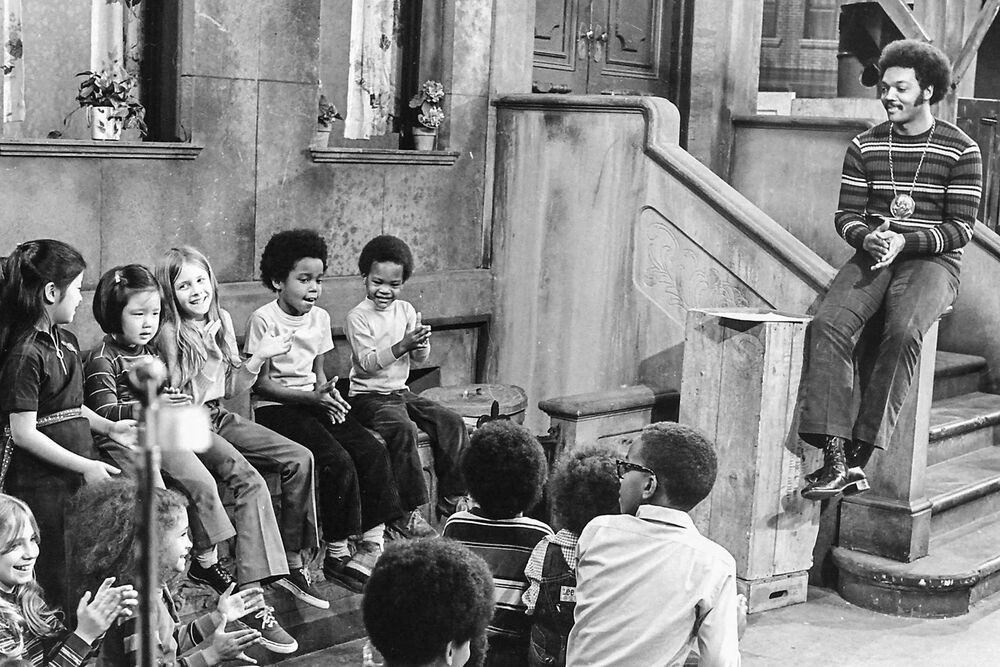
In 1972, reverend Jesse Jackson shared the poem "I Am - Somebody" (originally written by pastor and civil rights activist William Homes Borders, Sr. in the 1950s) with children of Sesame Street.


I am ...[I am!] 
Somebody... [somebody!] 
I am ... [I am!] 
Somebody ... [somebody!] 
I may be poor ... [I may be poor!] 
But I am ... [but I am!] 
Somebody ... [somebody!] 
I may be on welfare ... [I may be on welfare!] 
But I am ... [but I am!] 
Somebody ... [somebody!] 
I may be unskilled ... [I may be unskilled!] 
But I am ... [But I am!] 
Somebody ... [somebody!] 
I am ... [I am!] 
Black ... [black!] 
Beautiful ... [beautiful!] 
Proud ... [proud!] 
And must be respected ... [and must be respected]! 
I must be protected ... [I must be protected!] 
I am God's child ... [I am God's child] (via)

- - - - -
photograph via

Tuesday, 28 September 2021

Our Own Sense of Somebodyness

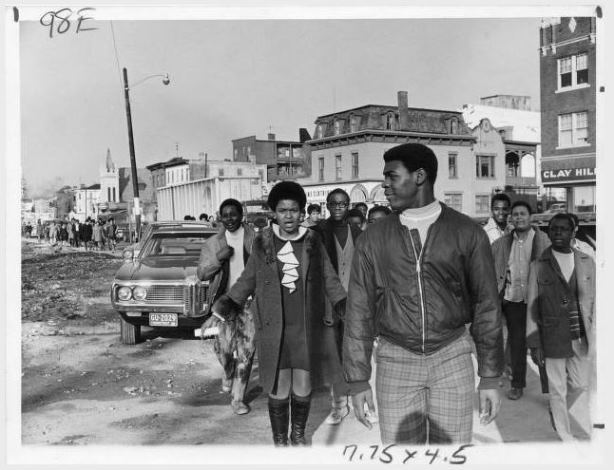
Jesse Jackson's speech held on 20 August 1972 at the benefit-concert organised to commemorate the community of Watts after the 1965 riots:


This is a beautiful day… It is a new day… it is a day of black awareness, it is a day of black people taking care of black people’s business… We are together, we are unified… and all in accord… Because when we are together we got power… and we can make decisions… 

Today on this program you will hear gospel, and rhythm and blues, and jazz. All those are just labels. We know that music is music… All of our people have got a soul, our experience determines the texture, the tastes and the sounds of our soul. We may say that we are may be in the slum but the slum is not in us. We may be in the prison, but the prison is not in us. In what we have shifted from, burn baby burn to learn baby learn. We have shifted from having a seizure about what the man got, to seizing what we need. We have shifted from bed bugs and dog ticks to community control and politics. 

That is why we've gathered today, to celebrate our homecoming and our own sense of somebodyness. That is why I challenge you now to stand together, raise your first together, and engage in our famous black litany. Do it with courage and determination... (via).

- - - - - -
photograph (Jesse Jackson and Bobby Seale, 1972; AP Photo/File) via

Monday, 27 September 2021

El Salvador's Femicide Epidemic

El Salvador has the highest rate of femicide in the world: Statistically, every 24 hours a woman is murdered by a man (13.49 deaths per one hundred thousand women). The number is high despite the very fact that femicide statistics do not account for forced disappereances of girls and women ... in the first five months of 2018 alone, 209 disappearances were reported. In addition, the number is rising significantly, doubling from 2013 to 2017 with 218 femicides a year to 520.


Women are more likely than not to experience gender-based violence. 67.4% of women report having experienced some sort of it in their lifetime. Again, the number is high despite involving only the ones "lucky" enough to have survived the abuse. Of the femicide cases brought to court, only 5% end in a sentence and only 3% carry a guilty verdict (via).
El Salvador’s femicide crisis is fueled by an ingrained culture of virulent machismo, high levels of gang and narco-violence, and a corrupt, unaccountable police force, untrained in the appropriate handling of gender violence cases. Machismo permeates every sector of society, not only as a central tenet of gang culture but also as an ideology deeply embedded in law enforcement, including among both police and judges. (...) The machista ideology shows no signs of lessening among El Salvadoran youth, who were born after the end of the war. One 2018 OXFAM survey found more than half of young Salvadoran men aged 15-19 believe “women endure violent relationships because they believe violence in a relationship with a man is normal.” Eighty-five percent of young men agreed that “a decent woman should not dress provocatively, nor be out on the streets late at night.”

- - - - - -
photograph (1977)  via

Sunday, 26 September 2021

"The F-word really is freedom."

“Fifty is a big corner to turn. It used to mean being put out to pasture, but it's the opposite with me. I feel more vibrant; I'm more active than I've ever been. The F-word really is freedom. It's the freedom to have dropped the rock-the rock of addiction, of family, of comparisons with other people. It's being fit and focused and kind of furious.” 
Jamie Lee Curtis


“I was doing a children's book on self-esteem, and I really felt like I wanted to shed the shame I'd been feeling - and maybe make it easier for women my age who had probably felt bad about themselves.” 

“I am appalled that the term we use to talk about aging is 'anti'. Aging is human evolution in its pure form. Death, taxes and aging .... We are ALL going to age and soften and mellow and transition.”

“I don't think any woman wants to be known for being beautiful or busty. I think you want to be known for who you are.” 

“Modern women are just bombarded. There's nothing but media telling us we're all supposed to be great cooks, have great style, be great in bed, be the best mothers, speak seven languages, and be able to understand derivatives. And we don't really have women we're modeling after, so we're all looking for how to do this.” 

- - - - - -
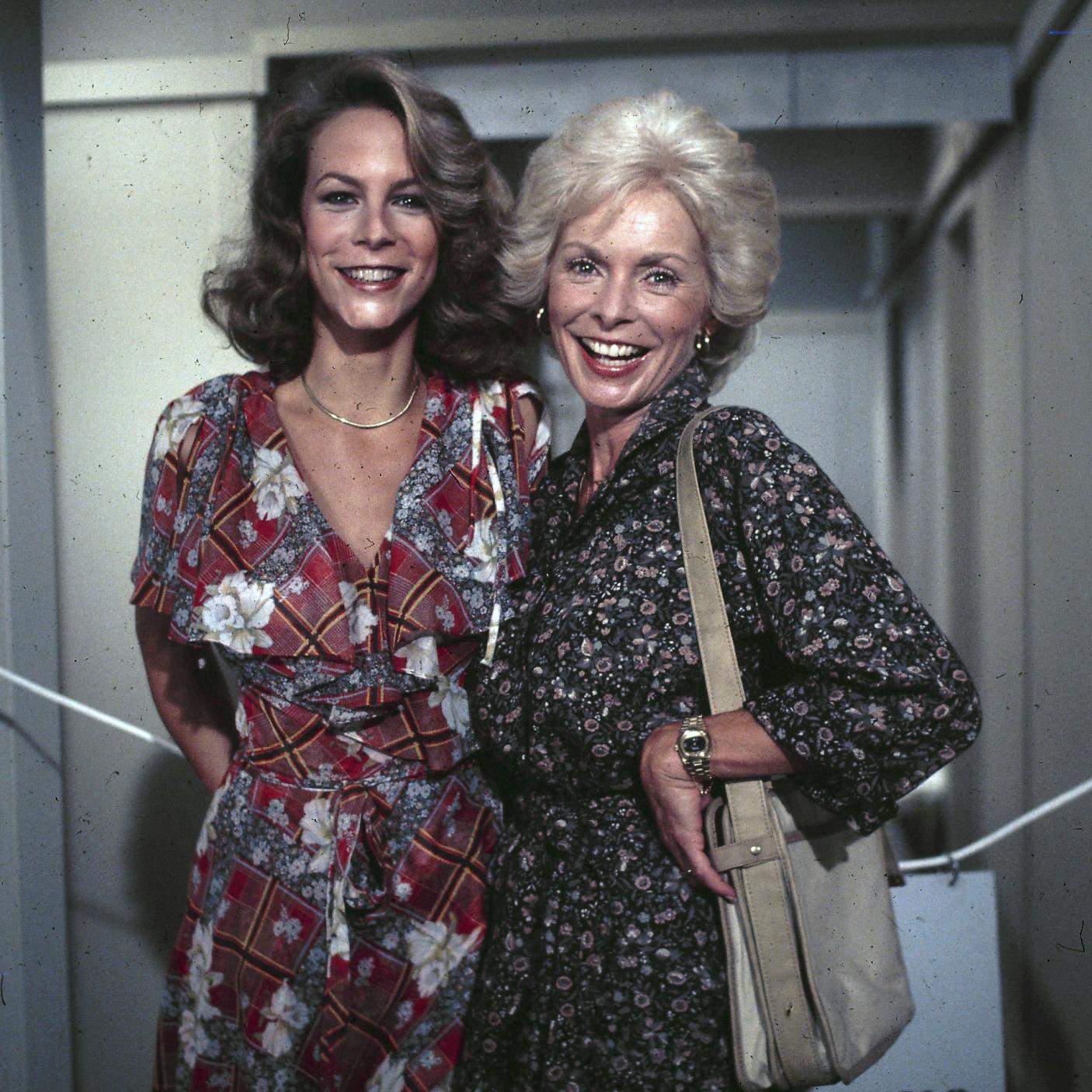
photograph of Jamie Lee Curtis and her mother Janeth Leigh via

Saturday, 25 September 2021

Women in Animation Just Need a Ballsy, Single Parent, Militant Feminist, Lesbian Mother to Succeed

According to "Women in Animation", 60% of animation students are women but only 20 to 40% of professional roles in the industry are held by women. The industry seems to be a "boys' club" with "macho energy flying around". Usually, producers are women, men are directors and when a woman is a director she might "want to be more macho, speak louder or lower and make sure you’re not ‘screechy’ (...) behaving in ways that lose you energy because you’re trying to be something you’re not.”

“It is of course a matter of the total male domination in all powerful positions, that’s been going on forever.” Niki Lindroth von Bahr

Typically, “men are the creative leads and women are the jobbing crew animators or producers. Women are there to facilitate and enable the creative voice and vision of men because self-doubt is the patriarchy’s most insidious weapon.” Moving from education to career, women have “their more feminine qualities praised – nurturing, a willingness to please. It’s a restrictive pattern that upholds the status quo.” Kitty Turley

Technical roles (e.g. FX artists) are hugely male dominated: “It goes back to a time when boys were encouraged to like things such as technology and football, and girls to art and ballet dancing. These projected expectations have possibly fed into later interests and career choices. Gender roles and expectations are becoming more fluid though, which is an exciting shift.” Rosanna Morley

But there is hope since the right mother can give women the confidence they need to succeed in the animation industry. Anna Ginsburg says her upbringing by a “ballsy mother, a single parent, lesbian, militant feminist and lawyer" was quite helpful (via). Solution found.

-----
photograph (Disney, ca. 1969) via

Friday, 24 September 2021

"Lady, it’s official, your boy is a big fag."

In 1996, Jake Shears (Scissor Sisters) had "that chat" with his parents while spending their holidays in Las Vegas.

For spring break, my mom and dad wanted some family time, so we flew to Las Vegas. (...) Keeping my sexuality from my family was eating away at my happiness. The layers and compartments to which I tended, the juggling of selves – it was wearing me out, rubbing all sides raw. I was sick of hiding magazines under my bed, sick of sneaking boys in through the window, sick of announcing in the school hallway anytime my mom came to visit, ‘You guys, my mom is outside and she’s coming in. I’m NOT GAY. OKAY?’ I wanted to feel like a complete person, to be ashamed of nothing and apologize to no one. 

‘When we get back to Seattle, I want to talk to you about something.’ She adjusted her lip liner. 

I froze, one hand covered in gel, coaxing my strands to stand. What was ‘something’? Did this mean she suspected? She looked over at me and must have known I was going to ruin any chance of us coming out of this vacation happy. Christ, who cares? I thought. Here we go. 

‘Is it about me being gay?’ There, I had said it. Boom. The pale yellow tiles in the bathroom looked the color of sick. I felt nauseous. It was over. Out of the bag. Neon lights. Phase two. Lady, it’s official, your boy is a big fag. She paused, set down her brush, and extricated herself from the bathroom. I followed and sat next to her on the stiff bed. My father lay on one side, silent and watching TV. ‘Is that what you meant?’ I said. 

‘Is that what you wanted to talk about?’ Her eyes were seeing atrocities on an invisible horizon. ‘Mom, I’ve always been like this.’ 

‘Jason,’ she said, just under her breath. ‘Your father is trying to watch the news.’ We sat through the overblown Michael Crawford show, none of us able to focus on the stage. My parents ordered a bottle of wine at the table; it was the first time I saw either of them have a drink in about ten years. Dad was quiet and went back to the room after it was finished. Mom and I walked ‘to get ice cream.’ We paced and hissed, raising our voices in front of a buzzing food court. ‘It’s a death sentence,’ she said. ‘What did we do to make this happen?’ At one point: ‘I’m never going to have grandchildren!’

‘People do that now sometimes,’ I said between spoonfuls of Häagen-Dazs. ‘Mom, I can totally have kids.’ ‘Over my dead body!’ she shot back. 

We all flew back the next day and didn’t speak. On the way to drop me off at my dorm, we stopped at a gas station and my mom went inside to pay. My father faced forward as the car idled and the wipers swiped off the drizzle. ‘Dad? Are you okay?’ 

He glanced at me in the rearview mirror and gave one small shake of his head, eyes back on the windshield. ‘We’re simply devastated, Jason.’ (via)

- - - - - -
YouTube Links:
::: Scissor Sisters - Laura: WATCH/LISTEN
::: Scissor Sisters - Comfortably Numb: WATCH/LISTEN

- - - - - -
photograph via

Wednesday, 22 September 2021

Age + Poor Eyesight = Discrimination

According to a study of  7.677 adults aged fifty and over, those with poor vision report significantly more discrimination, i.e. they are 40% more likely to report being discriminated against (e.g. treated with less respect or courtesy, receive poorer service than other people in restaurants and stores, people act as if they think they are not clever) compared to adults who class their eyesight as good. Those experiencing discrimination, again, show a clear tendency to be depressed or feel lonely, and are more likely to report a lower quality of life and life satisfaction (Jackson et al., 2019).

"People with poor eyesight are at increased risk of loneliness and depression. Our results suggest that discrimination may be an important contributor to this. In addition to addressing the injustice of unfair treatment, tackling the issue of discrimination against people with poor vision could also have substantial benefits for their mental health and wellbeing."
"Teaching coping strategies may help older people with poor vision mitigate the risks for mental health associated with discrimination. More importantly, there is a need for efforts to tackle the negative attitudes and discriminatory behavior toward people with visual impairment in society to reduce their exposure to these damaging experiences."
-----
- Jackson, S. E., Hackett, R. A. & Pardhan, S. (2019). Association of Perceived Discrimination With Emotional Well-being in Older Adults With Visual Impairment. JAMA Ophtalmology, link
- photograph (Environment Transformer/Flyhead, 1968, by Haus-Rucker-Co) via

Tuesday, 21 September 2021

Eight Design Principles for De-Marginalising the Future

Consider the poor, and strive for a future where they have plenty. 
Remember those who mourn, and design a future that will alleviate their sorrow. 
Listen to those who are quiet, who doubt themselves, and whose voice is easily drowned out, as they have as much of a claim to the future as everyone else. 


Pay attention to those who advocate for social justice, and work toward creating a future that is responsive to them. 
Hold in high esteem those who are merciful, and design a merciful future for them. 
Remember those who can’t care for themselves, and build a future that cares for them. 
Elevate people who mend rifts and build bridges, and design a future that values their skills. 
Recognize those who are persecuted, and endeavor to create a future where they are not. (literally via)


photographs (Gelbes Herz by Haus-Rucker-Co) via and via

Monday, 20 September 2021

Design Justice

Abstract: Design is key to our collective liberation, but most design processes today reproduce inequalities structured by what Black feminist scholars call the matrix of domination. Intersecting inequalities are manifest at all levels of the design process. (...) Design justice is a field of theory and practice that is concerned with how the design of objects and systems influences the distribution of risks, harms, and benefits among various groups of people.


Design justice focuses on the ways that design reproduces, is reproduced by, and/or challenges the matrix of domination (white supremacy, heteropatriarchy, capitalism, and settler colonialism). Design justice is also a growing social movement that aims to ensure a more equitable distribution of design’s benefits and burdens; fair and meaningful participation in design decisions; and recognition of community-based design traditions, knowledge, and practices (Costanza-Chock, 2018).


- Costanza-Chock, S. (2018). Design Justice: Towards an Intersectional Feminist Framework for Design Theory and Practice; link
- photographs (©Haus-Rucker-Co) via and via