Showing posts with label inclusive design. Show all posts

Thursday, 9 June 2022

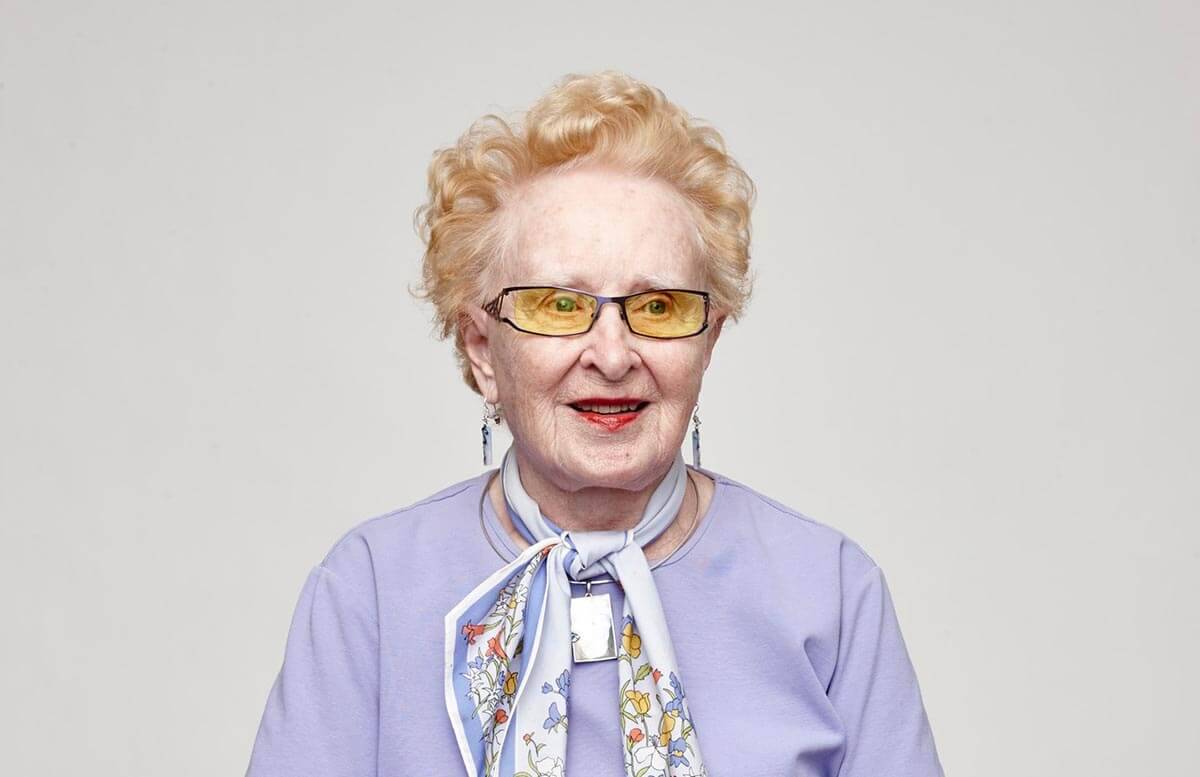
Barbara Beskind: A Smashing Designer Smashing Age Stereotypes

Barbara Beskind, born in 1924, is a designer and inventor who, in 2013 aged 89, saw David Kelley - the founder of IDEO - on TV and decided to send him a letter because she had the impression that he "accepted, and really respected, people from a varied background" offering her "unique kind of life experience and designing skills".


"(...) I typed a letter, which might have caught their attention because they don't get many communications by "snail mail"- I have macular degeneration so my eyesight prevents me from using computers.
Within a week I got a response. They were just starting to design implements that would be helpful to the ageing, and so it was very fortuitous that I arrived at that time.
They invited me to come in and meet a few people. When we sat down at a table for four in the cafeteria, I thought, "That's very nice but I thought there were going to be a couple more people." What I couldn't see was that behind me people were filing in - about 30-35 designers and engineers. Suddenly, I found myself being introduced as the speaker. I got up and told my story and fielded some very interesting questions.
After that I became an adviser for equipment and designing products and services for the elderly and the low-vision community.
Every Thursday I walk three blocks to the train station - I know all the conductors now. I arrive at either the Palo Alto or San Francisco IDEO office around 10:00 and often sit on the same sofa, so that everyone knows where to find me. Word spreads from the front desk and people will arrange appointments with me for ongoing client projects. People will also stop by to talk about what is going on with various projects - it's an extremely collaborative environment.
I love working in this atmosphere. I may be six or seven decades older than some of the people I'm working with - and many of them have PhDs or masters degrees, which I don't - but I'm accepted as an equal. My voice is respected for what I bring to the table, for my experience, for my insights, and for my inventive, problem-solving nature.
For example, for one product - still under wraps - they intended to use batteries, but if these batteries are tiny, like the ones for hearing aids, older hands can't manipulate them easily and they drop them or lose them. My point was that it was better to recharge the product at night, when it is not being used.
No-one can expect, at a young age, to put themselves in the shoes of an elderly person and sense what it's like. Even as close as I am to the issues of the elderly, I have been amazed, and have learned from people whom I live with in my retirement community. I've always said to them, "Come and bring me your ideas of what you need."
There was a gentleman who came up to me recently and said: "Barbara, I need you to invent something for me - I walk slowly on a walker and I don't hear well, so when somebody comes up behind me and slaps me on the back it scares me to death. What can you do to help me? Maybe something that would be like a mirror?" I thought, "Well, that's a no-brainer." I went to the bicycle shop, got a rear-view mirror, attached it to his walker and he is so happy. (...)
If you're going to design for the elderly, ask them what they need, don't tell them. We don't need pink canes and jewelled pill boxes, we need functional equipment that makes us more independent, keeps us safe and gives us joy.
I think the elderly are an untapped resource, whose input should be sought. (...)"
“The team I worked with at IDEO — all who had master’s degrees and Ph.D.s — was very receptive to having a 90-year-old consult on their designs, and they accepted me as an equal. Their respect and eagerness to have me collaborate with them was tremendously important to me.” 
- - - - - - - - -
photograph via

Monday, 6 June 2022

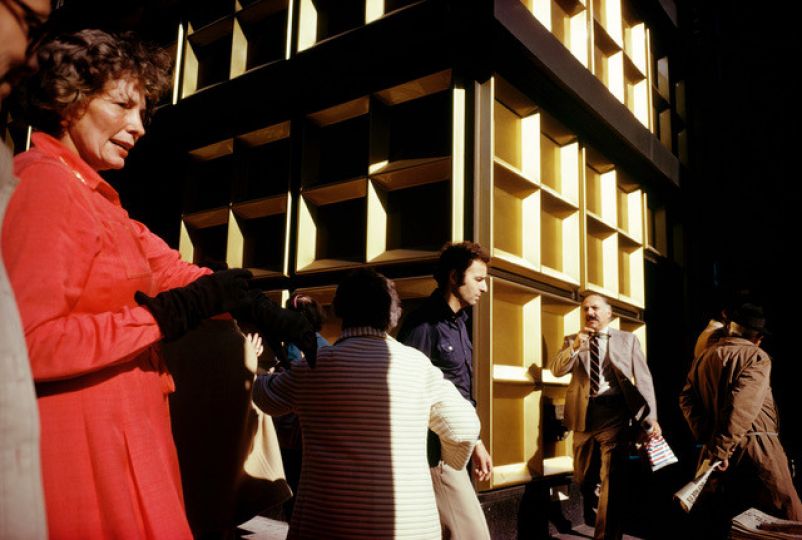
Meet me at the Fifteen Seconds Festival...

 ... where I will be holding a workshop on the impact of ageism on design. Title: The Impact of Visual Ageism on Design and Designing for Social Change: Some Very Good Practices and Many Very Bad Practices.

Content: Design can do many things. It can represent minorities or other them, help develop empathy, raise both awareness and status or perpetuate stereotypes and marginalise, script and mediate social practices… In short: Design has the power to include or exclude groups of people. This workshop focuses on the impact ageism has on design. Ageist stereotypes affect societies, happiness, health, and life expectancy, limit the capacity to make choices about lives. And yet they remain rather unchallenged: surveys suggest no jeans after the age of 53, no twitter if you are 47 or older, we are constantly surrounded by associations such as young and dynamic and constructs like 50plus. Ageing in an ageist society generally means becoming invisible and losing status. The combination of image makers influencing what issues we discuss in a society, of designers – often unconsciously – being driven by negative assumptions and consumers internalising the deficit orientation might explain why there is a design ghetto created for „the old“. However, there are a great many inspirational approaches that successfully focus on asthetics, address issues of dignity, consider the role language plays, empower, and challenge the notion that design need not be sexy when targeting „the old“, approaches that prove: Design can make change.

- - - - - - -
photograph by Joel Meyerowitz via

Saturday, 4 June 2022

Design Meets Disability (II): On Eyewear and Hearwear.

... a follow-up posting with a few more excerpts from the highly interesting chapter "fashion meets discretion" in the highly interesting book "design meets disability" ... excerpts that focus on the development of glasses from "medical necessity" to fashion statement and compare this trend with the status and stigma of hearing aids. Generally, the latter are "developed within a more traditional culture of design for disability". There are, however, some designers celebrating deafness by creating high fashion hearing aids, for instance here and here and here.

glasses

Glasses or spectacles are frequently held up as an exemplar of design for disability. the very fact that mild visual impairment is not commonly considered to be a disability, is taken as a sign o fthe success of eyeglasses. But this has not always been the case: Joanne Lewis has charted their progress from medical product to fashion accessory. In the 1930s in Britain, National Health Service spectacles were classified as medical appliances, and their wearers as patients. It was dictated that "medical products should not be styled." At that time, glasses were considered to cause social humiliation, yet the health service maintained that its glasses should not be "styled" but only "adquate". In the 1970s, the British Government acknowledged the importance of styling, but maintained a medical model for its own National Health Service spectacles in order to limit the demand. In the meantime, a few manufacturers were offering fashionable glasses to consumers who could afford them. As recently as 1991, the design press declared that "eyglasses have become stylish."

These days, fashionable glasses are available in the shopping mall or on Main Street. It has been reported that up to 20 percent of some brands of glasses are purchased with clear nonprescription lenses, so for these consumers at least wearing glasses has become an aspiration rather than a humiliation. So what lessons does this hold for design and disability? There are several, especially in relationship to the widely held belief that discretion is the ultimate priority in any design for disability. 

First, glasses do not owe their acceptability to being invisible. Striking fashion frames are somehow less stigmatizing than the National Health Service's supposedly invisible pink plastic glasses prescribed to schoolgirls in the 1960s and 1970s. Attempting camouflage is not the best approach, and there is something undermining about invisibility that fails: a lack of self-confidence that can communicate an implied shame. (...)

But neither is the opposite true: glasses' acceptability does not come directly from the degree of their visibility either. Brightly colored frames exist, although they are still a minority taste. This might serve as a caution to medical engineering projects that have adopted bright color schmes for medical products "to make a fashion statement" as the automatic progression from making a product flesh-colored. Most spectacle design, and design in general, exists in the middle ground between these two approaches. This requires a far more skilled and subtle approach - one that is less easy to articulate than these extremes. (...) (Pullin, 2009:15-17)

(...) many fashion labels design and market eyewear collections. Collections, labels, and brands: these words set up different expectations and engagement from consumers. And consumers is a long way from patients or even users. (...)

Eyewear designers Graham Cutler and Tony Gross have spent thirty years on the front lines of the revolution that turned eyewear "from medical necessity into key fashion accessory." It is interesting to note how recent this revolution was, given how much it is now taken for granted. (...), and their customer base transcends age and occupation. 

(...) Certainly, fashion designers are rarely part of teams even developing wearable medical products, which is incredible considering the specialist skills they could bring as well as their experience and sensibilities. But if we are serious about emulating the success of spectacle design in other ares, we need to involve fashion designers, inviting them to bring fashion culture with them. 

hearing aids

Compare glasses with hearing aids, devices developed within a more traditional culture of design for disability where discretion is still very much seen as the priority. Discretion is achieved through concealment, through a constant technological miniaturization. The evolution of the hearing aid is a succession of invisible devices: objects hidden under the clothing, in the pocket, behind the ear, in the ear, or within the ear. As the hearing aid has grown ever smaller, it has occasionally broken cover only to migrate from one hiding place to another. What has remained the same is the priority of concealment. 

Such miniaturization has involved amazing technological development, but it is not without a price. (...) hearing aids' performance is still compromised by their small size and (...) they could deliver better quality sound if they weren't so constrained. This is how fundamental the priority of discretion can be. Yet for many hearing-impaired people, their inability to hear clearly is far more socially isolating than the presence of their hearing aid. (...) (Pullin, 2009)

- - - - - - - -
- Pullin, G. (2009). design meets disability. Cambridge & London: The MIT Press.
- image (Pierre Cardin) via

Friday, 3 June 2022

Design Meets Disability (I): Fashion Meets Discretion.

These are a few excerpts from the highly interesting chapter "fashion meets discretion" in the highly interesting book "design meets disability" (Pullin, 2009). In this chapter, the author discusses the tension between the notion of design for disability having to be discrete and invisible versus fashionable and a statement. The two approaches are exemplified by contrasting the development of glasses and hearing aid devices (see the following posting).

discretion

The priority for design for disability has traditionally been to enable, while attracting as little attention as possible. Medical-looking devices are molded from pink plastic in an attempt to camouflage them against the skin. The approach has been less about projecting a positive image than about trying not to project an image at all.

But is there a danger that this might send out a signal that disability is after all something to be ashamed of? If discretion were to be challenged as a priority, what would take its place? Invisibility is relatively easy to define, and may even be achieved through technical and clinical innovation alone, but it is more difficult to define a positive image purely from these perspectives. 

fashion

Fashion, on the other hand, might be seen as being largely concerned with creating and projecting an image: making the wearer look good to others and feel better about themselves.

Eyewear is one market in which fashion and disability overlap. On the rare occasions that the words design and disability are mentioned in the the same breath, glasses are often referred to as the exemplar of a product that addresses a disability, yet with little or no social stigma attached. This positive image for disability has been achieved without invisibility.

tension

Fashion and discretion are not opposites, of course; fashion can be understated, and discretion does not require invisibility. Nonetheless, there is a tension between these qualities because they cannot both be the absolute priority. There are also deep cultural tensions between the two designs communities. Perpaps fashion with its apparent preoccupation with an idealized human form is seen as having little to say about diversity and disability. The extremes and sensationalism of cutting-edge fashion can seem inappropriate in the context of disability, where discretion is seen as being so important. For some in the medical field, the very notion of being in fashion, of designs coming and going, is the antithesis of good design. 

But learning from fashion might require embracing not only its design qualities but also more of its values. Fashion does not just arise from a particular set of skills but creates and requires a culture. The mechanism through which fashion design evolves, whether through haute couture or street fashion, ceates extreme designs that can provoke negative as well as positive reactions in different audiences. It may not be possible to have one without the other, to have the results without the culture and the values. (...)

- - - - - - - -
- Pullin, G. (2009). design meets disability. Cambridge & London: The MIT Press.
- photograph (Pierre Cardin) via

Tuesday, 21 September 2021

Eight Design Principles for De-Marginalising the Future

Consider the poor, and strive for a future where they have plenty. 
Remember those who mourn, and design a future that will alleviate their sorrow. 
Listen to those who are quiet, who doubt themselves, and whose voice is easily drowned out, as they have as much of a claim to the future as everyone else. 


Pay attention to those who advocate for social justice, and work toward creating a future that is responsive to them. 
Hold in high esteem those who are merciful, and design a merciful future for them. 
Remember those who can’t care for themselves, and build a future that cares for them. 
Elevate people who mend rifts and build bridges, and design a future that values their skills. 
Recognize those who are persecuted, and endeavor to create a future where they are not. (literally via)


photographs (Gelbes Herz by Haus-Rucker-Co) via and via

Monday, 20 September 2021

Design Justice

Abstract: Design is key to our collective liberation, but most design processes today reproduce inequalities structured by what Black feminist scholars call the matrix of domination. Intersecting inequalities are manifest at all levels of the design process. (...) Design justice is a field of theory and practice that is concerned with how the design of objects and systems influences the distribution of risks, harms, and benefits among various groups of people.


Design justice focuses on the ways that design reproduces, is reproduced by, and/or challenges the matrix of domination (white supremacy, heteropatriarchy, capitalism, and settler colonialism). Design justice is also a growing social movement that aims to ensure a more equitable distribution of design’s benefits and burdens; fair and meaningful participation in design decisions; and recognition of community-based design traditions, knowledge, and practices (Costanza-Chock, 2018).


- Costanza-Chock, S. (2018). Design Justice: Towards an Intersectional Feminist Framework for Design Theory and Practice; link
- photographs (©Haus-Rucker-Co) via and via

Sunday, 6 December 2020

Schaufenster

Last week, the Austrian newspaper Die Presse invited me for an interview on diversity and design published in their weekly lifestyle and culture supplement Schaufenster. It is a fascinating field since design can do so many things ... reproduce stereotypes but also help challenge them by producing new images of the marginalised ... such as disabled or older people. Objects specifically designed for these target groups are often aesthetically stigmatising, at times literally shouting "I need help". I believe that the approach chosen is often rather caused by stereotypes than evil intention or design constraints. These stereotypes are difficult to get rid of since we live in a world that is highly segregated by age and ability, which, again, has an impact on designers ...

Monday, 30 November 2020

Design Doing Gender

No matter if razors, barbeque sauces or low-fat products, the consumer's gender is anticipated and inscribed into marketing and packaging guiding consumer choices, reflecting, reproducing and constructing gender norms by placing men on one side and women on the other. In her article, Petersson McIntyre (2019) sees packages as "objects that play an active part in gender performativity", objects that do/perform gender and "create notions of what is masculine, feminine, and even gender-neutral".


Design, according to many scholars, can never be gender-neutral. Nevertheless design discourse shows the tendency to regard objects as neutral ones that only follow principles of form and function. 
 
- - - - -
- Petersson McIntyre, M. (2019). Gender by Design: Performativy and Consumer Packaging. The Journal of the Design Studies Forum, 10(3), 337-358.
- photograph by Garry Winogrand (New York City, 1966) via

Friday, 20 November 2020

New Designers. Old Stereotypes.

"In a survey I undertook at the beginning of the course (…) ‘Design for An Aging Population’, I asked students to write down three words that describe an elderly person. Almost three quarters of their responses had negative associations revolving around words like weak, slow, and feeble. (...) But it was during the presentations of their ‘aging suits’ that I realized how ingrained ageism is within our society."
Glen Hougan


photograph by Helen Levitt via

Sunday, 15 November 2020

design + diversity: Designing an Inclusive World

When design chooses the approach one-size-fits-all, whose size are we, in fact, talking about? Who is Mr. Normal the so-called rest needs to adapt to? What impact does it have on "the other" when designing standardisation (and the illusion of normality) also means creating deviation (in a most heterogeneous world)? Who has a voice in visual culture? Who has to live in a design ghetto?...


Design can exclude and include groups of people, can make our lives more difficult and easier, can reinforce stereotypes and debunk myths, can respect and challenge taboos, can make minorities more invisible and raise awareness, can help maintain our narrow-mindedness and help develop empathy, can harm the image of minorities and raise their status, can stabilise and destabilise power relations. Design can.

The aim of this lecture is to present creative approaches and solutions, to discuss why we need ideas like a bicycle with Multiple Sclerosis and braille graffiti, to give some food for thought and raise awareness for the power of design and how it can create a better world for everybody, no matter what age, gender, ethnicity, religion, no matter if disabled or queer.

Online lecture hosted by FH Joanneum University of Applied Sciences
Monday, 16 November 2020, 5 p.m. Central European Time
Registration: idk.PR@fh-joanneum.at (by 4 p.m. the day of the lecture)

- - - - - - - -
photograph by Paperwalker, modified by IDK FH Joanneum (including the creative spelling of my forename)

Thursday, 12 November 2020

You are not what you use.

"If we are what we use, then it seems the elderly people in today's society are cranky, stupid and tacky. Of course, looking at products made for the elderly really says more about what product designers and manufacturers think the elderly are."
Gretchen Anderson


photograph by Helen Levitt (1973) via

Saturday, 17 October 2020

How diversity gets lost in design practices of information and communication technologies

Abstract: This article adopts an intersectional approach to investigate how age, gender, and diversity are represented, silenced, or prioritized in design. Based on a comparative study of design practices of information and communication technologies (ICTs) for young girls and older people, this article describes differences and similarities in the ways in which designers tried to cope with diversity. Ultimately diversity was neglected, and the developers relied on hegemonic views of gender and age, constructed older people and young girls as an “other,” and consequently their input was neglected. These views were thus materialized in design and reinforce such views in powerful yet unobtrusive ways. Oudshoorn, Neven & Stienstra (2016)


- Oudshoorn, N, Neven, L. & Stienstra, M. (2016). How diversity gets lost: Age and gender in design practices of information and communication technologies, Journal of Women & Aging, link
- photograph by Pierre Cardin (1970) via

Friday, 17 July 2020

Using Design to Redefine an Empathetic Mental Health Assessment

The Mindnosis Kit is a set of exercises that "help understand emotional distress and how to feel about it" and to reach out for help when necessary. The first tool, for instance, consists of six colourful triangles which represent areas that may be have an impact on the user's wellbeing. Once the right one has been chosen, it can be pasted into the journal with thoughts and reflections. Another tool is made of activity tools (mindfulness, cognitive behaviour therapy techniques, tips from peers) (via).


"When I was 17 I became unwell for a year. Accessing and using mental health services was a very traumatic experience which I buried and felt ashamed of for a long time. Years after I discovered many people had had similar experiences and we all shared the same thoughts. That is why I decided to use design to redefine what an empathetic mental health assessment can look like, as done by people who had gone through it." 
Sarah Lopez Ibanez

- - - - - - -
photograph via

Thursday, 16 July 2020

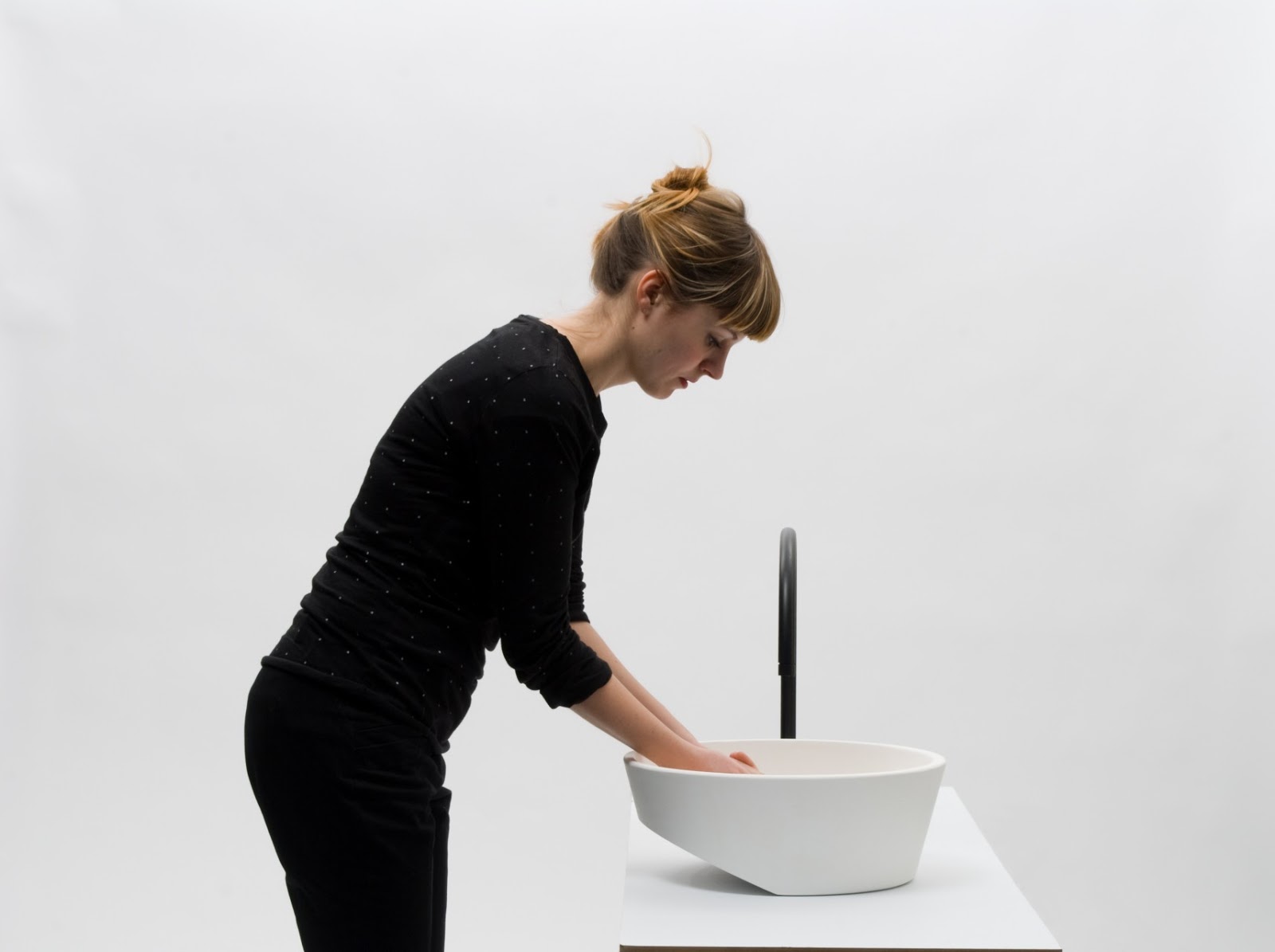
The Tilting Sink by Gwenolé Gasnier

« tilting sink », is a sink that can adapt to everyone. The common basin has been re-imagined with a simple alteration to accommodate all walks of life – a cut along the body of the piece to allow it to tilt according to the user’s height. By rocking around an axis, the design can be positioned to cater for a standing and seated adult or children. A locking system and a large overflow makes it secure in the two positions of use. (literally via)


photographs via

Tuesday, 11 July 2017

A Razor Designed for Assisted Shaving

"In the past 100 years, over 4000 razor have been designed to shave yourself. There have been 0 designed with the intent to shave someone else. Until now. (...) With millions of people around the globe under care, Gillette offers a humble but meaningful improvement in their daily lives."
Gilette


"And I'd do anything, anything for him." This wonderful commercial about love, role reversal, and more love shows Kristian Rex and his father, a former boat captain who suffered a stroke and cannot complete some tasks since then - such as shaving (via).

Wednesday, 15 June 2016

Access City Award 2016 ... The Winner is ... Milan

The Access City Award is the European prize given to cities that make daily life more accessible to people with disabilities or older persons (via). The award is part of the EU disability strategy "that aims at making Europe barrier-free for persons with disabilities". It encourages cities with a minimum of 50.000 inhabitants to take part, share their experiences and to improve accessibility. Since 2010, more than 250 cities have participated (via).


"On the top position, Milan was recognized for its consistent accessibility efforts, as well as its commitment to projects for the promotion of the employment of disabled people, and the support of independent living. Milan’s building standards are to be granted for promoting universality in design. The city stands for its impressive steps to improve accessibility made in the past, but also for its ambitious plans for the future." The second places was granted to Wiesbaden, the third to Toulouse." (via)


"In addition to its excellent and consistent accessibility efforts, Milan has also committed to projects to promote the employment of people with disabilities and to support independent living. Its building standards not only support accessibility and usability, but they also promote Universal Design standards, which aim to design products and spaces in a way that they can be used by the widest range of people possible. Milan is the winner of the EU Access City Award 2016, not only for its impressive steps to improve accessibility made in the past, but also for its ambitious plans for the future." (via)


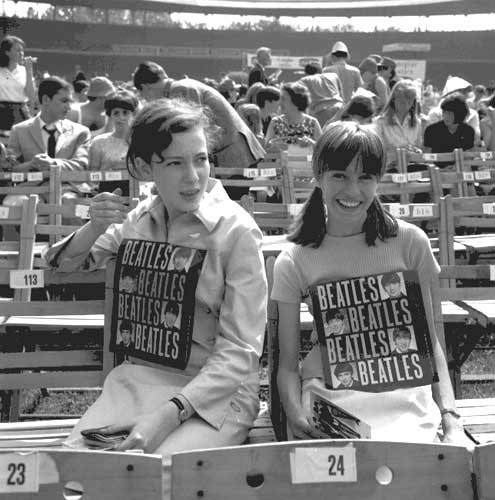
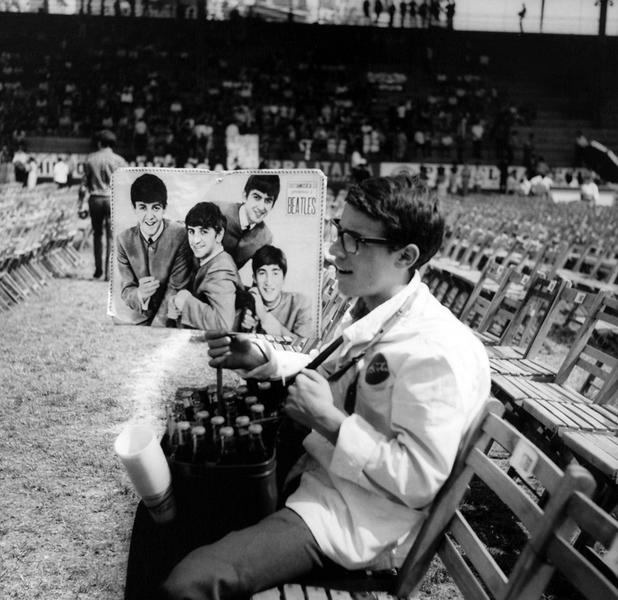
The Beatles had their first concert in Italy - in Milan - on 24 June 1965. It was their only concert in Milan. When they arrived by train in the evening of 23 June, 3.000 female fans were waiting for them at the Stazione Centrale. Four Alfa Romeo took them to their hotel, hundreds of fans spent the whole night in and around the Hotel Duomo to be close to the Fab Four.
The next day, they played at 4 p.m. for about 7.000 fans and once again in the evening in front of 25.000 people. They played for a little bit less than half an hour at the Vigorelli (a place dedicated to American Football today). Tickets cost 1.000,- lire, those who wanted to be closer to the stage had to pay 2.000,- lire  (via and via).


photographs of the Beatles in Milan (1965) via and via and via and via and via and via and via and via

Tuesday, 29 March 2016

Inclusive Design - Universal Design - Design for All

- Inclusive Design
Defined in 2000 by the UK Government as "products, services and environments that include the needs of the widest number of consumers". It has a history stretching back to the social ideals in Europe that materialised after World War II. These include healthcare and housing for everyone. Inclusive Design is used within Europe and goes beyond older and disabled people to focus on other excluded groups to deliver mainstream solutions.


- Universal Design
This term originated in the USA and is now adopted by Japan and the Pacific Rim. It started with a strong focus on disability and the built environment. Driven by the large number of disabled Vietnam War veterans, it was modelled on the Civil Rights Movement that promised "full and equal enjoyment … of goods and services". It has been a driving force in establishing American legislation regarding older and disabled people.


- Design For All
Closely related to Inclusive Design, Design for All started by looking at barrier-free accessibility for people with disabilities but has become a strategy for mainstream, inclusive solutions. As highlighted by the European Commission, it is about ensuring that environments, products, services and interfaces work for people of all ages and abilities in different situations and under various circumstances. This term is used in continental Europe and Scandinavia. There are other terms that are sometimes used with varying relevance to Inclusive Design. A few include Co-design, People-centred Design, User-focused Design and Transgenerational Design. Please see the Glossary for further information.


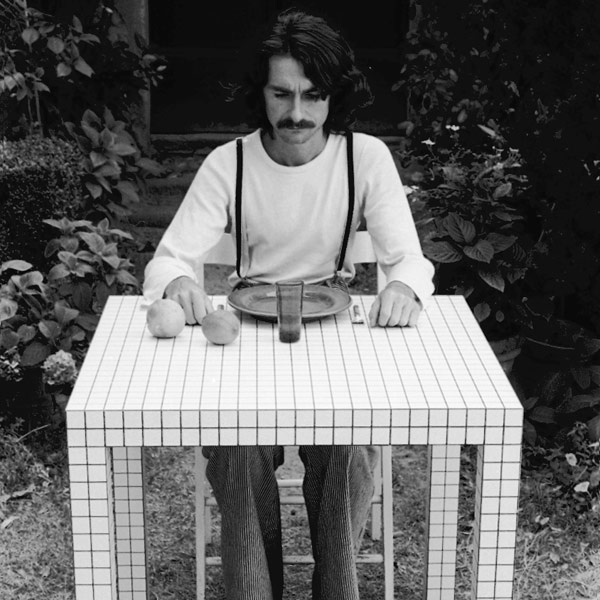
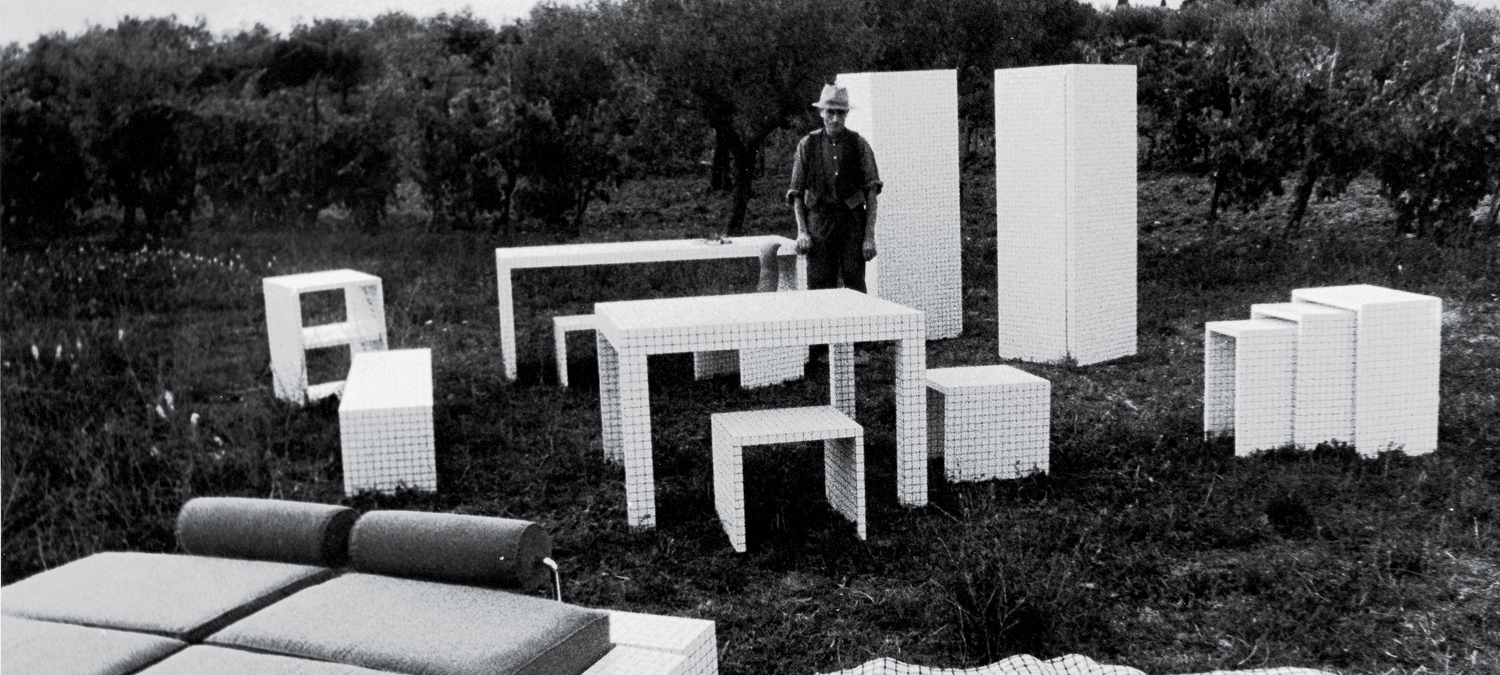
definitions literally via Inclusive Design, photos (Superstudio) via and via and via