Monday, 31 October 2022

Joan E. Biren: Using the language of visual art to reverse the history of invisibility

US-American photographer and activist Joan E. Biren (JEB) wanted to make lesbians seen. She started taking pictures of them in 1971 and created a body of 64.400 images. In 1979, at a time when coming out could mean losing one's job, home and children, and when publishers were rather reluctant to release anything containing the word "lesbian", she published the book "Eye to Eye: Portraits of Lesbians", a book that is still considered to be groundbreaking since it was the first time lesbians were "candidly and unashamedly" represented in photography. Biren had decided to reverse the history of invisibility (via and via and via).

My purpose was to help build a liberation movement, and you can’t build a movement without being seen.
Joan Biren


(above:) Gloria and Charmaine, Baltimore, 1979

The book is a collection of portraits of queer women of different ages and different backgrounds doing everyday tasks. Biren developed her films herself in order to avoid confiscation under the so-called obscenity laws (via and via and via).

There wasn’t a book of photographs by a lesbian, of lesbians, with the word ‘lesbian’ on the cover that I could find anywhere in the world. Even though there were all these possible harmful consequences, the power of being out had huge rewards. The ability to live an open life lifted the heavy burden that came from hiding, and lying, and self-denial… Without the bravery of these women, there would be no book.
Joan E. Biren

I wanted people to find their friends and their lovers in the book so that they could feel reflected and affirmed. Representing the broadest range of lesbians I could was a conscious choice that grew out of my intersectional politics even though we didn’t have that term at the time.
Joan E. Biren

(above:) Priscilla and Regina, Brooklyn, 1979

It all started with a selfie she took of herself and her lover Sharon Deevey, a "revolutionary moment". Despite a rather strong feminist movement, lesbian life was not really included in feminist narratives. Using the language of visual art is an opportunity to "seek control and prevent erasure" for many queer activists. The camera becomes an ally, helps acknowledge aspects of one's identity and do both "proving existence and moving forward into the future". (via)

I wasn’t preoccupied with learning the conventions of photography or developing a personal style. I just wanted my images to embrace the energy I experienced being with lesbians. I was trying to develop an approach where the photographer and the person being photographed had equal power in the transaction. I was always making my photographs so that other lesbians could see them. What guides me is what I think is needed politically. That’s my creative practice.
Joan E. Biren

A photograph can bring heat to the desire to be more of yourself. Seeing something you may never have even imagined can move you to desire it so much that you’re moved to action. I want my images to act as ‘wicks of desire’; to make the idea of radical change irresistible.
Joan E. Biren

(above:) Barbara and Beverly, Roxbury, 1978

“You have to have joy in your life, or you won’t make it. Resistance is difficult work. You have to understand everything that is wrong in order to try and fix it. You need joy to keep going. Back then, we thought we could change the world. We saw ourselves as revolutionaries, and to do that, you have to be an optimist. We were also young and in love, and both of those things tend towards hopefulness. Ultimately, it’s what the movement achieves that protects us and lets us live our authentic lives.”
Joan E. Biren

- - - - - - -
photographs via  

Sunday, 30 October 2022

Awkward Puppets: Offensive Jokes

Sam: "We have better technology."
Diego: "We have better food."
Sam: "Psh, please. There is more to life than just tacos."
Diego: "Yeah, well, there is more to life than just kale chips."
Sam: "We have better TV."
Diego: "We have better girls."
Sam: "We have better music."
Diego: "Are you ... are you kidding me? Every time I turn on the radio it's Taylor Swift complaining about high school boys. Isn't she like 45?"

::: Awkward Puppets, Offensive Jokes WATCH or WATCH


image via

Thursday, 27 October 2022

"I wanted to look ambiguous."

"I was perceiving myself as good as a man or equal to a man and as powerful and I wanted to look ambiguous because I thought that was a very interesting statement to make through the media. And it certainly did cause quite a few ripples and interest and shock waves."


"Why are we not valuing the word 'feminism' when there is so much work to be done in terms of empowerment and emancipation of women everywhere?"

"Feminism is a word that I identify with. The term has become synonymous with vitriolic man-hating but it needs to come back to a place where both men and women can embrace it. It is particularly important for women in developing countries."

- - - - - - - -
photograph via

Monday, 24 October 2022

"Talk to me about your kids and how you feel about plastic surgery."

"Men aren't asked about age. Men aren't asked about their children. Not that these things aren't important, but I do feel like it becomes reductive when a woman's life becomes, 'Talk to me about your kids and how you feel about plastic surgery.'"
Julianne Moore

"With actors, all our ages are out there for all to see - you can't hide anything, really. And it's kind of a relief. This is my age, this is what I look like without makeup on - who cares? That youth culture - that lying about your age - it's all denial of death anyway."
Julianne Moore

"If you're 50, you're never going to be 50 ever again, so enjoy being 50. If you sit through the year wishing you were younger, before you know it, it's going to be over, and you're going to be 51."
- - - - - - - -
photograph via

Saturday, 22 October 2022

The Complexities of a Hybrid Combination

"Jamaica is a small country of less than 3 million people that has been fundamentally shaped by European imperialism. I’m from a Black-majority society, though as with many other Caribbean and Latin countries, the racial/color conventions are different from the United States. The “one-drop rule” doesn’t hold, and “browns” were originally clearly demarcated from “Blacks” in a three-tiered white/Brown/Black social pyramid. As a “brown” Jamaican, I was — and to a certain extent still am — relatively privileged vis-à-vis the Black majority. So in a sense, in coming to the U.S. to work after I got my PhD in Canada, I was changing race, becoming part of an unambiguously subordinated “Black” American racial group, while equipped with the inherited cultural capital and privilege of my “brown” Jamaican middle-class origins and education.


You’ll appreciate, then, the complexities of this evolving hybrid combination of privilege and disadvantage, insider and outsider status, and its resulting weird epistemic amalgam of insight and obtuseness. I’m not Black American in the sense of having U.S. family origins that go back to slavery. But I’m Black and an American citizen, and I certainly identify with and have tried to support in my work, the long Black American struggle for racial equality and justice.

The U.S. and Jamaica are vastly different in innumerable ways. But what they have in common is that they’re both former slave societies, built on the racial exploitation of African persons. Yet whereas this historical reality is very much part of everyday consciousness in Black-majority Jamaica, it has been suppressed in white-majority America. Hence the hostility to the “1619 Project” and the truths it’s telling, truths that many white Americans still refuse to hear."

Charles W. Mills (1951-2021) via/more

- - - - - - - - 
photograph by Adrian Boot (Railton Road, Brixton, 1979, home of Race Today, a British political magazine quoted as "the leading organ of Black politics") via

Friday, 21 October 2022

Refugees. By Brian Bilston.

They have no need of our help 
So do not tell me
These haggard faces could belong to you or me
Should life have dealt a different hand


We need to see them for who they really are
Chancers and scroungers 
Layabouts and loungers
With bombs up their sleeves
Cut-throats and thieves
They are not
Welcome here
We should make them
Go back to where they came from
They cannot
Share our food
Share our homes
Share our countries
Instead let us
Build a wall to keep them out
It is not okay to say
These are people just like us 
A place should only belong to those who are born there
Do not be so stupid to think that
The world can be looked at another way

(now read from bottom to top) 


- - - - - - 
photograph of flood refugees (1937) by Walker Evans (1903-1975) via

Thursday, 20 October 2022

She is a Tree of Life to Them

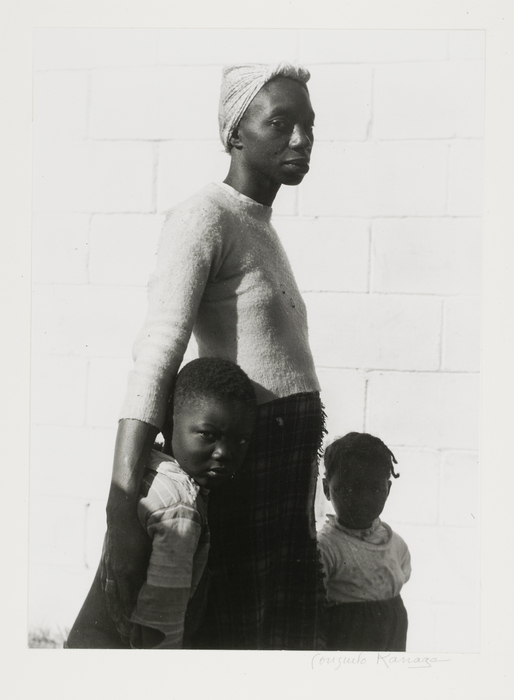
Consuelo Kanaga (1894-1978) was a US-American photographer and one of the pioneers among women in photography. She met Dorothea Lange in the early 1900s, Lange encouraged her to turn photography into a full-time career and introduced her to the photography community in San Francisco. 

In 1931, Consuelo Kanaga met an African-American man by the name of Eluard Luchell McDaniels. Kanaga employed McDaniels as a handyman and chauffeur. While Kanaga was McDaniels’s employer, the two struck up an unlikely friendship. Through discussion with McDaniels, Kanaga learned more about the racial injustices African Americans were continually forced to endure. Consuelo soon became a vocal advocate for the rights of African-Americans and other people of color.

Just shy of turning 40-years-old, Kanaga’s work as a photographer took on a whole new purpose. As a way to advocate for equal rights and equal treatment of African-Americans throughout the United States, Kanaga began to devote her photography career to capturing photos of African-Americans, their homes, and their culture. (via)

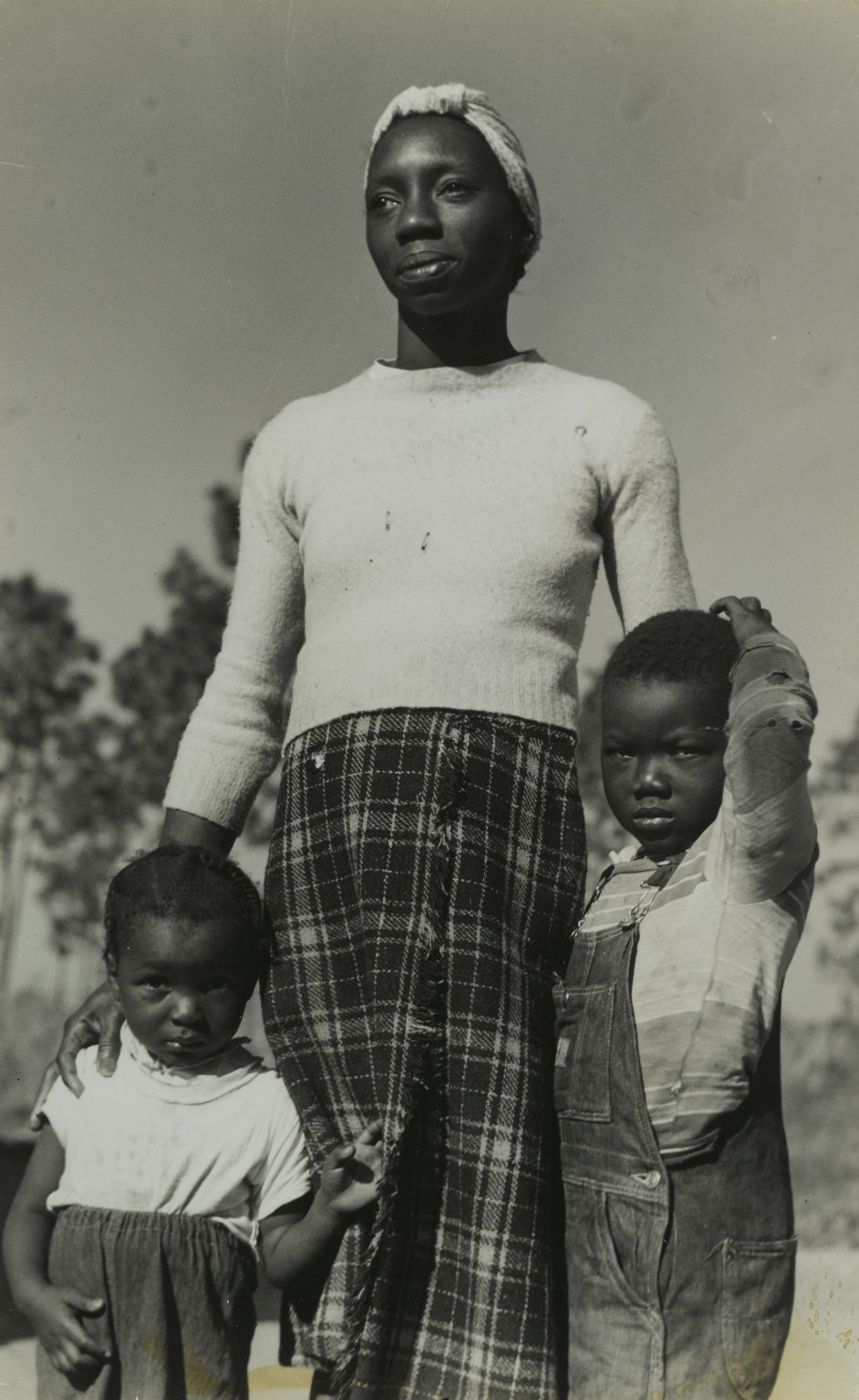
In 1950, Kanaga took the photograph of a mother with her two children in Maitland, Florida, where Kanaga was taking up residence in an artists's colony. In the agricultural swampland around Maitland, she took many photographs of Black field workers, among them this very one that later gained icon status. In Edward Steichen's 1955 exhibition "The Family of Man", it was paired ...

with a phrase from Proverbs 3:18—‘She is a tree of life to them that lay hold upon her: and happy is everyone that retaineth her’—and has been known by that title ever since. For Steichen, the photograph represented an archetype of motherhood, and he often referred to it as one of his favorite images in the show. He wrote, ‘How completely this picture speaks . . . for itself! This woman has been drawing her children to her, protecting them, for thousands of years against hurt and discrimination’ (The New York Times Magazine, 29 April 1962, pp. 62-63). (via)

Kanaga continued photographing social causes and injustices in the next decades and became actively involved in civil rights. 

In her 60s and 70s at the time, she attended and photographed many demonstrations and marches throughout these years. At 69-years-old, Consuelo Kanaga was even arrested for her activism as she marched in the Walk for Peace in Albany, Georgia, during 1963. (via)

- - - - 
photograph via, She is a Tree of Life to Them II: see

Monday, 17 October 2022

Quoting Angela Lansbury

"I've never been particularly aware of my age. It's like being on a bicycle - I just put my foot down and keep going."
Angela Lansbury


photograph via

Sunday, 16 October 2022

The Good Mother Sacrificing Her Professional Life. A Survey.

According to a survey carried out in Italy in 2021, about 42% of the respondents believe that "it is not possible for women to be good mothers without partly sacrificing their professional life." Two out of three respondents said that "it is more difficult for a woman to have a successful career because she would have to partly sacrifice her family life." 51% of respondents believe that people would exaggerate gender inequalities (via).


photograph of Sophia Loren and her son via

Saturday, 15 October 2022

You have to put on dark glasses.

"If you go to a meeting of the American Philosophical Association, you have to put on dark glasses, or else you’ll get snow blindedness from the expanse of white faces."
Charles W. Mills


photograph of Monica Vitti via