Tuesday, 30 June 2020

The Elderly, the Pandemic, ... Our Indifference.

(...) Notice how the all-too-familiar rhetoric of dehumanization works: “The elderly” are bunched together as a faceless mass, all of them considered culprits and thus effectively deserving of the suffering the pandemic will inflict upon them. Lost entirely is the fact that the elderly are individual human beings, each with a distinctive face and voice, each with hopes and dreams, memories and regrets, friendships and marriages, loves lost and loves sustained. But they deserve to die—and as for us, we can just go about our business. (...)


What does it say about our society that people think of the elderly so dismissively—and moreover, that they feel no shame about expressing such thoughts publicly? I find myself wondering whether this colossal moral failure is exacerbated by the most troubled parts of our cultural and economic life. When people are measured and valued by their economic productivity, it is easy to treat people whose most economically productive days have passed as, well, worthless.

From a religious perspective, if there is one thing we ought to teach our children, it is that our worth as human beings does not depend on or derive from what we do or accomplish or produce; we are, each of us, infinitely valuable just because we are created in the image of God. We mattered before we were old enough to be economically productive, and we will go on mattering even after we cease to be economically productive.

Varied ethical and religious traditions find their own ways to affirm an elemental truth of human life: The elderly deserve our respect and, when necessary, our protection. The mark of a decent society is that it resists the temptation to spurn the defenseless. It is almost a truism that the moral fabric of a society is best measured by how it treats the vulnerable in its midst—and yet it is a lesson we never seem to tire of forgetting. “You shall rise before the aged and show deference to the old,” the Bible says—look out for them and, in the process, become more human yourself.

Shai Held (president, dean, and chair in Jewish Thought at Hadar)

- - - - - - - -
potograph by wonderful Vivian Maier via

Monday, 29 June 2020

Quoting Robert Kennedy

“Ultimately, America's answer to the intolerant man is diversity.”
Robert Kennedy


photograph (Philadelphia, 1968, (c) Associated Press) via

Sunday, 28 June 2020

"(...) in times of crisis or danger, it grew into a paranoid xenophobia." Excerpt.

The primary mentality existing in a society where local cultures and the corporate ideal predominated, created self-contained compartments identified as exclusive and impervious to penetration by aliens or outsiders. Each social and cultural compartment contained within itself a sense of its own unique and exclusive identity, shared by no other community. Everyhing done in that community centered historically upon the members of that community. This sense of exclusiveness existed in a less harmful state of being for centuries, but in times of crisis or danger, it grew into a paranoid xenophobia.


Communities based upon the principle of association functioned at their best when all the distinct and different sub-groups lived alongside and amongst one another under the assumption of peace. If, however, dissension overtook the endeavor of peaceful association and even cooperation among the different groups, and suspicion grew to the point of increased violence and warfare, then the joint endeavor had failed and paranoid xenophobia marked the associationist principle.


Under such circumstances in the 19th century some states and societies identified assimilationism as a new goal for social cooperation. By eradicating all the cultural differences that distinguised the diverse groups from one another, the tension and violence that had grown powerful could perhaps decrease or disappear. If such an effort failed, then the assimilationism could become the tool of a xenophobic majority seeking to create a single national community. Ethnic cleansing or exportation of various "minorities" beyond the boundaries of the new national sphere would emerge as methods of xenophobic unification.
(Reid, 2000:185)

- - - - - - - - -
- Reid, J. J. (2000). Crisis of the Ottoman Empire. Prelude to Collapse 1839-1878. Quellen und Studien zur Geschichte des östlichen Europa, Band 57. Stuttgart. Franz Steiner Verlag.
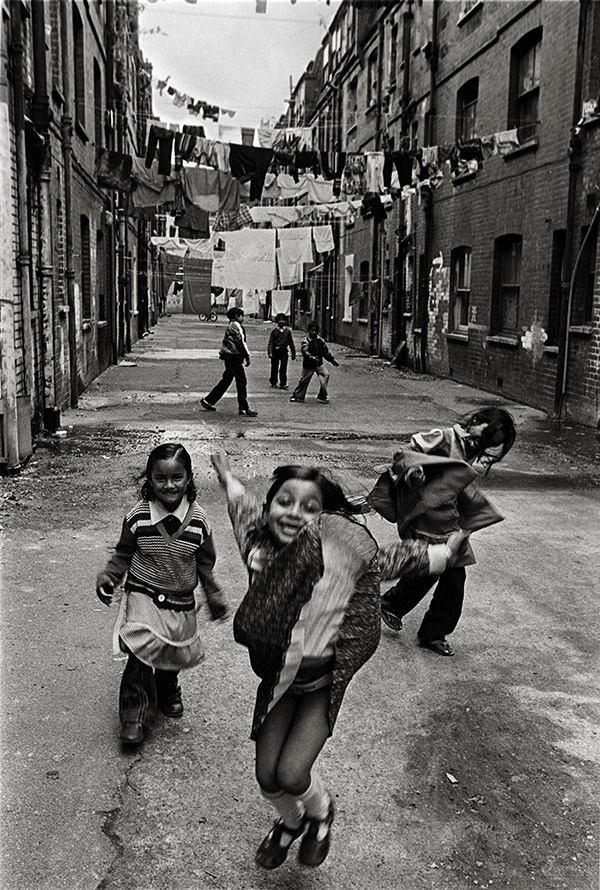
- photographs (Fieldgate Mansions, 1973-1984) by David Hoffman via

Thursday, 25 June 2020

Nick Gabaldon. Surfing against Segregation.

"Race wasn't really an issue at Malibu. Everyone liked him. And he was a pretty smooth surfer, too."
Rick Grigg (a teenager who surfed with Gabaldon)


Nick Gabaldon (1927-1951) was the first documented black US-American surfer. He learned to surf at the Inkwell in Santa Monica which was a tiny (about 60 meters), roped-off, segregated beach designated for the black community at the time. Gabaldon paddled many miles to Malibu, "one of California's best waves" since he had no car and surfed on a borrowed lifeguard's paddleboard (via and via and via).
According to most reports, on June 5, 1951, Nick Gabaldon caught his last wave. During an eight-foot south swell, Gabaldon lost control of his board and struck a piling beneath the Malibu Pier. His board washed up on the beach shortly after. Three days later, lifeguards recovered his body, and the small community of (white) surfers who had come to accept and respect Nick mourned. (...)
For Nick, surfing was a vehicle to improve his world. The ocean was his medium, which is fitting because the sea knows no prejudice; it’s the ultimate equalizer. As is a basketball court. Or a soccer pitch. Or a football field. Or, especially, a great story. (via)
- - - - - -
image via

Monday, 22 June 2020

Waterskiing. Gender. Injuries.

Not only do more men than women participate in waterskiing, men are also more likely to sustain injuries (Muzumdar, 2008) and have "significantly more strains and sprains than females" (Loughlin, 2013).


- Loughlin, S. (2013). Investigation of injuries occurring within competitive water-skiing in the UK. International Journal of Exercise Science 6(1), 29-42.
- Muzumdar, P. (2008). Waterskiing. In C. H. Tator (ed.) Catastrophic Injuries in Sports and Recreation. Causes and Prevention - A Canadian Study (209-220). Toronto, Buffalo & London: University of Toronto Press.
- photograph via

Saturday, 20 June 2020

It takes wealth to make wealth...

Income is primarily earned in the labour market. Wealth, however, is mainly accumulated by the transfer of resources across generations. In other words, it takes wealth to make wealth. A further, and not really surprising, distinction is that wealth is far more unequally distributed than income. In the U.S., the "median black household holds just ten percent of the wealth of median white household, and while blacks constitute thirteen percent of America’s population, they hold less than three percent of its wealth."
(Darity et al, 2018)


- Darity, W. Jr., Hamilton, D., Paul, M., Aja, A., Price, A., Moore, A., & Chiopris, C. (2018). What We Get Wrong About Closing the Racial Wealth Gap. Samuel DuBois Cook Center on Social Equity Insight Center for Community Economic Development, link
- photograph by Garry Winogrand via

Thursday, 18 June 2020

"...instead of blaming him if married love begins to cool, she should question herself."

Often a wife fails to realize that doubts due to one intimate neglect shut her out from happy married love.


A man marries a woman because he loves her. So instead of blaming him if married love begins to cool, she should question herself. Is she truly trying to keep her husband and herself eager, happy married lovers? One most effective way to safeguard her dainty feminine allure is by practicing complete feminine hygiene as provided by vaginal douches with a scientifically correct preparation like "Lysol". So easy a way to keep married lovers apart.
(...) You, too, can rely on "Lysol" to help protect your married happiness...keep you desirable!

- - - - - -
image via

Tuesday, 16 June 2020

It's all about sex, or is it? Humans, horses and temperament. An abstract.

We propose that the anthropomorphic application of gender stereotypes to animals influences human-animal interactions and human expectations, often with negative consequences for female animals. An online survey was conducted to explore riders’ perceptions of horse temperament and suitability for ridden work, based on horse sex. The questionnaire asked respondents to allocate three hypothetical horses (a mare, gelding and stallion) to four riders compromising a woman, man, girl and boy. Riders were described as equally capable of riding each horse and each horse was described as suitable for all riders. Participants were also asked which horses (mares, geldings or stallions) were most suitable for the three equestrian disciplines of show-jumping, dressage and trail-riding.


Logistic regression analyses were conducted to investigate people’s perceptions about suitability of horse types for particular riders, to evaluate if age, strength or gender were important in rider choice and to investigate riders’ allocation of various descriptors to a gelding, stallion or mare. There were 1,233 survey respondents, 94% of whom were female and 75% of whom were riders with at least eight years of experience. Binomial logistic regression revealed the girl had 2.5 times the odds of being allocated the gelding compared to the boy (p<0.001). Respondents were significantly more likely to allocate the stallion to the man and nearly 50% of respondents did not allocate a horse to the boy, even though they ranked rider gender as least important to their choice (p<0.001). In a forced choice selection of a positive or negative descriptor from a series of nine paired terms to describe horse temperament, a greater proportion of respondents assigned geldings positive ratings on terms such as calm,trainable, reliable and predictable. In terms of suitability for the three equestrian disciplines of show-jumping, dressage and trail-riding, participants overwhelmingly chose geldings for trail-riding, with mares being least preferred for both dressage and show-jumping disciplines. The results suggest that female riders are entering the horse-human dyad with gendered ideas about horse temperament and view horse-riding as an activity primarily for women and girls. This could have far-reaching implications for equine training and welfare.

- - - - - - -
- Fenner, K., Caspar, G., Hyde ,M., Henshall, C., Dhand, N., Probyn-Rapsey, F., Dashper, C., McLean, A., McGreevy, P. (2019). It's all about sex, or is it? Humans, horses and temperament; link
- photograph of Elizabeth Taylor via

Monday, 15 June 2020

I'll tell you something banal...

"I'll tell you something banal. We're emotional illiterates. And not only you and I – practically everybody, that's the depressing thing. We're taught everything about the body and about agriculture in Madagascar and about the square root of pi, or whatever the hell it's called, but not a word about the soul. We're abysmally ignorant, about both ourselves and others. There's a lot of loose talk nowadays to the effect that children should be brought up to know all about brotherhood and understanding and coexistence and equality and everything else that's all the rage just now...


... But it doesn't dawn on anyone that we must first learn something about ourselves and our own feelings. Our own fear and loneliness and anger. We're left without a chance, ignorant and remorseful among the ruins of our ambitions. To make a child aware of its soul is something almost indecent. You're regarded as a dirty old man. How can you understand other people if you don't know anything about yourself? Now you're yawning, so that's the end of the lecture."
Ingmar Bergman

- - - -
photograph via

Wednesday, 10 June 2020

Roma Città Aperta (1945)

The film "Rome, Open City" was conceptualised in Italy before the end of WWII and shot in 1945 (via). From 1950 to 1961, Rossellini's masterpiece was prohibited in West Germany since "it showed the cruelty of German Gestapo" (Bösch, 2017) and the Italian resistance against the occupation of Rome. Generally speaking, films showing the contribution of the German population to Nazi cruelty were not welcome. Movies harming Germany's reputation or the country's relation to others were to be banned (Kötzing, 2013).


The film "instantly, markedly, and permanently changed the landscape of film history. It has been credited with helping to initiate and guide a revolution in and reinvention of modern cinema, bold claims that are substantiated when we examine its enormous impact, even to this day, on how films are conceptualized, made, structured, theorized, circulated, and viewed." (Gottlieb, 2004:1)


- Bösch, F. (2017). Mass Media and Historical Change. Germany in International Perspective, 1400 to the Present. New York & Oxford: berghahn.
- Gottlieb, S. (2004). Open City: Reappropriating the Old, Making the New. In S. Gottlieb (ed.) Roberto Rosselini's Rome Open City. Cambridge: Cambridge University Press.
- Kötzing, A. (2013). Kultur- und Filmpolitik im Kalten Krieg. Die Filmfestivals von Leipzig und Oberhausen in gesamtdeutscher Perspektive 1954-1972. Göttingen: Wallstein Verlag.
- Roma Città Aperta, in German, link
- images of wonderful, stunning, amazing Anna Magnani and of Aldo Fabrizi via and via