Monday, 30 June 2014

Pretty Old.

Amanda Logacre was declared Miss Delaware on 14th June 2014. She was soon later told that she had to give back her crown and $ 11.000,- scholarship because she was too old for Miss America. Amanda Lograce is 24.


Marilyn Monroe look-a-like competition at Hastings, 15th July 1958 (via)

The organisers said that her age violated competition rules since contestants had to be between 17 and 24. As Logacre turns 25 this October, one month after the Miss America competition, she is too old. The Miss Delaware 2014 title was given to Brittany Lewis, Amanda Logacre was dethroned and received best wishes for her future endeavours (via). The state pageant's attorney later said that Amanda Lograce would receive all the scholarship money she had to forfeit (via).


Beauty contestants Baba (16), Conway (18) and Swenson (26) at a chiropractor-judged beauty contest in May 1956 at a time when contestants were judged on beauty, poise, posture and X-rays and people were not really concerned about raditation (via) ...

Logacre compared the way she was stigmatised with beauty queens who lost their titles because they had been involved with criminal behaviour or pornography: "I'm being treated as if I did something morally and ethically wrong. I'm just really heartbroken." (via). That is probably what ageism feels like.


... speaking of radiation: Miss Atomic Bomb Lee A. Merlin wearing a swimsuit with a cotton mushroom cloud. Las Vegas combined the two major attractions nuclear bombs and showgirls (1957) (information via, photo by Don English via)


Copa Girl Linda Lawson as Miss-Cue wearing an A-Bomb crown to illustrate another misfiring of the Operation Cue Bomb surrounded by servicemen, Las Vegas, 1st May 1955 (photo via)


Linda Lawson with an A-Bomb crown (photo via)


"Miss Beautiful Ape" contest run by Gary Owens in June 1972, at the time of the release of "Conquest of the Planet of the Apes". Dominique Green (no. 2) won a role in "Battle for the Planet of the Apes" (1973) (photo by Larry Bessel via)


Miss New Zealand collapses under the hot sun of Long Beach, California, 17th July 1954 (photo by Perry Griffith via)


Adam West with beauty pageant contestants (photo via)

Friday, 27 June 2014

The Universal Declaration of Human Rights

Article 2
Everyone is entitled to all the rights and freedoms set forth in this Declaration, without distinction of any kind, such as race, colour, sex, language, religion, political or other opinion, national or social origin, property, birth or other status. Furthermore, no distinction shall be made on the basis of the political, jurisdictional or international status of the country or territory to which a person belongs, whether it be independent, trust, non-self-governing or under any other limitation of sovereignty.(via)


The Universal Declaration of Human rights was adopted by the UN General Assembly in 1948 to never allow again the atrocities seen in the Second World War. The General Assembly encouraged all member states to disseminate and display the declaration in schools and other educational institutions (via).

Wednesday, 25 June 2014

Osteoporosis & Gender Medicine

Although men in Europe and the US account for a third of hip fractures that are related to osteoporosis, osteoporosis is still defined as the "disease of postmenopausal women". As a result, men are rarely diagnosed and treated for osteoporosis. Diagnostic models have been developed on the basis of bone mineral densitiy norms of young women. Hence, criteria to identify risk in men are still often lacking. By 1997, men's bone quality was evaluated based on women's norms.  Now, male reference populations are established and new diagnostics are created to improve diagnosis in men and women (European Commission, 2013).


- European Commission (2013) Gendered Innovations. How Gener Analysis Contributes to Research. (via)
- photo of Clint Eastwood and Silvana Mangano via

Monday, 23 June 2014

"I chose freedom over a constructed prison." Football and homophobia.

"Although many major sports in the world have witnessed a liberalization in which gay competitors have felt emboldened, or at least comfortable in revealing their sexual orientation openly and without fear of embarrassment or censure, football has not. Gay players have typically remained secretive during their active playing careers. Some have talked openly about their sexuality, but usually only after retiring." (Cashmore & Cleland, 2014).


Elton John playing football (1976) via

Football is called a refuge for outdated notions of "true masculinity", a sphere of "male culture, male bonding, and male power". In other words, it is a place where sexism and homophobia meet. Men who do not play well, for instance, are called "girls" or "faggots" while women who play well are called "viragos" or "lesbians". "Homophobia and sexism are often understood as being part of the cultural logic of football. Racist, sexist, or homophobic forms of behaviour are intended to provoke, insult, or humiliate the opponents and their fans and as such become legitimate strategies for winning the match." (Walther, 2006). In women's football the situation is said to be slightly different (via).


Aston Villa return to Birmingham with the cup in 1957. via

Due to this "football culture", coming out becomes rather difficult. For a long time, English footballer Justinus Soni "Justin" Fashanu (1961-1998) was the only professional footballer to come out as gay. He publicly came out in 1990, became a target of abuse and took his life eight years later (via). Fashanu became a "symbol of the continuing problems faced by gay men and women in sport" (via).
British semi-professional footballer Liam Davis has been out for four years: "I just got to a stage in my life where I had no reason to hide who I was." (via).


Villa fans on the terraces in 1975. via

In 2013, US-American Robbie Rogers striker/winger came out of the closet and became the second professional male footballer in Britain to do so (via and via). He announced that he was gay after leaving the club: "You're afraid to tell people and be open with stuff and so it's hard to just change. A lot of gay men and women who aren't out and don't really accept that they're gay, live with a bit of self-hate." "So I had to be so blunt about it, but hating yourself is very damaging." Rogers came out when he was 25: "I always heard homophobic things in locker rooms, on soccer fields, you know, before training, after training." "Whether it was joking or whether it was malicious, I just heard so many different things that scarred me and made me think that there's no chance I'm ever going to come out - ever - to anyone." (via). Rogers received more support than he had expected. Among others, FIFA president Joseph Blatter thanked him for his courage (via).
US-American football player David Testo came out of the closet in November 2011: "I really regret not having said publicly earlier. I fought with it all my life, my whole career. Living the life of a professional athlete and being gay is incredibly difficult. It is like wearing a secret in his bags but never yourself. It saps all your energy to you, in addition to having to perform, having to play." (via).


Aston Villa footballer Ron Wylie playing football with his son Nigel in the garden of their home. 15th June 1968. via

German midfielder Marcus Urban was a "rising star" in the 1980s who was unable to continue his career since he was terrified to be outed and living a double life was unbearable: "I hid 24 hours a day, I adjusted." "It was an almost unbearable pain, a great sacrifice, a painful price to pay to achieve my goal of becoming a professional footballer." By his early 20s he was burned out. Urban retired from the game when he was 23: "I realized that if I became a professional footballer, I would suffer as a man. I chose freedom over a constructed prison." (via). He came out in 2007 (via).
Heinz Bonn, an aspiring German talent in the 1970s, also decided to hide and suffered from anxieties. His life ended tragically in 1991 (via).
German midfielder and high-profile footballer Thomas Hitzlsperger retired last September and came out this January to break the taboo. He is the first German football professional to come out and received widespread support (via). Former colleagues twittered their respect, the Deutsche Fußball-Bund (German Football Association) promised to give him all the support needed, politicians and the German government praised his choice (via).


Terraces: Villa supporters in September 1978. via

In 2009, French football player Yoann Lemaire took a sabbatical from his amateur club FC Chooz because one of his colleagues had made homophobic comments. When he wanted to return to his club he had spent 14 years with, team managers refused to register him again to avoid "trouble" with his teammates (via). French football striker Olivier Rouyer came out in 2008 after having retired (via).


A crowd of Aston Willa supporters await the teams arrival with the FA cup outside the Town Hall. May 1957 Credit: Mirror Pix. via

Norwegian U19 football defender Thomas Berling ended his career before it really started because of the homophobic atmosphere (via).
Anton Hysén was the first (and so far only) Swedish semi-professional football player to come out (via) in March 2011. Despite the mostly positive reactions he said that he could not generally recommend a coming out (via).
Dutch football player John de Bever, Belgian Jonathan de Falco, ... the list is not exhaustive but there are probably not that many football players to add who have come out publicly. And certainly even fewer ones if only those are considered who did so before retiring. Compared to the past, however, more football players seem to choose "freedom over a constructed prison".


Villa fans on the terraces in 1970. via

Homophobia in football seems to be more openly and widely discussed. Clubs, managers and fans have started to show support. Quoting Roy Hodgson, manager of the English national football team who supported the "Football v Homophobia" campaign last year: "I can say from experience that football is a game that transcends different cultures and religions and it's a sport that lends itself to things like diversity and inclusion because of the worldwide appeal." "Like anything, education is the key to progression and creating an atmosphere that allows everyone to enjoy the game we’re all passionate about." (via).


Michael Caine and Bobby Moore via

- Cashmore, E. & Cleland, J. (2014) Football's Dark Side: Corruption, Homophobia, Violence and Racism in the Beautiful Game. Basingstoke: Palgrave Macmillan
- Walther, T. (2006) Kick it out. Homophobia in Football. european gay & lesbian sport federation (via)

Sunday, 22 June 2014

Sunday Music

Music and rhythms are powerful strategies for challenging sociocultural conventions. They are, as Theodor Adorno put it, a "formative force" that encourages collectivity and creates "binding experiences". They unite people in their struggles in colonial and post-colonial eras and at the same time reinforce individualism. The hegemonic authority of France in Francophone cultures, for instance, made these cultures choose percussive, instrumental and vocal strategies to express themselves and shift the balance of power. At the heart of the post-colonial power struggle is the question - or rather questioning - of identity.


Language, translation and sociocultural factors shape our understanding of rhythm and music. In many West African regions, such as Senegal, for instance, professional musicians are regarded as "socially and ethnically distinct". From a transcultural point of view, there is the basic question of how to define music since there is a lack of a direct translation of "our" word "music" in, for instance, many Sub-Saharan African languages (Huntington, 2005).


Huntington, J. A. (2005) Transcultural Rhythms: An Exploration of Rhythm, Music and the Drum in a Selection of Francophone Novels from West Africa and the Caribbean. Nashville: Dissertation

Friday, 20 June 2014

World Refugee Day

World Refugee Day is an opportunity to honor the courage, strength and determination of women, men and children who are forced to flee their homes under threat of persecution, conflict and violence.
Refugees flee with nothing but the clothes on their back. The UN Refugee Agency implements the most important international protection tool, the 1951 Refugee Convention, ensuring that innocent people caught up in conflict are safe (literally via).


Welcoming refugees has a humanitarian aspect but also an economic one since refugees and the diversity of skilled immigration "can provide substantial contributions to the workforce and economic development in the long run". In addition, they represent a new purchasing power. According to research findings, refugees are highly motivated to give back to the host country and more likely to be entrepreneurs - as entrepreneurs they can provide new jobs. The total economic impact of refugees in the Cleveland area for 2012, for instance, is estimated dollars 48 million. Cleveland has benefitted from welcoming refugees and being a supportive environment in many ways: increase in cultural diversity, increase in demand for local housing and locally produces goods and servies, entrepreneurship and employment, taxes paid etc. (Chmura Economics & Analytics, 2013). Welcoming refugees is a humanitarian duty. And it is in our economic interest.

- - - - - - - - - - - - - -
- Chmura Economics & Analytics (2013) Economic Impact of Refugees in the Cleveland Area. Calendar Year 2012. via
- Lego poster via

Tuesday, 17 June 2014

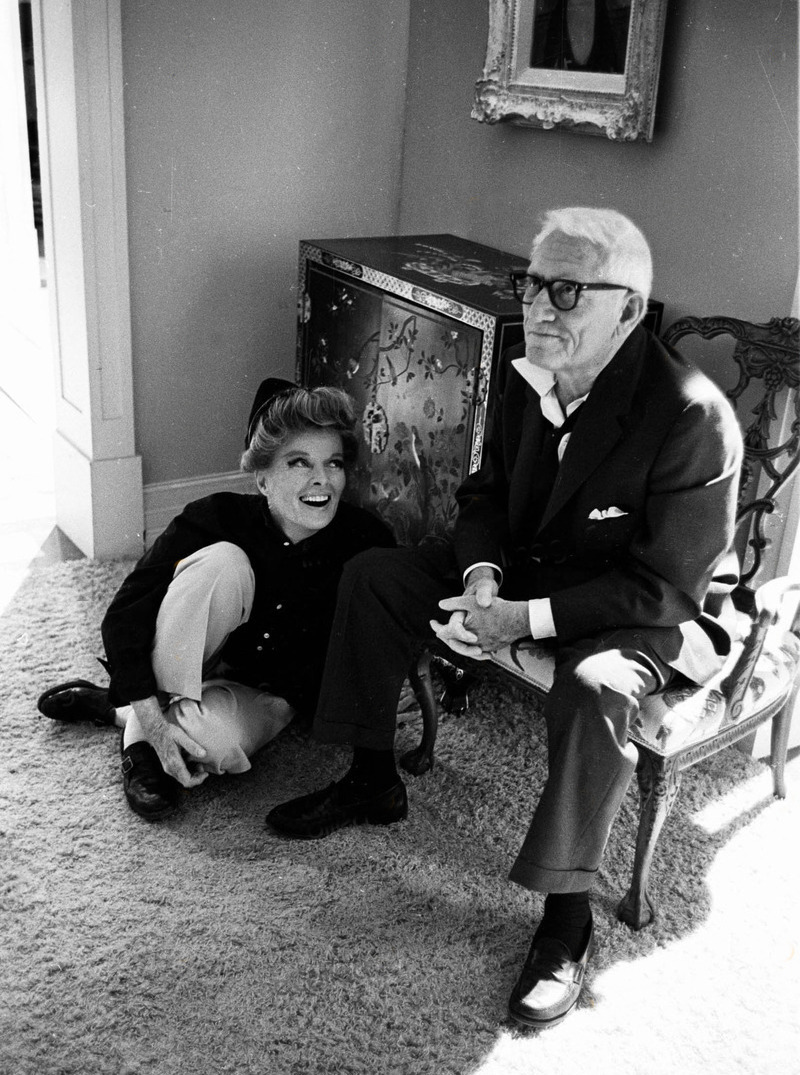
Katherine Hepburn wears trousers. Spencer Tracy is not amused. And Katherine Hepburn couldn't care less.

"I have one, Ms. Walters. I'll wear it to your funeral."
Katherine Hepburn's answer to Barbara Walters' question if she owned a skirt (via


When Spencer Tracy first met Katharine Hepburn in 1947, she was wearing trousers. Tracy did not approve and said to the producer: “Not me, boy, I don’t want to get mixed up with that.”


In 1967, Katherine Hepburn was asked about her atttitude to wearing trousers as a woman:
“Spencer doesn’t like women who wear trousers, but I couldn’t care less. Well, I have always worn trousers, never not worn them. I know my legs are good, but I marvel that women should be sainted for keeping stockings up. That’s one of the most boring tasks that anybody could ever be faced with. I don’t wear makeup, not even lipstick. I’ve got the same pants I’ve had for 30-40 years. The ones I have on now are only about ten years old- gabardine- and when they wear out in the rear end, I have new seats put in. I don’t go out unless I can wear trousers if I possible can-only at the theater at night in New York do I wear a dress. And women’s clothes- they’re insane now. (...)” (via)


photos (Hepburn on The Dick Cavett Show 1973) via and photo (Hepburn and Tracy) via and photo (Hepburn laughing) via

Monday, 16 June 2014

World Day of the African Child

16 June is the International Day of the African Child. On 16 June 1976, hundreds of South African children died in Soweto (via). This day is dedicated to them.


"No, I have not consulted the African people on the language issue and I'm not going to. An African might find that 'the big boss' only spoke Afrikaans or only spoke English. It would be to his advantage to know both languages." Punt Janson, Deputy Minister of Bantu Education

In South Africa, "white" education was subsidised by the government while black parents had to pay a month's wage to send their children to school for one year, had to pay for textbooks and to partly cover the costs of building schools. Nevertheless, according to the Department of Bantu Education, the (white) government had the right to choose the language of instruction. And so it did.

"If students are not happy, they should stay away from school since attendance is not compulsory for Africans." (via)


Afrikaans was introduced as a language of instruction, a language Desmond Tutu once called "the language of the oppressor" (via). The official file said that "for the sake of uniformity" it had been decided to use English and Africaans on a 50-50 basis as from January 1975. English was used for general science and practical subjects, Afrikaans for mathematics, arithmetic, social studies and the mother tongue for religion instruction, music and physical culture (via).


Protests started with 10.000 to 20.000 students marching against the introduction of Afrikaans in schools. Then the protests escalated (via). Among the many children killed by the police was 13-year-old Hector Pieterson (1963-1976). Sam Nzima's photograph of 18-year-old school boy Mbuyisa Makhubo (who was afterwards driven into exile) carrying Hector after he was shot with Hector's sister Antoinette Sithole running beside them became the iconic image of the Soweto (South Western Townships) uprising.


- Sifiso Mxolisi Ndlovu: The Soweto Uprising via
- photo "Boy With June Bug" by Gordon Parks (1963) via and young babysitter in South Africa by Ian Berry (1969) via and photo by Kuni Takahashi via and photo of child in Pimville, Soweto by Constance Stuart Larrabee (1948) via

Sunday, 15 June 2014

World Elder Abuse Awareness Day

"Elder abuse is a global social issue which affects the health and human rights of millions of older persons around the world, and an issue which deserves the attention of the international community."
UN Secretary-General Ban Ki-moon


Secretary-General's Message for 2013 (via)
"Around the world, older persons are tragically subject to psychological, financial or physical abuse. Unfortunately, too many older persons can be at risk. Prejudicial attitudes contribute to the problem.  Today, let us re-examine our attitudes towards ageing and the status and role of older persons. I urge Governments, civil society, and communities to raise awareness about this challenge. Governments, in particular, can help by enacting legislation to protect the abused and prosecute the abuser. We owe it to older persons and societies at large to fight ageism in all its forms and enhance the dignity and human rights of older persons everywhere."


Secretary-General's Message for 2012 (via)
"The World Health Organization estimates that between 4 and 6 per cent of older persons worldwide have suffered from a form of elder abuse — physical, emotional, financial. Furthermore, emerging research suggests that abuse, neglect and violence against older persons, both at home and in institutions, are much more prevalent than currently acknowledged. Such abuse is an unacceptable attack on human dignity and human rights. Making matters even worse, cases often remain unreported and unaddressed. Alarmed at this widening problem, the United Nations General Assembly has proclaimed World Elder Abuse Awareness Day, a new observance to be marked annually on 15 June. Respect for elders is an integral part of many societies. As people live longer, and as we strive for sustainable and inclusive development, it is time to revive and expand our appreciation for those who have advanced in years. A modern civilization can only live up to that name if it preserves the tradition of honouring, respecting and protecting society’s elders. As we commemorate the Day for the first time, let us all join in reaffirming that the human rights of older persons are as absolute as those of all human beings. I call upon Governments and all concerned actors to design and carry out more effective prevention strategies and stronger laws and policies to address all aspects of elder abuse. Let us work together to optimize living conditions for older persons and enable them to make the greatest possible contribution to our world."


Daphne Selfe was born in London in 1928. In the 1950s, she worked as a dancer and model but appeared in Vogue only when she was 70. She has also appeared in Marie Claire and campaigns by Dolce & Gabbana, GAP, Nivea and Olay (via and via).

"My five-year plan… Since people are living to 100 now, I have great hopes. I'll keep at it, keep fit, eat properly and I'll keep on working if I can."  (via).

"Other younger models admire me but they're not jealous as I'm not a threat. I have a niche all of my own." 

"I don't feel a day over 60. It's fantastic. I'll continue modelling until they stop asking. I love it. It's fun and keeps me young. I was never one for wild parties and I've never had any need to get drunk." (via)


photos via

Wednesday, 11 June 2014

Quoting Catherine Deneuve

"A woman has to be intelligent, have charm, a sense of humor, and be kind. It's the same qualities I require from a man."
Catherine Deneuve

"There are relatively few role models for young people. We are in a society that is ruled by men."
Catherine Deneuve


photo by Willy Rizzo via; quotes via