Wednesday, 7 October 2015

Missing Women

"It is often said that women make up a majority of the world’s population. They do not. This mistaken belief is based on generalizing from the contemporary situation in Europe and North America, where the ratio of women to men is typically around 1.05 or 1.06, or higher."
Amartya Sen


The concept of "missing women" was developed by Indian economist, philosopher and Nobel Laureate for Economics Amartya Sen in the early 1990s and refers to the phenomenon that in some parts of the world, such as India and China, "the ratio of women to men is suspiciously low" (Anderson & Ray, 2012).


"To get an idea of the numbers of people involved in the different ratios of women to men, we can estimate the number of “missing women” in a country, say, China or India, by calculating the number of extra women who would have been in China or India if these countries had the same ratio of women to men as obtain in areas of the world in which they receive similar care. If we could expect equal populations of the two sexes, the low ratio of 0.94 women to men in South Asia, West Asia, and China would indicate a 6 percent deficit of women; but since, in countries where men and women receive similar care, the ratio is about 1.05, the real shortfall is about 11 percent. In China alone this amounts to 50 million “missing women,” taking 1.05 as the benchmark ratio. When that number is added to those in South Asia, West Asia, and North Africa, a great many more than 100 million women are “missing.” These numbers tell us, quietly, a terrible story of inequality and neglect leading to the excess mortality of women."
Amartya Sen


"Violence against women must be recognised as a key issue in its own right, as one of the significant causes of death on our planet – comparable in importance only to war, hunger and disease." Winkler (2005)
According to United Nations' estimations, around 200 million women and girls are, euphemistically speaking, missing - a euphemism that "hides one of the most shocking crimes against humanity" (Winkler, 2005).

Gendercide in figures:

- Between 1.5 and 3 million girls and women are killed through gender related violence each year (Winkler, 2005).
- As of 2005, several million foetuses had been aborted in India within the last two decades for the only reason that they had been female (via). In India, there are at least 400.000 sex selective abortions per year (via). Almost half of the 100 million women who were not born because of their gender would have been Indian (43 million of the estimated 100 million) (via).
- Of those girls who are born in India, thousands are abandoned each year (Jha et al., 2011).
- For every 1.000 boys, there are at least about 60 to 70 girls under the age of six years who were killed before or within 6 years after birth (via).
- Indian girls under five years have a 40% higher mortality rate than boys the same age. "Negligent homicide" refers to the practice of letting girls die of malnutrition or starvation, or not taking them to hospital when they fall sick (via).
- Indian girls between one month and five years die of pneumonia or diarrhea at a rate four to five times higher than boys that age. Pneumonia is often induced by wrapping the girl in a wet towel soon after she is born to make sure infanticide is not detected in a police investigation (via).
- In India, girls of one year and younger are 50% more likely to die because of violence than boys at that age. Girls are 21% more likely than boys to die because of violence before their fifth birthday (via).
- According to the United Nations Population fund, around 5.000 women are killed every year in so-called honour crimes. It is estimated that at least three Pakistani women are murdered in "honour killings" every day. In Egypt, 47% of women who had been raped were "honour" killed by a relative afterwards (via).
- About 15.000 widows live and die on the streets of the holy city of Vrindavan, widows who had mostly been sent away by their own families after losing their husbands (via).


- Anderson, S. & Ray, D. (2012). The Age Distribution of Missing Women in India. Economic & Political Weekly, XLVII(47&48), 87-95.
- Jha, P., Kesler, M. A., Kumar, R., Ram, F., Ram, U., Aleksandrowicz, L., Bassani, D. G., Chandra, S. & Banthia, J. K. (2011) Trends in selective abortions of girls in India: analysis of nationally representative birth histories from 1990 to 2005 and census data from 1991 to 2011. The Lancet, 377(9781), 1921-1928
- Winkler, T. H. (2005). Slaughtering Eve. The Hidden Gendercide, 1-3. In: vlachova, M. & Biason, L. (eds.) Women in an Insecure World  via

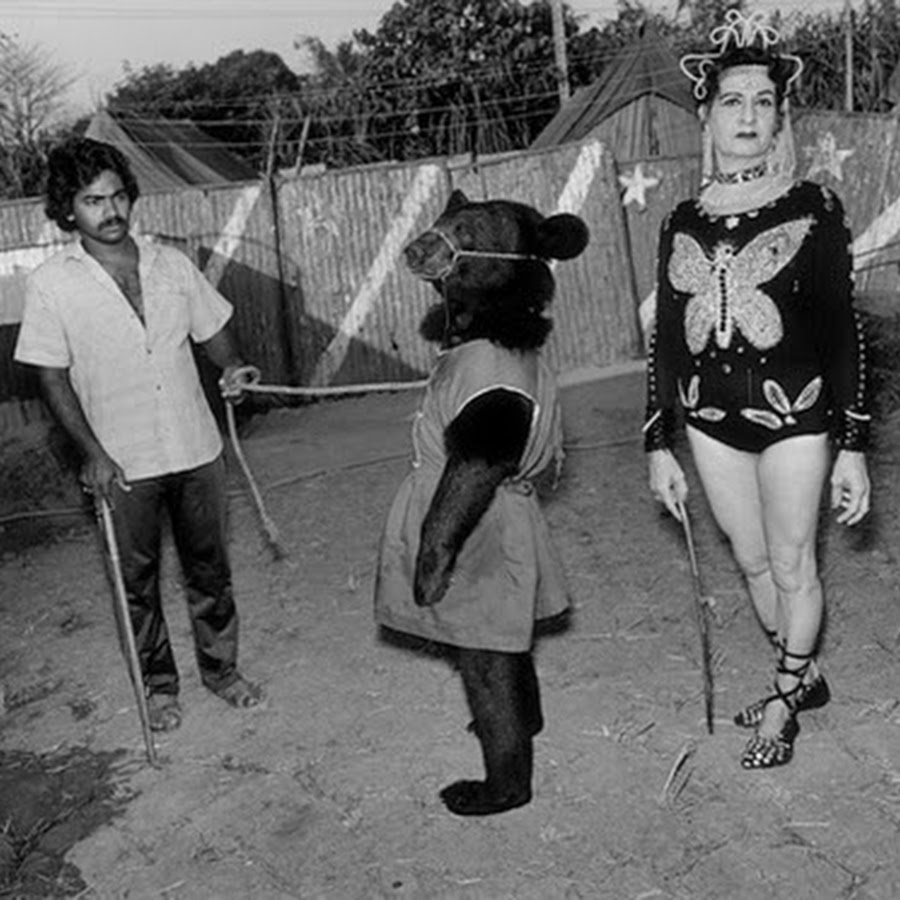
- all photographs by Mary Ellen Mark (1940-2015), "Hippopotamus and Performer. Great Rayman Circus Madras India" (1989) via, "Mira, Shefali and Pushpa of the Great Famous Circus", Calcutta via, Shavannaas Begum with her three years old daughter Par Veen, Great Gemini Circus via, Indian Circus via and via and via and via and via

Monday, 5 October 2015

Captain Pike has a female first officer & Captain Kirk hugs a mountain

"With all the weird surroundings of outer space, the basic underlying theme of the show is a philosophical approach to man's relationship to woman. There are both sexes in the crew and, in fact, the first officer is a woman ['Number One' played by Majel Barrett]"
Jeffrey Hunter


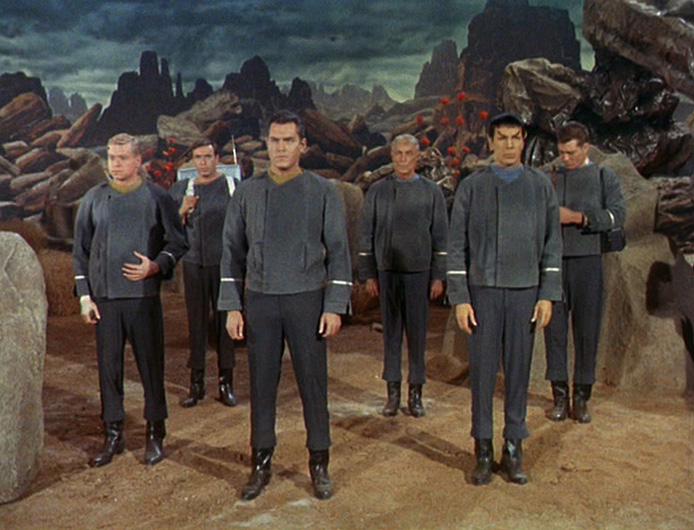
Jeffrey Hunter (1926-1969), born Henry Herman 'Hank' McKinnies, Jr., was the first Star Trek captain - Captain Christopher Pike - in the pilot episode "The Cage" (1964) before the role went to William Shatner ... and Captain Kirk. "The Cage" made headlines because a woman, Majel Barrett, played the USS Enterprise's first officer "Number One", a role that certainly did not represent the typical 1960s woman (more: link to related posting).


And now back to Captain Kirk and the question "Captain Kirk is climbing a mountain, why is he climbing a mountain?" probably each of us has asked at least once. The song "Captain Of The Mount" by Fall On Your Sword gives the answer we all were waiting for. Enjoy!
::: LISTEN/WATCH


images via and via and via and via

Saturday, 3 October 2015

#SaySomething

Charlie Winston and Gregor Meyle uploaded a beautiful song with English and German lyrics on YouTube yesterday. Both artists and Sony make sure that proceeds from this song directly benefit the International Federation of Red Cross and Red Crescent Societies. Other musicians participating in this clip are Peter Gabriel, Sting, Cassandra Steen, Cordula Stratmann, Madsen, Maria Mena, Xavier Naidoo, Sasha, Michael Patrick Kelly, Meret Becker, Nisse, Laith Al-Deen, Andrea Kiewel, Henning Wehland, Conchita Wurst, Stefanie Heinzmann, and Marlon Roudette.


Today, people will walk for refugees in Vienna - it is the "Walk of Fame of Humanity"; 40.000 people are expected (via)*. In the afternoon, the concert "Voices for Refugees" will start with a great many European musicians, mostly from Austria, Germany, and Italy. In the evening, Austria's president Heinz Fischer will hold a speech - another voice for refugees.

*Update at 10 p.m.: More than 120.000 people are participating.

Friday, 2 October 2015

The -ism Series (24): Anti-Humanism

"In the end, anti-black, anti-female, and all forms of discrimination are equivalent to the same thing: anti-humanism."
Shirley Chisholm

Interviewer: "Are you a feminist?"
Meryl Streep: "I am a humanist. I am for nice easy balance."

"At one point, ‘feminist’ became a pejorative term. How did that happen? If you’re a feminist, you’re basically saying you’re a humanist."
Julianne Moore


Shirley Anita St. Hill Chisholm (1924-2005) was the first major-party black candidate for President of the United States and the first woman to run to the Democratic presidential nomination in 1972. Chisholm was a founding member of both the Congressional Black Caucus and the National Women's Political Caucus and known for minority and women's issues (via and via).
"When I ran for the Congress, when I ran for president, I met more discrimination as a woman than for being black. Men are men.(...) They think I am trying to take power from them. The black man must step forward, but that doesn't mean the black woman must step back." Shirley Chisholm
 "Of my two handicaps, being female put many more obstacles in my path than being black." Shirley Chisholm
"I want history to remember me not just as the first black woman to be elected to Congress, not as the first black woman to have made a bid for the presidency of the United States, but as a black woman who lived in the 20th century and dared to be herself."
Shirley Chisholm
"Tremendous amounts of talent are lost to our society just because that talent wears a skirt." Shirley Chisholm
- - - - - - - - - -
photograph via

Wednesday, 30 September 2015

steirischer herbst

"steirischer herbst has re-invented itself many times in its history – an amorphous institution in progress that poses the question as to its conditions and necessities as a very individual platform for new art every year. As a festival, steirischer herbst is special in many respects: by dint of its many voices, its promotion of communication between the various disciplines of art, thanks to the link-up of aesthetic positions and theoretical discourse. Its clear-cut positioning as a festival of production and processes, of facilitation and initiation is also special – and increasingly necessary in the international politico-cultural situation.


The incorporation and networking of both international and regional artists, scenes and contexts is a central issue – steirischer herbst did, after all, emerge from an initiative of local scenes, on the one hand, and has taken productive advantage of its proximity to Slovenia, Croatia and the Central and Eastern European regions (long before the opening of most borders), on the other. Paradoxically (and with some self-irony), steirischer herbst can be referred to as an avant-garde festival with tradition: For forty years now, steirischer herbst has been one of the world’s few festivals of contemporary art that is by nature truly multidisciplinary." (via)
"When the winds of change blow, some people build walls and others build windmills." Chinese proverb
The festival steirischer herbst (literally "Styrian autumn") takes place every autumn in and around the Austrian (Styrian) city of Graz. In her opening speech last weekend, festival director Veronica Kaup-Hasler pointed out that there were no simple solutions for complex situations. She said that building fences and turning Europe into a fortress were signs of not knowing about history, of not having thought about the future ... and of having no idea what art is about. Kaup-Hasler asked people to re-read the Geneva Convention on Refugees. Based on the initiative "Hunger auf Kunst und Kultur" (created in 2003 to grant free entrance to those who otherwise would not be able to attend cultural activities, such as people receiving social welfare or minimal retirement pensions), refugees are welcome to visit performances and exhibitions during the steirischer herbst free of charge if they are not sold out (via).
"Es gibt keine einfachen Lösungen für diese komplexen Anforderungen an unsere Zeit. Wer einfache Lösungen parat hat, etwa meint, dass das Errichten von Zäunen, die Perfektionierung der Festung Europa, das Verharren im vermeintlich Eigenen liegen, hat sich weder mit Geschichte auseinander gesetzt noch mit zukunftsfähigen Visionen. Und schon gar nicht mit Kunst." Veronica Kaup-Hasler
Programme 2015: link


- photographs by Burt Glinn (1925-2008), Museum of Modern Art, New York, 1964 via and via
- Interesting interview with Kaup-Hasler on art, culture and migration from 2013 (in German): link

Monday, 28 September 2015

Mr Cab Driver & Black And White America

Mr Cab Driver won't you stop to let me in
Mr Cab Driver don't like my kind of skin
Mr Cab Driver you're never gonna win
Mr Cab Driver won't you stop to pick me up
Mr Cab Driver I might need some help
Mr Cab Driver only thinks about himself
Here we go


Mr Cab Driver, Mr Cab Driver


Mr Cab Driver don't like the way I look
He don't like dreads he thinks we're all crooks
Mr Cab Driver reads too many story books
Mr Cab Driver pass me up with eyes of fire
Mr Cab Driver thinks we're all one sixty five'ers
Mr Cab Driver fuck you I'm a survivor
Oh yeah, one more time, ahah


Let me in

Mr Cab Driver, Mr Cab Driver
Mr Cab Driver, Mr Cab Driver (via)


"'Mr. Cab Driver' was written with a sense of humor. But, the whole thing stems from a day of trying to get to the studio to record. I was recording out at Hoboken, New Jersey at the time and I was standing at the corner of West Broadway and Broome, trying to get a cab, and I was late for the studio, and I had a lot of work to do, and I was passed by about 20 cabs. Then, finally, a cab stopped for me. I got in, and told him where I was going, and he kicked me out of the cab. And by the end of the whole thing, we were fighting on top of the cab, and you know, he was calling me nigger. And it got really out of hand. It was horrible. So, I went back to my loft, because I couldn't get to the studio. I was pissed off at that point. I had just been in a fight the middle of the street on top of a yellow cab, and I wrote 'Mr. Cab Driver' and went in the next day and cut it. And you know, the whole thing is about racism and what not, but it is written with a sense of humor." (via)

::: Lenny Kravitz (1989) Mr Cab Driver: LISTEN/WATCH


"I didn't know anything about problems until I went to first grade and it was brought to my attention. I knew my father looked different than my mother, but I didn't know that that meant anything. ... I had no idea that it was an issue." Lenny Kravitz


About the inspiration for the album "Black And White America", released in 2011:
“The inspiration came from a documentary that I was watching. … It was about a group of Americans, I’m sure somewhere tucked away, and they were saying they were disgusted by what America had become, they were disgusted that there was an African-American commander in chief; they’re not for racial equality, they would like America to be back to the way it was 100 years ago and, basically, they would do anything it took to make sure that their idea of America was restored, down to assassination, etc. And it was with such hatred and, obviously, we know that racism exists but somehow they threw me for a loop. I was like, Really? For real? So the chorus of the song … I was just saying to them, This is what’s happening, you need to know what time it is. It’s how I was raised; I grew up between two cultures at a pivotal time after the civil rights movement, and [it’s] the story of my parents, and what they went through. It’s very natural for me to write about that sort of thing.” (via)

About his parents:
"They would walk down the street (and) people would spit on them. My father would take my mother to a hotel on holiday and they would say, "No prostitutes allowed at the hotel" – very disgusting things. My father lost his side of the family `til I was born. It took them a minute to get it together. But in essence ... none of that bothered them. They were in love and they wanted to be together and that was that." (via)

About the song "Black And White America":
"It's a very special song to me and it's obviously got a lot to do with who I am. It's my story. It's everything I knew growing up. It's my parents' story – being an interracial couple growing up in the time of the civil rights movement. And it's the story of today – what we're going through, dealing with race and the fact that we have an African-American president." (via)

::: Black And White America (2011): LISTEN/WATCH


Martin Luther King, he had a vision
And that's a fact
He died so we could see that was his mission
So don't look back

There is no division, don't you understand
The future looks as though it has come around
And maybe we have finally found our common ground
We're the children of one father
If you're looking back don't bother
We're black and white America

In nineteen sixty three my father married
A black woman
And when they walked the street they were in danger
Look what you've done

But they just kept on walking forward hand in hand
The future looks as though it has come around
And maybe we have finally found our common ground
We're the children of one father
If you're looking back don't bother
We're black and white America (....) (via)


Lenny, the photographer: The book "Flash", released this year, shows photographs in which "Lenny Kravitz captures the essence of his life as a musician who is permanently in the public eye and a constant target for photographers, paparazzi, and fans. Seen from this angle, his works reveal much about the photographer, his life, and his subjects in a uniquely intense and aesthetic way." (via)


photographs by (c) Lenny Kravitz via and via and via and via and via and via and via and via and via and via and via and last one by (c) Frank Rumpenhorst via

Friday, 25 September 2015

Boundaries

The 2014 theme of the Young Photographers Alliance Mentoring Program, founded in 2009 to empower the next generation of photographers, was 'Boundaries':
"When the program’s theme was announced, it was congruent with a time when there was prevalent, open online discussion about what it meant to be a woman in a man’s world. Being able to read about the experiences of other women, and in turn share experiences with my female friends, made me feel connected, supported, and especially inspired to create work that interpreted this conversation in my own way. I was particularly determined to express the idea that oppression of women does not just occur in extreme isolated incidents (violent rape and physical abuse) but can also be felt in lesser forms during the day to day."


"In this series you will see one woman, an average young professional, depicted in routine daily situations. The concept of male entitlement is represented by male arms and hands performing a variety of actions that are overwhelming intrusive on her body and her life. In each situation she maintains a blank expression, a visual choice that demonstrates how conditioned we as women have become to accept this atmosphere as excusable and even normal. A slightly hyper-real post processing style was implemented to emphasize that these actions, whether large or small, all perpetuate the idea that “woman” does not mean the same thing as 'human'.” (via)


"Coming up on a year since brainstorming began for the Boundaries project, it feels like time to reflect on what we created and the reaction it has inspired.
Having a personal project go internet “viral” is a bit of a double-edged sword. It’s really an incredible feeling to have so many people see something in your work and want to share it. It’s even more incredible when complete strangers approach you with their personal accounts on ways they can relate to what you’ve done. I’ve heard deeply touching stories (no really- I’ve cried, a bunch) about others’ battles with sexism and been inspired by the ways they’ve overcome those circumstances, many of which involve awesome creative work of their own. I’ve had people tell me how shocked they were when they saw the photos, which may not seem like a positive thing, but I’m glad I created something that made them think. There is a negative side to “viral” as well; your quotes can be cherry-picked and misinformation is spread, and you are left wide open to thousands of uninformed opinions." Allaire Bartel (via)


photographs by Allaire Bartel via and via and via and via and via

Wednesday, 23 September 2015

Marciano

UNICEF Chile recently released a new video about "Marciano", a new student at school who is bullied by his classmates because he is alien, because he is different. A lovely clip for children with a happy end. UNICEF's message is:
"No pierdas la oportunidad de aceptar a alguien distinto. No pierdas la oportunidad de que te cambien la vida."
"Dont' miss the opportunity to get to know someone different. Don't miss a life-changing opportunity."

Monday, 21 September 2015

Intersection of Displacement, Age, Disability, Gender

Fleeing a country is not easy, in particular for older persons (via). Last year, 51% of refugees were under 18 years old (via). Considering the long and exhausting journey, it is not surprising that most of the refugees coming to Europe are young. About 80% of them are under 35. In fact, it is said that  it is very difficult to find a person over 50. According to the statistical agency of the European Union, asylum seekers lead to demographic changes in the European Union where the average age drops from 41.2 years to 34.7 years. Those coming from African countries are particularly young (Eritrea: between 18 and 25 years of age, Syria: between 20 and 29 years) (via).


Nevertheless, older refugees (here defined as 60+) make up a larger proportion than generally recognised. As of 2000, they made up between 8.5 and 30% of the population of concern to UNHCR. Older refugees may face problems such as a) social disintegration (erosion of formal or informal social support systems in war, e.g. being abandoned by their families who see no other way to survive), b) negative social selection (young, healthy, able-bodied persons are the first to leave refugee camps while the elderly, the sick, the handicapped and single mothers with young children are left behind) and c) chronic dependency (a consequence of being unable to secure family support or State benefits) more than younger people (via). According to a survey carried out by HelpAge International and Handicap International about two years ago, 54% of older Syrian refugees living in Jordan and Lebanon had a chronic disease. It can be assumed that figures have risen in the meantime (via). Still, older refugees
"should not be seen only as passive, dependent recipients of assistance. This policy seeks to highlight that older refugees often serve as formal and informal leaders of communities; they are valuable resources for guidance and advice, and transmitters of culture, skills and crafts that are important in preserving the traditions of the dispossessed and displaced. Older refugees can and do make an active contribution to the well-being of their next-of-kin, and only become totally dependent in the final stages of frailty, disability and illness. Older persons have taken the lead in return to countries as far afield as Croatia and Liberia. Older persons can also contribute to peace and reconciliation measures. Good programming requires that these roles are utilized." (via)
And then there are, of course, the very young who suffer extremely: children.


#refugees: 18 yr old Afghan man has pushed his grandmother in a wheelchair from Afghanistan to Hungary pic.twitter.com/3djeVqAai1
— Valerio De Cesaris (@ValerioDeC) 27. August 2015
Age is not the only additional burden. Among those who walk from one country to another, who move thousands of kilometres of "everything but comfortable barrier-free pedestrian zones" are refugees with disabilities. Even refugee camps are not barrier-free. Being a refugee is a hard fate; being a refugee with a disability even more (via).

::: BBC: Noujain Mustaffa, journey of a 16-year-old from Kobane to Europe on a wheelchair (3 minutes) WATCH


The intersection of displacement, disability and gender makes life even more dangerous. Worldwide, more than 51 million people were displaced due to severe conflicts in 2013 (according to UNHCR, figures have risen to 59.5 million people, via). Based on the 2013 figures, there may be at least 7.6 million persons in forced displacement - potentially even more (about 15% of any population are persons with disabilities). In other words, about 7.6 million persons with disabilities are "less able to protect themselves from harm, more dependent on others for survival, less powerful and less visible", hence at greater risk of gender-based violence (via). The same is true for their caregivers who are also mostly women and girls. Persons with disabilities in humanitarian settings, however, are usually excluded from services and programmes which aim to prevent gender-based violence. According to a study carried out by the Women's Refugee Commission and the International Rescue Committee from 2013 to 2015 in Burundi, Ethiopia, Jordan and the Northern Caucasus in Russia, sexual violence is the most often reported violence. Women and girls with mental and intellectual disabilities are particularly vulnerable. In addition, persons with disabilities are often not invited to join activities as programme managers understimate the benefits they could have. And even if they are invited, inadequate transportation and communication are barriers to access (WRC, 2015).
Convention on the Rights of Persons with Disabilities
Article 11 - Situations of risk and humanitarian emergencies  
States Parties shall take, in accordance with their obligations under international law, including international humanitarian law and international human rights law, all necessary measures to ensure the protection and safety of persons with disabilities in situations of risk, including situations of armed conflict, humanitarian emergencies and the occurrence of natural disasters. (via)


Most of the refugees currently seeking asylum in Europe are men. In 2014, 3/4 of those seeking asylum in Austria were male, only 1/4 female. This year, more than 37.000 persons sought asylum in Austria, only 21.5% of them are women. Women are often affected by conflicts differently. Families threatened by war try to anticipate what could be expecting them, discuss which family members could take the risk of leaving the country before any decision is made. Since fleeing a country is considered to be more dangerous for a woman than for a man - who can, in addition to the dangers threatening every refugee, face gender-based violence on her way to a safer life - it is more often men who leave the country. And, women often travel with little children or cannot swim, circumstances that make the journey even more dangerous. Often, men flee and try to bring their families to a safe place in a legal way by applying for a family reunification (via).


::: "Super Mario" turns into "Refugee Mario": Syrian refugee's satirical take "Refugee Mario" explains the reality for Syrians crossing Europe using the narrative of a game. WATCH


- Women's Refugee Commission (WRC) (2015) "I See That It Is Possible" Building Capacity for Disability Inclusion in Gender-Based Violence Programming in Humanitarian Settings. NY, download
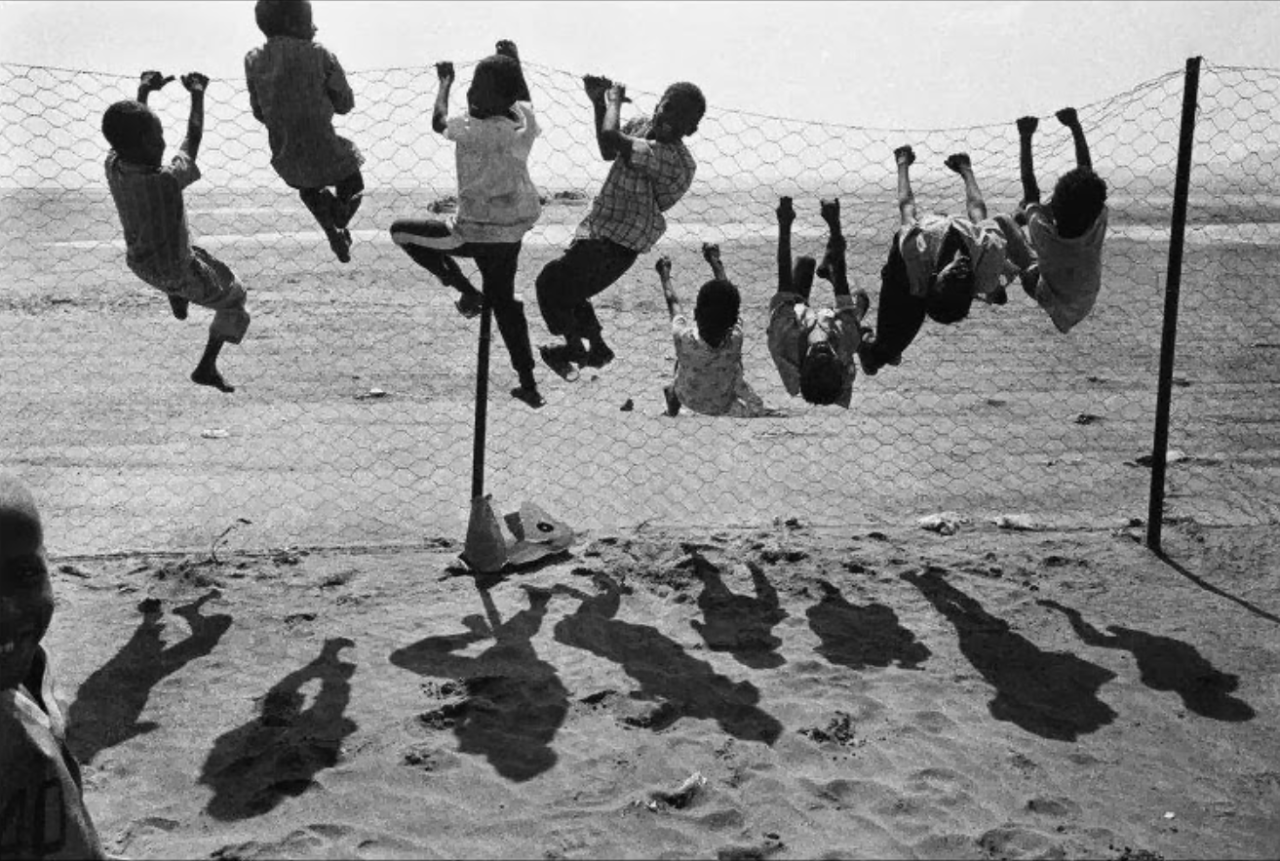
- photographs (1-3) by Eli Reed "The Lost Boys of Sudan", Kakuma Refugee Camp in Kenya, August 2001 via and by John Vink (Sudanese displaced) via and (Angolan schoolboy displaced, following classes held in church) via and by Nicos Economopoulos (Somalian refugees at Hiswa camp, Aden, 1992) via
Saturday, 19 September 2015

Jonathan Hart + Dan Hartman

"This is my boss - Jonathan Hart, a self-made millionaire. He’s quite a guy. This is Mrs. H – she’s gorgeous. What a terrific lady. By the way, my name is Max. I take care of them, which ain't easy, 'cause their hobby is murder."
Opening credits, narrated by Max, the butler (Season 1)

"This is my boss - Jonathan Hart, a self-made millionaire. He’s quite a guy. This is Mrs. H – she’s gorgeous. She’s one lady who knows how to take care of herself. By the way, my name is Max. I take care of both of them – which ain’t easy; ‘cause when they met, it was murder."
Opening credits, narrated by Max, the butler (Season 2)


Jonathan Hart, successful CEO of Hart Industries, a global conglomerate based in Los Angeles, lives a happy jetset lifestyle with his wife Jennifer, a freelance journalist who solves crimes together with him. At least this is the case during the "Hart to Hart" television series with Robert Wagner and Stefanie Powers originally released from 1979 to 1984 (via). NBC network is currently considering a remake of the series in which Jennifer Hart is replaced by Dan Hartman ... the Harts become a gay couple (via). According to a description, the new show will be "A modern and sexy retelling of the classic series" about "attorney Jonathan Hart and free-spirited investigator Dan Hartman, who must balance the two sides of their life: action-packed crime-solving in the midst of newly found domesticity.” (via). Release date and casting are not yet communicated but one thing is sure: "If it's done right, a gay-themed adventure/mystery series could be groundbreaking (...)" (via).


photographs of Robert Wagner and Natalie Wood (who originally ABC wanted to co-star as Jennifer Hart) via and via