Thursday, 26 November 2015

Welcome to Salzburg

Inspired by the "Refugee Guide" for Germany and with good intention, the city of Salzburg has just published a "welcome guide" for "new Salzburg residents" to give answers to the many questions "repeatedly asked by many refugees".


You learn that in Austria, people are punctual, say "Grüß Gott" when they greet each other, shake hands, and that children have a right to an upbringing free of violence. Smiling does not necessarily mean flirting, spitting on the ground in public is not tolerated (I wished), religion is considered a private matter (one may still wonder why the registration office includes religious affiliation among the few questions it asks or why hospitals in Austria ask about name, address, telephone number ... and religion), Austrians use toilets instead of urinating in public and afterwards wash their hands.
"It is an offence to urinate in public. You will usually find a public toilet in the vicinity. Toilets usually provide toilet paper, but not bidets. Toilet paper is disposed of in the toilet, not in the rubbish bin next to the toilet. However, sanitary items for women, such as tampons or towels, are disposed of in the rubbish bin next to the toilet. Any residue in the toilet should be removed using the toilet brush. The toilets should be kept as clean and dry as possible. That´s why the toilets should be sat on when used. Where there are no urinals, this also applies to men. For reasons of hygiene, it is important to wash your hands after using the toilet."


Refugees also learn where to stand on escalators, to separate waste instead of throwing it on the ground, that tap water is delicious, not to "kiss or caress the nice children of your neighbours" or "offer them sweets", that haggling over prices in supermarkets is not acceptable, and that staring at people who wear short trousers or mini skirts in summer is impolite. And then there is some information that manages to be useful without being offensive (e.g. from to which age education is compulsory, important telephone numbers, etc.). The photograph on the cover of the booklet shows a couple of people with their thumbs up - a popular gesture in Austria (particularly among Austrian politicians) and probably not the most adequate choice in a transcultural setting where it is no secret that it is considered to be one of the gestures to avoid (e.g. viavia)


"About this guide
This guide is aimed at visitors, refugees and future citizens of Austria. It should make it easier for you to settle in and understand the country’s rules and customs. The purpose of this guide is to offer useful information.
We are aware that some of the information may be considered presumptuous or derogatory. This was continuously critically queried and reflected during the preparation of the document. In order to counter this uncertainty, the guide was drawn up in close collaboration with people from the most varied of countries (with people from Syria, Afghanistan, Sudan, Egypt, Palestine and other countries; as well as with people who have recently immigrated to Austria).
Some of the content was taken from the "Refugee Guide". This has been judged by the ProAsyl Germany (based on the English version) to be faultless, and many immigrants have mentioned that they would have liked such an information brochure.
The guide has been adapted by representatives of the central/integration office of the city of Salzburg. Thank you to www.refugeeguide.de for providing the foundations for the guide."


And now for something slightly different: The University of Salzburg published a "welcome guide" for international students in 2008. The first part of the booklet is about the university system, tuition, courses, scholarships, etc. The second part is about living in Salzburg. Instead of telling international students not to urinate in public and to use cutlery when eating in restaurants, it starts with the location of Salzburg, the city "Where Mozart Was At Home", the climate (and famous Salzburg rain), the city's history and famous people, and the fabulous sweets. It continues with entry regulations for EU/EEA countries and Non-EU/EEA countries, residence requirements, health insurance, accommodation, everyday life (working, shopping, getting around), communication, attractions, sports, art, and culture. This guide may have been an inspirational choice.

- - - - - - - - - - - - - - - - - -

- Refugeeguide.de (n.d.) A Guide for Orientation and Communication in Germany. pdf
- Stadt Salzburg (2015). Welcome Guide. Tips & Information for New Salzburg Residents. pdf
- Universität Salzburg (2008). Welcome Guide. Studium in Salzburg. pdf
- images "Hopscotch" (1980) with Walter Matthau and Glenda Jackson, shot in the U.S., UK, Germany, and Salzburg via

Friday, 20 November 2015

More Than "Laundry Wisdom"

"Laundry is the only thing that should be separated by colour."
Unknown


image of Paul Rudd via

Wednesday, 18 November 2015

"Hold Each Other"

"It's sort of a big coming out song for me."
Chad King

A Great Big World's song "Hold Each Other" (listen/watch) started as a "standard love song between a man and a woman" when the duo Ian Axel and Chad King wrote the song. Axel asked King how he was going to sing the line "Something happens when I hold her": "Chad, how are you going sing this and deliver it honestly?" For Chad King, who had always sung about girls "because it's just what people do", a personal struggle started.

"I was like, 'I can't do this, no one does this, it doesn't feel comfortable, there's no way I can do this. And I thought about it for like two seconds and said, 'I have to do this.' This is my truth, people will respond to that. I know they will and I hope it inspires other people to sing about their own truth or or speak about their own, you know?" (via)


“I think what is really interesting is that I was [at first] uncomfortable singing it as ‘Something happens when I hold him. The fact that I was uncomfortable singing it, as someone who’s gay, it showed me and Ian that we have to spread this message because I shouldn’t be scared to say what’s in pop music. It isn’t done in pop music often, not in this way. The fact that I was scared to say that showed us that we needed to do it.”

"After that first day when Ian changed the lyric it became second nature. The initial switching of that pronoun, I’m not used to seeing [in pop music]. Even when we’re writing, there will be some stream-of-consciousness moments where I’m singing about 'she' and 'her' and 'the girl,' but in no way do I actually feel those things. I feel that it’s a habitual thing that I learned over the years listening to pop music." 

"I thought we would have had a little more resistance to 'Hold Each Other', especially getting it played on radio. There have been a couple stations in the South that have refused to play it because they feel it’s too progressive. But I’m OK with that, because it means we’re doing something right. If they can’t play a song like this, which is only about love, if they can’t play a song about love then I don’t want to listen to their station." (via)

"Everyone is gay" - a hilarious song:


photograph via

Monday, 16 November 2015

"Tolerance is not passive or silent acceptance of differences" ... International Day for Tolerance

"Tolerance is a new idea, one which we need now more than ever. It leads us to respect cultural diversity, ways of life and expressions of our own humanity. It is a necessary condition for peace and progress for all people in a diversified and ever-more connected world.


UNESCO was created exactly 70 years ago, on 16 November 1945, the International Day of Tolerance, on the basis that wars could be avoided if people learned to get to know each other better and understood that, in the fertile diversity of their cultures, that which unites them is stronger than that which divides them. These principles were reaffirmed 20 years ago in the Declaration of Principles on Tolerance, adopted by UNESCO in 1995. In a globalized world, home to people from many cultures and backgrounds and flooded with pictures of and information about other peoples, tolerance is the cornerstone of sustainable citizenship.


Tolerance is not passive or silent acceptance of differences; it is inseparable from respect for fundamental human rights. It is constant commitment to facilitating exchanges and dialogue, despite difficulties and a lack of understanding which can lead to inward-looking attitudes. It is a call to question prejudice and commonly-held beliefs. When violent extremism spreads messages of hate and intolerance, both on the ground and on social media; when human beings suffer persecution, exclusion or discrimination on the basis of their religion or background; when economic crises accentuate social divides and stand in the way of acceptance of others, such as minorities, foreigners or refugees; we must offer up a different discourse, an open message which calls for tolerance. We must make the lessons of the past more visible and remind people of the extreme situations which can result from rejection of others, racism and anti-Semitism.


Diversity is a reality, calling us to adapt our policies and act appropriately, for which tolerance is key. Today’s world presents us with considerable opportunities to better understand each other, share our stories, create a public space on a global scale, enrich our outlook on life and combine our perspectives. It is an invitation for us to strengthen moral and intellectual solidarity between peoples through educational cooperation, dialogue among cultures, knowledge-sharing and free distribution of information. Tolerance is a means of constructing peace; it accelerates innovation and creation, opening our minds to other ways to view the world. This founding mission of UNESCO is not decreed through laws and declarations: it relies on the will and daily efforts of the citizens of the world who are developing this culture of tolerance, and today is the time to support them."

Message by Irina Bokova, Director-General of UNESCO


- related posting: International Day for Tolerance
- photographs: (by Brian Duffy) via and (by Eliott Erwitt) via and (by Marianne Grondahl) via and (by Luis H. Salgado) via

Sunday, 15 November 2015

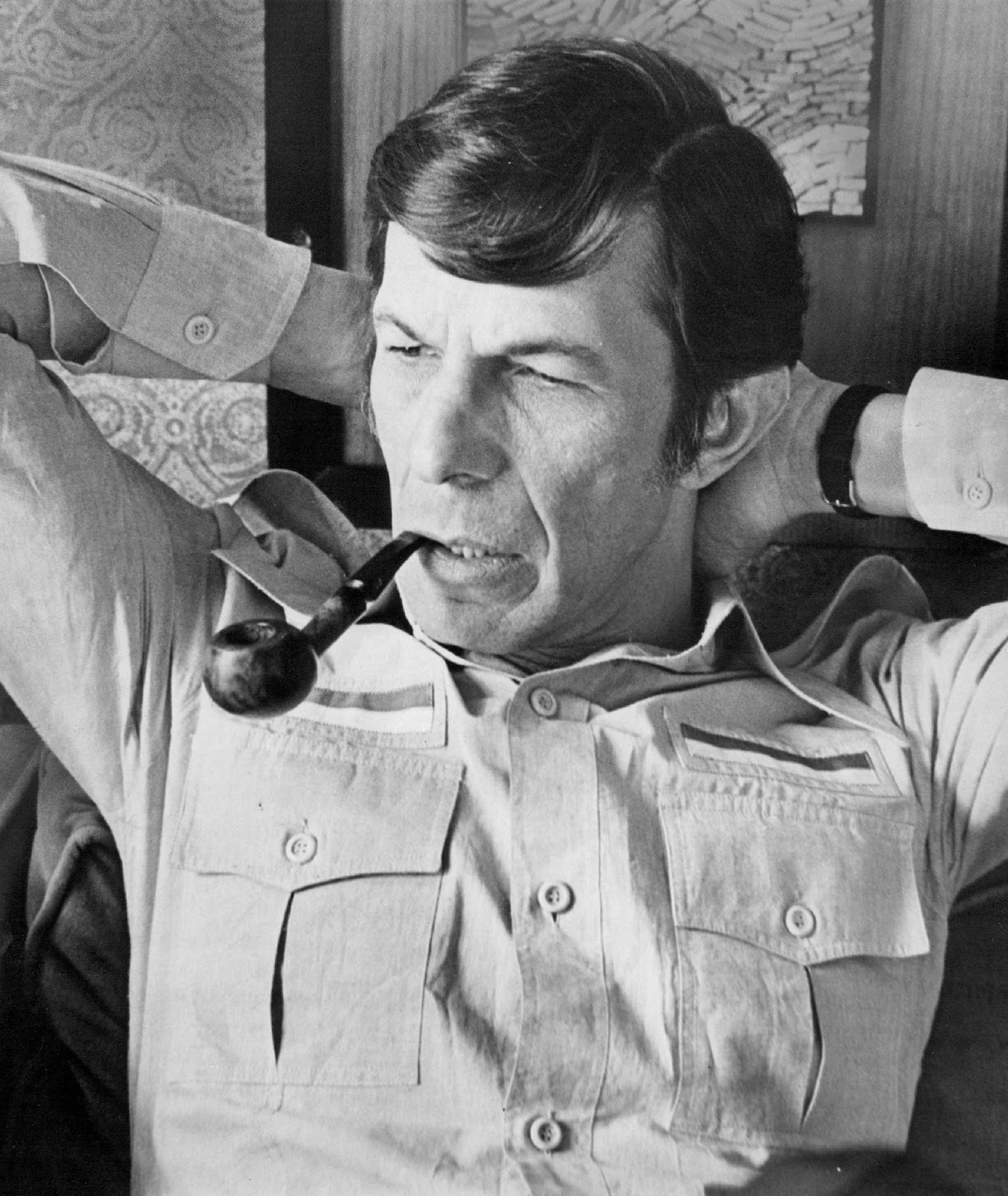
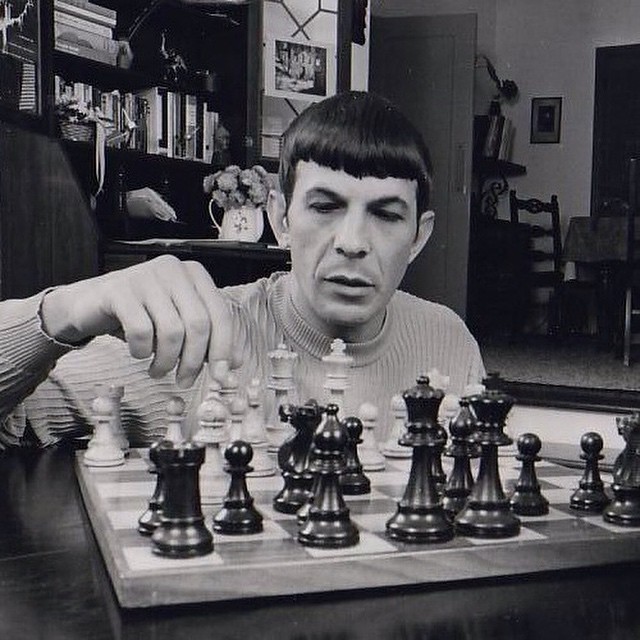
The Conscience of Star Trek

"Mr. Roddenberry started calling me the conscience of Star Trek."
Leonard Nimoy


"In fact, I got to know Mr. Spock long before I knew the actor who played him. It was a mark of his integrity that he was so loyal to the role he portrayed. When I finally did get to know the man better, I discovered his compassion, his intelligence and his humanity. All of which laid the foundation for his keen sense of philanthropy."
Walter Koenig

According to Star Trek cast member Walter Koenig (U.S.S. Enterprise's navigator "Pavel Chekov"), Leonard Nimoy fought for gender pay equity in the 1960s and made sure "Lieutenant Uhura" Nichelle Nichols was not paid less than Walter Koenig and "Hikaru Sulu" George Takei.
"Leonard (Nimoy, Mr. Spock) was always kind of unapproachable. But a very good man. Sound ethics and a good sense of morality." "When it came to the attention of the cast that there was a disparity in pay in that George [Takei] and I were getting the same pay but Nichelle was not getting as much, I took it to Leonard and he took it to the front office and they corrected that." "There was also the case where George and Nichelle we’re not hired to do their voices in the animated series. I refused to do Spock until they were hired. Mr. Roddenberry started calling me the conscience of Star Trek."  Walter Koenig


- related posting: Leonard Nimoy
- photographs of Leonard Nimoy via and via

Friday, 13 November 2015

Quoting Goldie Hawn

"There are only three ages for women in Hollywood: Babe, District Attorney, and Driving Miss Daisy." 
Goldie Hawn

"Youthfulness is connected to the ability to see things new for the first time. So if your eyes still look at life with wonder, then you will seem young, even though you may not be chronologically young."
Goldie Hawn


"I've been practicing Buddhism for a while. So, I call myself a Jew-Bu, because my tribe is still Jew. But my philosophy and my practice is really Buddhist." 
Goldie Hawn

"I was born Jewish, and I consider that my religion. But I've studied all religions, and as you learn more, you really learn that everyone's praying to the same God." 
Goldie Hawn

“It’s wonderful to know you’re aging, because that means you’re still on the planet, right? It’s all about how you make it. It’s all in your mind.”
Goldie Hawn

u

photographs via and via

Friday, 6 November 2015

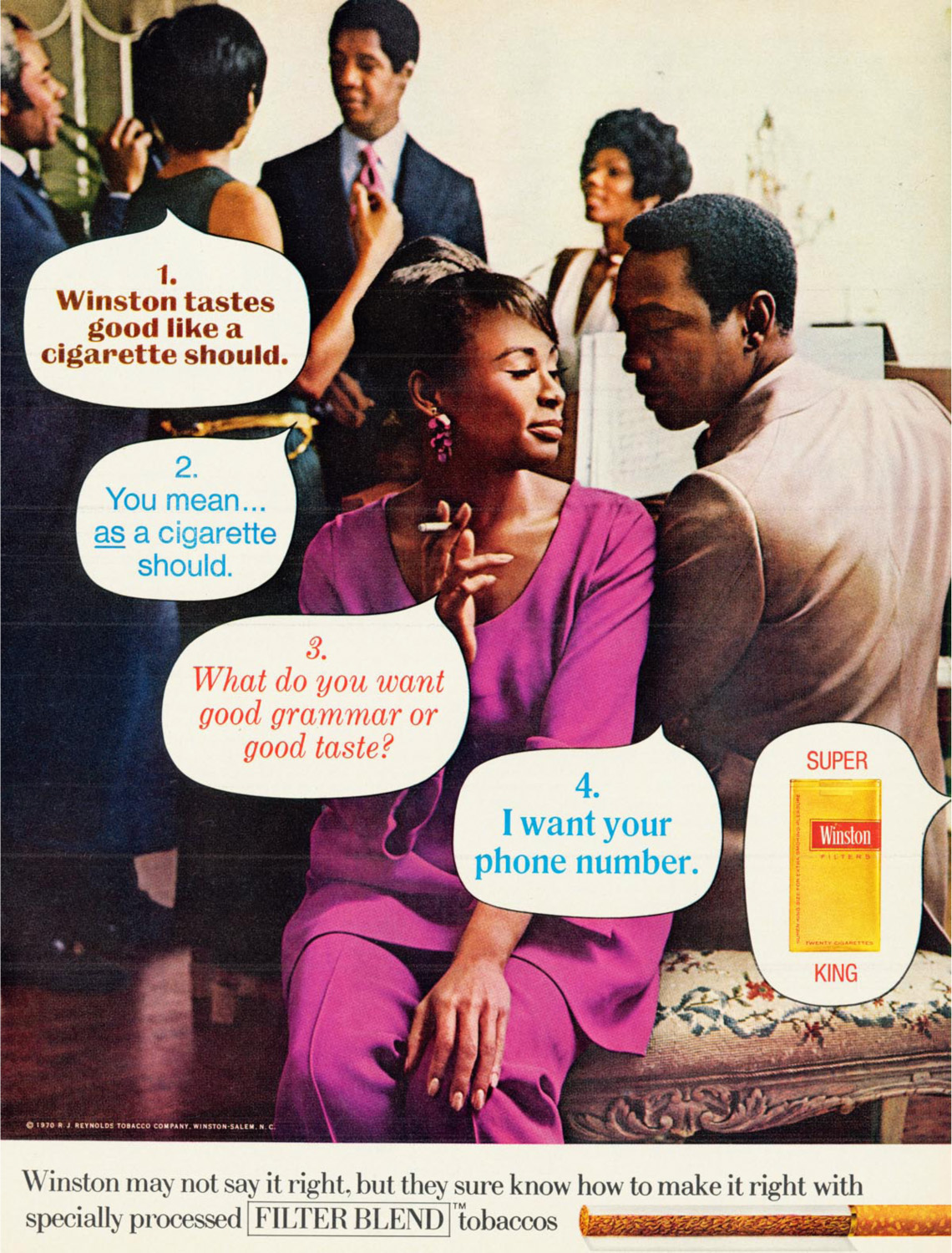
"We reserve the right to smoke for the young, the poor, the black and stupid."

“We don’t smoke that s***. We just sell it. We reserve the right to smoke for the young, the poor, the black and stupid.” 
R.J. Reynolds Tobacco Company Executive

"Smoking is a plague on all Americans, but it hits African-Americans especially hard. The tobacco companies target African-Americans with the intensity of fanatical hunters on the trail of very special game."
New York Times, 1993


"To say that the black community has been overrun with tobacco advertising is an understatement." (via)

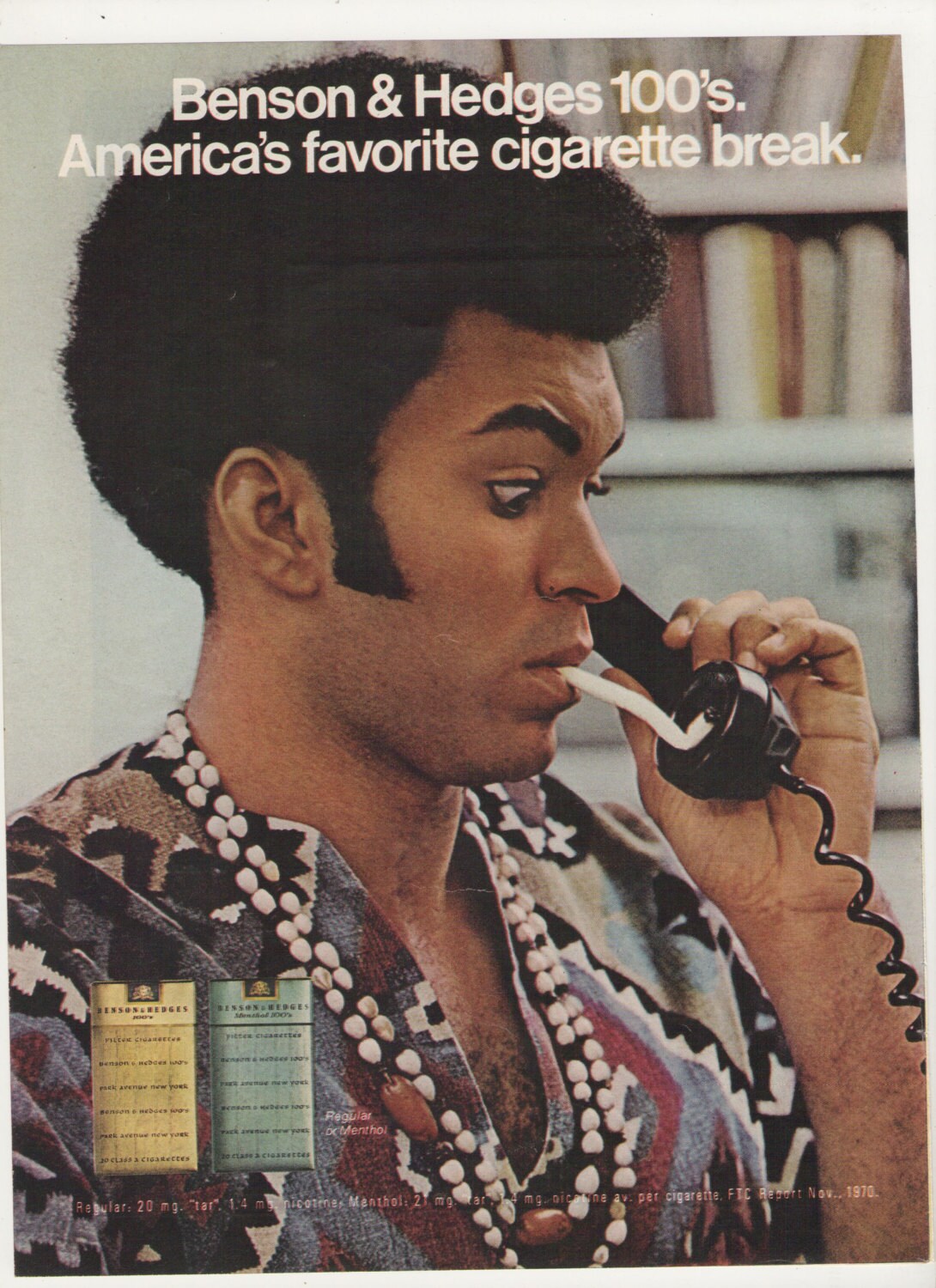
At the end of World War II, tobacco companies decided to expand to so-called "new" markets in order to keep growing, discovered black Americans and started targeting them in their campaigns. After WWII, there was more "minor advertising" in weekly African American newspapers.


The sudden interest developed because of post-war changes: urban migration and increasing incomes of black Americans in the 1940s. Between 1920 and 1943, their annual income increased threefold, i.e., from $3 billion to more than $10 billion ... an income that made black Americans attractive for the tobacco industry.


Advertising and marketing magazines called the "emerging Negro market" profitable and published a great many articles. One of them, published in 1944, was titled "The American Negro-An 'Export' Market at Home". And the plan worked out: From 1920 to 1943, the amount of money black Americans spent on tobacco products increased six-fold.


Another development that helped the tobacco industry was that during the 1940s, glossy monthly magazines targeting African Americans were introduced (e.g. Negro Digest, Ebony, and Negro Achievements). They were more attractive to advertisers than the pre-war African American daily newspapers as they had glossy pages and a much larger national distribution. In addition, advertisers could feature black models "away from the eyes of white consumers" (via Stanford School of Medicine). They were, however, not the only medium advertisers used. Inducements to smoke were present on billboards, buses, underground trains; sports and cultural events were sponsored. A disproportionate amount of tobacco companies' promotional budget was spent on attracting black smokers (via).


Winston, owned by Imperial Tobacco Company and Japan Tobacco and originally introduced by R. J. Reynolds Tobacco Company in 1954, is one of the top selling cigarette brands. In fact, it became the number one cigarette sold worlwide by 1966 - a position it held until 1972 (via). It was not the only brand that discovered black Americans. In 1995, Menthol X was introduced (and was soon pulled off the shelves after protests), in 1997, R. J. Reynolds introduced a mentholed version of Camel denying that the company was targeting black consumers (and had to withdraw after protests) - just to name a few.
“Marlboro would probably have a very difficult time getting anywhere in the young black market. The odds against it there are heavy. Young blacks have found their thing, and it's menthol in general and Kool in particular.” Philip Morris


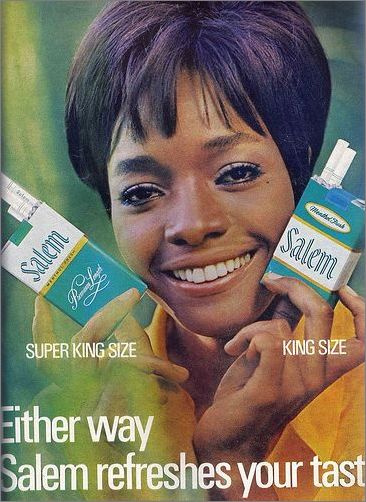
"Since younger adult Blacks overwhelmingly prefer menthol cigarettes, continued emphasis on Salem within the Black market is recommended. Salem is already positioned against younger adults. With emphasis on the younger adult Black market, Salem may be able to provide an alternative to Newport* and capitalize on Kool’s decline."
R. J. Reynolds

*Newport is a brand of menthol cigarettes owned by R. J. Reynolds Tobacco Company, introduced in 1957. According to a 2005 survey, about 50% of all cigarette sales to black Americans were Newport cigarettes (via).


Potential black consumers were discovered after WWII and still seem to be defined as "the" target group. According to studies carried out in the 1980s, there are twice as many billboards in black neighbourhoods of St. Louis as white, about 60% of them advertising cigarettes and alcohol. In Philadelphia, out of 73 billboards along 19 blocks in a black neighbourhood, 60 advertised cigarettes or alcohol; in Baltimore 70% of the 2.015 billboards. Three fourth of the billboards were found in predominantly poor black neighbourhoods. Marketing to win the "lungs of Blacks . . . [by] playing on the image of success, upward mobility, stokes fantasies of wealth and power. . . . They design socially conscious ads in Black publications that tout Black leaders and celebrities, praise Black historical figures, scientists, artists and events and promote their sponsorship of scholarship, business and equal opportunity promotional programs for Blacks. . . ." (via). And things have not changed. According to a 2013 study of tobacco retail outlets in St. Louis, for instance, there is more tobacco advertising (including more menthol advertising) in areas with a higher rate of black American residents. A study carried out in California shows: The more black high school students in a neighbourhood, the more menthol advertising. When it comes to menthol cigarette brands, disparities in advertising are particularly evident (via).


Related posting: You've come a long way, baby (Philip Morris targeting women)

Winston images via Stanford School of Medicine, inspired by Flashbak; other images via and via and via and via and via and via and via and via and via

Wednesday, 4 November 2015

The More-John-Than-Women Phenomenon

John /dʒɒn/ is a masculine given name in the English language. The name is derived from the Latin Ioannes and Iohannes, which are forms of the Greek name Iōannēs (Ἰωάννης), originally borne by Hellenized Jews transliterating the Hebrew name Yohanan (יוֹחָנָן), "Graced by Yah", or Yehohanan (יְהוֹחָנָן), "Yahweh is Gracious". (literally via)


Among chief executives and chairs of FTSE 100 companies (Financial Times Stock Exchange 100 listed on the London Stock Exchange with the highest market capitalisation), there are 17 male bosses called John and seven female bosses (with different names). In other words, there are more men called John leading UK's largest companies than women. Men called David or Dave outnumber women by 2:1. In the boardroom, there are 17 Johns, 14 Davids and seven women. Ians and Marks outnumber women by about 5:1. The "More-John-Than-Women phenomenon" can be observed in the U.S., too. According to a report by Ernst & Young, for every woman there are 1.03 Johns, Jameses, Roberts, and Williams in the U.S. In Australia, Johns become Peters. More men called Peter hold the chief executive positions of companies in the ASX200 (Australia's 200 largest listed companies) than women (via).


Similarly, in the Austrian province of Upper Austria, there have been 42 male mayors called "Johann", 38 men called "Josef", 35 men called "Franz" ... and 33 women (via). Recent elections created a lot of discussion as there is currently not one single woman represented in the provincial government of Upper Austria turning Upper Austria into the only 'men only" Austrian provincial government (via).


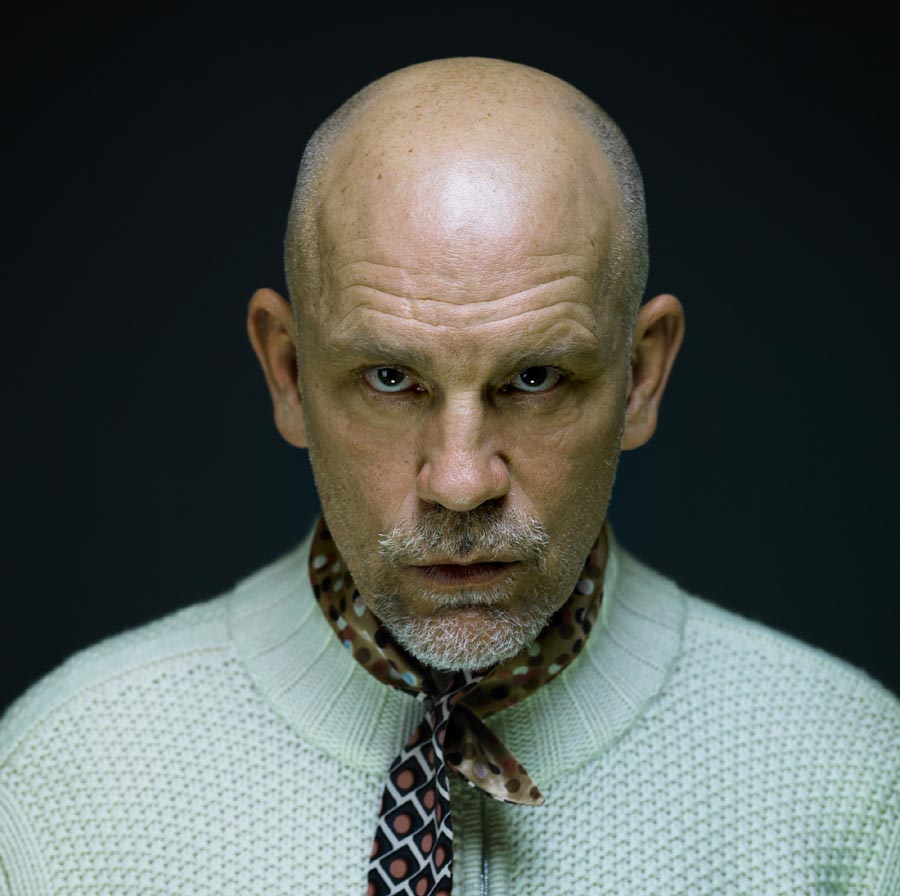
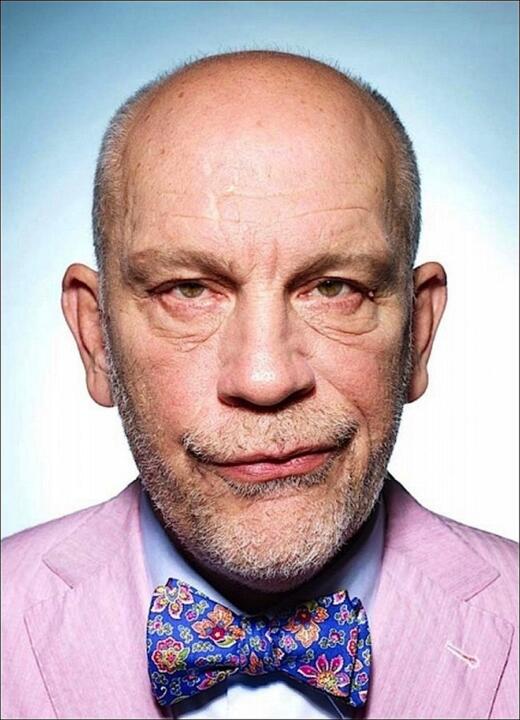
There are 5.276.405 people in the U.S. with the forename John, and 203 with the surname Malkovich (via).


photographs of John Gavin Malkovich via and via and via and via

Wednesday, 28 October 2015

Jane Drew, Architect

Dame Jane Drew (1911-1996) was one of Britain's most distinguished architects and urban planners. Brought up by a humanist father who "despised the profit motive and abhorred cruelty", she had a compassion for both architecture and humanitarian concerns and worked on the principle that architecture had to provide a space in which human being could flourish (via).


"The first thing I learned from Jane was that the Office did not employ men and women, but architects and each was rewarded on merit unrelated to sex." Frank Knight, employee at the practice from 1947
Jane Drew, born Iris Estelle Radcliffe Drew and registered as Joyce Beverly Drew (via), had made a secret pact with her classmate Peggy Ashcroft that they would pursue a career and keep using their own names (via). Nevertheless, she was often introduced as "Mrs Maxwell Fry", the wife of the well-known architect - an architect's wife rather than an architect in her own right (Jackson & Holland, 2014). Once, when she was introduced by her married name as "Mrs Fry", she pulled the speaker's sleeve and corrected him quietly: "I'm sorry Mrs Fry can't be with us tonight, instead Miss Jane Drew has kindly accepted to replace her." (via).
In the 1930s, it was not easy for a female architect to find work and in order to succeed, "women were forced by social and cultural expectations to tread a very fine line with regard to gender identity". Women were expected to be gentle and modest and Drew did not adhere to these rules. For her, gender was a non-issue. As a reaction to the discrimination she had experienced as a graduate, she decided to employ only women staff when she set up her own office (Jackson & Holland, 2014), which she initially did (via).


The "Jane Drew Prize" is an award given by the Architect's Journal to persons who show "innovation, diversity and inclusiveness in architecture" recognising a "contribution to the status of women in architecture" (via).


- Jackson, I. & Holland, J. (2014). The Architecture of Edwin Maxwell Fry and Jane Drew: Twentieth Century Architecture, Pioneer Modernism and the Tropics. Farnham & Burlington: Ashgate
- photographs of Jane Drew (with Le Corbusier and husband Maxwell Fry in Chandigarh, (c) FLC/ADAGP) via and via and via

Monday, 26 October 2015

Ku Klux Klan Reality, captured by Anthony Karen

The Ku Klux Klan, founded in 1865, had four million members in 1925. Today, the Ku Klux Klan has a maximum of 8.000 members and is called a former terrorist power that "has become a curiosity" (via). Photographer Anthony Karen spent eight years documenting Klan organisations as a nonjudgmental observer (via).


Above: Son of an Imperial Wizard in North Carolina (first picture), Klan gathering in North Carolina (second picture) granddaughter of an Imperial Wizard (third picture), and sacred altar used to "naturalise" prospective members into the "Invisible Empire"
Below: Carl, an imperial wizard of a Southern-based Ku Klux Klan realm (or state-level group), takes aim with a pellet gun at a large cockroach (on the piece of paper just below the clock), while his wife and goddaughter try to avoid getting struck by a possible ricochet. (via)


Ku Klux Klan nomenclature (excerpt from second Klan era, via):

Imperial Wizard - national head of the Knights of the Ku Klux Klan often referred to in documents as president.
Imperial Klonsel - Supreme attorney
Imperial Kleagle - executive, recieves reports from the Grand Goblins.
Grand Goblin - ruler over a "Dominion" which is now defined as a multi-state area.
King Kleagle - manager of state known as a "Realm."
Kleagle - field organizer over a certain territory or part of a "Realm."
Exalted Cyclops - president of the Klavern
Terrors - officers of the Exalted Cyclops which consists of:
Klaliff - vice president of the Klavern
Klokard - lecturer
Kludd - the Chaplain
Kligrapp - secretary
Klabee - treasurer
Kladd - the conductor of ceremonies
Klarogo - inner guard
Klexter - outer guard
Klokan - Head of the three-man Klokann Board which investigates prospective members.
Night-Hawk - Custodian of the fiery cross and person incharge of new candidates or "aliens"


Above: An imperial officer from a Midwestern-based Ku Klux Klan at the home of his imperial wizard and wife shortly before departing for a Christmas party for members at a local church (via)


Above (second one): “Little Charlie” of the Louisiana-based Dixie Rangers of the Ku Klux Klan displays her custom-made wedding veil as her fiancé looks on. (via)
Last row, left: Candidates wishing to become initiated into the Ku Klos Knights of the Ku Klux Klan take their oaths as part of a naturalization ritual. Candidates are blindfolded and led through the woods at a sometimes vigorous pace. They are questioned about Klan craft and history, and they swear certain oaths. They are then "knighted" through anointing with sacred waters, a sword touch on both shoulders, and a benediction. The new members are greeted and welcomed by the officiating officers. (literally via)


In general, white robes indicate a rank-and-file member, green robes indicate state leaders (Grand Dragons), black robes indicate Knighthawks. The Imperial Wizards, the leaders, choose among a variety of colours (via). For the highly interesting and complete "Catalogue of Official Robes and Banners. Knights of the Ku Klux Klan" from 1925 see the amazing internet library Internet Archive.


Above: Richard Bondira, former Grand Wizard and Grand Blufustin of the KKK. (via)

"Aryan Outfitters": Ms Ruth sews hoods and robes for Klan members every day. A red satin outfit for a so-called "Exalted Cyclops" costs about $140,- Ms Ruth comes from five generations of Ku Klux Klan members and has a quadriplegic daughter who was injured in a car accident (via).


photographs via and via and via and via and via and via and via and via and via and via and via and via and
via and via and via and via and via and via and via and via and via and via and via and via, copyright by Anthony Karen