Showing posts with label Roy DeCarava. Show all posts

Tuesday, 23 July 2019

Less Than Human, by Livingstone Smith (2011)

Think of the word dehumanization. It literally means something like "removing the human-ness." Now, take someone and imagine that their humanity has been stripped away from them. What's left? When the founding fathers dehumanized their slaves, what remained of them? When European colonists dehumanized Native Americans or Nazis dehumanized Jews, what remained? In their eyes, what was left was a creater that seemend human - had a human-looking form, walked on two legs, spoke human language, and acted in more-or-less human ways - but which was nonetheless not human.


Describing human beings as rats or cockroaches is a symptom of something more powerful and more dangerous - something that's vitally importang for us to understand. It reflects how one thinks about them, and thinking of a person as subhuman isn't the same as calling them names. Calling people names is an effort to hurt or humiliate them. It's the use of language as a weapon. But dehumanizing a person involves judging them to be less than human. It's intended as a description rather than as an attack, and as such is a departure from reality - a form of self-deception.
(...) We are all potential dehumanizers, just as we are all potential objects of dehumanization.

The uneasy relationship between the economic attractions of slavery and the Enlightenmen vision of human dignity was a long-standing one, and for those torn between the demands of conscience and the seductions of self-interst, there was a way out of the dilemma. They could deny that African slaves were human, and in this way they could square the moral circle.

Thinking sets the agenda for action, and thinking of humans as less than human paves the way for atrocity. The Nazis were explicit about the status of their victims. they were Untermenschen - subhumans - and as such were excluded from the system of moral rights and obligations that bind humankind together. It's wrong to kill a person, but permissible to exterminate a rat. to the Nazis, all the Jews, Gypsies, and the others were rats: dangerous, disease-carrying rats.
(...) Sometimes the Nazis thought of their enemies as vicious, bloodthirsty predators rather than parasites.

What about the Americans and their English-speaking allies? We were the good guys, weren't we? Allied personnel also dehumanized their enemies (as one soldier wrote in a letter home, "It is very wrong to kill people, but a damn Nazi is not human, he is more like a dog") but on the whole dehumanized the Germans less than they did the Japanese. Germans, after all, were fellow Anglo-Saxons - strapping blue-eyed boys who might just as well have grown up on farms in Oklahoma. But the Japanese were another story. A poll of U.S. servicemen indicated that 44 percent would like to kill a Japanese soldier while only 6 percent felt the same way about Germans.
The "Japs" were considered animals, and were often portrayed as monkeys, apes, or rodents, and sometimes as insects (...).

It's all too easy to imagine that the Third Reich was a bizarre aberration, a kind of mass insanity instigated by a small group of deranged ideologues who conspired to seize political power and bend a nation to their will. Alternatively, it's tempting to imagine that the Germans were (or are) a uniquely cruel and bloodthirsty people. But these diagnoses are dangerously wrong. What's most disturbing about the Nazi phenomenon is not that the Nazis were madmen or monsters. It's that they were ordinary human beings.

Like their German allies, the Japanese believed that they were the highest form of human life, and considered their enemies inferior at best and subhuman at worst. American and British leaders were depicted with horns sprouting from their temples, and sporting tails, claws, or fangs. The Japanese labeled their enemies as demons (oni), devils (kichiku), evil spirits (akki and akuma), monsters (kaibutsu), and "hairy, twisted-nosed savages". Americans were Mei-ri-ken, a double entendre translated as "misguided dog".
(...) We called the Chines 'chancorro' ... that meant below human, like bugs or animals. ... The Chinese didn't belong to the human race. That was the way we looked at it.

- - - - - - - - - - - -
- Livingstone Smith, D. (2011). Less Than Human. Why We Demean, Enslave, and Exterminate Others. New York: St. Martin's Press (excerpts)
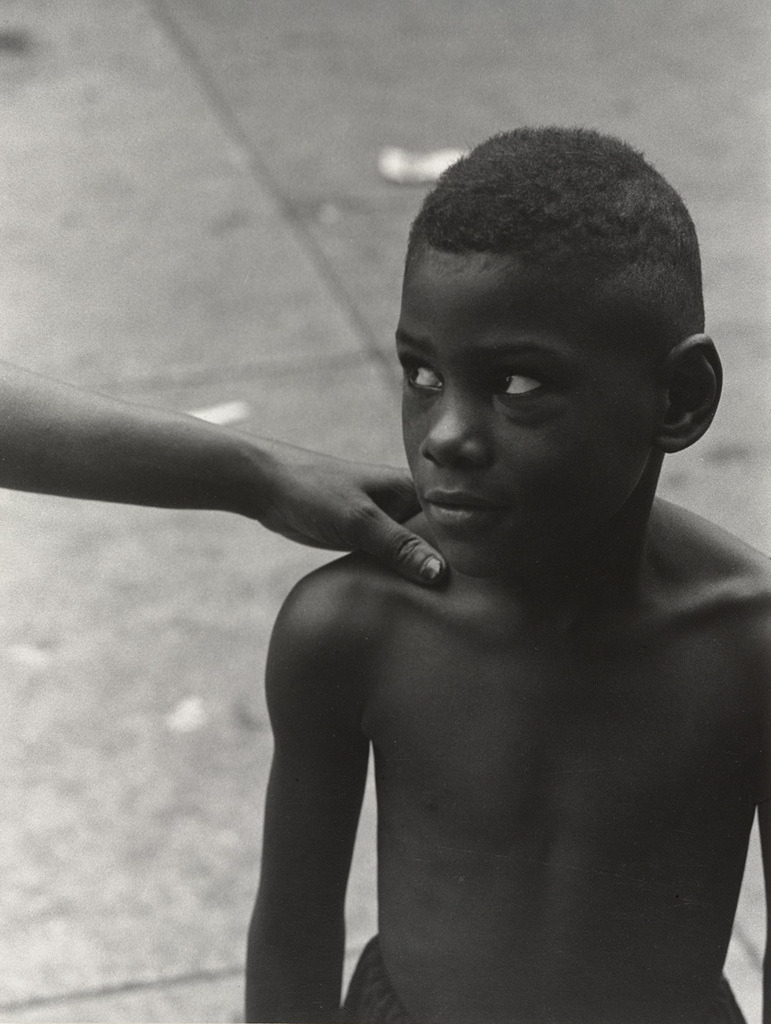
- photograph by Roy DeCarava (Boy Playing, Man Walking, 1966) via

Wednesday, 10 February 2016

Roy DeCarava. Photographing Blackness.

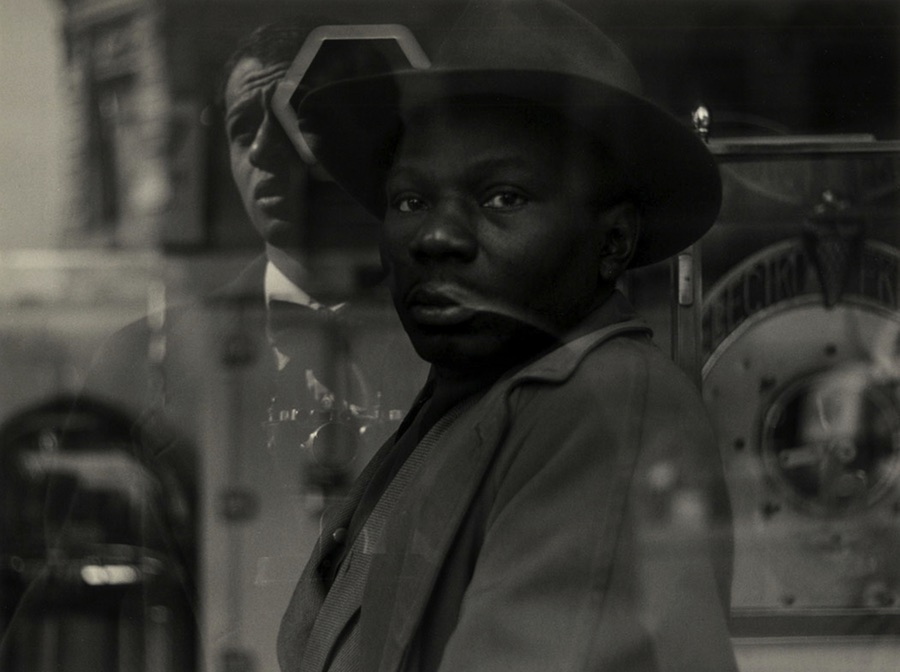
"There were no black images of dignity, no images of beautiful black people. There was this big hole. I tried to fill it."
Roy DeCarava


Self Portrait, Reflection (1949)


Woman on Train (1961)


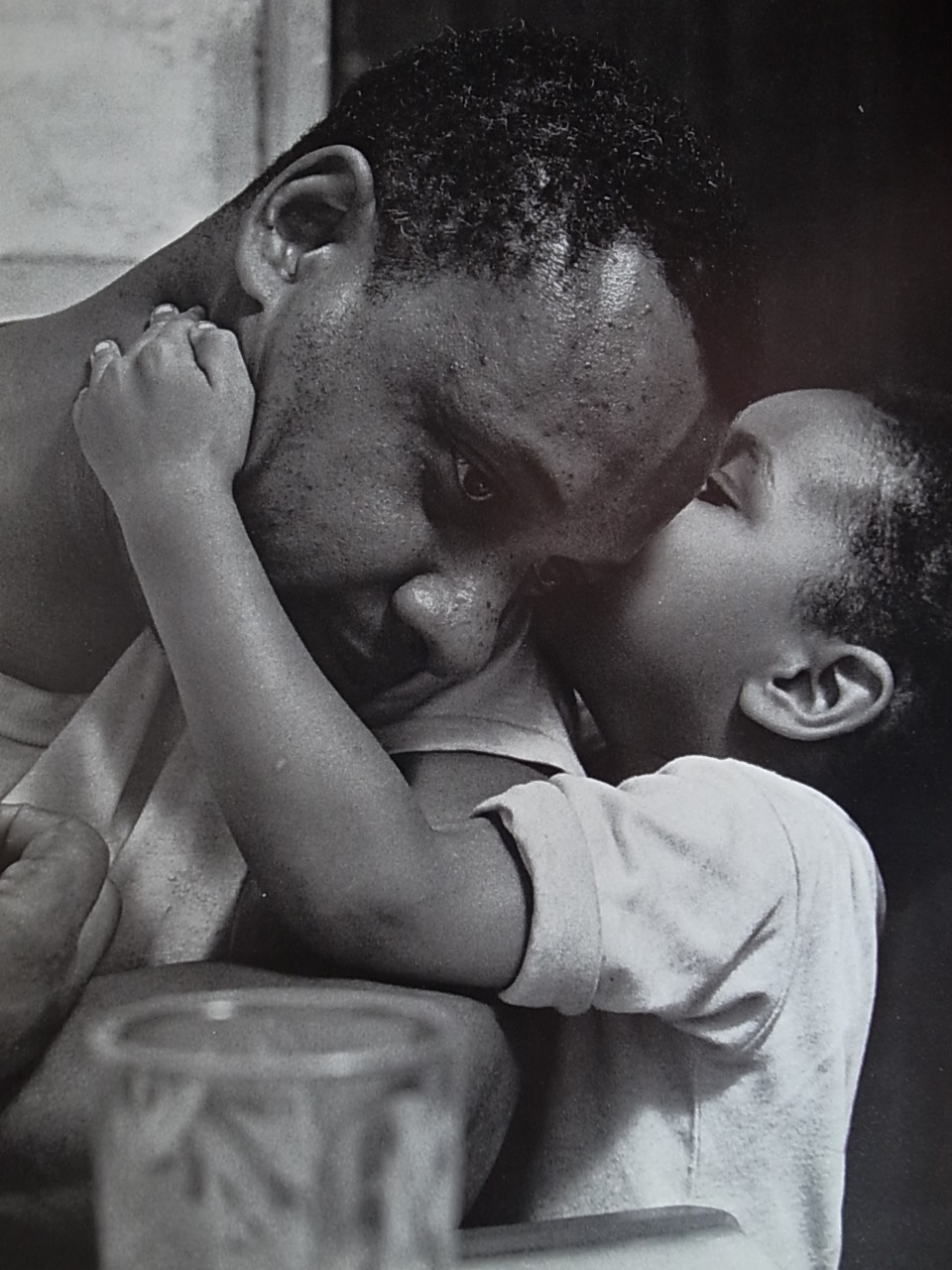
Bill & Son (1962)

“One of the things that got to me was that I felt that black people were not being portrayed in a serious and in an artistic way.”
Roy DeCarava (1982)
"Unlike many photographers of his day, Mr. DeCarava did not intend that his photos be viewed as visual documentation but rather as artistic expressions in their own right so that his images were, in his words, "serious," "artistic," and universally "human." Whether photographing the Scottish countryside or the heart of New York City, the deep connection he felt to the lives of people everywhere is evident in the integrity of his images. Among the many subjects his camera focused upon, he expressed an early desire to address the lack of artistic attention given to the lives of Black Americans, illuminating the aesthetic and human qualities of each individual life through the lens of his perceptions." (via)


Woman Resting, Subway Entrance, New York (1952)


Haynes, Jones, and Benjamin (1956)

"DeCarava took photographs of white people tenderly but seldom. Black life was his greater love and steadier commitment. With his camera he tried to think through the peculiar challenge of shooting black subjects at a time when black appearance, in both senses (the way black people looked and the very presence of black people), was under question." (via)


Roy DeCarava (1919-2009) was one of two black students at a high school for textile studies and one of a few at the Cooper Union of Art (with a scholarship to study art and architecture). Discouraged by the hostility of many white students there, he left and enrolled at Harlem Community Art Center after two years.
DeCarava trained to be a painter but soon turned to photography after using a camera to gather images for his printmaking. As a black painter, he would have faced limitations: "A black painter, to be an artist had to join the white world or not function - had to accept the values of white culture." He became "the founder of a school of African-American photography that broke with the social documentary traditions of his time."
DeCarava was an outspoken crusader for civil rights, a member of the Committee to End Discrimination Against Black Photographers (he once supported protest against Life magazine for having only one - Gordon Parks - black photographer on its staff). DeCarava felt that "his pictures would speak louder as a record of black life if they abandoned the overtly humanist aims". Roy DeCarava was an artist who treated photography as a fine art and turned Harlem into his canvas (via).


from the book "The Sweet Flypaper of Life"

“I want to photograph Harlem through the Negro people. Morning, noon, night, at work, going to work… talking, kidding… in the home, in the playground, in the schools… I do not want a documentary or sociological statement, I want a creative expression, the kind of penetrating insight and understanding of Negroes which I believe only a Negro photographer can interpret.”
Roy DeCarava (via, via)


Marchers talking (1963)


Mississippi Freedom Marcher, Washington, DC (1963)

On the photograph "Mississippi Freedom Marcher, 1963" (see above)
"In “Mississippi Freedom Marcher,” for example, even the whites of the shirts have been pulled down, into a range of soft, dreamy grays, so that the tonalities of the photograph agree with the young woman’s strong, quiet expression. This exploration of the possibilities of dark gray would be interesting in any photographer, but DeCarava did it time and again specifically as a photographer of black skin. Instead of trying to brighten blackness, he went against expectation and darkened it further. What is dark is neither blank nor empty. It is in fact full of wise light which, with patient seeing, can open out into glories." (via)


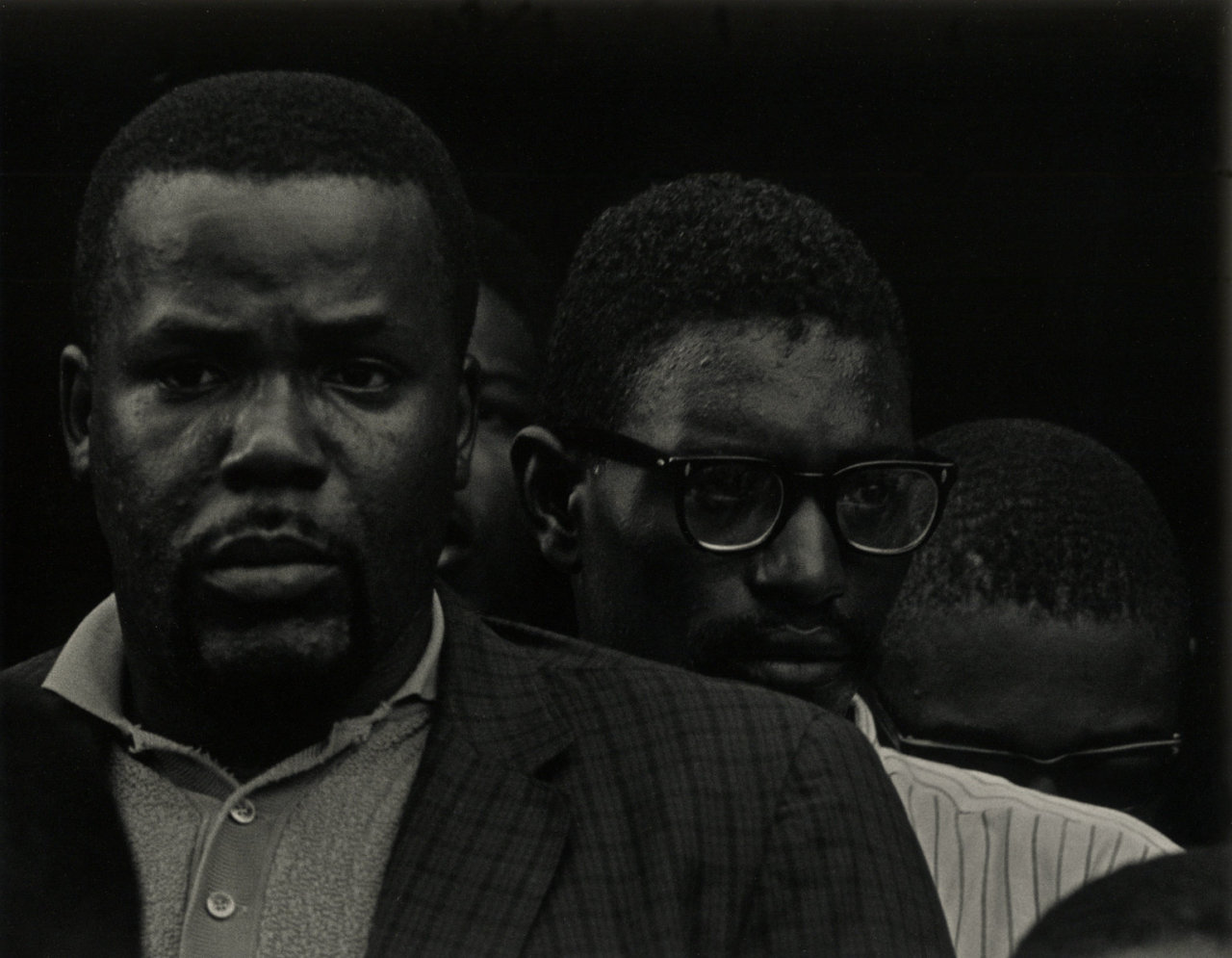
Five Men (1964)

On the photograph "Five Men, 1964" (see above)
“This moment occurred during a memorial service for the children killed in a church in Birmingham, Ala., in 1964. The photograph shows men coming out of the service at a church in Harlem.” The “men were coming out of the church with faces so serious and so intense that I responded, and the image was made.”
Roy DeCarava, 1990


Two Men Talking, Washington, DC (1963)


Picket, Downstate Demonstration (1963)

- - - - - - - - - -
photographs via and via and via and via and via and via and via and via and via and via and via and via