Showing posts with label aviation. Show all posts

Wednesday, 22 July 2015

Born this day: Pancho Barnes

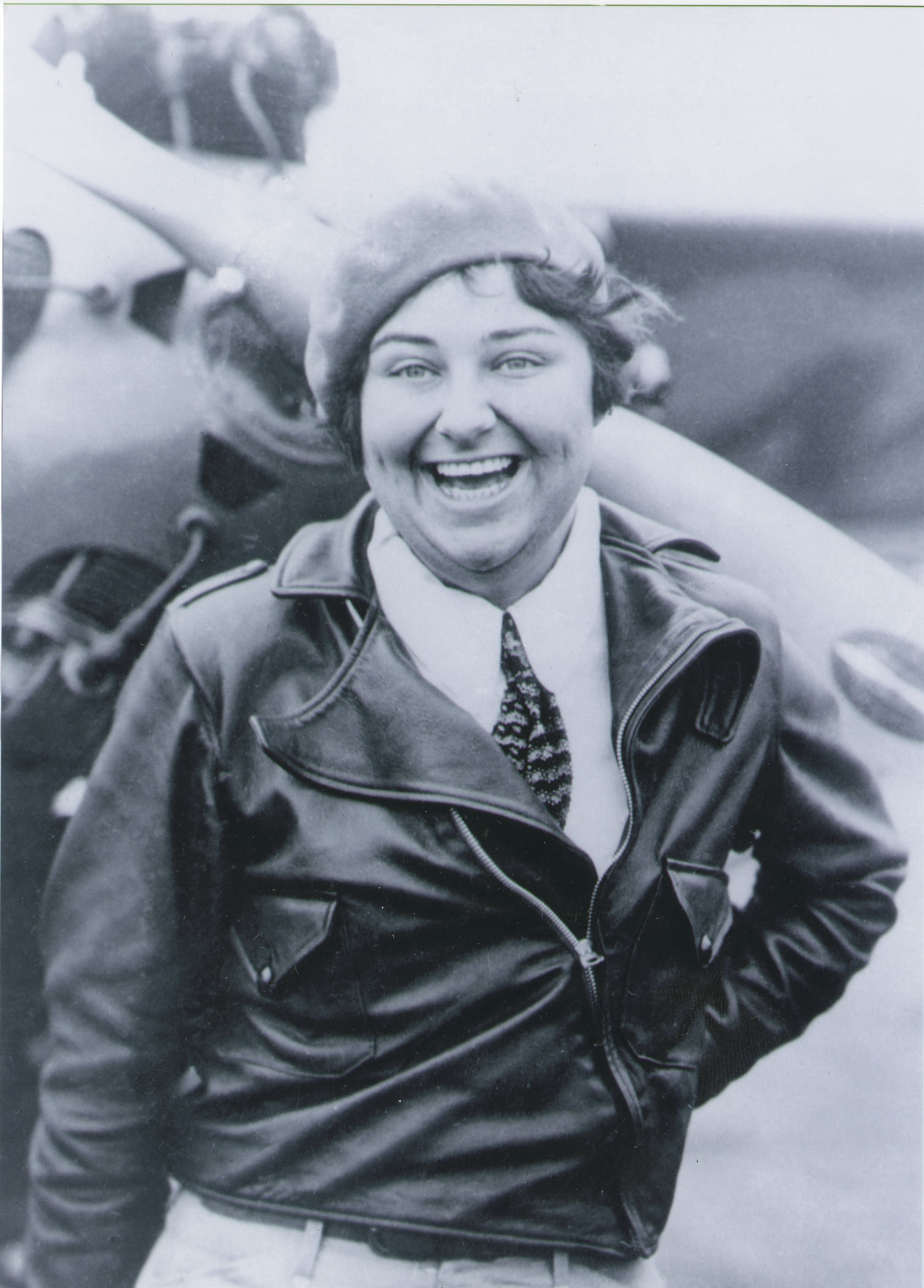
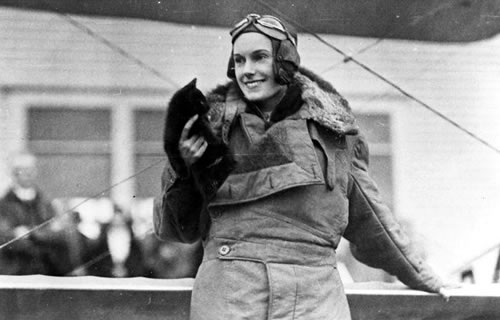
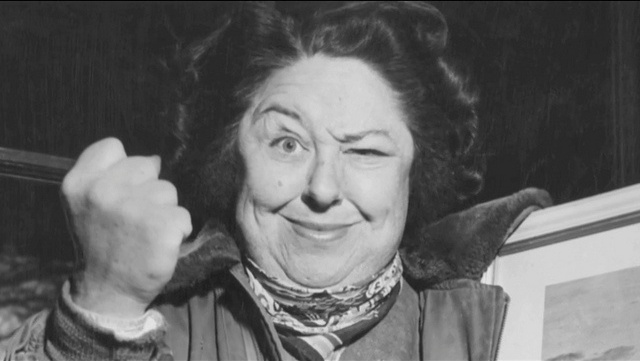
Pancho Barnes (née Florence Leontine Lowe) was born on 22 July 1901. She was one of the first female pilots to be licensed in the U.S., Lockhead's first female test pilot, a stunt pilot during the Silent and Sound eras, the founder of the "Associated Motion Picture Pilots" (the first movie stunt pilots' union), and a member of the Ninety-Nines (the International Organization of Women Pilots). In 1930, she broke Amelia Earhart's world women's speed record and became the first woman to fly into the interior of Mexico. Pancho Barnes set speed records and was considered "America's fastest woman flyer" (via and via).


"After she graduated, Barnes announced that she wanted to be a veterinarian. That was such an appalling idea to her mother that she promptly enrolled the teenager in Stickney School of Art for a more ladylike course of study. This did not offer any real long term prospects, however, so Barnes’ maternal grandmother arranged for her to marry the rector of the local Episcopal church. It seemed like a win-win situation, if not a perfect match. The groom would be appeasing a major contributor to the church and get a new bell tower. The bride would be able to stop living with her parents and have a shot at independence. (...) As was to be expected, Barnes was totally bored being a poor pastor’s wife, but she tried to fill the role for a while.
(...) In addition to the usual carousing, in June 1952 Barnes was involved in planning another bash, her fourth wedding, to Mac. The bride was 51 years old, and the groom was 32. (...)  The 58 second ceremony was presided over by Judge J. G. Sherrill and witnessed by 650 guests. Then the couple exchanged vows again in a Native American ceremony officiated by Chief Lucky and Little Snow White of the Blackfoot tribe. The wedding banquet included four whole roasted pigs, 80 pounds of potato salad, 16 gallons of Jell-O and a 50 pound wedding cake. One of the entertainers at the reception was Lassie."
(literally via


"When some friends got the idea to get hired on as crew on a banana boat bound for South America, Barnes, the only woman, didn’t hesitate to join them. She dressed as a man and signed on as “Jacob Crane.” As soon as the boat left the dock, the adventurers discovered they were running guns and ammunition to revolutionaries in Mexico. When they arrived in San Blas, the ship was boarded by armed guards who used the vehicle to shelter the town’s money from the rebels. The crew was held hostage for six weeks. Barnes and the helmsman, Roger Chute, were the only two courageous enough to escape.
The pair stole a horse and burro and set out through the Mexican countryside. Barnes quipped that her partner looked like Don Quixote, and he said that made her “Pancho.” She corrected his reference, saying the character’s name was “Sancho Panza,” but Chute liked “Pancho” better. Barnes liked the sound of Pancho Barnes, and the name stuck."
 (literally via)


"Amelia Earhart got all the publicity and Bobbie Trout made all the money, but I was the best pilot."
Pancho Barnes

Later, Pancho Barnes was mainly recalled as the the owner of the "Happy Bottom Riding Club", a dude ranch near Edwards Air Force Base in California that became "a slice of American history". In the 1940s, it was a favoured hangout for test pilots and Hollywood celebrities. In 1953, it burned down and her plans to re-open never came to fruition (via and via). Pancho Barnes passed away in 1975.


photographs via and via and via and via

Monday, 15 September 2014

Born this day ... Jean Batten

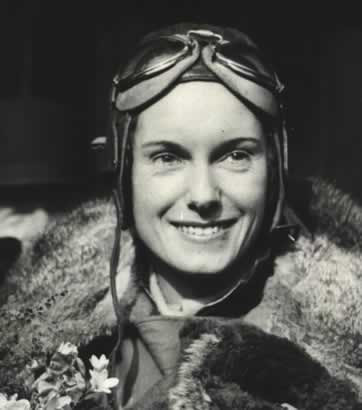
Jean Batten was born on 15 September 1909 in Maori. Inspired by Charles Lindbergh's solo non-stop flight crossing the Atlantic Ocean (via), she decided to become a pilot when she was 18. Her mother Ellen Batten, who was "ahead of her time in her feminism, pushing boundaries wherever she could" and "organized suffragist rallies" (Powter, 2006), took her to England where she joined the London Aeroplance Club (via). Ellen Batten taught her daughter that there was nothing a woman could not do. At the same time she taught her that there were a great many things a woman should not do, such as showing weakness and not being properly dressed and made up. Her mother had a great influence on her life, the two "were inextricably intertwined" (Powter, 2006).


In 1934, Jean Batten flew from England to Australia and broke Amy Johnson's record. The following year she became the first woman to make a return flight (Australian - England) and set the world record flying from England to Brazil, followed by another world record in 1936, flying from England to New Zealand (via). The New Zealander Batten became one of the most famous aviatrixes in the world, her receptions took levels of hero worship. Due to her flying records, looks and glamour she was given the name "Garbo of the Skies". She was awarded several honours, among them the Order of the Southern Cross which had never before been given to a member of the British Empire who was not of royal birth (via). At that time, there was a "relative equality that women enjoyed in the young sport. The number of female pilots - famous female pilots quite the equal of men - was much greater than women's penetration of other risk pursuits." Female pilots were more or less as often in the newspapers as male pilots. They competed not to break women's records but to be the first or the fastest ones independent of gender (Powter, 2006).


Descriptions of Jean Batten range from the warm-hearted aviatrix to a narcissistic, seductive persona (Powter, 2006). Jean Batten is also referred to as "the girl who has beaten all the men" and as a woman who, in her way, supported ongoing feminist struggles (Millward, 2007).


Later, Jean Batten withdrew and lived with her mother. In 1982, she was bitten by a dog on Majorca. She did not wish any treatment, the wound became infected, Jean Batten died from the complications. Anonymously. It was only in 1987 that her relatives and the world learned about her passing away (via).


Clip "Jean Batten Triumphs.": watch


- Millward, L. (2007) Women in British Imperial Airspace, 1922-1937. McGill-Queen's University Press
- Powter, G. (2006) Strange and Dangerous Dreams. The Fine Line between Adventure and Madness. Seattle: The Mountaineers Books
- photos via and via and via and via and via

Thursday, 24 July 2014

Born this day ... Amelia Earhart

"One of my favorite phobias is that girls, especially those whose tastes aren't routine, often don't get a fair break... It has come down through the generations, an inheritance of age-old customs, which produced the corollary that women are bred to timidity."
Amelia Earhart


Amelia Earhart, "Queen of the Air", born on 24 July 1897, was the first female aviatrix to fly across the Atlantic Ocean in 1928, the first woman to fly an autogyro, the first woman to fly nonstop coast-to-coast across the U.S., the first person to fly solo from Los Angeles to Mexico, from Hawai to California, from ... Amelia Earhart was a pioneer who set a great many records (via).


"Women must pay for everything. They do get more glory than men for comparable feats, but, they also get more notoriety when they crash."
Amelia Earhart


Amelia Earhart was an advocate for female pilots. She was the first president of The Ninety-Nines, the International Organization of Women Pilots (99s) which was founded for the mutual support and advancement of women pilots, an official of the National Aeronautic Association where she promoted the introduction of separate women's record, and a visiting faculty member of Purdue University where she councelled women on careers. When the aeronautical Bendix Trophy Race banned women in 1934, she refused to fly the actress, co-founder of the United Artists studio and at the time "most famous woman in the world" Mary Pickford (1892-1979) to open the races. Her ideals on marriage were rather liberal; she believed in equal responsibilities for both partners and kept her own name (via and via).


Amelia Earhart encouraged women to become passengers or pilots, told mothers not to say "no" to their daughters: "My point is that aviation is being sold to boys much more effectively than it is to girls." One of her goals was to make female fliers, women like herself, more the norm: "I am lonesome for the companionship of women in aviation. . . . When I want to 'talk shop' in aviation at home there are only men to talk to. Bill, Slim and some other flying men I have met are wonderful, but once in a while one likes to talk about a common interest with a woman." (via).
(...) when she attempts to address "what this flight means," she begins with the observation that the mayor who greets her in Southhampton, the first woman sheriff in England, is addressed as "Mister Mayor," pointing to the modern woman as oxymoron. She then considers the flight's meaning for aviation, for women, and for herself, always the order in which she will consider the importance of any aeronautical achievement. (literally via)


Amelia Earhart was aware of the impact of gender on the public perception of aviation. She pointed out that if a woman did something ordinary such as becoming a passenger, it was safe and everybody could do it. If a woman did something extraordinary, such as flying the Atlantic, it would become news. And if a woman failed to do it and, for instance, crashed, her gender would make it bigger news and women in general might be prevented from flying. With her short hair, her trousers ("It is possible that the advance of trousers for women is the most significant fashion change of the twentieth century."), her advocating for women's rights to endanger their lives and not just improve the lives of others, she showed traits that are traditionally associated with the figure of the dandy (via). Amelia Earhart became a feminist icon.


"Women, like men, should try to do the impossible. And when they fail, their failure must be but a challenge to others."
Amelia Earhart


The plan to circumnavigate the globe by flight did not work out. Amelia Earhart disappeared on 2 July 1937 together with her navigator Frederick Noonan and her customised Lockheed Electra (via) during their flight from Lae in New Guinea to the small atoll of Howland Isand in the Pacific. One of the largest naval air search operations followed (Beheim, 2004) to find "America's favorite missing person" (Hancock, 2009). A great many search operations followed.


"...now, and then, women should do for themselves what men have already done—occasionally what men have not done—thereby establishing themselves as persons, and perhaps encouraging other women toward greater independence of thought and action. Some such consideration was a contributing reason for my wanting to do what I so much wanted to do."
Amelia Earhart


"The woman who can create her own job is the woman who will win fame and fortune." 

"I have known girls who should be tinkering with mechanical things instead of making dresses, and boys who would be better at cooking than engineering."
Amelia Earhart


"Being men and being engaged in a highly essential phase of the serious business of air transportation, they [airline mechanics] all naturally had preconceived notions about a woman pilot bent on a 'stunt' flight—not very favorable notions, either. It was, undoubtedly, something of a shock to discover that the 'gal,' with whom they had to deal, not only was an exceptionally pleasant human being who 'knew her stuff,' but that she knew exactly what she wanted done and had sense enough to let them alone while they did it. There was an almost audible clatter of chips falling off skeptical masculine shoulders."
C.B. Allen, New York Herald Tribune 


- Beheim, E. (2004) Searching for Amelia. Naval Aviation News, 22-25, via
- Hancock, P. A. (2009) HF/E Issues Involved in the Disappearance of and Search for Amelia Earhart. Ergonomics in Design, 19-23
- Mayrose, B. (n.y.) Amelia Earhart, Feminist. via
- photos via and via and via and via and via and via and via and via and via and via and via