Showing posts with label Eliott Erwitt. Show all posts

Wednesday, 29 May 2024

The Black Dog Syndrome

There is the notion that dark pets are discriminated against. Shelter workers repeatedly observe the phenomenon that black dogs have to wait longer to get adopted than lighter-furred ones and that they get euthanised more often. Speculations on the reasons why black dogs are discriiminated agaist vary and range from superstition, i.e., mythologies around black dogs being evil and scary to black dogs' faces regarded as less expressive or facial expressions more difficult to read. Photographs play a major role in the adoption process. When black dogs are photographed in a way that makes only a black silhouette and a big tongue visible, and the eyes and eyebrows get lost, there is little response since people might find it harder to huanise them and build a connection (via).

Other hypotheses floating around the trade: Would-be owners worry that a black dog will shed too noticeably on the furniture; black dogs get overheated more easily at adoption events and don’t introduce themselves; black dogs look older; black dogs strike people as boring. And one chow jowl-wrinkle that no one mentions: Studies suggest that people tend to choose pooches that bear some resemblance to them, whether that manifests in a lady with flowing tresses selecting a long-eared retriever or a saggy-faced man opting for a bulldog. Could the link between an owner’s and a dog’s appearance factor into the phenomenon? According to a Pew survey, 45 percent of white people own a dog, compared to 20 percent of black people. (Looking at presidential pets, Bo Obama is black, but then so was George W. Bush’s Miss Beazley.) (via)

In other words, there are a great many anecdotes but it is not yet clear if the Black Dog Syndrome is nothing more than an urban legend. Various studies do not support the syndrome (via). Some studies find some evidence, others find none (via and via). The relationship, if there is any, is not straightforward as the following abstract illustrates:

Most support for Black Dog Syndrome or Big Black Dog Syndrome is anecdotal or theoretical. Yet some animal shelters/organizations have implemented strategies to address what they believe are lower rates of adoption and/or higher rates of euthanasia for “Big Black Dogs.” This study examines the persistent anecdotes and theories on humans’ preferences and aversions to dogs of various shades, using hierarchical multinomial logistic regression to predict outcomes for an analytic sample of 7,440 dogs from 2010–2011 in an urban, public animal shelter serving Louisville, Kentucky, USA. The relationship between coat shade and dog outcomes was not straightforward; while no relationship existed at the bivariate level, after controls were added, entirely black dogs showed somewhat lower odds of adoption—and higher euthanasia risk—than those characterized as secondarily black or sans black. Breed category, breed size, and purebred status were stronger predictors of dog outcomes than coat shade. Big Black Dog Syndrome was not supported by these data; smaller dogs were more likely to be euthanized if they were partly or wholly black. These findings may offer nuances to adoption strategies employed by shelters/organizations, help make better use of resources, and, perhaps, improve the likelihood of homing or rehoming shelter animals. (Sinski et al., 2016)

And, finally some anecdotes: 

We recently had a litter of five very cute, very fluffy puppies, two yellow and three black. And the yellow ones all went immediately, but for the black ones it took weeks.
Mirah Horowitz

Marika Bell, director of behavior and rehoming for the Humane Society of Washington, D.C., says the organization has been tracking animals that have stayed at their shelters the longest since March 2013. They found that three characteristics put a pet at risk of becoming one of these so-called “hidden gems”: medium size, an age of 2-3 years, and an ebony coat. (via)

Employees at our shelter constantly witness visitors scanning the kennels as they walk down the aisles in search of a new friend and merely glance at the black dogs but stop completely when they approach a "colored" dog.” Pam Backer, cited in Castek (2010)

- - - - - - - - - - -
- Castek, J. (2010). Black Dog Syndrome, link
-  Sinski, J. Carini, R. M. & Weber, J. D. (2016). Putting (Big) Black Dog Syndrome to the Test: Evidence from a Large Metropolitan Shelter. Anthrozoös, 26(4), link
- photograph by Eliot Erwitt (1953) via

Monday, 16 November 2015

"Tolerance is not passive or silent acceptance of differences" ... International Day for Tolerance

"Tolerance is a new idea, one which we need now more than ever. It leads us to respect cultural diversity, ways of life and expressions of our own humanity. It is a necessary condition for peace and progress for all people in a diversified and ever-more connected world.


UNESCO was created exactly 70 years ago, on 16 November 1945, the International Day of Tolerance, on the basis that wars could be avoided if people learned to get to know each other better and understood that, in the fertile diversity of their cultures, that which unites them is stronger than that which divides them. These principles were reaffirmed 20 years ago in the Declaration of Principles on Tolerance, adopted by UNESCO in 1995. In a globalized world, home to people from many cultures and backgrounds and flooded with pictures of and information about other peoples, tolerance is the cornerstone of sustainable citizenship.


Tolerance is not passive or silent acceptance of differences; it is inseparable from respect for fundamental human rights. It is constant commitment to facilitating exchanges and dialogue, despite difficulties and a lack of understanding which can lead to inward-looking attitudes. It is a call to question prejudice and commonly-held beliefs. When violent extremism spreads messages of hate and intolerance, both on the ground and on social media; when human beings suffer persecution, exclusion or discrimination on the basis of their religion or background; when economic crises accentuate social divides and stand in the way of acceptance of others, such as minorities, foreigners or refugees; we must offer up a different discourse, an open message which calls for tolerance. We must make the lessons of the past more visible and remind people of the extreme situations which can result from rejection of others, racism and anti-Semitism.


Diversity is a reality, calling us to adapt our policies and act appropriately, for which tolerance is key. Today’s world presents us with considerable opportunities to better understand each other, share our stories, create a public space on a global scale, enrich our outlook on life and combine our perspectives. It is an invitation for us to strengthen moral and intellectual solidarity between peoples through educational cooperation, dialogue among cultures, knowledge-sharing and free distribution of information. Tolerance is a means of constructing peace; it accelerates innovation and creation, opening our minds to other ways to view the world. This founding mission of UNESCO is not decreed through laws and declarations: it relies on the will and daily efforts of the citizens of the world who are developing this culture of tolerance, and today is the time to support them."

Message by Irina Bokova, Director-General of UNESCO


- related posting: International Day for Tolerance
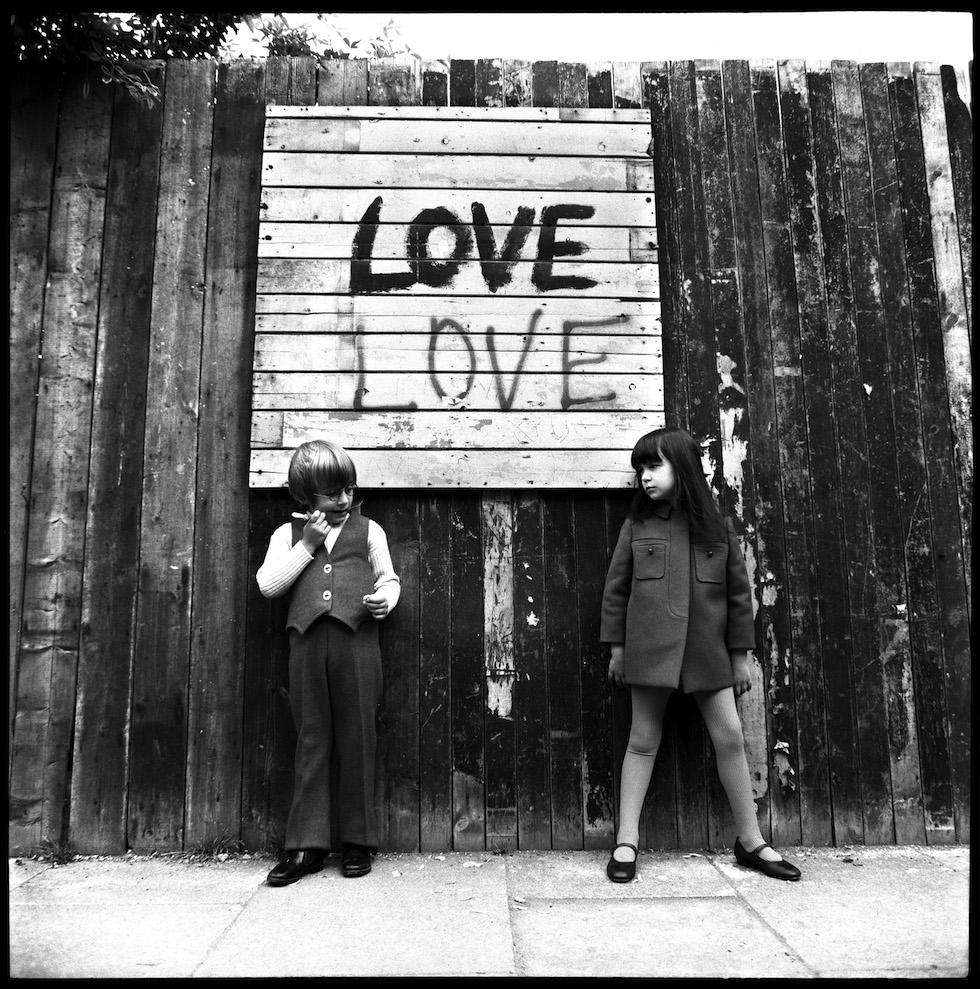
- photographs: (by Brian Duffy) via and (by Eliott Erwitt) via and (by Marianne Grondahl) via and (by Luis H. Salgado) via

Wednesday, 3 June 2015

He, She, God, and the Church of England

"Orthodox theology says all human beings are made in the image of God, that God does not have a gender. He encompasses gender – he is both male and female and beyond male and female. So when we only speak of God in the male form, that’s actually giving us a deficient understanding of who God is.”
Rev Jody Stowell


"Women and the Church" is a group within the Church of England that advocates for female bishops (Right Reverend Libby Lane was consecrated as the first female bishop last January, two more followed in March) and now recommends that church liturgy refers to God as both "He" and "She" since exclusively using "He" instead of a "more expansive language and imagery" would give worshippers a "deficient understanding" (via) and suggest that men are closer to God (via). The debate is not a completely new one in the church, the shift to gender-equal language has made clear progress in some sections of the church where "[q]uietly clergy are just talking about God as 'she' every now and then.'" Rev Jody Stowell explains that it is not an attempt to make God a woman but to create "proper, Biblical images of God" (via).
“It’s just the church moves slowly. [The debate] caught the imagination now because we’ve got women bishops so in a sense the church has accepted that women are equally valued in God’s sight and can represent God at all levels. We want to encourage people to be freer, and we want to get the Liturgical Commission to understand that people are actually quite open to this and there is room for richer language to be used.” Rev Emma Percy


“In the last two or three years we’ve seen a real resurgence and interest in feminism, and younger people are much more interested in how gender categories shouldn’t be about stereotypes. We need to have a language about God that shows God can be expressed in lots of diverse terms.”
Rev Emma Percy

"Will it make a difference having women serve as bishops?
Only if it means more women in the church are more confident to challenge the kindly benign paternalism that continues to keep us quiet, and without having to soothe the ruffled feelings of those, mainly men, whom we challenge.
Only if God is she as often as she is he – because this is such a formative aspect of our church life, and a real bastion of sexism.
Only if laywomen are better enabled by our church life to live more godly lives – everyday lives – not usually by being ordained or by helping the vicar, but in our calling to be a role model for girls of thoughtful leadership wherever that may be: as generous administrators, as alert police officers, as really skillful engineers, as vigorous MPs, as campaigners on homelessness, climate change and modern slavery. Our religious institutions need to affirm and encourage us all in our work as women of faith in a God-filled and God-unnoticing country.
I hope our three women bishops, with more to come, I trust, will carry some of these yearnings with them."
Hilary Cotton (Chair of Women and the Church)

"We have images of God as a mother bear, so very ferocious, protecting her cubs. We have God as a woman baking and kneading the bread, so this forming God. We have God as a nursing mother. We're not restricted to understanding God with one gender. I would encourage people to explore those kinds of images. They're wholly Biblical. They're wholly traditional within the Christian faith."
Rev Jody Stowell

"Most people think of God as a bearded man in the sky... probably white himself. This is not just a gender discussion. I think if [young people] are seeing people saying that God is not an old, white man in the sky and that God is inclusive of everybody, then that will interest people, especially if they've got the idea that Christianity is male, pale and stale. If we're debunking that myth... of course that's going to bring people to explore faith more."
Rev Jody Stowell


photograph, circa 1955: Jesuit priests hear confessions at the Martyr's Shrine, near Midland, Ontario. The shrine is dedicated to the first Jesuit missionaries who arrived in 1626 in the Huron country to convert the Iriquois. (Photo by Berni Schoenfield/Three Lions/Getty Images) via and by John Gutmann (The Confessional, Mexico, 1960) via and by Eliott Erwitt (Czestochowa, Poland, 1964) via