
 Age |
 Disability |
 Ethnicity |
 Queer |
 Religion |
 Gender |
 Stereotypes |
 -isms |
 Quotes |
 World days |
 Music |
 Space |
 Sports |
 Health |
 Marketing |
 Urban planning |
 Narrative images |
 Birthday |
 Language |
 Segregation |
 School |
Saturday, 22 January 2022
Disability. A byproduct of society.


Tuesday, 18 January 2022
Age Representation in Online Images
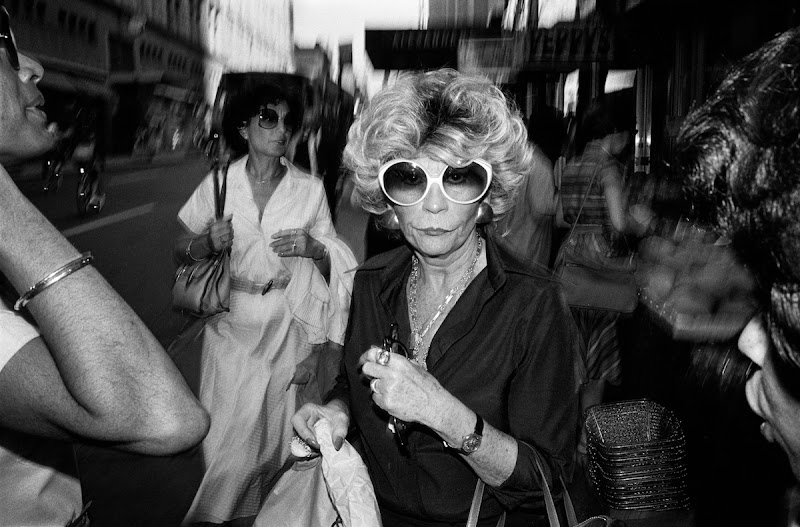
Photographs of people aged over fifty are usually missing and if they are not, you might wish they were. Using natural language processing technology, Thayer and Skufca (2019) reviewed more than 1.116 online images (randomly drawn from more than 2.7 million images) posted in 2018 by brands and opinion leaders on sites and social media (Facebook, Instagram, Twitter, blogs, news sites) with at least one million followers.
The results:
46% of the adult population in the US is over fifty but only 15% of the images contain people in "that age segment".
The images suggest homogeneity and exaggerate stereotypcial and outdated characteristics. While 31% of adults over fifty colour their hair, only 15% of the images show nongrey hair. 73% of images of the so-called "50-plus" show people with wrinkles, 12% have age spots, only 15% have clear skin.
Snapshots of those over 65 become less varied and vibrant.
Seven in ten photographs of people over fifty show them in isolated situations, seated, alone, dependent, with a partner or a medical professional receiving care. Younger adults, however, are often "standing in the workplace, giving speeches, or actively participating in the world".
While 30% of the labour force is fifty or older, only 13% of images involve these adults at work settings. The contrast: 55% of photographs of people under fifty show them at work.
Only 5% of images depict people over fifty interacting with technology. And if they do, the photographs usually involve a younger person teaching the older one how to use it.
- - - - - - - -
- Thayer, C. & Skufca, L. (2019). Media Image Landscape: Age
Representation in Online Images. Wahsington, DC: AARP Research,
link
- photograph by Richard Sandler
via
Saturday, 15 January 2022
Stereotypes... Does age outweigh gender? Spoiler: Yes.

- Kite, M. E., Deaux, K., & Miele, M. (1991). Stereotypes of young and old: Does age outweigh gender? Psychology and Aging, 6(1), 19–27. doi.org/10.1037/0882-7974.6.1.19
- photograph by Richard Sandler (NYC, 1985) via