Showing posts with label cultural differences. Show all posts

Friday, 28 June 2024

Women and Smoking Stigma in South Korea

Generally speaking, fewer women smoke than men. There are however, cultural and regional variations and greater gender differences are found in South Korea, Indonesia, and China, compared to Europe and the United States. South Korea, for instance, has the highest male smoking rate and the lowest female smoking rate of all (OECD) countries (Park et al., 2014). The World Health Organization (2017) estimates that 40% to 50% of men and 4% to 8% of women in Korea smoke; according to the OECD (2015) it is 31.3& of males and 3.4% of females (Gunter et al., 2020). Gender is a factor.

Women may encounter negative social attitudes toward women's smoking. This stigma can have an impact on their smoking cessation motivation and concealment (David et al., 2024). Korean women, for instance, underreport their smoking activity because of the stigmatisation. This stigma may prevent many Korean woman from smoking (Woo, 2018). Using biological indicators (urinary cotitine concentration), others come to the conclusion that the "actual female smoking rate is significantly highere than official records state" and that the social desirability bias produces results that underestimate the number of female smokers (Park et al., 2014).

This study shows that the actual female smoking rate is significantly higher than that reported officially, but also that the gap is decreasing steadily. Females exhibited a higher rate of false responses, which resulted in an underestimation of the female smoking rate. (Park et al., 2014)

Concealment is not really surprising given harsh reactions might be possible as the following two anecdotes imply:

"I was a bit tipsy and felt like a puff. After I lit the cigarette, a random middle-aged man came up to me and started shouting as if I had done something very bad. He said, ‘I will slap your face if you don't throw your cigarette away right now.' He called me ‘dirty little woman.'" (Kim, 26)

"When I was smoking outside, an old man shouted at me how dare I, a female, smoke there. People say the social atmosphere about female smoking has changed but this kind of thing still happens. Men cannot understand how scared women get in those situations." (Lee, 33)

In South Korea, women use heated tobacco products for different reasons than men do, i.e., to avoid the stimga associated with female smoking while men use them to avoid family members putting pressure on them to stop smoking (Kwanwook et al., 2020)

As has been well-established by previous studies, the smell of cigarettes was the main reason for using HTP for both male and female users. Nevertheless, there was a gender difference in the cause for concern about the smell of cigarettes, especially regarding the person(s) to whom participants thought the smell was an issue. Males tended to identify smell as a problem when it came to their familial responsibilities with their wives and children. Many participants felt guilty for using cigarettes due to their harmfulness to health and exposing their family members to secondhand smoke. For these participants, these feelings, usually recognised, and revived by the very smell of tobacco, could be reduced through the use of HTPs with a relatively low odour. Therefore, males were more concerned with the ‘physical’ characteristics of the cigarette smell as a reminder of the harmfulness of tobacco. 

‘When I got married, my wife knew that I was a smoker and did not care too much. But when she got pregnant, she kept telling me, “Your body smells of cigarettes. Don’t come near, it’s bad for a child”. She told me a lot to stop smoking. So, I thought about various ways, and finally bought IQOS which was easily available. I think it would be better to choose one that doesn’t smell to my family.’ (Male, 39 years) 

Unlike the male participants, female participants were more interested in the ‘socio-cultural’ rather than physical characteristics of the tobacco smell. In other words, women were conscious that their tobacco smell would expose their smoking habit in a patriarchal society where female smoking is still a highly stigmatised activity, particularly in the workplace. Therefore, unlike men, they were reluctant to disclose their smoking habit. In particular, women with children were extremely vigilant about concealing such socially unacceptable behaviour as smoking, when among other parents and their children’s teachers, because of the perception that they should be a morally upright ‘agi-eomma’ (a baby’s mother). For these reasons, women chose HTPs to maintain their social status as a righteous working woman or mother.  

‘I should not let my colleagues in the company notice the smell from my smoking. Since my sister introduced me to “lil”, I have used it while working and smoked CCs at home.’ (Female, 22 years)  

‘For me, [the] IQOS has solved every interpersonal problem caused by the smelly cigarette. Now I have been able to avoid uncomfortable gazes, [I am] liberated from the smell, and [I have] improved interpersonal relationships with my children’s teachers or other parents. I used to be unable to smoke openly because I was given kind of a name tag called “agi-eomma” (a baby’s mother).’ (Female, 42 years) (Kwanwook et al., 2020)

- - - - - - - - - - - - - - - - - -

- David, J.-C., Fonte, D., Sutter-Dallary, A.-L., Auriacombe, M., Serre, F., Rascle, N. & Loyal, D. (2024). The stigma of smoking among women: A systematic review. Social Sciene & Medicine, 340, 116-491. Korean Journal of Family Medicine, 41(3)
- Gunter, R., Szeto, E., Jeong, S.-H., Suh, S. & Waters, A. J. (2020). Cigarette Smoking in South Korea: A Narrative Review. 
-  Kwanwook Kim, Jinyoung Kim, Hong-Jun Cho (2020). Gendered factors for heated tobacco product use: Focus group interviews with Korean adults. Tobacco Induced Diseases, 18(43), link
- Myung Bae Park, Chun-Bae Kim,corresponding author Eun Woo Nam & Kyeong Soo Hong (2014). Does South Korea have hidden female smokers: discrepancies in smoking rates between self-reports and urinary cotinine level. BMC Womens Health, 14(156), link
- Woo, C. (2018). Gendered Stigma Management among Young Adult Women Smokers in South Korea. Sociological Perspectives, 61(3), link
- photograph by Nina Ahn via

Monday, 30 August 2021

The Chinese-perspective of Intercultural Competence Models Revisited

"Most intercultural competence models have been developed by Western experts based on Western theory and Western cultural values, and they are not culturally specific models. The lack of non-Chinese researchers to study and contribute to the construction of intercultural competence from a Chinese-perspective is a serious shortcoming, and most of the models developed by Chinese scholars are a replica of the Western models. A Chinese-perspective of intercultural competence model is indeed needed to reinterpret concepts and theories that are coined in the West, which are then widely used and generalized without any concrete-solid bases of their universality."


"A Chinese-perspective of intercultural competence model is indeed needed to reinterpret concepts and theories that are coined in the West, which are then widely used and generalized without concrete-solid bases of their universality. Western-based intercultural competence models need to be scrutinized and analyzed thoroughly to conrm, to modify, or to deny altogether for their applications in different cultures. Unfortunately, the current practices in academia pay less attention to such an initial analysis." (Huat Chong & Grzymala-Mosczczynska, 2015)
 
- - - - - - - - -
- Huat Chong, Y. & Grzymala-Moszczynska, H. (2015). Journal of Intercultural Management, 7(1), link
- photograph by Elisa Leonelli via

Friday, 13 December 2019

Politeness. A Reflection of Cultural Norms.

Language is a reflection of culture and accepted cultural norms, polite conducted and interaction is inseparable to culture. Polite interaction takes on many forms in the way people interact, not only by the spoken word but also by the unspoken messages portrayed by behaviour, body language, eye contact and facial expressions. People from the same country speaking the same language and same cultural background have a basic common shared ideology and value system defining general accepted norms and rules of conduct to be followed. Accepted norms of behaviour and linguistic appropriateness in one culture are not necessarily acceptable in another culture. What is considered polite in one cultural society may be considered impolite in another. (...)


Politeness in any given society is conducted within a system of acceptable social behaviour and social linguistic cultural norms that govern the way in which citizens interact. (...) Accepted behaviour and politeness within a society and sharing the same value system and cultural understanding is part of the fibre of society. Rules within a language community guide behaviour and communication within the society; (not only guiding what people do or say but, equally important what people do not do or say). (...)

Politeness is a fundamental part of culture which shapes human behaviour within a society. Goode et al. (2000) explains this politeness and behaviour as an ‘integrated pattern of human behaviour that includes thoughts, communications, languages, practices, beliefs, values, customs, courtesies, rituals, manners of interacting and roles, relationships and expected behaviours of a racial, ethnic, religious or social group; and the ability to transmit the above to succeeding generations.’ This view illustrates the importance of politeness in language teaching, culture and politeness is mirrored and represented in all the above human interactions, as a result politeness can not be considered a separate isolated component of language learning. The spectrum of politeness affects all human behaviour and interactions, therefore ‘linguistic competence alone is not enough for learners of a language to be competent in that language’ (Krasner, 1999). Language learners need to understand culture, context and politeness to be able to function and communicate appropriately in the target language. (...)

excerpts taken from O'Sullivan (2007)

- - - - - - -
- O'Sullivan, W. (2007). A study on politeness teaching to English learners in China. The International Journal of Language Society and Culture, 23, 47-52.
- photograph (Elswick Kids, 1978) by Tish Murtha via

Thursday, 10 January 2019

The British Art of Queuing, Culture and Egalitarianism

"People usually choose to queue because it is fair. In fact, queues are places where people are obsessed with fairness, and where cutting in line is seen as a terrible crime that can lead to all sorts of scuffles, fights and frictions. (...) While the need to queue depends largely on the activity, a person’s willingness to queue occurs in varying degrees around the world. Britons, in particular, are renowned for their orderly and regimented approach to queuing. (...) The stereotype of the Anglophone countries is that queuing is something they specialise in. The more charitable view is that there is a strong tradition of egalitarianism in many of these places – and the queue is a form of equality, where if you seek a service first, you are served first, regardless of your social position."
Nick Haslam


“The British have a well-established culture of queuing and a very specific type of queue conduct, one that has been known to confuse many a foreign visitor. In a time when Britain is changing rapidly, and the ways in which we queue are shifting, the psychology behind British queuing is more important than ever – it a one of the keys to unlocking British culture.”Adrian Furnham
The least accepted "no-no", according to a survey conducted by Privilege Home Insurance, is queue skipping since it goes against the principle of "first come, first served", against the British social system of linear queueing and as it sparks a sense of injustice. Other "no-nos" are starting a conversation while queueing and accepting an offer to go ahead of someone in the queue. "In British queueing culture, not only will acceptance be perceived as impoliteness, it will also lose the individual the respect of the remaining queuers" (via).
"When humans encounter a queuing situation outside our personal and cultural expectations, we become dumb and anxious." (via)


photographs by Nina Leen (1958) via and via

Monday, 23 September 2013

The Metaphor of Face

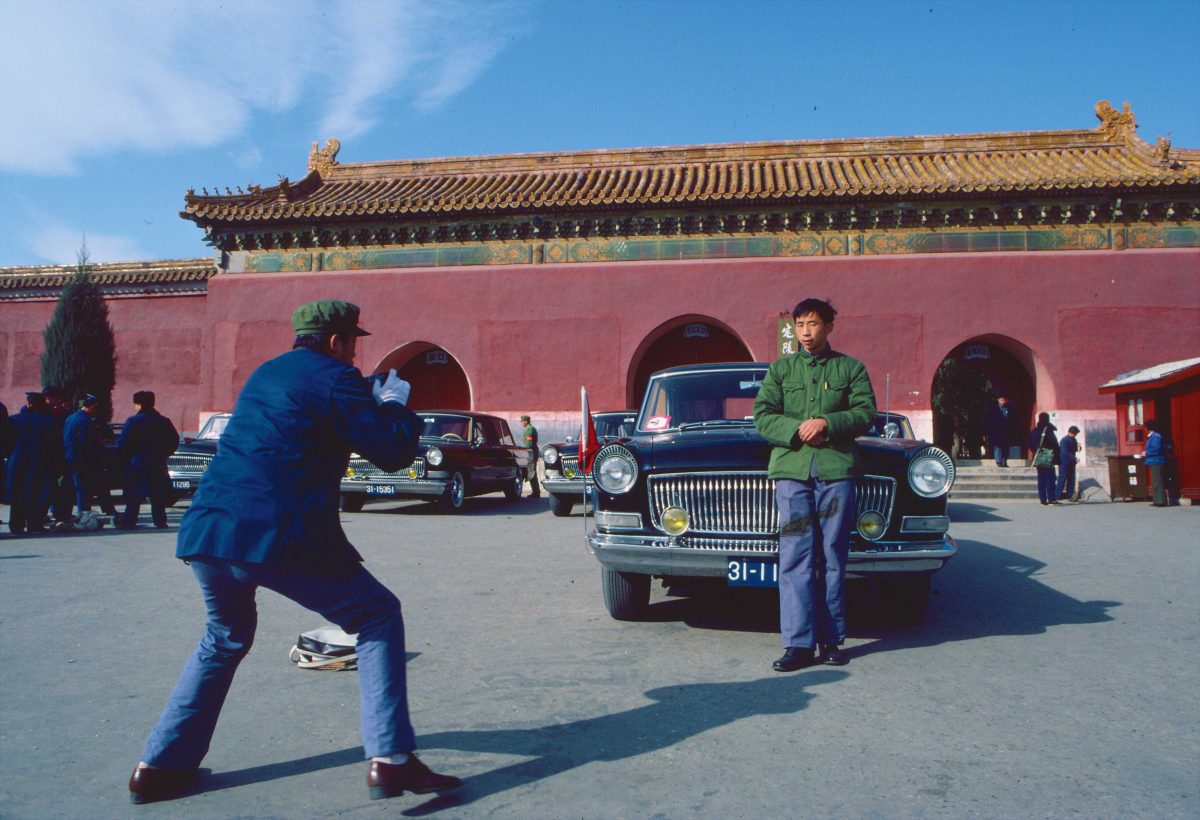
Face is the public image a person presents or wants to present. Facework is the process of maintaining or gaining face and supporting or challenging another person's face (Amarasinghe, 2011). In other words, we can lose, save, give or get face. When we are in face, we typically respond with feelings of confidence and assurance. And when we are out of face, we are likely to feel ashamed and inferior (Goffman, 1967).


The concept of face is of Chinese origin and traced to Confucian ideology. In Chinese culture it is conceptualised as relational, affective and emotional. Face is based on feelings and an appeal to promote harmonious human relationship which is considered as a major component of a collectivist culture. In contrast to individualist cultures, collectivist cultures stress the importance of cohesion and the priority to group goals over individual goals - hence the importance of harmony. The concept of face can only be understood from the point of reciprocity and interdependence. Face is essential to healthy social interactions and places emphasis on relationships instead of impression management (Jia, 1997).


Three types of facework are identified, i.e. dominating (e.g. defending and aggressive behaviours in order to maintain or gain face), avoiding (e.g. giving in) and integrating (e.g. apologising, compromising, problem solving). While dominating strategies are rather self-face oriented, avoiding and integrating strategies allow to save mutual face.


Face and facework are believed to be universal with culture-bound values and strategies. It is hypothesised that people in individualistic cultures might be more concerned about self-face needs than people in collectivistic cultures where harmony plays a central role and that they therefore apply more defending and aggressive strategies to save their own face (Chang, 2011).


- Amarasinghe, A. D. (2011) A comparative analysis of facework strategies of Australians and Sri Lankans working in Australia. Queensland: Master Thesis
- Chang, Y. (2011) You Think I am Stupid? Face Needs in Intercultural Conflicts. Journal of Intercultural Communication (25)
- Goffman, E. (1967) Interaction Ritual. New York: Doubleday
- Jia, W. (1997) Facework as a Chinese Conflict-Preventive Mechanism - A Cultural/Discourse Analysis. Intercultural Communication Studies, 8(1)

For a critique of the dichotomous classification individualism vs. collectivism see e.g. Voronov, M. & Singer, J. A. (2002) The Myth of Individualism-Collectivism: A Critical Review. The Journal of Social Psychology, 142(4), 461-480

Photographs by Life magazine photographer Ralph Crane via and via and via and via and via