Showing posts with label culture. Show all posts

Friday, 28 June 2024

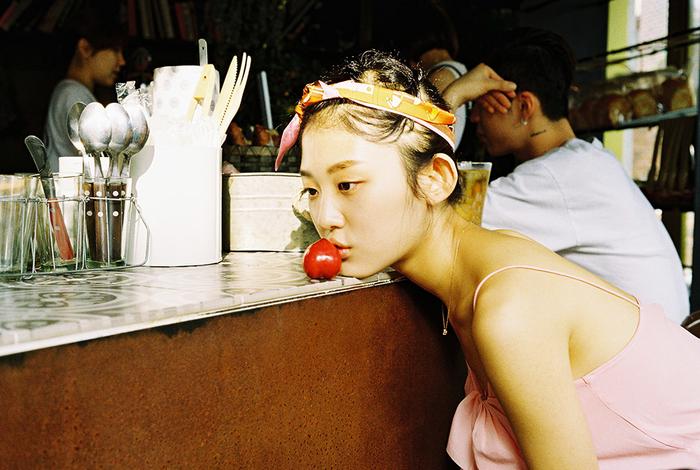
Women and Smoking Stigma in South Korea

Generally speaking, fewer women smoke than men. There are however, cultural and regional variations and greater gender differences are found in South Korea, Indonesia, and China, compared to Europe and the United States. South Korea, for instance, has the highest male smoking rate and the lowest female smoking rate of all (OECD) countries (Park et al., 2014). The World Health Organization (2017) estimates that 40% to 50% of men and 4% to 8% of women in Korea smoke; according to the OECD (2015) it is 31.3& of males and 3.4% of females (Gunter et al., 2020). Gender is a factor.

Women may encounter negative social attitudes toward women's smoking. This stigma can have an impact on their smoking cessation motivation and concealment (David et al., 2024). Korean women, for instance, underreport their smoking activity because of the stigmatisation. This stigma may prevent many Korean woman from smoking (Woo, 2018). Using biological indicators (urinary cotitine concentration), others come to the conclusion that the "actual female smoking rate is significantly highere than official records state" and that the social desirability bias produces results that underestimate the number of female smokers (Park et al., 2014).

This study shows that the actual female smoking rate is significantly higher than that reported officially, but also that the gap is decreasing steadily. Females exhibited a higher rate of false responses, which resulted in an underestimation of the female smoking rate. (Park et al., 2014)

Concealment is not really surprising given harsh reactions might be possible as the following two anecdotes imply:

"I was a bit tipsy and felt like a puff. After I lit the cigarette, a random middle-aged man came up to me and started shouting as if I had done something very bad. He said, ‘I will slap your face if you don't throw your cigarette away right now.' He called me ‘dirty little woman.'" (Kim, 26)

"When I was smoking outside, an old man shouted at me how dare I, a female, smoke there. People say the social atmosphere about female smoking has changed but this kind of thing still happens. Men cannot understand how scared women get in those situations." (Lee, 33)

In South Korea, women use heated tobacco products for different reasons than men do, i.e., to avoid the stimga associated with female smoking while men use them to avoid family members putting pressure on them to stop smoking (Kwanwook et al., 2020)

As has been well-established by previous studies, the smell of cigarettes was the main reason for using HTP for both male and female users. Nevertheless, there was a gender difference in the cause for concern about the smell of cigarettes, especially regarding the person(s) to whom participants thought the smell was an issue. Males tended to identify smell as a problem when it came to their familial responsibilities with their wives and children. Many participants felt guilty for using cigarettes due to their harmfulness to health and exposing their family members to secondhand smoke. For these participants, these feelings, usually recognised, and revived by the very smell of tobacco, could be reduced through the use of HTPs with a relatively low odour. Therefore, males were more concerned with the ‘physical’ characteristics of the cigarette smell as a reminder of the harmfulness of tobacco. 

‘When I got married, my wife knew that I was a smoker and did not care too much. But when she got pregnant, she kept telling me, “Your body smells of cigarettes. Don’t come near, it’s bad for a child”. She told me a lot to stop smoking. So, I thought about various ways, and finally bought IQOS which was easily available. I think it would be better to choose one that doesn’t smell to my family.’ (Male, 39 years) 

Unlike the male participants, female participants were more interested in the ‘socio-cultural’ rather than physical characteristics of the tobacco smell. In other words, women were conscious that their tobacco smell would expose their smoking habit in a patriarchal society where female smoking is still a highly stigmatised activity, particularly in the workplace. Therefore, unlike men, they were reluctant to disclose their smoking habit. In particular, women with children were extremely vigilant about concealing such socially unacceptable behaviour as smoking, when among other parents and their children’s teachers, because of the perception that they should be a morally upright ‘agi-eomma’ (a baby’s mother). For these reasons, women chose HTPs to maintain their social status as a righteous working woman or mother.  

‘I should not let my colleagues in the company notice the smell from my smoking. Since my sister introduced me to “lil”, I have used it while working and smoked CCs at home.’ (Female, 22 years)  

‘For me, [the] IQOS has solved every interpersonal problem caused by the smelly cigarette. Now I have been able to avoid uncomfortable gazes, [I am] liberated from the smell, and [I have] improved interpersonal relationships with my children’s teachers or other parents. I used to be unable to smoke openly because I was given kind of a name tag called “agi-eomma” (a baby’s mother).’ (Female, 42 years) (Kwanwook et al., 2020)

- - - - - - - - - - - - - - - - - -

- David, J.-C., Fonte, D., Sutter-Dallary, A.-L., Auriacombe, M., Serre, F., Rascle, N. & Loyal, D. (2024). The stigma of smoking among women: A systematic review. Social Sciene & Medicine, 340, 116-491. Korean Journal of Family Medicine, 41(3)
- Gunter, R., Szeto, E., Jeong, S.-H., Suh, S. & Waters, A. J. (2020). Cigarette Smoking in South Korea: A Narrative Review. 
-  Kwanwook Kim, Jinyoung Kim, Hong-Jun Cho (2020). Gendered factors for heated tobacco product use: Focus group interviews with Korean adults. Tobacco Induced Diseases, 18(43), link
- Myung Bae Park, Chun-Bae Kim,corresponding author Eun Woo Nam & Kyeong Soo Hong (2014). Does South Korea have hidden female smokers: discrepancies in smoking rates between self-reports and urinary cotinine level. BMC Womens Health, 14(156), link
- Woo, C. (2018). Gendered Stigma Management among Young Adult Women Smokers in South Korea. Sociological Perspectives, 61(3), link
- photograph by Nina Ahn via

Friday, 22 March 2024

The Tenor of American Emotional Life

"There’s an American can-do attitude that can be bad for people, and I’m not sure it’s lessening. I have cancer now, and you’re supposed to have a good attitude. To hell with it. How are you supposed to have a good attitude? It would be cuckoo to have a good attitude. There’s something about that general tenor of American emotional life. I consider it a very American problem: the inability to tolerate unpleasant emotions. Some emotions are unpleasant, some experiences are unpleasant, some things are very sad, some things are very frustrating. And that’s okay. You can’t fix it. That’s the way life is."
Susanna Kaysen


photograph by Vivian Maier via

Saturday, 18 November 2023

Minari (2020)

Minari is a film by - hyphenated - Korean-American filmmaker Lee Isaac Chung. The film is partly autobiographical and fully beautiful.  


Watching films in which white families speaking English represented the American experience and growing up with a father who "came to America believing in the romantic dream of what he saw in films like 'Big Country' and 'Giant' - this fertile land able to yield so much promise" (via), Lee Isaac Chung wanted to create something that transcends borders and feelings of national identity. And he certainly succeeded. Minari is "about taming the soil, like so many westerns", a drama "in an eminently American tradition".  At the same time, the language mainly spoken is Korean. This intersection led to some controversy when the movie's Golden Globes category was not best film, but best foreign film (via).
While Minari is about immigrants arriving in an unfamiliar world, the film shows a light touch in its treatment of racial and cultural difference. The Yi children face what we would now call microaggressions from local kids, but these are presented as essentially benign in their cluelessness. This is true to his experience, Chung says. “I grew up feeling like the main obstacles that we were trying to overcome had more to do with how we survive together as a family, and less to do with external relationships that we had with the community. Racism did exist and I’ve experienced some horrific incidents, but when I think about those days, it’s more about farming and the difficulties of trying to love each other.” (via)
"A lot of people have had good discussions about what it means to be American, and we need to broaden our definition."

"We grew up in rural Arkansas without any Koreans close by, and when I go to Korea feel out of place."

"Because growing up as an Asian-American and growing up as someone who is not white, oftentimes in this country you can feel as though you're a foreigner, or you're reminded of being a foreigner, even though you're not. Even though inside, internally, you feel completely American."
Lee Isaac Chung

"Growing up where I was, there were no Asians, no minorities, and there was always something to remind me of what I'm not. And when I go to Korea it's the same thing. I'm constantly reminded that I'm not Korean."


"I like the idea of all of us looking at the world with less of an emphasis on national borders and with more of an emphasis on shared humanity."

"A lot of times we have these categories that maybe don't fit the reality of human experience and human identity. I'm completely sympathetic to what a lot of people in my community are saying - that often as Asian Americans we're made to feel more foreign than we internally feel ourselves."

"I always tend to gravitate toward the idea of things being human: that this isolation I feel as an Asian American, even though it's real, other people have it too in their own way."

"I wanted to make something that transcends borders and gets beyond this feeling of national identity."

"Part of the fabric of America is that we have people from different countries who've come here and they are American, and yet they embrace their home ancestral culture. And this is their new home. And that's part of what makes this country unique in the history of human beings on this earth."

"I hope that anyone facing or experiencing discrimination will, first of all, take to heart that this is not their fault, and they are not alone in this. Secondly, I hope they find ways to plug into communities to help prevent negative feelings of discrimination from festering."

"Any time there is a film in a 'foreign language,' in Spanish or Korean or whatever language, it's usually not an American film. It's usually from another country."

"I grew up watching films of predominantly white families speaking in English, and that this represented the American experience."

- - - - - - - - - - - -
images via and via and via

Wednesday, 13 September 2023

US-Americans and the Death of Home Cooking

According to the Economic Research Service's Adult Eating & Health Module (EHM) study carried out over two three-year periods (2006-2008 and 2014-2016), US-Americans spend less time eating and drinking as a primary activity (decrease by 5%) than they did ten years ago. The amount of time spent eating as a secondary activity, i.e., eating while engaged in another activity, has not changed much. Education - directly or indirectly - has an impact on the amount of time dedicated to eating. Those with more than a bachelor's degree spent 18% more time eating and drinking as a primary activity than those with less education. The data collected also showed an increase in prepared food purchases (via).

After the pandemic, spending at restaurants and food-service providers (excluding grocery stores) returned to what was perceived as normal before. The percentage of US-Americans spending money on eating out vs cooking and eating at home swelled to 53.2. (via)

Based on time-use surveys carried out in France and the US, Maria Pleszz and Fabrice Etilé come to the conclusion that both people in the US and in France spent about 15 to 20 minutes less time cooking and eating at home in 2010 than they did in 1985, however, for different reasons. In France, the decrease was mainly due to a drop in eating time while the time spent cooking had remained relatively stable. According to the authors, the time drop in France was mainly caused by an increase in smaller households. In the US, the drop was explained with people spending less time making meals (via).

For some Americans, going out to dinner is a treat, planned and budgeted for. For others, it’s just another Tuesday night. And Wednesday. And Thursday. 
And that second group of people is becoming the majority. The number of Americans who enjoy cooking is declining, while the prevalence of food delivery startups, and culinary-centric television shows grows. (via)

The importance or non-impartance of food is surely culture-bound. Compared to other nationas, US-Americans only spend a small portion of their household income on food (via) and, again in comparison, spend little time on cooking (via). The early introduction of fast food as an acceptable alternative to real meals, their consumption portrayed in movies, and TV characters throwing away food easily might be further contributors to the message that food is nothing to think about much.

Eddie Yoon gathered data over two decades. In his first survey, he found three groups of US-Americans: 15% saying the love cooking, 50% saying they hate it and 35% being ambivalent about it. 15 years later the percentages had shifted, not necessarily for the better: 10% loved cooking, 45% hated it, 45% were indifferent or liked to sometimes cook, In other words, 90% are not really fond of cooking (via). Grocery shopping and cooking are shifting to a niche activity (via).

(...) our fondness for Food TV has inspired us to watch more Food TV, and to want to eat more, but hasn’t increased our desire to cook. (via)

Monsiavais et al. (2014) carried out a study on time use. The authors stratified the sample into those who a) spent less than an hour a day on food preparation and cleanup, b) one to two hours a day, and c) more than two hours a day. Those who spent the least amount of time on food preparation were working adults with a strong focus on convenience. Time spent on food preparation positively correlated with diet quality (more vegetables, salads, fruits, and fruit juices). Spending less than an hour a day on food preparation meant spending more money on food outside home and using fast food "restaurants" more often: "The per-person expenditure in the lowest time-use group was >$22/week whereas that in the highest group was approximately $15/week". 

Surveys show that the time US-Americans spend on cooking has decreased substantially since the 1960s, i.e., to an average of 33 minutes per day for food preparation and cleanup. Lack of time is mentioned as one reason but surely only explains part of the situation (Monsiavais et al., 2014).

A survey from 2019 found that 41.43% of US-Americans preferred to spend less than 30 minutes cooking a weeknight meal, 50.17% found it acceptable to spend between 30 and 60 minutes, 8.4% were happy to spend more than an hour on it (via).

- Monsivais, P., Aggarwal, A. & Drewnowski, A. (2014). Time Spent on Home Food Preparation and Indicators of Healthy Eating. American Journal of Preventive Medicine, 47(6), 796-802.
- photographs of Marilyn Monroe eating hot dogs with Arthur Miller in New York, 1957, taken by Sam Shaw via 

Thursday, 3 February 2022

Eyes as Big as Plates

“We need to learn to see not just with Western eyes but with Islamic eyes and Inuit eyes, not just with human eyes but with golden-cheeked warbler eyes, coho salmon eyes, and polar bear eyes, and not even just with eyes at all but with the wild, barely articulate being of clouds and seas and rocks and trees and stars.”  Roy Scranton

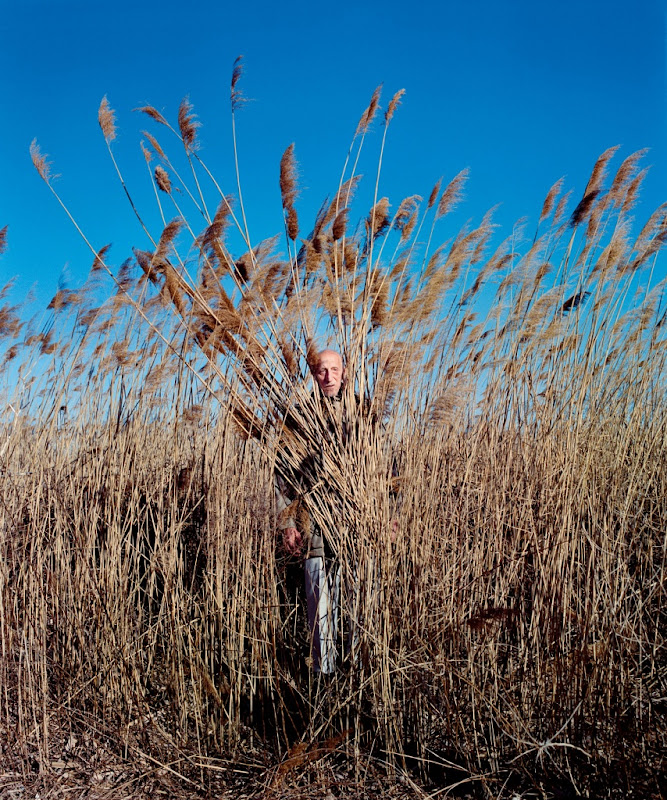
"Eyes as Big as Plates" is a project launched by Karoline Hjorth and Riitta Ikonen. It began as "a play on characters from Nordic folklore" searching ways how modern humans belong to nature. People participating are fishermen, opera singers, artists, farmers, academics... In 2011, the artist duo started portraying seniors in Norway, Finland, France, UK, Iceland, the Faroe Islands, Sweden, Japan, Greenland, the Czech Republic, the US and South Korea. The photographs show them wearing sculptures they create symbolising how they inhabit the landscape (via).

"As active participants in our contemporary society, these seniors encourage the rediscovery of a demographic group too often labelled as marginalized or even as a stereotypical cliché. It is in this light that the project aims to generate new perspectives on who we are and where we belong." (via)

photographs by Karoline Hjorth and Riitta Ikonnen via 

Monday, 30 August 2021

The Chinese-perspective of Intercultural Competence Models Revisited

"Most intercultural competence models have been developed by Western experts based on Western theory and Western cultural values, and they are not culturally specific models. The lack of non-Chinese researchers to study and contribute to the construction of intercultural competence from a Chinese-perspective is a serious shortcoming, and most of the models developed by Chinese scholars are a replica of the Western models. A Chinese-perspective of intercultural competence model is indeed needed to reinterpret concepts and theories that are coined in the West, which are then widely used and generalized without any concrete-solid bases of their universality."


"A Chinese-perspective of intercultural competence model is indeed needed to reinterpret concepts and theories that are coined in the West, which are then widely used and generalized without concrete-solid bases of their universality. Western-based intercultural competence models need to be scrutinized and analyzed thoroughly to conrm, to modify, or to deny altogether for their applications in different cultures. Unfortunately, the current practices in academia pay less attention to such an initial analysis." (Huat Chong & Grzymala-Mosczczynska, 2015)
 
- - - - - - - - -
- Huat Chong, Y. & Grzymala-Moszczynska, H. (2015). Journal of Intercultural Management, 7(1), link
- photograph by Elisa Leonelli via

Friday, 13 December 2019

Politeness. A Reflection of Cultural Norms.

Language is a reflection of culture and accepted cultural norms, polite conducted and interaction is inseparable to culture. Polite interaction takes on many forms in the way people interact, not only by the spoken word but also by the unspoken messages portrayed by behaviour, body language, eye contact and facial expressions. People from the same country speaking the same language and same cultural background have a basic common shared ideology and value system defining general accepted norms and rules of conduct to be followed. Accepted norms of behaviour and linguistic appropriateness in one culture are not necessarily acceptable in another culture. What is considered polite in one cultural society may be considered impolite in another. (...)


Politeness in any given society is conducted within a system of acceptable social behaviour and social linguistic cultural norms that govern the way in which citizens interact. (...) Accepted behaviour and politeness within a society and sharing the same value system and cultural understanding is part of the fibre of society. Rules within a language community guide behaviour and communication within the society; (not only guiding what people do or say but, equally important what people do not do or say). (...)

Politeness is a fundamental part of culture which shapes human behaviour within a society. Goode et al. (2000) explains this politeness and behaviour as an ‘integrated pattern of human behaviour that includes thoughts, communications, languages, practices, beliefs, values, customs, courtesies, rituals, manners of interacting and roles, relationships and expected behaviours of a racial, ethnic, religious or social group; and the ability to transmit the above to succeeding generations.’ This view illustrates the importance of politeness in language teaching, culture and politeness is mirrored and represented in all the above human interactions, as a result politeness can not be considered a separate isolated component of language learning. The spectrum of politeness affects all human behaviour and interactions, therefore ‘linguistic competence alone is not enough for learners of a language to be competent in that language’ (Krasner, 1999). Language learners need to understand culture, context and politeness to be able to function and communicate appropriately in the target language. (...)

excerpts taken from O'Sullivan (2007)

- - - - - - -
- O'Sullivan, W. (2007). A study on politeness teaching to English learners in China. The International Journal of Language Society and Culture, 23, 47-52.
- photograph (Elswick Kids, 1978) by Tish Murtha via

Monday, 17 June 2019

Only in England

Tony Ray-Jones (1941-1972) was an English photographer, or rather, "a social anthropologist with a camera". He photographed English rituals of Eton boarding school, beauty contests, pop festivals, the street, and the seaside (via).
Intrigued by the eccentricities of English social customs, Tony Ray-Jones spent the latter half of the 1960s travelling across England, photographing what he saw as a disappearing way of life.
Science Media Museum


"My aim is to communicate something of the spirit and the mentality of the English, their habits and their way of life, the ironies that exist in the way they do things, partly through their traditions and partly through the nature of their environment and their mentality. For me there is something very special about the English 'way of life' and I wish to record it from my particular point of view before it becomes Americanised and disappears."
Tony Ray-Jones


"In his photographs, the recent English past does indeed seem like another country, but one that, for all the strangeness he captures, remains oddly familiar."
Martin Parr


- photographs via and via and via and via and via and via
- more photographs: LINK

Tuesday, 21 May 2019

The English Language and the Subtle Differences in Transatlantic Understanding

YouGov showed common British phrases to 1.729 Britons and 1.952 US-Americans and asked the participants of the survey to interpret them. The results showed "plenty of common ground" but also "a difference in transatlantic understanding" with many US-Americans being "in danger of missing the serious passive aggression we Brits employ" (via and via).


Here are a few examples:

Statement: "With the greatest respect..."
Interpretation: "I think you are an idiot." (UK: 68%, US: 40%)
Interpretation: "I am listening to you." (UK: 24%, US: 49%)

Statement: "I'll bear it in mind."
Interpretation: "I've forgotten it already." (UK: 55%, US: 38%)
Interpretation: "I will probably do it." (UK: 32%, US: 43%)

Statement: "I hear what you say."
Interpretation: "I disagree and do not want to discuss it further." (UK: 48%, US: 32%)
Interpretation: "I accept your point of view." (UK: 45%, US: 58%)

Statement: "You must come for dinner."
Interpretation: "It's not an invitation, I'm just being polite." (UK: 57%, US: 45%)
Interpretation: "I will send you an invitation soon." (UK: 34%, US: 41%)

For more details see LINK and LINK.

"We have really everything in common with America nowadays except, of course, language."
Oscar Wilde

- - - - - - - -
photograph (London, 1975) via

Wednesday, 20 March 2019

Happy 1398! Celebrating a Resilient Holiday.

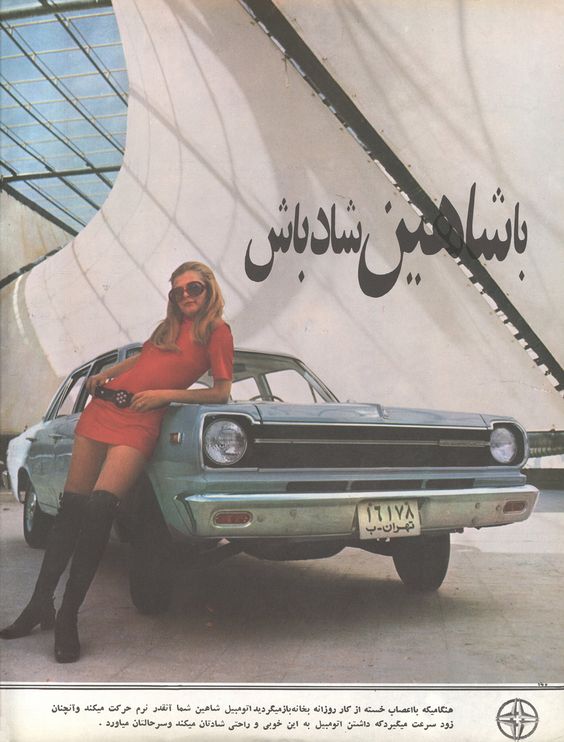
"For thousands of years, Iranians and those influenced by Persian culture have celebrated their new year at the first moment of spring." (via). The holiday dates back to at least 1.700 B.C. and ancient Zoroastrian traditions (via), estimations are in the range of 3.000 years (via).
An important aspect of Nowruz is that it survived Islam. After the revolution in 1979, the government tried to curb the popularity of Nowruz and limit its influence since Iran's most important holiday had no Islamic roots (neither did Iranians) (via). Even before the 1970s, there were attempts to suppress or ban Nowruz, e.g. by Arab invaders in the 7th and 8th century. It "faced the ire of the Arabs on numerous occasions". In Afghanistan, the holiday was forbidden by the Taliban as it was pre-Islamic, hence un-Islamic (via). Nowruz proved to be a resilient holiday and was inscribed on the Representative List of the Intangible Cultural Heritage of Humanity (via).


"Norouz has been a bold identification code for being Persian, including all ethnicities within the land. (...) Norouz has been a celebration of early spring, and as Shabazin (2009) asserts, 'Norouz survived because it was so profoundly engrained in Iranian traditions, history, and cultural memory that Iranian identity and Norouz mutually buttressed each other ...'"
Payvar (2015)

Tonight, the equinox will happen at 10:58 p.m.
Here is some information how to celebrate Norouz: LINK

- - - -
- Payvar, B. (2015). Space, Culture, and the Youth in Iran. Observing Norm Creation Processes at the Artists's House. New York: Palgrave Macmillan.
- image via

Thursday, 10 January 2019

The British Art of Queuing, Culture and Egalitarianism

"People usually choose to queue because it is fair. In fact, queues are places where people are obsessed with fairness, and where cutting in line is seen as a terrible crime that can lead to all sorts of scuffles, fights and frictions. (...) While the need to queue depends largely on the activity, a person’s willingness to queue occurs in varying degrees around the world. Britons, in particular, are renowned for their orderly and regimented approach to queuing. (...) The stereotype of the Anglophone countries is that queuing is something they specialise in. The more charitable view is that there is a strong tradition of egalitarianism in many of these places – and the queue is a form of equality, where if you seek a service first, you are served first, regardless of your social position."
Nick Haslam


“The British have a well-established culture of queuing and a very specific type of queue conduct, one that has been known to confuse many a foreign visitor. In a time when Britain is changing rapidly, and the ways in which we queue are shifting, the psychology behind British queuing is more important than ever – it a one of the keys to unlocking British culture.”Adrian Furnham
The least accepted "no-no", according to a survey conducted by Privilege Home Insurance, is queue skipping since it goes against the principle of "first come, first served", against the British social system of linear queueing and as it sparks a sense of injustice. Other "no-nos" are starting a conversation while queueing and accepting an offer to go ahead of someone in the queue. "In British queueing culture, not only will acceptance be perceived as impoliteness, it will also lose the individual the respect of the remaining queuers" (via).
"When humans encounter a queuing situation outside our personal and cultural expectations, we become dumb and anxious." (via)


photographs by Nina Leen (1958) via and via

Tuesday, 4 October 2016

A Pocket Guide to France (1944)

I- Why you're going to France
YOU are about to play a personal part in pushing the Germans out of France. Whatever part you take - rifleman, hospital orderly, mechanic, pilot, clerk, gunner, truck driver - you will be an essential factor in a great effort which will have two results: first, France will be liberated from the Nazi mob and the Allied armies will be that much nearer to Victory, and second, the enemy will be deprived of coal, steel, manpower, machinery, food, bases, seacost and a long list of other essentials which have enabled him to carry on the war at the expense of the French. (...)


II - The United States soldier in France
MANY of you are no doubt wondering what kind of people the French are. You will soon see for yourselves. You will find that aside from the fact that they speak another (and very musical) language, they are very much like a lot of the people you knew back home. Here are a few facts about them which apply generally, but you must remember that each of them is individual, and that Pierre Ducrot is as different from Paul Boucher as you are from Joe Jones.
Frenchmen are much like us in one particular respect - they are all Frenchmen together and are as intensely proud of the fact as we are of being Americans. Yet we have many kinds of Americans - Southerners, Yankees, hoosiers, Native Sons - to name a few. (...) It's the same with France; you will find many accents and dialects among Bretons, Alsatians, Normans, Basques, Catalans and Provencals - the Southerners of France. But these people are Frenchmen all, and proud of it.
You will soon discover for yourself that the French have what might be called a national character. It is made up of half dozen outstanding characteristics:
(1) The French are mentally quick.
(2) Rich or poor, they are economical. Ever since the Nazis took over and French business came to a standstill, thousands of French families have kept themselves alive on their modest savings.
(3) The French are what they themselves call realistic. It's what we call having a hard common sense. (...) the Nazis have called the French cynical. Even in defeat the French can't be easily fooled.
(4) The French of all classes have respect for the traditionally important values in the life of civilized man. They have respect for religion and for artistic ideas. They have an extreme respect for property, whether public or private. (...) Respect for work is a profound principle in France. (...) Above all, the French respect the family circle as the natural center of social and economic life. (...) There is very little divorce in France. (...)
(5) The French are individualists. (...)
(6) The French are good talkers and magnificent cooks - if there sitll is anything left to put in the pot. French talk and French food have contributed more than anything else to the French reputation for gayety. (...)

The French also shake hands on greeting each other and on saying goodbye. They are not back-slappers. It's not their way.
In the larger cities you'll find shop-keepers who speak English (...). Many of the younger French generation (...) have picked up a smattering of English, plus slang, from the American movies, which were their favorites till the Nazis prohibited them. (...)


Security and Health
Health conditions of France closely resemble those you know in the United States except for a somewhat lower sanitary standard. Water supplies in the rural areas are more likely to be polluted but those of the large cities were generally safe before the war. Milk is not safe to drink unless boiled. (...)
Flies, lice and fleas are more common than with us, and less is done about them. (...) For your own sake keep them away. (...)


You Are a Guest of France
(...) Mostly, the French think Americans always act square, always give the little fellow a helping hand and are good-natured, big-hearted and kind. They look up to the United States as the friend of the oppressed and the liberator of the enslaved. (...)


Mademoiselle
France has been represented too often in fiction as a frivolous nation where sly winks and coy pats on the rear are the accepted form of address. You'd better get rid of such notions right now if you are going to keep out of trouble. A great many young French girls never go out without a chaperone, day or night. It will certainly bring trouble if you base your conduct on any false assumptions.
France is full of decent women and strict women. Most French girls have less freedom than girls back home. If you get a date don't be surprised if her parents want to meet you first, to size you up. (...)
Should you find some girl whose charms induce thoughts of marriage, here are a few points to think over: In your present status as a soldier, marriage to a foreign girl has many complications. (...)


Churchgoers
Throughout the history of France, the Church has filled a very real compartment in the lives of Frenchmen. In the Middle Ages and during the Renaissance, the superb craftmanship and the sincere religious feeling of the French combined to erect some of the most magnificent monuments to God ever created. (...)


V - In parting
We are friends of the French and they are friends of ours.
The Germans are our enemies and we are theirs. Some of the secret agents who have been syping on the French will no doubt remain to spy on you. Keep a close mouth. No bragging about anything. (...)
You are a member of the best dressed, best fed, best equipped liberating Army now on earth. You are going in among the people of a former Ally of your country. They are still your kind of people who happen to speak democracy in a different language. Americans among Frenchmen, let us remember our likeness, not our differences. The Nazi slogan for destroying us both was "Divide and Conquer". Our American answer is "In Union Is Strength".


A Pocket Guide to France DOWNLOAD

Thursday, 26 November 2015

Welcome to Salzburg

Inspired by the "Refugee Guide" for Germany and with good intention, the city of Salzburg has just published a "welcome guide" for "new Salzburg residents" to give answers to the many questions "repeatedly asked by many refugees".


You learn that in Austria, people are punctual, say "Grüß Gott" when they greet each other, shake hands, and that children have a right to an upbringing free of violence. Smiling does not necessarily mean flirting, spitting on the ground in public is not tolerated (I wished), religion is considered a private matter (one may still wonder why the registration office includes religious affiliation among the few questions it asks or why hospitals in Austria ask about name, address, telephone number ... and religion), Austrians use toilets instead of urinating in public and afterwards wash their hands.
"It is an offence to urinate in public. You will usually find a public toilet in the vicinity. Toilets usually provide toilet paper, but not bidets. Toilet paper is disposed of in the toilet, not in the rubbish bin next to the toilet. However, sanitary items for women, such as tampons or towels, are disposed of in the rubbish bin next to the toilet. Any residue in the toilet should be removed using the toilet brush. The toilets should be kept as clean and dry as possible. That´s why the toilets should be sat on when used. Where there are no urinals, this also applies to men. For reasons of hygiene, it is important to wash your hands after using the toilet."


Refugees also learn where to stand on escalators, to separate waste instead of throwing it on the ground, that tap water is delicious, not to "kiss or caress the nice children of your neighbours" or "offer them sweets", that haggling over prices in supermarkets is not acceptable, and that staring at people who wear short trousers or mini skirts in summer is impolite. And then there is some information that manages to be useful without being offensive (e.g. from to which age education is compulsory, important telephone numbers, etc.). The photograph on the cover of the booklet shows a couple of people with their thumbs up - a popular gesture in Austria (particularly among Austrian politicians) and probably not the most adequate choice in a transcultural setting where it is no secret that it is considered to be one of the gestures to avoid (e.g. viavia)


"About this guide
This guide is aimed at visitors, refugees and future citizens of Austria. It should make it easier for you to settle in and understand the country’s rules and customs. The purpose of this guide is to offer useful information.
We are aware that some of the information may be considered presumptuous or derogatory. This was continuously critically queried and reflected during the preparation of the document. In order to counter this uncertainty, the guide was drawn up in close collaboration with people from the most varied of countries (with people from Syria, Afghanistan, Sudan, Egypt, Palestine and other countries; as well as with people who have recently immigrated to Austria).
Some of the content was taken from the "Refugee Guide". This has been judged by the ProAsyl Germany (based on the English version) to be faultless, and many immigrants have mentioned that they would have liked such an information brochure.
The guide has been adapted by representatives of the central/integration office of the city of Salzburg. Thank you to www.refugeeguide.de for providing the foundations for the guide."


And now for something slightly different: The University of Salzburg published a "welcome guide" for international students in 2008. The first part of the booklet is about the university system, tuition, courses, scholarships, etc. The second part is about living in Salzburg. Instead of telling international students not to urinate in public and to use cutlery when eating in restaurants, it starts with the location of Salzburg, the city "Where Mozart Was At Home", the climate (and famous Salzburg rain), the city's history and famous people, and the fabulous sweets. It continues with entry regulations for EU/EEA countries and Non-EU/EEA countries, residence requirements, health insurance, accommodation, everyday life (working, shopping, getting around), communication, attractions, sports, art, and culture. This guide may have been an inspirational choice.

- - - - - - - - - - - - - - - - - -

- Refugeeguide.de (n.d.) A Guide for Orientation and Communication in Germany. pdf
- Stadt Salzburg (2015). Welcome Guide. Tips & Information for New Salzburg Residents. pdf
- Universität Salzburg (2008). Welcome Guide. Studium in Salzburg. pdf
- images "Hopscotch" (1980) with Walter Matthau and Glenda Jackson, shot in the U.S., UK, Germany, and Salzburg via

Monday, 1 June 2015

The Tokyo Beatles, Culture, Odd and Even Numbers

While Westerners show a tendency to prefer even numbers, Japanese prefer odd numbers - with few exceptions such as "eight" ("increasing property) and "nine" ("suffering"). In the Seven-Five-Three Festival, for instance, boys and girls at the age of three, boys at the age of five and girls at the age seven celebrate their growth at shrines. According to a custom, festivals are held on odd numbered days in odd-numbered months. At weddings, there is the tradition to give gifts of 10.000, 30.000 or 50.000 yen, never 20.000 or 40.000 yen.


Even numbers, on the other hand, generally do not have positive associations. "Two" means separating, "four" is associated with death and "six" means "good-for-nothing". At funerals, condolence payments are entirely in odd numbers. Hospital sickrooms avoid the number "four" as it sounds like the pronunciation of the word meaning "death".


The clear roles of odd and even numbers can be traced back to the Chinese philosophy of yin and yang (Nishiyama, 2004) - literally meaning dark and bright - which describes the complementary, interconnected and interdependent character of apparently opposite or contrary forces (via).


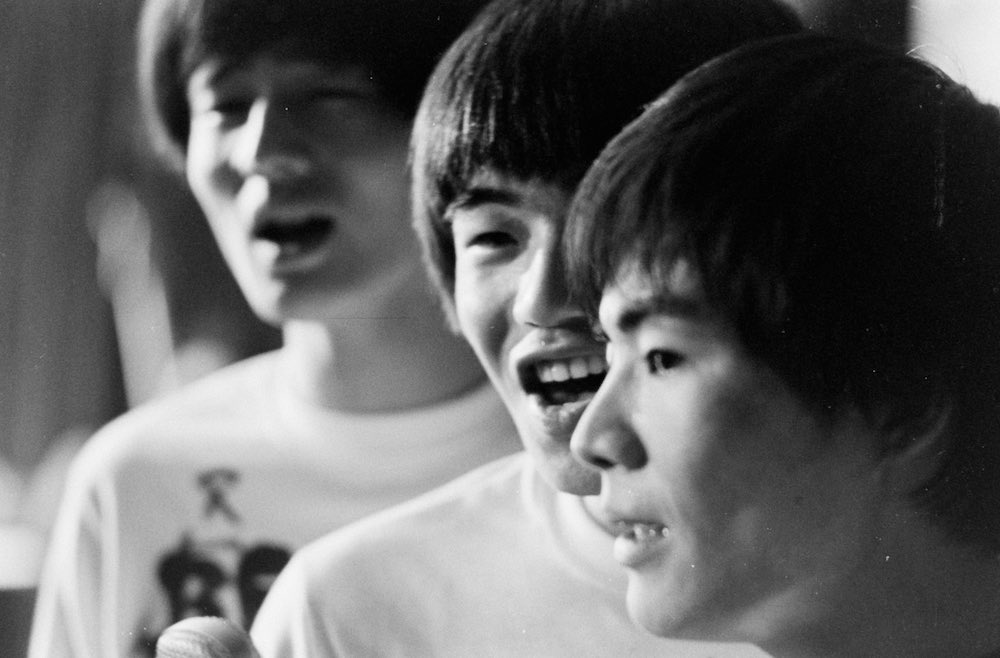
The Tokyo Beatles were a Japanese cover band, "a group of skinny, mop-topped Japanese rock and rollers" that drove their fans wild borrowing their name of "a group of skinny, mop-topped British rock and rollers". The band was most popular for some time and had "highly energized fans" but broke up after seven years in the 1960s "without too many people noticing they were gone" (via).

::: "I want to hold your hand" in Japanese: Dakishimetai 


Michael Rougier (1925-2012) was a LiFE Magazine staff photographer for 24 years (via) and an accomplished sculptor. He was recognised as a "stellar photojournalist" and won the "Magazine Photographer of the Year" award from the National Press Photographers Association in 1954 (via). In 1964, he was on assignment in Japan where he did not only take photographs of the Tokyo Beatles and their fans but "an astonishingly intimate, frequently unsettling portrait of teenagers hurtling willfully toward oblivion" (via).


- Nishiyama, Y. (2004). The Cultural History of Numbers. Studies in Economic History, 8, 146-174.
- photographs by LIFE photographer Michael Rougier (1964) via and via and via and via and via and via and via and via and via and via and via and via and via and via