Thursday, 11 December 2014

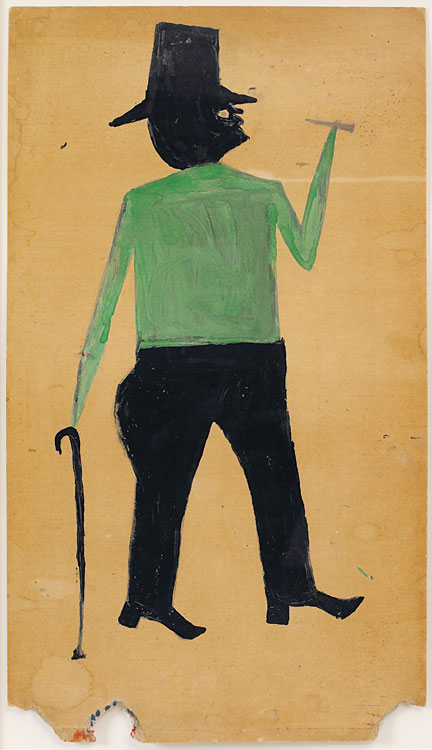
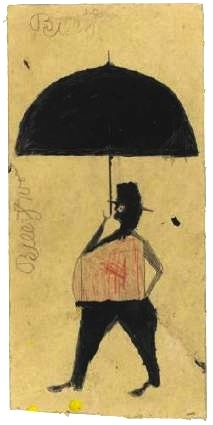
Bill Traylor

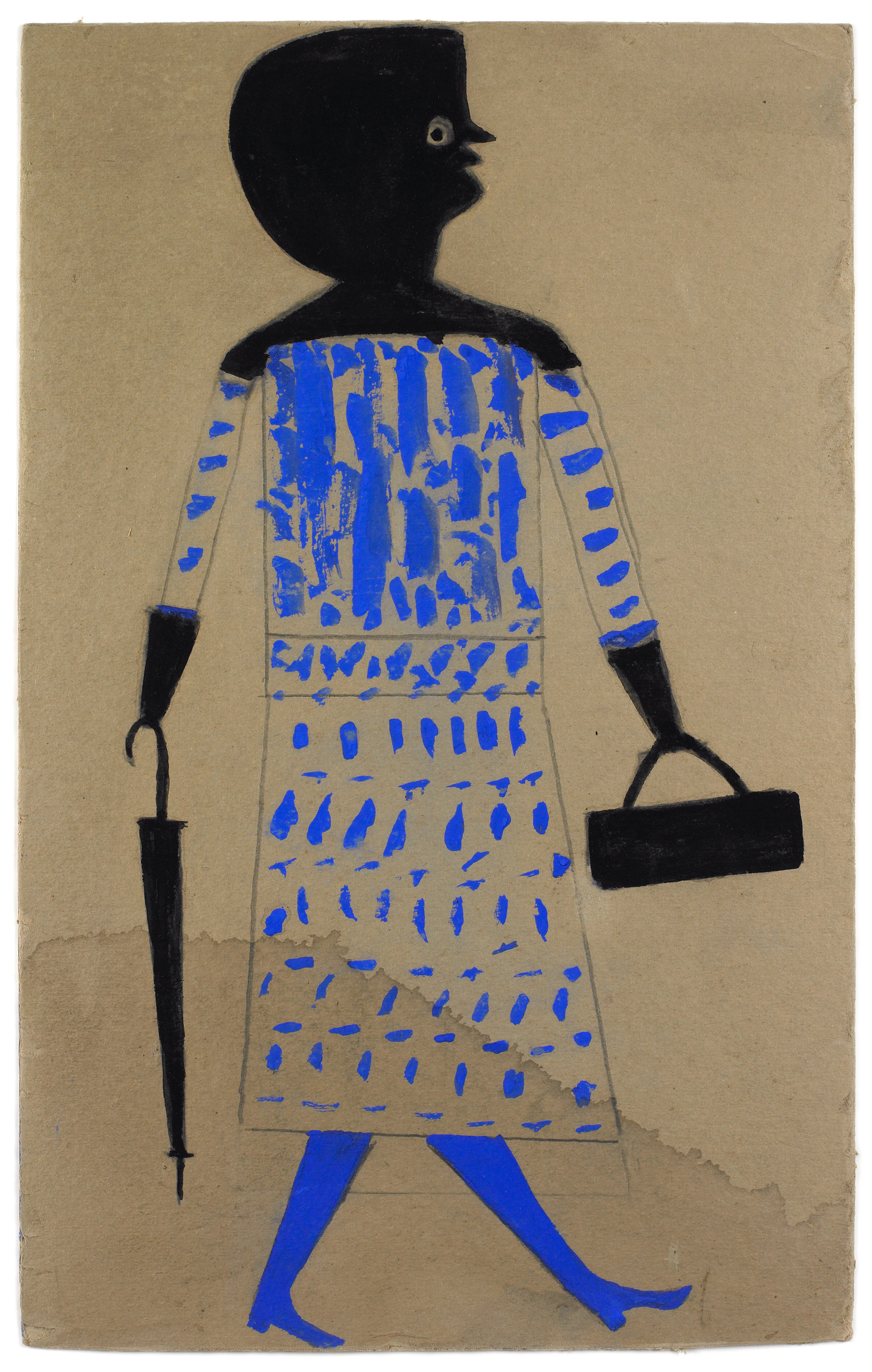
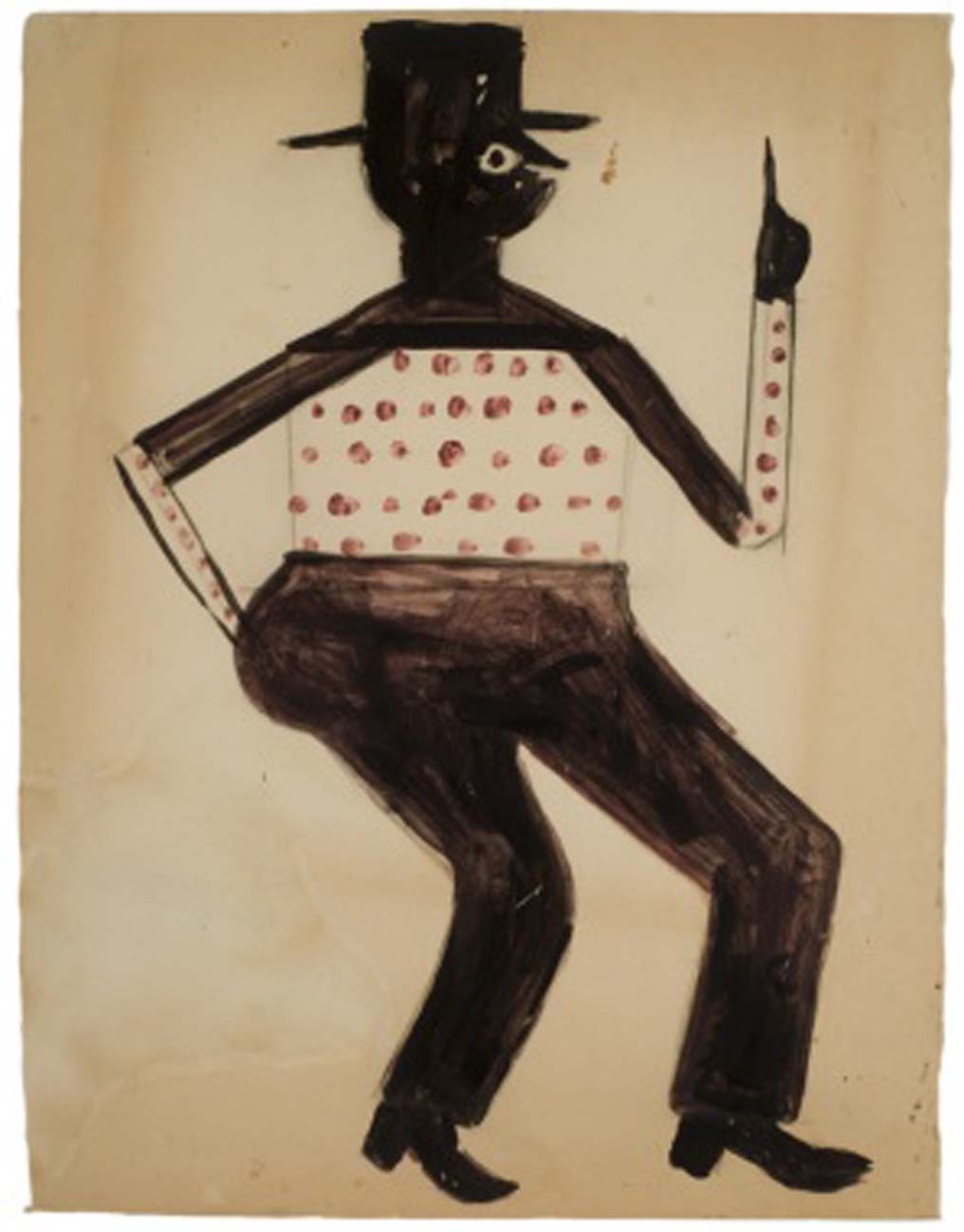
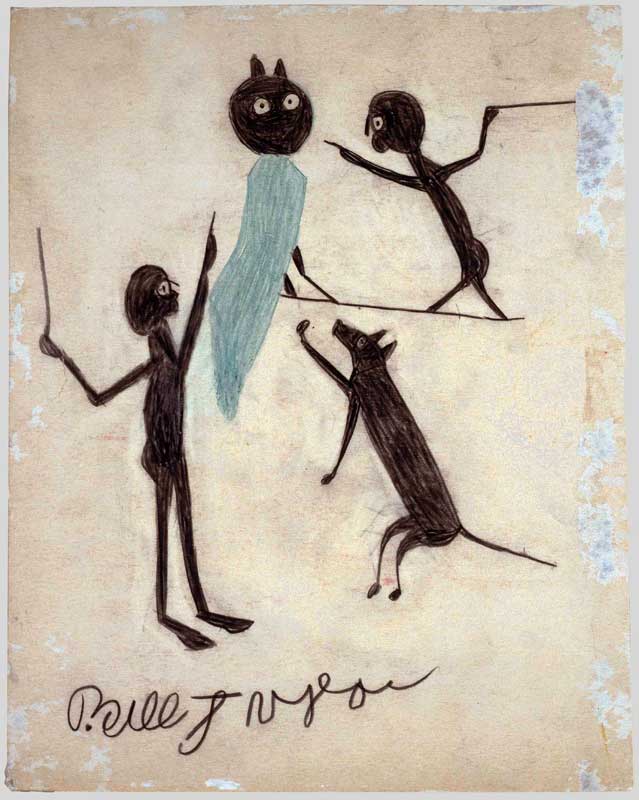
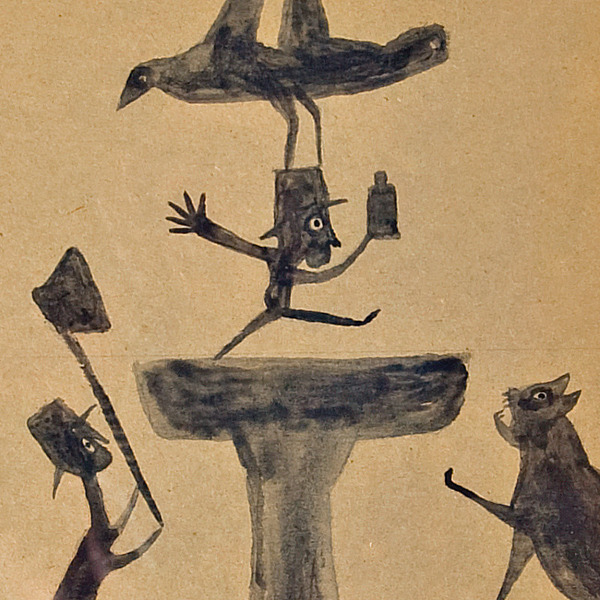
Bill Traylor was born into slavery in 1854 (according to other sources in 1856). The son of Sally and Bill Calloway - both slaves - grew up in Alabama, on the plantation of the white cotton grower George Hartwell Traylor (via) where he later worked as an emancipated sharecropper.


He was in his mid eighties when the plantation he had spent all his life on was sold (via). And he was in his mid eighties, when he one day, picked up a stub of pencil and a scrap of cardboard from the street and started drawing (via). Despite the circumstances, Traylor's art never showed anything bitter but rather optimism which could be interpreted as "the only kind of resistance to power and repression that a 95-year-old black man in Alabama could offer some eight decades after the Civil War's end. That resistance is the art of insistent optimism and celebration of humanity and nature that can be summoned even amid the most sustained coercion."  (via). Bill Traylor started drawing in 1939, had his first public exhibition in 1940 and produced about 1.500 pieces of art from 1939 to 1942. He died in 1945 (via).


"Racism and poverty have been the obvious obstacles to Traylor's appreciation, but more recently it has been the myth of the Outsider Artist, a kind of cultural ghettoization of the so-called untrained, poorly connected, marginalized savant, that accounts for not just Traylor's relative obscurity, but for the obscurity of thousands of artists like him throughout the U.S. alone. Eurocentrism--the Western cultural bias that elevates the self-proclaimed refinement of the European art-historical legacy above the productions of the myriad non-Western legacies of the world--is an even more entrenched and insidious dynamic keeping Traylor from achieving the truly international renown he is due." (via)


images via and via and via and via and via and via and via and via and via and via and via and via and via and via and via and via

Wednesday, 10 December 2014

Human Rights Day

"Where, after all, do universal human rights begin? In small places, close to home - so close and so small that they cannot be seen on any maps of the world. Yet they are the world of the individual person; the neighborhood he lives in; the school or college he attends; the factory, farm, or office where he works. Such are the places where every man, woman, and child seeks equal justice, equal opportunity, equal dignity without discrimination. Unless these rights have meaning there, they have little meaning anywhere. Without concerted citizen action to uphold them close to home, we shall look in vain for progress in the larger world."
Eleanor Roosevelt


"In 1950, on the second anniversary of the adoption of the Universal Declaration of Human Rights, students at the UN International Nursery School in New York viewed a poster of the historic document.  (photograph via, description via)

"On Human Rights Day we speak out.
We denounce authorities who deny the rights of any person or group.
We declare that human rights are for all of us, all the time: whoever we are and wherever we are from; no matter our class, our opinions, our sexual orientation.
This is a matter of individual justice, social stability and global progress.
The United Nations protects human rights because that is our proud mission – and because when people enjoy their rights, economies flourish and countries are at peace.
Violations of human rights are more than personal tragedies. They are alarm bells that may warn of a much bigger crisis.
The UN’s Human Rights Up Front initiative aims to heed those alarms. We are rallying in response to violations – before they degenerate into mass atrocities or war crimes.
Everyone can advance the struggle against injustice, intolerance and extremism.
I call on States to honour their obligation to protect human rights every day of the year. I call on people to hold their governments to account. And I call for special protections for the human rights defenders who courageously serve our collective cause.
Let us respond to the cries of the exploited, and uphold the right to human dignity for all." 
Ban Ki-moon, Secretary-General (Human Rights Day 2014)


"The Universal Declaration of Human Rights is first printed at the University of California-Berkeley Press." (photograph via, information via)


Eleanor Roosevelt with the Universal Declaration of Human Rights, November 1949.  (photograph via, information via)

Monday, 8 December 2014

The Truman Show, Music & Dementia Village

"For those who have forgotten who they are. For those who no longer count time. For those to whom love and care is all that matters. Dementia Village Architects creates custom living environments for elderly people with dementia. No big anonymous buildings, but instead manageable and pleasant residential areas. Where it is comfortable for everyone to live. Where residents feel safe at home. Where they enjoy living out their final days, connected with family, caregivers and healthcare providers. Where they can enjoy the precious life they were used to and still want to lead." 
Dementia Village Architects


In December 2009, a village was founded in the Netherlands, one for people with Alzheimer's Disease. Hogeweyk in the municipality of Weesp, on the outskirts of Amsterdam, has a town square, supermarket, theatre, pub, hairdressing salon, garden, post office, restaurant (via), green areas, i.e. parks and gardens designed by the landscape architect Niek Roozen, 160 inhabitants and 250 geriatric nurses and specialists whose 24-hours-a-day occupations range from cashier to grocery-store attendees and post-office clerks. The residents live in "lifestyle groups", in groups of six to seven persons who share similar interests and backgrounds (via). They live in houses together with one or two caretakers. The decor, design and furniture of each house is based on the design of furniture at the time the residents' short-term memories decreased. Homes resemble the 1950s, the 1970s, or the 2000s - a narrative reality with many recognisable stimuli.
Cameras monitor the residents, caretakers in street clothes take care of the residents. Family and friends are encouraged to visit as often as they can. According to reports, the residents need fewer medications, eat better, live longer and appear more joyful than those living in elderly-care facilities. And, they are more active as they spend comparatively much time outside. By contrast, nursing-home residents go outside for just 96 seconds a day. Hogeweyk residents engage in a community instead of feeling isolated; isolation makes the disease worse. Living in the village does not cure but it creates an environment "around life rather than death" (via).


"Into Oblivion" is a project of Maja Daniels, who photographed life within a geriatric hospital for three years. Based on the "principle of precaution", the so-called Protected Unit is "home to residents with Alzheimer’s disease. Due to tendencies to wander about and potentially get lost, they are confined within the ward. A locked door separates the occupants from the rest of the hospital." Within the secured area, residents can circulate freely "but due to a lack of activities and a limited presence of carers in the ward, the locked door becomes the centre of attention for the elders who question the obstruction and attempt to force it open. The daily struggle with the door, damaged due to repeated attempts to pick the lock, can last for hours."
This series documents not only the day-to-day challenges in an often ignored sector, but also the wider implications of the growing populations of elderly in modern society as an increasing life span has coincided with the breakdown of the family unit.
These aspects have caused a growing disregard for the elderly, swept aside by a commercially driven, youth-obsessed culture. As growing old and being dependent is more taboo than ever, the geriatric institution hides our elders away, safely out of sight. Maja Daniels


::: "Alive Inside", beautiful, beautiful, beautiful trailer: watch

"Dan Cohen, founder of the nonprofit organization Music & Memory, fights against a broken healthcare system to demonstrate music's ability to combat memory loss and restore a deep sense of self to those suffering from it." The full movie (1:17:51): watch

images via

Friday, 5 December 2014

Real Life Superheroes & Successful Ageing

The image of the older person is "often depicted as an inevitable onset of deficiencies", associated with loss, renunciation, physical frailty, dependence, and care. The negative image supports the notion that age and its stereotypical deficits need to be postponed ... and sport is considered to be an efficient measure "to escape ageing". It is, without doubt, a deficit perspective.


This very deficit perspective is changing. "Today, ageing is understood as a dynamic process, respectively, a certain span in the continuum of birth, life and death. This interpretation is based on the fact that every stage of life allows individual development and that later life represents a period with its own specific orientations and values." Hence, we need to focus on opportunities and activity options in later life, i.e. what gerontology refers to as "successful ageing": adapting to the facts and exploiting one's potentials for active living and personal development (Tokarski, 2004).


The following aspects need to be considered when discussing sport of the elderly:
- changes in the conceptual model of ageing have led to ageing adopting a completely new image,
- daily routine, leisure and sport activities of elderly persons need to be included when analysing sport of the elderly and when understanding "life-long learning" as "life-long physical and mental exercising",
- addressing encouragement and barriers,
- promoting the ideal of continued physical exercise involvement through later life.


- Tokarski, W. (2004) Sport of the Elderly. Kinesiology, 36, 98-103
- photographs by Dean Bradshaw ("Real Life Superheroes") via

Wednesday, 3 December 2014

Narrative images: "Free Hugs"

Johnny Nguyen's photograph of Sgt. Bret Barnum hugging 12-year-old protestor Devonte Hart at a Fergusan demonstration in Portland was shared with hundreds of thousands of people in the past days.
"Devonte stood alone in front of a police barrier, wearing a "Free Hugs" sign around his neck as he gazed at the police officers with tears streaming down his face. Sgt. Barnum, who has been with the force for 21 years, approached the young boy and extended his hand. After making small talk, the officer asked why Devonte was crying. According to his mother, the 12-year-old expressed "his concerns regarding the level of police brutality towards young black kids," to which Barnum replied, "Yes. I know. I'm sorry. I'm sorry." The officer then asked if he could have a hug, resulting in this beautifully touching photo captured by Nguyen." (literally via)


- What was it about Devonte that compelled you to stay at the scene and eventually capture your extraordinarily powerful photo?
What compelled me about Devonte was the fact that he was the only one in the midst of a hundred protestors holding signs that could otherwise be seen as violent, angry, hateful, and graphic, who had a sign around his neck that said "Free Hugs." This opposite was what immediately drew me to Devonte. He also had tears running down his face when he hugged people. It wasn't until Sgt. Barnum and Devonte started to speak that I knew I had to really stay at the scene. The stark juxtaposition between White American Cop and Young African-American Boy is what got me.

- Is there a message you want to convey through this photo?
The message I want to convey with this photo is that if hate is the problem, then love is the fix. Love and compassion is the real answer. Just like Martin Luther King Jr. said, "Darkness cannot drive out darkness; only light can do that. Hate cannot drive out hate; only love can do that." We must come together, for even a moment, like Devonte and Sgt. Barnum. This photo has become a symbol of humanity, and I hope people can take away from that as much as possible in troubled times like now.

- What's your reaction to your photo being shared with hundreds of thousands of people as it spreads virally across the internet?
I am absolutely honored to see my photo get this much exposure. I believe that a photo isn't complete until it is communicated, and it's gone beyond that. I'm just glad I can do my part not only as a photographer but as a contributing member of society to push the message of positivity, hope, and humanity. It's a dream come true. (literally via)


photographs by Johnny Nguyen via and via, for more photographs taken in Portland see

Monday, 1 December 2014

Torture

"Once governments use or allow torture, no one is safe. Almost anyone can be a victim, regardless of age, gender, ethnicity or politics. (...)

However, some individuals and groups are more vulnerable than others. (...) People belonging to a particular religious or other minority group, or targeted because of their identity, also face increased risk. (...) Many victims come from already disadvantaged groups: women; children; members of ethnic minorities; lesbian, gay, bisexual, transgender and intersex people; and, overwhelmingly, the poor. These are the very people who find access to redress difficult or impossible. (...)


Rape and other sexual attacks on women by state agents are reported in many countries. Women may have less access to legal remedies and be subject to discriminatory laws, making it even harder for them to secure justice for torture.

Both women and men – but mostly women – are subject to gender-based torture, including in the form of rape and other sexual violence. Some forms of torture and other ill-treatment are unique to women including forced abortions, denial of abortions, forced sterilization and female genital mutilation. Lesbian, gay, bisexual, transgender and intersex prisoners will also be targeted in different ways from heterosexual prisoners. For example, transgender prisoners are often held in facilities for their gender at birth rather than their gender of choice, and lesbian and gay prisoners will more often be targeted for sexual and other violence than heterosexual prisoners, whether by other prisoners/detainees or prison staff.


Measures to combat torture must therefore be gender-sensitive and gender inclusive as well as being sensitive and inclusive of the specific measures needed to ensure the protection of lesbian, gay, bisexual, transgender and intersex persons."
Amnesty International, 2014


via Torture in 2014. 30 Years of Broken Promises. Amnesty International

Friday, 28 November 2014

Dieting Women

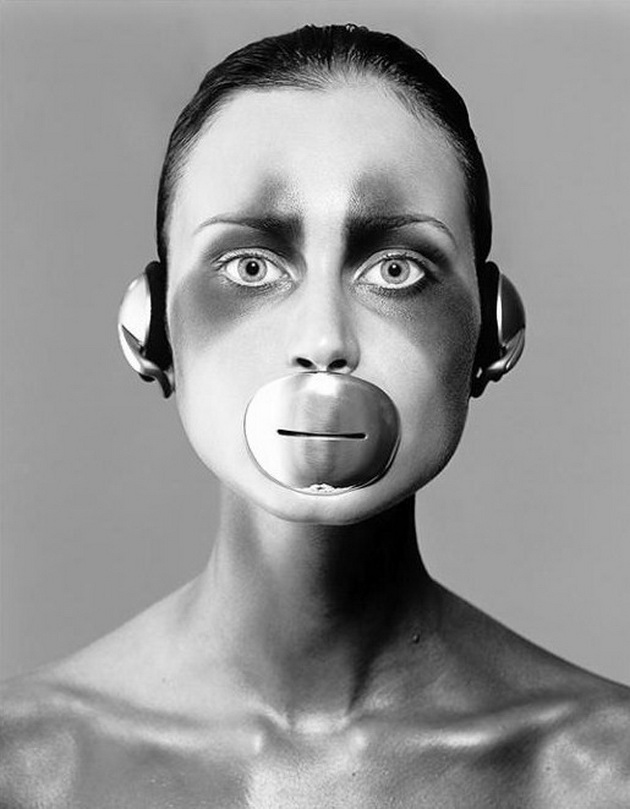
"A culture fixated on female thinness is not an obsession about female beauty, but an obsession about female obedience. Dieting is the most potent poltical sedative in women's history; a quietly mad population is a tractable one."
Naomi Wolf


Vogue's recent slideshow "The Best Lingerie Comes in All Sizes" shows so-called "plus-sized" models. Also recently, Calvin Klein's " US size 10" or "UK size 14" model Myla Dalbesio, so far "the biggest girl Calvin Klein has ever worked with" (via) became famous. She regards herself as an "inbetween" because she is neither anorexic nor plus-sized: "I love that by opening this discussion, I can also (hopefully) open some doors for other models, friends of mine, that have always straddled the line between straight size and plus. True body diversity doesn't mean only sizes 0's and 2's then jumping to size 16 and up. There is a middle ground." (via)
About twenty years ago, average models weighed 8% less than average women. Today, they weigh 23% less (via). From 1959 to 1978, Playboy's playmates' weights decreased significantly. So did Miss America Pageants with an average yearly decline of 0.17 kg (0.37 lb.) within the decades examined (Garner & Garfinkel, 1980). It can be assumed that these trends accelerated in the past years.


- Garner, D. M. & Garfinkel, P. E. (1980) Cultural Expectations of Thinness in Women. Psychological Reports, 47, 483-491
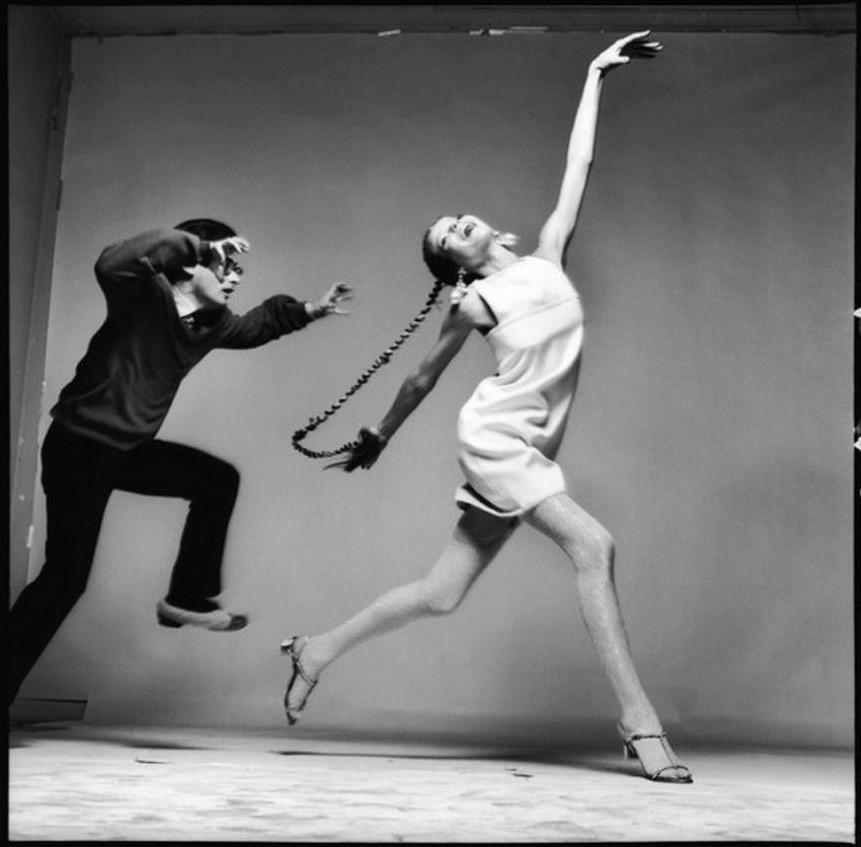
- photographs by Richard Avedon (1923-2004) via and via
Wednesday, 26 November 2014

Akira Kurosawa writes a letter to Ingmar Bergman

"A human is not really capable of creating really good works until he reaches eighty."
Akira Kurosawa


Swedish director Ernst Ingmar Bergman (1918-2007) retired after three Academy Awards, six Golden Globes, seven Cannes prizes, two BAFTAs, the Irving G. Thalberg Memorial Award, and many more honours. Once he said: "I probably do mourn the fact that I no longer make films."
In 1988, he received a letter (via) from Akira Kurosawa (1910-1998),  "Asian of the Century" and "the" filmmaker admired by Bergman, Fellini, Polanski, Bertolucci, Altman, Scorsese ... just to mention a few. Kurosawa was said to have expressed his engagement with ageing and spiritual search through the medium of film and that as he aged he, "appear(ed) to become more spiritualised, expressing transcendence, resignation and/or holy rage" (Geist quoted by Jones, 2002).

Dear Mr. Bergman,  
Please let me congratulate you upon your seventieth birthday.  
Your work deeply touches my heart every time I see it and I have learned a lot from your works and have been encouraged by them. I would like you to stay in good health to create more wonderful movies for us.  
In Japan, there was a great artist called Tessai Tomioka who lived in the Meiji Era (the late 19th century). This artist painted many excellent pictures while he was still young, and when he reached the age of eighty, he suddenly started painting pictures which were much superior to the previous ones, as if he were in magnificent bloom. Every time I see his paintings, I fully realize that a human is not really capable of creating really good works until he reaches eighty.  
A human is born a baby, becomes a boy, goes through youth, the prime of life and finally returns to being a baby before he closes his life. This is, in my opinion, the most ideal way of life.  
I believe you would agree that a human becomes capable of producing pure works, without any restrictions, in the days of his second babyhood.  
I am now seventy-seven (77) years old and am convinced that my real work is just beginning.  
Let us hold out together for the sake of movies.  
With the warmest regards,  
Akira Kurosawa


- Jones, K. (2002) The Spiritual Dimension: a gerotranscendental take on Akira Kurosawa's film, "Ran", via
- photographs of Ingmar Bergman and Akira Kurosawa via and via and via and via

Monday, 24 November 2014

Touchable Memories

People born blind have capabilities to create visuo-spatial images. In a range of studies on visual imagery of blind vs. sighted people, congenitally blind persons showed only slight differences in performance. They did not perform worse than sighted persons in tasks involving pictorial and spatial representations of two-dimensional matrices, only in three-dimensional ones. Their dreams are vivid and self-engaging. Visualisation seems to be possible without previous experience (Bértolo, 2005).

"Touchable Memories" is a project that helps the blind to physically re-experience visual memories. Images are reproduced on the basis of 3D sculptures or reliefs.


Bértolo, H. (2005) Visual imagery without visual perception? Psicológica, 26, 173-188.