Showing posts with label narrative images. Show all posts

Sunday, 29 October 2023

Narrative images: Trolley

"One of the most important photographs in “The Americans,” one of the most celebrated ones, is this one of the trolleys in New Orleans. It was a picture that Frank made in the fall of 1955, just a few weeks before Rosa Parks in nearby Montgomery, Alabama, had refused to give up her seat on a bus.

As you can see, it shows a trolley, and we see in the front of the trolley, two older white people, two children in the middle of the trolley. The boy looking out, I think, with an almost quizzical expression, as if to ask the photographer and then also us, the viewer, “What is this world? What is going on?”

In the back of the trolley is this African American man, who looks out with an almost plaintive expression, questioning expression, about why the world is perhaps this way. You can see here the rigidly segregated society that existed in New Orleans at that time.

One of the really interesting facets about the picture is those who are old enough to remember segregated buses, particularly perhaps those in the South, in New Orleans, might notice that the little girl has her hand resting not actually on the back of the seat itself, but a little bit higher than the seat. And it turns out that her hand is resting on a piece of wood that indicated the “colored section” of the bus. And that piece of wood could be picked up and moved backwards if there were no more seats for white people on the bus. So, if you get on this bus at that time, and there was no seat for a white person you could pick that up move it to the next row of seats and all of the African Americans would have to get up and move one seat back on one road.

It’s a really, I think, chilling expression of racism in this country at that time.

(...) it still speaks about issues that we’re dealing with today in contemporary society, the racism that exists within America, and also (...) it’s such a poignant and powerful picture."

Sarah Greenough

- - - - - - - - -
photograph by Robert Frank (New Orleans, 1955) via

Wednesday, 2 August 2023

Narrative images: Window Shopping, Granada, 1930s

"An African American woman, dressed in her Saturday go-to-town-best, stands outside a store window, chin in hand, contemplating the contents in the window. The image is reflective and thoughtful. What is she thinking? And what lies beyond the frame of this photograph? In Mississippi in the 1930s, could she walk into this store, perhaps try on clothes or hats, and make a purchase? If she were welcomed in this store, would she have the means to buy the merchandise? The woman is separated from the contents of the store window by the large plate glass of segregation.

As in most of her photographs, Welty captures an artistic moment in this image, but the reality of the world outside the frame of the photograph is always present. In this instance, Welty raises questions about this woman as a consumer. How is her ability to buy a mark of freedom conveying access to the American dream? Grace Elizabeth Hale states in her book Making Whiteness: The Culture of Segregation in the South, 1890-1940 that shopping and segregation were uneasily intertwined. Department stores, like railroad cars and movie theaters, were “muddled middle” spaces where segregation remained vulnerable, “neither public nor private, neither black nor white” (9). It was in these “muddled middle” spaces that middle class African Americans chose to shop. While whites and blacks might be separated in schools, churches, restaurants, and other spaces, the ritual of Saturday shopping “belonged to all southerners” (Hale 182). Welty captures this “muddled middle” of a Mississippi small town on Saturday in the group of white men just down the street from the African American woman gazing in the shop window."

Mae Claxton

- - - - - - - - -
photograph by Eudora Alice Welty, 1909-2001, (c) by Eudora Welty Foundation) via


Sunday, 14 May 2023

Narrative images: South of the River

"Growing up in Britain as a child of immigrants, I would hide certain elements of my everyday existence. As an adult and a photographer, I actively seek out and champion the very things I obscured and disregarded as a youngster. From the multicultural melting pots of Southwark and Lewisham to the brutalist blocks and postwar council estates of Thamesmead, south-east London is home to some of the most ethnically and culturally diverse communities in Britain."


photograph by Nico Froehlich via

Sunday, 8 May 2022

Narrative images: A Sunday in Central Park Zoo, 1967

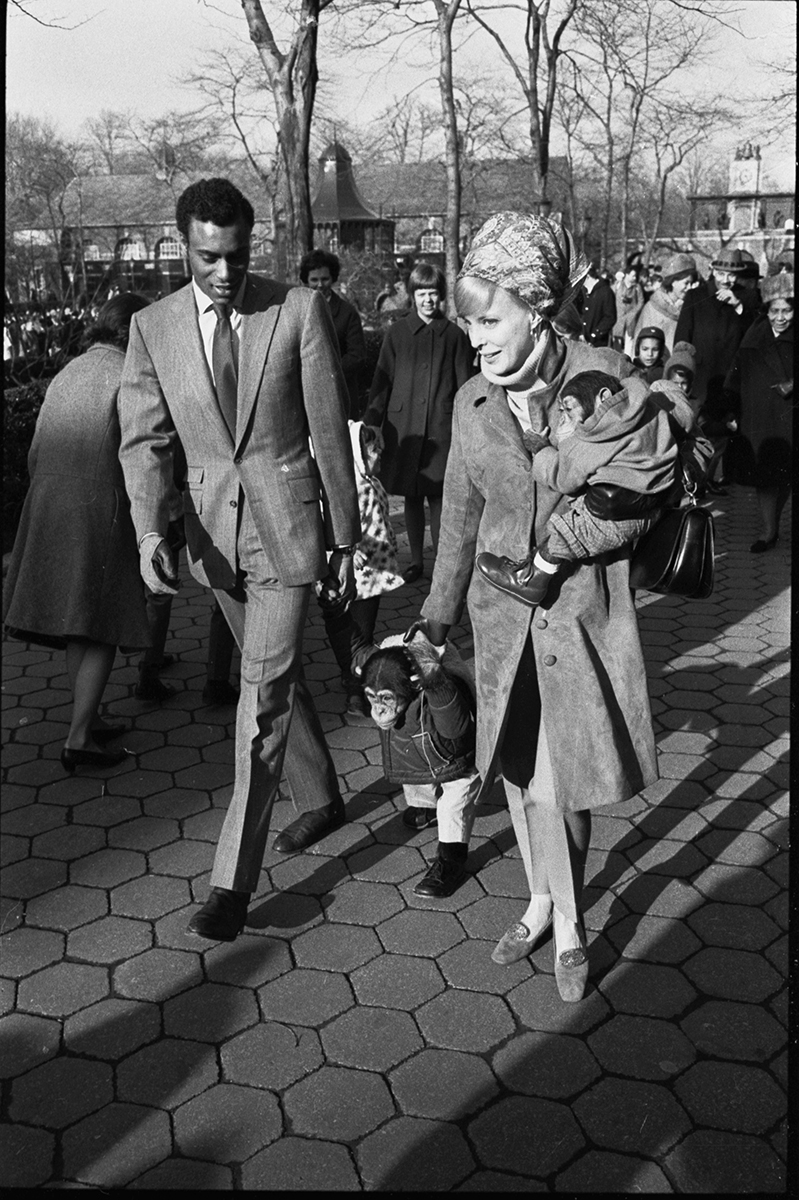
“In the photograph, we see a white woman and a black man, apparently a couple, holding the product of their most unholy of unions: monkeys. In projecting what we will into this image - about miscegenation, our horror of difference, the forbidden nature of black men with white women - we see the beast that lies in us all.” 
Hilton Als


"I think part of the aim was to unsettle people's ideas, whether his own or other people's. To move people out of an unquestioning space and to some less settled space in which the authority of rules and structures was broken up a bit."
Eileen Hale, Garry Winogrand's widow


"(...) there is one photograph in “The Animals” that resonates more deeply than others. This picture shows, in medium close-up, a black man and a white woman. The man wears a jacket, a shirt and a tie. She is blonde and sports a head scarf. The man and the woman are each carrying a baby monkey. The monkeys, by implication, are the product of miscegenation: that is, born of parents who defied a natural law - the marriage of black to white - and whose only natural progeny could be… animals."
Hilton Als, The Animals and Their Keepers


"(...) And so, one Sunday, on an early spring day about a year after we’d met, Garry and I found ourselves walking through the Central Park Zoo. I was 20 or 30 yards ahead of him when I noticed a handsome couple walking toward me—they looked like fashion models, in their 20s, both well-dressed—improbably walking with a pair of chimpanzees who were as immaculately attired as they were (the animals even wore shoes and socks). A New York City piece of strangeness, it seemed to me, strange enough to take a picture. So I did.

Then, bang!, I felt myself being pushed in the back away from this odd little group. A real shove, unfriendly, hard. And, of course, it was Garry, camera already up, making pictures, who’d done it. (...)

By now, both chimpanzees were off the ground (as my picture shows, one had been toddling between the couple when I first saw the group), and I finally noticed that the man in the little quartet was black, and the woman white and blonde. I’d already recorded that fact with my eyes, I’m sure, but what it may have meant, or could mean, in a photograph, was something I hadn’t had the time or the consciousness to process.

Garry Winogrand, however, had obviously processed the fact: where I saw only the possibility for a joke that, at best, touched on the crazy-quilt nature of city life, you could say that Garry, by not so much seeing the group itself but instantaneously imagining a possible photograph of it, placed meaning, particularly as it might gather around the question of race, at the very center of what he was doing.

In other words, quite apart from whatever Sunday pleasure or notion of self-advertising had actually brought that couple together with those two animals, Garry’s quick mind construed from their innocent adjacency a picture (or the projection of one) that could suggest the improbable price that the two races, black and white, might have to pay by mixing together. He was speculating, of course, playing an artistic hunch, but a large and important enough one that he felt it was worth pushing his friend aside for. So he did what he had to do, and then, a moment later, I answered by making a picture of him standing by the same family group as they continued their stroll through the zoo. (...)"
Tod Papageorge, 2014

- - - - - - - - -
- Papageorge, T. (2014). About a Photograph: New York, 1967, Garry Winogrand. Aesthetics of Theory in the Modern Era and Beyond, 2, via
- photographs by Garry Winogrand via and via and via

Wednesday, 5 January 2022

Narrative images: Caution. Humans.

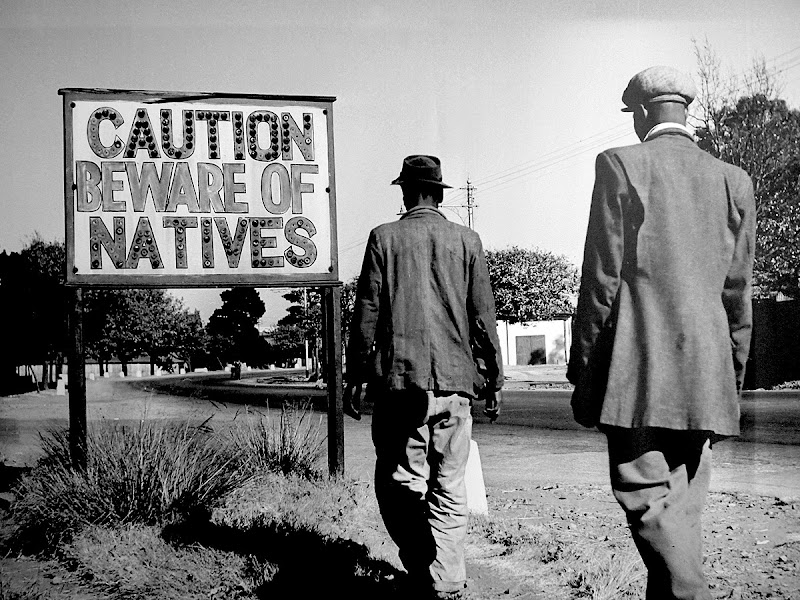
Just one of those road signs in Johannesburg, 1956: Caution. Beware of Natives.

photograph via

Tuesday, 7 December 2021

Narrative images: More interested in the people, in their hands

Leonard Freed was “never interested in photographing celebrities; I was interested in people. Take the Martin Luther King Photo. He is an icon, people want to touch him, he is not a human being anymore, he is totally surrounded by the arms, he is protected. Look at the eyes. I was more interested in the people, in their hands, than I was in Martin Luther King himself.” Freed’s picture of Dr King shows him being greeted on his return to the U.S. after receiving the Nobel Peace Prize, mobbed by the public as he travelled through Baltimore in a motorcade. The photographer documented the civil rights movement extensively and was a pioneer of socially conscious photography. (literally via)


photograph by Leonard Freed via

Tuesday, 22 June 2021

Narrative images: Disco in Wolverhampton (1978)

A decade after Enoch Powell's speech on immigration, in anticipation of its anniversary, the Sunday Times Magazine commissioned British photographer Chris Steele-Perkins to travel to Wolverhampton to capture the effects of Powell's words on ethnic minorities (via). 

 "I sensed that people would rather not talk about it. It was a nasty stain, but they wanted to move on. This [the series] happened ten years after Powell, but this stuff doesn’t wash out that quickly." Chris Steele-Perkins

In the 1950s, Wolverhampton's economic growth was booming needing more workforce. Newspapers published stories stating that Britain's boom could only be maintained by attracting recruits from abroad, i.e. the "Continent", Ireland, and the colonies. Commonwealth immigration was encouraged by the governement, however, it was unprepared for the number of people seeking employment in the factories which led to tensions between native residents and immigrant newcomers. The immigrant population (mostly West-Indian and South-Asian) was blamed for lowering wages and taking jobs. In the context of this tension, Enoch Powell, then Conservative MP for Wolverhampton, gave a controversial anti-immigration speech (via).

“It wasn’t a surprise. Powell was on the right of the Tory party, and he had been banging on about immigration before. It was just that this was the most extreme version of this kind of prejudice that he had come out with.” Chris Steele-Perkins 

When Steele-Perkins visited Wolverhampton, he found a city different from the rest of Britain,  immigrants who were alienated and given second-hand opportunities (via).

"I am essentially aware of it, as I am not part of the mainstream group. I have a Burmese mother and an English father, and I wasn't born in this country. I can't pretend it's something that happens to other people and is not connected with me." Chris Steele-Perkins

- - - - - - -

Enoch Powell's "Rivers of Blood" speech, excerpts (1968)

(...) A week or two ago I fell into conversation with a constituent, a middle-aged, quite ordinary working man employed in one of our nationalised industries.

After a sentence or two about the weather, he suddenly said: "If I had the money to go, I wouldn't stay in this country." I made some deprecatory reply to the effect that even this government wouldn't last for ever; but he took no notice, and continued: "I have three children, all of them been through grammar school and two of them married now, with family. I shan't be satisfied till I have seen them all settled overseas. In this country in 15 or 20 years' time the black man will have the whip hand over the white man."

I can already hear the chorus of execration. How dare I say such a horrible thing? How dare I stir up trouble and inflame feelings by repeating such a conversation?

The answer is that I do not have the right not to do so. Here is a decent, ordinary fellow Englishman, who in broad daylight in my own town says to me, his Member of Parliament, that his country will not be worth living in for his children.

I simply do not have the right to shrug my shoulders and think about something else. What he is saying, thousands and hundreds of thousands are saying and thinking - not throughout Great Britain, perhaps, but in the areas that are already undergoing the total transformation to which there is no parallel in a thousand years of English history.

In 15 or 20 years, on present trends, there will be in this country three and a half million Commonwealth immigrants and their descendants. That is not my figure. That is the official figure given to parliament by the spokesman of the Registrar General's Office.

There is no comparable official figure for the year 2000, but it must be in the region of five to seven million, approximately one-tenth of the whole population, and approaching that of Greater London. (...) Whole areas, towns and parts of towns across England will be occupied by sections of the immigrant and immigrant-descended population. (...)

The natural and rational first question with a nation confronted by such a prospect is to ask: "How can its dimensions be reduced?" (...)

The answers to the simple and rational question are equally simple and rational: by stopping, or virtually stopping, further inflow, and by promoting the maximum outflow. Both answers are part of the official policy of the Conservative Party.

It almost passes belief that at this moment 20 or 30 additional immigrant children are arriving from overseas in Wolverhampton alone every week - and that means 15 or 20 additional families a decade or two hence. Those whom the gods wish to destroy, they first make mad. We must be mad, literally mad, as a nation to be permitting the annual inflow of some 50,000 dependants, who are for the most part the material of the future growth of the immigrant-descended population. It is like watching a nation busily engaged in heaping up its own funeral pyre. So insane are we that we actually permit unmarried persons to immigrate for the purpose of founding a family with spouses and fiancés whom they have never seen. (...)

Nothing is more misleading than comparison between the Commonwealth immigrant in Britain and the American Negro. The Negro population of the United States, which was already in existence before the United States became a nation, started literally as slaves and were later given the franchise and other rights of citizenship, to the exercise of which they have only gradually and still incompletely come. The Commonwealth immigrant came to Britain as a full citizen, to a country which knew no discrimination between one citizen and another, and he entered instantly into the possession of the rights of every citizen, from the vote to free treatment under the National Health Service.

(...) The sense of being a persecuted minority which is growing among ordinary English people in the areas of the country which are affected is something that those without direct experience can hardly imagine.

I am going to allow just one of those hundreds of people to speak for me:

“Eight years ago in a respectable street in Wolverhampton a house was sold to a Negro. Now only one white (a woman old-age pensioner) lives there. This is her story. She lost her husband and both her sons in the war. So she turned her seven-roomed house, her only asset, into a boarding house. She worked hard and did well, paid off her mortgage and began to put something by for her old age. Then the immigrants moved in. With growing fear, she saw one house after another taken over. The quiet street became a place of noise and confusion. Regretfully, her white tenants moved out.

“The day after the last one left, she was awakened at 7am by two Negroes who wanted to use her 'phone to contact their employer. When she refused, as she would have refused any stranger at such an hour, she was abused and feared she would have been attacked but for the chain on her door. Immigrant families have tried to rent rooms in her house, but she always refused. Her little store of money went, and after paying rates, she has less than £2 per week. “She went to apply for a rate reduction and was seen by a young girl, who on hearing she had a seven-roomed house, suggested she should let part of it. When she said the only people she could get were Negroes, the girl said, "Racial prejudice won't get you anywhere in this country." So she went home.

“The telephone is her lifeline. Her family pay the bill, and help her out as best they can. Immigrants have offered to buy her house - at a price which the prospective landlord would be able to recover from his tenants in weeks, or at most a few months. She is becoming afraid to go out. Windows are broken. She finds excreta pushed through her letter box. When she goes to the shops, she is followed by children, charming, wide-grinning piccaninnies. They cannot speak English, but one word they know. "Racialist," they chant. When the new Race Relations Bill is passed, this woman is convinced she will go to prison. And is she so wrong? I begin to wonder.” The other dangerous delusion from which those who are wilfully or otherwise blind to realities suffer, is summed up in the word "integration." To be integrated into a population means to become for all practical purposes indistinguishable from its other members. (...)

- - - - - - -

photograph by Magnum photographer Chris-Steele Perkins via

Thursday, 4 June 2020

Mechanical Asphyxia

A black man and a white woman hold their hands up in a front of police officers in Long Beach, California, during a protest against the death of George Floyd.


photograph (AFP) via

Friday, 15 November 2019

Narrative images: Socialite Gathering (1964)

"At this socialite gathering in Dallas, the maid was just another piece of furniture." (Kelen, 2012). The photograph was taken by Bob Adelman in Texas, Dallas in 1964.


- Kelen, L. G. (2012). This Light of Ours. Activist Photographers of the Civil Rights Movement. University Press of Mississippi
- photograph via

Tuesday, 16 July 2019

Narrative images: Daddy, I want to be free (1961)

"This photograph captures William Edwin Jones as he pushes his daughter Renee Andrewnetta Jones during a protest march on Main Street in Memphis, Tennessee, in August of 1961. The father and daughter walk past a car full of white policeman who appear to be watching the protest. In a later interview, 8-month-old Renee who grew up to be a pediatrician, recalls that day as passed down by her parents to her. She noted that the protesters on that particular day were all fathers with their daughters. The mothers and the sons were to remain home in case violence broke out, in order to protect at least half of each family." (via)


Ernest Columbus Withers (1922-2007) was a photojournalist who documented the Civil Rights Movement and captured the segregated South. Withers was known for travelling with Martin Luther King, Jr. and for covering the Emmett Till murder trial (via).
“A veteran freelancer for America’s black press, Withers was known as ‘the original civil rights photographer,’ an insider who’d covered it all, from the Emmett Till murder that jump-started the movement in 1955 to the Little Rock school crisis, the integration of Ole Miss and, now, the 1968 sanitation strike that brought King to Memphis and his death.” (via)
- - - - - -
photograph via

Monday, 27 August 2018

Narrative images: Civil Disobedience (1963)

"A woman blocking dump trucks, slowing construction through civil disobedience as part of a protracted battle against unfair hiring practices at the Downstate Medical Center. Brooklyn. 1963." (via)


"The 1963 image by Bob Adelman appears to be a typical civil rights photograph. But it is not. The solitary woman’s act of defiance was far from the Deep South: It took place at Brooklyn’s Downstate Medical Center." (via)

“This photograph by Bob Adelman, from Mark Speltz’s book, ‘North of Dixie: Civil Rights Photography beyond the South,’ dispels the notion that racism and segregation were just a Southern problem. Growing up in a low-income housing project in New York, I observed the withering effects of white racism in one of the nation’s most liberal cities.” (via)

- - - - - -
photograph by Bob Adelman (1931-2016) via, copyright by owner(s)

Monday, 6 August 2018

Narrative images: Mothers of Civil Rights Workers

The photograph was taken by Richard Avedon in New York on 15 July 1975. It shows Anne Schwerner, Fannie Lee Chaney and Carolyn Goodman, mothers of slain civil rights workers. Their sons Michael Schwerner, James Chaney and Andrew Goodman were murdered on 21st of June 1964, known as the "Mississippi Burning murders". 41 years after the murders, one perpetrator was charged (via).


"The social paroxysms of the '60s changed, and darkened, Avedon's work. To a man so finely tuned to the Zeitgeist, how could they not? Photographing both civil-rights workers and segregationists in the South and, later, the antiwar movement, he ventured for the first time into political waters. At both Bazaar and Vogue, to which he moved in 1966, his editorial fashion work took on a brittle, sometimes critical edge: a shoot in Sicily is inspired by Antonioni's classic of ennui, "L'Avventura" and sends up the emptiness of high society. Three models in identical dresses fling themselves into the air in fits of manic laughter, an image of gleeful desperation. The Elizabeth Taylor/Richard Burton scandals are satirized in a witty mock-paparazzi scenario using Mike Nichols and Suzy Parker to play the press-hounded lovers." (via)

- - - - - - -
photograph via

Wednesday, 4 July 2018

Narrative images: Growing Up Female

"Being a woman influenced my ideas about what I wanted to photograph. My interest in women’s issues, in family issues, in social relationships came out of my experience of growing up as a female."
Abigail Heyman


Abigail Heyman (1942-2013), US-American feminist, photojournalist, and one of the first women to be invited to join Magnum Photos. She was known for her book "Growing Up Female: A Personal Photo-Journal" which was published in 1974 (via), a book "about women, and their lives as women, from one feminist's point of view" (via), "a sort of illustrated encyclopedia of women performing self-limiting roles" (via).

Heyman's "stark portraits of women at work, at home and at weddings gave a visual concreteness to feminist doctrine of the 1970s about the oppressiveness of traditional female roles" (via).
"I have photographed the problems and the strengths of women. Some have suggested that I photograph the solutions. I don't know the solutions." Abigail Heyman
"I have been a girl child and, in my expectations, a mother. I have tried to be prettier than I am. I have been treated as a sex object, and at times I have encouraged that. I have been married and have seen my husband’s work as more important than my own." Abigail Heyman
- - - - - - - -
photograph by Abigail Heyman via

Friday, 25 May 2018

Narrative images: "I am startled that out of so much pain some beauty came."

“The police and firemen used a brute show of force to try to stop the ongoing demonstrations. It didn’t work on this day. Rather than fleeing, the protestors hung on to each other and were able to stand up to the full fury of the water, though not without casualties. I have never witnessed such cruelty. There was almost as much moisture behind the lens as in front. I gave a print of this picture to Dr. King. He studied it and said, ‘I am startled that out of so much pain some beauty came.”
Bob Adelman (1930-2016)


The photograph was taken in Kelly Ingram Park, Birmingham, Alabama in 1963. Birmingham was one of the most ethnically divided cities in the U.S.; according to Martin Luther King, it was the most segregated city. The Birmingham movement was a model of nonviolent direct action protest and organised to bring attention to the black Americans fighting for integration. So it did. It drew the world's attention to segregation with the help of images like Adelman's. Charles Moore' photographs of school children being hit by high-pressure water were printed in Life (via).

- - - - - - -
photograph via

Wednesday, 3 January 2018

Narrative images: The Babysitter

"A young black girl, scarcely more than a child herself, looks after a baby girl for a white family. 1969." (literally via)


"In the post-war period, the South African government gradually developed a policy that was meant to permanently retain the rights and privileges of a white minority: apartheid, racial prejudices and tensions create difficulties in many societies, but only in South Africa was segregation institutionalized and regulated. The results were tragic and disturbing.
The camera of Ian Berry has uniquely recorded this aspect of the South African experience: the duty to ‘live apart’ while occupying the same space."

Magnum Photos
The photograph was taken by British photojournalist Ian Berry in South Africa where he worked for the Daily Mail and Drum magazine (via). Berry is the photographer who took "the photos that changed history". He was the only photographer to witness the Sharpeville massacre in 1960, an event that is now marked as a national holiday, one of the more brutal events in late-apartheid history with 69 people killed and 180 injured (via and via).

- - - - - - - -
photograph via Magnum Photos

Monday, 6 November 2017

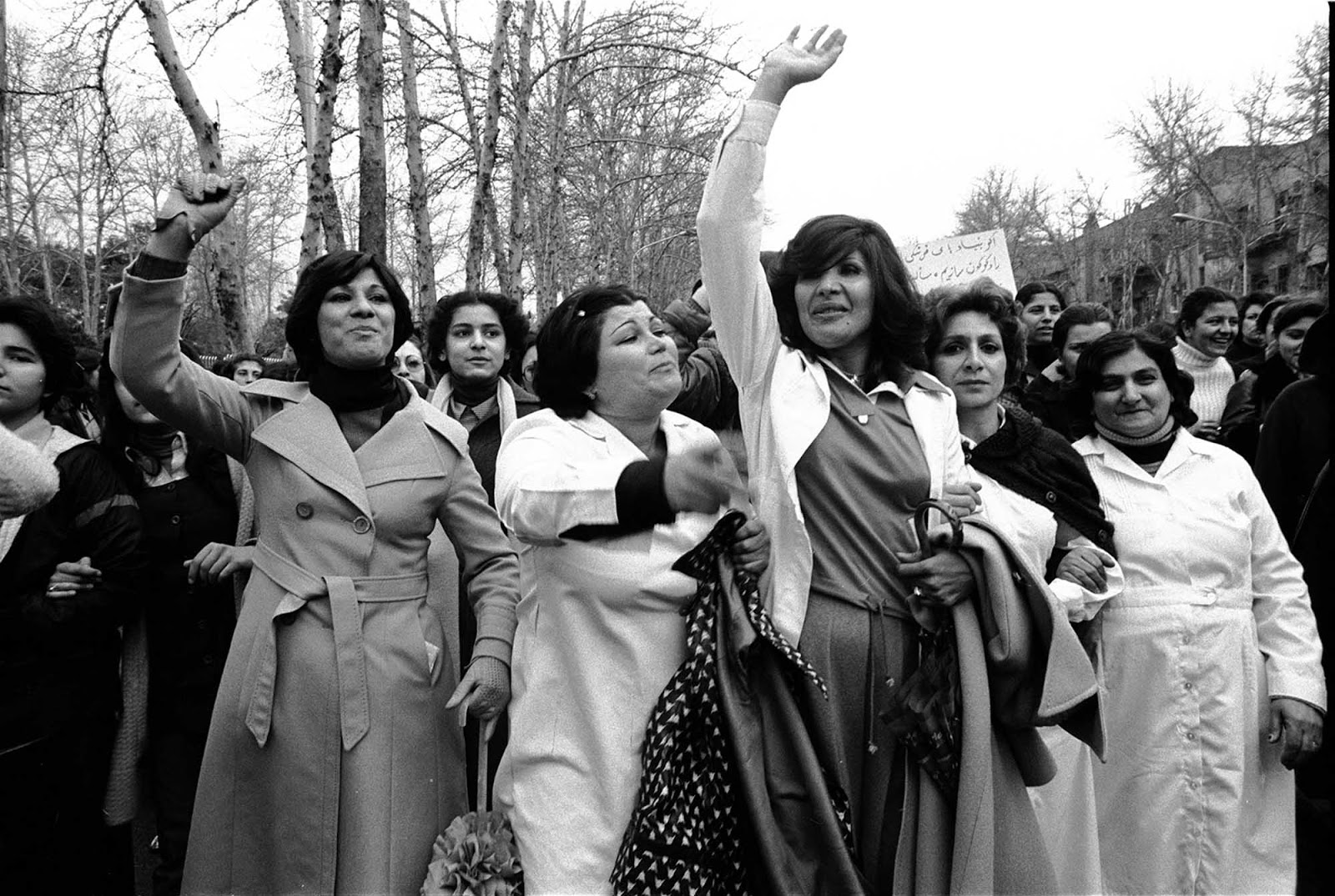
Narrative images: The Last Day Women Walked the Streets of Tehran with Their Heads Uncovered

"This turned out to be the last day women walked the streets of Tehran uncovered. It was our first disappointment with the new post-revolution rulers of Iran."
Hengameh Golestan


On 8 March 1979, Iranian women protested against the new "Hijab Law" that had been introduced the day before. Women, from that day on, have been forced to wear scarves when leaving the house.


"Many people in Tehran went on strike and took to the streets. It was a huge demonstration with women – and men – from all professions there, students, doctors, lawyers. We were fighting for freedom: political and religious, but also individual."
Hengameh Golestan


photographs taken by Hengameh Golestan via and via and via

Saturday, 26 August 2017

Narrative images: Buying a house on Long Island

"An African American and a white girl study a sign in the integrated Long Island community of Lakeview, New York, on April 1962." (via)
Negroes! This Community could become another ghetto. You owe it to your family to buy in another community 


Erase (2012). Housing and Neighbourhood Preferences of African Americans on Long Island. 2012 Survey Research Report.
::: DOWNLOAD
Here are some excerpts from the 2012 research report:

Long Island is one of the most racially segregated regions in the country. For the past ten years, ERASE Racism has documented how housing discrimination plays a significant role in determining the neighborhoods where African Americans on Long Island will most likely reside. We have reported that, as a direct result of patterns of housing segregation, only 9% of Long Island’s black students have access to high performing schools as compared to 30% of white students. Studies have also shown that even the most affluent black and Hispanic homeowners are segregated into majority black and Hispanic communities with high concentrations of poverty. These factors point to structural impediments for blacks to housing choice and to quality education. Nonetheless, studies about neighborhood preferences often pose the question about whether so-called “self-segregation” is at play by all racial groups, including blacks, rather than structural racism."

Despite the popular notion that blacks only want to live in communities with neighbors who share their own race or ethnicity, the telephone survey findings showed that given the choice, nearly all respondents chose a racially mixed neighborhood, with a large majority, 69%, who chose an even mix of 50% white and 50% black. Only 1% of respondents said that they would like to live in a neighborhood that is all black.

Long Island continues to be one of the most racially segregated regions in the nation; in 1980 the Dissimilarity Index for blacks in relation to whites was 76.9, with 100 representing total segregation. Thirty years later, in 2010, the black-white level of segregation was 69.2, still very high and indicating just a slight decrease (dropping barely 1 percentage point every five years). While Long Island also tends to be segregated by income, income disparities cannot explain the very high level of segregation experienced by blacks in the region.

African Americans perceive housing discrimination as pervasive on Long Island. One in three, 33%, of black Long Islanders surveyed reported having experienced housing discrimination first-hand or within their immediate family. Our previous housing reports, reports by others and various law suits have documented the ongoing problem of fair housing violations, including racial steering by real estate agents, predatory lending by banks, and discriminatory municipal policies. Housing discrimination promotes and preserves residential and school segregation.

- - - - - - - - -
photograph via

Thursday, 3 August 2017

Narrative images: Femmes Algériennes

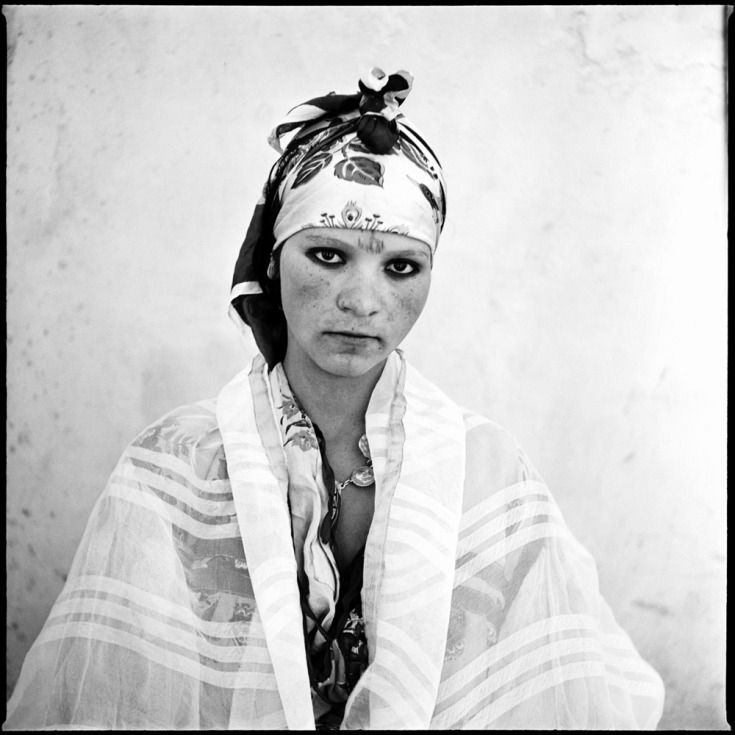
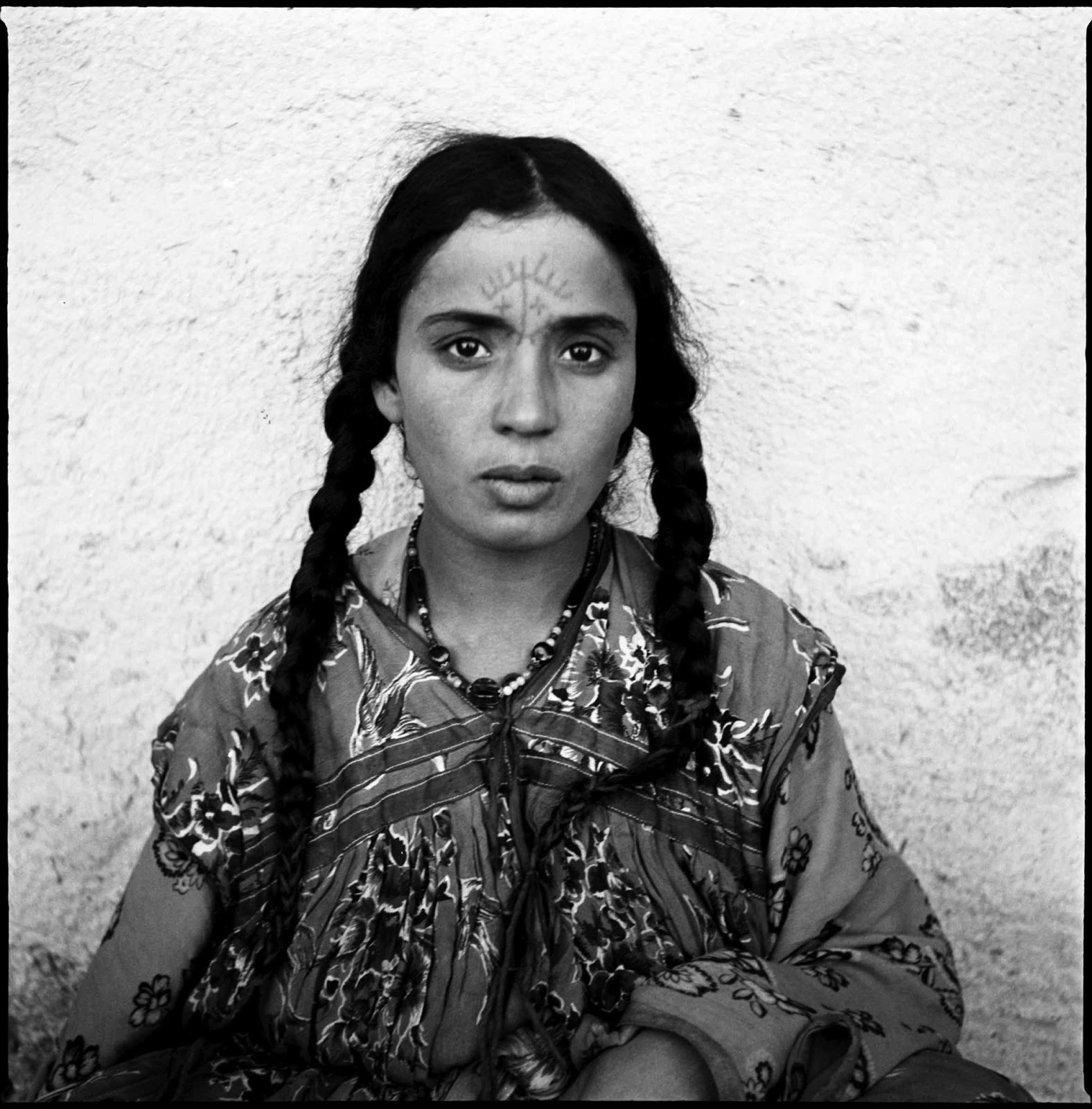
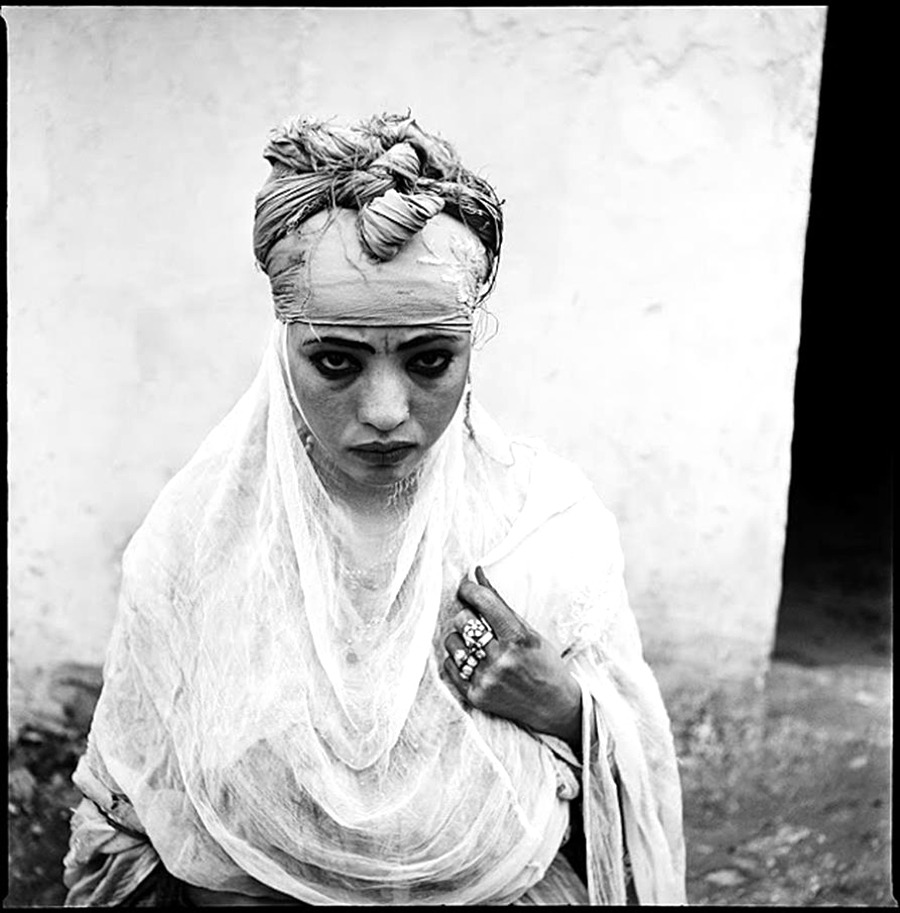
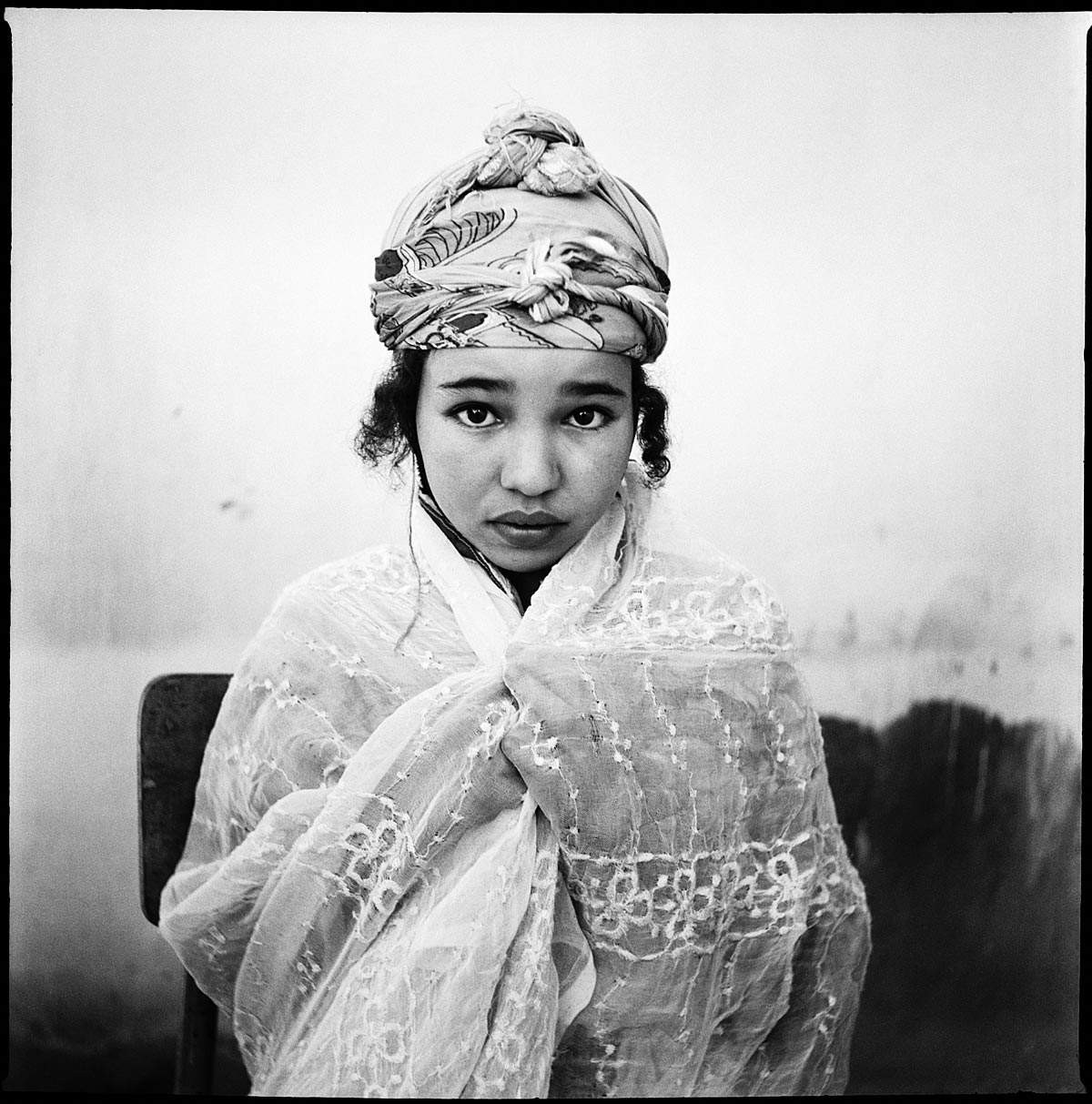
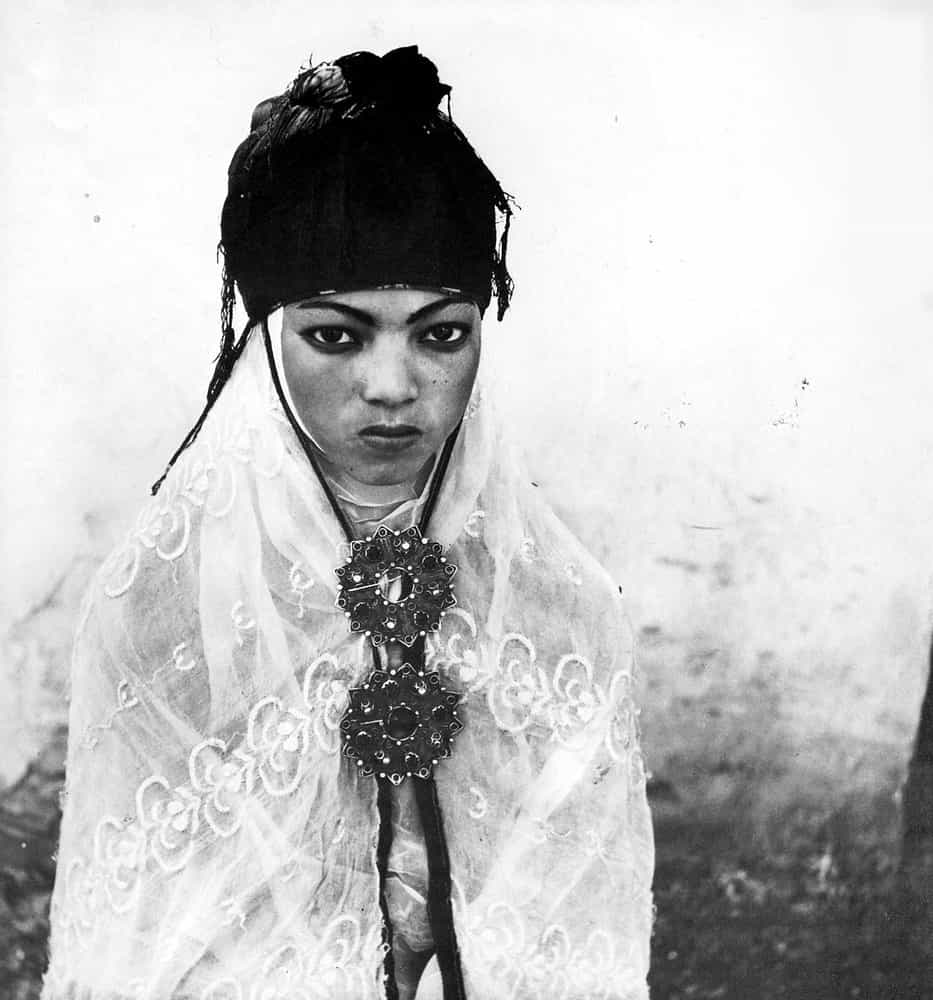
"I would come within three feet of them. They would be unveiled. In a period of ten days, I made two thousand portraits, two hundred a day. The women had no choice in the matter. Their only way of protesting was through their look. It is this immediate look that matters. When one discharges a condenser, a spark comes out: to me, photography involves seizing just that instant of discharge. In these sessions, I felt a completely crazy emotion. It was an overwhelming experience, with lightning in each image. I held up for the world a mirror, which reflected this lightning look that the women cast at me."
Marc Garanger


In 1960, Marc Garanger, a 25-year-old draftee landed in Algeria against his will. He had put off his departure for the army as long as he could "hoping that the war would end without him". He became the regiment's photographer from 1960 to 1962. When Maurice Challes, head of the French army, decided to destroy mountain villages in Algeria and to transfer inhabitants to internment camps, Garanger was told to take photographs for identity cards Algerians were required to carry (via), cards that made them visible and legible to French colonial authorities (Eileraas, 2003), cards they had to carry in "regroupment villages" that were supervised from observation posts, encircled with barbed wire, closed at night (Naggar, 1996):
"Naturally he asked the military photographer to make these cards. Either I refused and went to prison, or I accepted. I understood my luck: it was to be a witness, to make pictures of what I saw that mirrored my opposition to the war. I saw that I could use what I was forced to do, and have the pictures tell the opposite of what the authorities wanted them to tell."
Marc Garanger


After the first day, the commandant ordered all women to be photographed without the veils they usually wore in public. For the Algerian women, the forced unveiling felt like standing before the camera naked (via), it was obscene and humiliating as for them, the veil is inseperable from the face, a second skin (Naggar, 1996). Some of them looked lost, vulnerable, others distressed and extremely angry. "They were firing at me with their eyes", Garanger later recalled (via). He was repeatedly struck by the violence he saw in the Algerian women's eyes when they met his camera's gaze (Eileraas, 2003).
"The gaze is a means of communication and knowledge, and I don't think that the people who I photographed had any illusions about that. Women's violent protestation of colonial aggression is visible in every one of their gazes. It is this gaze to which I want to bear witness." Marc Garanger, cited in Eileraas (2003)
"The women would be lined up, then each in turn would sit on a stool outdoors, in front of the whitewashed wall of a house. Without their veils, their disheveled hair and their protective tattoos were exposed. Their lined faces reflected the harshness of their life. The stiffness of their pose and the intensity of their gaze evoke early daguerreotypes. (...) In the Middle East, the veil is like a second skin among traditional people. It may be taken off only within the secrecy of the walls, among women or between husband and wife, but never publicly. Garanger’s portraits symbolize the collision of two civilizations, Islamic and Western, and serve as an apt metaphor for colonization. The women’s defiant look may be thought of as an ‘evil eye’ that they cast to protect themselves and curse their enemies."
Carole Naggar


"You have to understand that this is a military camp. This was war and they were forced to be photographed, so there was no communication. This had to happen. I had to take the picture, and they had no choice in being photographed."
Marc Garanger

"I was trying to give them back their humanity and their dignity through my portraits."
Marc Garanger

"Driven by a spirit of revolt, Garanger exploited photography's capacity to shape the national imagery. He tried to create images that would question the authoring (and auhorizing) functions of the colonial gaze. Given his ambivalent position vis-à-vis la mission civilatrice, Garanger opens up a space for disidentification with the racial and sexual politics embedded in colonial imagery."
Karina Eileraas (2003)


"La réalité c'est le mensonge, l'horreur. Et donc, pour survivre, pour m'exprimer avec mon œil, puisque les mots sont inutiles, je prends mon appareil photo. Pour hurler mon désaccord. Pendant vingt-quatre mois, je n'ai pas arrèté, sûr qu'on jour je pourrai tèmoigner, raconter avec des images."
Marc Garanger, cited in Howell (2010)

"I was very angry. France was forcing me into a war I did not want to do. Though everybody around me was saying "we won", I was convinced it was doomed. The outspoken opinions around me were so degrading that I gave even more strength to my pictures. All this was significant of what this war was about: These people were not considered human, but savages, beasts France could kill as pleased! That's the real aim of this war and nothing else: Racism!"
Marc Garanger


In 1961, Garanger started organising photographic exhibitions in France "to spark public debate about French military practices in Algeria". With his exhibitions and anti-colonial photo-essays, he helped to disturb the silence France kept regarding the Algerian War (Eileraas, 2003). This war, in fact, has been hardly documented in France as the country seems to have chosen an approach of willful forgetting and of "collective amnesia" (Naggar, 1996).

Garanger went back to Algeria in 2004 to meet the women he had photographed in the 1960s. The photographs he had taken were often the only ones the women had of themselves (via).

::: Interview with Marc Garanger (2010): LISTEN/WATCH


More:
- Fifty years after Algeria's independence, France is still in denial; The Guardian (2012), LINK
- The History of French-Muslim Violence Began in the Streets of Algeria; Time (2015), LINK
- France's unresolved Algerian war sheds light on the Paris attack, The Independent (2015); LINK
- Camus and France's Algerian Wars, The New Yorker (2012); LINK
- Algerian independence film draws French protest at Cannes (2010): WATCH


- Eileraas, K. (2003). Disorienting Looks, Ecarts d'identité: Colonial Photography and Creative Misrecognition in Leila Sebbar's Eherazade. In I. E. Boer (ed.) After Orientalism: Critical Entanglements, Productive Looks, 23-44. Amsterdam & New York: Rodopi
- Howell, J. (2010). "Decoding Marc Garanger's Photographic Message in La Guerre d'Algérie vue par un appelé du contingent", Dalhousie French Studies, 92, 85-95.
- Naggar, C. (1996) The Unveiled: Algerian Women. In L. Heron & V. Williams (eds.) Illuminations: Women Writing on Photography from the 1850s to the Present, 422-426. Duke University Press
- Ptacek, M. M. (2015). Simone de Beauvoir's Algerian war: torture and the rejection of ethics. Theory and Society, 44(6), 499-535.
- photographs via and via and via and via and via and via and via and via and via and via and via and via and via and via and via

Thursday, 13 July 2017

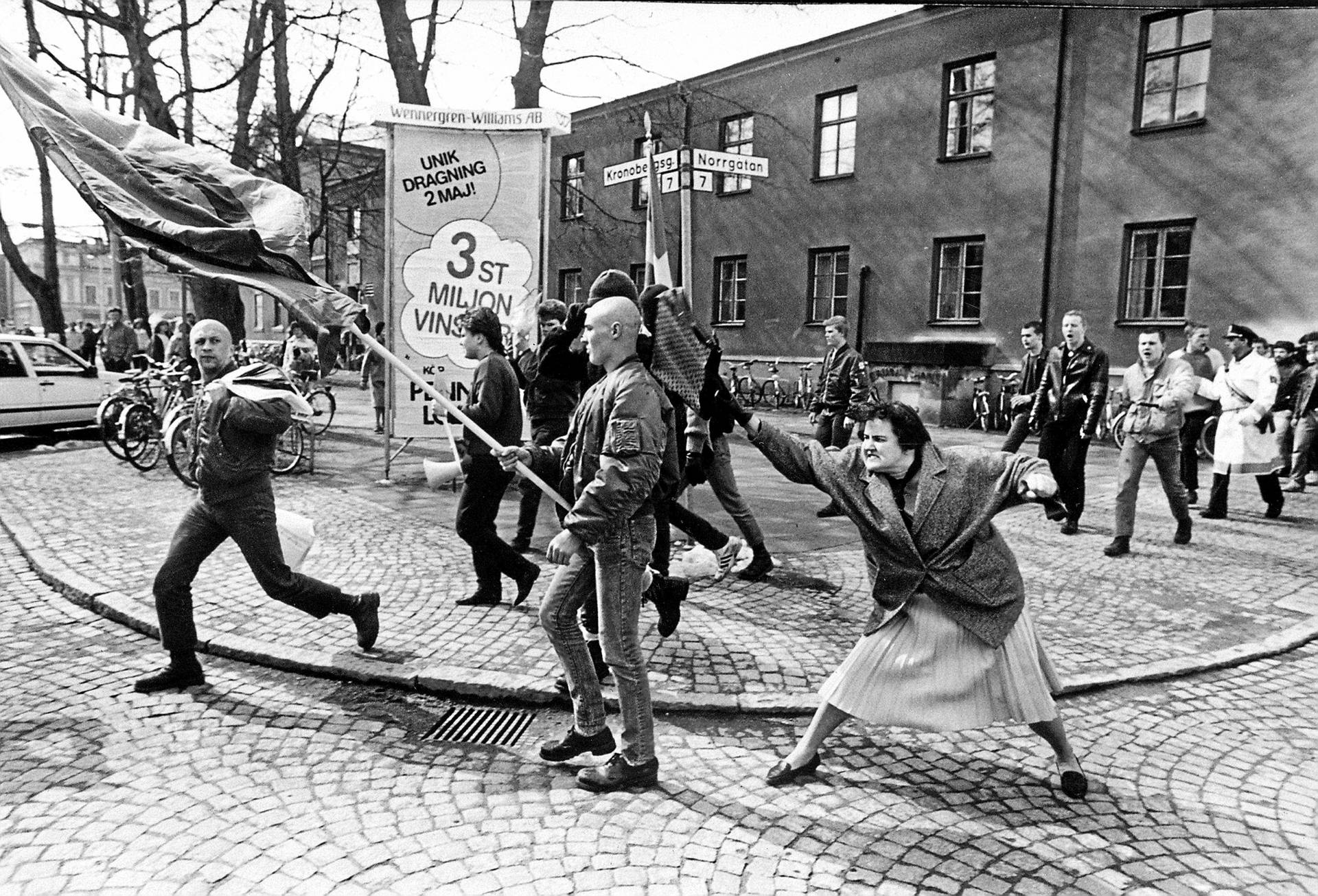
Narrative images: A Woman Hitting a Neo-Nazi With Her Handbag

"Some images never go out of date. They remain endlessly urgent. Where most viral photos enjoy a fleeting flash of fame, flaring up like a rash across social media, there is a cache of imperishable images that have lingered longer and strike a deeper chord. They stay forever part of the mind’s permanent collection of archetypal signs."
Kelly Grovier


"Kvinnan med handväskan" or "The woman with the handbag" is a photograph that was taken by Hans Runesson in the Swedish city of Växjö on 13 April 1985. The photograph shows neo-nazis marching and supporting the "Nordic Reich Party" and, most importantly, Danuta Danielsson (1947-1988) hitting a neo-nazi (via).
"Predating by decades the instant-reaction platforms of Facebook and Twitter, an edgy image captured on the streets of Växjö, Sweden in April 1985 during a demonstration by the Neo-Nazi Nordic Reich Party succeeded (without today’s propulsive power of ‘likes’ and ‘retweets’) to imprint itself on the cultural consciousness. Snapped at the instant when a Polish-Swedish passerby, whose mother had reportedly been sent to a Nazi concentration camp, could no longer contain her irritation at having to share civic space with fascists, the black-and-white photo of Danuta Danielsson clocking a Neo-Nazi with her handbag continues to resonate for many as a silent rallying cry." Kelly Grovier
Reactions to this photograph ranged from applauding Danuta Danielsson, calling her a hero and wanting to honour her with a statue... to criticising her and deciding not to honour her with a statue as that would - among other reasons - otherwise "glorify violence"... back to people hanging handbags on statues around the world in reaction to Danielsson's statue not being built (via). A debate started whether a mild form of violence as the "handbag scene" captured is socially acceptable with the moralising undertone that one needs to differentiate "between behaviour we might understand and behaviour we can applaud" (via). Of course violence is not acceptable. Still, the focus of this discussion may only be touching the surface considering the form of violence exhibited here, the background of the woman and what the neo-nazi was actively demonstrating for.
"She is unquestionably also one of Nazism’s real victims–this is the downtrodden’s reaction to racist violence." Ola Luoto
Danuta Danielsson was of Polish-Jewish origin. 85% of the deportees murdered in Auschwitz were Jewish (i.e. 1.1 million people, 900.000 of them in gas chambers immediately on arrival), 10.8% (i.e. 140.000 persons) of the deportees killed there were Poles (via). Danuta Danielsson's mother was one of the few persons (31.746 were reported in January 1945, via) who survived Auschwitz.
And there she is in a Swedish city, four decades after the official end of the murderous Nazi regime and sees skinheads mourning the good old nazi days and supporting the Nordic Reich Party, a party that was "deeply involved in extended legal disputes with the Swedish government over the distribution of anti-Semitic literature". The Nordic Reich Party was led by Göran Assar Oredsson who actively promoted "the National Socialist revival in Scandinavia" (Kaplan, 2000). When "Keep Sweden Swedish" emerged in 1979, a nationalist activist group that "prophesized cultural and economic devastation due to immigration, as well as the loss of racial purity and the inability for nonwhites to function in Swedish society", the Nordic Reich Party was not part of this movement because Keep Sweden Swedish hardly celebrated Hitler or presented Jews as a significant threat, in other words, was too moderate and not nazi enough. The Nordic Reich Party even alleged that "the activist group was filled with disguised Zionists bent on undermining National Socialism and the resurgence of the Nordic race" (Teitelbaum, 2017). This is the ideology the "handbag victim" was demonstrating for.

The skinhead Danielsson hit, by the way, was Seppo Seluska who was said to be convicted for torturing and murdering a Jewish homosexual the same year the photograph was taken (via). Danuta Danielsson allegedly commited suicide in 1988 (via).

There is the question why statues of men holding swords are more acceptable than a woman holding a handbag (via). There is also the hypothetical question what this neo-nazi would have done to her Jewish mother in the 1940s. There are many more questions. The photograph is still considered to be both controversial and inspiring. Artist Susanna Arwin created a small bronze model in 2014, in 2015, handbags "mysteriously started to appear on statues across Sweden" protesting the decision not to dedicate a statue to Danielsson (via). This year, Ramsey Nasser and Jane Friedhoff developed "Handväska" ("handbag"), a video game in which you can hit nazis with handbags (via)
"That photo was from f*** yesterday. It’s from Sweden, and it was the local Swedish neo-nazi movement going on parade. So this was way after the second World War." Ramsey Nasser
- - - - - - - - -
- Kaplan, J. (2000). Encyclopedia of White Power: A Sourcebook on the Radical Racist Right. Walnut Creek, Lanham, New York &. Oxford: Rowman & Littlefield
- Teitelbaum, B. R. (2017). Lions of the North: Sounds of the New Nordic Radical Nationalism. Oxford University Press ebook
- photograph via

Monday, 29 May 2017

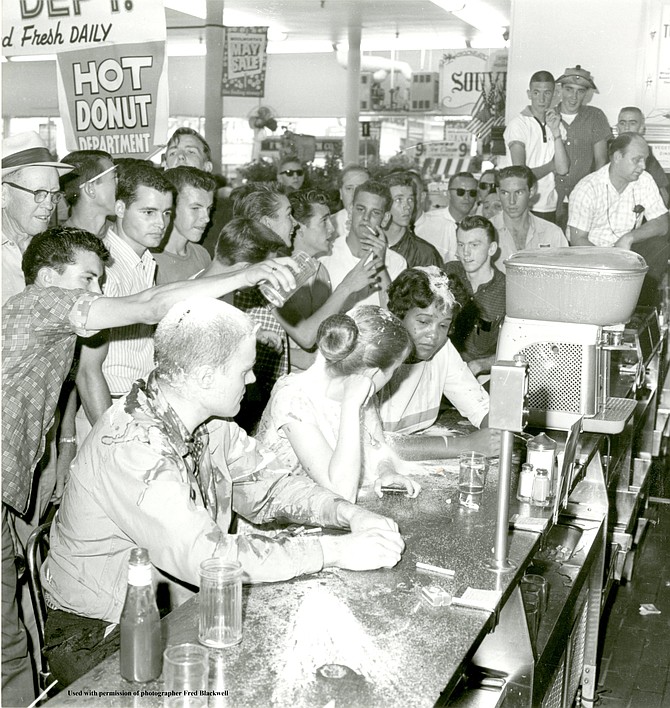
Narrative images: Lunch at the Woolworth Counter in May 1963

"We didn’t allow fear. We had accepted we could die. Panic-attack fear immobilizes you, it doesn’t keep you alive. Stay cool. At that Woolworth counter, people were beaten. It was a total out-of-body experience for me — the kind you hear soldiers have in battle."
Joan Trumpauer Mulholland


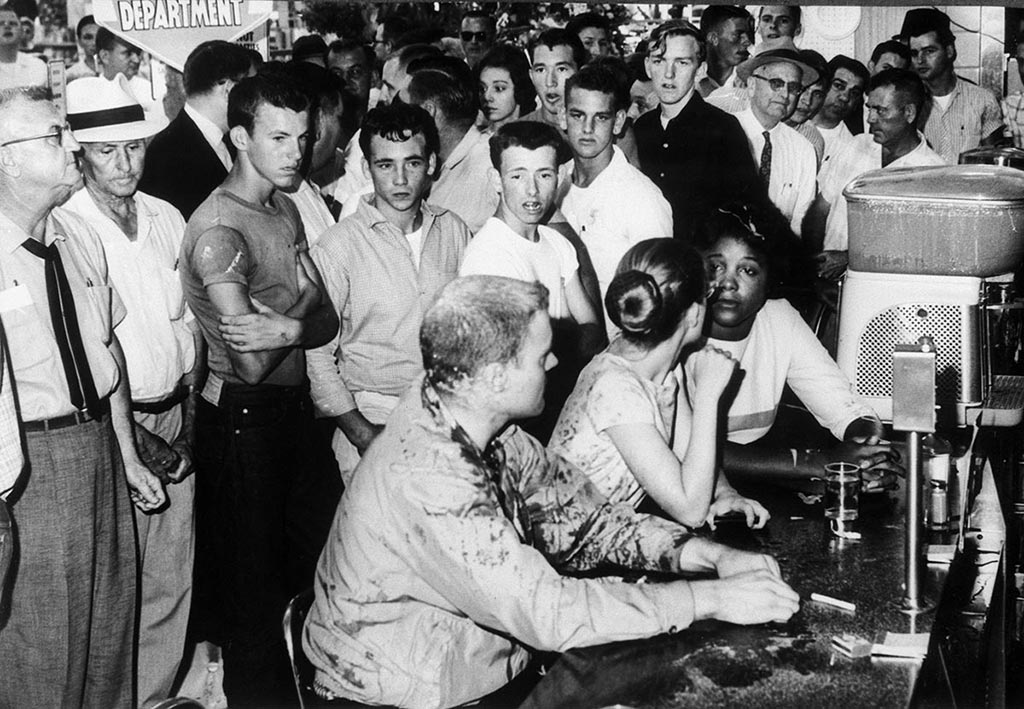
The Greensboro (North Carolina) sit-ins in 1960, the most well-known sit-ins of the Civil Rights Movement, led to the Woolworth department store chain removing its racist policy of segregation in the South. It was a long way and it took a great many sit-ins. Today, the Woolworth store in Greensboro is the International Civil Rights Center and Museum (via). These photographs were taken on 28 May 1963. In the centre of the picture above are Anne Moody and Joan Trumpauer, seated on the left is Hunter Gray (via). They sat there after others had been pulled away, kicked and smeared with ketchup, mustard, sugar - anything that was on the counter (via).

"They cut my face with sharp brass knuckles, someone cut the back of my head with the jagged edge of a broken sugar container. There was a good deal of blood.
They dumped slop on us. I was burned with cigarettes, hit and had pepper thrown in my eyes. The women weren't struck, but had their hair pulled. All the air was filled with obscenities, the n-word - it was a lavish display of unbridled hatred. (...)
I saw the photo the next morning in the Jackson Daily News. Friends across the county called to say they had seen it, and we got letters from people from all over the world.
Now in textbooks, this picture reinforces my feeling that change came because of the great courage and determination of grass-roots people. I remember sitting at that counter, thinking about the indoctrination of these young people: white councils issuing special curriculums for white schools. And more sinister warnings such as: “Race mixers are communist and traitors.” The kids had been brainwashed with this poisonous stuff all their lives. I saw no free will in that mob, and I couldn’t blame the kids personally.
Fifty years on I continue to feel sorry for them. If I met any of them today, I’d say: “Let’s go have lunch.
"
Hunter Gray


"They wanted the "n*ggers" - both white and black - to leave."
Trip Burns


photographs via and via and via