![]() Age |
![]() Disability |
![]() Ethnicity |
![]() Queer |
![]() Religion |
![]() Gender |
![]() Stereotypes |
![]() -isms |
![]() Quotes |
![]() World days |
![]() Music |
![]() Space |
![]() Sports |
![]() Health |
![]() Marketing |
![]() Urban planning |
![]() Narrative images |
![]() Birthday |
![]() Language |
![]() Segregation |
![]() School |
Thursday, 6 June 2024
The Social Meanings of Men's and Women's Hats
Sunday, 6 August 2023
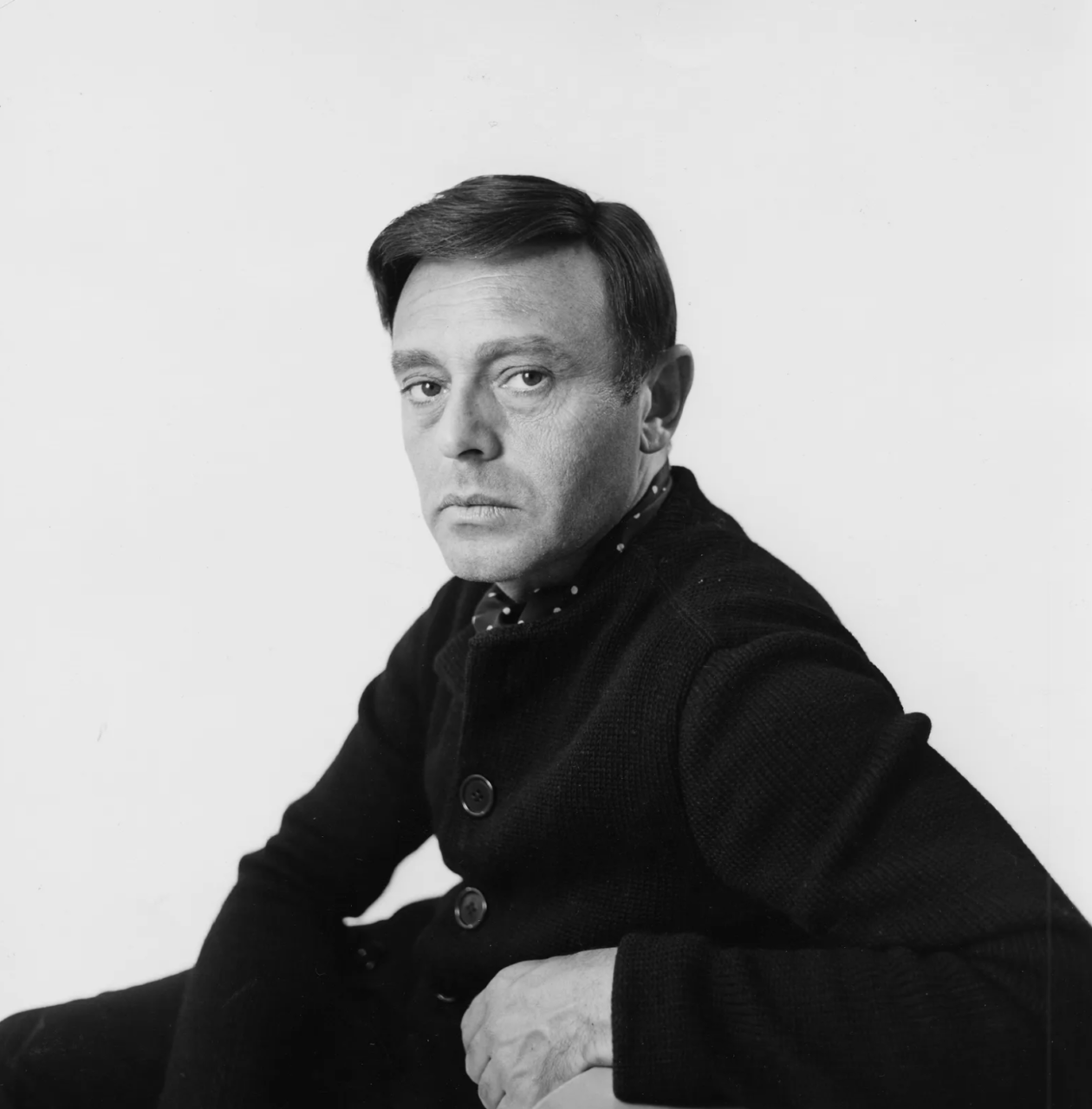
Rudi Gernreich, "a great example of how far we haven't come"
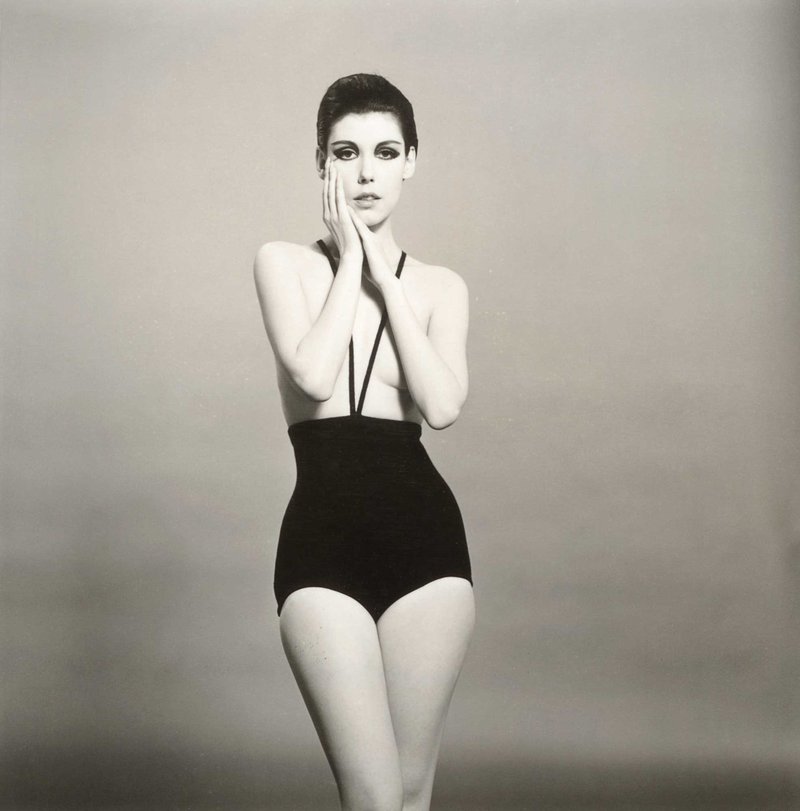
The story of the topless bathing suit begins with Adolf Hitler. When Germany annexed Austria in 1938, Hitler banned public nudity with an executive order. The Post-Freudian Viennese had taken to exercising in the nude, regarding it as healthy. Among those who fled the Nazi regime was widowed Jewish mother Elizabeth Gernreich and her 16-year-old son Rudi. They came to America, where Rudi launched an L.A. career as dancer, fashion designer, and gay activist. He was a founder of the Mattachine Society, an early gay rights organization.Throughout his life, Gernreich retained the free, Viennese attitude to nudity. This was reflected above all in his swimsuits. In a 1962 issue of Women's Wear Daily, Gernreich declared: "Bosoms will be uncovered within five years." Thereafter journalists kept pressing him for specifics. "It was my prediction," Gernreich recalled. "For the sake of history, I didn't want [Emilio] Pucci to do it first." (via)
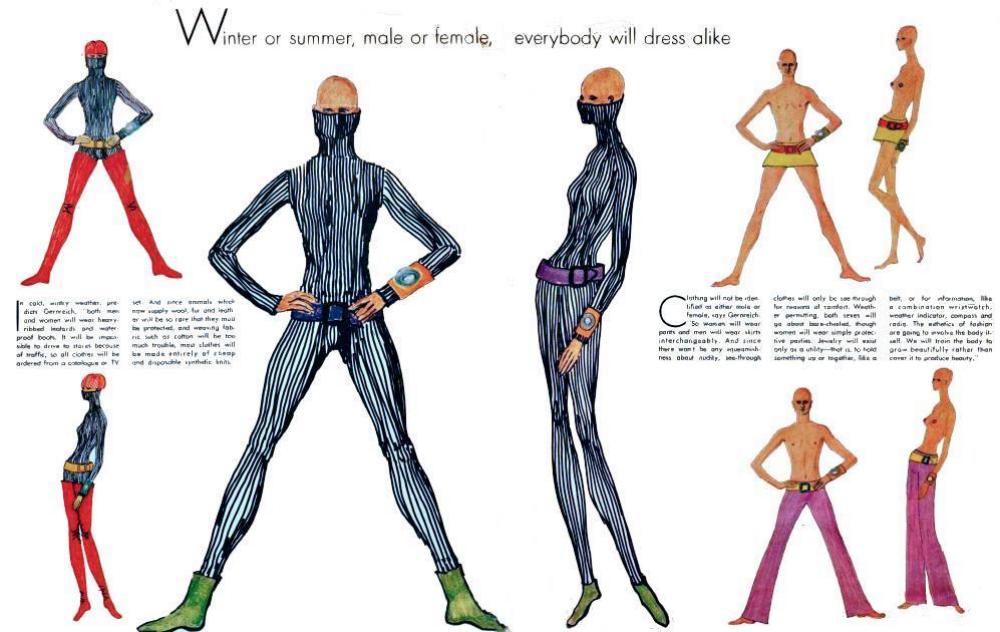
Fashion, as we know it, is dead. In the new environment of the future, people will accept their bodies. Clothes will be utilitarian, organic, and minimal. It will free us to think of more important things.Rudi Gernreich, 1971
Fashion does come up from the streets now. Young people are saying ‘We are people, not men and women.’ There’s no sexual confusion. It’s a social change. Rudi Gernreich, 1967
Monday, 12 December 2022
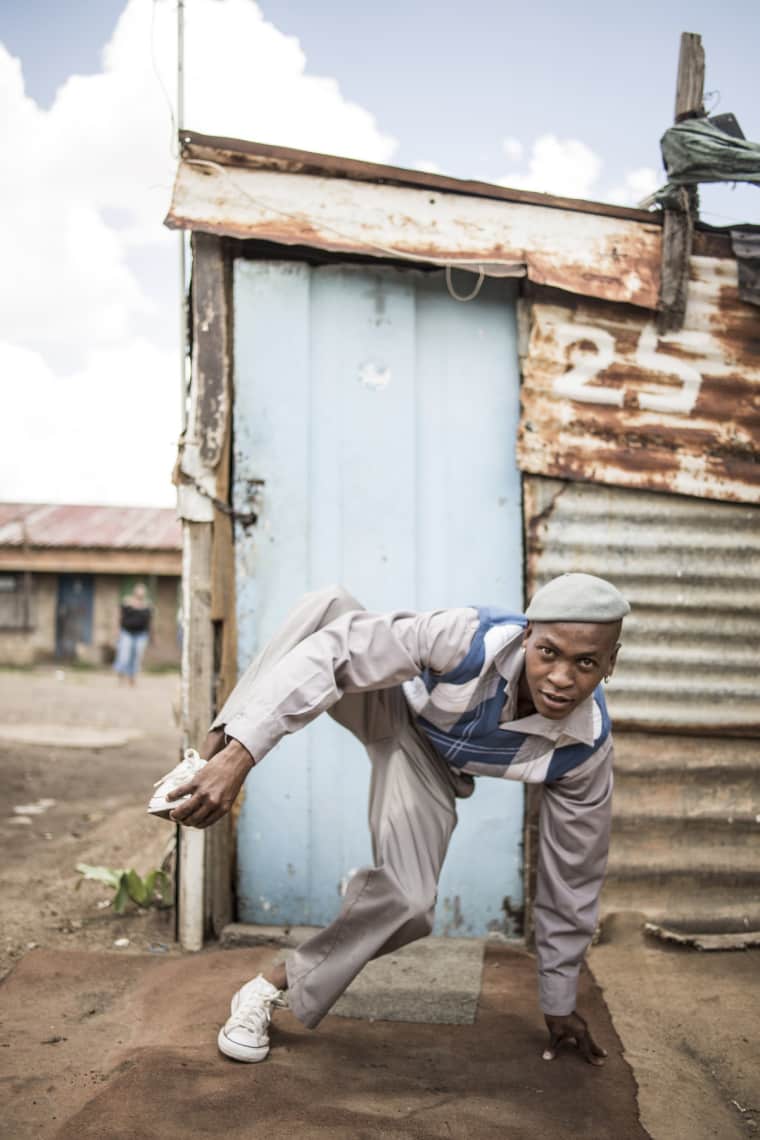
Pantsula + The Photographs of Chris Saunders
Pantsula is a fusion of traditional and modern dance, hip-hop, jazz, everyday's gestures, acrobatics, lifestyle, fashion, and storytelling. Its name is a Zulu word meaning waddling like a duck, a reference to thw way fashionistas used to walk and pose in the 1970s. The roots of Pantsula can be traced back to Johannesburg, the suburb of Sophiatown, of the 1940s (via and via).
::: Watch Alexander Tiernan's "Yellow Jumpsuits" on YouTube: WATCH
"Pantsula is a fundamental part of Johannesburg culture, Johannesburg is the city I grew up in. It’s a very divided city stemming from the history of Apartheid, a city where many important cultures and mechanisms of recording and telling history were formed, one of them being Pantsula.
I felt that by documenting Pantsula I was documenting a form of storytelling that was the closest to the true history of the city, a culture that developed in the townships around Johannesburg where many black people were forced to live.
(...) Pantsula is an older culture with a strong heritage dating back to Jazz and Swing, it lived through Apartheid and came out as a very developed rich culture.
(...) I think as a white South African it was important for me to learn and document South African culture, growing up in separated areas as children we often didn’t have exposure to Johannesburg’s vibrant African culture, but when Apartheid ended and I grew up I began documenting what I felt were Johannesburg’s most prominent and somewhat relatively undocumented modern cultures and subcultures."
"Coming from a white background in South Africa during the transition, we weren't massively exposed to a lot of black culture. I had been exposed to Kwaito music, however, which had Pantsula dance in some of its videos. You'd see bits of pantsula, and be like, “Cool. That's interesting. But what is this culture?” There were songs that were coming out that were linked, but that was it.
I guess it was like growing up in Nebraska and watching hip-hop videos from the ‘80s. That's how vast the separation was because of apartheid. It took years of people having conversations and being interested in assimilating into general culture to be exposed to each other’s cultures. But now people who don't know about pantsula, which is massive popular culture, don’t really have an excuse. There are thousands of people who are a part of it. That's why I never wanted to call it a subculture, because it was important to be seen as modern city culture. Almost everyone who grew up in a Johannesburg township, which is the large majority, knows what pantsula is. You can't really call it a little subculture. It's popular culture.
(...) There was also this idea of the townships, with all these people forced into environments by apartheid. You see all those things crashing together and this incredible culture coming out of it. For me, this is the closest you can get firsthand to the story, because they were telling these stories in the townships during apartheid about what was happening. It wasn't a writer going in and interviewing a guy, and reinterpreting the story. They were involved and this was their lives.
(...) It's a very masculine culture. There were always women involved, but on a specific side of the culture. They would do their own dance, and men would do their own dance. Now it's joined, starting less than ten years ago. I've seen the number of women in some crews rise since I met them. Part of it may be because of the growing popularity of the culture. There were a lot of guys who had a very traditional mindset that women could never dance like a man. There are a lot of girls that are as powerful as the male dancers."
photogrpahs by Chris Saunders via and via and via and via and via
Monday, 21 November 2022
Male fashionistas, female football fans, gender stereotypes and neurophysiological correlates
Abstract: Recent studies have shown that pre-existing contextual information, such as gender stereotypes, is incorporated online during comprehension (e.g., Van Berkum, van den Brink, Tesink, Kos, & Hagoort, 2008). Stereotypes, however, are not static entities, and social role theory suggests that they may be influenced by the behavior of members of the group (Eagly, 1987). Consequently, our study examines how gender stereotypes affect the semantic processing of statements from both a male and a female speaker, as well as investigating how the influence of stereotypes may change as listeners gain experience with individual speakers.
Participants listened to male and female speakers produce sentences about stereotypically feminine (fashion) and stereotypically masculine (sports) topics. Half of the participants heard a stereotype congruent pattern of sentences (e.g., for the male speaker, semantic errors about fashion but no semantic errors on sports sentences) and the other half heard a stereotype incongruent pattern. We found that the N400 effect of semantic correctness is larger in stereotype incongruent conditions. Furthermore, in stereotype congruent conditions, only stimuli presented in the male voice show an N400 effect in the expected direction (larger N400s to semantic violations). Additionally, when we examined ERP changes over the course of the experiment, we found that the degree of change in amplitude was predicted by individual differences in ambivalent sexism. These results suggest that not only are speaker characteristics incorporated during online language processing, but also that social knowledge influences language processing in a manner congruent with social role theory. (Grant, Grey & van Hell, 2020)
- - - - - - - -
- Male fashionistas and female football fans: Gender stereotypes affect neurophysiological correlates of semantic processing during speech comprehension. Journal of Neurolinguistics, 53, linkFriday, 3 June 2022
Design Meets Disability (I): Fashion Meets Discretion.
These are a few excerpts from the highly interesting chapter "fashion meets discretion" in the highly interesting book "design meets disability" (Pullin, 2009). In this chapter, the author discusses the tension between the notion of design for disability having to be discrete and invisible versus fashionable and a statement. The two approaches are exemplified by contrasting the development of glasses and hearing aid devices (see the following posting).
discretion
The priority for design for disability has traditionally been to enable, while attracting as little attention as possible. Medical-looking devices are molded from pink plastic in an attempt to camouflage them against the skin. The approach has been less about projecting a positive image than about trying not to project an image at all.
But is there a danger that this might send out a signal that disability is after all something to be ashamed of? If discretion were to be challenged as a priority, what would take its place? Invisibility is relatively easy to define, and may even be achieved through technical and clinical innovation alone, but it is more difficult to define a positive image purely from these perspectives.
fashion
Fashion, on the other hand, might be seen as being largely concerned with creating and projecting an image: making the wearer look good to others and feel better about themselves.
Eyewear is one market in which fashion and disability overlap. On the rare occasions that the words design and disability are mentioned in the the same breath, glasses are often referred to as the exemplar of a product that addresses a disability, yet with little or no social stigma attached. This positive image for disability has been achieved without invisibility.
tension
Fashion and discretion are not opposites, of course; fashion can be understated, and discretion does not require invisibility. Nonetheless, there is a tension between these qualities because they cannot both be the absolute priority. There are also deep cultural tensions between the two designs communities. Perpaps fashion with its apparent preoccupation with an idealized human form is seen as having little to say about diversity and disability. The extremes and sensationalism of cutting-edge fashion can seem inappropriate in the context of disability, where discretion is seen as being so important. For some in the medical field, the very notion of being in fashion, of designs coming and going, is the antithesis of good design.
But learning from fashion might require embracing not only its design qualities but also more of its values. Fashion does not just arise from a particular set of skills but creates and requires a culture. The mechanism through which fashion design evolves, whether through haute couture or street fashion, ceates extreme designs that can provoke negative as well as positive reactions in different audiences. It may not be possible to have one without the other, to have the results without the culture and the values. (...)
- - - - - - - -
- Pullin, G. (2009). design meets disability. Cambridge & London: The MIT Press.
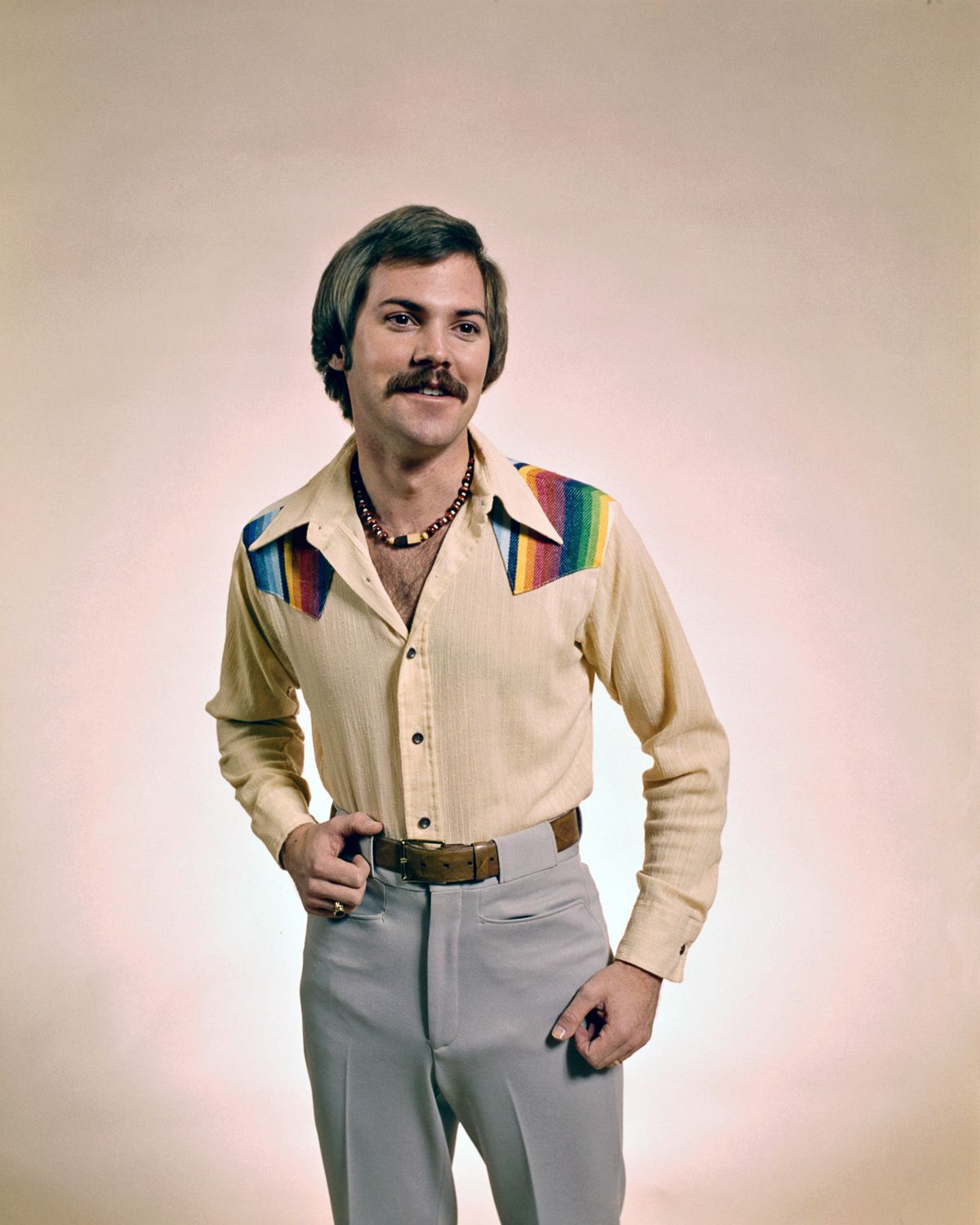
- photograph (Pierre Cardin) via
Monday, 21 February 2022
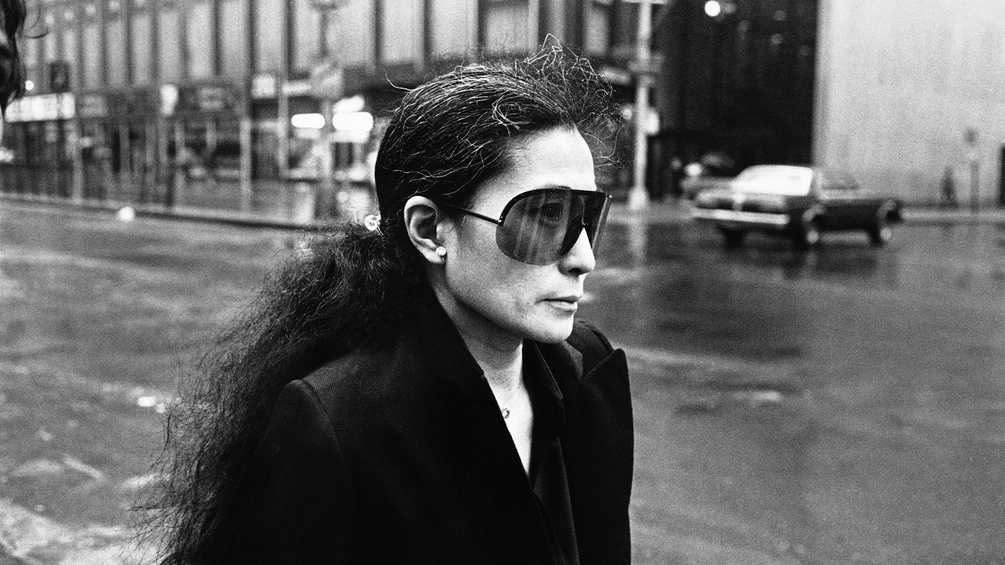
"Please don't create another old person." Yoko Ono's Open Letter
Yoko Ono Lennon, 18th of February 2015
- - - - - - -
photograph (AP/Allen Tannenbaum) via
Saturday, 19 June 2021
Sapeurs...
"Brazzaville and Kinshasa are on opposite banks of the Congo River, almost directly across from one another, yet they have different styles. In Brazzaville, La Sape is mainly 'French style' (think exquisite suits), but in Kinshasa anything goes, from Japanese Yamamoto coats to Scottish kilts. True Sapologie is about more than expensive labels: the true art lies in a sapeur's ability to put together an elegant look unique to their personality...
Tariq Zaidi
Saturday, 29 May 2021
Dear ladies, please just disappear.
According to a British survey carried out among 2.000 women(!) aged 18 to 65 by Retire Savvy and commissioned by Diet Chef, women believe miniskirts would be a "no-no" for anyone aged 35 or more. Once you hit 36, text talk is no longer acceptable, 38, no tattoo, 39, no infamous night-club hotspots, 40, no see-through chiffon blouse, no holidays without family or partner, 41, no longer watching reality TV, 42, don't wear a football shirt, 44, no trainers (unless for sport), no discos, 45, no leggings, no Ugg boots, no more festivals, 47, no knee high boots, no bikini, no skinny jeans, no twitter, 49, delete your facebook profile, 51, no high heels, 51, no ponytail, 52, no longer staying out past midnight, 53, no long hair, 61, no swimsuit (via and via).
One in ten bought clothes and soon took them back to the shop fearing it was "too young" for them, 5% said they had been warned by a shop assistant the item was not right for their age. Women also often hear warning from friends and family (via and via and via).
Bollocks. After 43 you should walk past the queues of nightclubs, shoulders back, chest out – tits and teeth. Stride up to the bouncer and shake his hand. (...) And I couldn’t give a toss what people think. Although my grandson told me I was too old to wear Adidas Stan Smiths, while two Romanians stopped me in the toilets to shake my hand because I‘m 'DFC' – dead fucking cool. Confidentials's Gordo
In an article, published in The Guardian, Emma Soames claims that women lose their instinct for knowing what suits them as they get older. I think we should be more careful with these ideas and reflect on where they come from and what impact they have before selling them as facts. On the contrary, perhaps style is something that needs time to develop and people dress better the older they get. And, surely, there is one major issue Ms Soames is not seeing: People are judged mildly, if at all, for wearing "not suitable" clothes when young and judged more harshly when older. Since women's "fashion antennae just shrivel with age", she continues, they need "some sartorial rules". The first one: You need to dress "appropriately", avoid the ultra feminine and the very short, dress classically (via).
No long hair, no high heels, no Ibiza, no facebook, no swimsuit... The message? Don't look like a woman, don't be active, don't have fun, don't go out. Just hide. Don't irritate with your presence. You no longer have a gender, you are either female or old. Dress in an age-appropriate manner and act your age by being invisible. That is the only way to age gracefully, by disappearing. We definitely still have a long way to go when it comes to raising awareness about the absurdities of internalised ageism.
photograph by Leon Levinstein via
Wednesday, 15 July 2020
Fat Rolls. From Hiding to Accentuating.
Karoline Vitto
"To me, this collection is not really about size, but about form. Aesthetic pressure is something that most women, if not all women, suffer from. I'm not trying to say that this is a solution, or that I am telling everyone's story – body acceptance is a very individual process – but what I really hoped with this collection was proposing a kinder way of looking at areas we used to consider 'flaws'."
Karoline Vitto
"I think more and more brands are concerned about representativity. That means not only more diversity on catwalks but also more sizes to chose from – different body types on ads and media. However, I know that there has been a lot of talk about how body positivity is a 'trend', which is a word that I totally disagree with. It shouldn’t be a trend, it should be part of what we consider when we design. Ultimately, that's one of the biggest barriers for small brands and young designers, the variety of sizes always makes production more complicated. I would still love to see not only more sizes, but also more shapes within the same size."
Karoline Vitto
- - - - - - -
photograph/more via
Thursday, 14 May 2020
It's nice to a have a girl's head under your foot.
A display of affection is great ... but enough is enough. She couldn't keep her hands off him. Always the little hugs, the pats on the cheek. Sly pinches. It could drive a man to the licence bureau. It all began when he wore his first pair of Mr. Leggs Slacks, tailored by Thomson. But he kept his head; now everything's under control. Why don't you try a pair of Mr. Leggs ... and get ready to dig.
FREE! Does your girl have perfect legs? ...
- images via and via, more ads: link and link
Sunday, 19 May 2019
Wear modest apparel, Helena!
1 Alexandra 2:9 (1 Timothy 2:9 with Alexandra's age specification)
Alexandra Shulman, former editor-in-chief of British Vogue, woman and 61 years old, shows us many things. Firstly, that it is a rather good idea to self-reflect before you start writing a column. Secondly, that both ageism and sexism (and their intersection) are -isms that we internalise as women and as persons who are growing older and by doing so help perpetuate stereotypes, if we are unable to self-reflect and shift the perspective.
This May, Shulman published an article with the headline "I’m sorry Helena Christensen, you ARE too old to wear that" which which she addressed former model Christensen who at the age of 50 decided to pitch up somebody's 24th birthday party "in a tacky, black lace bustier". Seriously, this is what her article is about.
Her column starts like this:
There comes that point in every woman’s life when, however reluctantly, you have to hand over the fleshpot-at-the-party baton to the next generation.Shulman speculates that Christensen possibly "just panicked" but then, quoting Dylan Thomas, decides that most probably this 50-year-old woman did not want to go "gentle into any good night when it comes to getting her share of the paparazzi's attention".
In other words, the only reason why a woman aged 50 wears jeans and a bustier is that she is desperately looking for attention. Instead, she should accept that her time is over and prepare to go gentle into that good night. Dylan Thomas's most famous and dark poem is about "the end of life" and "the personal struggle to hang onto life for as long as possible". It is about resisting death with all strength. Thomas challenges typical associations and stereotypes with old age by describing it as "burning and raving" (via), the same stereotypical associations that seem to dominate Shulman's attitude who, by the way, in an interview states that she has not left Vogue "to go and hide under a stone somewhere. I suppose, you know, you like the publicity at the end of the day. You want to carry on having a voice." (via).
She then continues with words that do not really make much sense:
We might like to think that 70 is the new 40 and 50 the new 30 but our clothes know the true story.And it gets better. Apparently, it is not primarily about age:
No matter how pert your breasts, how great your legs, how invisible your bingo wings, our clothes simply don’t look the same as we age because they are about the person wearing them, not the items themselves. They are about the people – not just the bodies – that we have become.
Something you wore at 30 will never look the same on you 20 years later. Clothes don’t lie.
While men can receive sex symbol status until they are in their box, for women it’s more complicated. As a society, we are frightened of sexuality that doesn’t come accompanied by fertility. Wrinklies like Richard Gere, who has fathered a baby at 69, or Ronnie Wood, who now takes his three-year-old twins on the road, have the advantage of this proof that their sexual function is still in working order.It may come as little surprise that I could not find any evidence that "societies are frightened of sexuality that doesn't come accompanied by fertility". I wonder why there is such a thing as birth control and why, for instance, couples continue having an intimate relationship after having raised a family. Nor have I ever heard of the custom that men feeling attracted to women ask them about their fertility before wanting to date them. And I am limiting my questions to heterosexuals here... Shulman's "proof" are two gentlemen, no, "wrinklies", such as Richard Gere (born in 1949, his wife born in 1983) and Ronnie Wood (born in 1947, his wife in 1978). Rules about attraction are slightly different when you are a celebrity, aren't they?
When women’s bodies no longer serve any child-bearing purpose, we find flaunting them disturbing and slightly tragic. I don’t claim that this is fair. But it’s true.
Shulman reduces women to their "child-bearing purpose" and claims it is a fact that when their bodies no longer serve this purpose, they become disturbing and tragic. They should become invisible and not irritate ageist and sexist people. Shulman - 61 years old - is a perfect example of how ageism works. We grow up with ageist messages, they come at us from every direction: work, health, marketing, fashion... After a lifetime of hearing them, we internalise them and become ageist, too. She also shows us that women can perfectly adopt the male gaze. It is irresponsible to link the style of dress with the desire to be attractive for others and the wish to seduce. We see the consequences of this dangerous link when victims of sexual violence are blamed for provoking the assault by dressing in a body-revealing style. Sure, clothing can have "the accompanying function of expressing a way of being" (Oliveira, 2013). However, communication is complex and the message may be misinterpreted (if there is one at all).
The results demonstrate a gender-based attribution gap wherein men report perceiving the sexualized look as indicating an interest in sex and intent to seduce, whereas women cite their wish to feel and look attractive as its primary cause, while entirely rejecting the seduction claim.And apart from that:
Moor, 2010:115
In contrast to affective cues, non-affective cues, such as clothing style and attractiveness, provide far less information about a woman’s momentary level of sexual interest because they typically are quite stable across a social interaction and tend to be more omnidirectional (i.e., available to everyone in the social environment).It is not only age and gender. Shulman thinks that black women on the cover "would sell fewer copies" (via).
Treat et al, 2016
Shulman is still smarting from the uproar provoked by a photograph in her final edition of the outgoing editor surrounded by 54 of her staff. Did she anticipate that many readers would be shocked to see that every single one of them was white? “No,” she mutters dryly. “Clearly not. Had I known that this was going to happen, I would not have put that picture in it. But it never entered my head. Over the years there have been people of all kinds of ethnicities in the magazine. On that particular day there was nobody there and, you know, it’s frustrating.”
Many employers go to some lengths to attract more diverse applicants. “Well, I guess I have to hold my hand up and say I don’t encourage positive discrimination in any area.” Shulman flatly refuses to accept the critique that under her editorship Vogue had a diversity problem. “I have never been somebody who’s box-ticked. I’m against quotas. I feel like my Vogue had the people in who I wanted it to. I didn’t look at what race they were. I didn’t look at what sex they were. I didn’t look at what age they were. I included the people I thought interesting. So no, I don’t, absolutely not.
“But if you’re going to say to me, ‘Well, how many white models as opposed to how many black models were in there?’, I’m sure you can make the numbers stack up to argue that there was an issue. But as far as I’m concerned, there wasn’t, and it never entered my head.”
Readers may then wonder why she put black faces on the cover only 12 times in 25 years. “Well, I don’t know. Who would I put on? Who would you have suggested that was a really well known black model who wasn’t on the cover?” (via) (Note: these two black faces were Naomi Campbel and Jordan Dunn)Her diversity problem includes body diversity:
“It was massively interesting, and actually a rather important subject, particularly if you advance the proposition, which I did, that magazines like Vogue and the fashionistas in general, pushed the idea for many years, and are still pushing it, though they deny it, that in order to look nice you’ve got to be stick-thin. I’ve always thought it an absurd proposition and damaging to an awful lot of young girls who are susceptible to that sort of pressure. So I was, according to some people, too aggressive with her. I thought I was actually rather polite.
“But she didn’t like being asked about that sort of thing and suggested, preposterously, that you’re almost as likely to see chubby women on the cover of Vogue. I think she came up with three examples over 25 years. Well, I rest my case, M’lud!”
John Humphrys
"Not many people have actually said to me that they have looked at my magazine and decided to become anorexic."We all grow older, if we are lucky. Let's enjoy it and stop making life difficult for others and ourselves.
Alexandra Shulman, 1998
"In the past women and men have been restricted to certain dress codes. Today there is no excuse for dressing to please others, the fashion police, or our inner critic." (via)- - - - - - -
- Lennon, S. J., Adomaitis, A. D., Koo, J. & Johnson, K. K. P. (2017). Dress and sex: a review of empirical research involving human participants and published in refereed journals. link
- Moor, A. (2010). She Dresses to Attract, He Perceives Seduction: A Gender Gap in Attribution of Intent to Women's Revealing Style of Dress and its Relation to Blaming the Victims of Sexual Violence. Journal of International Women's Studies, 11(4), 115-127.
- Oliveira, M. (2013). Dressing, seducing and signifying: From the symbolic dimension of fashion to the contemporary erotic imagery. Comunicação e Sociedade, 24, 152-160.
- Treat, T. A., Hinkel, H., Smith, J. R. & Viken, R. J. (2016). Men's perceptions of women's sexual interest: Effects of environmental contest, sexual attitudes, and women's characteristics. Cognitive Research: Principles and Implications, link
- photograph by Leon Levinstein (1910-1988), New York City, ca. 1960 via
Monday, 3 December 2018
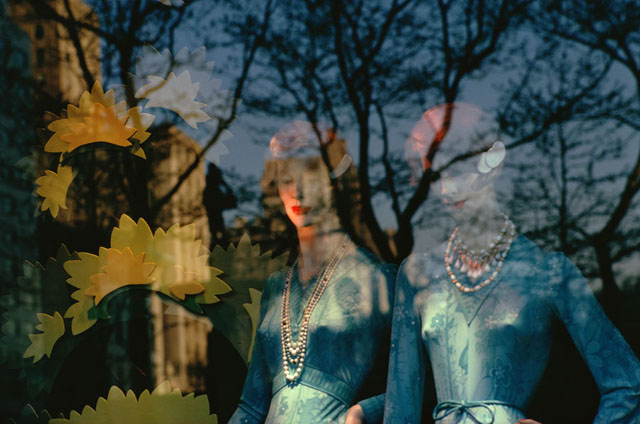
Shop Mannequins, Weight, and Body Image
Eric Robinson

"Mannequins communicate more than we might think about attitudes to body image in any given era." Lucy WallisIn the early 20th century, there was a more diverse range of body types which was also reflected by shop mannequins; larger ones were a "hangover from the Victorian era". Pierre Iman's mannequins were flat-chested with a pear shape and wide hips, three were size 46 (UK 18) and looked middle-aged. In the 1930s, mannequins became more uniform in size and embodying the then beauty ideals. In the 1950s, their waistlines were small, hips rounded, busts were high and shoulder were sloping. And in the noughties, a decade defined by cosmetic surgery, slim mannequins got sort of breast implants, too (via). Mannequins have been used for a relatively long time. The notion that their size can impact women's (and growingly men's) attitude to their body image and have a negative effect on their satisfaction due to social comparison, however, is largely unexplored (Cohen, 2014).
"We of course are not saying that altering the size of high street fashion mannequins will on its own 'solve' body image problems. What we are instead saying is that presentation of ultra-thin female bodies is likely to reinforce inappropriate and unobtainable body ideals, so as a society we should be taking measures to stop this type of reinforcement. Given that the prevalence of body image problems and disordered eating in young people is worryingly high, positive action that challenges communication of ultra-thin ideal may be of particular benefit to children, adolescents and young adult females."Findings of an online survey carried out among 325 women aged between 18 and 75 indicate that it is primarily women with a higher, "non-ideal" Body Mass Index who compare themselves with mannequins displayed in shop windows. And the greater the discrepancy between their and the mannequin's body, the more thin bodies are idealised and the more their body dissatisfaction grows (Cohen, 2014).
Eric Robinson
"One of the big – and I’ve been talking about this forever – is it all becomes invisible in a way because we're so used to it, and if its brought to people's attention, that sort of breaks through the clutter. I think it's pretty freakish for ribs to be showing."
Jean Kilbourne, former model and body image advocate
- - - - - - - - -
- Cohen, A. (2014). Mannequin Size on Consumers' Perception of Self and Satisfaction with Fit. University of South Carolina, link
- Robinson, E. & Aveyard, P. (2017). Emaciated mannequins: a study of mannequin body size in high street fashion stores. Journal of Eating Disorders, 5(1), ScienceDaily
- More: What an unusual Swedish mannequin reveals about body image, Washington Post, read
- More: Life imitates art: How shop mannequins have influenced body image, read
- photograph by Ernst Haas via
Wednesday, 31 October 2018
Katherine Hamnett's Licence to Kill
Katherine Hamnett
photograph taken by Chris Floyd (2015) via
Wednesday, 5 September 2018
Cleavage Application
Sophia Loren
According to Sevag Kertechian's study carried out in France, female applicants wearing low-cut tops are more successful in being invited to a job interview than women dressed in a less revealing manner. Over three years, Kertechian sent applications of two fictional women whose qualifications and photographs were more or less identical - with the only difference that one was wearing a more revealing outfit and the other a more traditional one. These fictional women applied for jobs in sales and accounting. The results: When wearing a revealing neckline, the applicant was invited to a job interview 19 times more often. Of the 200 sales role applications, the low-cut dress submission received 62 more invitations, of the 200 accountancy applications, there were 68 more interview offers when wearing a low-cut dress. Unfortunatley, the recruiters' gender was not considered as a control variable in this study (via and via and via and via).
"Our results showed interesting trends as low-cut dresses significantly influenced the choice of the recruiters, even for accounting positions. Regardless of the job, whether customer-facing saleswoman or office-based accountant, the candidate with the low cut clothing received more positive answers. The results were quite shocking and negative but not necessarily surprising — they show we need to conduct more research." Kertechian- - - - - - - - - - - - - -
Photograph of Sophia Loren and Jayne Mansfield (1957) via
Wednesday, 2 May 2018
Enninful's Vogue
Before I got the job I spoke to certain women and they felt they were not represented by the magazine, so I wanted to create a magazine that was open and friendly. A bit like a shop that you are not scared to walk into.
You are going to see all different colours, shapes, ages, genders, religions. That I am very excited about. You are going to see less of models who don’t look so healthy."
Edward Enninful
Edward Enninful is (British) Vogue's first black and male editor-in-chief. While shortly working for Italian Vogue, he led the magazine's first "Black Issue" featuring black models only (via). Before Enninful, Alexandra Shulman was Vogue's editor for 25 years, 25 years in which she gave black models solo covers only twice as otherwise she "would sell fewer copies". Enninful put a black model on his first cover (via).
In 2017, Enninful created the short film "I Am an Immigrant" with "81 of the international fashion community's most recognisable faces" because:
"There is so much unrest in the world right now, I simply wanted to show how beautiful it could be if we all were able to get along. The message is that we are all the same. The people that gave their time to this project, from the director, the subjects, hair, makeup, casting and the team at W, all came with a message of love and optimism."Related postings:
Edward Enninful
::: Audrey, Givenchy and Diversity in Fashion: LINK
::: The Diversity Coalition & The Fashion Industry: LINK
::: Jeans & Ageism: LINK
Monday, 6 November 2017
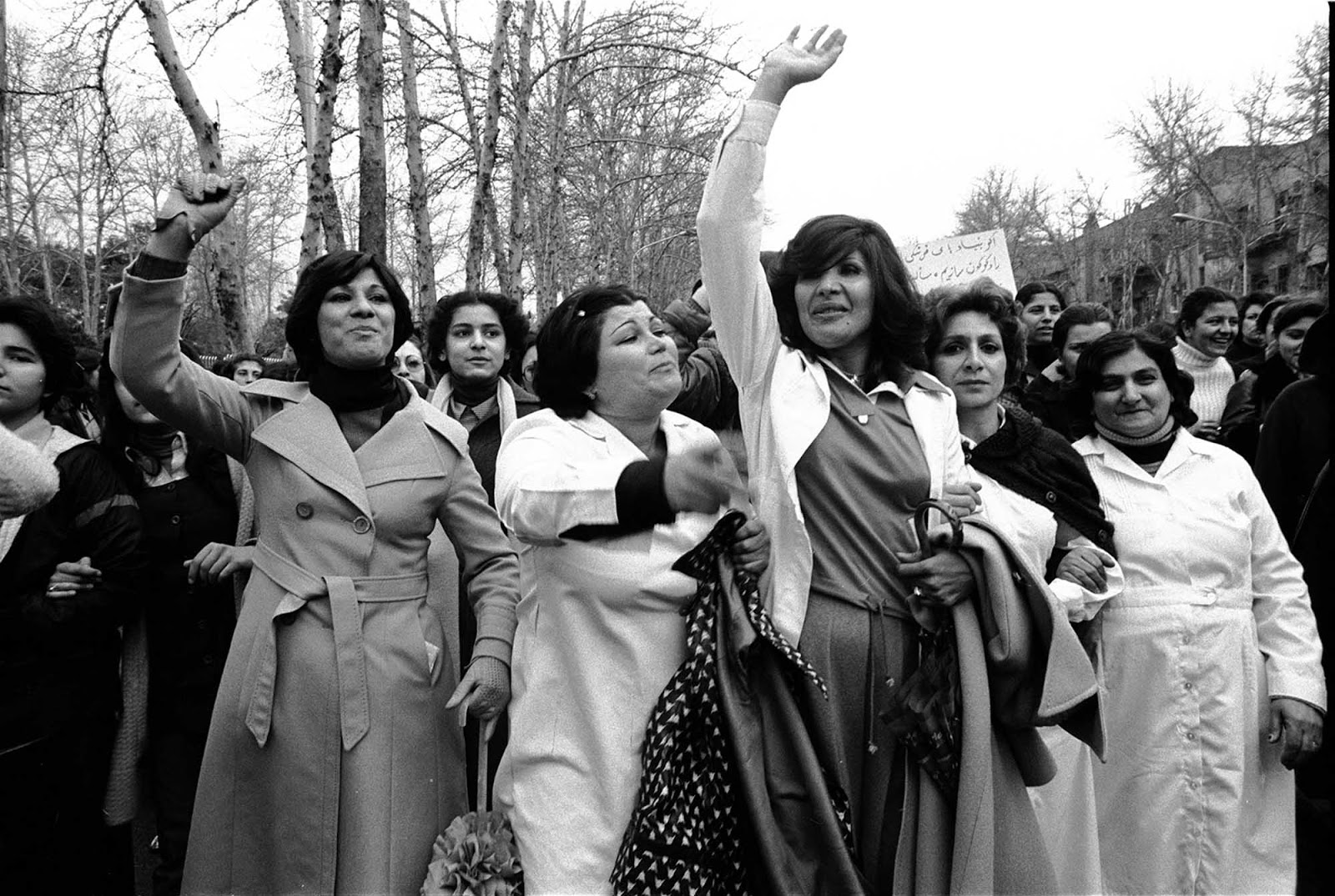
Narrative images: The Last Day Women Walked the Streets of Tehran with Their Heads Uncovered
Hengameh Golestan
On 8 March 1979, Iranian women protested against the new "Hijab Law" that had been introduced the day before. Women, from that day on, have been forced to wear scarves when leaving the house.
"Many people in Tehran went on strike and took to the streets. It was a huge demonstration with women – and men – from all professions there, students, doctors, lawyers. We were fighting for freedom: political and religious, but also individual."
Hengameh Golestan
photographs taken by Hengameh Golestan via and via and via
Monday, 7 November 2016
Jeans & Ageism
Senior Planet
According to a survey of 2.000 people carried out in Britain, the average age when men and women should stop wearing jeans is 53.
"It's surprising to see our research reveals that many people think jeans are the reserve of the younger generation, suggesting that we should all put denim back on the shelf at the age of 53."
Catherine Woolfe, Marketing Director at CollectPlus
"Denim is such a universal material and with so many different styles available it's a timeless look that people of all ages can pull off."
Catherine Woolfe, Marketing Director at CollectPlus
"What rubbish. I am 75 and will continue to wear jeans as long as I can get them on. I look great in them as do all my friends, skinny or ample. The whole point of jeans is that they fade, and adapt themselves to your shape."
Sarah Carter
- - - - - - - - - - - - - - - - - - - -
photograph of Marlon Brando via
Monday, 12 September 2016
"Ageism is so last century."
“Vogue’s 100th anniversary seemed like such an important moment, so we wanted to celebrate it by doing something symbolic. We’re really proud to be involved in a project which proves the older generation can be fearlessly stylish too. Ageism is so last century.”
Ben Tollet, executive creative director at Harvey Nichols' ad agency
Image via
Monday, 4 April 2016
The daughters of Eve
Judge Emerson Pereia
Saying that "in today's world it is the women and not the men who are doing all the seducing", Judge Emerson Pereia, of this small town in the state of Minas Gerais (Brazil), acquitted Analindo da Silva of charges of seducing a minor, an 18-year-old girl.
From the Wellsville Daily Reporter, August 16, 1974, submitted by Wayne and Lois West counterman, Wellsville, N.Y. (via)
- - - - - - - - - - -
photo via
Saturday, 6 February 2016
The -ism Series (25): Slackism
Wikipedia
"I’ll come back in slacks and if he puts me in jail I hope it will help to free women forever of anti-slackism."
Helen Hulick
Above: Helen Julick in the slacks she wore to court.
In 1938, kindergarten teacher Helen Hulick made headlines when she testfied against two men accused of burglarising her home ... wearing trousers in court. Judge Arthur S. Guerin rescheduled her testimony and told her to wear a dress next time she appeared in court.
"You tell the judge I will stand on my rights. If he orders me to change into a dress I won't do it. I like slacks. They're comfortable."
Helen Hulick, 10 November, 1938
Five days later Hulick returned to court in slacks; The Los Angeles Times reported (15 November 1938):
In a scathing denunciation of slacks — which he prosaically termed pants — as courtroom attire for women, Guerin yesterday again forbade Helen Hulick, 28, kindergarten teacher, to testify as a witness while dressed in a green and orange leisure attire.Guerin: "The last time you were in this court dressed as you are now and reclining on your neck on the back of your chair, you drew more attention from spectators, prisoners and court attaches than the legal business at hand. You were requested to return in garb acceptable to courtroom procedure.
Today you come back dressed in pants and openly defying the court and its duties to conduct judicial proceedings in an orderly manner. It's time a decision was reached on this matter and on the power the court has to maintain what it considers orderly conduct.
The court hereby orders and directs you to return tomorrow in accepted dress. If you insist on wearing slacks again you will be prevented from testifying because that would hinder the administration of justice. But be prepared to be punished according to law for contempt of court."
Hulick: "Listen, I've worn slacks since I was 15. I don't own a dress except a formal. If he wants me to appear in a formal gown that's okay with me.
I'll come back in slacks and if he puts me in jail I hope it will help to free women forever of anti-slackism." (via)
Hulick was given a five-day sentence and sent to prison.
Above: Helen Hulick (wearing a jail-issued dress) with her attorney William Katz and notary Jeanette Dennis
The Los Angeles Times continued:
"After being divested of her favorite garment by a jail matron and attired in a prison denim dress, Miss Hulick was released on her own recognizance after her attorney … obtained a writ of habeas corpus and declared he would carry the matter to the Appellate Court."
Hundreds of protest letters were sent to the courthouse, the Appellate Division overturned Guerin's contempt citation, and Hulick was free to wear slacks to court. When she came back to court a couple of months later, however, she wore a dress. She had made her point (via).
Above: Hulick dressed up for the followup court appearance on 17 January, 1939 (this photograph was published in the Los Angeles Times on 18 January, 1939)
photographs via and via and via