Thursday, 13 October 2022

Zanele Muholi: Rewriting Black Queer Visual History

Zanele Muholi, born in 1972, is a South African visual activist and - according to Tate Modern - one of the most acclaimed photographers today. Muholi has been documenting black queer people's lives in South Africa for many years. Their mission is "to re-write a black queer and trans visual history of South Africa for the world to know of our resistance and existence at the height of hate crimes in SA and beyond" and creating a positive imagery to defeat stigma and negativity attached to queer identity in the South African context (via).


"The black body itself is the material. The black body that is ever scrutinised, and violated and undermined."


Muholi photographs themself to emphatise with other queer people. "This is to say, ‘I am one of us,’. I’m not just taking photos for fine arts—I’m producing content that speaks to South African visual history and a group of people who, simply because of how they express themselves, won’t be counted in history. That includes me, so I’m working on content that’s produced by us for us about us—not dependent on other so-called experts." (via)
Muholi has produced a number of photographic series investigating the severe disconnect that exists in post-apartheid South Africa between the equality promoted by its 1996 Constitution and the ongoing bigotry toward and violent acts targeting individuals within the LGBTQ community. As an ensemble, Muholi’s images display the depth and diversity of this group in South Africa and in various countries that the artist has visited. With a profound commitment to redressing the social injustices faced by LGBTQ people, Muholi embraces a subjective perspective in their practice by forming relationships with the individuals they depict, including the women in Only Half the Picture (2003–06), the transgender or gay men in Beulahs (2006–10), and the couples in Being (2007). (via)

(above) In this tribute to her mother, a domestic worker, Muholi created a familiar image of exoticised Africa from laundry pegs. (literally via)


"I was thinking as you cross borders, the racial profiling that happens … When you’ve been through that process, you feel like trash. You wonder why this always happens to people like us."


"My art is political. It’s not for show, it’s not for play."


photographs via and via and via and via and via and via 

Wednesday, 12 October 2022

Hostile Neighbours: Sino-Japanese Antipathy

According to a survey carried out by Pew Research in China, Japan, Australia and India in 2016 (n = 7.618), stereotypical views of one another are largely negative in China and Japan. The countries see each other as violent, about 8-in-10 Japanese describe the Chinese as arrogant, about 7-in-10 Chinese describe the Japanese that way. Three-quarters of the Japanese (particularly those age 50 and older) believe the Chinese are nationalistic while only 4-in-10 Chinese associate the Japanese with nationalism. Neither country sees the other as honest. Only 11% of Japanese have a favourable view of China and only 14% of Chinese have a favourable opinion of Japan (via).

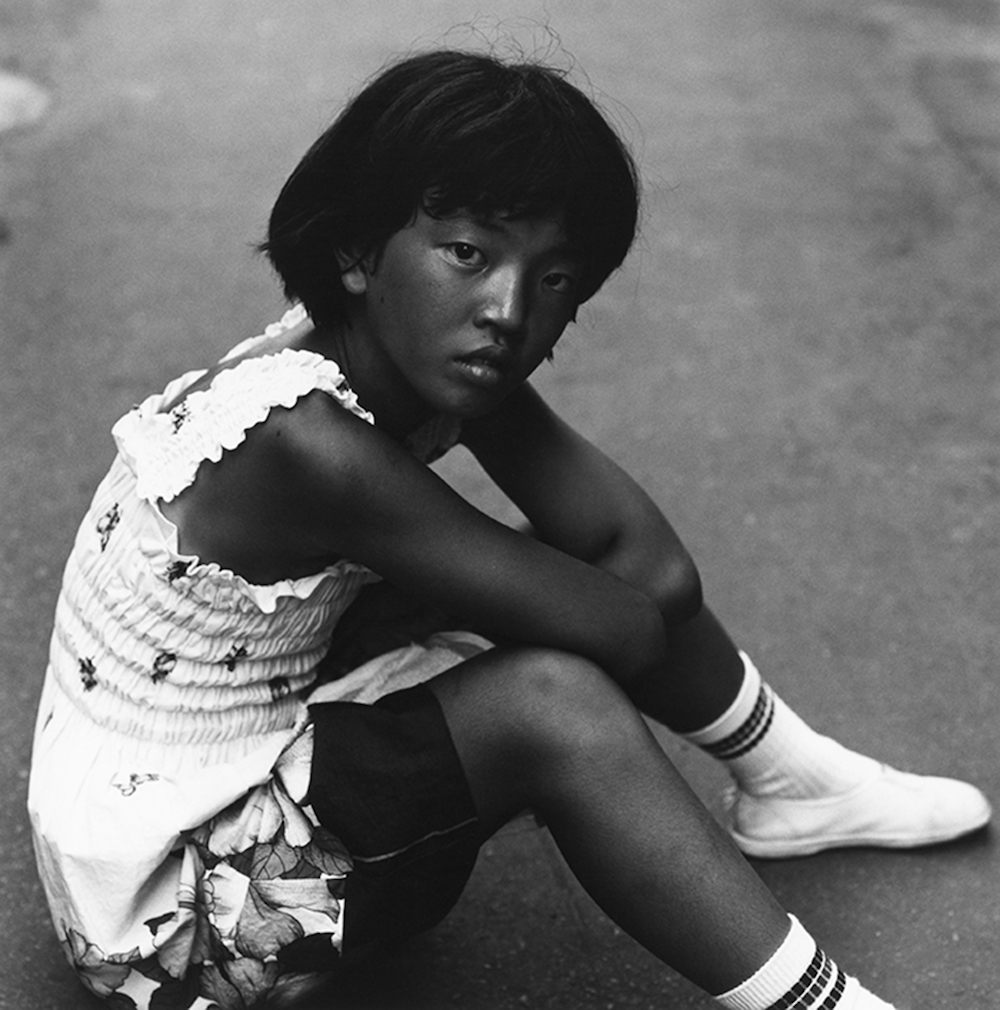
photograph by Issei Suda via

Tuesday, 11 October 2022

The Final Girl in Slasher Films

Brewer (2009) compared eight original horror films with their remakes to analyse female stereotypes. All of them were slasher films, i.e., a type of horror film in which a psychotic person kills many young people, usually women, using weapons such as chainsaws or blades. In most cases, the killer is an ordinary person who in the past had suffered a trauma and due to this injustice seeks vengeance. Often, filmmakers establish the so-called final girl in the beginning of the film: a tough and determined female who manages to survive in the end of the film after the "final struggle" with the killer. 

In the horror genre, the stereotypic characteristics of beauty, gentility, and morality permeate the slasher film. According to Rockoff (2002), “One of the most enduring images of the slasher film is that of the beautiful heroine screaming with fear- as the killer rapidly approaches. These post-modern damsels in distress, who have been collectively referred to as the “Final Girl,” are usually the lone survivors of the killer‟s rampage” (p. 13). In a study conducted by Sapolsky, Molitor, and Luque (2003), researchers observed the 10 most commercially successful slasher films of the 1990s. Results showed that the films portrayed female characters in more instances of fear, screaming, and cowering, than the male characters.
There are still stereotypic portrayals, however, they slightly shifted over the past decades with female roles expanding beyond their original stereotypic and limiting roles. While the original films portrayed women as helpless in fight scenes, the remakes showed them as women who were well capable of taking care of themselves and were fighting back. The original films portrayed women as unintelligent persons while they turned into intelligent problem solvers in the remakes. 
In respect to dialogue during critical thinking, the original films seemed to have either no real dialogue, or an inner dialogue. On the other hand, half of the remade films allowed the female characters to have very strong dialogue. 
In both films original and remake, women were victimised. In the remakes, however, the final girl often turned into the hero. Another difference observed in the analysis is sexual morality. In the past, those surviving in the end tended to be the virginal girls while the promiscuous ones died. This is a stereotype that still exists but results show that it is not as prevalent today in the remakes is it used to be in the original films. When Cowan and O'Brien (1990) conducte a study coding 56 slasher films and focusing on the violence directed towards men and women, they came to the conclusion that the non-surviving female characters were more frequently the more sexual ones: "In slasher films, the message appears to be that sexual women get killed and only the pure women survive".
According to the legendary “scream queen” Jamie Lee Curtis, “There‟s a sexual factor, yes. They kill the loose girls and save the virgins in most of these movies” (Rockoff, 2002, p. 14). This further perpetuates the social stereotype in horror films that women are to remain sexually reserved and virginal, if they want to survive. The viewers expect those women who survive to remain proper and virginal, whereas those who are sexually promiscuous often die at the hands of the killer.

And finally... 

Watching horror films is said to offer viewers a socially sanctioned opportunity to perform behaviors consistent with traditional gender stereotypes” (Weaver & Tamborini, 1996, p. 184). When the media, particularly the film industry, repeatedly expose viewers to social stereotypes of violence against helpless women, social acceptance of the behavior occurs. Thus, “early work on this topic found that males exposed to a sexually violent slasher film increased their acceptance of beliefs that some violence against women is justified and that it may have positive consequences (p. 184).
- - - - - - - - 
- Brewer, C. (2009) The stereotypic portrayal of women in slasher films: then versus now. Master's Thesis: Louisiana State University, link
- photograph (Hitchcock on the set of Psycho) via

Monday, 10 October 2022

Global Adult Literacy Rate By Gender

Generally speaking, literacy rates have increased worldwide for both genders. Nevertheless, as of 2020, there is still a gender gap when it comes to literacy with 90% of men and about 83% of women being literate (via).

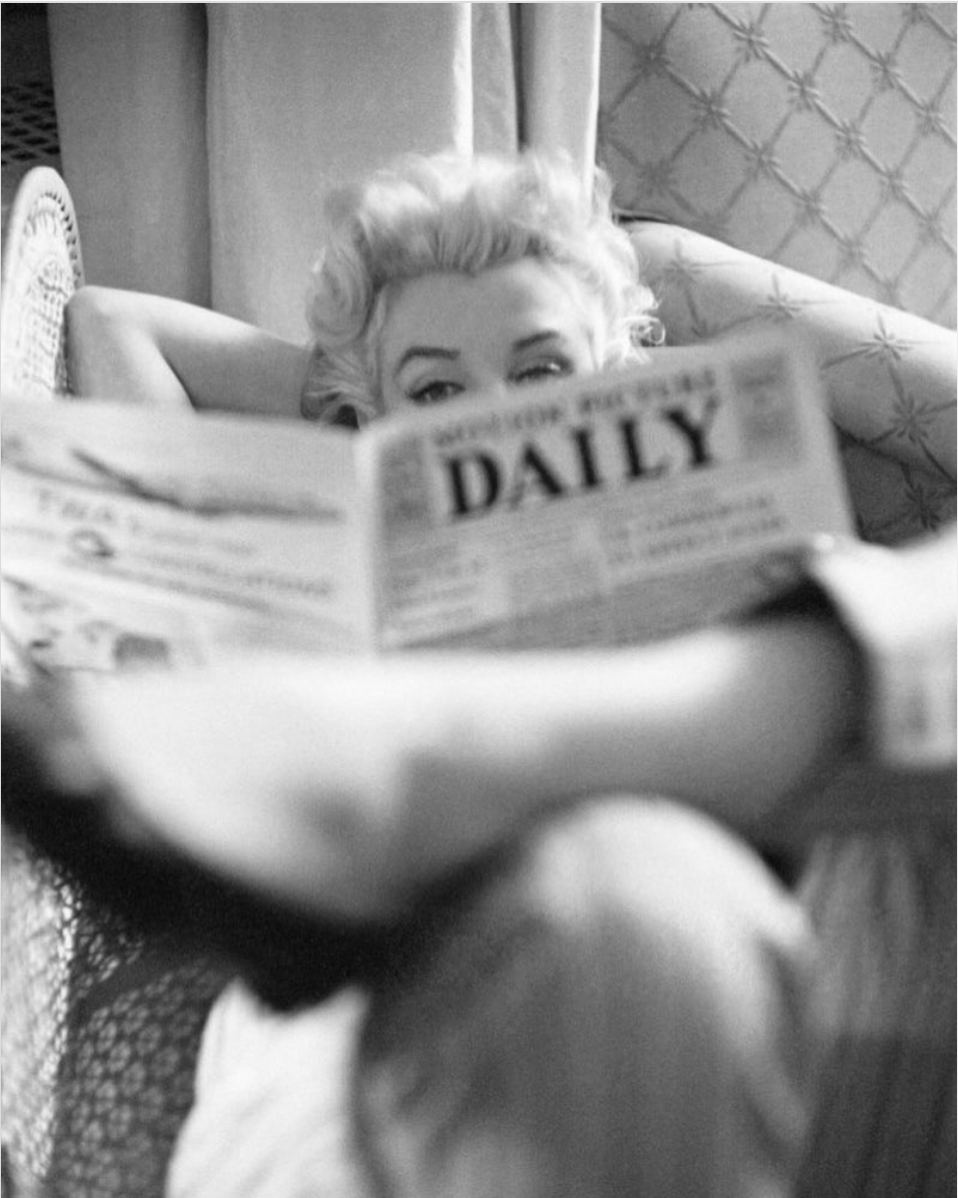
photograph of Marilyn Monroe via

Sunday, 9 October 2022

"Something needed to be done and we did it." Brick Lane 1978

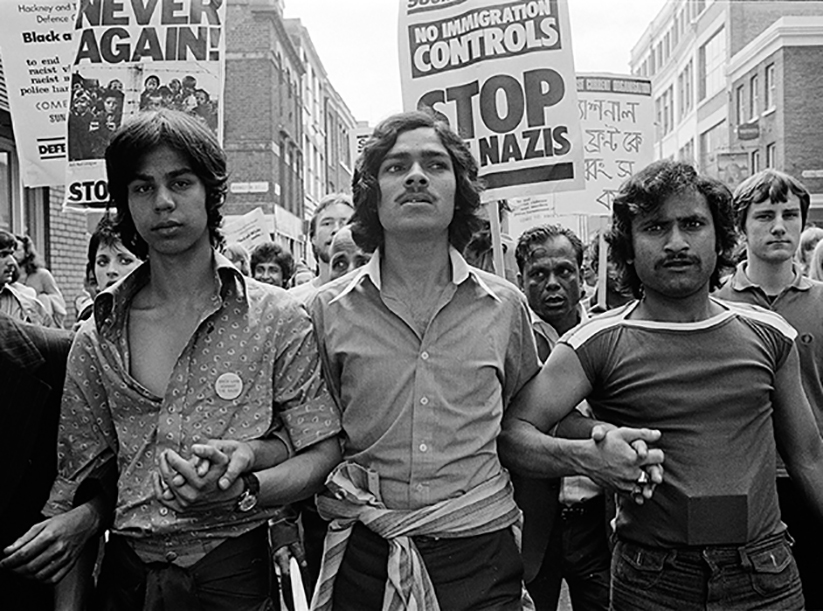
On 4th of May 1978, Altab Ali, a 24-year-old Bengali garment worker, was shopping for meal and planning to stop by a voting station to submit his ballot. He never did. That day, in broad daylight, he was brutally stabbed by three racist teenagers for being a "Paki". His body was found dead near Brick Lane. The next day, results of the elections showed that the National Front had gained popularity and that extremism "was making a return to mainstream British politics".

It was not the first racist attack on the Asian population but it was one that sparked reactions. Ten days later, about 7.000 Bengali marched from Brick Lane to Downing Street behind Ali's coffin. Ali's murder "galvanised what is now known as the Bengali Resistance Movement", protests that lasted throughout the summer of 1978 with people campaigning every single day (via and via and via).

"Something needed to be done and we did it."
Sunahwar Ali

photographs (c) Paul Trevor (first one: Adler Street, London E1, 14 May 1978. The start of the march behind Altab Ali’s coffin from Whitechapel to Hyde Park, organised by the Action Committee Against Racial Attack) via and via and via (coffin departing for Downing Street) and via and via and via

Saturday, 8 October 2022

Gender Dysphoria

Some transgender persons may experience "gender dysphoria" which refers to the "psychological distress that results from an incongruence between one's sex assigned at birth and one's gender identity". Gender dysphoria often starts in childhood, some experience it after puberty or many years later.

The DSM-5-TR defines gender dysphoria as an incongruence between one’s experienced gender and their assigned gender. It lasts at least six months and is manifested by at least two of the following criteria: 

A marked incongruence between one’s experienced/expressed gender and primary and/or secondary sex characteristics (or in young adolescents, the anticipated secondary sex characteristics) 
A strong desire to be rid of one’s primary and/or secondary sex characteristics because of a marked incongruence with one’s experienced/expressed gender (or in young adolescents, a desire to prevent the development of the anticipated secondary sex characteristics) 
A strong desire for the primary and/or secondary sex characteristics of the other gender 
A strong desire to be of the other gender (or some alternative gender different from one’s assigned gender) 
A strong desire to be treated as the other gender (or some alternative gender different from one’s assigned gender) 
A strong conviction that one has the typical feelings and reactions of the other gender (or some alternative gender different from one’s assigned gender) (literally via).

- - - - - - - -
photograph by Bruce Gilden via

Friday, 7 October 2022

On Aging. By Maya Angelou.

When you see me sitting quietly, 
Like a sack left on the shelf, 
Don’t think I need your chattering. 
I’m listening to myself. 


Hold! Stop! Don’t pity me! 
Hold! Stop your sympathy! 
Understanding if you got it, 
Otherwise I’ll do without it! 
When my bones are stiff and aching, 
And my feet won’t climb the stair, 
I will only ask one favor: 
Don’t bring me no rocking chair. 
When you see me walking, stumbling, 
Don’t study and get it wrong. 
‘Cause tired don’t mean lazy 
And every goodbye ain’t gone. 
I’m the same person I was back then, 
A little less hair, a little less chin, 
A lot less lungs and much less wind. 
But ain’t I lucky I can still breathe in.
- - - - - - -
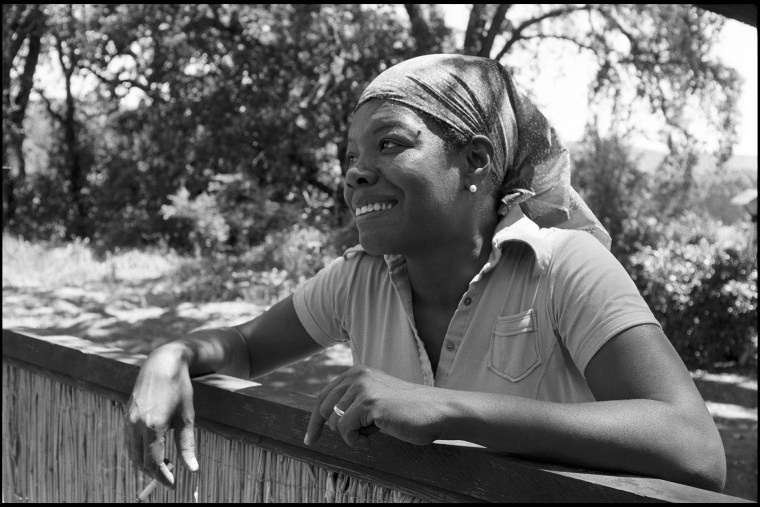
photograph via

Thursday, 6 October 2022

Evonne Fay Goolagong, Australian of the Year 1971

Evonne Goolagong Cawley, born in 1951, is a tennis legend who became one of the world's leading tennis players in the 1970s and 80s, winning the French Open singles, the Australian Open doubles championships, the women's singles tournament at Wimbledon, then winning Wimbledon as the first mother for 66 years, winning 14 Grand Slam tournament titles, representing Australia in three Fed Cup competitions, and, and, and. In 1971, she was named Australian of the Year, in 1985, Goolagong was inducted into the Sport Australia Hall of Fame, just to mention a few of her successes (via).


Winning Wimbledon was fine but certainly did not mean not being discriminated against:
Before I started traveling overseas and I was with a friend and in those days I loved music and I loved disco dancing so she took me out but I wasn’t allowed in. That happened again in Brisbane and I was with two Aboriginal friends and this was just after I won Wimbledon. I said ‘don’t worry we’ll go somewhere else’. I think it hurt my friends more than me.
Evonne Goolagong Cawley

Sydney was to provide no respite from the racism Goolagong Cawley had to face. She especially remembers an incident while playing with Edwards’ daughter against two older ladies. “One of the older ladies didn’t like the idea of two youngsters beating up on them. We won pretty easily. When it was time to shake hands. “And she said; ‘This is the first time I’ve had the pleasure of playing a N***er’ and I’ve never heard that before and I started to get really upset.” As her mentor Edwards did his best to shield her from such prejudice. “He taught me not to believe in what you read, believe in yourself so I never read anything. I realize now he was blocking me from a lot of things. “I always just thought of myself as a tennis player. I was protected from a lot of publicity and politics of life.”
Evonne Goolagong Cawley

Being an Indigenous Australian athlete she was believed to have different skills and qualities and was "patronised by both racist and sexist descriptions by a white male-controlled media" (Stell cited in Bruce & Hallinan, 2001). She was hardly mentioned without the preface "Aboriginal girl" (via)...

I'd much rather people knew me as a good tennis player than as an aboriginal who happens to play good tennis. Of course I'm proud of my race, but I don't want to be thinking about it all the time.
Evonne Goolagong

I don't think of myself as being colored but of being Australian.
Evonne Goolagong

"Australian newspapers gave considerable coverage to the 1971 women's Wimbledon final. Wimbledon was and is the tennis world's premier event, yet the women's final did not receive such coverage in Australia in the previous year, when the event was won, as expected, by Australia's Margaret Court. Court played again in the final in 1971, but this time the result was an upset: a surprise win by a young player whose coach had predicted she would first win the tournament three years later in 1974, a prediction possibly calculated to have exactly this publicity effect. Newspapers across Australia announced the result with sensationalist headlines and hyperbole. The winner was a young Evonne Goolagong (later Cawley), aged nineteen and a newcomer on the tennis world stage. Her potential to win this tournament had been hinted at earlier in the year when she won the French Open at Roland Garros. Was it her youth, her rural Australian background and unexpected success that produced this rush of interest in her and her life? Was it her beauty, in a sport where a woman's media profile was and is heavily influenced by her appearance and sexuality? Or was it that she was of Aboriginal descent, the heroine of a classic rags-to-riches tale of triumph? "
Karen Fox

Today, Goolagong`s foundation is dedicated to encouraging Indigenous boys and girls to play tennis.

- - - - - - -
- Bruce, T. & Hallinan, C. (2001). Cathy Freeman: the quest for Australian identity. In David Andrews & Steve Jackson (eds.) Sports Stars. The Cultural Politics of Sporting Celebrity (257-270). London & New York: Routledge.
- photograph via

Wednesday, 5 October 2022

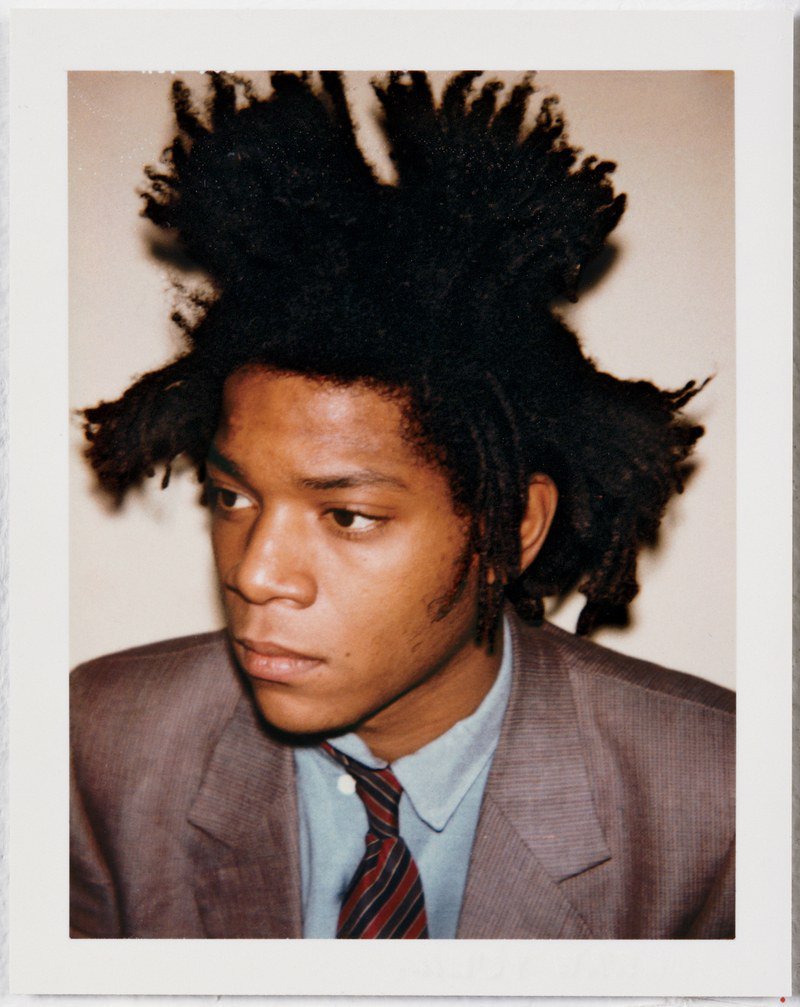
"Our cultural memory follows us everywhere." Jean-Michel Basquiat

"I'm an artist who has been influenced by this New York environment. But I have a cultural memory. I don't need to look for it, it exists. It's over there in Africa. That doesn't mean that I have to live there. Our cultural memory follows us everyhwere, wherever you are."
Jean-Michel Basquiat

"I don't know if my being Black has anything to do with my success. I don't think I should be compared to Black artists but with all artists."
Jean-Michel Basquiat

- - - - - - - - -
photograph (by Andy Warhol) via

Monday, 3 October 2022

"Giving Uganda back to ethnic Ugandans." The Expulsion of Ugandan Asians.

Uganda became a protectorate of the British Empire in 1894 and was finally granted independence in 1962. In 1896, The British administration sent over 40.000 citizens of India as labourers to build a railway. Later, more Asians were brought to Uganda to "serve as a buffer between Europeans and Africans in the middle rungs of commerce and administration" (via), many of them owned shops. In fact, Asian Ugandas owned 90% of the country's businesses and accounted for 90% of the country's tax revenues. They made up only 1% of Uganda's population but earned 1/5 of the nation's income. This, the British investing in the education of Asians over the education of Ugandans, and the segregation of schooling and healthcare later led to tensions. 

In 1971, General Idi Amin staged a coup and declared himself President of Uganda. In his eight-year regime of terror there were mass executions of tribes that had been loyal to Obote, the elected president who had been forced into exile. Amin also terrorised the general public making clear that everybody opposing his regime would be eliminated. It is estimated that about 300.000 civilians were massacred (via).

Needing a new enemy to distract from his problems and to make himself popular, Amin decided to capitalise on the resentement of Ugandan Asians, called them "bloodsuckers" and accused them of destroying the country's economy, of engaging in unethical business practices, corruption, ethnic elitism and "milking Uganda's money". In 1972, Amin announced the mass expulsion of Asian Ugandans over a period not to exceed three months. In other words, Amin was the man who would "give Uganda back to ethnic Ugandans". In 1972, between 50.000 and 70.000 Asians were forced to leave the country, those who stayed would be sent to concentration camps, Amin threatened (via and via). Asians were given 90 days time to pack their lives and leave, many moved to the United Kingdom. In the years to follow, the economy of Uganda slumped (via). 

- - - - - - - -
photograph (1973, family living in Leicester after being expelled from Uganda) via