Friday, 10 November 2023

Stereotypes about Black Bodies in French Medical Literature (1780-1950)

In parallel with the colonisation of African countries, colonial doctors and scientists started describing "African bodies" developing a hierarchy between Black peoples of Sub-Saharan Africa, i.e., from The Cape of Good Hope to Senegambia.  Interestingly, there were conflicts between some doctors and differing attitudes between home country practitioner medicine and colonial medicine on the field.

This research focuses on the descriptions of African people’s body according to French Doctors writings from the end of the 18th century to mid-20th century. Thoughthe black race is seen as monolithic group in the medical writings at the beginning of the period, the African multiplicity slightly came up under the colonial doctors’ pens. Their action and their work started developing in the last third of the 19th century in parallel with the colonization. Beyond the principal human races classification, the French doctors and scientists established a hierarchy between the black peoples of Sub-Saharan Africa, from The Cape of Good Hope to Senegambia. The view onAfrican bodies varied and became more refined all along the studied period, despite the permanency of numerous racial stereotypes. A sexual description of the peoples is added to the racial and ethnic taxonomy. Based on medical dictionaries, research monographs about human races or even on colonial medicine work, our work displays, within the descriptions of the black bodies, the overlapping of the theories about race, gender and kind, and also explains the similarity of the rhetorical methods used to define and describe the Other, should they be female or black. Moreover, this research highlights the way these representations thrived on scientific controversies, political concerns and interactions between home country practitioner medicine and colonial medicine on the field. Though the medical speeches stigmatize racial inferiorities or even the inversion of gender of the African people, this work also underlines the antithetical opinions and the conflicts between some doctors about these consensual.

To the ethnic taxonomy, a sexual description was added since hypersexuality was one of the most common prejudices about Africans, not only in medical literature. These supposedly overdeveloped sexes were associated with uncontrollable sexuality. The association, again, was established to justify female circumcision and polygamy. With sexology emerging, doctors and scientists intended to learn about the sexuality of the othered "in order to define sexuality in their own society by race (sic), gender or class". Understanding the so-called sexual practices of Africans was a means to help colonists to control and preserve their own sexuality. 

In effect, white expatriates who passed several months in the colonies underwent all sorts of temptations owing to the visible bodies of women, the so-called “free” sexuality and the climate — temptations to avoid for the sake of preserving the colonial power’s integrity and authority. Out of these fears arose discourses and warnings about racial mixing and its dangers for the white race.

Myths, random observations and racist theories about a "black sexuality" as the antithesis of a "white sexuality" (moderate, hygienic and connected with moral values) were introduced to maintain boundaries and support colonialism, the latter being marketed as a "civilising mission". Hypersexuality was seen as a main characteristic of Black people. Pseudo-scientific approaches, such as establishing a correlation between skull shape, brain weight and the size of genitals with carnal instincts and pleasures and intellectual weakness - were supposed to explain "Black hypersexuality".

It is still the same way that, with the N*gro, the intellectual organs being less developed, the genitals acquire more preponderance and extension. (Gazette Medicine of Paris, 1841)

In the first half of the twentieth century, women were portrayed as virile since they did hard work, had muscular bodies, short hair and were courageous while men were portrayed as effeminate because of their alleged laziness and intellectual inferiority, and hairless body. Colonial doctors regarded their mission as a civilising one as their work was also about redefining the social roles specific to each gender (Peiretti Courtis, 2018).

Discourse surviving black men for their physical strength and robustness also existed in medical books throughout the period studied and particularly at the turn of the nineteenth and twentieth century’s when the degeneration of the white race worries the medical and political sphere. The black body then becomes an example of virtue and resistance to offer to white men weakened by civilization and urbanization. African femininity is also valued during the nineteenth and first twentieth century when it comes to presenting a model of maternity to white women forsaking their mission. If Africans are erected, according to the political or social context in France, as an example for the French, everything seems nevertheless to bring them back to their body, presented as their main strength and wealth. These discourses have political consequences. Feminization but also the infantilization of black peoples led to a more general devaluation of Africans, which had political repercussions such as to justify the colonization of men considered inferior, intellectually or even physically close to women and children. And subject to their passions. Thus, the famous speech of Ferry in 1885 draws its roots in the breeding ground of the radiological medicine and in the tests brought by the scientists of an inferiority of the black race. Similarly, while the writings of colonial doctors have highlighted African diversity, they have generated, by aiming to rationalize the colonial work, a strengthening of ethnic groups but also differentiations and hierarchies still existing today in Africa.

- - - - - - - - - - -

- Peiretti Courtis, D. (2018). Stereotypes about black bodies in French medical literature: race, gender and sexuality (1780-1950), Journal of Historical Archaeology & Anthropological Sciences, 3(3), link
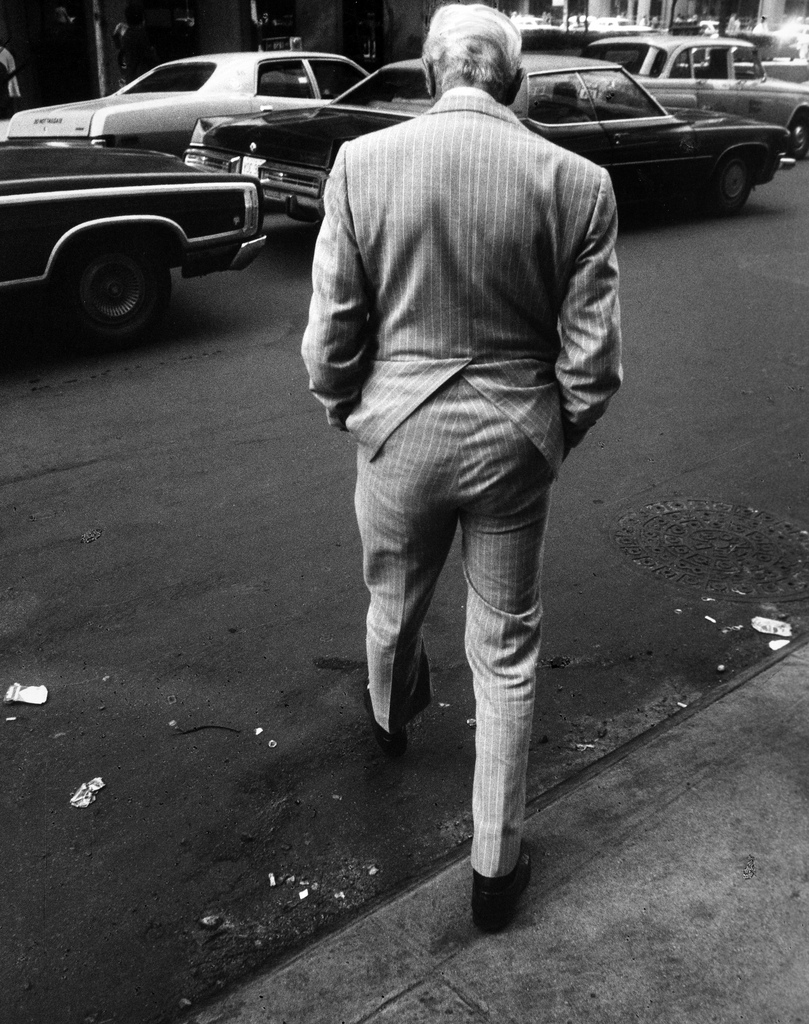
- photograph by Sory Sanle via

Thursday, 9 November 2023

Welsh Language, Its Survival and the Role of Broadcasting

The first BBC broadcast from Cardiff took place in 1923. Since - more or less - then, the broadcasting industry has included Welsh elements. A national broadcasting sector in Wales emerged, with Welsh channels and BBC Cymro Wales (two televistion channels, three radio stations) being the main public service broadcaster there. There is also S4C, the only Welsh-language TV channel.

The public service broadcasting (PSB) model is built on channels with "a distinctive and strong Welsh flavour" and is "an important asset for the Welsh population". Welsh broadcasting is vulnerable to the changing patterns of media consumption taking place on a global level. The PSB's decline (due to the changes in broadcasting and the tougher environment) threatens the foundations of Welsh broadcasting. Digital platforms, video-on-demand, more choice and competition but also developments in audience patterns have changed the media landscape. Some criticise streaming services for hardly offering local content and point out the lack of cultural references and regional accents in Netflix programmes that are produced in the United Kingdom. As a consequence, Welsh lives and experiences are not represented. And the more the global perspective of streamers dominates, the more Welsh-language broadcasting will be marginalised (via). 

Quoting The Guardian:

One of Europe’s oldest languages will only thrive if its place on radio and TV is retained and its online presence greatly expanded. (...) Welsh has largely been a success story over the past 40 years, greatly helped by the launch in 1982 of S4C – a free-to-air television channel aimed at Welsh speakers. S4C was crucial in revitalising the language and making it relevant to a rapidly changing Wales. But how much longer will that be the case? (via)

- - - - - - - - - - - - -
photographs of Richard Burton (The Villain, 1971) via

Wednesday, 8 November 2023

The Martial Race Ideology

Jean Jacques Rousseau wrote a discourse celebrating what he called the most natural state of man. He believed that in this state of nature, man was ultimately good and not inherently evil. As the stages of nature progress, Rousseau continued, the decadent society corrupts man by making him weak and unable to defend himself. He praised the primitive man's "military virtue", the "noble savage" rather untouched by civilisation, not polluted and weakened by modern society, hence perfect soldiering material (Spivey, 2017). 

One logical extension of his argument is that the “civilized” and “sophisticated” English would be forced to rely upon so-called “lesser” people for protection. (Spivey, 2017:16)

These ideas had an impact on the British Army and played a factor after the Indian Mutiny or First War of Independence, an unsuccessful rebellion against British rule in India from 1857 to 1859. After this war, the British Army introduced the classification of "martial" and "non-martial" groups in their armed forces. According to the Peel Commission Report (1859), the revolt began with Bengal Army filled with Brahmins (via). The British reacted to the report and the Martial Races Theory became part of their reorganisation strategy. They preferably recruited Sikhs and Gurkhas from the northwest frontier, but also Marathas and Rajputs and avoided Bengali who they thought had become weak and effeminate through the growing urbanisation. High-caste Brahmins were regarded as dishonest, disloyal and scheming. Later, the notion of martial and non-martial cultures or ethnicities was transferred to other contexts, such as the British Isles. There, the Highland Scots became the most desired soldiers while the Irish - Celt, Catholic, peasant - were seen differently. Scientific racism helped to keep this view unchallenged (Spivey, 2017). Quoting Darwin:

The careless, squalid, unaspiring Irishman multiplies like rabbits: the frugal, foreseeing, self-respecting, ambitious Scot, stern in his morality, spiritual in his faith, sagacious and disciplined in his intelligence, passes his best years in struggle and celibacy, marries late, and leaves few behind him. Given a land originally peopled by a thousand Saxons and a thousand Celts-and in a dozen generations five-sixths of the population would be Celts, but five-sixths of the property, of the power, of the intellect, would belong to the one-sixth of the Saxons that remained. (cited in Spivey, 2017:14)

Gurkha also played a role in the Falkland War when the 7th Duke of Edinburgh's Own Gurkha Rifles Regiment - part of the British task force- was sent to fight Argentina on the Falkland Islands.

The Brigade of Gurkhas, composed of more than 3,000 soldiers of Nepalese descent, who traditionally served in the British Indian Army before India became independent in 1947. (via)

The image of the Gurkha - a born soldier turned into a killing machine - survived the British departure from India in the 1940s (Barua 1995).

- - - - - - - -
- Barua, P. (1995). Inventing Race: The British and India's Martial Races. The Historian, 58(1), link
- Spivey, A. (2017). Friend or Foe? Martial Race Ideology and the Experience of Highland Scottish and Irish Regiments in Mid-Victorian Conflichts, 1853-1870, Electronic Theses and Dissertations, Paper 3216, East Tennessee State University
- photograph (by Masterji of Kelly, a bus conductor, 1950s) via

Tuesday, 7 November 2023

Severely Impaired, Self-Centred, Elitist, John Wayne Conservative or Golden Ager? Negative and "Positive" Age Stereotypes

Hummert et al. (cited in Miller Leyell & Mazachek, 2002), using e.g. cluster analysis, found eight negative and six (rather) positive stereotypes of older people. Negative stereotypes are associated more with older old people, positive ones more with younger old people. The older the age, the more the associations become: mildly impaired, severely impaired, shrew/curmudgeon, despondent, recluse, vulnerable. The positive older person is not a burden but the supportive grandparent or volunteer. Older persons are more or less seen positively as long as they are productive and wealthy "golden agers". 

The eight negative stereotypes: 

1) despondent (afraid, bored, depressed, fragile, frustrated, hopeless, hypochondriac, lonely, neglected, sad, sick, tired, victimise, wary)
2) vulnerable (afraid, bored, emotionless, hypochondriac, miserly, sedentary, victimised, wary, worried)
3) severely impaired (dependent, feeble, forgetful, fragile, hopeless, inarticulate, incoherent, neglected, poor, rambling, sedentary, senile, sexless, sick, slowly thinking, tired, victimised)
4) shrew/curmudgeon (bitter, bored, complaining, demanding, frugal, greey, humourless, hypochondriac, ill-tempered, inflexible, jealous, nosy, prejudiced, selfish, snobbish, stubborn)
5) recluse (dependent, forgetful, frustrated, naive, poor, quiet, sedentary, timid, worried)
6) mildly impaired (dependent, forgetful, fragile, frustrated, poor, rambling, sedentary, sick, slowly moving, tired, victimised, worried)
7) self-centred (emotionless, greedy, humourless, inflexible, jealous, miserly, nosy, selfish, sexless, snobish, stubborn)
8) elitist (demanding, naive, prejudiced, snobbish, wary)

The six "positive" stereotypes: 

1) perfect grandparent (family-oriented, family-loving, generous, grateful, happy, healthy, intelligent, kind, knowledgeable, loving, self-accepting, supportive, trustworthy, understanding, wise)
2) golden ager (active, adventurous, alert, capable, courageous, curious, determined, fun-loving, future-oriented, happy, health conscious, healthy, independent, intelligent, interesting, knowledgeable, liberal, lively, political, productive, proud, sef-accepting, sexual, skilled, sociable, successful, volunteer, wealthy, well-informed, well-travelled, wise, witty)
3) John Wayne conservative (conservative, curious, determined, emotional, mellow, nostalgic, old-fashioned, patriotic, political, proud, religious, reminiscent, retired, tough, wealthy)
4) liberal matriarch/patriarch (frugal, liberal, mellow, old-fashioned, wealthy)
5) activist (frugal, liberal, mellow, old-fashioned, wealthy)
6) small-town neighbour (conservative, emotional, frugal, old-fashioned, quiet, tough)

- - - - - - - -

- Miller, D. W., Leyell, T. S. & Mazachek, J. (2002). Stereotypes of the Elderly in US Television Commercials From the 1950s to the 1990s. Journal of Advertising History, link
-  photograph by Leon Levinstein via

Monday, 6 November 2023

The Black Woman in Zurich

"(...) at the time I grew up there were no black people in Switzerland. There was one black woman living in Zurich. It was a very isolated life. I don’t complain about it but it was cut off, especially when there was war all around the country because of the Germans."
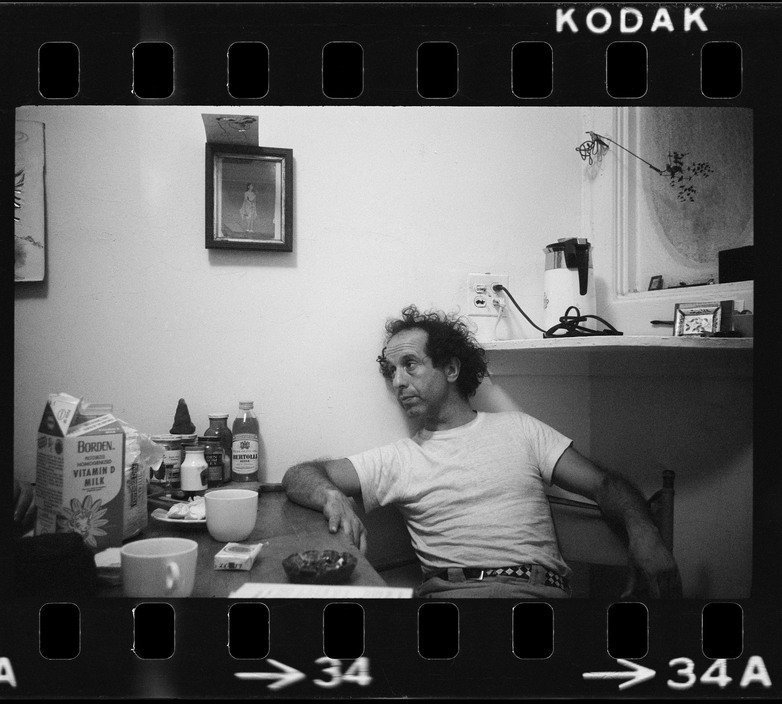
Robert Frank

photographs of Robert Frank by Danny Lyon via

Sunday, 5 November 2023

Feeling One's Underrepresentation in the Beauty Industry

"Mirror/Mirror: Survey of Women's Reflections of Beauty, Image and Media" is a survey conducted in 2019. It found that 64% of women aged 39 to 54 and 74% of women aged 55 to 73 feel that the beauty industry creates products not having people their age in mind and that they are underrepresented in beauty advertising. More than 70% of the women across both age groups state that they would be more likely to purchase from brands that are more inclusive in terms of age. 76% of women aged 22 to 38 agree with this statement (via).

photographs of Joan Crawford by Eve Arnold (1959) via 

Saturday, 4 November 2023

Ernest Ralph Tidyman and the Creation of Shaft

Ernest Ralph Tidyman (1928-1984) created John Shaft for the 1970 novel of the same name and co-wrote the screenplay for the 1971 film version of Shaft. It was Ronald Hobbs, one of the very few Black literary agents at the time and the only one in New York City, who - in 1968 - had recommended to commission Tidyman to write Shaft (via and via and via and via). More books and more film sequels followed.

"Encouraged by his literary agent, Ronald Hobbs, Tidyman took up a commission on a $1,800 advance from Macmillan mystery editor, Alan Rinzler. Rinzler had been looking to spice up the publisher’s mystery output and had been looking for something new in the field. He had the idea of creating a black detective hero in the Sam Spade/Philip Marlowe mould. After reviewing the initial pages Rinzler encouraged Tidyman to toughen up the lead character deeming Tidyman’s initial version too soft. He suggested a gesture of violence by having the hero throw a gangster out of his office window." (via)

Reading black fiction, you see that the central figure is either super hero or super victim, as in [William] Styron's book. The blacks I knew were smart and sophisticated, and I thought, what about a black hero who thinks of himself as a human being, but who uses his black rage as one of his resources, along with intelligence and courage.
Ernest Tidyman

"Tidyman’s true skill was an ability to define the hero and the bad guys without ever allowing racism to bump into itself. Everyone, black and white, was rooting for Shaft, the hero. The fact that he was black had nothing to do with it . . . and, of course, everything to do with it. Blacks and whites could root side by side, but in Shaft territory it was always going to be hipper to be black." (via)

- - - - - - - - - - -
photograph of Ernest Tidyman via 

Friday, 3 November 2023

Personality Disorders, Eccentricities or Ageism?

Abstract: Personality disorders, especially in older adults, are among the most difficult psychiatric disorders for nurses to assess. When aging further complicates these disorders, nurses' therapeutic skills are challenged. It has long been thought that personality disorders "age out," but new research indicates that personality disorders may in fact continue throughout the life span. 


In addition, the primary and secondary changes of aging further complicate assessment. Assessment of personality disorders in older adults may also be distorted by ageist stereotypes and a lack of understanding of cultural context. Likewise, nurses must be careful about misinterpreting "eccentric" older adult behavior as a personality disorder. In this article, we focus on assessment challenges in older adults to help nurses distinguish between characteristics of personality disorders, stereotypes, and eccentricities in this population. (Magoteaux & Bonnivier, 2009)

- - - - - - - - - - - - - -

- Magoteaux, A. L. & Bonnivier, J. F. (2009). Distinguishing between personality disorders, stereotypes, and eccentricities in older adults. Journal of Psychosocial Nursing and Mental Health Services, 47(7), 19-24, link
- photograph of Bette Davis via

Thursday, 2 November 2023

Coming out, coming home, coming with: Models of queer sexuality and the role of culture

In 2015, the video "Coming Home" appeared on Chinese social media, released by an organisation that advocates for "a U.S.-style of coming out among Chinese LGBTI". The video targeted parents of queer children and received more than 250 million views before the government made the website remove the "gay-friendly content" . 

Coming Home narrates the story of a middle-class gay man, Fangchao, who comes out to his parents on the phone. Fangchao’s father scolds him when he comes out: “Since you have already come/gone out, don’t come home again!”(PFLAG China, 2015). With this pithy statement, the scriptwriter makes conspicuous the opposing relational models of coming out versus coming home for Chinese queer subjects. There is a play on words (chuqu 出去) in the dialogue to mean both coming out (as a queer subject) and going out (as in leaving the family). This video weaves together simultaneous movements away from and toward the family: coming out takes on the meaning of leaving the family in order to gain sexual freedom; coming home (huijia 回家), on the other hand,brings to mind the idea of coming back to the family, reining in and covering queer desires in order to stay close to the family. In this rendering, coming out is antithetical to coming home: if you come out, then do not think about coming home again.
Fangchao's coming out turns him into an outcast. Two years later, so the flash-forward in the video, his mother calls him telling him to visit the family during the Chinese New Year: "No matter who you are, you are still our son." At the end, family love overrules and the parents accept their gay son. The video ends with mothers speaking out and encouraging viewers to come out to their families.
The messages of this video are clear: dear parents of Chinese queers, remember how much you love your children and be sure to invite them to come (back) home; dear Chinese queers, come out and then wait for your parents (probably your mother) to invite you to come home.
Coming out and coming home can be seen as models of queer sexuality, each offering norms, aspirations, prescriptions. Huang and Brouwer (2018) see coming home as an indigenous model and coming out as an exogenous one. and elaborate a third model - coming with. The authors conducted interviews with 13 Chinese queer subjects to ...
investigate the distinctness of these models, their points of dissonance and consonance,and the ways in which queer subjects take them up (partially or fully, temporarily or enduringly), revise them, or reject them. Broadly, we express a critical/cultural orientationas we “examine multiple axes of power and oppression …and consider culture to be a starting point for theory and analysis”(Ono, 2009, p. 77). More specifically, we hope to contribute to the projects of culturalizing queer theory and queering intercultural communication. Aligned with these projects, we stay alert to “the ways in which western queer formations,”like the coming-out model, “travel, by choice and by coercion, imposing western values and ideals on non-western cultures within and outside of westerncountries”(Chávez, 2013, p. 87). As we investigate if, why, and how Chinese queer subjects come out to themselves, friends, peers, and/or family members (cf., Bie & Tang, 2016) or choose tactics more aligned with coming home, we feature the particularities of everyday life as Chinese queer subjects express them, and we aspire to counter “the cultural reductionism”(Ban, Sastry, & Dutta, 2013, p. 283) that is persistent in orientalist ways of understanding China.
The questions asked are highly interesting since culture might be a neglected aspect in transnational queer discourse. Coming-out rates are, in fact, relatively low in China (as of 2016, 3% of gay and bisexual men, 6% of lesbian and bisexual women). Not the public but family, particularly parents, is what keeps them most from coming out, 75% of gay and bisexual men and 81% of lesbian and bisexueal women reported "that their primary source of distress" is the family. Only 19% of gay/bisexual men and 25% of lesbian/bisexual women said that they had come out to "some family members".
Transnational LGBTI movements privilege a queer politics that is oppositional and confrontational, with an emphasis on the visibility of sexual identity. Critical sexualities scholars have argued that the predominant narrative of “coming out”is built on a particular kind of queer experience and geography, which is usually from the standpoint of white,middle-class, urban U.S. citizenship (e.g., Chávez, 2013). Due to the transnational circulation of Euro-American queer discourses, identitarian and visibility frames of queerness (Puar, 2007), which endorse a confrontational politics of coming out, have become an increasingly prominent discourse in Chinese LGBTI movements. The movement organization PFLAG China, for example, not only sponsored the video we featured in the introduction, but also sponsored a coming-out story competition for lesbians, gay men, and allies (Bie & Tang, 2016). Transnational queer discourse’s emphasis on a homosexual identity and the politics of visibility has become a new discursive resource that Chinese queer subjects can draw on in order to fight for their sexual freedom. It risks becoming a new hegemony that Chinese queer subjects might be expected to embrace to become intelligible members in a transnational LGBTI imaginary—a form of peer pressure, to use the words of our interviewee Ada, that Chinese queer subjects face. Indeed, an analysis of our data shows that coming out is an important narrative in being queer in contemporary China.
Also of interest...
Some of the interview participants take up the imperatives and practices of coming outas offered by Western discourses. However, several take up coming out in partial and revised ways or reject it altogether as unimaginable, unfeasible, or unsustainable. Partial and revised uptake is mediated by several factors, including the cultural principles of pulu (铺路) and suzhi (素质). Repeatedly during the interviews, the two popular discourses of suzhi (“quality”) and pulu (“path-paving”) emerged as the parameters or preconditions of coming out. The discourse of suzhi/quality is essentially a class issue related to the emergence of a “rainbow economy.”Increasingly, Chinese queer subjects are interpellated into the consumerist position of being “out and proud.”But not all queer subjects answer the hail of interpellation as good consumers. Economic difference predicts whether one is a good consumer, and thus a proper queer or not. Those who do not or cannot afford to be good consumers are sometimes condemned as lacking “culture,”or described as “low quality”(di suzhi), and thus not qualified to be a “good homosexual”(see Rofel,2007, pp. 103–106).
A 19-year-old mentioned class differences in connection with coming out:
I remember when the CEO [chief executive officer] of Apple came out, everybody was talkingabout it. I remember how people responded to it: this is something of the rich. I think whenyou are financially well off, people think that [being gay] is OK. If you are not, then play notricks—get married and have children!
In line with this view, many interviewers reported to prepare themselves and their parents to better respond to the coming out by working on financial success, by "paving their way". Financial success is seen as a precondition for coming out.
The pulu/path-paving discourse suggests a “two-step model to coming out”(Kam,2012, p. 99)—first, to stand up as a “successful”member of society, leaving the issue of sexuality unaddressed, and then to come out as an “outstanding”(youxiu) daughter/son but “less desirable”queer subject. Such a “two-step model”relies on the recognition of,rather than challenges the criteria of, heteronormative society. “The recognition of queers,”Ahmed (2010, p. 106) points out, “can be narrated as the hope or promise of becoming acceptable, where in being acceptable you must become acceptable to a world that has already decided what is acceptable.”The discourse of pulu/path-paving promisesa gift from the “tolerant” heteronormative family, “which conceals queer labor and struggle”(p. 106). Complicity with heteronormativity, in turn, produces a kind of homo-normativity for Chinese queers.
Coming home, on the other hand, focuses on the desire or obligation to remain close to the family. Familial piety is an ethic, a priority. In China, it is regarded as the mot common approach historically and today. Hence, key assumptions of transnational queer movements are questioned since, in many Western societies, they are built on the notion of individualism, confrontational politics that might work there but are not automatically the best way to achieve liberation in community-oriented societies stressing the importance of social harmony. In line with this, the Chinese parents' main concern would be less about their children's identification as lesbian or gay but their marginalisaiton within the family "making the child a nonbeing in Chinese culture".
In conventional Chinese culture, one’s sexual normativity is less defined by one’s sexual preference than by one’s willingness and ability to fulfill one’s filial duties—in particular,the duty to reproduce (Chou, 2000, pp. 24–25). In other words, one’s sexual deviance is not determined primarily by the sex of one’s sexual partner(s) but by the (lack of) adherence to the ascribed filial duty of bearing children. According to the Confucian logic inChinese society, having same-sex desires does not absolve one from the responsibility of engaging in heterosexual activities that ensure the continuation of the family’s bloodline.
The coming-with model stresses the point that parents are not an option to choose but always an integral part of one's life. This approach combines "the preservation of space for one's queer sexuality with tactics that stay with the family either by cultivating parental harmony or actively interrogating heteronormative family structures".
the contours of an alternative model began to emerge as it became clear in the interviews that queer subjects are necessarily “closeted” under the familial discourse, as suggested by the polarizing construction between the Chinese family and sexual freedom, and that Chinese queer subjects do not agree with every connotation of the family institution. The interviewees described numerous ways that queer desires are still possible to circulate within the family institution by living with rather than turning away from the family institution.
The authors come to the conclusion that Chinese queer subjects prefer the coming-with approach that makes it possible to integrate both familial belonging and sexual identification. Coming out, on the other hand, is an approach that is associated with turning away from the family. And coming home would again mean leaving the heteronormative family uncontested (Huang & Brouwer, 2018).

- - - - - - - - - - - - 
- Huang, S. & Brouwer, D. (2018). Coming out, coming home, coming with: Models of queer sexuality in contemporary China. Journal of International and Intercultural Communication, 11(2), 1-20, link
- photograph by Eve Arnold (China 1979) via

Wednesday, 1 November 2023

Environmental Professionals and Ethnic Diversity

According to a survey (n = 2,004 environmental professionals) commissioned by Wildlife and Countryside Link, only 4% out of 44 charities have consistently implemented an action plan in order to increase ethnic diversity while 84% consider or are taking action over a lack of inclusion. Only 22% of leaders felt increasing diversity actually was a top priority for the sector (86% agreed it should be one). Only 98 of those surveyed indicated that they were of ethnic minority descent. These persons were also the ones who showed lower ratings of their organisations' policies aiming to promote equality, diversity and inclusion. Eleven of them said there was racism in the sector, mostly unconscious bias and covert racism (via).


photograph via