Showing posts with label Orson Welles. Show all posts

Wednesday, 13 October 2021

Orson Welles Commentaries (4): Banned Film

This is Orson Welles speaking. A motion picture in which I play a part was scheduled for a couple days running last week in Aiken, South Carolina. But the film was banned. Well, I’m used to being banned. I’ve been banned by whole governments. The Nazis in Germany have banned me, and the fascists of Italy and Spain have banned me. Here at home, the merest mention of my name is forbidden by Mr. Hearst to all his subject newspapers. But: to be outlawed by an American city is a new experience.

The movie in question is neither controversial, nor obscene. But I’m in it, and for the taste of Aiken, that makes any movie too offensive to be endured. Not only was the actual celluloid driven out of the city limits, as with a fiery sword, but in defense of civic sensitivities and to protect the impressionable of Aiken’s youth from the shock of my name and likeness, a detachment of police officers working under the direction of the city council itself solemnly tore down such posters as the local theatre manager had been rash enough to put up by way of advertisement. And burnt same, together with all printed matter having reference to me, in a formal bonfire in the public streets.

I’m also informed I’ve been somewhat less officially “hanged” in effigy. And while I have an apology to offer Aiken, it’s been suggested that I would be ill advised to deliver it in person. Since I brought to your attention the case of Isaac Woodard, the case has grown to an issue of the most heated popular concern. It deserves all the national interest it’s getting. Isaac Woodard is the veteran whose eyes were beaten out of his head by a policeman, in the streets of a place in South Carolina, that Isaac Woodard thought was Aiken. He said so in an affidavit, and when I read his affidavit on this program, the mayor of Aiken, the chief of police and others, subsequently preoccupied with the public burning of my name and picture, sent affidavits of their own protesting innocence.

My problem was the choice of affidavits. The boy had been blinded. That was the one clear, brutal fact. And I stuck to that with a promise to Aiken’s officialdom that I would apologize for publishing the veterans’ testimony when and if my investigators could show a decent doubt. The records were amazingly brief. The policeman who delivered Woodard to the hospital was not named. This is most unusual. The place where the attack occurred was not mentioned in the report. This is almost unheard of.

But my investigators, the investigators of the National Association for the Advancement of Colored People, and the investigators of the FBI, have together, narrowed down the search to the town of Batesburg, some nineteen miles from Aiken. And this morning comes word that the search has been narrowed still further. I have before me…wires and press releases to the effect that a policeman of Batesburg… a man by the name of Shaw, or Shore, or Shull, it is given three different ways here…the flash is just before us…Chief L.L. Shaw. Pronounce it however you want it. Or want to. Has admitted…that he was the police officer, who blinded Isaac Woodard. Thirty miles from Aiken. In South Carolina. This is in Batesburg.

I give you a few more of the facts. He has corroborated an army statement. Has police chief Shull or Shaw. That ex-serviceman Isaac Woodard was struck on the head with a blackjack. Chief Shull or Shaw says he was called to the bus one night last February to arrest Woodard who, and I’m reading from a Press Association, he said was drunk. Shaw claimed to have hit Woodard across the head when Woodard tried to take away his blackjack. He added that the blow may have landed in the veteran’s eyes. Shull or Shaw, the police chief, described the eyes as swollen the next day when Woodard was fined and the record’s his court, and says he then drove Woodard to a veterans’ hospital, at a doctor’s suggestion. Now, you remember from the affidavit, and from further reports of our investigators, that Woodard said he’d been offered liquor, after he was attacked by the police, which he refused. And investigators at the National Association for the Advancement of Colored Peoples, have discovered three other occupants of that bus. All of whom claim, in affidavits, that Woodard was not drunk, nor was he drinking. Woodard, you might remember, appealed for medical aid. And also according to the UP, Shaw, or Shore, or Shull, brands these stories as lies. He has volunteered no information, for this, he was unearthed by investigation. Well, the good citizens of Aiken must be surely so glad to hear this, that my apology tendered here with and as promised, most abjectly, will come as merely incidental comfort.

Batesburg, unlike Aiken, has turned out to be to blame. The search is narrowed down. We’re getting close to the truth, we have the admission of a man that he was the officer, the officer whom I call X. I would like to remind Officer X, otherwise known as Shull or Shaw, of another promise, a promise I made to the blinded Isaac Woodard. If Chief Shull or Shaw is listening to me now and it’s more than possible that he is, it gives me pleasure to repeat that promise. Officer X. We know your name now. Now that we’ve found you out, we’ll never lose you. If they try you for your crime, I am going to watch the trial, Chief Shull. If they jail you, I’m going to wait for your first day of freedom. You won’t be free of me. I want to see who’s waiting for you at the prison gates. I want to know who will acknowledge that they know you. I’m interested in your future, I will take note of all your destinations. Assume another name, and I will be careful that the name you would forget is not forgotten. Officer Shull or Shaw. Police chief of the city of Batesburg. I will find means to remove from you all refuge. You can’t get rid of me. We have an appointment. You and I. Only death can cancel it. (Orson Welles)

- - - - - - 
photograph via

Tuesday, 12 October 2021

Orson Welles Commentaries (3): To Be Born Free

This is Orson Welles. I’ve spoken these words before, but not on the radio. To be born free, is to be born in debt. To live in freedom without fighting slavery, is to profiteer. By plane last night, I flew over some parts of our Republic where American citizenship is a luxury beyond the means of the majority. I rode comfortably in my plane above a sovereign state or two where fellow countrymen of ours can’t vote without the privilege of cash. I bought my breakfast this morning where Negroes may not come except to serve their white brothers. And there I overheard a member of some master race or other tell all those who listened that something must be done to suppress the Jews.

I have met southerners who expect and fear a Negro insurrection. I see no purpose in withholding this from general discussion. There may be those in that outcast ten percent of the American people who someday will strike back at their oppressors, but to put down that mob, a mob would rise. I’d like to ask please, who will put down that mob? The scaly dinosaurs of reaction, if indeed they notice what I’m speaking here, will say in their newspapers that I’m a communist. Communists know otherwise. I’m an overpaid movie producer with pleasant reasons to rejoice, and I do, in the wholesome practicability of the profit system. But surely my right to having more than enough is cancelled if I don’t use that more to help those who have less.

My subject today is the question of moral indebtedness. So, I’d like to acknowledge here the debt that goes with ownership. I believe, and this has very much to do with my own notion of freedom, I believe I owe the very profit I make to the people I make it from. If this is radicalism, it comes…automatically to most of us in show business, it being generally agreed that any public man owes his position to the public. That’s what I mean when I say I’m your obedient servant. It’s a debt payable in service and the highest efforts of the debtor. The extension of this moral argument insists no man owns anything outright since he owns it rent free. A wedding never bought a wife. And the devotion of his child is no man’s for the mere begetting. We must each day earn what we own. A healthy man owes to the sick all that he can do for them. An educated man owes to the ignorant all that he can do for them. A free man owes to the world’s slaves all that he can do for them. And what is to be done is more, much more, than good works, Christmas baskets, bonuses, and tips, and bread and circuses. There is only one thing to be done with slaves. Free them.

If we can’t die in behalf of progress, we can live for it. Progress, we Americans take to mean, a fuller realization of democracy. The measure of progress, as we understand it, is the measure of equality enjoyed by all men. We can do something about that. The way our fighting brothers and sisters looked at it, some of them dead as I speak these words, the way they looked at it: we’re lucky. And they’re right, we’re lucky. We’re lucky to be alive. But only if our lives make life itself worth dying for. We must be worthy of our luck, or we are damned. Our lives were spared, but this is merely the silliest of accidents. Unless we put the gift of life to the hard employments of justice. If we waste that gift, we won’t have anywhere to hide from the indignation of history.

I wanna say this. The morality of the auction block is out of date. There is no room in the American century for Jim Crow. The times urge new militancy upon the democratic attitude. Tomorrow’s democracy discriminates against discrimination. Its charter won’t include the freedom to end freedom. What is described as a feeling against some races can’t be further respected. Feeling is a ninnyish, mincing way of saying something ugly. But the word is good enough for race hate when we add that it’s a feeling of guilt. Race hate isn’t human nature, race hate is the abandonment of human nature. But this is true: we hate whom we hurt. And we mistrust whom we betray. There are minority problems because minority races are often wronged. Race hate distilled from the suspicions of ignorance takes its welcome from the impotent and the godless. Comforting these with hellish parodies of what they’ve lost. Arrogance to take the place of pride. Contempt to occupy the spirit emptied of love of man. There are alibis for the phenomenon, excuses, economic and social, but the brutal fact is simply this: where the racist lies are acceptable, there is corruption. Where there is hate, there is shame. The human soul receives race hate only in the sickness of guilt.

The Indian, the Red Indian, is on our American conscience. The Negro is on our conscience, the Chinese and the Mexican American are on our conscience. The Jew is on the conscience of Europe. But our neglect gives us communion in that guilt. So that there dances even here the lunatic spectre of anti-semitism. This is deplored. But it must be fought. And the fight must be won. The race haters must be stopped. The lynchings must be stopped. No matter who’s going to be governor of Georgia, the murders in Monroe must be avenged. Gene Talmadge might call it foreign meddling, but the governor-elect who, you remember, campaigned on the Bilbo platform of race-hate needs to be told: that all the states in the Union and all the people in them are concerned. Immediately, personally concerned when a mob forms in the sovereign privacy of Georgia. The mob said it was taking care of things in its own way, well then, we’re going to have to take care of the mob. In our own way.

Those who take the law into their own hands are going to learn about some laws that’ll tie their hands. We’ll write those laws, and we’ll enforce them. To do him justice, old Gene went and issued himself a statement. After the killings in Monroe were public knowledge, he said the killings were regrettable. But old Gene’s made it plenty clear, he doesn’t figure any foreigner has the right to poke around asking embarrassing questions. I am sending old Gene a copy of the dawn sermon of the tolling bell, but I don’t suppose he’ll get the point. The point is, of course, that no man, even Gene Talmadge, is an island entire of itself. Point, of course, is that even Georgia is a piece of the continent. The American continent. And if a clod be washed away by the sea, or if a colored man and his wife are murdered on a dusty country road, America is the less.

And then there’s the soldier in the hospital. The blind soldier. The soldier said he was blinded, and the mayor and the chief of police in the place where the soldier says it happened, are most indignant with me for repeating what he said and swore to. The Times the other day was full of their official protests. Sent under seal all the way up to New York City via the inviolable borders of Aiken county, in South Carolina. My investigators are still hard at work on the case. If the soldier was wrong about the place, I’m going to do something about it. But he isn’t wrong about his eyes. He lost them. I’m going to do something about that. All the affidavits from all the policemen in the world won’t protest his eyes back in his head. Somebody, somebody who called himself an officer of the law, beat that boy with a stick, until he lost his sight. Now, that somebody is nobody. He’s vanished, he’s never been heard of, he hasn’t any name, well…he’s going to be heard of. The blind soldier has my promise of that. That somebody is going to be named. Editorials, and lots of newspapers, and lots of people, are writing me to demand to know what business it is of mine. God judge me if it isn’t the most pressing business I have.

The blind soldier fought for me in this war. The least I can do now is fight for him. I have eyes. He hasn’t. I have a voice on the radio, he hasn’t. I was born a white man. And until a colored man is a full citizen, like me, I haven’t the leisure to enjoy the freedom that colored man risked his life to maintain for me. I don’t own what I have until he owns an equal share of it. Until somebody beats me and blinds me, I am in his debt. And so I come to this microphone not as a radio dramatist, though it pays better, not as a commentator, although it’s safer to be simply that, I come in that boy’s name, and in the name of all who in this land of ours have no voice of their own. I come with a call for action. This is a time for it. I call for action against the cause of riot. I know that to some ears, even the word “action” has a revolutionary twang, and it won’t surprise me if I’m accused in some quarters of inciting to riot. Well, I’m very interested in riots. I’m very interested in avoiding them. And so I call for action against the cause of riots.

Law is the best action, the most decisive. I call for laws prohibiting what moral judgement already counts as lawlessness. American law forbids a man the right to take away another’s right. It must be law that groups of men can’t use the machinery of our republic to limit the rights of other groups. The vote can’t be used to take away the vote. It’s in the people’s power to see to it that what makes lynchings and starts wars is dealt with. Not by well-wishers, but by policemen. And I mean good policemen. Oh, for several generations there may be men who can’t be weaned away from the fascist vices of race hate. But we should deny such men the responsibility in public affairs exactly as we deny responsibility to the wretched victims of the drug habit. There are laws against peddling dope, there can be laws against peddling race hate. But every man has a right to his own opinion as an American boasts, but race hate is not an opinion, it’s a phobia. It isn’t a viewpoint, race hate is a disease. In a people’s world, the incurable racist has no rights. He must be deprived of influence in a people’s government. He must be segregated, as he himself would segregate the colored and semitic peoples. As we now segregate the leprous and the insane.

Anything very big is very simple.¸ If there’s a big race question, there’s a big answer to it. The big answer is simple. Like the word no. This is my proposition: that the sin of race hate be solemnly declared a crime. What makes this difficult is the conservative fear of raising issues. Well, let’s admit that this fear is often no more sinister than an honest dread of going to the dentist, but let’s respect the effectiveness of reactionary manipulations of that fear, which is the fear of anarchy and revolution. It is put to wicked use against the same general welfare conservative opinion seeks to protect. Forced to acknowledge Hitler’s enmity, conservatives are loathe to admit that even as he surrendered in Europe, he succeeded in America. Let conservatives evaluate the impudent candor of fascism in Argentina today. And be reminded that the heroic survival of our liberty is no proof of its immortality. Our liberty every day has to be safe from marauders whose greed is for all things possessed by the people. Care of these possessions is the hope of life on this planet. They are living things, they grow. These fair possessions of democracy. And nothing but death can stop that growth. Let the yearners for the past, the willfully childish, learn now the facts of life.

The first of which is the fact of that growth. In our hemisphere, the growing has begun, but only just begun. America can write her name across this century, and so she will, if we, the people, brown and black and red, rise now to the great occasion of our brotherhood. It will take courage. It calls for the doing of great deeds, which means the dreaming of great dreams. Giving the world back to its inhabitants is too big a job for the merely practical. The architects of freedom are always capable of hope. The lawmakers of true democracy are true believers. They believe quite simply in the people, in all of them. Only the devout deserve the trust of government, for only the devout can face the unimaginable vistas of man’s destiny. God grant them steadfast hope and the rest of us enduring patience. For we must not expect from any leadership a shiny ready made millennium in our time. No one of us will live to see a blameless peace. We must strive and pray and die for what will be here when we’re gone. Our children’s children are the ancestors of a free people. We send our greetings ahead of us to them.

To history yet unmade, our greetings.To the generations, sleeping in our loins.Be of good heart. The fight is worth it.

That just about means that my time is up. When my time’s up, it’s time for me to say goodbye, and to invite you please to join me, the same time, the same station. Next week. Until then. Thank you for your attention. I remain as always…obediently yours. Orson Welles

::: LISTEN

- - - - - - - - -
photograph by Douglas Kirkland via

Monday, 11 October 2021

Orson Welles Commentaries (2): The Peacemakers

Last week, I read you an affidavit from a Negro soldier named Isaac Woodard. You remember he was taken off a bus in South Carolina by a policeman and beaten until he was blinded in both eyes. I have a formal letter from a Mr. H. Odell Weeks, who, it seems, is the mayor of the city of Aiken in the state of South Carolina. Where, according to the soldier’s affidavit, he was blinded. The mayor encloses affidavits of his own, sworn to by the city recorder, by the city chief of police, by a couple of patrol officers. Now, these gentlemen deny all knowledge of the incident.

“It is indeed unfortunate,” writes Mr. Weeks, and these are his exact words, quote that you did not fully verify this story. Before you broadcasted it. Unquote. The mayor goes on to say that since my broadcast went out to the nation, and since, according to the affidavits, whose accounts are wholly untrue, he the mayor urges that I have the courage and forthrightness to retract the wrong I’ve done his city. Giving to my own retraction the same emphasis that I’ve placed on the original broadcast. Well, Mr. Weeks…I hardly know how to make affidavits of your city recorder and city policeman as emphatic as Mr. Woodard’s in the hospital for the blind. If it turns out to be true that the city of Aiken is blameless of this hideous scandal, it is my duty to make that innocence as public as possible. I hope to be able to. But: I must warn you that denials are never dramatic. And if I’m to say something exciting about Aiken will have to be something better than that a Negro boy was never blinded in its streets.

I look forward to giving the subject of Aiken all the emphasis it deserves. But I am bound to fail without some affirmative material. There are thousands of cities where Negro soldiers have not been blinded. I hope it will be my privilege to announce that your city is one of these. But since the broadcast is going to go out, as you put it, to the nation let’s spice up the retraction with a little good news. I won’t ask you what the city of Aiken has done for Negro soldiers, or for Negroes, or for the blind. I’ll only ask you if you’re willing to join with me in a manhunt. A man dressed as a policeman blinded a discharged veteran. The blinded boy swears that his tormenter told him he came from the Aiken police. It is surely a more urgent matter for you to apprehend this impostor before he commits further outrages in your city’s name, then it is to exact from a commentator the cold comfort of apology.

You’ll get the apology when the facts are clear. Until then you must understand why it must be deferred. After all, Mr. Weeks, I have not only the affidavits of your policemen, I have also the affidavits of the blinded soldier. Working on the meagre clue that there’s also an Aiken county, I’ve sent investigators there and to your city. Who should bring out the truth. Unless it is too skillfully hidden. The soldier might easily have made a mistake, but there’s a man in a policeman’s uniform who made a worse mistake. And all the retractions in the world won’t cleanse the name of Aiken. Till we find that man. I assure you Mr. Weeks, I do not doubt the word of your police chief. Your patrol officers, or your city recorder. But neither do I doubt the word of the blinded Negro boy. His suffering gives his oath a special validity. And I would take it against the Supreme Court and the President of the United States.

Let us say he misunderstood what was said to him. Or let us say he was lied to. But just saying that isn’t enough. Your city’s honor is certainly more important than my pride. But honor and pride are piddling trifles beside a pair of eyes. If it is your point that the boy was lied to, it is my point that we must refuse to rest until we’ve unmasked the liar. If you want me to say that this awful thing did not happen in your city, then there’s an American soldier who believes that it did happen in your city. And I cannot forget that. It is to him, Mr. Weeks, that you should address your first, and most indignant letters. They will of course need to be transcribed in braille.

And now I see my time is just about up. That’s all I have to say to you, for the moment, Mr. Mayor of Aiken. And you, ladies and gentlemen, thank you very much for coming to this part of your dial at this part of a Sunday. Please let me join you next week at this same time and… let me hear from you. Your letters are much appreciated, I like reading them on this program. Till next week then, same time, same station. I remain as always, obediently yours. Orson Welles

::: LISTEN

- - - - - -

photograph via

Sunday, 10 October 2021

Orson Welles Commentaries (1): Affidavit of Isaac Woodard

In September 1945, ABC started broadcasting the fifteen-minutes-series "Orson Welles Commentaries" in which Welles made political and social commentaries (via). In this commentary, he addresses the racist police officer who blinded Isaac Woodard, Jr.:

"He was just another white man with a stick, who wanted to teach a Negro boy a lesson – to show a Negro boy where he belonged: In the darkness. Till we know more about him, for just now, we’ll call the policeman Officer X. He might be listening to this. I hope so. Officer X, I’m talking to you. (...) Wash your hands, Officer X. Wash them well. Scrub and scour, you won’t blot out the blood of a blinded war veteran. Nor yet the color of your skin. Your own skin. You’ll never, never change it. Wash your hands, Officer X. Wash a lifetime, you’ll never wash away that leprous lack of pigment. The guilty pallor of the white man."
Orson Welles


Good morning, this is Orson Welles speaking. (LISTEN)

I’d like to read to you…an affidavit. I, Isaac Woodard Jr, being duly sworn to depose and state as follows: that I am twenty seven years old and a veteran of the United States Army, having served fifteen months in the South Pacific, and having earned one battle star. I was honorably discharged on February 12, 1946, at Camp Gordon, Georgia, at 8:30 pm at the Greyhound terminal at Atlanta, Georgia. While I was in uniform I purchased a ticket to Winnsboro, South Carolina, and took the bus headed there to pick up my wife to come to New York to see my father and mother. About one hour out of Atlanta, the bus driver stopped at a small drug store, as he stopped I asked if he had time to wait for me until I had the chance to go to the restroom. He cursed and said no. When he cursed me, I cursed him back. When the bus got to Aiken, he got off and went and got the police. They didn’t give me a chance to explain. The policeman struck me across the head with a billy, and told me to shut up. After that, the policeman grabbed me by my left arm and twisted it behind my back. I figured he was trying to make me resist. I did not resist against him. (...)

He knocked me unconscious. After I commenced to recover myself, he yelled “Get up!”, I started to get up, he started punching me in my eyes with the end of the billy. When I finally got up he pushed me inside the jailhouse, and locked me up. I woke up next morning, and could not see. 

A policeman said, “Let’s go up here and see what the judge says.” I told him that I could not see, or come out, I was blind. He said, “Feel your way out.” He said I’d be alright after I washed my face. He led me to the judge, and after I told the judge what happened, he said, “We don’t have that kind of stuff down here.” (...)


Well, ladies and gentlemen, I had that affidavit in my pocket a few hours before dawn when I left off worrying about this broadcast long enough for coffee at an all-night restaurant, I found myself joined at the table by a stranger. A nice, soft-spoken, well-meaning, well-mannered stranger. He told me a joke. He thinks it’s a joke. I’m going to repeat it, but not for your amusement, I earnestly hope that nobody listening will laugh. This is the joke.
Seems there’s a white man who came on business to a southern town, it could be Aiken, South Carolina…and found he couldn’t get a bed in any of the good hotels. He went to the bad hotels and finally the flophouses, but there was no room for him in any of the inns reserved for white folks, in that southern city, so at last, in desperation, he applied to a Negro hotel where he was accepted with the proviso that he would consent to share a double room with another guest. In rueful gratitude, this white man paid his bill left a call for early in the morning, he rested well, quite undisturbed by the proximity of the sleeping colored man beside him, and he was awakened at the hour of his request. After breakfast, he left for the railway station where he boarded his appointed train, but the conductor would not let him into any of the regular coaches. The man was told quite rudely to go where he belonged, the Jim Crow car. The hero of this funny story allowed he hadn’t washed in the morning, and the dust of travel must be responsible for the conductor’s grievous social miscalculation. He went to the washroom, he started to clean his hands.
They were black. An even hued black. Then he looked into the mirror. His face was the same color. He not only looked darker than white, he was quite visibly a Negro. A great oath precedes the final line which is presumed to be the funny part of this little anecdote: “I know what’s happened,” are the next words of the man. “It’s very simple.” “They woke up the wrong man!”
I left the teller of this tale in the coffee shop, but I found I couldn’t leave the tale itself. Like the affidavit I read at the start of the broadcast, it seems to have become a permanent part of my mental luggage. I sketched in my imagination a sequel to the stranger’s funny joke. I saw the man of business who’d gone to bed a white man getting into an argument with a conductor, I saw a policeman boarding a train at the next station, and taking the man of business out on the platform, and beating the eyes out of his head, because the man thought he should be treated with the same respect he’d received the day before when he was white. I saw a man at the police station trying to make him take a drink, so the medical authorities could testify that he was drunk. I saw the man of business bleeding in his cell. Reaching out with sightless hands through unseen bars, gesturing for help that would not, could not ever come. And I heard his explanation echoing down the stone hallways of the jail: “I know what’s happened, it’s very simple.” “They woke up the wrong man.”

Now it seems the officer of the law who blinded the young Negro boy in the affidavit has not been named. The boy saw him while he could still see, but of course he had no way of knowing which particular policeman it was. Who brought the justice of Dachau and Oswiecim to Aiken, South Carolina. He was just another white man with a stick, who wanted to teach a Negro boy a lesson – to show a Negro boy where he belonged: In the darkness. Till we know more about him, for just now, we’ll call the policeman Officer X. He might be listening to this. I hope so. Officer X, I’m talking to you. Officer X, they woke up the wrong man. That somebody else, that man sleeping there, is you. The you that god brought into the world. All innocent of hate, a paid up resident member of the brotherhood of man. Yes. Unbelievably enough, that’s you, Officer X. You. Still asleep. That you could have been anything, it could have gone to the White House when it grew up. It could have gone to heaven when it died. But they woke up the wrong man. They finally came for him in the blank grey of dawn, as in the death house they come for the condemned. But without prayers. They came with instructions. The accumulated ignorance of the feudal south. And with this particular briefing they called Cain, for another day of the devil’s work. While Abel slept. Wash your hands, Officer X. Wash them well. Scrub and scour, you won’t blot out the blood of a blinded war veteran. Nor yet the color of your skin. Your own skin. You’ll never, never change it. Wash your hands, Officer X. Wash a lifetime, you’ll never wash away that leprous lack of pigment. The guilty pallor of the white man.

We invite you to luxuriate in secrecy, it will be brief. Go on. Suckle your anonymous moment while it lasts. You’re going to be uncovered! We will blast out your name! We’ll give the world your given name, Officer X. Yes, and your so-called Christian name. It’s going to rise out of the filthy deep like the dead thing it is. We’re going to make it public with the public scandal you dictated, but failed to sign. (...)

Officer X may languish in jail. It’s unlikely, but it’s possible he’ll serve as long a term as a Negro would serve in Aiken, South Carolina, for stealing bread. But Officer X will never pay for the two eyes he beat out of the soldier’s head. How can you assay the gift of sight? What are they quoting today for one eye? An eye for an eye? A literal reading of this Mosaic law spells out again only the blank waste of vengeance. We’ve told Officer X that he’ll be dragged out of hiding. We’ve promised him a most unflattering glare of publicity. We’re going to keep that promise. We’re going to build our own police line-up to line up this reticent policeman, with the killers, the lunatics, the beastmen, all the people of society’s zoo. Where he belongs. If he’s listening to this, let him listen well. Officer X. After I’ve found you out, I’ll never lose you. If they try you, I’m going to watch the trial. If they jail you, I’m going to wait for your first day of freedom. You won’t be free of me. I want to see who’s waiting for you at the prison gates. I want to know who will acknowledge that they know you. I’m interested in your future. I will take careful note of all your destinations. Assume another name and I will be careful that the name you would forget is not forgotten. I will find means to remove from you all refuge, Officer X. You can’t get rid of me. We have an appointment, you and I. And only death can cancel it.

Who am I? A masked avenger from the comic books? No sir, merely an inquisitive citizen of America. I admit that nothing on this inhabited earth is capable of your chastisement. I’m simply but quite actively curious to know what will become of you. Your fate cannot affect the boy in the country hospital for the blind, but your welfare is a measure of the welfare of my country. I cannot call it your country. How long will you get along in these United States? Which of the states will consent to get along with you? Where stands the sun of common fellowship? When will it rise over your dark country? When will it be noon in Georgia? I must know where you go, Officer X, because I must know where the rest of us are going with our American experiment. Into bankruptcy? Or into that serene tomorrow, that plenteous garden that blind soldier hoped for when he had his eyes, and with eyes open, he went to war. We want a world that will lighten his darkness. You’re sorry for him? He rejects your pity. You’re ashamed? He doesn’t care. We want to tell him soon that all America is ashamed of you. If there’s room for pity, you can have it, for you are far more blind than he. He had eyes to see and saw with them, they made out if nothing else, at least part of the shape of human dignity, and this is not a little thing, but you have eyes to see and you have never seen.

He has the memory of light. But you were born in a pit. He cannot grow new eyes to open the world again for his poor bruised ones. Never. No. The only word we can share with the martyr to carry him from the county hospital to the county grave is word concerning your eyes, Officer X. Your eyes, remember, were not gouged away. Only the lids are closed. You might raise the lids, you might just try the wild adventure of looking. You might see something, it might be a simple truth. One of those truths held to be self-evident by our founding fathers and most of us. If we should ever find you bravely blinking at the sun, we’ll know then that the world is young after all. That chaos is behind us and not ahead. Then there will be shouting of trumpets to rouse the dead at Gettysburg. A thunder of cannon will declare the tidings of peace, and all the bells of liberty will laugh out loud in the streets to celebrate goodwill towards all men. The new blind can hear, and it would be very good if they could hear the news that the old blind can finally see them. Officer X, you’ll find that you can wash off what should be washed, and it will be said of you, even you, they awakened the right man. 

Now it’s time to say goodbye. Please let me call again. Next week, same time. Until then, I am always…obediently yours. (Orson Welles)

- - - - - -
images via and via

Tuesday, 27 March 2018

"Race hate isn't human nature; race hate is the abandonment of human nature.", by Orson Welles (1944)

In the years between Versailles and Munich, there was an argument common among the Englishmen, Frenchmen and Americans as to who won the war. Nobody won that argument for the sufficient reason that nobody won that war. This time there won't be any argument; whose advance is greatest toward Democracy, that nation will be counted victor. (...) We aspire to that leadership, and there's worth and honor in our ambitions for an American century. (...) Only the wasting sickness of disunity, the pestilence of race hate, can cheat our children out of that fulfillment.


This war is fought against the source, the very causes of race hate. These are military objectives or this war is without end, without meaning and without hope.

We are persuaded that our fight is against denial of man's equal dignity, men and women so persuaded are dying on the battlefronts. We've sent them little bottles of our blood and we've bought bonds, but tomorrow morning we expect to wake up to another prosperous day, and they will be dead. Who says there's nothing we can do about it?

If we can't die in behalf of progress, we can live for it. Progress we Americans take to mean a fuller realization of democracy. The measure of progress as we understand it is the measure of equality enjoyed by all men. We can do something about that.

(...)

Our continent, sanctified to the uses of liberty, has been named the new world. For most of the races of man this is a new place to live in. For all races it promises a second chance.


Much is against us on the records: we oppressed the Indian, we stole the Black Man from his home and held him in bondage. Our sins matched patterns and examples, though; we begot more life than we destroyed, and the fragrance of American freedom rose over the stench of butchery. If the conquerors and slavers left us a mad strain of hate—hate by the sons of slavers for the sons of slaves—we've told our children that this was hate from the old world, that in our climate it must finally perish.

(...)

Our Republican splendor in this new age will shine by its own virtues, not by virtue of contrasting tyranny, and what was excused in us before is no longer excusable. The morality of the auction block is out of date. There is no room in the American century for Jim Crow.


The times urge new militancy upon the democratic attitude. Tomorrow's democracy discriminates against discrimination; its charter won't include the freedom to end freedom.

What is described as "feeling" against some races can't be further respected. "Feeling" is a ninnyish, mincing way of saying something ugly, but the word is good enough for race hate when we add that it's a feeling of guilt.

Race hate isn't human nature; race hate is the abandonment of human nature. But this is true: we hate whom we hurt and we mistrust whom we betray. There are minority problems simply because minority races are often wronged. Race hate, distilled from the suspicions of ignorance, takes its welcome from the impotent and the godless, comforting these with hellish parodies of what they've lost—arrogance to take the place of price, contempt to occupy the spirit emptied of the love of man. There are alibis for the phenomenon—excuses, economic and social—but the brutal fact is simply this: where the racist lie is acceptable there is corruption. Where there is hate there is shame. The human soul receives race hate only in the sickness of guilt.

The Indian is on our conscience, the Negro is on our conscience, the Chinese and the Mexican-American are on our conscience. The Jew is on the conscience of Europe, but our neglect gives us communion in that guilt, so that there dances even here the lunatic spectre of anti-semitism.

This is deplored; it must be fought, and the fight must be won.


The poll tax is regretted; it must be abolished.

And poll tax thinking must be outlawed. This is a time for action. We know that for some ears even the word "action" has a revolutionary twang, and it won't surprise us if we're accused in some quarters of inciting to riot. FREE WORLD is very interested in riots. FREE WORLD is very interested in avoiding them.

We call for action against the cause of riots. Law is the best action, the most decisive. We call for laws, then, prohibiting what moral judgment already counts as lawlessness. American law forbids a man the right to take away anothers right. It must be law that groups of men can't use the machinery of our Republic to limit the rights of other groups—that the vote, for instance, can't be used to take away the vote.

It's in the people's power to see to it that what makes lynchings and starts wars is dealt with, not by well-wishers, but by policemen.

For several generations, maybe, there will be men who can't be weaned from the fascist vices of race hate. We should deny such men responsibility in public affairs exactly as we deny responsibility to the wretched victims of the drug habit. There are laws against peddling dope; there can be laws against peddling race hate.

That every man has a right to his own opinion is an American boast. But race hate isn't an opinion; it's a phobia. It isn't a viewpoint; race hate is a disease. In a people's world the incurable racist has no rights. He must be deprived of influence in a people's government. He must be segregated as he himself would segregate the colored and Semitic peoples—as we now segregate the leprous and the insane.

Anything very big is very simple. If there's a big race question, there's a big answer to it, and a big answer is simple like the word "no."

This is our proposition: that the sin of race hate be solemnly declared a crime.

What makes this difficult is the conservative fear of raising issues. Let's admit that this fear is often no more sinister than an honest dread of going to the dentist. But let's respect the effectiveness of reactionary manipulations of that fear, which is the fear of anarchy and revolution. It is put to wicked use against the same general welfare conservative opinion seeks to protect. Forced to acknowledge Hitler's enmity, conservatives are loathe to admit that even as he surrenders in Europe, he may succeed in America. Let conservatives evaluate the impudent candor of fascism in Argentina and be reminded that the heroic survival of our liberty is no proof of its immortality.

Our liberty has every day to be saved from marauders whose greed is for all things possessed by the people. Care of these possessions is the hope of life on this planet. They are living things, they grow—these fair possessions of democracy—and nothing but death can stop that growth. Let the yearners for the past, the willfully childish, learn now the facts of life, the first of which is the fact of that growth.

In our hemisphere the growing has begun, but only just begun. America can write her name across this century, and so she will if we, the people brown and black and white and red—rise now to the great occasion of our brotherhood.

Column written by Orson Welles for "Free World" in July 1944, via

- - - - -
photographs by Walter Carone (1950) via

Monday, 26 March 2018

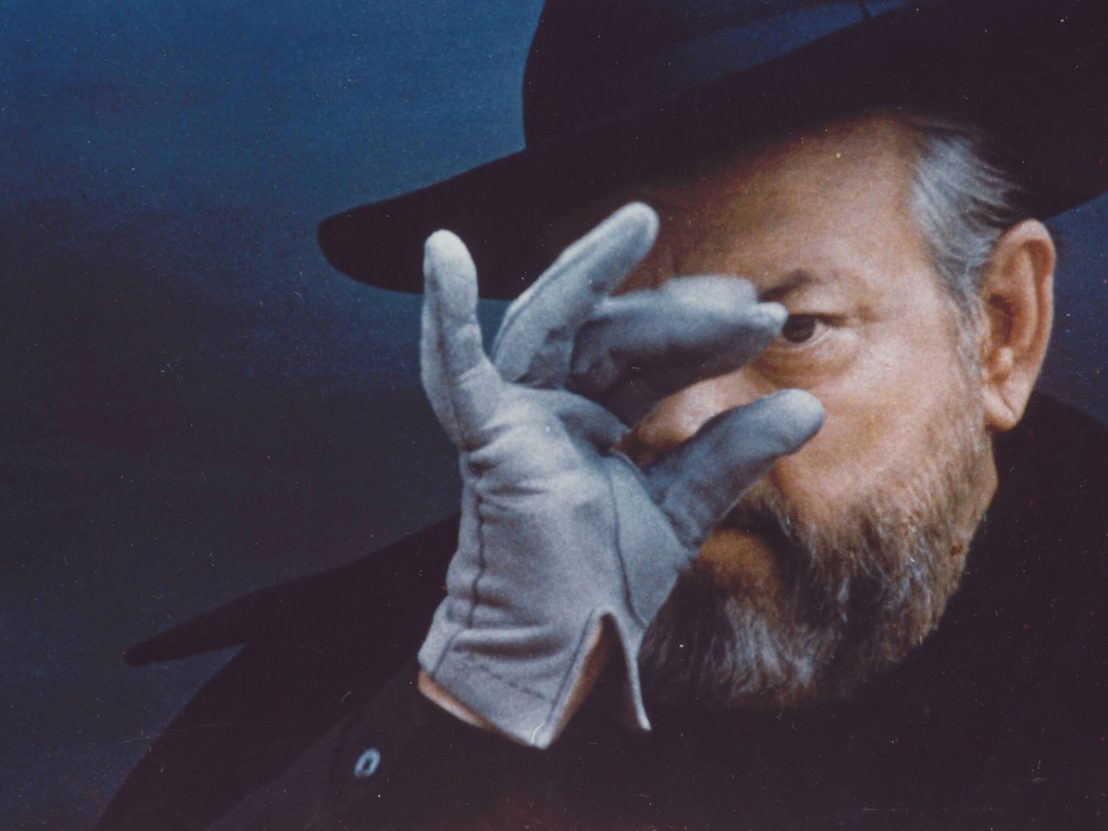
"Voodoo Macbeth". An All-Black Shakespeare Adaptation Directed by Orson Welles.

"It was a big political event. And there was a riot that night, the police were around because there was a big part of the black community that thought we were making fun of the blacks (...). The whole speech of Shakespeare was invented by the blacks (...) I brought none of the Shakespearean tradition to it."
Orson Welles


Orson Welles (1915-1985) was 20 years old when he made theatrical history directing the first black professional production of Shakespeare (McCloskey, 1985). The setting was moved from Scotland to the Caribbean and the witches were changed to Haitian witch doctors (via).
At a time, the U.S., including Hollywood, were segregated, an audience of 10.000 "flocked to Macbeth on its opening night on 14 April 1936" (via) to Harlem's Lafayette Theater where it debuted (via).
"The 150-strong cast were all black and the majority had little previous acting experience. The production was part of a government programme called the Federal Theatre Project which was aimed at boosting employment and opportunities during the depression. It gave black actors the opportunity to play ‘real’ acting roles rather than crude racial stereotypes.
However, Welles faced protests from within the black community who felt that he was making a mockery of his cast, whilst Shakespeare purists felt that it mocked threatre’s traditions. Ultimately both were proved wrong and Welles’ production was a resounding success with both black and white audiences."
BBC
"Once the play went up, self-appointed purists decried the all-black production as a mockery of Shakespeare and the institution of the theater itself. African-American actors were fine as entertainers, but were certainly not meant perform the classics. It “wasn’t Shakespeare at all,” wailed one critic, but rather “an experiment in Afro-American showmanship.”"
Kilson


- McCloskey, S. (1985). Shakespeare, Orson Welles, And the "Voodoo" Macbeth. Shakespeare Quarterly, 36(4), 406-416.
- images via and via