Saturday, 18 December 2021

On Photographing the Far Right

In 1977, Chris Steele-Perkins photographed the "Battle of Lewisham", i.e. members of the far right National Front planning to march to London's city centre, the 4.000 counter-protestors and many police officers.

Steele-Perkins kept photographing the far right supporters in the following decades... shaved heads, White Power t-shirts and Nazi salutes. However, they only tell part of the story, as he points out:

"The far right is depicted in photographs as the burly boys because it's easy to do it that way. Skinheads shouting perhaps looks more intimindating than people with long hair shouting."


“The real problem is the people who don’t talk – the political classes behind it are really to blame. The others are just foot soldiers, some of whom are not too bright and just want to get into a rumble. […] This is where photography and representation have a problem, The message is maybe not carried in the picture in same way [if it doesn’t show a skinhead].” 

photographs by Chris Steele-Perkins via

Monday, 13 December 2021

... an absurd parody of our former life.

"There is only one solution if old age is not to be an absurd parody of our former life, and that is to go on pursuing ends that give our existence a meaning – devotion to individuals, to groups or to causes, social, political, intellectual or creative work."

photograph by David Godlis via

Saturday, 11 December 2021

Quoting Damon Albarn III

“I was brought up an internationalist and my dad’s dad was a conscientious objector. Both my parents were very much part of the sixties in their mindsets. I didn’t feel any sort of nationalism. I didn’t really understand what it was. I remember when I first went to comprehensive school, Scotland had been in the World Cup in ’78. I bought a Scotland top and went into school, and I got the s*** kicked out of me. I soon learnt about nationalism after that one.” That’s a true story. I didn’t know you weren’t allowed to support other teams. Literally, because it had never been part of my upbringing.”
Damon Albarn


YouTube Selection

::: Hollow Ponds: LISTEN/WATCH
::: Polaris: LISTEN/WATCH
::: Out of Time: LISTEN/WATCH
::: The Universal (Matera, 2019): LISTEN/WATCH
::: Everyday Robots: LISTEN/WATCH
::: Royal Morning Blue: LISTEN/WATCH
::: On Melancholy Hill: LISTEN/WATCH
::: Lonely Press Play: LISTEN/WATCH
::: Hostiles: LISTEN/WATCH

- - - - -
photograph via

Friday, 10 December 2021

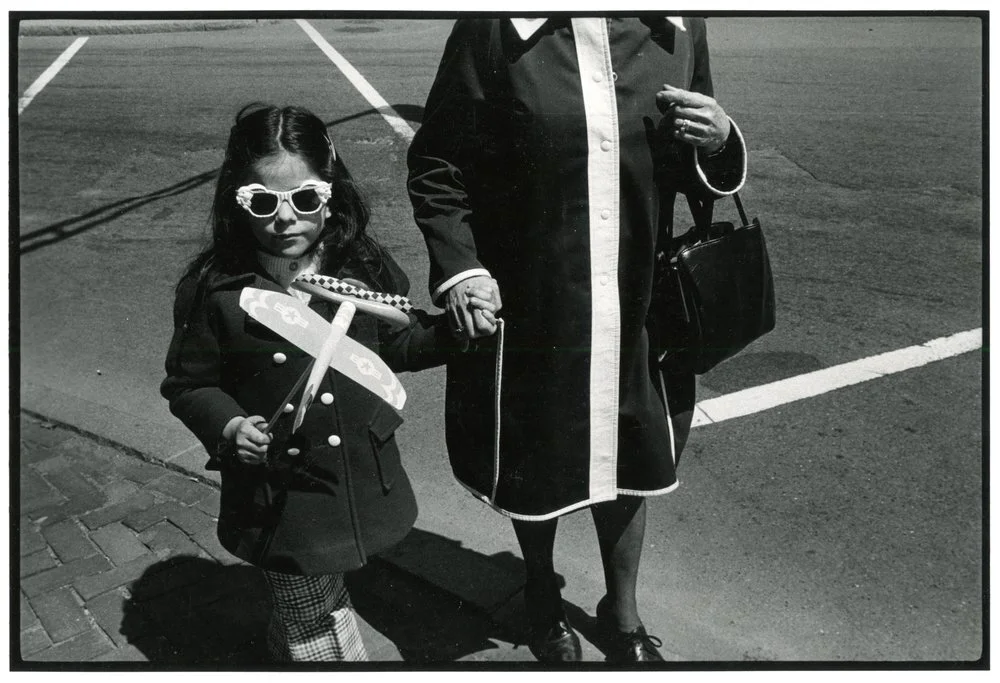
The Grandmother Stereotype and the Fog of Irrelevance

A grandmother is seen as a one-dimensional being since becoming one "subsumes everything else in your life under a fog of irrelevance". When Hillary Clinton, for instance, became a grandmother she was asked when she would "please go quietly into the night" (via). This attitude is there despite the fact that grandparents represent a bigger chunk of the population than ever before and despite many of them being in the labour force. Let's face it: "The idea of Grandma baking the occasional batch of cookies doesn't match today's realities." (via).

There's nothing new about grandmother stereotypes. Remember Little Red Riding Hood? A wolf swallows up sickly granny in her cap and nightgown and climbs into her bed to wait for the dutiful child to appear so he can gobble her up too, along with her basket of goodies. In the more benign resolutions of the tale, a friendly woodcutter cuts open the wolf, and grandmother and child emerge unscathed. Presumably granny then retires to her rocking chair and is transformed into another common stereotype – the plump, kindly old woman in her dotage, sitting with her knitting in an isolated corner of the room. Sandra Martin

----
photograph by David Godlis via

Thursday, 9 December 2021

Elfriede Jelinek says...

"Eroding solidarity paradoxically makes a society more susceptible to the construction of substitute collectives and fascisms of all kinds."

photograph by Leonard Freed (The March on Washington, 1963) via

Tuesday, 7 December 2021

Narrative images: More interested in the people, in their hands

Leonard Freed was “never interested in photographing celebrities; I was interested in people. Take the Martin Luther King Photo. He is an icon, people want to touch him, he is not a human being anymore, he is totally surrounded by the arms, he is protected. Look at the eyes. I was more interested in the people, in their hands, than I was in Martin Luther King himself.” Freed’s picture of Dr King shows him being greeted on his return to the U.S. after receiving the Nobel Peace Prize, mobbed by the public as he travelled through Baltimore in a motorcade. The photographer documented the civil rights movement extensively and was a pioneer of socially conscious photography. (literally via)


photograph by Leonard Freed via

Sunday, 5 December 2021

Giovanni and Roberto in Sardinia

Photographer Giovanni Corabi and creative director Roberto Ortu spent two weeks in Sardinia capturing "the rebellious youth" living on an island where the "traditions are strong and can sometimes feel heavy" making many people decide to leave and for those who stay hard to find their own voice. Corabi and Ortu celebrate "the rebellious youth that lives on the island but is an active part of where the culture is headed, somewhere between tradition and modernity" including migration (via).


photographs via

Saturday, 4 December 2021

Define Gender: Unboxing

“Gender isn't as black and white as I grew up believing. While some people are fluid and others decisive in their identification, both are of equal value. The social labels of the male and the female feel irrelevant and restrictive today. I wanted to express this through dance ...


... because, energetically, it can call upon the masculine and feminine but also exist outside those stereotypes. With the box structure of the set—and the dancer's liberation from it—I wanted to show that we do not have to exist within the binary limitations society inflicts on us. This film presents a space where gender can be more fluid than fixed definitions allow.”
Kate Cox


image via

Friday, 3 December 2021

International Day of Persons with Disabilities

Some facts... There are one billion persons with disabilities, 80% of them living in developing countries, 46% of people aged 60 years and over are people with disabilities, one in five women is likely to experience disability in her life, one in ten children is a child with disability. No matter where and what gender, people with disabilities are among the hardest hit by the pandemic (via).


"I urge all countries to fully implement the Convention on the Rights of Persons with Disabilities, increase accessibility, and dismantle legal, social, economic and other barriers with the active involvement of persons with disabilities and their representative organizations."
Antonio Guterres

- - - - -
photograph via

Thursday, 2 December 2021

80% Experiencing Everyday Ageism

According to a poll (n = 2.048 adults aged 50 to 80) carried out in the United States by the University of Michigan Institute for Healthcare Poliy and Innovation shortly before the pandemic started, more than 80% commonly experience at least one form of ageism in everyday life... the usual remarks about using a smartphone, jokes about losing one's memory or hearing, magazine ads focusing on wrinkles and grey hair... a never-ending and sociall accepted list (via).

The new poll asked older adults about nine forms of everyday ageism, and analyzed the results based on respondents’ age, income, media consumption habits, residence, work status, and self-reported health and appearance.
In all, 65% said they’re commonly exposed to ageist messages in materials they watch or read, and 45% said they sometimes or often experience ageism in interactions with other people. More than one-third of older adults have internalized stereotypes to the extent that they agreed or strongly agreed that feeling lonely or depressed were inherent parts of growing older.
Older and lower income older adults were more likely to report that they commonly experienced three or more forms of everyday ageism. Women, those who had retired and those who lived in rural areas were also more likely than men to experience it, as well as those still working and those living in suburban or urban areas.
“Everyday ageism is part of American culture and one of the most common and socially condoned forms of prejudice and discrimination. There is no doubt that it harms the health and wellbeing of older adults (...). In addition to addressing everyday ageism in general, we as a society should be especially careful about how ageist prejudices and stereotypes affect our response to the massive public health challenges of the ongoing pandemic.”
Julie Ober Allen, research fellow at the Institute for Social Research

- - - - - - - -
photograph by Leon Levinstein (Fifth Avenue, 1969) via