Tuesday, 13 December 2022

Child Marriage in the United States

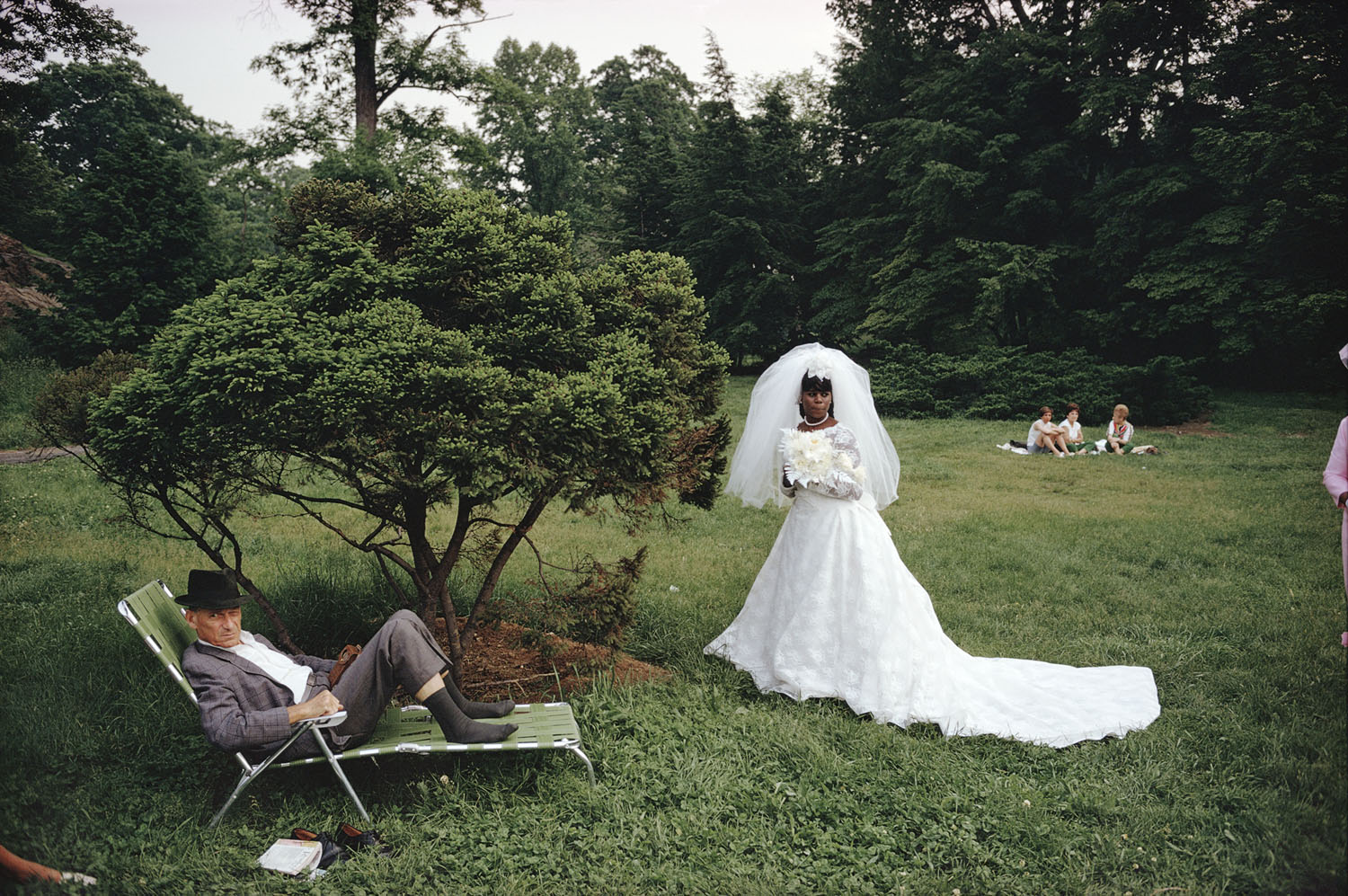
Child marriage does not just happen in othered countries "far away". From 2000 to 2018, nearly 300.000 children, i.e., age 17 and under, were married in the United States alone. Most of them were girls aged 16 or 17. More than 1.000 of them were 14 or younger and five were only 10 years old. 

In most U.S. states, the minimum marriage age with parental consent ranges from 12 to 17 years old. Massachusetts has the minimum ages of 12 for girls and 14 for boys (with parental consent) and states like California and Mississippi do not have any minimum ages at all, if there is parental consent. From 2000 to 2015, there were 200.000 child marriages, of which 67% of the children were 17, 29% were 16, 4% were 15, less than 1% were 14 or under, 51 cases of 13-year-olds and 6 cases of 12-year-olds marrying (via).

- - - - - - - - - - - - -

photograph by Joel Meyerowitz via

Monday, 12 December 2022

Pantsula + The Photographs of Chris Saunders

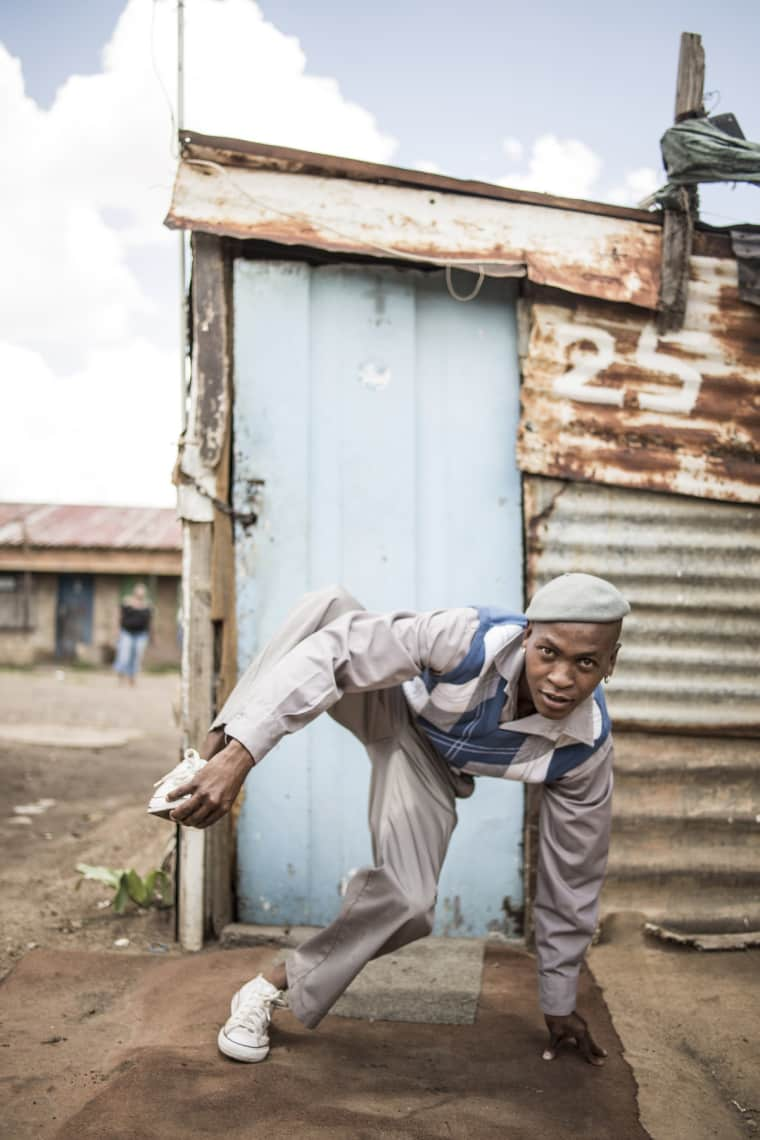
Pantsula is a fusion of traditional and modern dance, hip-hop, jazz, everyday's gestures, acrobatics, lifestyle, fashion, and storytelling. Its name is a Zulu word meaning waddling like a duck, a reference to thw way fashionistas used to walk and pose in the 1970s. The roots of Pantsula can be traced back to Johannesburg, the suburb of Sophiatown, of the 1940s (via and via).

::: Watch Alexander Tiernan's "Yellow Jumpsuits" on YouTube: WATCH

"Pantsula is a fundamental part of Johannesburg culture, Johannesburg is the city I grew up in. It’s a very divided city stemming from the history of Apartheid, a city where many important cultures and mechanisms of recording and telling history were formed, one of them being Pantsula. 

I felt that by documenting Pantsula I was documenting a form of storytelling that was the closest to the true history of the city, a culture that developed in the townships around Johannesburg where many black people were forced to live.

(...) Pantsula is an older culture with a strong heritage dating back to Jazz and Swing, it lived through Apartheid and came out as a very developed rich culture.

(...) I think as a white South African it was important for me to learn and document South African culture, growing up in separated areas as children we often didn’t have exposure to Johannesburg’s vibrant African culture, but when Apartheid ended and I grew up I began documenting what I felt were Johannesburg’s most prominent and somewhat relatively undocumented modern cultures and subcultures."

Chris Saunders

"Coming from a white background in South Africa during the transition, we weren't massively exposed to a lot of black culture. I had been exposed to Kwaito music, however, which had Pantsula dance in some of its videos. You'd see bits of pantsula, and be like, “Cool. That's interesting. But what is this culture?” There were songs that were coming out that were linked, but that was it. 

I guess it was like growing up in Nebraska and watching hip-hop videos from the ‘80s. That's how vast the separation was because of apartheid. It took years of people having conversations and being interested in assimilating into general culture to be exposed to each other’s cultures. But now people who don't know about pantsula, which is massive popular culture, don’t really have an excuse. There are thousands of people who are a part of it. That's why I never wanted to call it a subculture, because it was important to be seen as modern city culture. Almost everyone who grew up in a Johannesburg township, which is the large majority, knows what pantsula is. You can't really call it a little subculture. It's popular culture.

(...) There was also this idea of the townships, with all these people forced into environments by apartheid. You see all those things crashing together and this incredible culture coming out of it. For me, this is the closest you can get firsthand to the story, because they were telling these stories in the townships during apartheid about what was happening. It wasn't a writer going in and interviewing a guy, and reinterpreting the story. They were involved and this was their lives.

(...) It's a very masculine culture. There were always women involved, but on a specific side of the culture. They would do their own dance, and men would do their own dance. Now it's joined, starting less than ten years ago. I've seen the number of women in some crews rise since I met them. Part of it may be because of the growing popularity of the culture. There were a lot of guys who had a very traditional mindset that women could never dance like a man. There are a lot of girls that are as powerful as the male dancers."

Chris Saunders

photogrpahs by Chris Saunders via and via and via and via and via

Saturday, 10 December 2022

Excursus #9. (De-)sexualisation as an instrument for stereotyping the ethnically "other"

This is the text published in the exhibition catalogue. More texts of mine on the Dragon Lady, Butterfly, Mandingo, Uncle, Mammy, Jezebel stereotypes etc. are exhibited in the Caricature Museum Krems until 19th of February 2023.

Black … tall, athletic, strong, hypersexual, lusts after white women. Thus runs the narrative that turns Black men into feral savages and white women into the endangered objects of their desire. This narrative concurrently elevates white women to a generally valid female ideal and, tacitly but unmistakably, downgrades Black women to, at best, a second-rate alternative to this ethnocentric notion of beauty, an arbitrary and often contradictory mix of non-desirable, because desexualised , and unworthy of protection, because hypersexualised .

The Mandingo character was born at a moment that suited the white man. It pandered to rape myths in order to evoke fear and fury, the very emotions that can mobilise the masses and be instrumentalised to assert the white man's own interests—cloaked in the friendly guise of protecting women and serving the common weal. Protection is required when danger is looming—was actually the key message here. The muscle power of the enslaved Mandingo was useful on the plantation of the white man, but when Mandingo became a free individual, he had outlived his usefulness and the white man lived in fear that he might take his revenge by sexually assaulting white women.

Rape myths emerged when slaves became free and their freedom put social hierarchies and power asymmetries at risk. Basically, they were a paranoid reaction on the part of white men to an anticipated new order; instilling fear of a Black rapist was designed to serve as a prophylactic. After all, a world without slavery also meant political and economic participation for African Americans and thus endangered white supremacy. Moreover, it also meant the potential shattering of a sexual taboo involving the constellation of Black/male and white/female. Every effort was made to prevent this constellation, and crafting the image of the uninhibited, voracious Black rapist turned out to be a clever stratagem that also successfully instrumentalised sexual envy. Marketed under a catchy label, “new Negro crime”, the myth was disseminated by the Ku Klux Klan; while the—purported—aim was to protect white women and their purity, the actual motivation was to uphold the white power system. After all, rape of a white woman, even attempted rape, was only punishable by execution if the perpetrator was Black.

In this tradition white women assumed a complex role, being inferior as a gender to white men, but ethnically superior to Black men. They were able to harness this superiority by accusing a Black man of rape, even if their relationship was consensual. This course of action was taken, for instance, if relationships threatened to become public knowledge and the family’s reputation had to be protected. The practice of lynching helped to preserve order and regulated and controlled the behaviour and status of white women. The Mandingo stereotype legitimised executions and lynching. Today, it lives on in derivative forms as athlete, criminal or porn fantasy.

The female Black equivalent likewise suited the purposes of white men: Jezebel, the hypersexual, seductive, manipulative Black woman, the antithesis of the pure and innocent white woman. First and foremost she served as living proof of Black promiscuity and bolstered the insinuation that white men would not ever sexually assault their female slaves, but rather that the sex was consensual or indeed initiated by the woman.

Not particularly graceful, but likeable because devoid of hard edges, soft and motherly. This is the persona of the grateful slave woman, a loyal servant who knows her place and perceives her life’s purpose to be that of serving her white family. She neither has nor wants any Black friends, their aspirations of freedom being beyond her comprehension. In literature, movies and animated film alike, the “mammy” figure is portrayed as a corpulent, coarse, clownish, sometimes unclean, unattractive and, above all, asexual character. These attributes serve to convey a significant message and another riposte to the accusation levelled by abolitionists from the North that slave owners sexually exploited their female slaves, particularly the younger, lighter-skinned and slimmer ones among them. It is hardly a coincidence that the character of the mammy was forged in the time before and during the American Civil War. She served as evidence that white men could never covet a Black woman. The male equivalent of the mammy is the “uncle”, a completely asexual Black man who is unfailingly friendly and loyal to whites. Both were used as corporate characters in the design and marketing of food products.

The exhibition addresses the background and impact of ethnic stereotypes which are reduced to just a few signal components: Black, Asian, male, female, de-sexualised and hypersexualised . Apart from the examples sketched out here, the show also explores the combination of Asian and female, specifically in the characters of Butterfly and Dragon Lady. Both types of women are highly sexualised , the former being obedient, submissive, fragile and perfectly ready to commit suicide in order not to stand in the way of the white man’s long-term happiness, the latter being ice-cold, selfish, seductive and merciless. Asian men, on the other hand, are more often shown as desexualised characters, even today. The makers of movies and television films liked to use the practice of blackface and yellowface, which also served as templates for character design. Another aspect explored by the exhibition is the mutual influence on one another of comics, novels, film and theater, as well as the question of what role humour —genuine or pretend—plays in the acceptance of stereotypical portrayals. (Moazedi, 2022)

- - - - - -
photograph by Chen Man via, translation by Susanne Watzek

Friday, 9 December 2022

Excursus #9. The Impact of Stereotypes.

Since July, some texts of mine have been exhibited at the Caricature Museum Krems. Excursus #9 is on stereotypes, othering, and the role of (de)sexualisation of Black and Asian men and women. Here is the general part - printed in the museum's catalogue - on the impact of stereotypes, translated into English by Susanne Watzek.

Stereotypes do not emerge in a vacuum, in complete detachment from society and its structures, developments, the zeitgeist and the asymmetries of power. Time and place have an effect. Stereotypes define the representations that can, should or must be created in order to legitimise or uphold a certain state of affairs. One thing is certain: they are anything but disinterested; often designed to put the blame on the “other”, stereotypes thus reflexively lift any blame from one’s own shoulders and the collective one feels affiliated to. The “others” are a threat, aren’t they, which means that an attack is really nothing but defensive action. If the “other” is a seductress, having sex with her is a mere reaction. It turns out that these projections often tell us more about the creators of a stereotype than about those it is directed at. 

In most cases, stereotypes are negatively connoted, undifferentiated and simplistic attributions that define the level of popularity and status, stigmatise , create distance, construe identities and reinforce or redefine one’s own identity in strict delineation from that of the other. They are reductionist systems of orientation and structure, indispensable for othering and narratives in support thereof; they create categories in which to pigeonhole others and justify or exacerbate marginalisation and dominance, prescribing an assigned place for each and every human being. Stereotypes construe otherness and norms, defining affiliation and non-affiliation. While simplification does not do justice to human three-dimensionality, it makes the world more manageable and easier to grasp; over there the marginal groups in one big homogeneous mass, over here one’s own groups with all their many-hued facets. The defining element in all this: that which we do not have in common. 

Empirical findings are unambiguous and there is consensus among researchers that stereotypes distort perception, memory and patterns of explanation. A tendency towards selective perception has been observed: people see what fits their patterns and adhere to these patterns very rigidly, at the same time exhibiting all the more flexibility when it comes to defending them. Whatever does not fit the pattern is turned into a subcategory with deviating features and labelled an “exception to the rule”. People are resourceful in this exercise and stereotypes become pliable. In this way, the former do not have to rethink anything and the latter can be upheld. All is well.

Stereotyped knowledge becomes common knowledge that is acquired, handed down and perpetuated everywhere, in school, in the family, in the media and at the workplace. The images thus become common biases, mindsets and cultural resources. As a seminal part of socialisation these images have the power to shape not only how one sees others, but also how these others see themselves. Again, numerous studies have provided ample evidence that even a subtle activation of stereotypes has an impact on self-esteem, self-assessment and an individual’s level of performance. There comes a point when the messages suggesting that you are too much a woman, too Black, too old, are internalised and the stereotype takes effect, restraining, constricting and threatening. It curbs your radius of action and you act in line with the low expectations. When gender stereotypes are activated, the performance in mathematics or football deteriorates. Handwriting turns into a scrawl and gait becomes slow when age is made an issue, and the performance of African Americans in cognitive tests deteriorates—even in children - when skin colour is brought into play. These are only a few examples, but stereotypes are rarely harmless. (Moazedi, 2022)

- - - - - - -
photograph by Chen Man via

Thursday, 8 December 2022

Drag Syndrome

The starting point is the art.
Before Downs Syndrome,
before extra chromosome, before disability,
before anything.
artists

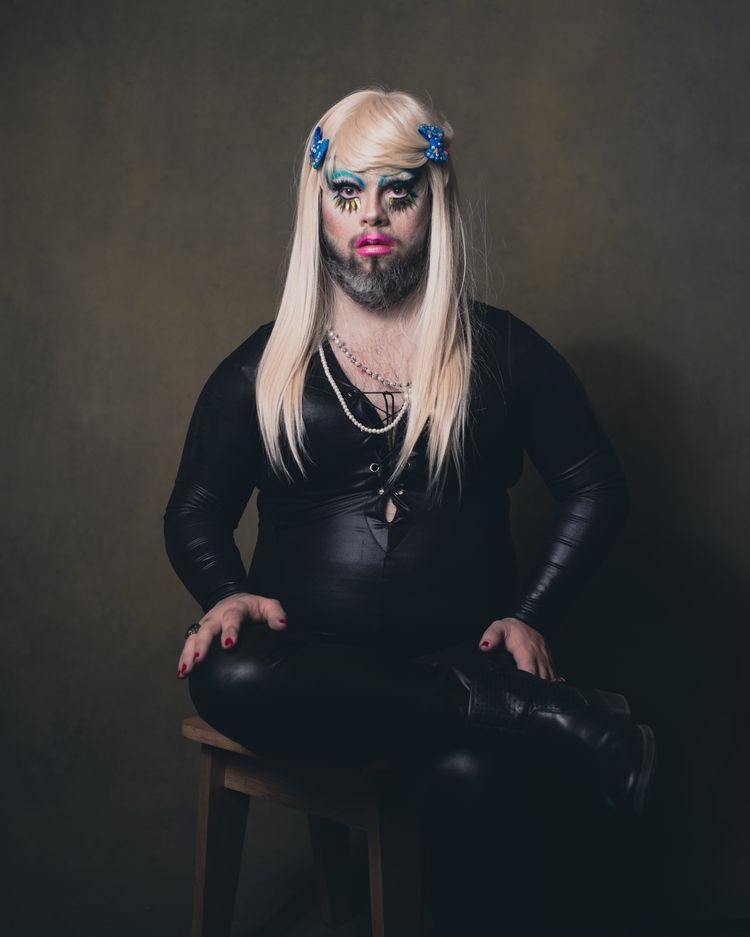
Drag Syndrome is a London-based collective that uses the power of drag to promote "a message of radical acceptance for those with disabilities". All performers are artists with Down syndrome, each constructs a drag personality that helps make them visible, be judged on their skills rather than their disability, and - as director Daniel Vais says - celebrate who they are. Drag Syndrome now performs regularly at festivals in the UK and Europe and already has a large fan base (via).

"A producer had invited me to see a space in East London. So I went with Sara Gordon, one of our models and dancers, to the Christmas party last year. During the event there were performances by drag queens, which prompted me to ask Sarah if she would ever be open to experimenting with drag. And she replied straight away saying it would be absolutely fascinating. Right on the spot I came up with the title, Drag Syndrome. 

From there, I spoke with all the artists and asked them if they would want to try it. They were all very enthusiastic about it. But I told them that drag is not just a costume. Drag is about transformation. It's an art form. So the performers started researching it and each began developing their own characters.

Drag is all about empowerment and transformation. It allows you to be a bigger version of yourself and express yourself in a way that's more surreal. There's so much fantasy and freedom to it. This is an opportunity for our performers to express themselves in a way they don't usually get to on a regular basis, in these kind of settings. They love it. They are really enjoying what they do and the characters they play.

We've received big support from the drag world. All the biggest and most influential drag queens and kings have connected with us and supported us. Beyond this, many celebrities and really famous people, including top dancers and photographers, have been really supportive and understand that this is a special performing arts project.

This is just another layer of drag, and it gives our performers a chance to hang around with young audiences and be a part of arts and culture, which is what they really want. It allows them to show their talents. This isn't really a social project, but we do give opportunities to performers and artists who have Down syndrome and put them into a mainstream context. Yes, these are artists who have Down syndrome, but it's not the main issue. Audiences see beyond that. That's why we get loads of great responses and people really enjoy it. The extra chromosome is only a bonus."

Daniel Vais

- - - - - - -

photographs via and via and via and via 

Wednesday, 7 December 2022

Chroma: An Ode to J.D. 'Okhai Ojeikere

In her series "Chroma: An Ode to J.D. 'Okhai Ojeikere", photographer Medina celebrates women's hair styles in Nigeria and pays tribute to Nigerian photographer J. D. ‘Okhai Ojeikere (1930-2014) who photographed women's hair in black-and-white and, over forty years, took inventory of more than 1.000 styles. With "Chroma", Medina aims to preserve but also encourage this ancient practice and hair culture, methods that date back thousands of years (via).


"Prior to de-colonisation, wigs and hair straightening had become popular, especially in urban areas of the country. Today, some of the more intricate and traditional styles risk abandonment once again as a result of the influence of social media and global trends. Cities today around the world resemble each other more and more, with gentrification diluting individuality and cultural specificity in favor of a prevailing mainstream model. As the world becomes more and more connected, new opportunities, influences and understanding arise, however the social and cultural practices which contribute to the character of a civilization and its people remains an essential component of understanding our past and future."
Medina


photographs by Medina via/more

Tuesday, 6 December 2022

0.17%

A cross-sectional study investigated the level of investment by the National Institutes of Health (NIH) to fund clinical research that focused on Asian American, Nativa Hawaiian, and Pacific Islander populations (AA/NHPI) and found 529 clinical research projects funded between 1992 and 2018. Findings showed that only 0.17% of the overall NIH budget was allocated to these projects over two decades. This proportion increased from 0.12% before 2000 to 0.18% after 2000.

AA/NHPI invividuals represent more than 5% of the US-American population. Nevertheless, according to Ghosh, between 1986 and 2000, AA/NHPI participants were represented in only 0.2% of all health-related federal expenditures. The findings of Doàn et al. (2019) match the former study carried out by Gosh. Since then, the number of AA/NHPI-only grants has increased but they account for only one-fifth of 1% of the NIH's clinical research budget.

Due to data grouped together, the Heckler Report published in 1985 came to the conclusion that AA/NHPI populations are healthier than other ethnic groups in the United States. The stereotype of the model minority population negatively affects some subgroups (e.g. Vietnamese). Disaggregated data is needed to understand disparities, complexities by subgroup, and social factors associated with health since AA/NHPI populations represent more than fifty countries or cultures and hundred languages.

For example, in aggregate, AA/NHPI adult rates of liver cancer incidence and mortality are double those of non-Hispanic white adults. However, when data are disaggregated, liver cancer incidence is 7 times higher and 9 times higher for Laotian men and women, respectively, compared with non-Hispanic white adults. (Đoàn et al, 2019)

- - - - - - - - - - - - -

- Đoàn LN, Takata Y, Sakuma KK, Irvin VL. (2019). Trends in Clinical Research Including Asian American, Native Hawaiian, and Pacific Islander Participants Funded by the US National Institutes of Health, 1992 to 2018. JAMA Netw Open, 2(7):e197432. doi:10.1001/jamanetworkopen.2019.7432, link
- photograph by Chen Man via

Monday, 5 December 2022

The Golden Age. By Alanna Airitam.

Tucson artist Alanna Airitam began the series The Golden Age “out of a desperate need to see people who look like me represented in fine art”. Considering European art history's clear tendency to minimise and otherise minorities, the history of slavery and colonisation and their consequences seen in today's structures, Airitam's work can be interpreted as "a fresh, and necessary, correction to an art historical injustice". 

Above: Queen Mary (The Queen), 2017

In her series, in which she emulates 17th century Dutch Realist painters, the subjects are rendered in a classical manner using rich colours, flowers, warm and subtle light resembling paintings (just like the paintings resembled photographs). Airitam knows about the symbolic power to see someone one identifies with in gilded frames next to timeless works of European masters. To her,  this as an approach to inclusion, empowerment and to resiliently countering a history of negative representations (via).

Above: Saint Monroe (2017)

"My practise is focused on researching historical and contemporary narratives of representation, heritage, identity, stereotypes and the erasure or manipulation of history through portraiture and vanitas still life subjects. I make photographs that reference the long history of racial and cultural inequality, while contemporary in the desire to move into the futre with honor and grace. 

Weary from experiencing how people of color are treated, I feel called to create images of people who look like me presented with reverence and dignity. I began working on The Golden Age during the spring of 2017, during which time I came to recognize ways I’ve allowed negative projections of others to hold me back artistically. I would spend time in museums admiring the lighting in European Renaissance paintings, while feeling how far the whole experience was from my own reality. I understood how uncomfortable I was in art spaces, that in so many unspoken ways I didn’t belong. 

It became important to create work as a tribute to Black culture while addressing how we’ve been omitted from art history. The Harlem Renaissance was our Age of Enlightenment, and I wanted my work to reflect the connections between the two periods. The Dutch Renaissance arose in Haarlem, Netherlands from the Eighty Years‘ War with Spain, as the Harlem Renaissance was birthed from the remnants of the Jim Crow and Great Migration north. To pay homage to the Harlem Renaissance while recognizing 17th century Dutch portraiture, I named the portraits as saints, with a street name or notable Harlem landmark as a way to commemorate the significance of this time (e.g. Saint Sugar Hill, Saint Madison, Saint Strivers)."
Alanna Airitam


Above: Dapper Dan (2017)

- - - - - - - -
photographs via and via and via

Sunday, 4 December 2022

Almost Something. By Hanna Moon.

Korea-born, London-based photographer Hanna Moon recently published the book "Almost Something", curated from "an archive of thousands of photos" she had shot over the past decade (via).

While [her work] is essential in its uncontrived Korean-ness, it does not overly identify with being Korean, or with any of the wretched and limiting ‘buzzwords’ that are used to describe it. It recognises identity as perpetually under construction, that both people and things are constantly becoming.
Moffy Gathorne Hardy

“Living [in London] and going back to Korea, I saw all these things you don’t notice at first. I documented them because I found them hilarious, or because I was out with friends and having fun. I didn’t think that much.” 
Hanna Moon

photographs via

Saturday, 3 December 2022

Black Drag Magic. By Lee-Ann Olwage.

In her series "Black Drag Magic", photographer Lee-Ann Olwage focuses on the intersection of gender identity and the South African context, a "beautiful and unique place", as she says, with "a complex and diverse nation who are still in the beginning of finding and celebrating our identity". In 1996, discrimination in terms of sexual orientation was outlawed. Dangers, however, are still persisting today (via).

Above: Professional drag performer Belinda Qaqamba Ka-Fassie came up with the idea for this series in collaboration with photographer Lee-Ann Olwage. “My performances are inspired by the human condition, or rather the ‘black queer condition,'” Ka-Fassie says. (literally via)
My most recent work, #blackdragmagic, tells the stories of Black queer, gender-nonconforming and trans people who grew up and live in the townships of Cape Town. The project is about augmenting the power of daily township-spatial navigation, migration, culture, gender and sexual identity. I wanted the project to serve as a platform for Black queer bodies where they were invited to co-create images that told their stories in a way that is affirming and celebratory. 
We shot in Khayelitsha, a partially informal township in Western Cape, South Africa, located on the Cape Flats. While the township is their home, it is also a place where they are subjected to harassment, violence and discrimination on a daily basis. The process of creating the project became a radical, progressive act to reclaim the township and to stand up against the overwhelming climate of discrimination Black queer people face.
Above: Mthulic Vee Vuma poses wearing traditional Xhosa female clothing and holding a beaded stick used in marriage ceremonies. “The meaning of the clothing I am wearing is to love and accept our culture,” Vuma says. (literally via)
[It] takes a deeper look at how gender and sexual identity are influenced by cultural identity in South Africa,” she says. “They cannot be separated from each other yet, in South Africa, cultural identity often denies that queer identity exists.
Above: Mthulic Vee Vuma poses in traditional Xhosa clothing at the *tshisanyama* meat market. (literally via)

- - - - - - - -
photographs via