Thursday, 23 May 2024

The Pink Drink Thesis, the "Classless Woman", and the World's Biggest Female Binge Drinkers

According to an OECD report released in November 2023, the biggest female binge drinkers in the world are ... British women. The OECD (Organisation for Economic Co-operation and Development) compared alcohol consumption across 33 countries.

The Daily Maily spread the Pink Drink Thesis, safely dismissed by the majority of people living and thinking in the 21st century, stating that the infantilised female drinker just cannot help accepting offers. Being the Daily Mail, the tabloid also hypothesised that British women drank to excess because they were "unattractive and classless". 

In the scramble to explain this, the following ideas have been floated, mainly by the Daily Mail: British women are uniquely susceptible to marketing pressures, including but not limited to pink drinks, supermarket offers, bottomless brunches and nice pubs. The 20th-century settlement in drinking culture – that you can have your fill, so long as you’re prepared to do it in a smoky back room with laminated tables and carpets that smelt like the urinals – was overturned in the late 1990s, during what we might call the All Bar One revolution (that chain was founded in 1994). Pubs became airier, more chic and inviting, women went into them voluntarily, and it was noted on the profit upswing that, where women went, men went also.

In an article published in The Guardian, Zoe Williams points out the importance to consider generational differences when discussing alcohol consumption:

(...) the sociologists Paul Chatterton and Robert Hollands ascribed the “feminisation of the night-time economy” by 2001 directly to the transformation of the labour market and the increase of female spending power. Arguably, the ladette as cultural artefact – the woman for whom drinking six pints, which by the way is considerably more than six units, was a direct expression of her emancipation – came into being as a way to accommodate this new, independent femininity. If you could slot it into established versions of masculinity, it would be fun and not terrifying. In a trend that has probably been noticed before, where alcohol is concerned, once we started, we didn’t stop. (via)

- - - - - - - - - - - - - -

photograph of Marilyn Monroe drinking champagne via

Wednesday, 22 May 2024

Ambient Ageism. The Ageist Sound of AgeTech Advertisements

AgeTech companies market smart home technologies designed to help older adults stay in their homes and keep them safe. These companies usually market their products constructing ideas of age and using ageist representations of ageing and older adults. For instance, Vermeer et al. (2019:27) explored online marketing strategies for surveillance technology designed for people living with dementia living at home and for their care providers. The advertisements directed their messages at families and care providers, not to the people living with dementia dehumanising them as a "problem to be managed" and categorising them "in the same class as wallets, keys, young children, dogs, and/or prisoners".

One of the ideas promoted is that ageing in one's home with autonomy is an essential part of healthy ageing. "Marketing is designed to play on underlying fears that consumers have been socialised to associate with ageing, as well as on our underlying social values."

AgeTech marketing discourse has been critiqued for its ageist constructs of ageing and older age. Advertisements rely on associations between older age and illness, decline, frailty, and forgetfulness. These associations in turn inform the definition of “needs” and justify the use of stereotypical representations of older people on marketing platforms (Neven and Peine, 2017; Peine and Neven, 2021). The problem of ageism in the media has been called “visual ageism” by Loos and Ivan (2018), which refers to underrepresentation and misrepresentation of older adults in the media, and “new visual ageism,” which refers to the “obsessive representations of older people in looking unrealistically young” (Ivan et al., 2020, p. 10). Acknowledgement of this has led to a call to push back against visual ageism in digital media content. Indeed, Einsend (2022) noted that the inclusion of older people in advertising has not been given enough attention by academics, calling for more research in this area.

Visual ageism is not the only aspect of interest. The soundtrack of commercials is also regarded as an important means of communicating with viewers. Music is "a tool that impacts viewers' emotions, cognition, and interpretation of the brand's message", it can attract attention and set the mood in comercials. 

In her study, Graham (2022) collected data through an online search for AgeTech advertiseent videos for ageing-in-place technologies posted from 2015 to 2022. The author came to the conlcusion that visual and acoustic ageism work together ranging from negative stereotypical portrayals to overly positive ones. Here are some excerpts:

Negative stereotypes of older adults were common to the AgeTech advertiseents. The vision of the older adult woman in the Essence Care video most profoundly reflected the dystopian, fourth-age imaginary of dependence, impairment, and lack of agency, not only visually, but also acoustically. As discussed above, the background music set the scene for the viewer to perceive passivity, lethargy, and deterioration. The acoustic dimension of the negative fourth-age imaginary is characterised by slow-moving, descending and decaying musical lines that are simultaneously passive (un-agentic, in Gilleard and Higgs' terms), and ominous. Just as Neven and Peine (2017) state that the ageing-and-innovation discourse stigmatises older people as old, so, too, can the musical discourse of AgeTech advertisements.

The Essence Care ad portrays the older adult woman more negatively than the older adult man by focusing attention on her face in a “scene of empathy” (Tan et al., 2007) and her audible exhausted sigh. Together, these representations reinforce the association between ageing and decline. Interestingly, it has been noted that these overly negative portrayals of the much-dreaded fourth age alienate older adults from technology because they identify technologies as being for “old people,” a social category with which they do not identify. Thus, both visually and acoustically (which this paper highlights), barriers to technology engagement are created through negative portrayals of older adults.

Following the binary pattern of dystopian-utopian imagined futures, the Vayyar advertisement provides an example of a utopian, agentic, third-age future with smart home technology. The background music is carefree, uncomplicated, almost toy-like in its simplicity and ease, setting a scene of leisure and play. Craton and Lantos (2011) note that upbeat music can symbolise fun entertainment products in advertising soundtracks. Framing the technology as an “entertainment technology” may help to bypass the tensions associated with surveillance technology. The music sets the stage for the audience to perceive the older woman as an agentic, third-age consumer who adopts technology to make life more enjoyable and less onerous (Gilleard and Higgs, 2022). This fits with common stereotypes of the “Golden Ager,” the “Perfect Grandparent,” and “the Productive Golden Ager” who is portrayed as full of “zest” and living in intergenerational harmony (Ylänne, 2015, p. 371).

The subtle changes in the background music of the SofiHub advertisement are an example of how music reinforces the normalisation of surveillance technology. There is no dramatic “crisis” in this advertisement, but there is still a construction of a need that key routine behaviours (late to bed, late to rise, and long duration in the bathroom) require monitoring and reporting to care providers. The inclusion of the more energetic drum track primes the viewer to perceive the technology as supporting successful, active everyday life and watching out for any sign of decline. According to Van Leeuwen (1999), ascending melodic motion is associated with energy and brightness, suggesting that the inclusion of electric guitar slides provides a happy and hopeful ending to the advertisement, ensured by the use of technology. In this case, everyday life with technology is pictured as good—the older woman gardens safely, the older man maintains his privacy. Interestingly, the change to the music occurs when a younger adult woman successfully transfers from her wheelchair to her couch, accompanied by a well-timed shift in the music to a louder, more energetic mood through the addition of a drum track.

- - - - - - - - - - - -

- Graham, M. E. (2022). Ambient ageism: Exploring ageism in acoustic representations of older adults in AgeTech advertisements. Frontiers Sociol, link
- photograph (Foothill Acres Nursing Homes, Neshanic, New Jersey) via

Tuesday, 21 May 2024

Quoting Jeff Bridges

"It's not enough just to treat women well. We have to work to make sure all men treat women well."
Jeff Bridges

image (Thunnderbolt and Lightfoot, 1974) via

Monday, 20 May 2024

The Cricital Approaches of Socio-Gerontechnology

One field of study the sociology of age and ageing focuses on is technology use in later life. Since, in the past, many research projects showed the tendency to be techno-optimist and mostly concerned with the question how technologies can improve older people's lives, recently, more cricital approaches evolved. These new approaches - widely refrerred to as Socio-gerontechnology -  criticise ageist stereotypes about "technology use in later life in design processes and the paternalist stance toward older adults resulting from it" as well as the techno-optimism of gerontological research. 

This includes, on the one hand, a deeper empirical engagement with design processes and innovation policy to highlight how new technologies not only address alleged problems or challenges of individual or population aging, but how they create and select certain ideas about aging that work well as targets for design or innovation policies (Bischof and Jarke, 2021; Peine and Neven, 2021). In such a view, design processes and innovation policy become important sites for our empirical understanding of age and aging, too, because they produce and reinforce societally shared ideas of how we can and should age—ideas whose contingent nature can be revealed by empirical inquiry (Lipp and Peine, 2022).

Socio-gerontechnology is also concerned about "the everyday life of older people, aging bodies and the construction of age and aging in relation to technology", how ageing is shaped by technologies and how ageing is quantified by technologies which again creates the image of the ageing body as one that is "constantly iprovable and invevitably in decline" (Gallistl et al., 2023).

- - - - - - - - - - - - -

- Gallistl, V., Katz, S., Kolland, F. & Peine, A. (2023). Editorial: Socio-gerontechnology - New perspectives on the digital transformation of later life. Front. Sociol, link
- photograph by Dennis Feldman via

Sunday, 5 May 2024

Quoting Paul Auster

“It always stimulates me to discover new examples of my own prejudice and stupidity, to realize that I don't know half as much as I think I do.”
Paul Auster, Oracle Night

photograph of Paul Auster via

Friday, 3 May 2024

The Deaf Snow White. By Kanika Agarwal. An Excerpt.

The great king and his queen were married for five years and were still waiting for a child. The mother often prayed for a girl whose skin and heart would be white and pure as snow. In their sixth year, their prayers were answered and they finally got a baby girl. However, the queen died a month after the birth of the child. The king was left to care for their only daughter and put his heart and soul into it. He named her Snow White in remembrance of his wife’s wishes.


As the years passed by, Snow White blossomed into a beautiful girl fair as snow. She had a gentle heart and a soothing voice. She grew up playing in the gardens of their palace, and most of her friends were the plants, bushes and her favourite three little birds – Brownie, Bluie and Ruie. She talked to them endlessly as her father presided over his court. Days turned into months and months turned into years. In the blink of an eye, Snow White was ten years old. It was then that she started losing her hearing. Her father knew that he would not be able to care for Snow White alone now. So, he remarried – primarily to provide care to his deaf daughter. But no one knew what fate had in store for Snow White.

(..) 
Snow White started sensing that her stepmother was using her deafness to fill her father’s ears against her. She observed that her father had become sterner towards her. He once came and sat beside her to talk. She saw his lips moving: “My dear little child, you need to work harder and make sure you treat your mother and your sisters fairly.”

(...) 
Snow White woke up to the pecks of her little birds on her body. “How did you find me?” she asked. They rubbed their beaks against her nose sweetly. Suddenly, Snow White realised that someone was in the house. She peeped out of the bedroom door to find seven little people sipping wine by the fire. She was scared of what awaited her and wanted to run out. So, she tried tiptoeing, only to realise that she was too big to escape the house unnoticed.

She spoke up hesitantly, apologising to them for her intrusion and tried walking away. They moved their lips but they were too tiny for her to read. That is when she had to tell them about her deafness. While many of them did not believe her and accused her of lying, one of them, Sheram, gestured to her to sit and explain her story. Tabish and Sheram listened patiently. By the time she finished her story, her fear had turned into grief and she sobbed inconsolably.


An excerpt taken from Parita Dholakia's version of Rapunzel (via): 
The prince falls in love with Rapunzel and invites her to his palace ...

“I can’t. There is no ramp from the room to the garden.”
“We will find a way. I can carry you down,” says the prince.
“Carry me? I don’t think I would like that. I always go everywhere wheeling my own chair.”

- - - - - - - - - - - - -
- Agarwal, K. (2024). The Deaf Snow White. In: Rising Flames (ed.) And They Lived ... Ever After: Disabled Women Retell Fairy Tales. HarperCollins India.
- More: The Guardian, link
- photograph of Nikki Giovanni (1972) via

Thursday, 2 May 2024

Identity Politics and Vaccine Distribution

"For me, the most important and the most shocking was the way in which the United States rolled out vaccines in 2021. We had these amazing life-saving vaccines, but there were too few of them, so what were we going to do? Virtually every country in the world did it by age. But the key advisory committee to the Centers for Disease Control, called ACIP, said that even though that course of action is much easier to implement, we're not going to do that. It would, they said, be unethical because a disproportionate number of older Americans are white. Even though, according to their own causal models, adopting a different rule would increase the number of deaths by between 0.5 and 6.5%, could lead to thousands more people dying, simply prioritizing older people would be the ethically wrong thing to do. 


Instead, they recommended putting essential workers, who supposedly are more diverse, first. A couple of things happened because of that. One is that it's really hard to communicate who's an essential worker. And immediately the politicking started about being included as essential workers: Film crews were essential workers. Finance executives were essential workers. I was an essential worker, as a college professor in Maryland, at a time when I was not allowed to teach classes in person…

Then what happened is that you had way too many people eligible for the vaccine at a time when there were barely any appointments. So who got the appointments? The people who were able to refresh the websites for hours a day, or who could write computer programs to find eligible spots, or who were able to drive hours out of town in order to get to some rural pharmacy that had more capacity for some reason. They were the ones to get it. In other words, more privileged people who were probably at slightly less risk of death. AI suspect that this policy even killed more non-white people, because if you give a vaccine to two 25-year-old black Uber drivers, rather than one 80-year-old black retiree, more black people are going to die.

So here's a policy that is a life or death question; is capable of inspiring just the worst kind of zero-sum racial competition in our politics; and can easily be exploited by the political right (...)"


- - - - - - - -
- photograph by Dennis Feldman (1969-1972, Hollywood) via
- Yasha Mounk, full interview: link

Wednesday, 24 April 2024

The Coded Gaze

"You've likely heard of the 'male gaze' or the 'white gaze. This is a cousin concept really, about who has the power to shape technology and whose preferences and priorities are baked in — as well as also, sometimes, whose prejudices are baked in.“


"The goal of AJL is to create a world with more inclusive technology by fighting “the coded gaze”, my term for bias in artificial intelligence that can lead to exclusionary experiences or discriminatory practices. The coded gaze is a view that posits any technology created by humans will reflect individual or collective values, priorities and if unchecked, prejudices. To address bias, the coded gaze must be acknowledged. Exploring the coded gaze can inform ways to make artificial intelligence more inclusive. AJL fights the coded gaze through a bias-busting strategy that (1) highlights bias by raising public awareness on the shortcomings of artificial intelligence through media production, public talks, and exhibitions, (2) identifies bias by conducting research and building tools that practitioners and researchers can use to check datasets and algorithms for demographic and phenotypic bias, and (3) mitigates bias by providing inclusive benchmarks and best practices to create more inclusive artificial intelligence." (Buolamwini, 2017)

- - - - - - - - - - - - - - - -
- Buolamwini, J. (2017). Gender Shades: Intersectional Phenotypic and Demographic Evaluation of Face Datasets and Gender Classifiers. MIT: MA Thesis.
- photograph by Vivian Maier via

Wednesday, 17 April 2024

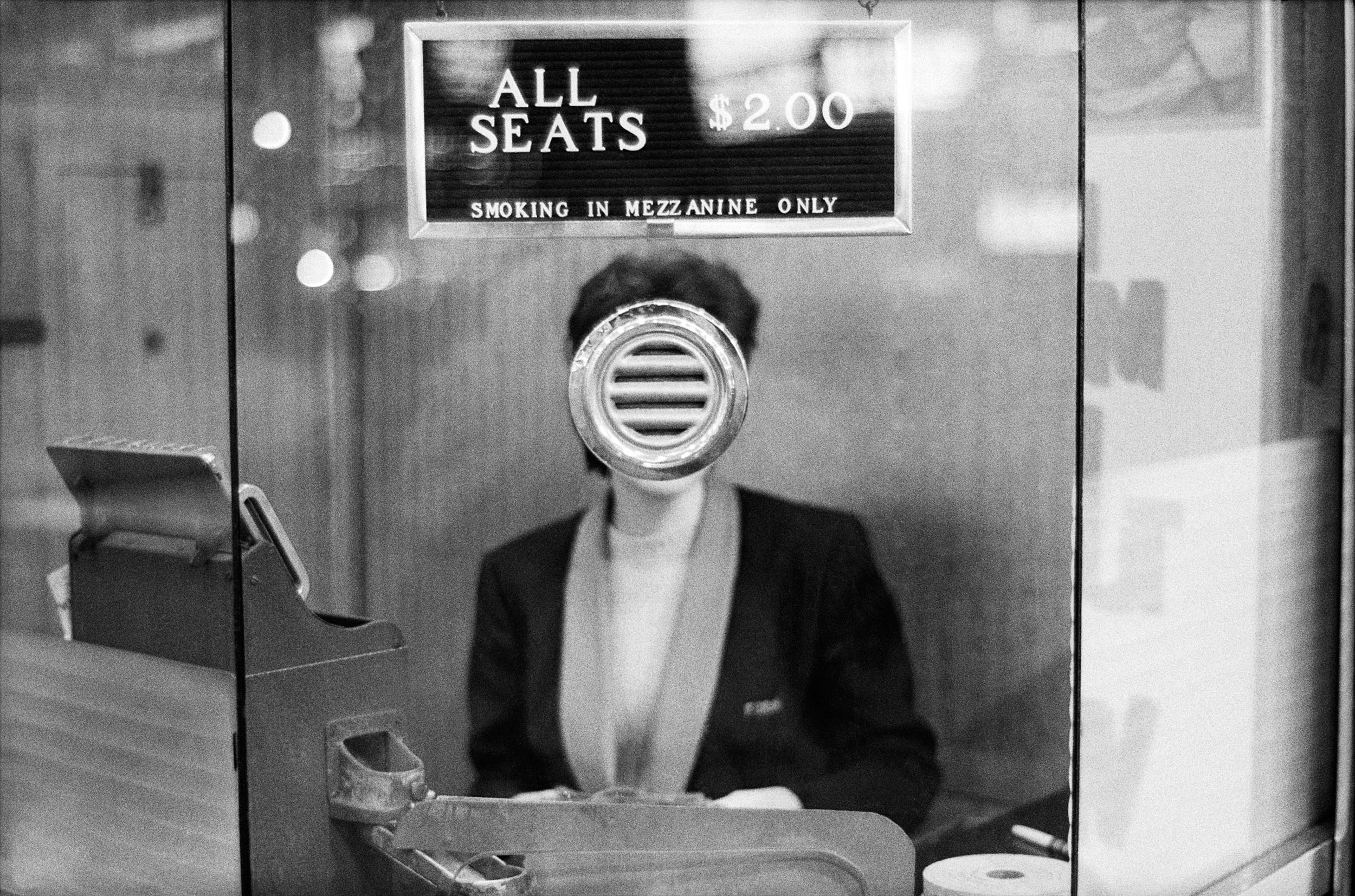
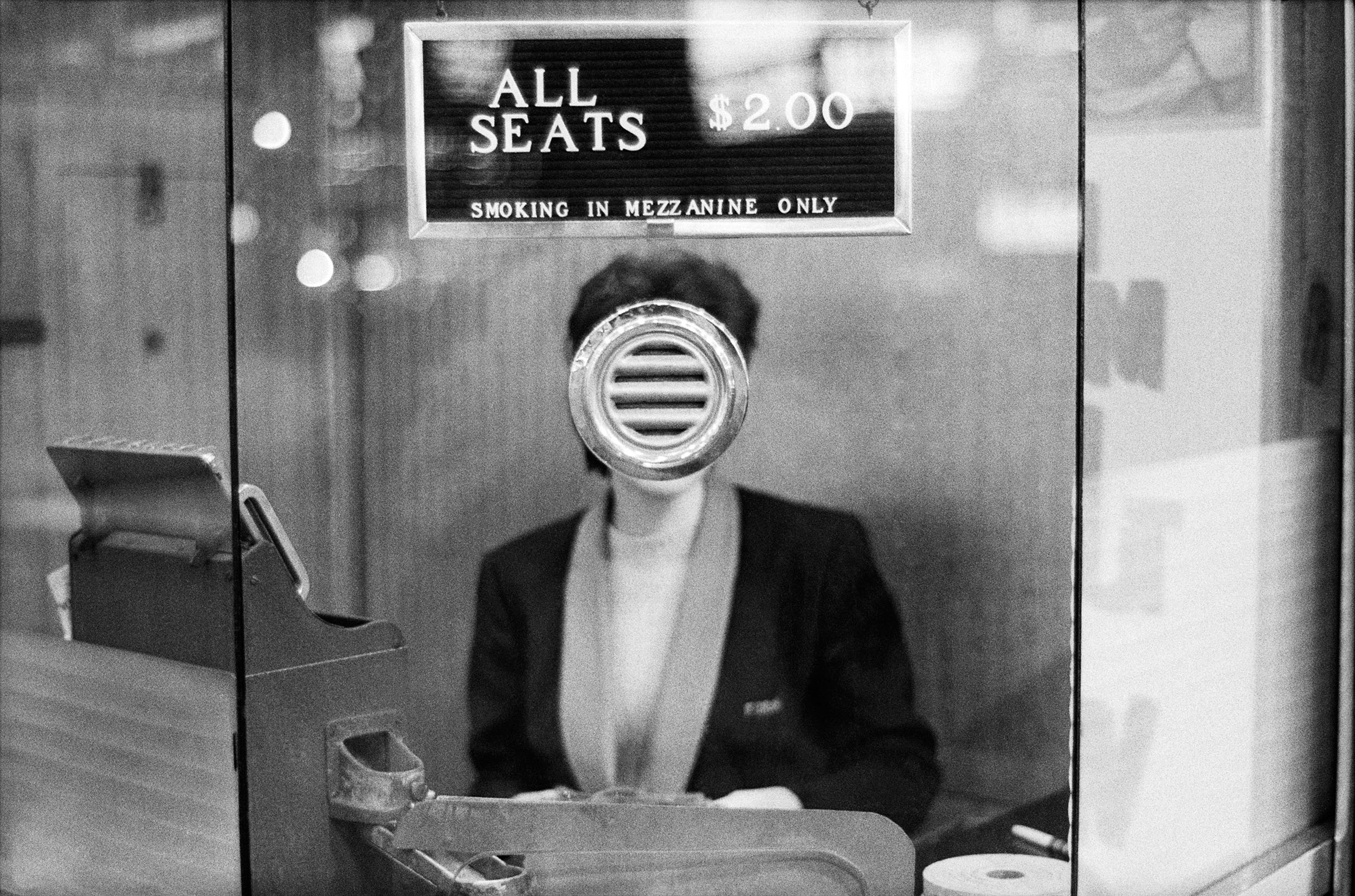
The -ism Series (38): Face-ism

The term "face-ism" was first introduced in an article published by Archer et al. in 1983. It refers to the relative facial prominence (ratio of the face to the total visible body) in depictions of men versus women. In their five studies, the authors assessed the prevalence of face-ism in five US-American magazines and newspapers (n = 1.750), in publications from 11 cultures (n = 3.500), and in artwork over 600 years (920 portraits and self-portraits). They found evidence that men are depicted with greater facial dominance than women. 

The authors observed this difference also in amateur drawings of men and women (by 40 male and 40 female undergraduate students). Most interestingly, in their fifth study, they found ratings of intelligence and personality characteristics depending on the facial prominence (n = 60) (Archer et al., 1983).

The phenomenon of face-ism and the varying judgement of persons based on facial prominence was found in a great many studies following Archer et al.'s, such as the attribution of less mental activity and morality, less intelligence and likeability to people with less facial prominence.

Cus Babic, Robert and Musil's (2018) findings are also consistent with previous research showing that face-ism is also prevalent on the internet. In their analysis of selfies (n = 2.754) from Bankgok, Berlin, London, Moscow, New York and Sao Paolo posted on Instagram, the authors came to the conclusion that photographs of men focus on the face while those of women focus more on their bodies.

Face-ism is also seen as a manifestation of sexism since "Western societies traditionally value men’s intellect, more prominence is given to men’s faces, whereas the relative prominence of women’s bodies communicates the value placed on their physical appearance instead of their intellect". Less face and more body enhances the perception of object-like persons (Cheek, 2016).

- - - - - - - - - - - - -

- Archer, D., Iritani, B., Kimes, D. D., & Barrios, M. (1983). Face-ism: Five studies of sex differences in facial prominence. Journal of Personality and Social Psychology, 45(4), 725–735.
- Cheek, N. N. (2016). Face-ism and Objectification in Mainstream and LGBT Magazines. PLoS One, 11(4), link
- Cus Babic, N, Robert, T. & Musil, B. (2018). Revealing faces: Gender and cultural differences in facial prominence of selfies, PLoS One, 13(10).
- photograph by Joel Meyerowitz via

Friday, 12 April 2024

Women Eating Less When Dining With Men?

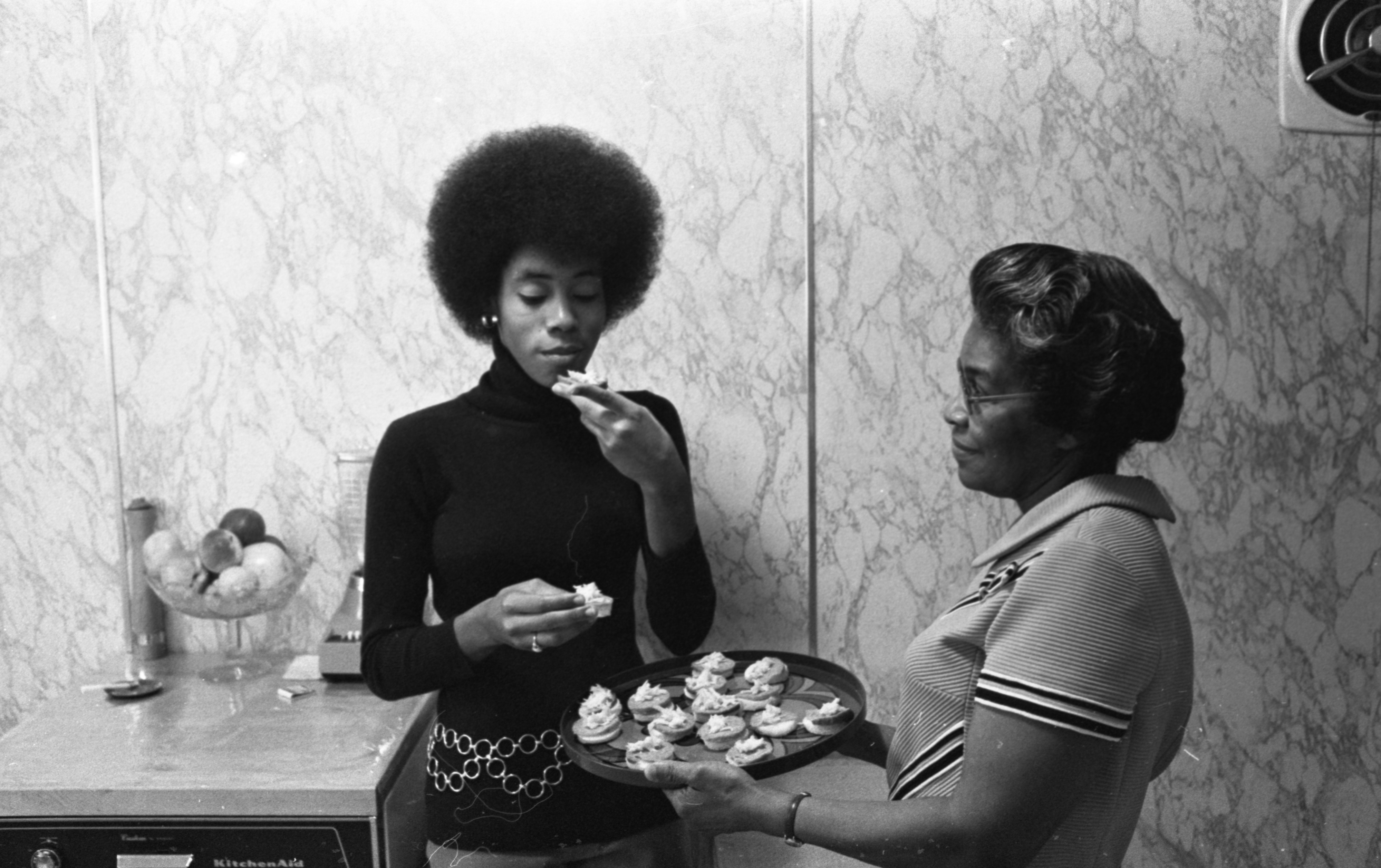
Young et al. (2009) observed students in naturalistic settings, i.e., in university cafeterias. Results show that women chose food of significantly lower caloric value (540 calories) when eating with a male companion (date situation). Eating with a group of men meant even lower calories (450). The food chosen was higher in calories (670 calories) when dining with another woman and even higher (750) when eating with a group of women. Allen-O-Donnell et al. (2011) came to similar conclusions.

Men, according to the study carried out by Young et al. (2009) were not affected by the gender of their dining companions (via and via). Allen-O'Donnell et al.'s (2011) findings suggest an inverse impact. In other words, men eating with women purchase more calories than those eating with men (via). According to a study published in 2015, males dining with females consume significantly more than males dining with males. Interestingly, the "sex of a female's eating partner did not significantly influence" how much food was consumed (Kniffin, Sigirci & Wansink, 2016).

In a naturalistic study, we investigated the influence of gender, group size and gender composition of groups of eaters on food selected for lunch and dinner (converted to total calories per meal) of 469 individuals (198 groups) in three large university cafeterias. In dyads, women observed eating with a male companion chose foods of significantly lower caloric value than those observed eating with another woman. Overall, group size was not a significant predictor of calories, but women's calories were negatively predicted by numbers of men in the group, while the numbers of women in the group had a marginally significant positive impact on calorie estimates. Men's calorie totals were not affected by total numbers of men or women. This study supports previous investigations, but is unique in making naturalistic observations. (Young et al., 2009)

"It is possible that small food portions signal attractiveness, and women conform, whether consciously or unconsciously, to small meals in order to be seen as more attractive,"
Meredith Young

"The theory is you're more aware of gender when you're with the opposite gender and may want to prove your gender more."
Marci Cottingham

Male and female subjects read a food diary attributed to a male or female target who was portrayed as eating either a small breakfast and lunch or a large breakfast and lunch. Consistent with the hypothesis that amount eaten would more strongly affect subjects' inferences about the female target, ratings of the male target were not differentially influenced by the meal size manipulation. In contrast, subjects considered the female target who ate smaller meals to be significantly more feminine, less masculine, more concerned about her appearance, better looking, and more likely to possess stereotypically feminine personality traits. (Chaiken & Pliner, 1987)

- - - - - - - - - - - -

- Allen-O''Donnell, M., Cottingham, M. D. Nowak, T. C. & Snyder, K. A. (2011). Impact of Group Settings and Gender on Meals Purchased by College Students, Journal of Applied Social Psychology, 41(9), 2268-2283.
- Chaiken, S. & Pliner, P. (1987). Women, but not Men, Are What They Eat: The Effect of Meal Size and Gender on Perceived Femininity and Masculinity, Personality and Social Psychology Bulletin, 13(2), link
- Kniffin, K. M., Sigirci, O. & Wansink, B. (2016). Eating Heavily: Men Eat More in the Compnay of Women. Evolutionary Pschological Science, 2, 38-46.
- Young, M. E., Mizzau, M., Mai, N. T., Sirisegaram, A. & Wilson, M. (2009). Food for thought. What you eat depends on your sex and eating companions. Appetite, 53(2), link
- photograph (Penny Anderson and her mother, 1971, (c) The Ann Arbor News) via