Friday, 14 June 2024

The Tradwife Persona

For a great many women, tradwife is an identity. Tradwives are women who believe in what is considered as traditional gender roles usually including "hetereosexual marriage with masculine dominance and feminine subservience, child-rearing, homeschooling,  and right-wing political ideals". In his article, Proctor examines three well-known online tradwife persona: Alena Kate Pettitt (The Darling Academy), Caitlin Huber (Mrs. Midwest), and Ayla Stewart (Wife with a Purpose). 

His focus is on how forms of racism and sexism manifest in their performances to "1) establish tradwifery as a legitimate practice and form of identification, 2) illustrate how a person should act/talk/live to be considered a tradwife, and 3) establish themselves as part of a community of tradwives". 

Tradwifery is inherently sexist and explicitly anti-feminist since women are portrayed as subservient to men and feminism is attacked calling for a return to so-called traditional feminine gender roles. Many tradwives call their ideology and lifestyle "choice feminism". In other words, as the choices are made by women they are automatically declared to be feminist choices.

The decisions to stay at home “may be presented as entirely personal. However, they are inseparable from the profound crisis of both work and care under neoliberal capitalism” (Rottenberg & Orgad 2020). So those women who choose to not work are exercising a privilege to embody a traditional version of feminine gender roles, as these traditions are often “frozen moments in history arbitrarily chosen from the cultural repertoire as “the’ authentic expression of the national collective” (Christou 2020). Indeed, very likely these arbitrary historic traditions themselves are complete inventions (Hobsbawm 1992). For instance, it is a myth that women in the far past didn’t work. They were wives and mothers, but also worked the fields, brewed mead, sold and bartered goods, spun wool, and very often worked alongside guildsmen to learn a trade (Shahar 2003). By framing the woman’s role in the home as ‘traditional’, tradwives continue a long project of delegitimizing women’s contributions in the workforce as separate and less valid than the formalized economy of male labour (Milkman 2016).

While sexism is quite obvious, the link between tradwifery and racism is comparably more subtle. The movement promotes white, western heteronormative ideals of gender roles taken from white middle-class US-Americans in the 1950s. The construction of the fragile woman was something white women had access to, not Black women, as the distribution of labour was different among the Black population. The tradwife movement is not explicitly racist or extremist. However, tradwife culture is useful to white supremacists.

In 2018, Ayla Stewart (censored several times) described her site as "an online forum which brings together people interested in God's plan for happy families and wives dedicated to traditional homemaking. It also serves youth interested in an alternative to feminism and liberal ideology". While Stewart is vocal on issues of feminism and ethnicity, Caitlin Huber and Alena Kate Pettit shy away from overt statements and focus more on institutional and corporate aspects of their personas and making money.

Huber has a ‘Shop’ tab on her blog that links out to allow purchase of her “favourite things”. She does not produce these items, but in the site’s frequently asked questions, she explains: “I get ad money from YouTube from my videos, and when I do a sponsorship, I will negotiate to get paid. I also get a little money from any links that I offer to y’all from Amazon!” (Huber 2022). She is letting us know (with a colloquial “y’all”) that even though she is making money from this, she’s really just like us: a normal person, where ‘normal’ is code (for all three women) as white, middle-class, heterosexual, cisgendered, neurotypical, and able-bodied. Pettitt takes corporate agency a step further by offering her own books on ‘Traditional Lifestyle & Etiquette’—co-authored by herself and The Darling Academy—for purchase via Amazon link.

The author points out that while the concept of tradwifery clearly contains aspects of misogyny and white supremacy, not all tradwives are anti-feminists or white nationalists (Proctro, 2022).

- - - - - - - - - -

- Proctor, D. (2022). The #Tradwife Persona and the Rise of Radicalized White Domesticity. Persona Studies, 8(2), 7-26; link
- photograph via

Wednesday, 12 June 2024

Becoming Old, Becoming a Stranger

Abstract: We start with the observation that aging gerontologists often engage in two distinct discourses on aging—one public and one private. This separation entails “othering,” which reproduces agism and stigma. Based on personal experience, insight from colleagues and writers, and concepts from symbolic interaction perspectives, we argue that becoming old to some degree involves becoming a stranger. Before reaching old age, both of us have been in the position of strangers due to social experiences that left us “off the line” or “on the margins.” 


Examples are crossing social borders related to nations, class structures, gender, race, health status, and generations. Our stories illustrate how aging is more than personal. It is interpersonal—shaped by social history, policies, interdependence in relationships, and the precariousness of old age. Such phenomena often show sharp contrasts in the interpersonal worlds and social experiences of women and men. Reflecting on our own journeys as life course migrants leaves us acutely aware of both the social problems and potential promises of aging. (Hagesta & Settersten, 2017)

- - - - - - - - - - - -
- Hagestad, G. O. & Settersten, R. A. (2017). Aging: It's Interpersonal! Reflections From Two Life Course Migrants. The Gerontologist, 57(1), 136-144.
- phtotgraph by Garry Winogrand via

Saturday, 8 June 2024

World Oceans Day & Environmental Injustice in the Anthropocene Ocean

In the 1980s, the concept of environmental justice emerged in the United States recognising the disproportional distribution of environmental pollution and hazardous waste with Black communities and  socio-economically disadvantaged populations experiencing more environmental burdens and having less access to benefits. Comparably little attention has, so far, been paid to environmental justice issues in connection with marine and coastal environments. Here, too, impacts are "unequally distributed geographically and produce socially differentiated impacts across racial, ethnic, gender, age and socio-economic groups". One of the reasons why marginalised groups experience worse impacts is that they are often inadequately considered and mostly excluded from the deciscion-making process (Bennett et al., 2022). 

These colonial and racist acts fail to recognize ancestral ocean ownership and tenure rights, inclusion of marginalized communities in decisions, respect for human rights, and consideration of social and health impacts in the formulation of pollution prevention approaches. (Bennett et al., 2022)

Bennett et al. (2022) discuss five key hazards in the marine and coastal environment affecting some communities and populations more than others: (1) pollution and toxic waste, (2) plastics and marine debris, (3) climate change, (4) ecosystem, biodiversity and ecosystem service degradation, and (5) fisheries declines.

Liboiron (2021) challenges us to think about plastics as a form of colonialism enabled by global capitalist expansion. The amount of plastic waste generated per capita by individuals in many low- and middle-income countries is substantially less than individuals from high-income countries (Euromap, 2016; UNEP, 2021a). Fifteen countries account for 73.9% of the plastic waste that is exported, 11 of these countries are from the OECD (Pedra & Gonçalves, 2020). However, many Low- and Middle-Income Countries are unable to adequately manage their own plastic waste let alone the burgeoning amount of plastic waste shipped from High-Income Countries (Ritchie & Roser, 2018). The UN Special Rapporteur on Toxics underscored how this issue compounds due to the lack of adequate reception and processing facilities in lower income countries (Orellana, 2021). When combined with local gaps in waste management, this leads to substantially greater land-based inputs of plastics into the ocean with associated increases in environmental and societal impacts for populations in lower income countries (Pedra & Gonçalves, 2020; UNEP, 2021b, 2021a). (Bennett et al., 2022)

Some interesting excerpts:

emerged in the 1980s in the United States from concerns about the disproportionate burdens of pollution that were being placed on and experienced by Black communities and socio economically disadvantaged populations (Bullard, 1994; Cutter, 1995). Environmental justice research demonstrated that polluting infrastructure, such as oil refineries, mining and factories, as well as air pollution emissions and toxic waste disposal sites, were often situated near Black, Indigenous, and Latino communities (Bullard, 2018; Walker, 2012). Such environmental discrimination and racism was shown to be producing numerous negative health effects and wellbeing outcomes for these populations (Brulle & Pellow, 2006). The field of environmental justice has since grown globally and expanded to focus on a broader set of environmental hazards and harms, including climate change, biodiversity and habitat loss, and declines in ecosystem services (Boyd, 2022; Chaudhary et al., 2018; Mutz et al., 2002; Sikor, 2013; Sze & London, 2008; Tsosie, 2007). Environmental justice has also come to refer broadly to both the distribution of environmental burdens and access to benefits, as well as the recognition, meaningful involvement and fair treatment of people in environmental decision making and legal frameworks emerged in the 1980s in the United States from concerns about the disproportionate burdens of pollution that were being placed on and experienced by Black communities and socioeconomically disadvantaged populations (Bullard, 1994; Cutter, 1995). Environmental justice research demonstrated that polluting infrastructure, such as oil refineries, mining and factories, as well as air pollution emissions and toxic waste disposal sites, were often transform-situated near Black, Indigenous, and Latino communities (Bullard, 2018; Walker, 2012). Such environmental discrimination and racism was shown to be producing numerous negative health effects and wellbeing outcomes for these populations (Brulle & Pellow, 2006). The field of environmental justice has since grown globally and expanded to focus on a broader set of environmental hazards and harms, including climate change, biodiversity and habitat loss, and declines in (Boyd, 2022; Chaudhary et al., 2018; Mutz et al., 2002; Sikor, 2013; Sze & London, 2008; Tsosie, 2007). Environmental justice has also come to refer broadly to both the distribution of environmental burdens and access to benefits, as well as the recognition, meaningful involvement and fair treatment of people in environmental decision making and legal frameworks. Historically marginalized groups, groups that rely on subsistence harvesting or small-scale fisheries, and low-income nations tend to be disproportionately exposed to and impacted by increasing chemical and biological contamination in the ocean (Landrigan et al., 2018; Liboiron, 2021), a problem which perpetuates and exacerbates pre-existing inequalities. For example, the worst social-environmental impacts and public health effects of pollution are often experienced and absorbed by Indigenous people, people of color, and women (Landrigan et al., 2018; Liboiron, 2021). Inuit women from the Arctic are still among the most contaminated humans with POPs such as PCB and PFAS, while struggling for food safety and security and being affected by underlying health risks due to chronic and emerging diseases such as breast cancer and endocrine disruption in the face of climate change (AMAP, 2021; Ghisari et al., 2014; Wielsøe et al., 2017). Indigenous populations and small-scale fishers who consume high amounts of fish or mammals are exposed to the effects of methylmercury on their health (Donatuto et al., 2011; Probyn, 2018). Afro-American communities, who have tolerated the burden of colonialism and impacts of top-down government policies for generations, have been disproportionately impacted by offshore oil and gas exploitation in coastal Louisiana where they have faced persistent industrial hazards from the myriad of old pipeline infrastructure that impair coastal marshes and produce health and livelihood impacts (Maldonado, 2018; Randolph, 2021). The golbal nature of the disposal of pollution and other wastes in the ocean reveals patterns of environmental racism, with the dumping of wastes and the breaking of ships often occurring in the lower income countries in Africa and Asia (Frey, 2015; Okafor-Yarwood & Adewumi, 2020; Wan et al., 2021). Oil exploration and exploitation also tends to be more polluting in lower income countries - such as Ecuador, Nigeria or Nicaragua - where corporations take advantage of governance gaps (Alava & Calle, 2013; Allen, 2011; Andrews et al., 2021; Arif, 2019; O’Rourke & Connolly, 2003). (Bennett et al., 2022)

Bennett et al – Environmental Justice in the Ocean 9 2.3.2 Impacts and Distribution The litany of climate change impacts and knock-on effects described above are having substantial but differentiated implications for coastal communities and ocean-dependent populations around the world. Extreme weather events, coastal inundation and erosion, saltwater intrusion, marine heatwaves and HABs can have detrimental effects on economic benefits from the fisheries, aquaculture, agriculture and tourism sectors (Bindoff et al., 2019; Misana & Tilumanywa, 2019; Narita et al., 2012; Oppenheimer et al., 2019; Ritzman et al., 2018; K. E. Smith et al., 2021). Shifts in the abundance, productivity and location of fish stocks and shellfish from warming oceans and acidification are affecting fisheries jobs, revenues, and food security for many coastal populations (Cheung et al., 2010; Doney et al., 2020; Fernandes et al., 2017; Lam, Cheung, Reygondeau, et al., 2016; Narita et al., 2012; Tigchelaar et al., 2021). Rising sea levels, combined with increased storm and flooding events, are harming community infrastructure, housing and health in both rural areas and urban centers (Heberger et al., 2011; Liwenga et al., 2019; Rahimi et al., 2020; Ryan et al., 2016) and leading to forced retreat or migration away from the ocean (Ahmed & Eklund, 2021; Dannenberg et al., 2019; Dasgupta et al., 2022; Hauer, 2017; Schwerdtle et al., 2018). Climate change impacts on ecosystems can undermine provisioning, regulating, cultural and supporting ecosystem services that are fundamental for human well-being (Doney et al., 2012; E. J. Nelson et al., 2013; Singh et al., 2019; Smale et al., 2019). In short, climate change threatens the human rights of coastal populations and nations to food, livelihoods, health and physical security (Ahlgren et al., 2014; Elver & Oral, 2021; Levy & Patz, 2015). There is substantial evidence that different racial, ethnic, gender, age and socio-economic groups experience the impacts of climate related changes to a greater or lesser extent (Benevolenza & DeRigne, 2019; Bindoff et al., 2019; Dankelman & Jansen, 2010; Flores, Collins, et al., 2021; N. Islam & Winkel, 2017; Thomas et al., 2019). For example, pre-existing social and structural inequalities tend to situate Black populations, women and the poor in more vulnerable positions when it comes to coastal flooding, storms, and other hazards related to climate change (Ahmed & Eklund, 2021; Gotham et al., 2018; Hardy et al., 2017). Communities and groups (e.g., small-scale fishers or Indigenous Peoples) who have a high level of resource dependence - either for livelihoods or food security - will also be more susceptible to changes to ecosystems, ecosystem services and fisheries brought on by climate change (Guillotreau et al., 2012; Lauria et al., 2018; Marushka et al., 2019). Similarly, groups with lower adaptive capacity - due to less access to financial resources, lack of alternative livelihood options, or structural barriers - will experience greater impacts (Cinner et al., 2018; Senapati & Gupta, 2017). Climate change adaptation and mitigation programs can further marginalize local populations when their needs and voices are not taken into account. Managed retreat, for instance, can have disruptive public health implications, including declining mental health, social capital, food security, water supply, and access to health care, that disproportionately affect Indigenous people (Dannenberg et al., 2019). In Bangladesh, climate adaptation projects have excluded and further marginalized women and minorities, and worsened income inequality (Sovacool, 2018). (Bennett et al., 2022)

8th of June was first declared as World Oceans Day in 1992 and designated by the United Nations in 2008. More on the day: LINK
- - - - - - - -

- Nathan J. Bennett, Juan José Alava, Caroline E. Ferguson, Jessica Blythe, Elisa Morgera, David Boyd, Isabelle M. Côté (2022). Environmental Justice in the Ocean, Working Paper, University of British Columbia, link
- photograph by Pierre Verger via

Friday, 7 June 2024

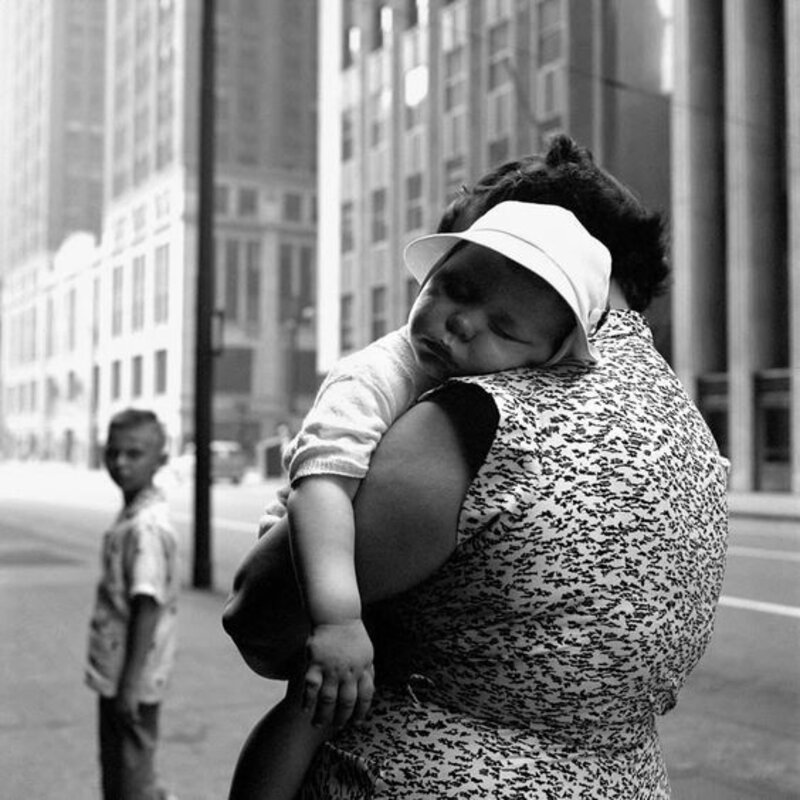
The Shaping of the Face Space in Early Infancy: Becoming a Native Face Processor

Abstract: Face perception remains one of the most intensively researched areas in psychology and allied disciplines, and there has been much debate regarding the early origins and experiential determinants of face processing. This article reviews studies, the majority of which have appeared in the past decade, that discuss possible mechanisms underlying face perception at birth and document the prominent role of experience in shaping infants’ face-processing abilities. In the first months of life, infants develop a preference for female and own-race faces and become better able to recognize and categorize own-race and own-species faces. This perceptual narrowing and shaping of the “face space” forms a foundation for later face expertise in childhood and adulthood and testifies to the remarkable plasticity of the developing visual system. (Slater et al., 2020)

- Slater, A., quinn, P. C., Kelly, D. J., Lee, K., Longmore, C. A., McDonald, P. R. & Pascalis, O. (2010). The Shaping of the Face Space in Early Infancy: Becoming a Native Face Processor. Child Development Perspectives, link
- photograph by Vivian Maier via

Thursday, 6 June 2024

The Social Meanings of Men's and Women's Hats

"Until the 1960s, the article of clothing that performed the most important role in indicating social distinctions among men was the hat. The fact that it ceased to fulfill this role in the 1960s suggests that in the nineteenth century, hats, which continued to be worn during the first half of the twentieth century, were particularly suitable for the social environment of the period. Several new types of hats appeared during the nineteenth century and were rapidly adopted at different social levels. Exactly what roles did hats perform? Because hats represented a more modest expense than jackets and coats, they provided an ideal opportunity for "blurring and transforming . . . traditional class boundaries" (Robinson 1993: 39). 


Men's hats were also used to claim and maintain, rather than to confuse, social status, as seen in the fact that specific types of hats became closely identified with particular social strata. Elaborate customs of "hat tipping" as a means of expressing deference to a man's superiors reflected the importance of the hat in marking class boundaries (McCannell 1973). Since men represented their families in public space, men's hats, rather than women's, were used to indicate the status of the family. Women's head coverings during this period were more varied and more individualized than men's (Wilcox 1945). Women's hats exemplified conspicuous consumption instead of relaying coded signals referring to social rank." (Crane, 2000)

- - - - - - - - - - - - -
- Crane, D. (2000). Fashion and Its Social Agendas: Class, Gender, and Identity in Clothing, excerpt via
- photography via

Wednesday, 5 June 2024

Hunger has a Female Face

49,7% of the world population is female, however, women and girls make up 60% of the 309 million people extremely hungry right now. 126 million more women than men struggle securing their next meal (via). In countries facing hunger due to conflict, women often eat least sacrificing for their families. In two thirds of countries, women are more likely to report food insecurity than men. One in three women has anemia, a diet-related iron deficiency, which can damage organs if it is untreated (via).

photograph by Vivian Maier via

Tuesday, 4 June 2024

The Homophobic Climate Index: Estimating Homophobia in 158 Countries

Lamontagne et al. (2018) developed the Homphobic Climate Index including aspects such as institutional (e.g. laws that criminalise same-sex relations) and social (acceptance of homosexuality in population) homophobia. 158 countries - ranging from Sweden to Sudan - were ranked based on how homophobic or gay-friendly they were. The most inclusive countries were Uruguay and countries located in Western Europe. Latin America appeared as a region fighting homophobia, and in Africa, South Africa and Cabo Verde were the most inclusive ones.

The ten most homophobic countries were (in the following order): Sudan, Afghanistan, Saudi Arabia, South Sudan, Qatar, Nigeria, Guinea, Iraq, Burundi, Chad. The ten most inclusive countries were: Sweden, Netherlands, Denmark, Norway, Spain, Finland, Belgium, France, Uruguay, United Kingdom.

The authors found some interesting correlations. For instance, a 10% change in GDP per capita was associated with a 1% reduction in the index. Also, a higher homophobic climate was correlated with lower life expectancy among men as well as with social inequalities, such as gender equality (measured by share of parliamentary seats held by women) and the abuse of human rights.

- - - - - - - - - -

- Lamontagne, E., d'Elbée, M., Ross, M. W., Carroll, A., du Plessis, A. & Loures, L. (2018). A sociological measurement of homophobia for all countries and its public health impact. European Journal of Public Health, 28(5), 96-972, link
- photograph by Diane Arbus via

Monday, 3 June 2024

Different Ethnicities and the Gaze of Infants

Abstract: Differential experience leads infants to have perceptual processing advantages for own- over other-race faces, but whether this experience has downstream consequences is unknown. Three experiments examined whether 7-month-olds (range = 5.9–8.5 months; N = 96) use gaze from own- versus other-race adults to anticipate events. 


When gaze predicted an event's occurrence with 100% reliability, 7-month-olds followed both adults equally; with 25% (chance) reliability, neither was followed. However, with 50% (uncertain) reliability, infants followed own- over other-race gaze. Differential face race experience may thus affect how infants use social cues from own- versus other-race adults for learning. Such findings suggest that infants integrate online statistical reliability information with prior knowledge of own versus other race to guide social interaction and learning. (Xiao et al., 2017)

- - - - - - - - - - -
- Xiao, N. G., Wu, R., Quinn, P. C., Liu, S., Tummeltshammer, K. S., Kirkham, N. Z., Ge, L., Pascalis, O. & Lee, K. (2017). Infants Rely More on Gaze Cues From Own-Race Than Othr-Race Adults for Learning Under Uncertainty, link
- photograph via Design Mom
Sunday, 2 June 2024

The Pressure to be "Beach Body Ready"

According to a survey (n = 2,000) on the so-called beach body and the stressors accompanying it, conducted by Estrid last year, 49% of respondents were worried about being "beach body ready". Two-thirds (70%) of  so-called "millennials", 66% of "Gen-Z" and one third (30%) of people aged 55 and over were concerned about being "beach body ready".

The sample was asked what the main concerns were; here some answers: pressure to look and feel physically fit (52%), generally feeling "beach body ready" (49%), pressure to remove body hair (48%), enhancing the grooming regime (47%).

The reasons why people felt the need to remove body hair for the beach were: to feel cleaner (22%), feeling insecure when showing body hair (11%), increased confidence through shaving (11%), the feeling to be judged by others if they don't remove body hair (9%).

The most pressure was felt from friends (20%), peers of similar age (20%), social media (17%), and social media influencers (10%) (via). Enjoy your summer!
- - - - - - - - - - - - - -

photograph by Gary Winogrand via

Saturday, 1 June 2024

Babies Associating Ethnicities with Different Music and Emotions

Abstract: We used a novel intermodal association task to examine whether infants associate own- and other-race faces with music of different emotional valences. Three- to 9-month-olds saw a series of neutral own- or other-race faces paired with happy or sad musical excerpts. Three- to 6-month-olds did not show any specific association between face race and music. At 9 months, however, infants looked longer at own-race faces paired with happy music than at own-race faces paired with sad music. 


Nine-month-olds also looked longer at other-race faces paired with sad music than at other-race faces paired with happy music. These results indicate that infants with nearly exclusive own-race face experience develop associations between face race and music emotional valence in the first year of life. The potential implications of such associations for developing racial biases in early childhood are discussed. (Xiao et al., 2017)

- - - - - - - - - - -
- Xiao, N. G., Quinn P. C., Liu, S, Ge, L. Pascalis, O. & Lee, K. (2017). Older but not younger infants associate own-race faces with happy music and other-race faces with sad music; link
- photograph by William Eggleston via