Showing posts with label Gordon Parks. Show all posts

Tuesday, 31 October 2023

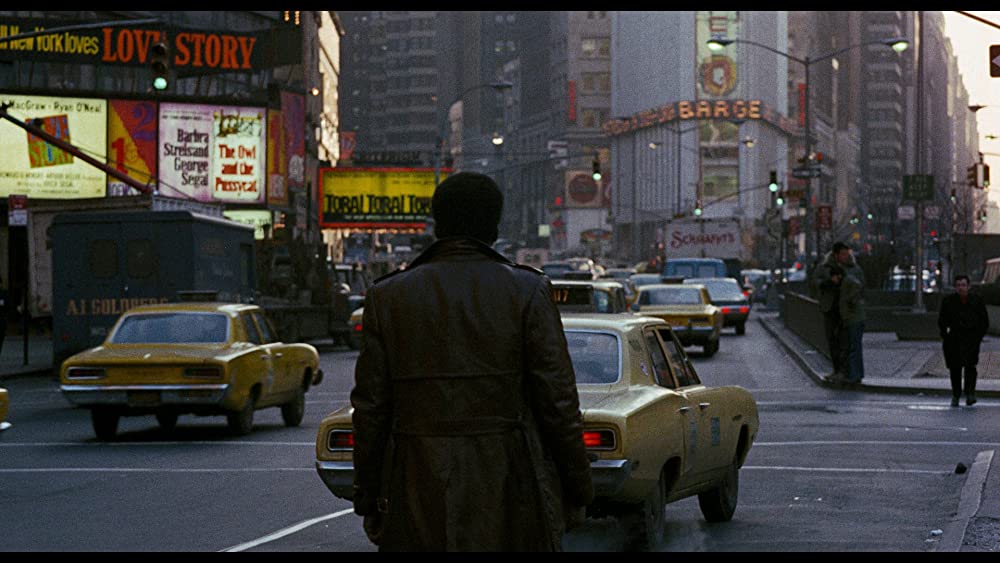
"Hotter than Bond, cooler than Bullitt"

“Ghetto kids were coming downtown to see their hero, Shaft, and here was a Black man on the screen they didn’t have to be ashamed of. We need movies about the history of our people, yes, but we need heroic fantasies about our people, too. We all need a little James Bond now and then.”
Gordon Parks (1972)


- image of Richard Roundtree (1942-2023) via 
- "Hotter than Bond, cooler than Bullitt!" was the blurb on the paperback the film was based on (via)

Tuesday, 21 February 2023

The Child Opportunity Index

The Child Opportunity Index (COI) was developed in 2014 to measure and map "the quality of resources and conditions that matter for children to develop in a healthy way" in the neighbourhoods they grow up, and to spark conversations about inequality and encourage actions to increase equity. In 2020, COI 2.0 was launched including updated data (via) from 29 neighbourhood-level indicators covering three domains: education (quality and access to early childhood education, social resources related to educational achievement), health and environment (access to healthy food and green space, pollution from industry, exposure to extreme heat), social and economic domain.
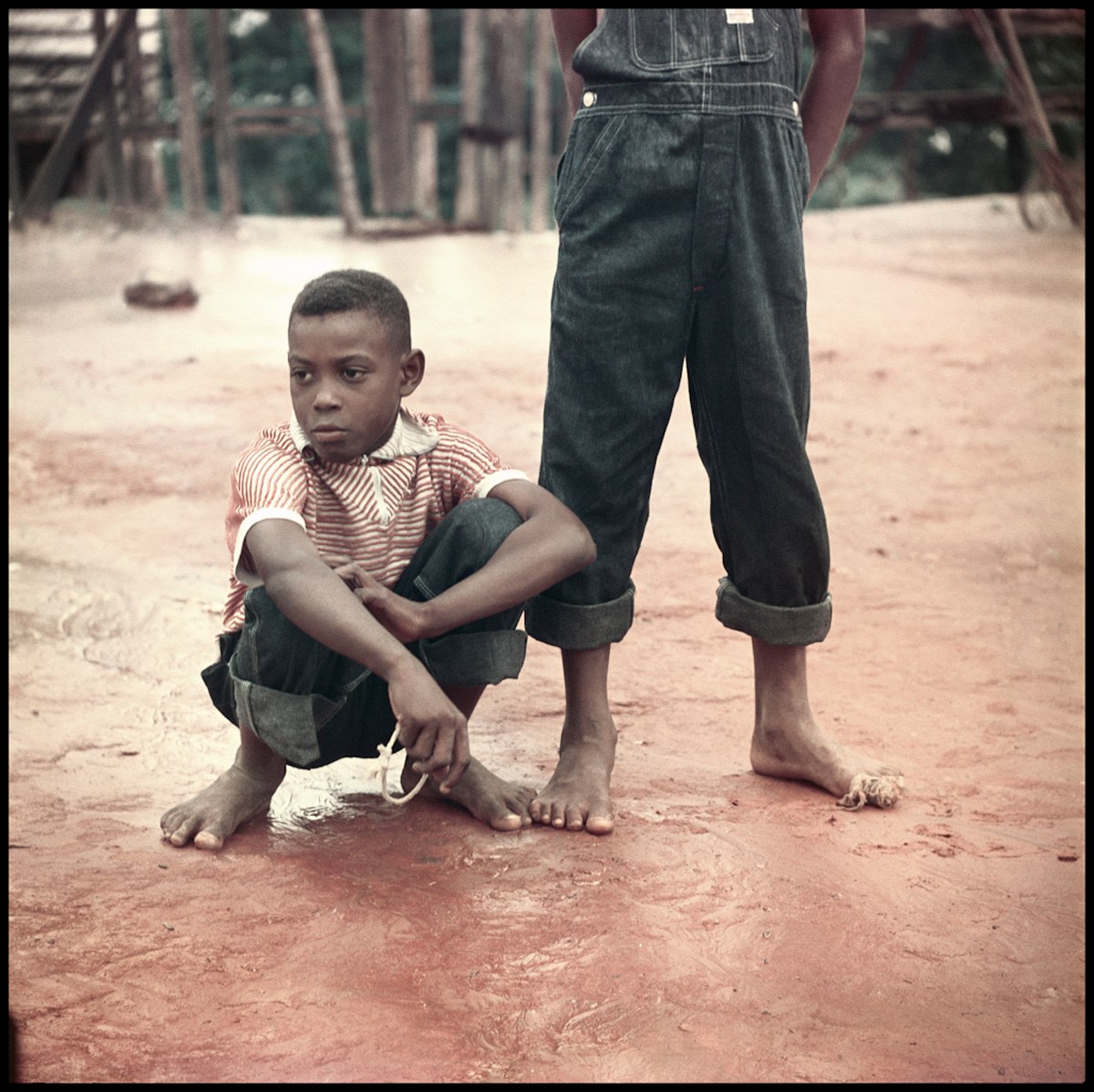
Good schools, parks, playgrounds, healthy food, clean air, safe housing, health care are some aspects crucial for children to become healthy adults. In the United States, many children live in these "high opportunity" neighbourhoods that provide access to the conditions mentioned before. Many, however, live in "low opportunity" neighbourhoods, many of these "many" being Black, Hispanic and Native American children (via).

For example, (...) in the Milwaukee metro the typical White child enjoys a neighborhood with a Child Opportunity Score of 85, while the typical Black child lives in a neighborhood with a score of only 6. As another point of comparison, this racial gap in Milwaukee represents about four opportunity levels (the maximum possible): the typical Black child lives in a very low-opportunity neighborhood, while the typical White child lives in a very high-opportunity neighborhood. (via)

As of 2017...

While only 9 percent of white children live in the 20 percent of neighborhoods ranked as lowest in opportunity, 32 percent of Hispanic and 40 percent of black children live in such neighborhoods. These disparities remain after controlling for children’s own poverty status. Looking just at poor children, 22 percent of white children live in the 20 percent of neighborhoods ranked as lowest in opportunity, but 45 percent of Hispanic and 57 percent of black children live in such neighborhoods (...). As in our analysis of neighborhoods by poverty status, we find that racial/ethnic inequities in neighborhood opportunities for children are larger in metro areas with higher levels of segregation. (McArdle & Acevedo-Garcia, 2017:5)

Summing up... 

Segregation is not benign. The neighborhoods where children live and grow are both separate and greatly unequal along racial/ethnic lines in ways that have profound impacts on opportunities for healthy child development and wellbeing. The differences in neighborhood characteristics and opportunities between racial/ethnic groups are dramatic not just on average, but for large majorities of their populations. (McArdle & Acevedo-Garcia, 2017:4)

- - - - - - - - - - - - - - -

- McArdle, N. & Acevedo-Garcia, D. (2017). Consequences of Segregation for Children's Opportunity and Wellbeing; via
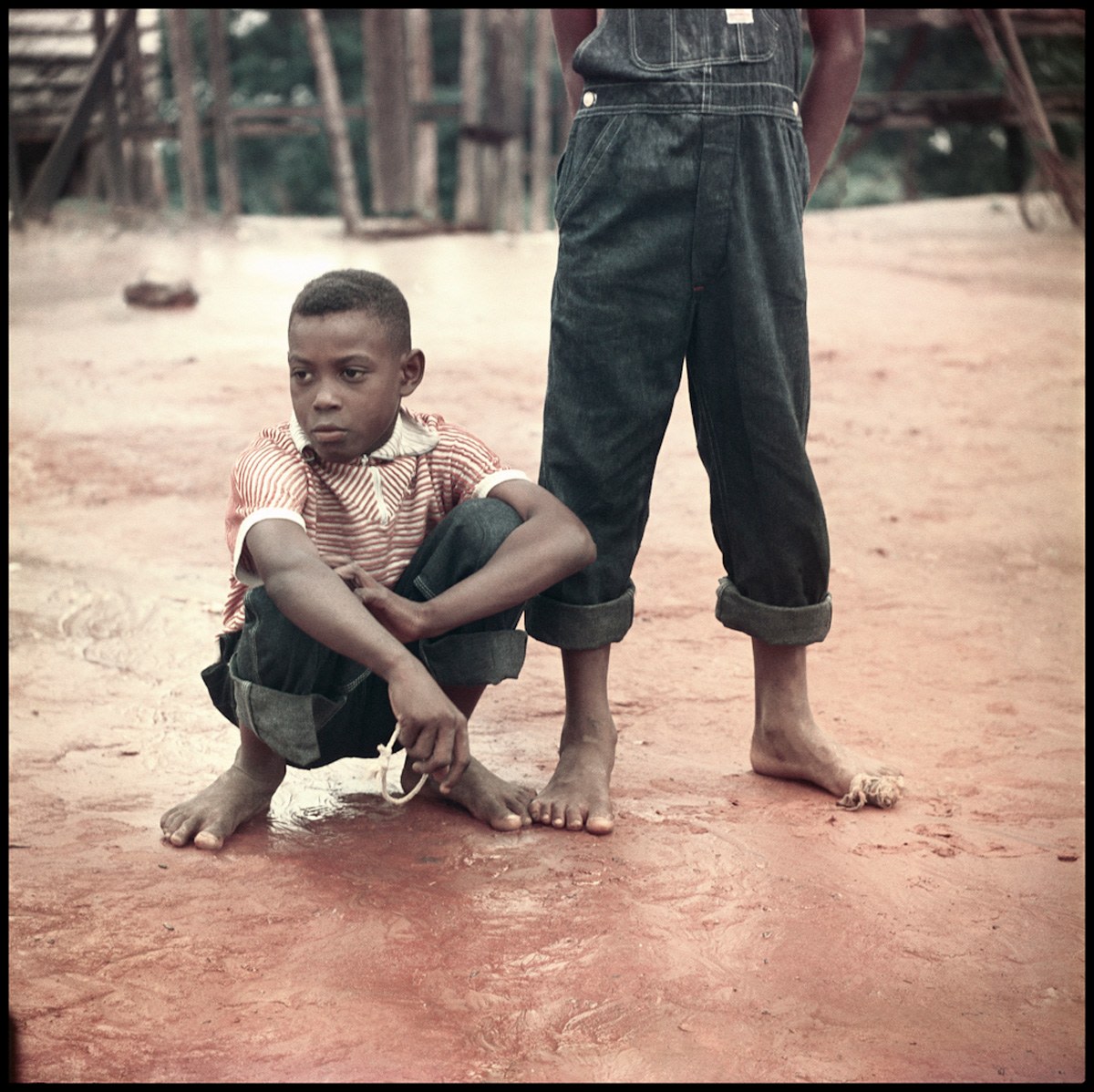
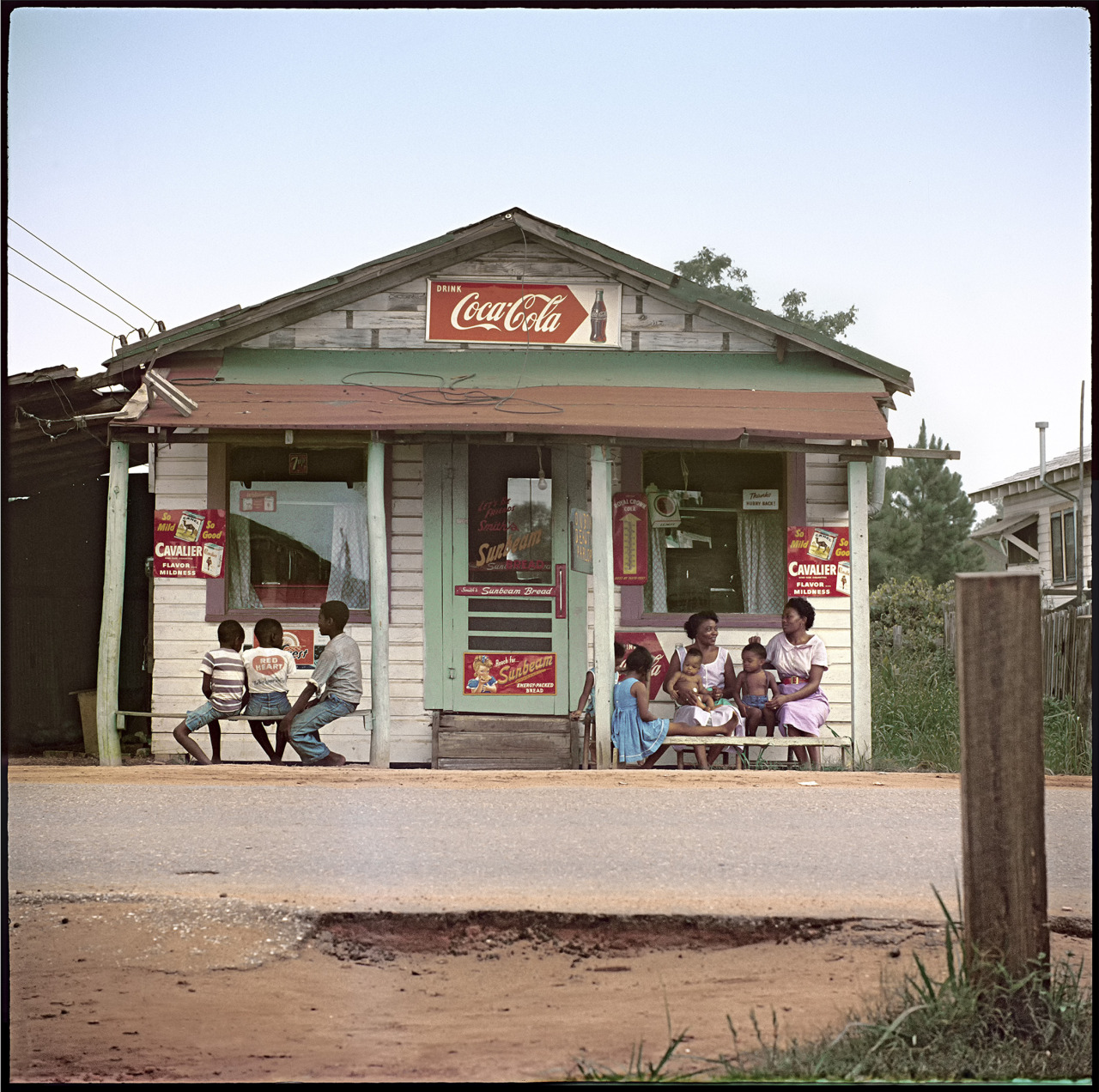
- photograph by Gordon Parks (Alabama, 1956) via and via

Monday, 20 February 2023

Diagnosing Alzheimer's Disease: Black vs White Patients

In the U.S., Black Americans are about 1.5 to 2 times more likely to develop Alzheimer's or related dementias than whites are. Nevertheless, fewer Black than white Americans are diagnosed with Alzheimer's or related dementias. In a study carried out by Lennon et al. (2022), 15 years (ranging from 2005 to 2020) of data on 5.700 Black and 31.225 white participants were tracked. While 36.1% of white participants were diagnosed with Alzheimer's, only 26.8% of Black participants received the diagnosis. Relative to white participants, Black participants had 35% lower odds of having the diagnosis at the initial visit (via).

Black study participants showed higher rates concerning cognitive impairment (particularly processing speed, language, executive function) than white participants, higher rates of hypertension and diabetes - in other words, more potential risk factors for Alzheimer's. In addition, they were twice as likely to experience delusions and hallucinations and generally more likely to show symptoms such as abnormal sleep, appetite or eating changes, irritability, agitation or aggression.

According to the research team, the results are further evidence that - compared to white patients - Black patients usually need more severe clinical presentations to receive a diagnosis of dementia from physicians. The results are backed by the tendency found in numerous studies showing that Black individuals are only diagnosed with Alzheimer's or related dementias when the disease process is more advanced.

Apart from the differences in diagnostic thresholds applied by providers, the scientists believe that these trends are partly due to social attitudes within Black communities in which memory problems are viewed as a normal part of ageing and medical treatment is only sought when neuropsychiatric symptoms (hallucinations, delusions, personality changes) are encountered. 

- - - - - - - - - - - - - -
- Lennon, J. C., Aita, S. L., Del Bene, V. A., Rhoads, T., Resch, Z. J., Eloi, J. M. Walker, K. A. (2022). Black and White individuals differ in dementia prevalence, risk factors, and symptomatic presentation. Alzheimer's & Dementia, The Journal of the Alzheimer's Association, 18(8), 1461-1471.
- photograph by Gordon Parks via

Friday, 26 November 2021

What I am, what you force me to be is what you are. By Gordon Parks.

For I am you, staring back from a mirror of poverty and despair, of revolt and freedom. Look at me and know that to destroy me is to destroy yourself. You are weary of the long hot summers. I am tired of the long hungered winters. We are not so far apart as it might seem. There is something about both of us that goes deeper than blood or black or white. It is our common search for a better life, a better world. I march now over the same ground you onced marched. I fight for the same things you still fight for. My children's needs are the same as your children's. I too am America. America is me. It gave me the only life I know - so I must share in its survival. Look at me. Listen to me. Try to understand my struggle against your racism. There is yet a chance for us to live in peace beneath these restless skies. Gordon Parks


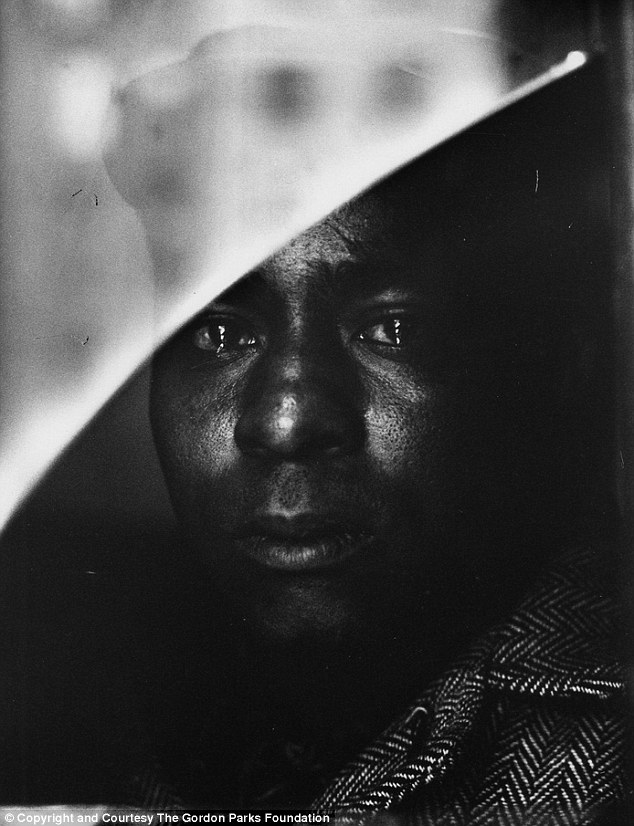
photograph of Norman Fontenelle by Gordon Parks (1967) via

Sunday, 14 November 2021

Just ready to start

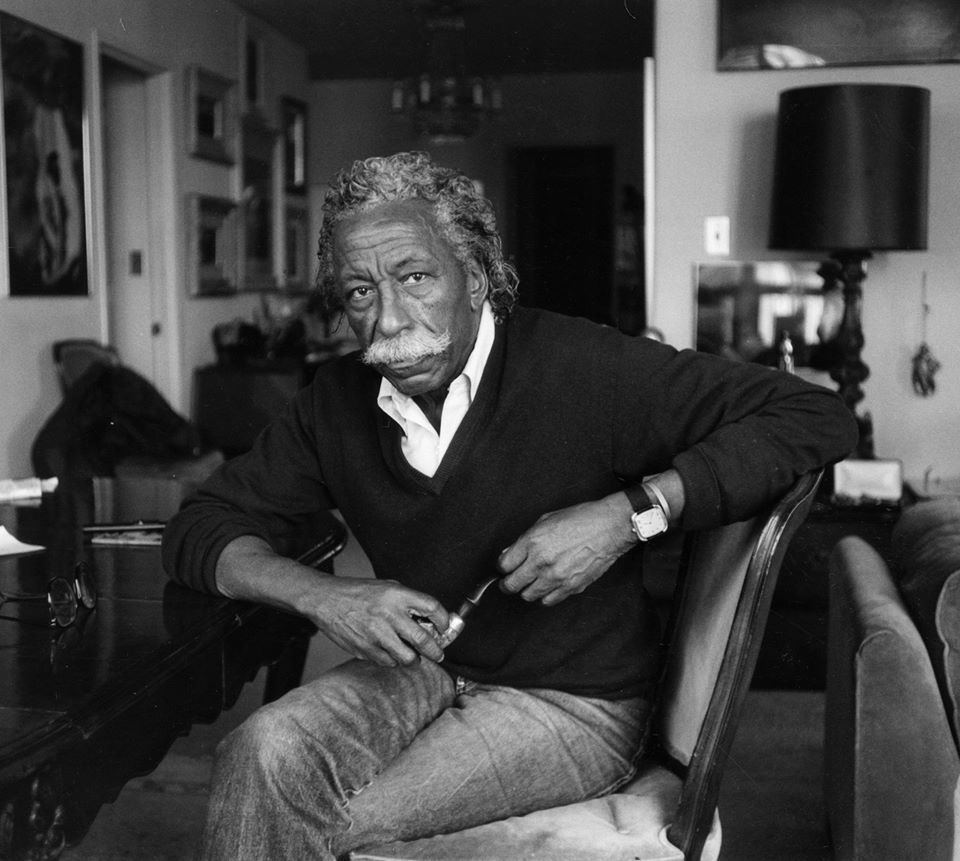
"And now, I feel at 85, I really feel that I'm just ready to start."
Gordon Parks


photograph via

Tuesday, 19 October 2021

A fierce grudge against poverty...

“I hold a fierce grudge against poverty because I was so desperately poor when I was young. But accusing my past is hardly the answer. There is, I want to believe, a personal need to recognise the right of every man to live a reasonably decent life."
Gordon Parks


photograph by Gordon Parks via

Friday, 18 November 2016

Quoting Gordon Parks

"I saw that the camera could be a weapon against poverty, against racism, against all sorts of social wrongs. I knew at that point I had to have a camera." 
Gordon Parks

"I suffered first as a child from discrimination, poverty ... so I think it was a natural follow from that that I should use my camera to speak for people who are unable to speak for themselves."
Gordon Parks


"I suffered evils, but without allowing them to rob me of the freedom to expand."
Gordon Parks

"I was up in New York state someplace and I went to a hotel, bitterly cold, twenty below zero or something like that. The guy refused me a room, just wouldn't talk with me and a young white boy came in with a mackinaw on and a guitar in his arm. He was standing behind me so the guy says, "Well, what do you want?" and he says, "Well, I'm after this man." And the hotel man said, "Well, we don't allow Negroes or Jews in this hotel, the management doesn't." And the other boys says, "Oh, if it's not good enough for him, it's not good enough for me." And he turned and walked back out in the cold. Well, he never stopped to apologize to me for this man, for his race or anything of this sort. It was the only hotel in town and I figured he must have gone somewhere but I thought the act was something I could never forget and I think I appreciated it even more because he didn't stop to talk. He showed me he believed in what he . . . he didn't want to quarrel about it and off he went back into the cold and that was something that you don't forget, a thing like this. I often would like to have known who this guy was. A lot of people say that they thought maybe it was Pete Seeger, but I didn't know him but he was tall and he had a guitar under his arm. Anyhow, I just don't want to know who he was; to me he's better unknown. You know?"
Gordon Parks


"Washington, D.C. in 1942 was not the easiest place in the world for a Negro to get along."
Gordon Parks

"Having just come from Minnesota and Chicago, especially Minnesota, things aren't segregated in any sense and very rarely in Chicago, in places at least where I could afford to go, you see. But suddenly you were down to the level of the drugstores on the corner; I used to take my son for a hotdog or malted milk and suddenly they're saying, "We don't serve Negroes," "niggers" in some sections and "You can't go to a picture show." Or "No use stopping, for we can't sell you a coat." Not refusing but not selling me one; circumventing the whole thing, you see? And Roy more or less expected all this, because he could see that I was green as a pea when I came to Washington and not too involved in all this as I might have been, in humanity. So he said, "Go out and see these things, the people, eat here, go to a theatre, go to the department store and buy yourself a coat. You need a coat." And I came back roaring mad and I wanted my camera and he said, "For what?" and I said I wanted to expose some of this corruption down here, this discrimination. And he says, "How you gonna do it?" "Well, with my camera." So he says, "Well, you sit down and write me a little paper on how you intend to do this," and I said, "Fine." I sat down, wrote several papers, brought them in. He kept after me until he got me down to one simple little project. That was my first lesson in how to approach a subject, that you didn't have to go blaring in with all horns blasting away, but I did a picture there that he often laughed at because of, I suppose, of what I thought was the shock appeal of it."
Gordon Parks

"I think maybe the rural influence in my life helped me in a sense, of knowing how to get close to people and talk to them and get my work done. That might have helped some. I think Roy stirred the interest in me to try and get to know people and get to know all kinds of people better and investigate their ills and their prejudices and their goods and their evil. It was just like a research into the mind of the one you met and in that way I'm sure you felt that you'd grow in a sense and that sometime would be doing some sort of service by recording as much of it as you could with a camera. I don't know that I was any better equipped. I probably . . . in some instances I was, more than probably the white photographers because of an emotional something that probably I was closer to or akin to which has certainly been in my favor since. Some of those Negro stories that I've done for Life and Standard Oil and other places have dealt with poverty, dealt with the emotional aspect of everyday living, because my own life was packed, early life, was packed with so much of it."
Gordon Parks

"I don't say that, you know, I was any more sensitive than the rest of the photographers on the FSA, but I certainly had other areas of my own personal problems in rejection and discrimination than any of them did, because I was a Negro and Roy I think taught me to use that disadvantage in an intelligent way instead of striking back with violence any longer, and so I put it into the camera. Meanwhile, I suppose meeting all these people and taught me a lot about human beings that I didn't know, inasmuch as when I came to Washington, I practically hated every white face that I saw because of what happened to me. But as I . . . as he showed me around and exposed me to more and more people, I came to realize that, for really the first time in my life, that we must accept people as individuals and it was a great lesson Roy taught me. He charged me with bitterness at first, showed me both sides of the coin, and then let me take my own choice you know and hoping I'm sure that he had over-exposed me to the best part of it. And felt, I suppose, that if I didn't work out all right then he'd done as much as he could have done toward . . . . I think I was sort of a noble experiment for Roy."
Gordon Parks

"I picked up a camera because it was my choice of weapons against what I hated most about the universe: racism, intolerance, poverty. I could have just as easily picked up a knife or a gun, like many of my childhood friends did... most of whom were murdered or put in prison... but I chose not to go that way. I felt that I could somehow subdue these evils by doing something beautiful that people recognize me by, and thus make a whole different life for myself, which has proved to be so."
Gordon Parks

"The camera could be a very powerful instrument against discrimination, against poverty, against racism."
Gordon Parks

(...) and certainly it wasn't popular for any magazine including Life or anyone else to hire a Negro in those days and I never was given Negro assignments as such. I was given regular assignments like everyone else and I think everyone respected this training and background."
Gordon Parks

"But I was very disappointed that I didn't get a chance to go overseas with that group, might not have gotten back but I wanted very much to go because there's not much of a record of the exploits of the first Negro fighter group."
Gordon Parks

"So I went to Chicago in 1940, I think, '41, and the photographs that I made there, aside from fashion, were things that I was trying to express in a social conscious way. I'd become sort of involved in things that were happening to people. No matter what color they be, whether they be Indians, or Negroes, the poor white person or anyone who was I thought more or less getting a bad shake."
Gordon Parks

"I've been asked if I think there will ever come a time when all people come together. I would like to think there will. All we can do is hope and dream and work toward that end. And that's what I've tried to do all my life."
Gordon Parks

- - - - - - - - - - - - - -
photographs via and via

Tuesday, 25 October 2016

In the year 2244

According to a recent US-report, white households own seven times as much wealth as black households. The Forbes 100 billionaires are as rich as all black US-Americans combined. This is hardly surprising as wealth accumulates and can be passed down from generation to generation. So can debt and poverty. Both are effects of history. At current growth rate, it will take black US-Americans 228 years to have as much wealth as white US-Americans have today. In other words: We are talking about the year 2244.


Higher unemployment rates among black US-Americans only explain part of the situation as the wealth gap between blacks and whites is much bigger than the income gap. As sociologist Thomas Shapiro puts it, "(h)istory and legacy created the racial gap." Discrimination has - for instance - an impact on homeownership (41% of black US-Americans own their homes vs. 71% of white US-Americans). Housing segregation (generally, white US-Americans do not want to live in a neighbourhood that is more than 20 to 25% black) costs black families "tens of thousands of dollars in home equity" (via). Differences in education (e.g. via) and employment (e.g. via) add to the gap.

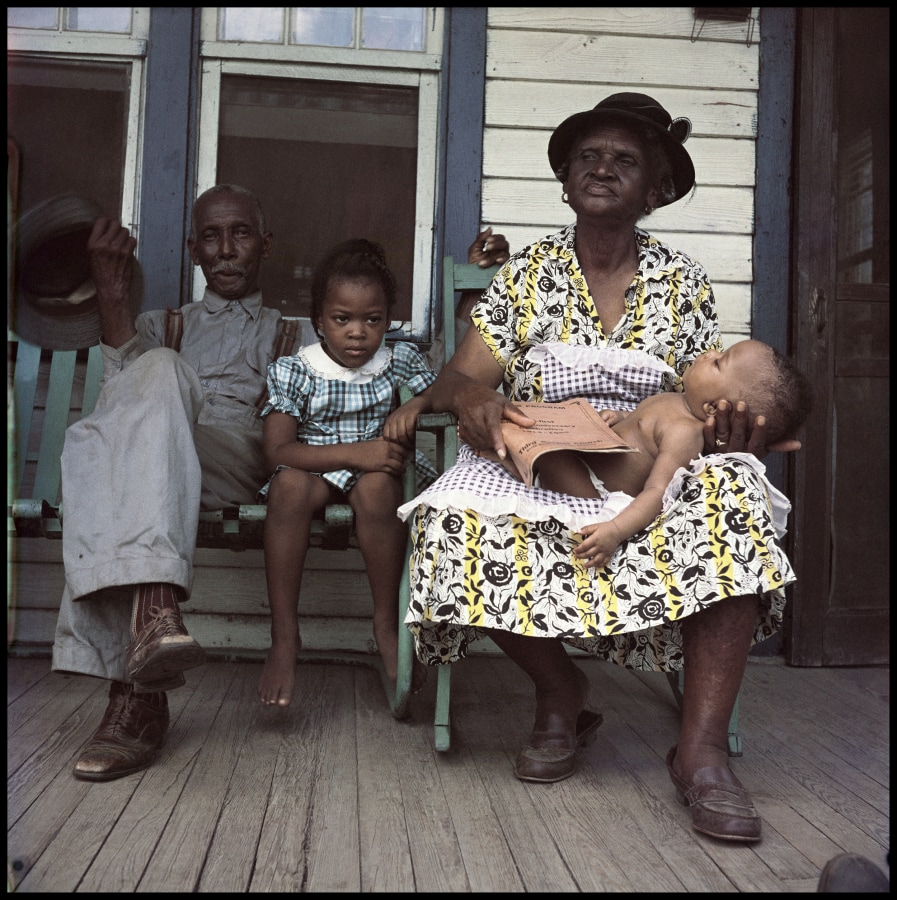
In 1956, Life published Gordon Parks's photo essay "The Restraints: Open and Hidden" that documented everyday life of black Americans in the segregated rural South (via). 26 of his photographs taken of three families living in Mobile, Alabama, were published (via and via). Parks's photographs were rediscovered in 2012.


"Despite de facto segregation still being glaringly prevalent across the US today, Americans are more comfortable thinking about it as something that happened long ago. Black and white photographs help create that sense of distance, which is why Parks’s use of colour is so important: segregation no longer feels as if it’s from some distant, unrecognisable past. Even when Parks became Life magazine’s first African-American photographer, black and white was the dominant medium. If colour made his essay stand out then, the effect is even more striking today."
Steven W. Thrasher


Related postings:
- Narrative images: American Gothic
- The -ism Series (4): Racism
- In the year 2069


photographs by Gordon Parks via and via and via and via and via and via and via

Wednesday, 1 April 2015

Narrative images: American Gothic

"It's the first professional image I ever made, created on my first day in Washington."  
Gordon Parks

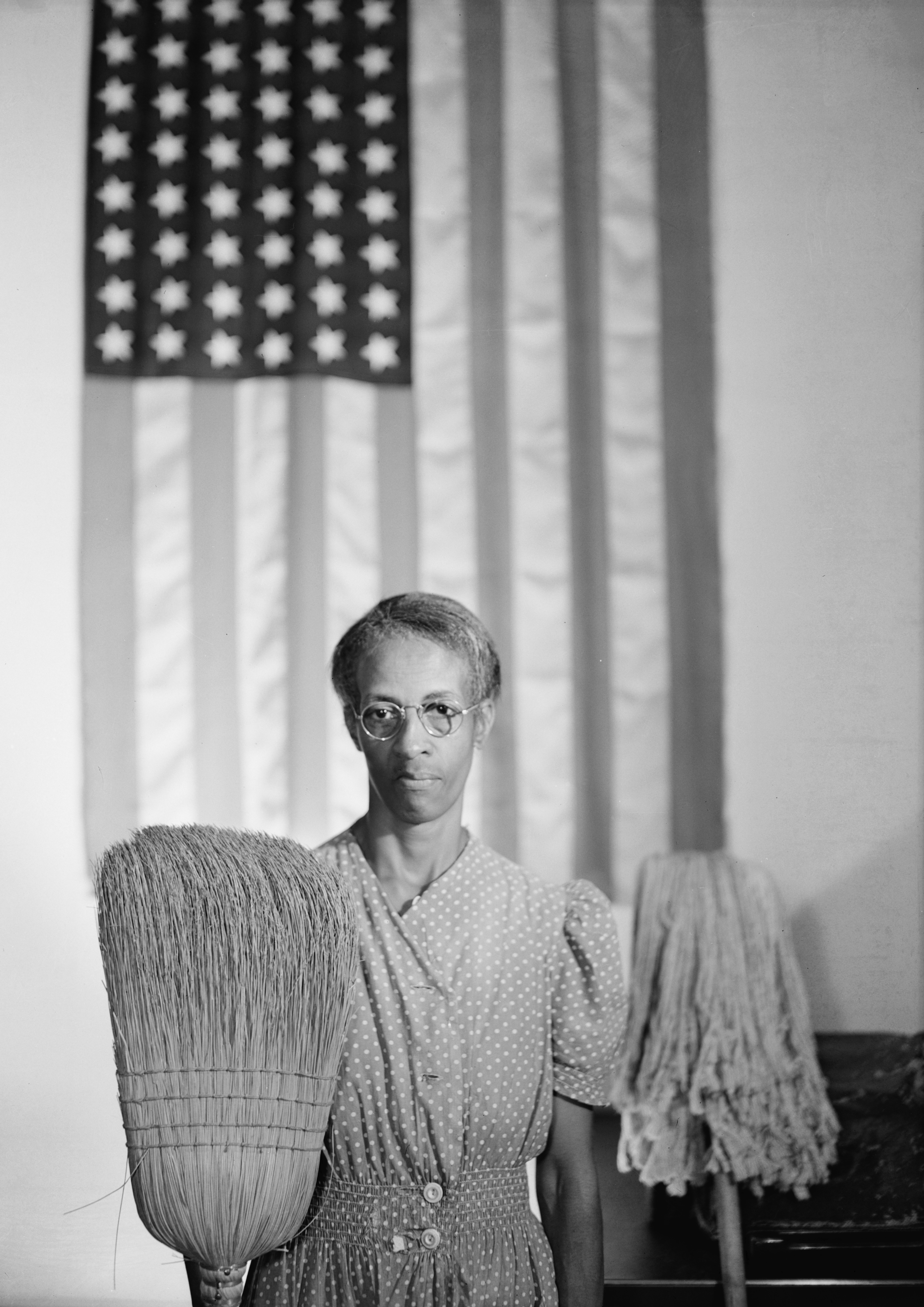
Gordon Park's "American Gothic", his 1942 shot of Ella Watson, a black government charwoman mopping floors in the Farm Security Administration (FSA) building, became his "signature image" and "the symbol of the pre-civil rights era's treatment of minorities" (via). Parks went to Washington, D.C. on a fellowship from the Julius Rosenwald Fund which was dedicated to research about the South. Since he had long admired the FSA photographs, he decided to spend his fellowship year as an apprentice photographer there.He arrived in Washington D.C. in 1942 with the plan to document the African-American community - a rather difficult plan. Roy Stryker, director of his FSA section, told him to leave his camera in the office and visit shops, restaurants, and theatres ... At theses places, Parks was refused service.  He returned to the office and later said: "In this radiant, historic place racism was rampant."  A few weeks later, he told Stryker that he was still looking for a way to capture intolerance with his photographs. Stryker pointed out a charwoman and told Parks: "Go have a talk with her." And.that was exactly what Parks did. He approached Ella Watson, the charwoman who was cleaning the FSA office, talked to her and asked her if he could take her picture (via).


My first photograph of [Watson] was unsubtle. I overdid it and posed her, Grant Wood style, before the American flag, a broom in one hand, a mop in the other, staring straight into the camera. Stryker took one look at it the next day and fell speechless. 
"Well, how do you like it?" I asked eagerly.
He just smiled and shook his head. "Well?" I insisted.
"Keep working with her. Let's see what happens," he finally replied. I followed her for nearly a month--into her home, her church, and wherever she went. "You're learning," Stryker admitted when I laid the photographs out before him late one evening. "You're showing you can involve yourself in other people. This woman has done you a great service. I hope you understand this." I did understand.
(literally via)
Through Ella Watson, the black charwoman who had struggled alone after her parents' death, whose father had been killed by a lynch mob, who had become pregnant during high school, whose husband had been accidentally shot dead two days before their second daughter was born, who had lost two children and who was then working to support herself and the two grandchildren, Gordon Parks "gained an intimate perspective on the reality of life for black beyond the historical gleam of white Washington, D.C.". For four months she gave him access to her home and her community where he took a series of photographs (via and via).
"Culminating this series is the photograph titled American Gothic, in which Watson poses coolly with a mop and broom in front of the U.S. flag. Among the most famous pictures Parks ever took, it points to the complexity of his mature style. Not only does the photograph connect the intimacy of one person’s life with a national state of affairs, it also engages with a larger history of American images by referring to and reinterpreting Grant Wood’scelebrated 1930 painting of the same name." (literally via)


More: The Library of Congress has a collection of Ella Watson's photographs; leaving for work at 4.30 p.m., cleaning a government office at night, view from her window, her adopted daughter, with her three grandchildren, etc.

- photographs of Ella Watson by Gordon Parks via and via
- Jenkins Johnson Gallery via
- Library of Congress via

Monday, 17 November 2014

Religion & Ethnic Prejudice

"The role of religion is paradoxical. It makes prejudice and it unmakes prejudice."
Allport (1954)

The relationship between religiosity and ethnic prejudice is rather complex. Results of empirical studies support both positive and negative correlations between religion and prejudice. According to a meta-analysis by Hall et al., it depends on the aspects of religion that are considered. In general, religious dimensions such as extrinsic religiosity or fundamentalism positively correlate with prejudice (i.e., the higher religiosity, the higher the prejudice) while intrinsic religiosity and quest religiosity negatively correlate with ethnic prejudice (i.e. the higher religiosity, the lower the prejudice). Fundamentalism per se, however, does not seem to be automatically connected with prejudice. If authoritarianism is controlled for, for instance, the positive correlation between religiosity and prejudice vanishes (Johnson et al., 2010).


- Johnson, M. K., Rowatt, W. C. & LaBouff, J. (2010). Priming Christian Religious Concepts Increases Racial Prejudice. Social Psychological and Personality Science, 1(2), 119-126.
- photograph of Ethel Muhammad Sharrieff (1922-2002), daughter of Nation of Islam leader Elijah Muhammad, by Gordon Parks (1963) via

Wednesday, 14 May 2014

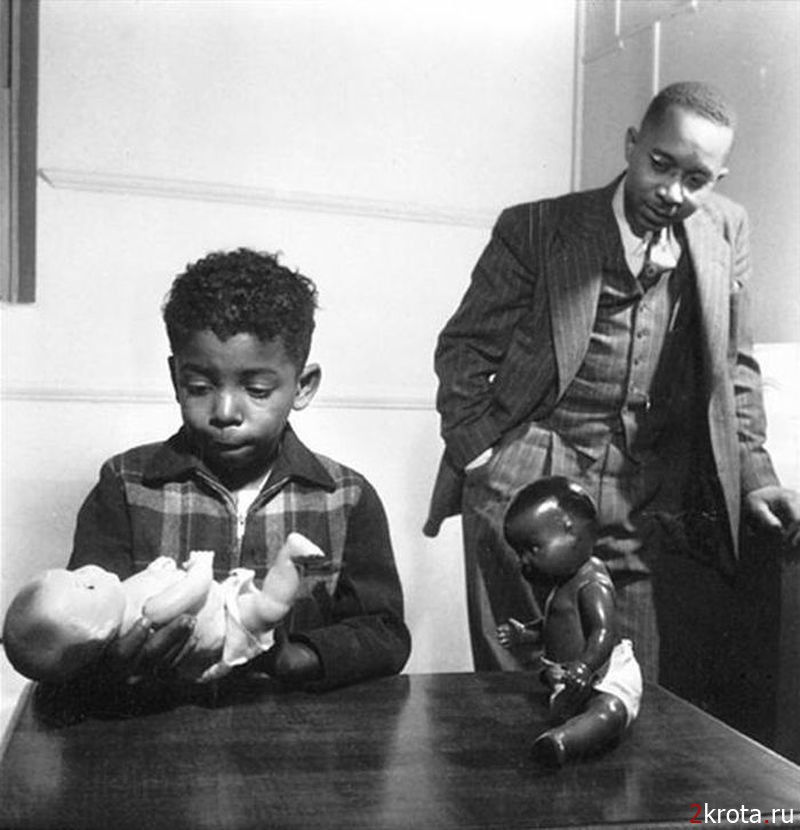
The Clark Doll Test

"To separate them from others of similar age and qualifications solely because of their race generates a feeling of inferiority as to their status in the community that may affect their hearts and minds in a way unlikely to ever be undone". (via


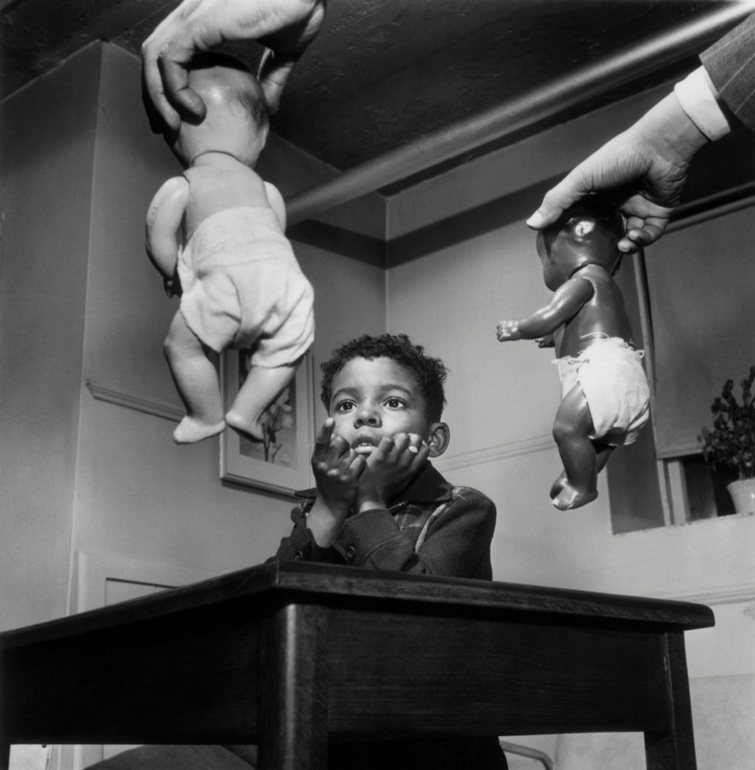
Kenneth Bancroft Clark (1914-2005, first African American to earn a doctorate in psychology at Columbia, to hold a permanent professorship at City College of NY and to become president of APA via) and Mamie Phipps Clark (1917-1983, first African American woman with psychology doctorate) were educational psychologists and active in the Civil Rights Movements. This combination made them conduct the landmark "Clark Doll Tests" starting in 1939 which "challenged the notion of differences in the mental abilities of black and white children" (via) and contributed to the U.S. Supreme Court's decision that racial segregation in public education was unconstitutional (via).


In their "Doll Study", the Clarks measured young children's ethnical preferences (questions 1-4), awareness (questions 5-7) and self-identification (question 8). Black children were shown a White and a Black doll and asked to give the Clarks the doll that 1) they liked to play with or liked best, 2) was the nice doll, 3) looked bad, 4) was a nice colour, 5) looked like a White child, 6) looked like a coloured child, 7) looked like a "Negro" child, 8) looked like the child himself/herself. 67% of the children preferred to play with the White doll, 59% found the White doll nicer, 60% chose the White doll to be the one with the nicer colour, 59% chose the Black doll as the one that looked bad, and 58% of the Black children chose the Black doll as the one that "looks like you".


Self-identification with the Black doll was linked to the children's skin tone and age. But the main findings were that Black children judged White dolls as superior to Black dolls. The studies have often been replicated since the 1940s. The replication studies supported the findings and revealed that White children showed a clear tendency to identify with their skin tone while Black children tended to reject their own ethnic group (Jordan & Herndandez-Reif, 2009). At a very young age, the children had already internalised racism.


- Jordan, P. & Hernandez-Reif, M. (2009) Reexamination of Young Children's Racial Attitudes and Skin Tone Preferences. Journal of Black Psychology, 35, 388-403
- photos by Gordon Parks via and via and via and via