Friday, 23 May 2014

Quoting Roger Moore

"The wonderful thing about age is that your knees don't work as well, you can't run down steps quite as easily and obviously you can't lift heavy weights. But your mind doesn't feel any different." 
Roger Moore


photo of Roger Moore and Tony Curtis via

Thursday, 22 May 2014

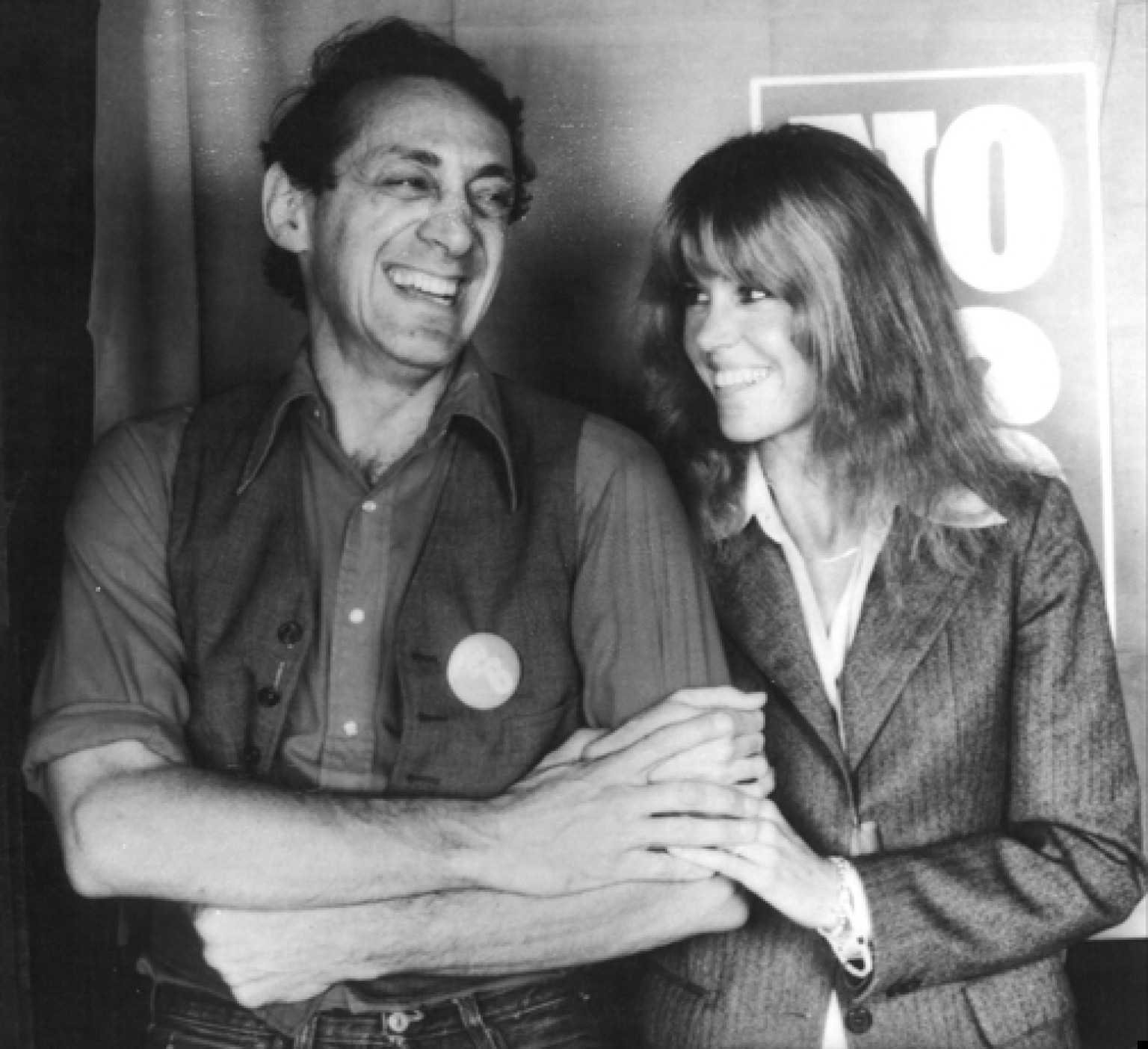
Harvey Milk Day

“It's not my victory, it's yours and yours and yours. If a gay can win, it means there is hope that the system can work for all minorities if we fight. We've given them hope.”
Harvey Milk


Harvey Bernard Milk (1930-1978) was the first openly gay US-American politician elected to public office in California and "the most famous and most significant open LGBT offical ever elected in the United States" (via). Milk was posthumously awarded the Presidential Medal of Freedom in 2009 (via). This year, he will be featured on a stamp (via) which will be released today. The Postal Service said that his achievements "gave hope and confidence to the Lesbian, Gay, Bisexual and Transgender (LGBT) community in the United States and elsewhere at a time when the community was encountering widespread hostility and discrimination" (via).
Harvey Milk Day is celebrated around the anniversary of Milk's birthday, i.e. 22 May, to promote human equality. "Senate Bill 572" was passed by the California State Legislature and signed by Governor Arnold Schwarzenegger in 2009 to designate 22 May as "Harvey Milk Day" (via). It is recognised as "a day of special significance for public schools" in California (via). The group "Save California" warns parents to protect their children from "Harvey Milk Gay Day", from the "homosexual brainwashing" (via), and to "rescue" them by boycotting the day that is "indoctrinating children in classrooms and assemblies" (via).


“The only thing they have to look forward to is hope. And you have to give them hope. Hope for a better world, hope for a better tomorrow, hope for a better place to come to if the pressures at home are too great. Hope that all will be all right. Without hope, not only gays, but the blacks, the seniors, the handicapped, the us'es, the us'es will give up. And if you help elect to the central committee and other offices, more gay people, that gives a green light to all who feel disenfranchised, a green light to move forward. It means hope to a nation that has given up, because if a gay person makes it, the doors are open to everyone. So if there is a message I have to give, it is that if I've found one overriding thing about my personal election, it's the fact that if a gay person can be elected, it's a green light. And you and you and you, you have to give people hope....”
Harvey Milk


On 27 November 1978 - after ten months in office - Milk was shot dead (via).

“If a bullet should enter my brain, let that bullet destroy every closet door.”
Harvey Milk


photos via and via and via and via

Monday, 19 May 2014

Frederika & Carmen: Super Mamikas. No pieces of furniture.

Sacha Goldberger, French photographer and grandson of 91-year-old Hungarian Frederika, started taking pictures of his grandmother when he found her feeling lonely and depressed in order to cheer her up.


Frederika was born in Budapest and saved the lives of ten people during World War II. After surviving Nazism, she emigrated to France. 


Goldberger's series "Mamika" ("grandma" in Hungarian) is a big success, Frederika keeps receiving messages such as "You're the grandmother that I have dreamed of, yould you adopt me?" and "You made my day, I hope to be like you at your age."


According to the photographer, his grandmother no longer shows the signs that worried him and made him start the series (text, photos via and via).


What you can't do is say that I'm an old woman, no good for anything. I should be in bed or in a rocking chair... No. You can't do that. (Carmen Delgado)

You see widows having their coffee and cakes in the afternoon, gossiping and eating cakes ... I thought, "Is that my life from now on? No. That's not what I want." Don't be defeated by the idea that you're old and no good for anything. You're not a piece of furniture. (Carmen Delgado)


Carmen Delgado started studying journalism together with her grandson. At that time she was 77. She graduated five years later. Congratulations, Carmen.

Saturday, 17 May 2014

International Day against Homophobia and Transphobia

The day "was created in 2004 to draw the attention of policymakers, opinion leaders, social movements, the public and the media to the violence and discrimination experienced by LGBTI people internationally. Since then the Day has grown in both scope and depth. In 2013, actions around the International Day Against Homophobia & Transphobia took place in almost 120 countries. In the United Kingdom alone in 2013, almost 200 events took place around the Day (...). The date of May 17th was specifically chosen to commemorate the World Health Organization’s decision in 1990 to declassify homosexuality as a mental disorder. The International Day against Homophobia and Transphobia has received official recognition from several States and such international institutions as the European Parliament, and by countless local authorities. Most United Nations agencies also mark the Day with specific events." (literally via)


When the Austrian bearded drag queen Conchita Wurst - attacked by transphobic and homophobic slurs for weeks (via) - won the Eurovision Song Contest in 2014, she said she felt that Europe had taken a stand by voting her for winner. With 290 points, she was a clear winner. Wurst: "I dream of a world where we don't have to talk about unnecessary things like sexuality, who you love. I felt like tonight Europe showed that we are a community of respect and tolerance." (via
"The beard is a statement to say that you can achieve anything, no matter who you are or how you look." (via). While some people reacted with "shaving selfies" because they were afraid beards had become "unmanly" (via) others painted beards to show their support. Cher and Elton John sent messages of support (via), Cardinal Schönborn (Archbishop of Vienna) expressed his happiness about Conchita winning and pointed out that there is "colourful diversity in God's colourful garden" and that "each individual deserves respect" (via).

"Human rights are universal, indivisible and interdependent - when one right is violated, all others become vulnerable." 
Excerpt from the (beautiful) message from Irina Bokova, Director-General of UNESCO, on the occasion of the International Day against Homophobia and Transphobia (2014)

"(...) we recommit ourselves to the fundamental belief that all people should be treated equally, that they should have the opportunity to reach their fullest potential, and that no one should face violence or discrimination -- no matter who they are or whom they love. (...) we call on partners everywhere to join us in defending the equal rights of our LGBT brothers and sisters, and in ensuring they are treated with the dignity and respect they deserve."
Excerpt from Barack Obama's statement on the occasion of the International Day against Homophobia and Transphobia (2014)

- - - - - - - - - - - - - - - -
photo of Tony Curtis and Jack Lemmon via

Wednesday, 14 May 2014

The Clark Doll Test

"To separate them from others of similar age and qualifications solely because of their race generates a feeling of inferiority as to their status in the community that may affect their hearts and minds in a way unlikely to ever be undone". (via


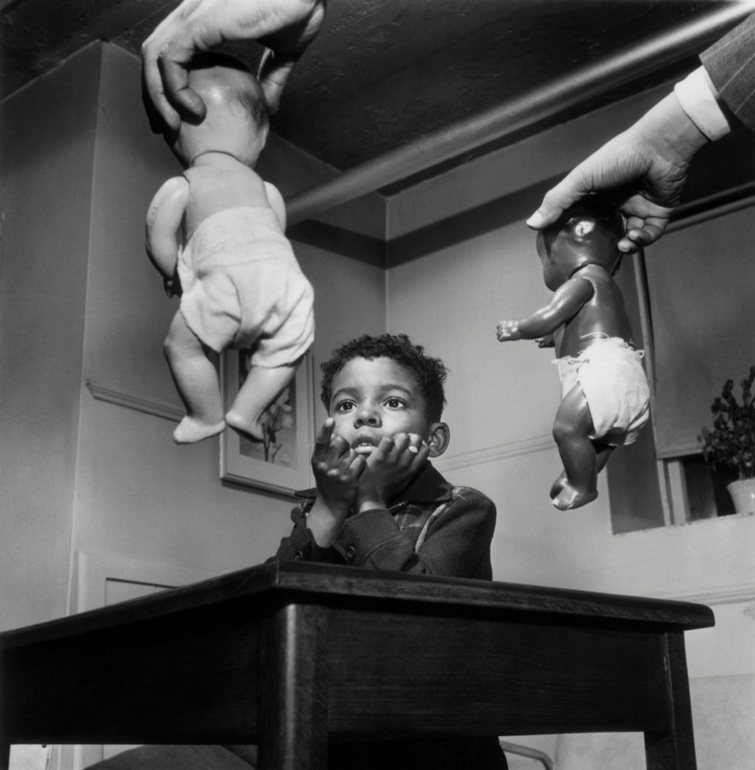
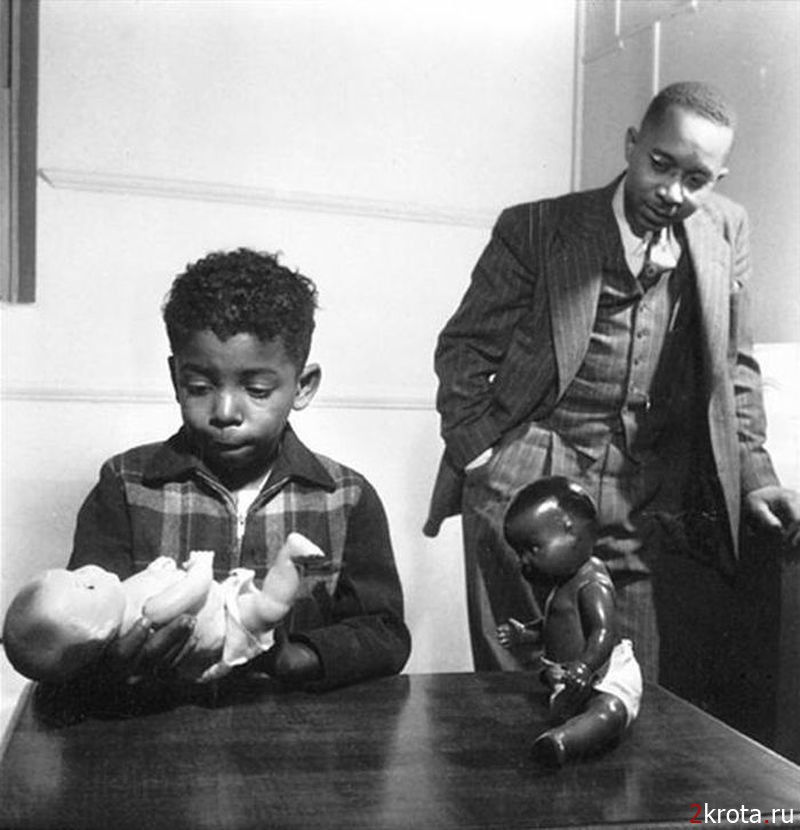
Kenneth Bancroft Clark (1914-2005, first African American to earn a doctorate in psychology at Columbia, to hold a permanent professorship at City College of NY and to become president of APA via) and Mamie Phipps Clark (1917-1983, first African American woman with psychology doctorate) were educational psychologists and active in the Civil Rights Movements. This combination made them conduct the landmark "Clark Doll Tests" starting in 1939 which "challenged the notion of differences in the mental abilities of black and white children" (via) and contributed to the U.S. Supreme Court's decision that racial segregation in public education was unconstitutional (via).


In their "Doll Study", the Clarks measured young children's ethnical preferences (questions 1-4), awareness (questions 5-7) and self-identification (question 8). Black children were shown a White and a Black doll and asked to give the Clarks the doll that 1) they liked to play with or liked best, 2) was the nice doll, 3) looked bad, 4) was a nice colour, 5) looked like a White child, 6) looked like a coloured child, 7) looked like a "Negro" child, 8) looked like the child himself/herself. 67% of the children preferred to play with the White doll, 59% found the White doll nicer, 60% chose the White doll to be the one with the nicer colour, 59% chose the Black doll as the one that looked bad, and 58% of the Black children chose the Black doll as the one that "looks like you".


Self-identification with the Black doll was linked to the children's skin tone and age. But the main findings were that Black children judged White dolls as superior to Black dolls. The studies have often been replicated since the 1940s. The replication studies supported the findings and revealed that White children showed a clear tendency to identify with their skin tone while Black children tended to reject their own ethnic group (Jordan & Herndandez-Reif, 2009). At a very young age, the children had already internalised racism.


- Jordan, P. & Hernandez-Reif, M. (2009) Reexamination of Young Children's Racial Attitudes and Skin Tone Preferences. Journal of Black Psychology, 35, 388-403
- photos by Gordon Parks via and via and via and via

Monday, 12 May 2014

The -ism Series (13): Androcentrism

Androcentrism is described as a "pervasive cutural bias" (Hegarty, 2006), as one of the cultural lenses that distort perceptions of gender, as the ways differences between men and women are reported and interpreted. According to Behm, it is the implicit conflation of maleness with the norm. Psychological studies show that judgments about men and people are more similar than jugdments about women and people (Hegarty & Buechel, 2006).


Androcentrism has an impact on interpretations of gender similarities and gender differences and refers to the practice of assuming men to be the norm when gender differences are not mentioned and assuming differences to inhere in women when differences are mentioned (Hegarty, 2006). In other words, if there is no specific information about gender, social categories are more likely to be represented as male than as female (Hegarty & Buechel, 2006).


One of the many concrete examples that help to understand where one encounters androcentrism in everyday situations is the study of Miller et al. in which they asked participants to think of typical voters. When thinking about a typical voter, participants described male persons. Gender differences in voting behaviour, however, were explained with women's attributes.


The research group argued that voters were mentally represented as male turning men's attributes into normative ones and constructing gender differences to be about women rather than men. In categories where women are more typical (e.g. elementary school teachers) androcentrism is reduced (Hegarty, 2006).


Hegarty, P. (2006) Undoing Androcenctric Explanations of Gender Differences: Explaining 'The Effect to be Predicted'. Sex Roles, 55, 861-867
Hegarty, P. & Buechel, C. (2006) Androcentric Reporting of Gender Differences in APA Journals: 1965-2004. Review of General Psychology, 10(4), 377-389
photo by Georg Oddner (1923-2007) via, second photograph via, third one via and fourth one via

Friday, 9 May 2014

Quoting Jane Fonda

"It's hard for women at my age in Hollywood, but I'm not discouraged."
Jane Fonda


"Real love and intimacy can be much more possible when you're older."
Jane Fonda


"Feminism is not just about women; it's about letting all people lead fuller lives."
Jane Fonda


"I see many more men who are feminist, or at least who have learned about life in the context of feminism."
Jane Fonda


"I don't want my wrinkles taken away - I don't want to look like everyone else."
Jane Fonda


photos by Milton Hawthorne Greene (1922-1985) via

Tuesday, 6 May 2014

The Caucasian Myth

In general, awareness concerning the usage of certain words and their effects seems to have risen. Terms such as "Negroid", "Red Man" or "Yellow Race" have been replaced ... with one "striking exception" "Caucasian". The term "Caucasian" originated in the eighteenth century and was coined by Johann Blumenbach (1752-1840) (Mukhopadhyay, 2008) whose "insights and errors provide important lessons for us today" (Bhopal, 2007). The real (dis-)honour, however, belongs to Christoph Meiners (Baum, 2006) who Blumenbach borrowed the term from (Painter, 2003).


When travelling to the Caspian and Black seas, German anthropologist, physiologist and comparative anatomist Blumenbach declared the people there the most beautiful people in the world who were created in "God’s image" and the region as the area where humans most likely originated (Mukhopadhyay, 2008). According to him, Adam and Eve had been Caucasian and other "races" developed as a reaction to environmental factors, mainly climate, who in a "proper" environmental control could revert to "the orginial Caucasian race" (via). In 1775, he published four geographically defined varieties (people from Europe, Asia, Africa, North America). In his second edition (1781), he outlined five varieties and in his third (1795), he provided generic instead of geographical labels (Caucasians, Mongolians, Ethiopians, Americans, Malays) (Bhopal, 2007). Caucasian became a synonyme for white.


Although biased, Blumenbach’s attitude to Africans was "out of tune with that of the times". He wrote favourably about them, did not regard them as inferior (Bhopal, 2007), criticised Meiners and von Sömmerring, both practitioners of "scientific racialism" (via) and was "more in line with that seen during the movements for civil rights and equality in the 1960s" (Bhopal, 2007). Nevertheless, his legacy is highly influenced by biases and errors such as his subjective notion of beauty. Beauty played a crucial role in the definition of Caucasian: "I have taken the name of this variety from Mount Caucasus, both because its neighbourhood, and especially its southern slope, produces the most beautiful race of men, I mean the Georgian." The beauty of the "Caucasian skull" somehow became an obsession of his (Painter, 2003).


The Caucasus covers an area of 440.000 square kilometers and comprises fifty Caucasian ethnic groups (Painter, 2003). The "Caucasian race" as a synonyme for white was invented more than 200 years ago. The foundations for this arbitrarily chosen term were laid in 1775 ... when Wolfgang Amadeus Mozart wrote his five violin concertos, when James Cook claimed the South Sandwich Island for Britain, when the first engines were built under the patent of James Watt, when executions for witchcraft took place, when King George III reigned Britain, when Louis XVI was King of France, when Marie Antoinette still had her head, and before George Washington became the first president of the US. Times have changed. The label has persisted. As Mukhopadhyay (2008) points out it is high time we got rid of it.


"I am African": The 2005 (controversially discussed) campaign aimed to raise money for antiretroviral drugs for Africa. Its basic idea is that each "and every one of us contains DNA that can be traced back to our African ancestors." David Bowie, Elijah Wood, Alicia Keys, Sarah Jessica Parker, Gwyneth Paltrow, Liv Tyler, Sting, Elizabeth Hurley, Heidi Klum, Seal, Tyson Beckford, Lenny Kravitz, Mischa Barton, Alan Cumming, Iman, Richard Gere, Gisele Bündchen and Lucy Liu were photographed (via).


- Baum, B. (2006) The Rise and Fall of the Caucasian Race: A Political History of Racial Identity. New York: New York University Press
- Bhopal, R. (2007) The beautiful skull and Blumenbach’s errors: the birth of the scientific concept of race. BMJ, 335:1308
- Mukhopadhyay, C. C. (2008) Getting Rid of the Word "Caucasian", 12-16, in Pollock, M. (ed.) Everyday Anti-Racism. The New Press
- Painter, N. I. (2003) Collective Degradation: Slavery and the Construction of Race. Proceedings of the Fifth Annual Gilder Lehrman Center International Conference at Yale University.
- photographs via and via and via and via and via

Monday, 5 May 2014

Body Movement & Gender Stereotypes

In their study, Koppensteiner and Grammer translated public performances of forty politicians (20 male and 20 female speakers) into animated stick figures. That way, information was limited and the speaker’s gender was to be recognised by outward features, i.e. landmarks on different spots such as the forehead, ears, shoulders, hands etc. In addition, personality ratings were given. The authors created a "sex index" for each figure and correlated it with the personality ratings. The main questions were if the participants were able to recognise the gender of the speakers in the stick figure movies and if their ratings of perceived gender were influenced by their judgments of personality.


Results showed frequent errors when identifying the gender of the speakers and differences when participants were asked to ascribe personalities to male vs. female stick-figures. While there were no differences between males and females when agreeableness, conscientiousness and openness were identified, male speakers were rated as more extraverted and more emotionally stable. Correlations between personality ratings and "sex index" showed that stick figures that were rated more often as female received higher scores for agreeableness. In other words, "friendly" behaviour was classified as female. In contrast, extraversion was related to masculinity. The authors come to the conclusion that gender stereotypes influence ratings.


Koppensteiner, M. & Grammer, K. (2011) Body movements of male and female speakers and their influence on perceptions of personality. Personality and Individual Differences, 51, 743-747


Photos by Gjon Mili (Alfred Hitchcock via), (woman, 1951 via), (third one via)

Friday, 2 May 2014

The -ism Series (12): Ethnocentrism

In 1906, Sumner coined the term "ethnocentrism" describing cultural narrowness, rigidness and provincialism leading individuals to accept only those that are culturally alike (Ögretir & Özcelik, n.d.). Ethnocentrism, "a nearly universal syndrome of discriminatory attitudes and behaviors" means seeing one’s own group as superior, one’s own values as universal. Ethnocentrism is also defined as in-group favouritism while xenophobia refers to out-group hostility (Hammon & Axelrod, 2006). Patriotism is another construct related to it (Chen, 2010).


Freud's focus is slightly different. According to him, ethnocentrism is "the narcissism of minor differences" that facilitates the displacement of aggression from in-group to out-group. Quoting Freud (from Ögretir & Özcelik, n.d.):
"Every time two families become connected by a marriage, each of them thinks itself superior to or of better birth than the other. Of two neighboring towns each is the other’s most jealous rival; every little canton looks down upon the others with contempt. Closely related races keep one another at arm’s length: the South German cannot endure the North German, the Englishman casts every kind of aspersion upon the Scot, the Spaniard despises the Portuguese."


At its core, ethnocentrism means using one’s own group as the centre of viewing things (Chen, 2010), scaling and rating others with reference to one‘ s own group (Ögretir & Özcelik, n.d.). It is the perspective one takes. In other words, one’s own culture is the standard, "the rest" is "the deviating other". And "the other" is rarely judged neutrally.

Link to Neuliep and McCroskey's questionnaire to measure one's tendency to ethnocentrism: click


- Chen, G.-M. (2010) The Impact of Intercultural Sensitivity on Ethnocentrism and Intercultural Communication Apprehension. Intercultural Communication Studies XIX(1), 1-9
- Hammon, R. A. & Axelrod, R. (2006) The Evolution of Ethnocentrism. Journal of Conflict Resolution, 50(6), 926-936
- Ögretir, A. D. & Özcelik, S. (n.y.) The Study of Ethnocentrism, Stereotype and Prejudice: Psycho-Analytical and Psycho-Dynamic Theories. Journal of Qafqaz University, 236-244
- first and last photographs by Aleksandr Malin via and via, Mick Jagger's photograph by Cecil Beaton via