Thursday, 20 November 2014

Narrative images: Singing freedom songs in 1963

Robert Fahsenfeldt, owner of a segregated lunchroom in the racially tense Eastern Shore community of Cambridge, Maryland, douses a white integrationist with water, on July 8, 1963. The integrationist, Edward Dickerson, was among three white and eight African American protesters who knelt on the sidewalk in front of the restaurant to sing freedom songs. A raw egg, which Fahsenfeldt had broken over Dickerson's head moments earlier, still is visible on the back of Dickerson's head. The protesters were later arrested (literally via).


photo via

Wednesday, 19 November 2014

International Men's Day

"Objectives of International Men's Day include a focus on men's and boy's health, improving gender relations, promoting gender equality, and highlighting positive male role models. It is an occasion for men to celebrate their achievements and contributions, in particular their contributions to community, family, marriage, and child care while highlighting the discrimination against them."
(internationalmensday.com)


... "highlighting the discrimination against them" is surely more challenging than finding fields in which women are discriminated against or confronted with prejudices. But it is possible to identify them: traditionally female dominated occupations or "pink collar jobs".


Men working as nurses, secretaries, grade-school teachers or in the kindergarten used to be very rare. Due to the recession, men were "forced" to take up "different" careers (via). Male caregivers, particularly men teaching toddlers, can raise eyebrows ... and be confronted with a range of insinuations and parents who have little understanding for their choice of profession (via). According to a survey, men distrust "male nannies more than female pilots". In the "mistrust ranking", male nannies were followed by male midwives, female pilots, female mechanics, male primary schoolteachers, female surgeons, males nurses, and female bus drivers (via). Still, even in female dominated occupations men usually earn more than women (via).


In general, men do not really seem to face discrimination in "female occupations" (e.g. nursing, elementary school teaching, librarianship, social work) but rather prejudice from people outside the professions. In contrast to women, however, they may encounter structural advantages which enhance their careers. Men do face barriers, too. But they are different (Williams, 1992) and - according to empirical findings - often they even benefit from their minority status (differential treatment, assumptions of enhanced leadership and a more careerist attitude to work) (Simpson, 2004).


"Our lives have changed dramatically, but the notions we have about what it means to be a man remain locked in a pattern set decades ago, when the world looked very different.”
Michael Kimmel, sociologist


- Simpson, r. (2004) Masculinity at Work: The Experiences of Men in Female Dominated Occupations. Work Employment and Society, 18(2)
- Williams, C. L. (1992) The Glass Escalator: Hidden Advantages for Men in the "Female" Professions. Social Problems, 39(3), 253-267.
- photographs (Just For Men World Beard and Moustache Championships 2014) by Craig Mitchelldyer via, for more click

Monday, 17 November 2014

Religion & Ethnic Prejudice

"The role of religion is paradoxical. It makes prejudice and it unmakes prejudice."
Allport (1954)

The relationship between religiosity and ethnic prejudice is rather complex. Results of empirical studies support both positive and negative correlations between religion and prejudice. According to a meta-analysis by Hall et al., it depends on the aspects of religion that are considered. In general, religious dimensions such as extrinsic religiosity or fundamentalism positively correlate with prejudice (i.e., the higher religiosity, the higher the prejudice) while intrinsic religiosity and quest religiosity negatively correlate with ethnic prejudice (i.e. the higher religiosity, the lower the prejudice). Fundamentalism per se, however, does not seem to be automatically connected with prejudice. If authoritarianism is controlled for, for instance, the positive correlation between religiosity and prejudice vanishes (Johnson et al., 2010).


- Johnson, M. K., Rowatt, W. C. & LaBouff, J. (2010). Priming Christian Religious Concepts Increases Racial Prejudice. Social Psychological and Personality Science, 1(2), 119-126.
- photograph of Ethel Muhammad Sharrieff (1922-2002), daughter of Nation of Islam leader Elijah Muhammad, by Gordon Parks (1963) via

Saturday, 15 November 2014

Quoting David Bowie

"I'm well past the age where I'm acceptable. You get to a certain age and you are forbidden access. You're not going to get the kind of coverage that you would like in music magazines, you're not going to get played on radio and you're not going to get played on television. I have to survive on word of mouth." 
David Bowie


(...) And I'm running down the street of life
And I'm never gonna let you die
And I'm never ever gonna get old
And I'm never ever gonna get

I'm never ever gonna get
I'm never ever gonna get old
And I'm never ever gonna get
Never ever gonna get old

David Bowie, Never Get Old (2003)


photographs via and via

Monday, 10 November 2014

"Just a little impromptu thing"

Scat singing, a "vocal improvisation with wordless vocables, nonsense syllables or without words at all" that puts emphasis on rhythm rather than melody is a most difficult technique that requires highly developed skills and humour (via). With her vocal range spanning over three octaves, Ella Fitzgerald had both. Her first scat song was "Flying Home" (1945) which was a very symbolic title and referred to World War II. "Like much African American music, 'Flying Home' spoke differently to black and white audiences. Even as the song signalled the end of a conflict for most white veterans, their black counterparts knew that for them, a new battle was just beginning." 


Since the era of the Harlem Renaissance, African American's musical styles were commercialised by white musicians, club owners, or executives of record companies while black musicians "never got their share". Scat, in this context, could be seen as a reaction, as a statement to these conditions. "Tired of the lyrics that were given by the white music industry, scat singing might have been an ironical reaction to the many shallow swing songs that had been produced over the last decade. The art of scat singing in this context also bears resemblance to the artistic movement known as Dadaism" (Demetriou, 2008).


"I do not believe there's such a thing as a jazz singer." "Every pop singer is influenced a little by jazz, because it's our native folk art."
Mel Tormé

Ella Jane Fitzgerald (1917-1996), "Lady Ella", "Queen of Jazz" or the "First Lady of Song" explains jazz together with Melvin Howard Tormé (1925-1999), also known as "The Velvet Fog":

::: Here the most(!) wonderful introduction in jazz: WATCH/LISTEN/ENJOY

More scatting Ella:
::: One Note Samba (1969) watch
::: One Note Samba with Joe Pass (1975) watch


- Demetriou, R. (2008). Programmatic Presentations in the Songs of African American Female Singers. Norderstedt: GRIN
- photographs of Ella Fitzgerald via and via and via

Friday, 7 November 2014

Born this day ... Lise Meitner

"I will have nothing to do with a bomb!"

"Surely Hahn fully deserved the Nobel Prize for chemistry. There is really no doubt about it. But I believe that Otto Robert Frisch and I contributed something not insignificant to the clarification of the process of uranium fission - how it originates and that it produces so much energy and that was something very remote to Hahn."


Lise Meitner (1878-1968) was born on 7th of November 1878 in Vienna. The physicist was the "Mother of the Atomic Bomb" and a pacifist, a female scientist at a time women were not yet permitted at Prussian universities, and an Austrian of Jewish descent living in the 1930s (via). First she suffered because she was a woman, then she suffered because she was Jewish (via) and fled to Sweden.
In 1905/06, Meitner became the second woman to earn a doctoral degree at the University of Vienna. She went to Berlin to study with Max Planck (via) who - until then - had rejected any women wanting to attend his lectures, later became his assistant and then the first woman in Germany to assume the post of full professor in physics (via). In Berlin, she met Otto Hahn who became her research partner for the following 30 years (via). At that time, working in Berlin as a female scientist meant entering the Kaiser-Wilhelm-Institut (now Max Planck Institut) through the backdoor (via) and making experiments in the cellar since women had no access to "real" laboratories (via).
Otto Hahn (1879-1968) received the Nobel Prize in Chemistry for 1944, Meitner - part of the team that discovered the nuclear fission - was overlooked. And not just once. From 1939 to 1945 she was nominated nine times, each time a male candidate received the prize (via). Meitner is probably "one of the most glaring examples of women's scientific achievement overlooked by the Nobel committee." (via).

images via and via

Tuesday, 4 November 2014

Divided by a common language

“The difference between Austrians and Germans is like the difference between a battleship and a waltz.”
Christoph Waltz 


Hofstede's research findings from 1984 revealed differences between Germans and Austrians concerning some cultural dimensions, such as Power Distance, Masculinity, and Individualism. In other words, gender roles were more traditional in Austria and Individualism was higher in Germany. The latter findings are associated with "the Austrians' tendency to preserve harmony, and to Germans' willingness to fight for their rights." In the GLOBE (Global Leadership and Organizational Behavior Effectiveness Research) study carried out in 2004, Austria, again, scored higher than Germany on practices related to Collectivism and "Human Orientation" which indicates interpersonal considerations and a stronger concern for others. Muhr's (2008) linguistic comparison supports these findings, too (results indicate tendencies): Germans argue, Austrians avoid conflict, Germans demand, Austrians ask.


Germans and Austrians also (or most of all?) differ in their stereotypical perceptions of each other. While Austrians consider Germans as "competent but cold", efficient, bossy, industrious and well-informed, Germans tend to see Austrians as rather "incompetent but nice", charming, hospitable, not very dependable nor industrious or educated. Germans describe Austrians as more likeable than vice versa (Renner et al., 2014). And Christoph Waltz is no exception.


::: Christoph Waltz explains differences between Austrians and Germans in three hilarious minutes: watch


This reply might be better understood knowing about some journalists' tendencies to turn him (and by the way Mozart, Romy Schneider, Maximilan Schell, Senta Berger etc., too) into a German:
“I was born in Vienna, I grew up in Vienna, I went to school in Vienna, I took my university entrance exams in Vienna, I studied in Vienna, I began my professional career in Vienna, I had my first theater role in Vienna, I filmed for the first time in Vienna, and there are a few more Vienna specifics. How much more Austrian could you be?” Christoph Waltz


- Renner, W., Gula, B., Wertz, M. & Fritzsche, S. (2014) Asymmetric Mutual Perception of Austrians and Germans: A Social Identity Approach Assessing Implicit and Explicit Attitudes. online
- photographs via and via  and via and via and via and via and via and via, animated gifs via and via and via

Sunday, 2 November 2014

Walking Contest

An individual's walking speed is determined by several factors ranging from personal ones, such as age, gender, health, mood etc., to cultural ones, such as country or size of the city. In empirical studies, walking speed is often regarded as one indicator of the speed of life. Early studies from the 1970s revealed a link between the average walking speed and the number of inhabitants; i.e., the more inhabitants a city has, the higher their average walking speed. Levine developed the concept of "Type-A-Cities" which are characterised by large size, high speed, mild climate, high gross domestic product, specific cultural values ... and higher rates of coronary heart disease (Morgenroth, 2008).


Richard Wiseman's study of 32 cities ranks Singapore first place (10.55 seconds for 60 feet/about 20 metres), followed by Copenhagen (10.82s), Madrid (10.89s), Guangzhou (10.94s), Dublin (11.03s), Curitiba (11.13s), Berlin (11.16s), New York (12s), Utrecht (12.04s) and Vienna (12.06s). The Swiss city of Bern is on place 30 (17.37s), followed by Maname in Bahrain (17.69s) and Blantyre in Malawi (31.60s) (via). Bern has the image of being comparably more "slow-paced" than other Swiss cities. A comparison between Zürich and Bern shows that on average people in Zürich walk 5.3 metres more per minute than those in Bern (via). Morgenroth's study of 20 German cities carried out in 2003 ranks Hannover (5.38 km/h) first place and Trier (4.97 km/h) last. One interpretation of the results the authors offer - on the basis of Max Weber's (controversially discussed) concept of the "Protestant Work Ethic" and its closer link to capitalism - is that cities with a higher percentage of Protestant inhabitants have a higher walking speed than "Catholic cities" (via).


::: Daniel Koren's beautiful Walking Contest: watch


- Morgenroth, O. (2008) Zeit und Handeln: Psychologie der Zeitbewältigung. Stuttgart: Kohlhammer
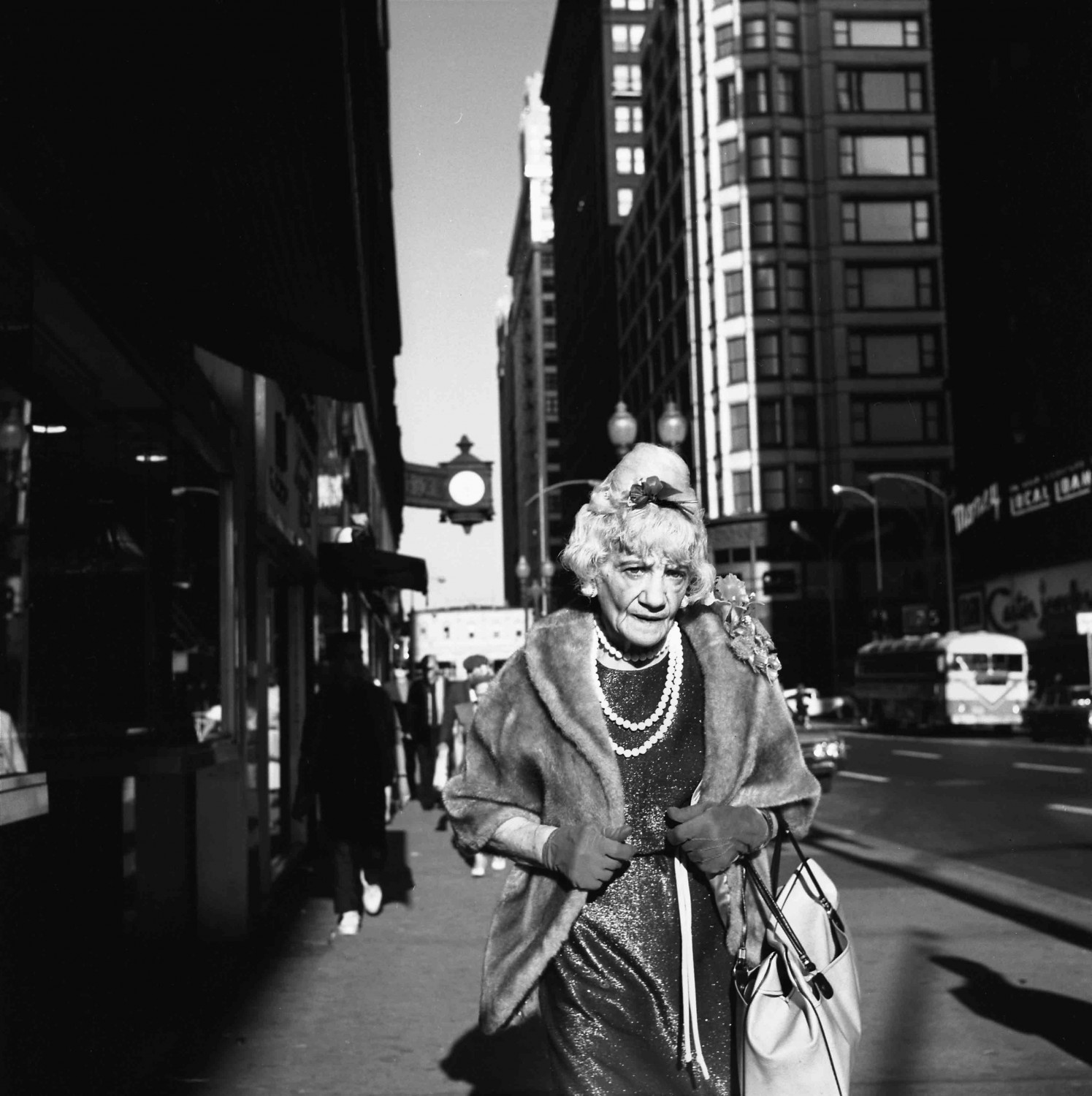
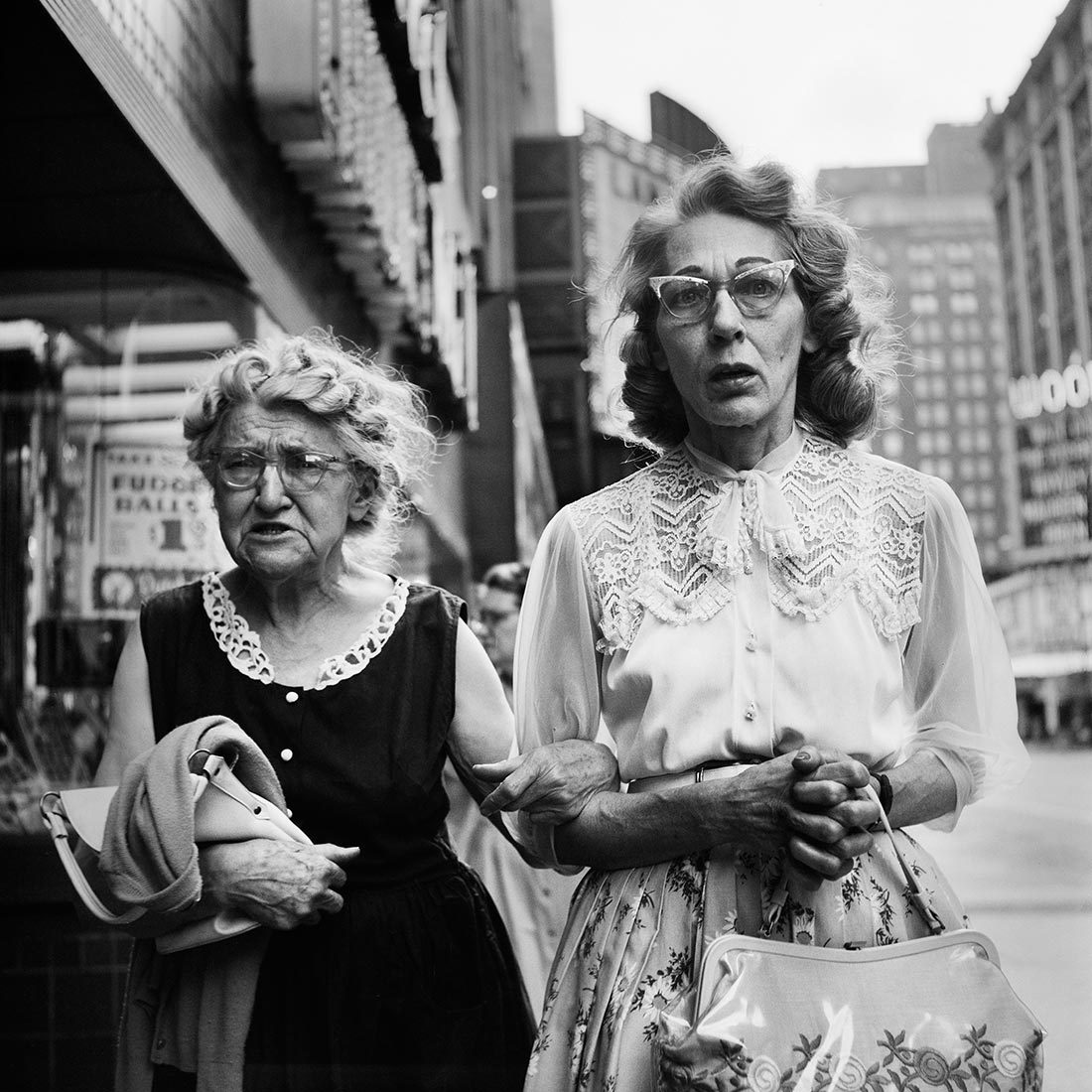
- photographs by Vivian Maier (1926-2009) via and via and via

Thursday, 30 October 2014

Walking on the Street

According to a US-survey carried out in 2014, 65% of women and 23% of men have experienced some sort of street harassment. Women mostly reported having been sexually touched or followed while men mostly reported homophobic or transphobic slurs. LGBT individuals are particularly vulnerable: In a study of 93.000 LGBT individuals in the European Union, half of the participants said they would avoid public spaces because of street harassment (via).

- This clip went viral: 10 Hours of Walking in NYC as a Woman
- This clip soon should: 10 Hours of Walking in NYC as a Man


Ruth Orkin's (iconic) photograph "American girl in Italy" (1951) is often used as a symbol of harassment of women. Ninalee Craig, the woman in the photo, criticises this association (information and photograph via).

Wednesday, 29 October 2014

"(...) assuredly no advantage, but it is nothing to be ashamed of, no vice, no degradation"

In April 1935, Sigmund Freud (1856-1939) “was contacted by a worried mother who was seeking treatment for her son’s apparent homosexuality. Freud, who believed that all humans are attracted to both sexes in some capacity, responded with the following letter of advice.” (via)


Dear Mrs [Erased],
I gather from your letter that your son is a homosexual. I am most impressed by the fact that you do not mention this term yourself in your information about him. May I question you why you avoid it? Homosexuality is assuredly no advantage, but it is nothing to be ashamed of, no vice, no degradation; it cannot be classified as an illness; we consider it to be a variation of the sexual function, produced by a certain arrest of sexual development. Many highly respectable individuals of ancient and modern times have been homosexuals, several of the greatest men among them. (Plato, Michelangelo, Leonardo da Vinci, etc). It is a great injustice to persecute homosexuality as a crime - and a cruelty, too. If you do not believe me, read the books of Havelock Ellis.
By asking me if I can help, you mean, I suppose, if I can abolish homosexuality and make normal heterosexuality take its place. The answer is, in a general way we cannot promise to achieve it. In a certain number of cases we succeed in developing the blighted germs of heterosexual tendencies, which are present in every homosexual in the majority of cases it is no more possible. It is a question of the quality and the age of the individual. The result of treatment cannot be predicted.
What analysis can do for your son runs on a different line. If he is unhappy, neurotic, torn by conflicts, inhibited in his social life, analysis may bring him harmony, peace of mind, full efficiency, whether he remains a homosexual or gets changed. If you make up your mind he should have analysis with me — I don’t expect you will - he has to come over to Vienna. I have no intention of leaving here. However, don’t neglect to give me your answer.
Sincerely yours with best wishes,
Freud


Hidden Freud: Currently, advertising pillars with posters and quotes of Sigmund Freud are entrances to the digital exhibition "Hidden Freud" in the Austrian city of Graz. The exhibition uses both public space and digital media. 14 advertising pillars have codes for smartphones and tablets which open the door to a virtual tour to and with Sigmund Freud.

inspired by Open Culture, image via