Monday, 6 September 2021

Eve Arnold (I): Passion for Social Justice

Eve Arnold (1912-2012) was born in Philadelphia into a poor family of Jewish immigrants from Ukraine. In 1943, she married Arnold Arnold, a Jewish refugee from Hitler Germany.

"Although Eve was never overtly political, her passion for social justice and her curiosity about people's lives made her a perfect witness to the emerging currents and trends of the time."

Eve Arnold photographed the Davis family, descendants of early settlers and US-American prototypes, at meetings, having a church supper, ... and after a while suggested that she also photograph the migrants working for them in their fields picking strwaberries, sorting potatoes, living in overcrowded camps without toilet facilities and water. The living conditions  shocked Arnold, her photographs were called "another step in Eve's development as a photojournalist with a deep social conscience". She was ready to tackle social injustice, "not a popular subject then". 

"As a second-generation American, daughter of Russian immigrants, growing up during the Depression, the reality I knew well was poverty and deprivation. So I could identify easily with laborers who followed the potato crop north along the Eastern seaboard, settling in each new area as the harvest was ready for them." Eve Arnold

Once, Arnold came up with the controversial idea to photograph hearings at the House Un-American Activities Committee. "As the daughter of parents who had escaped the horrors of the Russian pogroms, she felt deeply for anyone who suffered for their religious of political beliefs". In order to understand the situation better, she researched and found people who had suffered at McCarthy's hand and were still living in fear. When she went to Washington, she was the only woman reporter, McCarthy singled her out, went to her, rested his hand on her shoulder. Reporters were watching her, other journalists thought McCarthy had befriended her, hence ignored her.

Aged 70, she travelled across her homeland where she found the social and political climate troubling: homelessness, HIV epidemic, mortgage foreclosures... She decided not to take black-and-white photographs since she was afraid they would make the images too bleak. At the beginning of the journey she visited the Navajo Nation, then continued photographing miners, strippers, construction workers, prisoners, church choirs, immigrants, queer transvestite nuns, and the Ku Klux Klan ... the last one she called her worst experience (de Giovanni, 2015).

- - - - - - -
- de Giovanni, J. (2015). Eve Arnold. Magnum Legacy. Prestel.
- photograph via 

Sunday, 5 September 2021

"Drugs Paradise": The Dutch Stereotype That Interfered With Politics

The approach of the Netherlands to drugs led to the stereotype of the country being a (too) liberal one when it comes to the consumption and the trade of substances. The stereotype of a "drugs paradise", again, was seen as a problem by Dutch policy makers and made the Netherlands take more conciliatory positions in order to protect the national image. Dutch drug policy has been both "praised and glamorized for its tolerant and pragmatic approach - and condemned and demonized for the same reasons". 

European countries thought the Dutch approach would contribute to an increased availability of drugs in their countries. The stereotype of a "drugs paradise", however, was formed well before the policies were introduced and coffee shops were opened.

By March 1976, the German delegation framed the Netherlands as Germany’s most importantsupplier of heroin. Considerable amounts of the cannabis consumed in Germany were also comingfrom Dutch territory, they said in the PG. The Germans pushed the Dutch to increase their efforts infighting drug trafficking as a way of governing the problem. Similar pressure came from the Swedishdelegation, who pleaded for a higher Dutch police commitment. The publicity around drug debates inthe Dutch parliament coincided with reports over significant seizures of amphetamine and heroin inSweden. The liberal tone of the debates in the Dutch parliament annoyed Swedish authorities. At thesame time, the international image of the Netherlands as a drug supplier raised concerns among theDutch. The Netherlands were being framed as an enemy of the international regulatory machine, andthis could have undesirable consequences.

The stereotype of being too lenient and tolerant, a supplier nation, too soft on crime, and a transit country led to political pressure and influenced Dutch attitudes to drug policies; it became a problem for policy makers.

Throughout these developments, the Netherlands unsuccessfully fought its stereotypes of a “drugparadise” with an emphasis on its efforts to fight the drug trade. The oil boycott by the Arab nationspressed the Netherlands further into a compromise-seeking approach that pushed them from stoutlydefending their liberal cannabis policies to acquiring the highly needed support of neighboring coun-tries through a tough stance on hard drugs and the drug trade.
-----
- Rigoni, R. (2019). "Drugs Paradise": Dutch Stereotypes and Substance Regulation in European Collaborations on Drug Policies in the 1970s. Contemporary Drug Problems, 46(3), link
- photograph by Holger Rüdel (Amsterdam, 1970) via

Saturday, 4 September 2021

Hate Crimes + Older People

Crimes motivated by ageism are, generally speaking, not regarded as hate crimes even though many older victims become hate crime victims because of being old. The very reason why the police define crimes as hate crimes is that by doing so more attention is given to these crimes - which is also the very reason why crimes motivated by ageism need this label. However, how is an older victim to be defined, what is the minimum age? The police, according to a study carried out in the U.K., do not sufficiently recognise older people as a vulnerable group leading to a lack of coordination of activity to give them the service they need. There are no specific policies and procedures to address these crimes.

Older people are vulnerable to a range of crimes. When it comes to doorstep crimes, for instance, 85% of the victims are aged 65 and over, 53% of people aged over 65 have been targeted by fraudsters. 82% of victims of distraction burglary are over the age of 70, about 25% of domestic homicides involve a victim aged 60 and over although the age group accounts for only 18% of the population, homicides are more often committed by family members when the victim is older. 44% of people over 60 have been or are abused by an adult family member (vs 6% of younger victims), experiences of domestic abuse are not recognised and addressed when the victim is older (via).

- - - - - - -
- Her Majesty's Inspectorate of Constabulary and Fire & Rescue Services (2019). The poor relation. The police and CPS response to crimes against older people; link.
- photograph by Martin Parr via >

Friday, 3 September 2021

Sacrificing Oneself for the Poor Victim

“It is more satisfying to sacrifice oneself for the poor victim than to enable the other to overcome their victim status and perhaps become even more succesful than ourselves.” 
Slavoj Žižek, Living in the End Times

photograph via

Thursday, 2 September 2021

The Geography of Poverty

For his project "The Geography of Poverty", Matt Black travelled about 77.249 km (48.000 miles) across 44 US states to photograph so-called poverty areas, i.e., communities with poverty rates above 20%. In the US, more than 43 million people qualify as poor (via).


In Canton, Ohio, 32.4% live below the poverty level.


In Philadelphia, Pennsylvania, 26.7% live below the poverty level.


In Alturas, California, 29.3% live below the poverty level.


In Cleveland, Ohio, 35.9% live below the poverty level.

----
photographs by Matt Black (Magnum Photos, 2006) via

Wednesday, 1 September 2021

Tuesday, 31 August 2021

Ambien Zombies

"Medicine has long worked on the assumption that women are essentially men with boobs and tubes – and so ‘women’s health’ became a term associated with the reproductive organs." 
Simon Crompton


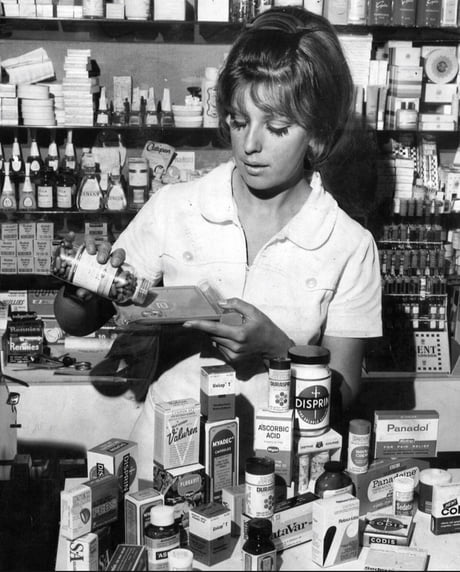
Ambien (Zolpidem), one of the most common sedatives to treat insomnia and jet lags, was approved in 1992. About a decade later, worrying reports emerged about side effects, mostly by women, such as driving accidents the morning after taking the tablets, sleepwalking and bizarre behaviour without any recollection of it afterwards. In 2006, Ambien drew national attention when a disoriented congressman blamed the drug for a crash into a Capitol Hill barrier at 2 a.m.

He ultimately pleaded guilty to driving under the influence of prescription drugs and served a year probation. Around the same time, Sanofi was slammed with a class-action lawsuit by Ambien users who complained of sleep-eating while under the drug's influence. Plaintiffs' lawyer Susan Chana Lask cited examples of clients gobbling buttered cigarettes and raw eggs (including the shells) while in an Ambien-induced haze. "Ambien zombies," she called them. 

Only in 2013 did US drug regulators confirm that the manufacturer's recommended dose was double what women should take. The research prior to the drug's launch, in fact, had not differentiated between men and women (women, in fact, account for 64% of Ambien prescriptions) which was the reason why it had not been realised that women metabolise Ambien more slowly than men and hence still had the drug in their system when they woke up. The blood levels were so high the morning after that activities requiring alertness were impaired - including driving. It seems quite disturbing that sex and gender were not considered in the 1990s, but, even worse, "it's remarkable that this is still the case" (via and via).

- - - - - -

photograph via

Monday, 30 August 2021

The Chinese-perspective of Intercultural Competence Models Revisited

"Most intercultural competence models have been developed by Western experts based on Western theory and Western cultural values, and they are not culturally specific models. The lack of non-Chinese researchers to study and contribute to the construction of intercultural competence from a Chinese-perspective is a serious shortcoming, and most of the models developed by Chinese scholars are a replica of the Western models. A Chinese-perspective of intercultural competence model is indeed needed to reinterpret concepts and theories that are coined in the West, which are then widely used and generalized without any concrete-solid bases of their universality."


"A Chinese-perspective of intercultural competence model is indeed needed to reinterpret concepts and theories that are coined in the West, which are then widely used and generalized without concrete-solid bases of their universality. Western-based intercultural competence models need to be scrutinized and analyzed thoroughly to conrm, to modify, or to deny altogether for their applications in different cultures. Unfortunately, the current practices in academia pay less attention to such an initial analysis." (Huat Chong & Grzymala-Mosczczynska, 2015)
 
- - - - - - - - -
- Huat Chong, Y. & Grzymala-Moszczynska, H. (2015). Journal of Intercultural Management, 7(1), link
- photograph by Elisa Leonelli via

Sunday, 29 August 2021

Quoting Lauren Bacall

"I think your whole life shows in your face and you should be proud of that."

photograph by Annie Leibowitz via

Monday, 16 August 2021

Rainbow Europe Map 2021

The Rainbow Map and Index are a benchmarking tool used since 2009 to illustrate the legal and policy situation of queer people in European countries. It ranks 49 European countries based on 71 criteria from the categories equality and non-discrimination, family, hate crime and hate speech, legal gender recognition and bodily integrity, civil society space, and asylum. While Malta occupies the number one spot on the Rainbow Europe Map for the sixth year in the row, Poland occupies the lowest ranking in the EU for the second year in a row (via).

According to a survey carried out by the European Union Agency for Fundamental Rights, 19% in Poland say that LGBTQ prejudice and intolerance dropped in the last five years (vs 40% across the EU-28) whereas 68% say that they have risen (vs 36% for the EU-28). Not really surprisingly, only 4% in Poland believe that their government combats prejudice and intolerance aginst LGBTQ people (vs 33% for the EU-28) (via).

_ _ _ _ _

photograph (taken in Wroclav in 1982) via