Friday, 10 June 2022

Ageing, Getting Fatter, More Wrinkles and the Happiness and Freedom that Come with It

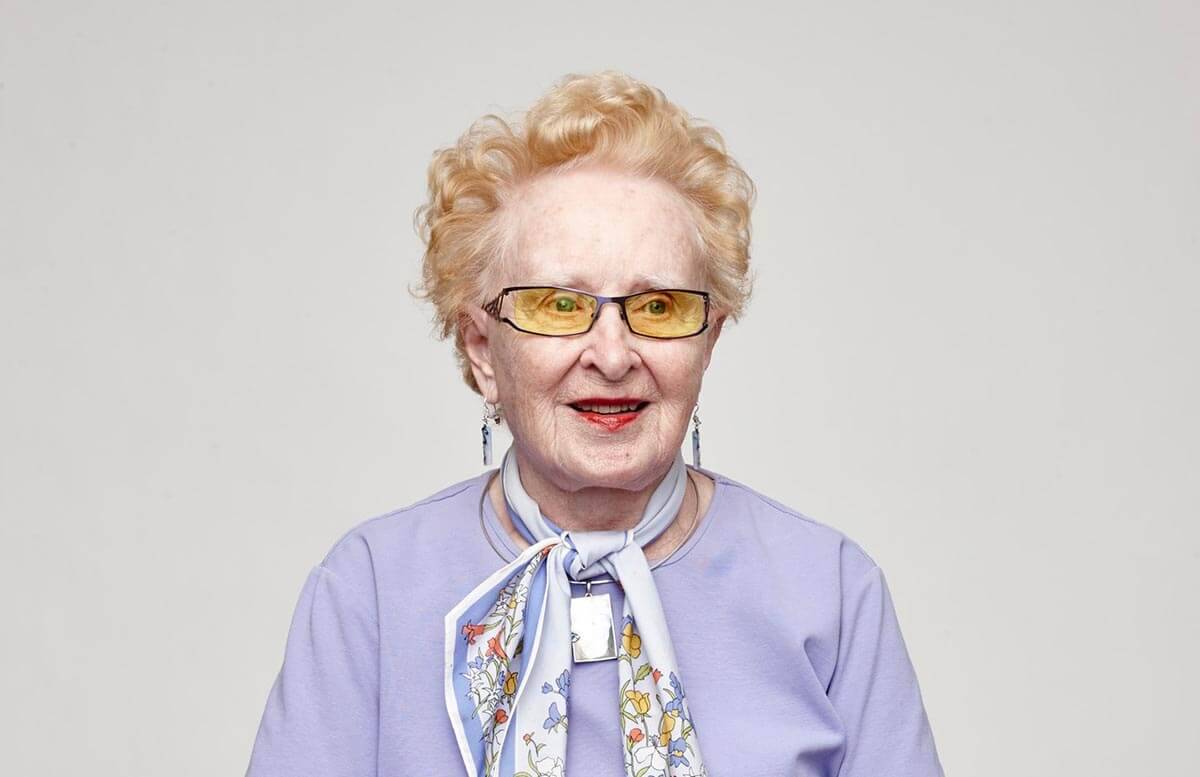
“Ageing brings a lot of happiness. You get fatter and more wrinkles, and that’s not so good, but there is a freedom that comes with it...


...The freedom is: I better do what I want to do now, because I’ll be dead soon. So this is my last chance. Also, there’s a serenity that comes – I had the career I had, good or bad, I did the best I could, and now I continue pursuing what is interesting to me.”
Isabella Rossellini

photographs via and via

Thursday, 9 June 2022

Barbara Beskind: A Smashing Designer Smashing Age Stereotypes

Barbara Beskind, born in 1924, is a designer and inventor who, in 2013 aged 89, saw David Kelley - the founder of IDEO - on TV and decided to send him a letter because she had the impression that he "accepted, and really respected, people from a varied background" offering her "unique kind of life experience and designing skills".


"(...) I typed a letter, which might have caught their attention because they don't get many communications by "snail mail"- I have macular degeneration so my eyesight prevents me from using computers.
Within a week I got a response. They were just starting to design implements that would be helpful to the ageing, and so it was very fortuitous that I arrived at that time.
They invited me to come in and meet a few people. When we sat down at a table for four in the cafeteria, I thought, "That's very nice but I thought there were going to be a couple more people." What I couldn't see was that behind me people were filing in - about 30-35 designers and engineers. Suddenly, I found myself being introduced as the speaker. I got up and told my story and fielded some very interesting questions.
After that I became an adviser for equipment and designing products and services for the elderly and the low-vision community.
Every Thursday I walk three blocks to the train station - I know all the conductors now. I arrive at either the Palo Alto or San Francisco IDEO office around 10:00 and often sit on the same sofa, so that everyone knows where to find me. Word spreads from the front desk and people will arrange appointments with me for ongoing client projects. People will also stop by to talk about what is going on with various projects - it's an extremely collaborative environment.
I love working in this atmosphere. I may be six or seven decades older than some of the people I'm working with - and many of them have PhDs or masters degrees, which I don't - but I'm accepted as an equal. My voice is respected for what I bring to the table, for my experience, for my insights, and for my inventive, problem-solving nature.
For example, for one product - still under wraps - they intended to use batteries, but if these batteries are tiny, like the ones for hearing aids, older hands can't manipulate them easily and they drop them or lose them. My point was that it was better to recharge the product at night, when it is not being used.
No-one can expect, at a young age, to put themselves in the shoes of an elderly person and sense what it's like. Even as close as I am to the issues of the elderly, I have been amazed, and have learned from people whom I live with in my retirement community. I've always said to them, "Come and bring me your ideas of what you need."
There was a gentleman who came up to me recently and said: "Barbara, I need you to invent something for me - I walk slowly on a walker and I don't hear well, so when somebody comes up behind me and slaps me on the back it scares me to death. What can you do to help me? Maybe something that would be like a mirror?" I thought, "Well, that's a no-brainer." I went to the bicycle shop, got a rear-view mirror, attached it to his walker and he is so happy. (...)
If you're going to design for the elderly, ask them what they need, don't tell them. We don't need pink canes and jewelled pill boxes, we need functional equipment that makes us more independent, keeps us safe and gives us joy.
I think the elderly are an untapped resource, whose input should be sought. (...)"
“The team I worked with at IDEO — all who had master’s degrees and Ph.D.s — was very receptive to having a 90-year-old consult on their designs, and they accepted me as an equal. Their respect and eagerness to have me collaborate with them was tremendously important to me.” 
- - - - - - - - -
photograph via

Wednesday, 8 June 2022

Sleep Sound... Deaf Dancers Moving to the Silence

“I was on a train listening to music, getting deep into it, and this girl started staring at me, After a while I took my headphones off and she came up to me, started signing and then wrote me a note to say that she was deaf but could almost feel the music by my movement.
The relationship between silence and music is a big part of what I am trying to express with my work. The first kid in the video, Archie, was bliss - all of them were amazing. I hope this is a project I can develop further.”


::: Sleep Sound on YouTube: WATCH

Inspired by this "chance encounter, Mattioli was asked to create a video for the member of The xx and Grammy-winning producer of Alicia Keys, Gil Scott-Heron and Drake. During the course of one day, she danced with 13 members of the Manchester Deaf Centre with ages ranging from five to 27 years old, who responded to the movement of the artist and the vibrations in the air given off by the song." (Nowness)

- - - - - - 
image via

Tuesday, 7 June 2022

Quoting Steve McQueen

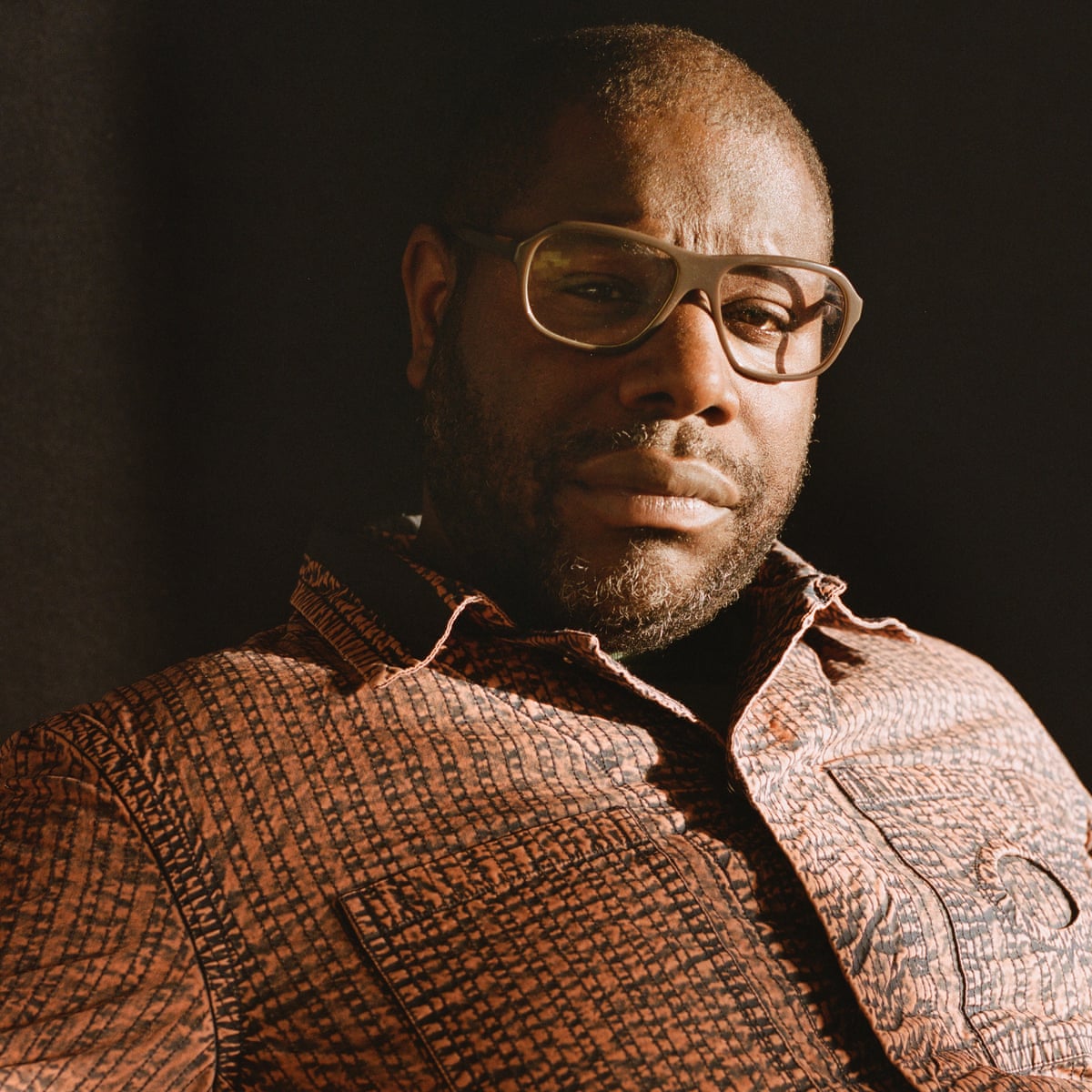
“What I do as an artist is, I think, to do with my own life experience. I came of age in a school which was a microcosm of the world around me. One day, you’re together as a group, the next, you are split up by people who think certain people are better than you. It was kind of interesting to observe that.”
Was there a stigma attached to that separation? 
“Oh for f*cking sure. And it was informed by class and race and privilege. Absolutely. No ifs or buts or maybe about it.”
Steve McQueen

As a working-class boy growing up in 1980s suburbia, "there were no examples of artists who were like me. When did you ever see a black man doing what I wanted to do?" (Steve McQueen/The Guardian)

- - - - - - - -
photograph via

Monday, 6 June 2022

Meet me at the Fifteen Seconds Festival...

 ... where I will be holding a workshop on the impact of ageism on design. Title: The Impact of Visual Ageism on Design and Designing for Social Change: Some Very Good Practices and Many Very Bad Practices.

Content: Design can do many things. It can represent minorities or other them, help develop empathy, raise both awareness and status or perpetuate stereotypes and marginalise, script and mediate social practices… In short: Design has the power to include or exclude groups of people. This workshop focuses on the impact ageism has on design. Ageist stereotypes affect societies, happiness, health, and life expectancy, limit the capacity to make choices about lives. And yet they remain rather unchallenged: surveys suggest no jeans after the age of 53, no twitter if you are 47 or older, we are constantly surrounded by associations such as young and dynamic and constructs like 50plus. Ageing in an ageist society generally means becoming invisible and losing status. The combination of image makers influencing what issues we discuss in a society, of designers – often unconsciously – being driven by negative assumptions and consumers internalising the deficit orientation might explain why there is a design ghetto created for „the old“. However, there are a great many inspirational approaches that successfully focus on asthetics, address issues of dignity, consider the role language plays, empower, and challenge the notion that design need not be sexy when targeting „the old“, approaches that prove: Design can make change.

- - - - - - -
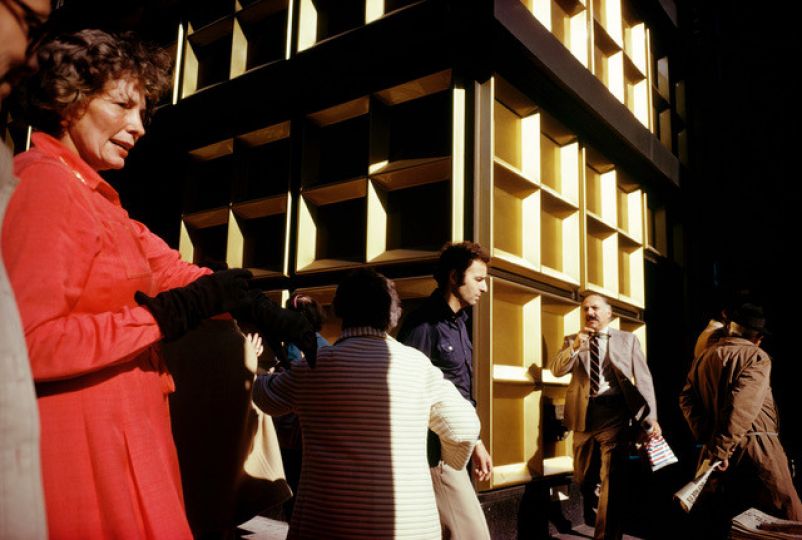
photograph by Joel Meyerowitz via

Sunday, 5 June 2022

Italian Children No Longer Automatically Named After Father

The constitutional court has ruled that Italian children should be given the surnames of both parents (alternatively parents should choose one surname together) and no longer be automatically named after their fathers since this practice was "discriminatory and harmful to the identity" of the child (via).

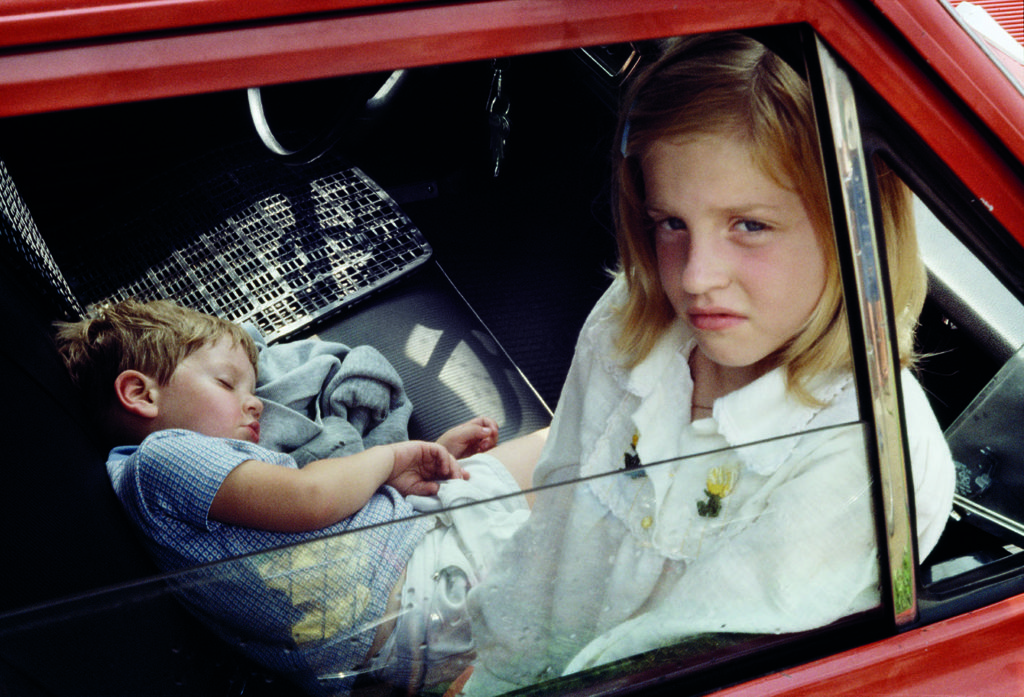
photograph by Vivian Maier via

Saturday, 4 June 2022

Design Meets Disability (II): On Eyewear and Hearwear.

... a follow-up posting with a few more excerpts from the highly interesting chapter "fashion meets discretion" in the highly interesting book "design meets disability" ... excerpts that focus on the development of glasses from "medical necessity" to fashion statement and compare this trend with the status and stigma of hearing aids. Generally, the latter are "developed within a more traditional culture of design for disability". There are, however, some designers celebrating deafness by creating high fashion hearing aids, for instance here and here and here.
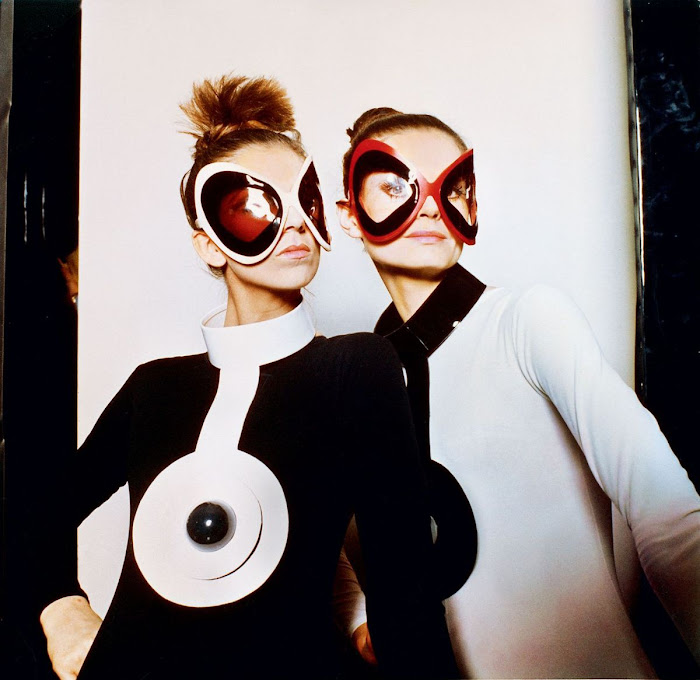
glasses

Glasses or spectacles are frequently held up as an exemplar of design for disability. the very fact that mild visual impairment is not commonly considered to be a disability, is taken as a sign o fthe success of eyeglasses. But this has not always been the case: Joanne Lewis has charted their progress from medical product to fashion accessory. In the 1930s in Britain, National Health Service spectacles were classified as medical appliances, and their wearers as patients. It was dictated that "medical products should not be styled." At that time, glasses were considered to cause social humiliation, yet the health service maintained that its glasses should not be "styled" but only "adquate". In the 1970s, the British Government acknowledged the importance of styling, but maintained a medical model for its own National Health Service spectacles in order to limit the demand. In the meantime, a few manufacturers were offering fashionable glasses to consumers who could afford them. As recently as 1991, the design press declared that "eyglasses have become stylish."

These days, fashionable glasses are available in the shopping mall or on Main Street. It has been reported that up to 20 percent of some brands of glasses are purchased with clear nonprescription lenses, so for these consumers at least wearing glasses has become an aspiration rather than a humiliation. So what lessons does this hold for design and disability? There are several, especially in relationship to the widely held belief that discretion is the ultimate priority in any design for disability. 

First, glasses do not owe their acceptability to being invisible. Striking fashion frames are somehow less stigmatizing than the National Health Service's supposedly invisible pink plastic glasses prescribed to schoolgirls in the 1960s and 1970s. Attempting camouflage is not the best approach, and there is something undermining about invisibility that fails: a lack of self-confidence that can communicate an implied shame. (...)

But neither is the opposite true: glasses' acceptability does not come directly from the degree of their visibility either. Brightly colored frames exist, although they are still a minority taste. This might serve as a caution to medical engineering projects that have adopted bright color schmes for medical products "to make a fashion statement" as the automatic progression from making a product flesh-colored. Most spectacle design, and design in general, exists in the middle ground between these two approaches. This requires a far more skilled and subtle approach - one that is less easy to articulate than these extremes. (...) (Pullin, 2009:15-17)

(...) many fashion labels design and market eyewear collections. Collections, labels, and brands: these words set up different expectations and engagement from consumers. And consumers is a long way from patients or even users. (...)

Eyewear designers Graham Cutler and Tony Gross have spent thirty years on the front lines of the revolution that turned eyewear "from medical necessity into key fashion accessory." It is interesting to note how recent this revolution was, given how much it is now taken for granted. (...), and their customer base transcends age and occupation. 

(...) Certainly, fashion designers are rarely part of teams even developing wearable medical products, which is incredible considering the specialist skills they could bring as well as their experience and sensibilities. But if we are serious about emulating the success of spectacle design in other ares, we need to involve fashion designers, inviting them to bring fashion culture with them. 

hearing aids

Compare glasses with hearing aids, devices developed within a more traditional culture of design for disability where discretion is still very much seen as the priority. Discretion is achieved through concealment, through a constant technological miniaturization. The evolution of the hearing aid is a succession of invisible devices: objects hidden under the clothing, in the pocket, behind the ear, in the ear, or within the ear. As the hearing aid has grown ever smaller, it has occasionally broken cover only to migrate from one hiding place to another. What has remained the same is the priority of concealment. 

Such miniaturization has involved amazing technological development, but it is not without a price. (...) hearing aids' performance is still compromised by their small size and (...) they could deliver better quality sound if they weren't so constrained. This is how fundamental the priority of discretion can be. Yet for many hearing-impaired people, their inability to hear clearly is far more socially isolating than the presence of their hearing aid. (...) (Pullin, 2009)

- - - - - - - -
- Pullin, G. (2009). design meets disability. Cambridge & London: The MIT Press.
- image (Pierre Cardin) via

Friday, 3 June 2022

Design Meets Disability (I): Fashion Meets Discretion.

These are a few excerpts from the highly interesting chapter "fashion meets discretion" in the highly interesting book "design meets disability" (Pullin, 2009). In this chapter, the author discusses the tension between the notion of design for disability having to be discrete and invisible versus fashionable and a statement. The two approaches are exemplified by contrasting the development of glasses and hearing aid devices (see the following posting).

discretion

The priority for design for disability has traditionally been to enable, while attracting as little attention as possible. Medical-looking devices are molded from pink plastic in an attempt to camouflage them against the skin. The approach has been less about projecting a positive image than about trying not to project an image at all.

But is there a danger that this might send out a signal that disability is after all something to be ashamed of? If discretion were to be challenged as a priority, what would take its place? Invisibility is relatively easy to define, and may even be achieved through technical and clinical innovation alone, but it is more difficult to define a positive image purely from these perspectives. 

fashion

Fashion, on the other hand, might be seen as being largely concerned with creating and projecting an image: making the wearer look good to others and feel better about themselves.

Eyewear is one market in which fashion and disability overlap. On the rare occasions that the words design and disability are mentioned in the the same breath, glasses are often referred to as the exemplar of a product that addresses a disability, yet with little or no social stigma attached. This positive image for disability has been achieved without invisibility.

tension

Fashion and discretion are not opposites, of course; fashion can be understated, and discretion does not require invisibility. Nonetheless, there is a tension between these qualities because they cannot both be the absolute priority. There are also deep cultural tensions between the two designs communities. Perpaps fashion with its apparent preoccupation with an idealized human form is seen as having little to say about diversity and disability. The extremes and sensationalism of cutting-edge fashion can seem inappropriate in the context of disability, where discretion is seen as being so important. For some in the medical field, the very notion of being in fashion, of designs coming and going, is the antithesis of good design. 

But learning from fashion might require embracing not only its design qualities but also more of its values. Fashion does not just arise from a particular set of skills but creates and requires a culture. The mechanism through which fashion design evolves, whether through haute couture or street fashion, ceates extreme designs that can provoke negative as well as positive reactions in different audiences. It may not be possible to have one without the other, to have the results without the culture and the values. (...)

- - - - - - - -
- Pullin, G. (2009). design meets disability. Cambridge & London: The MIT Press.
- photograph (Pierre Cardin) via

Thursday, 2 June 2022

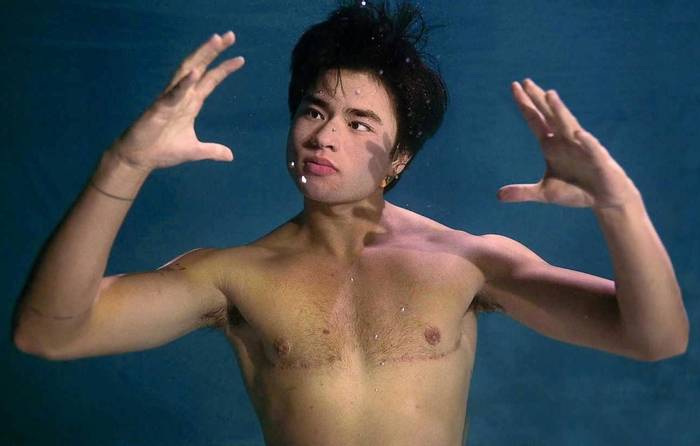
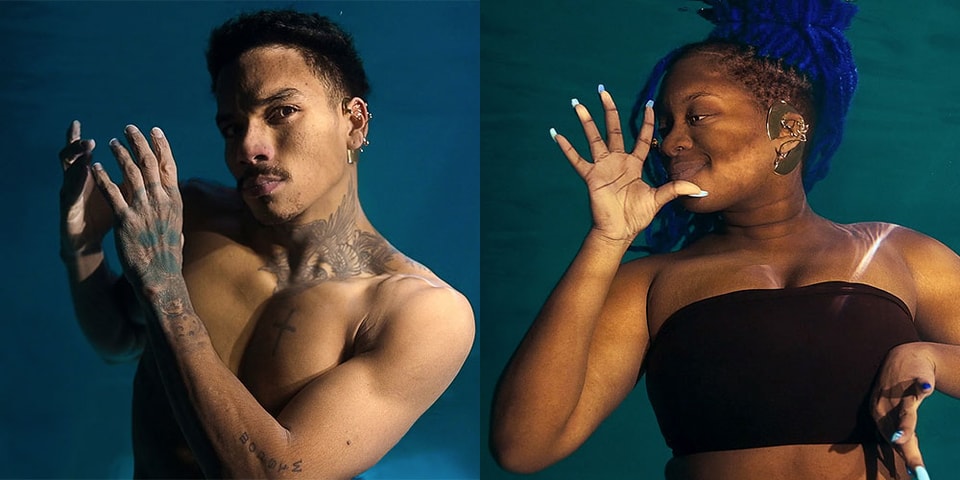
The Beauty of Being Deaf. An Underwater Celebration of Hearing Loss.

In "The Beauty of Being Deaf", sign language is not a mere means of communication but turns into physical poetry. You can watch the three-minute short film on YouTube: link.

This expertise, this deaf gain that we are all granted come together to form community, culture, establishing a continuum of people who are different… yet connected. And how beautiful is it to be able to communicate underwater.

"I have manifested this film since childhood, but its actualization could not exist in scarcity. Luckily, it has grown along with me, perspective and resources expanding. Shooting this piece required both the cast and production’s full hearts as we waded into our vulnerabilities. This ease was translated into the final film; we carried that rawness with us. And, when we stepped in front of the camera, it was just our hearts, you know? I am forever grateful and proud of the healing and connections that were created this day."
Chella Man

- - - - - - -
images via and via

Wednesday, 1 June 2022

The Welsh According to a Stereotype Survey

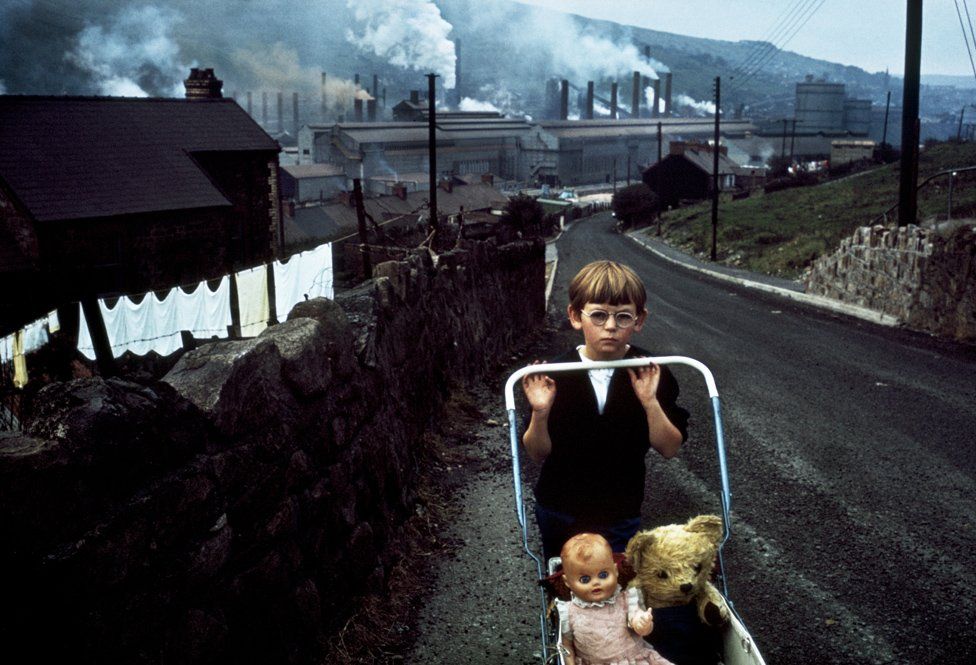
According to the National Character Survey carried out among 2.000 adults across the United Kingdom who were asked to rank regions in terms of stereotypes, people from Wales are seen as the the most introverted in the UK, as the least ambitious, the least open to experiences, the least rude, the least arrogant, second-most stingy, second-least aggressive, second-least agreeable, and second-most anxious. 

Londoners (38%) are most likely to perceive the Welsh as gloomy. In fact, more than 30% of the Welsh agree with this stereotype (via).

- - - - - - - -
photograph by Bruce Davidson (Welsh child with a stroller, Cymcarn, 1965, Magnum Photos) via