Showing posts with label TV. Show all posts

Tuesday, 23 November 2021

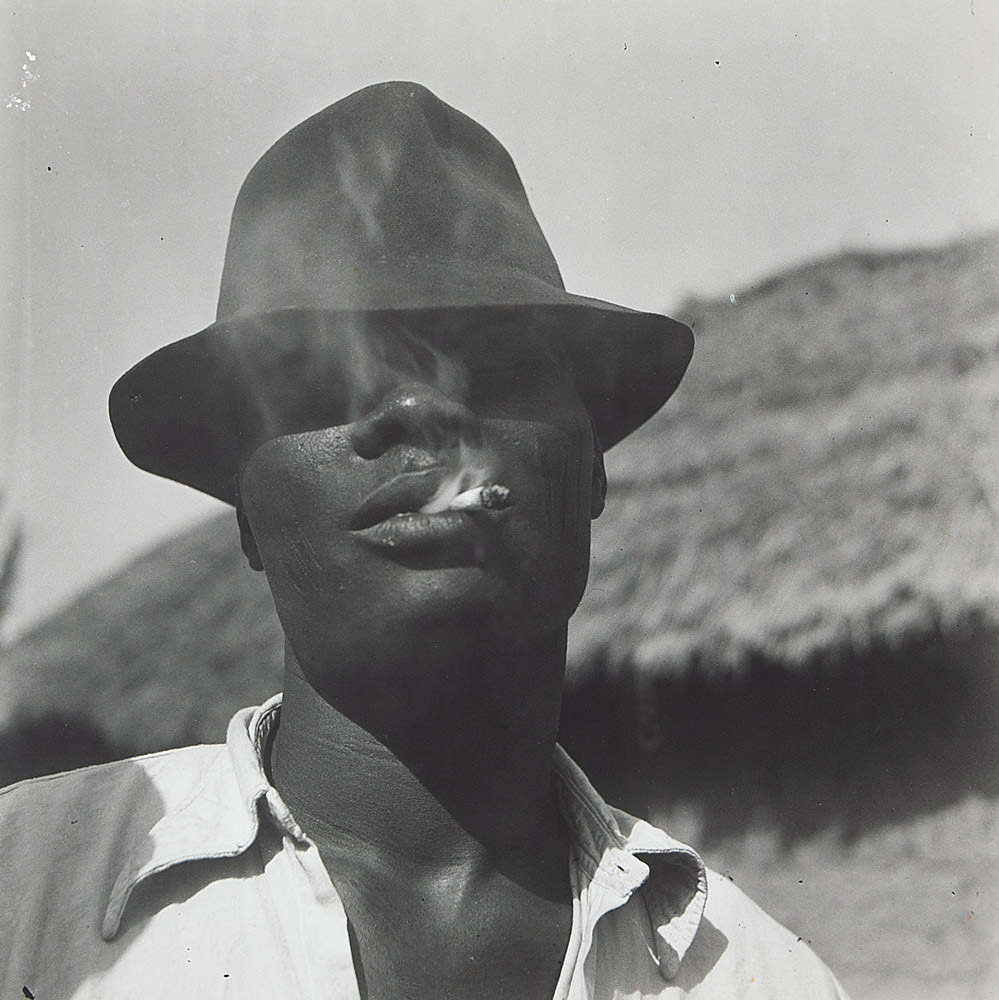
Television Portrayals, Ethnic Stereotypes and Guilt Ratings

Abstract: An experiment was conducted to test the hypothesis that stereotypical television portrayals of African-Americans increase the likelihood that whites will make negative social perception judgments of an African-American (but not a white) target person. Forty white subjects were exposed to comedy skits featuring stereotypical or netural portrayals of African-American characters. Subjects then read a vignette describing an incident in which a college student was allegedly assaulted by his rommate. In half of the conditions, the alleged offender was assumed to be white; in the other half he was assumed to be African-American. 

Subjects rated the likelihood that the alleged offender was guilty of the assault. Guilt ratings of the white target did not differ significantly between the stereotypical and the neutral comedy skit conditions. In contrast, guilt ratings of the African-American target were higher in the stereotypical comedy skit condition than in the neutral comedy skit condition. (Ford, 1997)

- - - - - - - - -

- Ford, T. E. (1997). Effects of Stereotypical Television Portrayals of African-Americans on Person Perception. Social Psychology Quarterly, 60(3), 266-275.
- photograph by Pierre Verger via

Friday, 13 September 2019

Free to Be ... You and Me

"Feminism... I think the simplest explanation, and one that captures the idea, is a song that Marlo Thomas sang, 'Free to be You and Me'."
Ruth Bader Ginsburg


"Free to Be ... You and Me" was a children's entertainment project starting in 1972 including a record album, an illustrated book, and an ABC special using poetry, songs and sketches to encourage gender neutrality (via).
The idea for Free to Be came to Marlo Thomas - then most famous for her starring role on That Girl, in which she played Ann Marie, a career girl who didn’t want to get married - as she was reading a bedtime story to her 5-year-old niece Dionne. Thomas was shocked to discover all the books available to her niece were the same books she had been read when she was a little girl, and “it had taken me 30 years to get over them.” When Thomas went to the bookstore the next day in search of better fare, she found the state of children’s fiction was “worse than I thought.” On the shelves she discovered the especially abyssmal I’m Glad I’m A Boy, I’m Glad I’m A Girl. Sample text: “Boys invent things, girls use what boys invent.” Says Thomas: “I almost had a heart attack right there.”

According to Thomas, there were three pieces the TV powers-that-be wanted to cut from the special. The first two were "William Wants A Doll" and "It’s Alright to Cry," because the network was worried showing them “would make every boy in America a sissy…that wasn’t the word they used.”

They also had a problem with "Parents are People," not because of the lyrics, says Thomas, but because there was concern that the scene featuring her and Harry Belafonte wheeling their own baby buggies down a sidewalk made it seem as though the two were married. The network told Thomas they “couldn’t put that out and certainly couldn’t play it in the South.” (via)


"When We Grow Up" by Roberta Flack and Michael Jackson:


When we grow up will I be pretty?
Will you be big and strong?
Will I wear dresses that show off my knees?
Will you wear trousers twice as long?

Well, I don't care if I'm pretty at all
And I don't care if you never get tall
I like what I look like and you're nice small
We don't have to change at all.

When we grow up will I be a lady?
Will you be on the moon?
Well, it might be all right to dance by its light
But I'm gonna get up there soon.

Well, I don't care if I'm pretty at all
And I don't care if you never get tall
I like what I look like and you're nice small
We don't have to change at all.

When I grow up I'm going to be happy
And do what I like to do,
Like making noise and making faces
And making friends like you.

And when we grow up do you think we'll see
That I'm still like you
And you're still like me?
I might be pretty
You might grow tall
But we don't have to change at all.
(via)

More "Free to Be You and Me" on YouTube:

::: Parents are People (Harry Belafonte): LISTEN/WATCH
::: Sisters and Brothers (song starts at 2.29): LISTEN/WATCH
::: William Wants a Doll: LISTEN/WATCH
::: Princess Atalantis: LISTEN/WATCH
::: Ladies First: LISTEN/WATCH
::: Boy Meets Girl: LISTEN/WATCH
::: It's Alright to Cry: LISTEN/WATCH

- - - -
image via

Monday, 29 July 2019

Mr Rogers' and François Clemmons' Famous Footbath

Fred McFeely Rogers (1928-2003) created "Mister Rogers' Neighborhood", a children's programme that began airing in the U.S. in 1968, was the host of all 895 episodes, composed more than 200 songs. "More importantly, he changed the face of children’s television and transformed the way we think about the inner lives of young children." (via)


As different as we are from one another, as unique as each one of us is, we are much more the same than we are different. That may be the most essential message of all, as we help our children grow toward being caring, compassionate, and charitable adults.
Fred Rogers
In a 1969 episode, on a hot day, Fred Rogers invited François Clemmons, who embodied a friendly police officer for 30 years and the first recurring black character on a children's series, to join him in taking a footbath. This was "one of those giant leaps for mankind moments" (via) since at the time, many community pools did not "welcome" black US-Americans (via).
Fred came to me and said, “I have this idea, you could be a police officer.” That kind of stopped me in my tracks. I grew up in the ghetto. I did not have a positive opinion of police officers. Policemen were sicking police dogs and water hoses on people. And I really had a hard time putting myself in that role. So I was not excited about being Officer Clemmons at all.
François Scarborough Clemmons
He invited me to come over and to rest my feet in the water with him. The icon Fred Rogers not only was showing my brown skin in the tub with his white skin as two friends, but as I was getting out of that tub, he was helping me dry my feet.
I think he was making a very strong statement. That was his way. I still was not convinced that Officer Clemmons could have a positive influence in the neighborhood and in the real-world neighborhood, but I think I was proven wrong.
François Scarborough Clemmons
- - - - -
image via

Wednesday, 10 April 2019

Not the Nine O'Clock News | Conservative Conference Speech

Not the Nine O'Clock News was broadcast on BBC 2 from 1979 to 1982 launching the career of Rowan Sebastian Atkinson and others (via).


"Our right honourable leader… and Denis. My, lords, ladies, fellow party workers, I am a golfer! [applause] But I am also a Conservative and the Conservatives are back in power! What a wonderful word! But with a new initiative and most of all, a new style. And we are mostly concerned with two main issues.
Firstly, immigration. Now, people really do get this party wrong on this issue every time, don't they? We don't think immigrants are animals, for god's sake! I know a lot of immigrants personally and they're perfectly nice people. They're black, of course, which is a shame. But honestly, some of them can do some jobs almost as well as white people... and we acknowledge this.
Now, a lot of immigrants are Indians and Pakistanis for instance, and... I like curry, I do! But now that we've got the recipe, is there really any need for them to stay? Conservatives understand these problems, you see.


Like we understand young criminals, another very emotive issue. This party feels that we've been just a little too soft on these... bastards. Mr. Whitelaw has spoken of the short sharp shock treatment, and his introduction of the 24,000V electric chair to Home Office detention centres begins next week... on a purely experimental basis, of course. If it doesn't work? Then of course we will be more than prepared to revert to old liberal wishy-washy socialist n***er-loving red left-wing homosexual commie ways of the recent past. But please, let's have a chance! It may be a tough road, we know, but don't forget, it is easier for a rich man to pass through the eye of a needle than it is for a camel to… [pause] ...than it is, for a camel to." (via)


"We all enjoy a great British curry, but what we want are curry chefs trained here in Britain so we’re providing jobs for people here in this country, and that’s what our immigration controls provide."
George Gideon Oliver Osborne (British Conservative Party politician) in 2016

- - - - - - -
photographs via and via

Friday, 5 April 2019

Peter Falk's Eye

"Young man, for the same price I'll get an actor with two eyes."
Harry Cohn, Columbia Pictures


Peter Michael Falk (1927-2011) had a cancerous eye removed at the age of three. The navy did not take him because of his glass eye. "So I joined the merchant navy who allowed monocular crew, if you worked in the kitchens. You're not wanted on deck or in the engine room with one eye, but you're good to fire up the ovens and cook hundreds of chops." (via). Despite warnings he became an actor, and a very popular one.
As an aspiring actor, he was reportedly warned by one agent the false eye would preclude him from working in television. In fact, it became another endearing trait of his most famous character. (via)


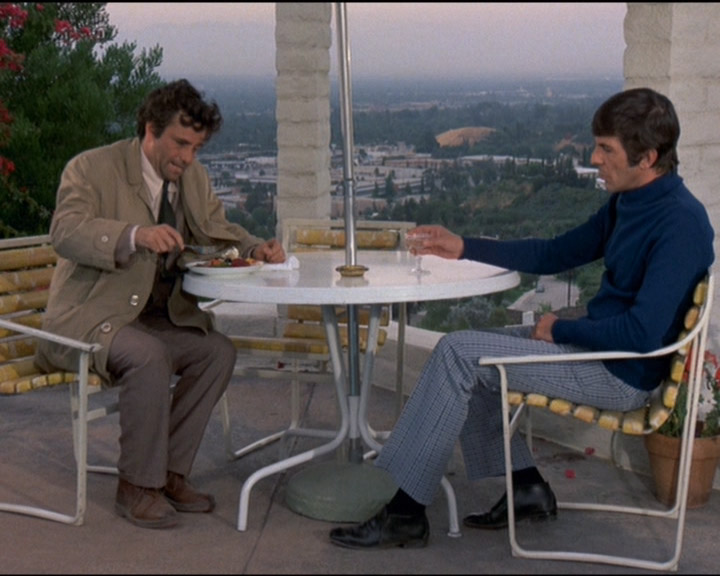
images of Peter Falk and Leonard Nimoy (Columbo, A Stitch in Crime, 1973) via

Friday, 24 August 2018

There Is Black. And There Is Black.

"The lighter an African American actor or model is and the more Anglo-white her features, the greater her chances are of accessing certain societal rewards such as movie or other media exposure. (...) Darker African women are made into societal misfits who are targeted for more devaluing than their lighter counterparts by the white cultural artists."
Jean & Feagin, 2015: 87f


- Jean, Y. S. & Feagin, J. R. (2015). Double Burden. Black Women and Everyday Racism. London & New York: Routledge.
- photograph of Lena Horne (1917-2010) by Wayne Miller, 1947 via (copyright by owner)

Tuesday, 17 July 2018

Quoting Diahann Carroll

"In the beginning, I found myself dealing with a show business dictated by male white supremacists and chauvinists. As a black female, I had to learn how to tap dance around the situation. I had to ... find a way to present my point of view without being pushy or aggressive. In the old days, the only women I saw in this business were in makeup, hairdressing, and wardrobe departments. Now I'm surrounded by women executives, writers, directors, producers, and even women stagehands."
Diahann Carroll


"I suppose our lives need to be more integrated. We have white communities and black communities and white country clubs and black country clubs. It's very important when we integrate ourselves, and it helps us to have a better understanding of the world, to people all over the world and this is the time in history that we have become very aware of how important that is, so I think it's just really-we have to know each other and work together and play together in order to write about each other."
Diahann Carroll


photographs (1969) via

Tuesday, 19 June 2018

UFO! Survival (1971)

Straker: "(...). Now, whoever commands it has got one of the most responsible jobs in S.H.A.D.O. I'd like you to consider it, Mark."
Bradley: "Are you offering me the job, Sir?"
Straker: "Yes, does that surprise you?"
Bradley: "Not altogether. And does it surprise you if I say no?"
Straker: "It disappoints me."
Bradley: "Well, you've done your duty. You've asked. And I've given you the no you wanted."
Straker: "What do you mean, I've done my duty?"
Bradley: "Sure - after Foster, I'm the senior man. The obvious choice, if you like."


Straker: "So. I offer you the command of Moonbase, and you say no. Why?"
Pause
Straker: "I asked you why!"
Bradley: "Because of this." (Points to his skin)
Straker: "Don't give me that. Racial prejudice burned itself out five years ago."
Bradley: "How would you know? All right, on the surface, maybe. But deep down inside of people, it's still there. Maybe it will never show. And maybe it will - like some time I'm ordering a guy out on a mission? A time the chances are he won't be coming back?"
Straker: "Look. I'm not offering you some easy number. And I don't care if you are polka dot with red stripes. You're the best man for the job. Now, do you want it?"
Pause
Straker: "Do you want it?"
Bradley: "Yes, Sir. I would like it. But not like this."
Straker: "No one wanted it like this. Now, you get some rest, Commander."


The whole episode on YouTube: WATCH


images via and via and via

Monday, 26 February 2018

Anchorman

"It is anchorman, not anchorlady. And that is a scientific fact."
Champ Kind (Anchorman: The Legend of Ron Burgundy)

Australian TV anchor Karl Stefanovic saw the sexism his female colleagues had to deal with and decided to start an experiment. He wore the same blue suit for a whole year (2013/14) every morning on Channel Nine's Today programme. There was absolutely no reaction. His female co-host Lisa Wilkinson, however, kept receiving feedback (e.g. "Who the heck is Lisa's stylist?", "Today's outfit is particularly jarring and awful. Get some style.") (via).


"No one has noticed; no one gives a shit. But women, they wear the wrong colour and they get pulled up. They say the wrong thing and there's thousands of tweets written about them.
Women are judged much more harshly and keenly for what they do, what they say and what they wear.
I've worn the same suit on air for a year – except for a couple of times because of circumstance – to make a point. I'm judged on my interviews, my appalling sense of humour – on how I do my job, basically. Whereas women are quite often judged on what they're wearing or how their hair is ... that's [what I wanted to test]."
Karl Stefanovic

"Today’s media landscape, particularly for women, is one now so focused on the glossy and the glamorous, it often eclipses and undermines everything else. When you’re a woman doing breakfast TV, you quickly learn the sad truth that what you wear can sometimes generate a bigger reaction than even any political interview you ever do."
Lisa Wilkinson


Quotes from the movie (via):

Ed Harken: "A lot of you have been hearing the affiliates complaining about a lack of diversity on the news team."
Champ Kind: "What in the hell's diversity?"
Ron Burgundy: "Well, I could be wrong, but I believe diversity is an old, old wooden ship that was used during the Civil War era."
Ed Harken: "Ron, I would be surprised if the affiliates were concerned about the lack of an old, old wooden ship, but nice try."

Ron Burgundy: "Do you know who I am?"
Veronica Corningstone: "No, I can't say that I do."
Ron Burgundy: "I don't know how to put this, but, I'm kind of a big deal."
Veronica Corningstone: "Really?"
Ron Burgundy: "People know me."
Veronica Corningstone: "Well I'm very happy for you."
Ron Burgundy: "I'm very important. I have many leather-bound books and my apartment smells of rich mahogany."

- - - - - - -- - -
image of Will Ferrell, "Anchorman: The Legend of Ron Burgundy" via

Saturday, 24 February 2018

NBC's Winter Olympics' Gender Coverage Gap and Gender Marking

 "[This all] sends a powerful message about the value of women’s sport. We may be picking up on this during the 2018 Olympics, but none of this is new. There’s a whole history of examples of similar things happening, it’s just that sometimes we have these moments where we can really notice how even in 2018, despite the tremendous gains we’ve made, women’s sport is still occupying second-class status." 
Cooky


NBC's primetime broadcast of the 2018 Winter Olympic Games is - so far - not gender balanced. Significantly more men's events are highlightened than women's events. In the first ten nights, men received 48.5% of the coverage, women received 32.9% (18.6% were dedicated to mixed-pair events). The 15.6% gap is smaller than the average gap found in the past two decades but wider than it was in the first half of the Sochi Games (via).
"The results of the first week of NBC’s primetime coverage of PyeongChang are a bit disheartening because of the continued press for equal coverage." James Angelini
Weiller, Greenleaf and Higgs analysed TV broadcasts of the 1991, 1996 and 2000 Summer Olympics which were all covered by NBC. They focused on sports that had male and female participants and noticed an increased amount of coverage of women's sports and athletes from 1996 to 2000. In numerous sports, gender marking (identifying the gender of the athletes, e.g. "swimming" vs "women's swimming") was evident.
"In track and field, audiences were reminded 57 that they were watching the U.S. Women's Track Team. They were reminded only 12 times that they were watching the U.S. Men's Track Team. Similarly, during the rowing competition, there were 27 instances of gender marking for female athletes during the one hour and 45-minute time frame televised. Little gender marking occurred for male athletes in rowing."
Karen Weiller
Gender marking of female athletes implies that in sports, male is the norm and female the deviation. For instance, we have "football" and "women's football". There is no "men's football", it is just "football".

There was also a hierarchy of naming as athletes of the women's rowing competition were called "girls" ten times; male athletes were never referred to as "boys". Women competing in swimming and diving were referred to by their forenames 87 times, gymnastic commentators used women's forenames 104 times (for men 11 times and 64 times) (via).
"It is obvious that media coverage of an event like the Olympic Games is critical in setting the tone as to how women are represented in the sports media. But as Olympics coverage shows, men's sports continue to enjoy a level of focus and sophistication that women's sports are missing."
Karen Weiller
"Comparison of female athletes to males in the same sport suggests a standard differential and standard comparison, most often with the female athletes being identified as the lesser of the two."
Karen Weiller
- - - - - - - - - - - -
Photograph of Elisabeth Demleitner and Stephan Hoelzlwimmer (West German luge team) with their latest design in helmets, Innsbruck, 1976 via

Thursday, 18 January 2018

The King. The Cool. Peter Wyngarde.

Peter Wyngarde (1927 - 2018) was "Jason King" but also Jan Wicziewsky, a gay Polish army lieutenant in one of the first ever gay television dramas ("South"). The milestone in gay cultural history screened in 1959, at a time homosexuality was illegal in the UK. In the acting world it was well-known that Wyngarde was gay, to the general public it was a "closely guarded secret" (via).


"I think you have to give Wyngarde a massive pat on the back in terms of the bravery in taking this role. There were quite bad reactions from some of the press."
Simon McCallum

"I do NOT see anything attractive in the agonies and ecstasies of a pervert, especially in close-up in my living room. This is not prudishness. There are some indecencies in life that are best left covered up."
review from the Daily Sketch's critic

"Watching it does remind you how brave he was at the time to take this role and the way the subject is dealt with is incredibly brave."
Simon McCallum


images via and via

Monday, 4 December 2017

Stellan Skarsgård as John River

"I did BBC One's River because I was jealous of actresses.
Male roles are always about hiding emotions - it's always what's going on underneath. While women in their roles always get the opportunity to show everything."
Stellan Skarsgård


On John River:

"What first attracted me to River was the poetry - the warmth and love of human beings that runs through the script. Even though there’s a lot of sadness, that humanity makes it bearable.
But on another level, what really interested me was the way the male characters are written. Male characters that are created by women can be badly written. And female characters are usually very badly written by men. Because when you write about the other sex, you usually go back to some sexual fantasy about them, not who they really are.
But Abi Morgan’s writing is about a human being, it doesn’t matter if they have a penis or not. Male characters are usually written with a sort of contained emotional life, while actresses always get the opportunity to tell all their feelings all the time. So for the first time in my career I got the opportunity to be as an actress is, and show everything. And I really enjoyed that."
Stellan Skarsgård

"I've worked with Lars von Trier on many films, and there's always a female character that's like an open wound - everything just pours out of this person. For the first time I saw a male role that had that opportunity."
Stellan Skarsgård

"I've been offered some of those police stories in Sweden, but we do so many - Wallander and Beck and whatever it is. Some of them are very good and you probably see the best ones [in the UK]."
Stellan Skarsgård

"But there's so much of it and I'm not interested in police stories. I'm not interested in 'who did it' - this being a much more internal story about a man, and his difficulties in surviving in a reality that doesn't accept people that are different, is more interesting to me."
Stellan Skarsgård

“He (Lars von Trier) doesn’t have to show me a script for me to say yes, but there’s one role in all his films and it’s a woman. She’s an open wound bleeding all over the screen, then there are some stupid men around. Actors are meant to be manly and hide everything, but River allowed me to be actor and actress.”
Stellan Skarsgård


On England, the U.S., and Scandinavia:

“If you look at the stories, they’re pretty banal. It’s the cultural difference that’s exciting. Lisbeth Salander is a fantastic character, with a child’s vulnerability but a hardness and coldness that makes her stronger than any man. Thanks to Scandinavia being the most emancipated part of the world, you have female characters that are very hard to invent in a more repressed, sexist society like Britain. I heard they lit Tower Bridge pink because they had an heir that didn’t have a penis.”
Stellan Skarsgård

"I was brought up an Anglophile. But you [the English] seem to be extremely happy with the social differences in this country…[and] it’s going to get worse. What has made the development of society possible is not greed, but compassion and empathy – otherwise we’d still be running around killing each other in the f***ing jungle."
Stellan Skarsgård

“Somebody from the studio suggested changing the name of Professor Lambeau [Skarsgard’s character in Good Will Hunting]. I said, I’ll change it to Svensson if all the American actors take American names like Sitting Bull …. What is an English name, anyway?”
Stellan Skarsgård

- - - - - - - - -
images via and via

Monday, 20 November 2017

Narrative images: The Lost Year

"A high school student being educated via television during the period that schools in Little Rock, Arkansas, were closed to avoid integration" (via). The photograph was taken by Thomas O'Halloran in September 1958 (via).


"'The Lost Year' refers to the 1958–59 school year in Little Rock (Pulaski County), when all the city’s high schools were closed in an effort to block desegregation. One year after Governor Faubus used state troops to thwart federal court mandates for desegregation by the Little Rock Nine at Central High School, in September 1958, he invoked newly passed state laws to forestall further desegregation and closed Little Rock’s four high schools: Central High, Hall High, Little Rock Technical High (a white school), and Horace Mann (a black school). A total of 3,665 students, both black and white, were denied a free public education for an entire year which, increased racial tensions and further divided the community into opposing camps.

(...) Perhaps the greatest consequences were the effects on displaced students and their families. Some of the educational alternatives that displaced students found were nearby public schools, in-state public schools where students lived with friends or relatives, out-of-state public and private schools, correspondence courses, parochial schooling, and early entrance into college. Nearby schools such as Jacksonville (Pulaski County) and Mabelvale (Pulaski County) for white students and Wrightsville (Pulaski County) for black students absorbed as many students as they could. Some students, as young as fifteen years old, moved in with relatives in public schools across all of Arkansas, and even out of state. The number of displaced white students was 2,915. Of those, thirty-five percent found public schools to attend in the state. Private schools in Little Rock took forty-four percent of the displaced white students. A total of ninety-three percent of white students found some form of alternative schooling. This was not the case for displaced black students. Among the 750 black students who were displaced, thirty-seven percent found public schools in Arkansas to attend. Some located parochial schooling, out-of-state public and private schooling, and some did enter college early or take correspondence courses. However, fifty percent of displaced black students found no schooling at all. The NAACP, through Roy Wilkins, stated that opening private high schools for displaced black students would defeat their intent to gain equal access for all students to public education. Some of the students from both races went to the military, some went to work, and some married early or simply dropped out. Interviews with many former students indicate lifelong consequences because of this denial of a free public education."

Via/More: The Encyclopedia of Arkansas History & Culture

- - - - - - - - -
photograph via

Wednesday, 8 February 2017

The Next Doctor Who

"Doctor Who", the British science-fiction TV programme that started in 1963, has had twelve doctors so far. After Peter Capaldi, the current Doctor Who since 2014 (and who was a "risk" for the BBC because he was older than most of the doctors before him), announced that he would leave the show, fans called "to seize the opportunity to appoint a black or female actor as the 13th incarnation of the Time Lord".


Current writer Steven Moffat said that it would be "amazing" to have two non-white leading actors (via). Since shape-lifting is part of the narrative, more flexibility is given. The new cast certainly is "an obvious opportunity - at a time of urgent debate in British TV about diversity" (via).


“Of course there should be a female Doctor Who, but what we need is a man as her assistant. She has got to tell him what to do. He will need that leadership.”
Harriet Harman, former Labour deputy leader

“Before the BBC consider changing the lead role to a female Doctor, they should consider getting more female directors on the show. In the entire 50 years that Doctor Who has been on air there’s only been 10 female directors, which is a terrible reflection of the time we live in. Doctor Who’s very first producer was a woman, now there’s a success story for taking a risk. If they could do that a bit more now, it would be a better series as a result.”
Sebastian J. Brook, founder of Doctor Who Online


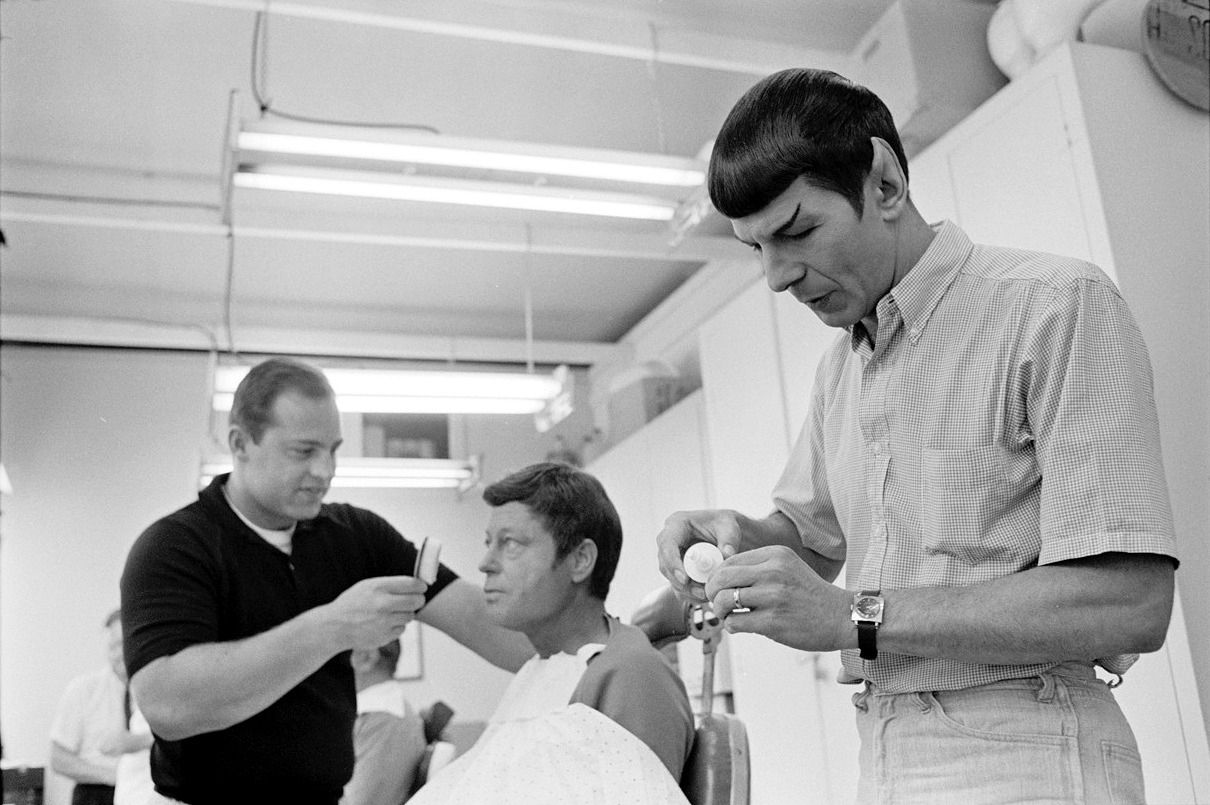
images of John Pertwee (1970-1974), Patrick Troughton (1966-1969) and William Hartnell (1963-1966) via and via and via

Friday, 16 September 2016

Trekkies

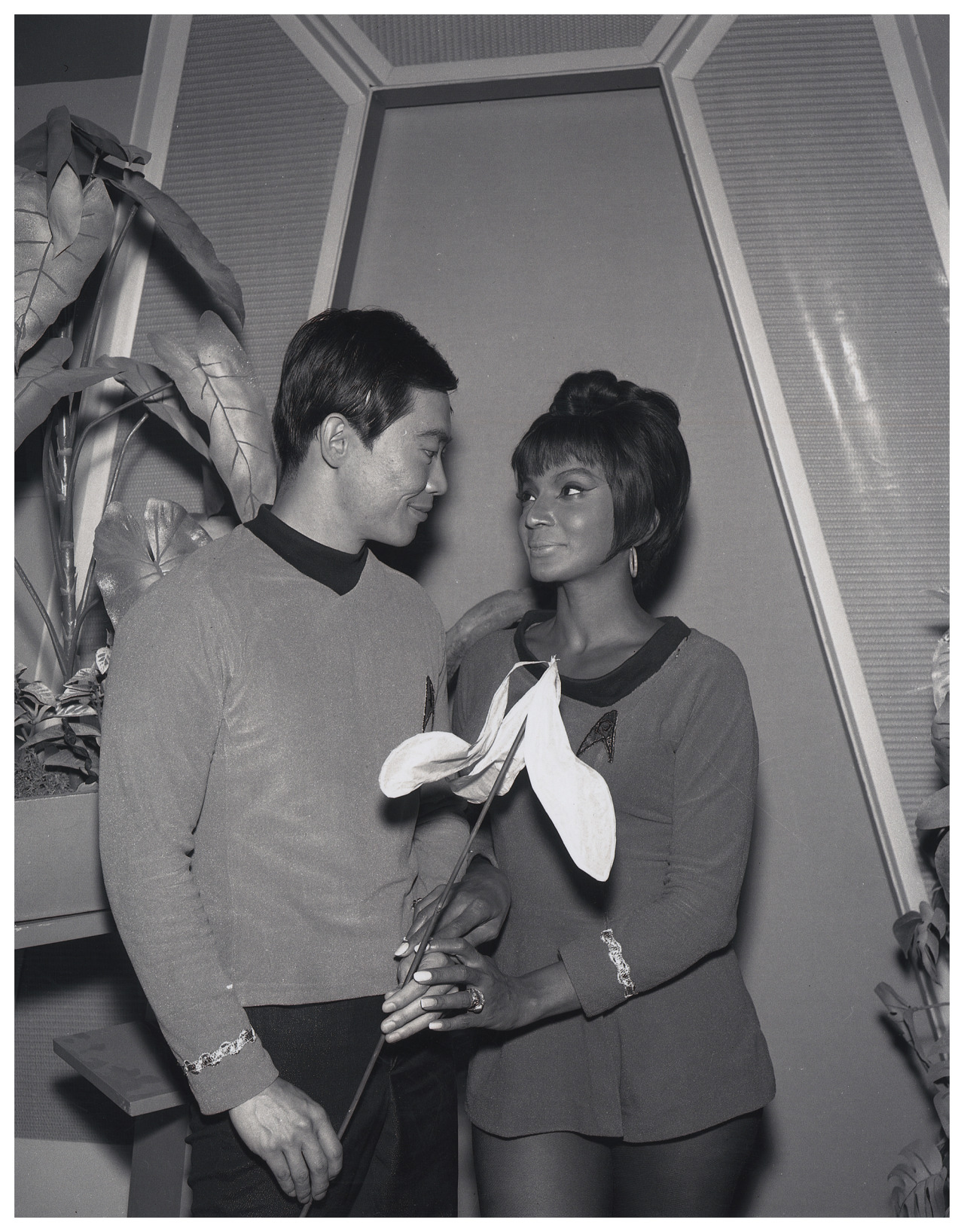
“Unlike the classic male nerd archetype that most people tend to picture in their heads, the quintessential Star Trek fan is a woman.”
Victoria McNally


“It redefined the classic nerd to be much more inclusive. There were more women involved. The entire show was diverse in many ways, including the people that worked on the show. You had women writers and women story editors, and that wasn’t as common back then. A lot of different areas were opened up because of Gene [Roddenberry]’s vision, and a lot of the fannish community took that to heart, which is a very, very good thing.”
Stuart Hellinger

"Star Trek fans span the globe and span every walk of life, every age group, and every mainstream cultural or ethnic group. Star Trek fandom is a phenomenon like no other, it has been going strong nearly 45 years, and is certain to continue for many more. Starting with the first letter writing campaign to save the original series, fans have always been inspired to take action. Their inspiration? Why Star Trek of course! As made clear throughout this survey, fans are educated, informed, and active citizens. They have taken the meanings in Star Trek and have applied them in mainstream culture. They have certainly individualized the myth, but share a group ideology that binds fandom together, and across cultural lines. Star Trek fans are by their own definition open minded, community oriented, and accepting people. They may not always agree on what Star Trek is or what terms they prefer to identify one another, but this only adds to the diversity within the group, and it certainly is diverse."
Subspace Communique


"Who are Star Trek fans? They are not simply teenage boys who live in their mother’s basements as the stereotype goes. They are not the glimpses of costumed characters the media airs when the Trekkies come to town. They are a diverse and vibrant cultural entity. Star Trek fans are educated, with as many, if not more, female fans as male fans, and come to fandom from a broad spectrum of age and demographic. This phenomenon of fandom stems from the fan attraction to the meanings in the mythos of Star Trek. Myths are value-laden discourse that focus on the examination or explanation of the human condition, therefore Star Trek is indeed a powerful myth that has acted as the basis for the formation of the fandom culture. Star Trek represents modern/progressive myth, and as such it legitimizes fan participation in numerous activities. Myth explains the meaning which fans have assigned to both Star Trek and the archetype characters it has created. Star Trek acts as a secular myth for contemporary times by providing cultural symbols and meanings that serve as a model for the formation of a distinct culture. (...)
Now onto women in fandom! Yes indeed, 57% that took this survey reported being female! That means 43% were males. That was not expected, but it was close. This data does support the history of Trek fandom, the current trends in fandom, and the rumors that have buzzed about since the 2009 film came out about how it brought in not only new fans, but more female fans. Women have held a strong presence in science fiction both as professionals and as fans for decades. Fanfic has been dominated by the female fan, and over the past several years, participation by women in fandom has been increasing. The data also demonstrated a correlation between age and sex, further supporting the idea that more women are entering Trek fandom due to the recent 2009 film. Of those females responding, 13 % were between 21-30, overall that age group accounted for 21% of respondents, the second highest age group following the 41-50 year olds, of which accounted for 34% of those responding to the survey in general, 19% were female. From Bjo Trimble and the original letter writing campaign to save the original series to Shirley Majewski (known fondly as the godmother of fandom), women have been a real driving force in Trek fandom. Various reports from the 1960’s and 1970’s rated female involvement in ranges between 17 and 80% at times, most especially in examining fanfic and clubs which were both female dominated areas in fandom and continue to be today."
Daryl G. Frazetti, Professor of Anthropology and Sociology


photographs via and via and via

Wednesday, 20 July 2016

The Writers Lab

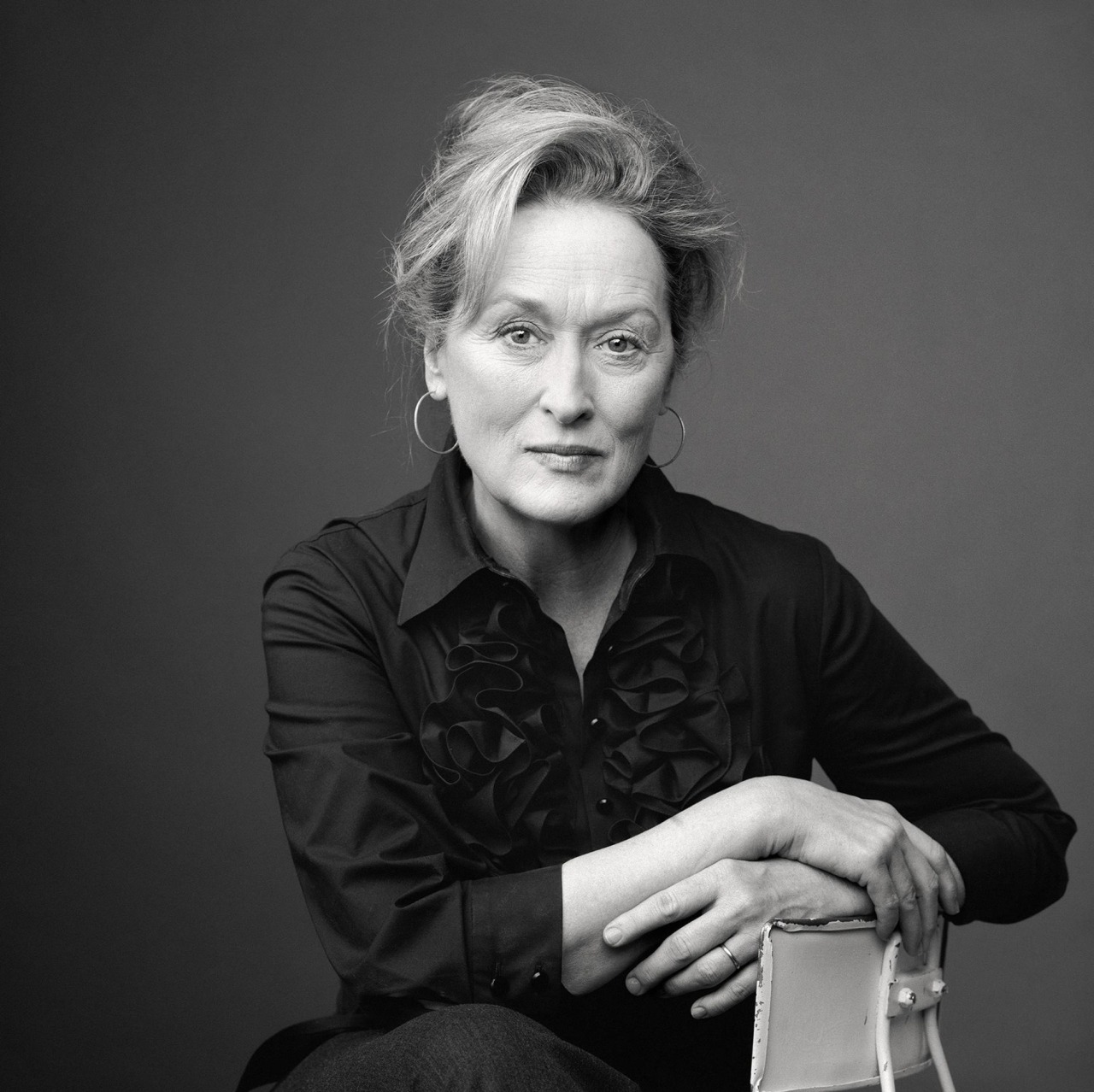
Meryl Streep, together with New York Women in Film and Television and other female filmmakers, helped fund a screenwriting lab for female writers over 40 to bring in more diverse writers and more female roles on screen (via). As figures clearly show, age discrimination in Hollywood (and not only there) is worse for women and things do not seem to get better.


"The Writers Lab is dedicated to developing narrative feature screenplays written by women over the age of 40. We feel it is critical to nurture the voices of mature women that have not been heard and are in danger of being lost entirely. We look forward to a new landscape where the female narrative is in equal proportion to the male narrative, sharing our stories to strengthen our ties to one another and empower younger generations." The Writers Lab
During the 2013-14 TV season, women composed 29% of employed TV writers, a decline from 30.5% in the 2011-12 season. Of the top 250 US-films, only 10% are female screenwriters. When women are not represented behind the scene, they are not represented on screen, or - if they are - often in limited stereotypical ways. Women over 40, for instance, are almost non-existent or "often stale stereotypes". According to director and casting director Risa Bramon Garcia, "The problem happens when writers and producers don't see women as being sexual after 40 - by sexual I mean complex human beings who are attractive and appealing, vital and powerful, in their 40s and 50s and beyond." (via).

<

According to a study conducted by the Writers Guild of America, West, "(w)omen and minorites have actually lost ground as compared to their white male counterparts". Minority writers saw a 7% decline, employment of female writers fell 5%. Concerning writers in general, no matter which gender, the study came to the conclusion:
“Although writers over 40 continued to claim a majority of all staff writer positions, data from the most recent TV season show that their employment prospects drop dramatically after age 50. Such stark statistics continue to illustrate that the entertainment industry remains a glaringly unlevel playing field.” (via)
- - - - - - - - - - - - - - - -
photographs of Meryl Streep via and via and via

Wednesday, 25 May 2016

Sesame Street and Education for Refugee Children

Sesame Workshop (Sesame Street's educational nonprofit) and the International Rescue Committee (a global humanitarian aid organisation) have a new partnership aiming to develop and distribute educational resources and programmes that are designed with refugee children in mind. Using mobile devices, radio, TV and printed materials, educational content can reach the children who live in displaced or resettled communities


"The partnership is aimed at the children who make up half of the record 60 million people currently displaced around the world, specifically the one-third of that population under the age of eight. In addition to a lack of education, these children also often deal with toxic stress and trauma." (via)

- - - - - - - - -
photograph via

Saturday, 30 January 2016

Idris Elba's Keynote Speech to Parliament on Diversity in the Media

Thanks for such a warm welcome. I could almost feel at home… In fact we’re not far from where I grew up in East London, but as a young man, I never thought I’d come here. In fact as an older man, I never thought I’d come here. But Oona invited me to speak here today. You know what she's like, she's a bit obsessed with diversity. I told her to get out more, & stop watching TV. Thing is, when you get out more, you see there's a disconnect between the real world & TV world. People in the TV world often aren't the same as people in the real world. And there’s an even bigger gap between people who make TV, and people who watch TV. I should know, I live in the TV world. And although there's a lot of reality TV, TV hasn't caught up with reality. Change is coming, but it's taking its sweet time.


Why change?
1. Because the TV world helps SHAPE the real world. It’s also a window on our world. But when we look out the window, none of us live in Downton Abbey.
2. Because the creative industries are the foundation of Britain's future economy. You guys want to safeguard Britain's economy, right? That's your job?
3. If you want to safeguard the economy, you have to safeguard the Creative Industries; and they rely on TALENT. Talent is our lifeblood - we can't afford to WASTE it, or give it away. But when you don't reflect the real world, too much talent is trashed. Talent is everywhere, opportunity isn't. And talent can’t reach opportunity. Especially on our small island – that’s why British talent gets exported all over the world. We haven’t done enough to nurture our diverse talent. But before I go any further I want to say something really important:

I'm not here to talk about black people; I’m here to talk about diversity. Diversity in the modern world is more than just skin colour. - it’s gender, age, disability, sexual orientation, social background, and - most important of all, as far as I’m concerned – diversity of thought. Because if you have genuine diversity of thought among people making TV & film, then you won’t accidentally shut out any of the groups I just mentioned. Anyway, on the whole, I don’t think of myself as just a ‘black actor’. I’m an actor, not a number. Just like anyone else. (...)


None of us are just one flavour or one colour. If we were, we’d be one- dimensional. And that’s what used to drive me mad as an up and coming actor. My agent and I, we’d get scripts and we were always asked to read the “black male” character. Or “the athletic type.” And that was just Crimewatch… But when a script called for a “black male”, it wasn’t describing a character. It was a describing a skin colour. A white man - or a caucasian - was described as “a man with a twinkle in his eye”. My eyes may be dark, but they definitely twinkle! (Ask the Mrs…) And I was like “I wanna play the character with a twinkle in his eyes!” So I got to a certain point in my career, and I saw that glass ceiling; I was very close to hitting my forehead on it. I was busy, I was getting lots of work, but I realised I could only play so many “best friends” or “gang leaders”. I knew I wasn’t going to land a lead role. I knew there wasn’t enough imagination in the industry for me to be seen as a lead. (...)

What all this taught me, is too often people get locked inside boxes. And it’s not a great place to be. Ask women, they’ll say the same thing. Or disabled people. Or gay people. Or any number of under-represented groups. So today I’m asking the TV & film industry to think outside the box, and to GET outside the box. This isn’t a speech about race, this is a speech about imagination. Diversity of thought. Thankfully in our country, we’re free to say what we want. But we’re not as free as we think, because our imagination isn’t that free. We can’t help putting people inside boxes, it’s a national pastime… Funny thing is, it’s not good for the people locked in the box; but it’s also not good for the people deciding what’s ON the box. Audiences don’t want to see caricatures Because the point about a caricature is this: you’ve seen it all before. So I want our incredibly creative and successful TV industry to be more imaginative with the cultural exports we send around the world. (...)


I agreed to speak in Parliament today, because I want to highlight the important discussion taking place tomorrow The CEOs of Channel 4, ITV, and the BBC, are just some of those industry leaders meeting to discuss diversity. And Channel 4’s research for the conference is really interesting. The headline finding is that British TV is awash with low-level sexism. The interesting comparison, is that the same figure for low-level racism was only a tenth of that. This means women on TV are 10 times more likely to be treated negatively than black people on TV. That’s crazy, right? I’m not saying you expect black people to be treated worse than women (although God help black women) But as Viola Davies said last year when she became the first-ever black woman to win an Emmy for drama, “you can’t win an Emmy for a role that’s never been written.” That’s why we need more imagination from our directors, our producers, our casting directors, our writers - especially our writers. So I’m just saying we need to be more aware. (...)

Nelson Mandela said “anything difficult always seems impossible until it’s done.” But the good news is, we’re not trying to put a man on the moon. We’re just trying to redesign the face of British TV. And because British TV helps shape our world, and is the window onto our world, this is a debate for everyone. And yes, let’s make our cultural empire even more successful than our military empire. I'll leave you with this thought: I don't want to give away any spoilers, but in the new Star Wars film, isn't it amazing the princess grows up to be a General??! Seriously: let that sink in: the princess grows up to be a General! That's all I'm asking for: - some proper imagination, - untold stories - the road less travelled Let's think outside the box. In fact let's smash the box. Given we're in London let's "MASH the box." G'wan, mash it up! Lords, Ladies and gentlemen, officers of the Empire, and any princesses, Thank you for listening!

- - - - - - - - - - - -
- speech excerpts via Channel4; speech on YouTube: LISTEN
- photographs via and via and via

Saturday, 19 September 2015

Jonathan Hart + Dan Hartman

"This is my boss - Jonathan Hart, a self-made millionaire. He’s quite a guy. This is Mrs. H – she’s gorgeous. What a terrific lady. By the way, my name is Max. I take care of them, which ain't easy, 'cause their hobby is murder."
Opening credits, narrated by Max, the butler (Season 1)

"This is my boss - Jonathan Hart, a self-made millionaire. He’s quite a guy. This is Mrs. H – she’s gorgeous. She’s one lady who knows how to take care of herself. By the way, my name is Max. I take care of both of them – which ain’t easy; ‘cause when they met, it was murder."
Opening credits, narrated by Max, the butler (Season 2)


Jonathan Hart, successful CEO of Hart Industries, a global conglomerate based in Los Angeles, lives a happy jetset lifestyle with his wife Jennifer, a freelance journalist who solves crimes together with him. At least this is the case during the "Hart to Hart" television series with Robert Wagner and Stefanie Powers originally released from 1979 to 1984 (via). NBC network is currently considering a remake of the series in which Jennifer Hart is replaced by Dan Hartman ... the Harts become a gay couple (via). According to a description, the new show will be "A modern and sexy retelling of the classic series" about "attorney Jonathan Hart and free-spirited investigator Dan Hartman, who must balance the two sides of their life: action-packed crime-solving in the midst of newly found domesticity.” (via). Release date and casting are not yet communicated but one thing is sure: "If it's done right, a gay-themed adventure/mystery series could be groundbreaking (...)" (via).


photographs of Robert Wagner and Natalie Wood (who originally ABC wanted to co-star as Jennifer Hart) via and via

Tuesday, 16 June 2015

TV, Film & Gender

A study examining gender portrayals in general audience films (101 of the top-grossing G-rated movies between 1990 and 2005) came to the conclusion that there was a clear gender imbalance. 28% of the speaking characters and 17% of characters in crowd scenes were female, 83% of the films‘ narrators were male. Apart from gender, ethnicity was a construct affected by a clear imbalance in representation. 85.5% of the characters in G-rated films (i.e. general audiences, all ages permitted) were "white". Differences did not only refer to the quantity, there were also qualitative differences. Females were valued for their appearance, had rather short sighted aspirations and were longing for one-dimensional love. The authors conclude that much work is needed to be done to improve gender portrayals (Smith & Cook, 2008).


"Female audiences are driving the change, I think. Women don't stop consuming cultural product once they stop menstruating."
Cate Blanchet 

"When Lisa Genova wrote this book, she told me that no one wanted to make it into a movie because no one wanted to see a movie about a middle-aged woman."
Julianne Moore at the 2015 Golden Globes Award

"In spite of efforts to achieve greater gender balance within the industry, especially in these busier times, the reality seems to be that it's getting worse not better. These statistics must propel industry and inform government policy to increase the pursuit of proper diversity in the workforce."
Iain Smith

"On so many sets women are seen as lesser beings in terms of status and many women still find it hard to be taken seriously. I just can't bear it. There are still a lot of hostile working environments in film and television for women to walk into that need to be addressed, where they are treated differently from the men, but because of the nature of the industry none of these people get called out."
Beryl Richards


"I've noticed a lot of people talking about the wealth of roles for powerful women in television lately. And when I look around the room at the women who are here and I think about the performances that I've watched this year, what I see actually are women who are sometimes powerful and sometimes not, sometimes sexy, sometimes not, sometimes honorable, sometimes not, and what I think is new is the wealth of roles for actual women in television and in film. That's what I think is revolutionary and evolutionary."
Maggie Gyllenhaal at the 2015 Golden Globes Award (by the way the same Maggie Gyllenhaal that at 37 was told to be too old to play the lover of a 55-year-old man)


Some figures:

- More than three-quarters of those involved (entire crew from make-up artist to sound engineers and directors) in making 2.000 of the biggest grossing films in the past twenty years have been male, 22% female (via).
- On basis of the 2.000 films, 13% of the editors, 10% of the writers and 5% of the directors were female. Visual effects had 17.5% women, music 16%, camera and electricals 5% (via).
- In TV, less than 15% of directors are women. (via)
- Of the top 100 box-offices releases in the US, 4.4% of the directors are women. (via)
- The Academy Award for Best Directing has been given out for 87 years. During this period, one woman won the award. (via)
- In film, about three-quarters of leading roles are male. (via)
- In 2014, women made up 13% of leading roles. (via)
- In film, 9 out of 10 script writers are male. (via)
- During the 2013/14 television season, 29% of employed TV writers were female (2011/12: 30.5%). (via)
- In 2013, 10% of film screenwriters from the top 250 films produced in the US were female. (via)
- In 2014, only 55.4% of films passed the Bechdel Test (2013: 67.5%, 2012: 66.4%). (via)
- In 2014, women had speaking roles 30% of the time, i.e., 5% more than in the 1940s and 1950s. (via)
- In 2014, the top ten earning actresses made half of what their male counterparts made. (via)
- Ally the Manic Listmaker compiled a collection of movies by women worldwide in the past twenty years and listed 1.400. (via)


Some reactions:

- In 2015, Meryl Streep started funding the "Writers Lab", a laboratory for women screenwriters over 40.
- In 2015, "The Dollhouse Collective" was launched by Rose Byrne and four other actresses, an all-female production company aiming to increase the presence of female filmmakers (via)
- In 2014, Lena Dunham launched "A Casual Romance" with two women, a production company aiming to empower comedic women. (via)
- In 2012, Reese Witherspoon together with producer Bruna Papandrea launched "Pacific Standard" focusing on developing roles for women.
- In 2015, Geena Davis launched the Bentonville Film Festival to promote diversity . (via)


- Smith, S. L., & Cook, C. A. (2008) Gender Stereotypes: An Analysis of Popular Films and TV., www.thegeenadavisinstitute.org
- photographs of Twiggy Lawson by Bert Stern (1929-2013) via and via and via and via and via

The first part of this posting was originally published on Science on Google+ on 14th of December 2013